TalentLMS is the best of the absorb lms alternatives for most teams, because Core costs 119 dollars a month for up to 40 users and the free plan covers 5 users. Pick 360Learning for collaborative courses, or Docebo when you need enterprise scale with AI learning.
How we make this list: we compare pricing pages, product documentation and public user reviews, then re-check every price before each update. No product paid for a place. Disclosure.
TalentLMS is the best Absorb LMS alternative for most teams, with a free plan for 5 users and Core at 119 dollars a month for up to 40 users.
360Learning is the collaborative pick at 8 dollars an active user a month, with no annual commitment on Team.
Docebo is the enterprise AI pick, but its 9-dollar price needs a 250-user minimum, so the smallest contract is about 27,000 dollars a year.
LearnUpon, Cornerstone and Absorb itself are all quote-only, so shortlist them only when the budget is open.
LearnWorlds is the cheapest way to sell courses at 24 dollars a month, but the 5-dollar fee per enrollment adds up fast.
Which Absorb LMS alternative should you switch to?
Absorb LMS is a strong enterprise platform, but it sells by quote only, so teams shopping for a published price look elsewhere. The alternatives here split into flat-rate tools, per-user tools and quote-only enterprise suites.
Start with your learner count. TalentLMS charges by user bands, 360Learning and iSpring Learn charge per active user, and Tovuti and Litmos charge a flat annual fee.
Watch the minimums. LearnUpon starts at 100 users, iSpring Learn at 100 active users, and Docebo at 250 users, so a 20-person team has only a few real options.
Free plans are rare in this category. Only TalentLMS offers a real free plan here, for 5 users and 10 courses, while the rest offer 14 to 30 day trials.
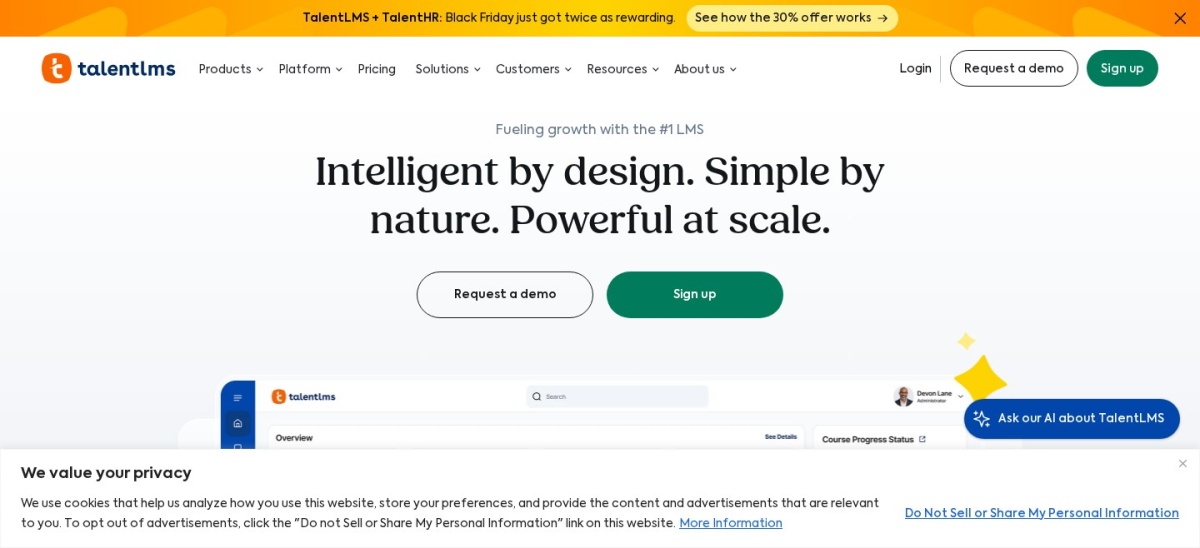
TalentLMS is a cloud LMS for employee, customer and partner training, with course creation, assignments, gamification, certificates and reporting in a clean interface. The free plan covers 5 users and 10 courses, and Core costs $119 a month billed annually for up to 40 active users.
The trade off is price growth with users. Core covers only 40 users, and larger brackets cost more, so model your active-user count first. It suits small and mid-size teams that want to launch training fast without an implementation project.
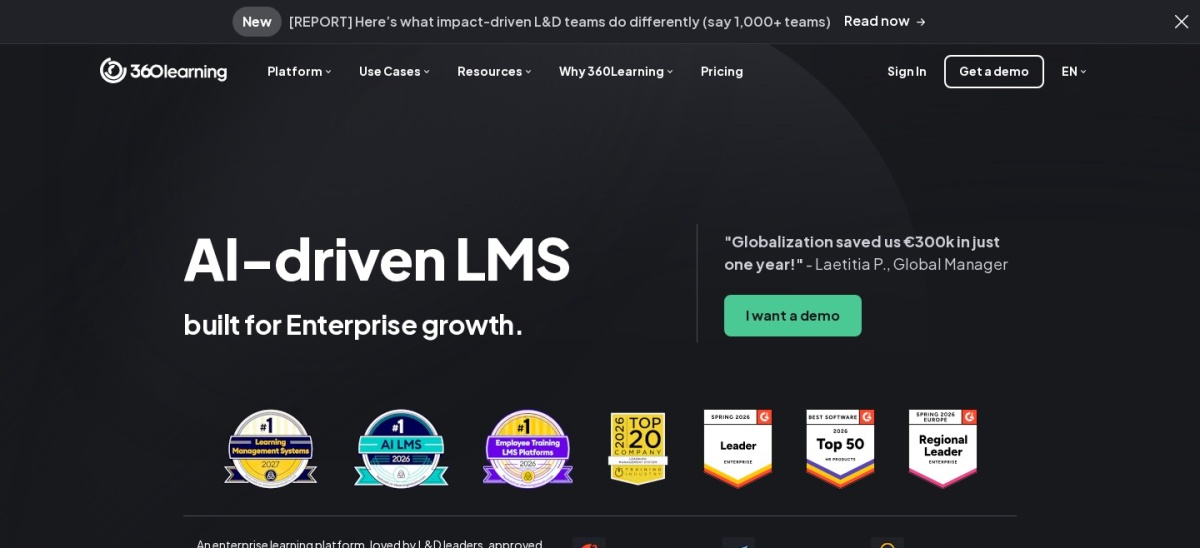
360Learning is a collaborative learning platform where in-house experts write the courses, with peer feedback and AI-assisted authoring built in. Team costs $8 per active user a month billed monthly, covers up to 100 users, and includes a 30-day trial with no annual commitment.
The trade off is the cap and the billing. Team stops at 100 users, Business is by quote, and you pay for every account until it is deleted. It suits teams that want subject experts, not just the training team, to build the training.
Docebo is an enterprise learning platform with AI authoring, skills management and more than 400 integrations, built for large companies that train employees, customers and partners. Its main tier costs $9 per user a month, but it needs a 250-user minimum, so the smallest contract runs about $27,000 a year.
The trade off is the floor and the quote. The pricing page itself is quote-based, the $9 figure comes from Docebo's own site and comparisons, and small teams will find the minimum far too high. It suits enterprises that want AI learning at scale.
LearnUpon is a cloud LMS for mid-size and enterprise teams that trains employees, customers and partners through separate branded portals from one account. It is easy to set up and administer, with learning paths, ecommerce for paid courses, and integrations with HubSpot and Google Meet.
The trade off is price and depth. LearnUpon publishes no prices and sells by quote, plans start at 100 users, and reviewers note limited features next to larger rivals. It suits companies that train several audiences from one clean platform.
Litmos is a corporate LMS for employee, customer and partner training, with a library of more than 300 pre-built compliance courses. Foundation starts at $8,000 a year and covers single sign-on, standard reporting and content import, and it is the rare enterprise vendor that lists starting prices.
The trade off is the starting price. Foundation suits up to around 250 learners, Platinum starts at $15,000 a year, and the AI tier is by quote, so small teams pay an enterprise-style entry fee. It suits firms that want an LMS plus ready-made content in one contract.
iSpring Learn is the shortest path from a PowerPoint slide deck to a trackable course, with per-user prices published at 100, 300 and 500 users. The Business plan costs $6.91 per active user a month for 100 users billed annually, or $8,286 a year, and idle seats are free since billing follows active users.
The trade off is the 100-user floor. Plans start at 100 active users, the per-user rate only drops at higher volume, and enterprise features need a quote. It suits teams whose training already lives in slide decks and documents.
Tovuti is a learning platform that starts at $7,500 a year for the first 100 learners, with most features in one price: authoring, gamification, portals and reporting. It is the most feature-complete option at its price in this list, and a free trial is available.
The trade off is the annual commitment. There is no monthly plan and no free tier, so a small team must commit $7,500 a year before testing at scale. It suits mid-size teams that want one full platform and no tier ladder to compare.
Cornerstone is an enterprise learning and talent platform that pairs its LMS with performance, skills and HR tools in one suite. It is built for large global companies that run compliance, onboarding and career development together, with a dedicated success team on enterprise contracts.
The trade off is the enterprise model. Pricing is by quote only, implementation is a project rather than a signup, and small teams will find it far too heavy. It suits large organisations that want learning inside a full talent suite.
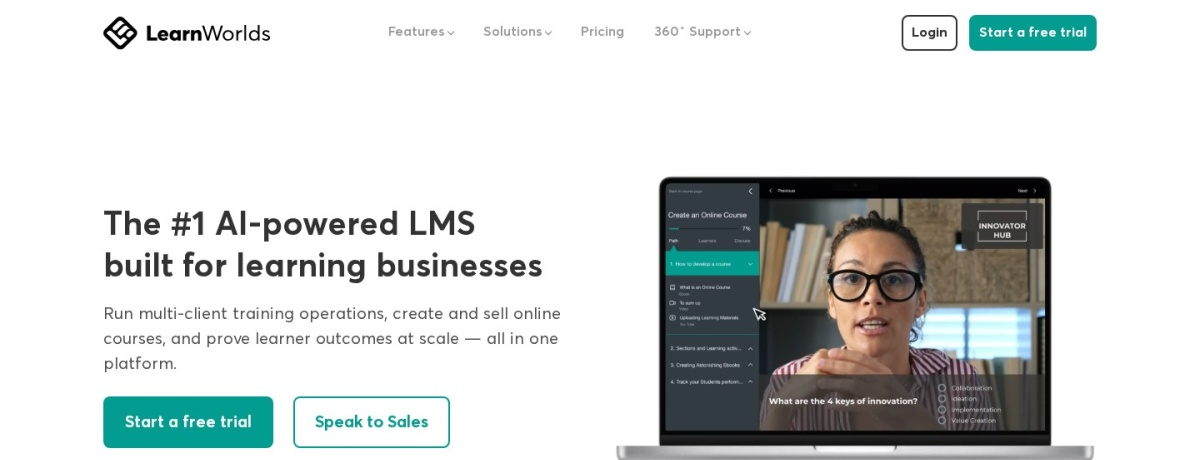
LearnWorlds is a course platform for creators and training companies that sell courses, with a full course builder, a branded school site, checkout, subscriptions and marketing tools in one place. Starter costs $24 a month billed annually, plus a $5 fee on every paid enrollment.
The trade off is the Starter fee. The $5 fee per paid enrollment makes Starter a poor deal once volume grows, and the higher plans cost $79 to $249 a month. It suits small academies that sell courses and want a polished storefront.
Absorb LMS itself scores 4.6 on G2 from 960 reviews and sells by quote only, with published prices absent from its pricing page.
TalentLMS, 360Learning, iSpring Learn, Tovuti, Litmos and LearnWorlds all publish prices, so you can shortlist them before any sales call. LearnUpon, Docebo and Cornerstone are quote-only like Absorb.
The biggest change is usually the audience. Absorb is built for compliance training at scale, while TalentLMS suits small teams, 360Learning suits expert-led learning, and LearnWorlds suits selling courses.
How we chose
We started from the platforms that appear most often as Absorb LMS alternatives in 2026 comparisons, then kept those with a verifiable rating on G2, Capterra or Trustpilot and a published price, free plan or trial.
Prices and ratings were checked on 29 November 2026. Ratings and review counts come from G2 on the same day, and prices come from each vendor's pricing page or published plan, with quote-only tools marked Custom and the 250-user minimum on Docebo stated plainly.
We left out platforms with no verifiable G2, Capterra or Trustpilot rating and those with no published price and no trial. No vendor paid for a place, and we do not claim hands-on testing for this list.
How to choose an Absorb LMS alternative
Match the platform to your learner count and audience first, then check the price model before you book a demo.
Count your learners. A 20-person team has few real options here, while a 100-plus team can use almost any platform on this list.
Name the audience. Employee compliance points to Litmos or TalentLMS, customer education to LearnUpon, and course sales to LearnWorlds.
Compare the price model. Flat-rate, per-active-user and quote-only tools bill very differently, so model the total for your learner count.
Try before the sales call. Use the free plan or trial on TalentLMS, 360Learning, iSpring Learn or Tovuti before committing to a quote-only platform.
FAQ
What are the best Absorb LMS alternatives in 2026?
TalentLMS is the best Absorb LMS alternative for most teams, because Core costs 119 dollars a month for up to 40 users and the free plan covers 5 users. 360Learning suits collaborative courses, and Docebo suits enterprises that need AI learning at scale.
Is there a free Absorb LMS alternative?
Yes. TalentLMS is the only free Absorb LMS alternative here, with a free plan for 5 users and 10 courses and no time limit. The other platforms offer 14 to 30 day trials, or demos only on the quote-only enterprise tools.
What is the cheapest Absorb LMS alternative?
360Learning Team is the cheapest Absorb LMS alternative at 8 dollars an active user a month, with no annual commitment. iSpring Learn costs 6.91 dollars per active user at 100 users, but plans start at 100 users and the total is 8,286 dollars a year.
Which Absorb LMS alternative is best for compliance training?
Litmos is the best Absorb LMS alternative for compliance training, with more than 300 pre-built compliance courses and Foundation from 8,000 dollars a year. TalentLMS is the cheaper pick for small teams, with Core at 119 dollars a month.
Can I migrate from Absorb LMS to TalentLMS?
Yes. TalentLMS offers migration help and imports SCORM, xAPI and video content, and most LMS platforms here offer import tools or migration services. Ask for the migration before you sign, so you can test the import with your real courses.
Is Docebo a good Absorb LMS alternative?
Docebo is a good Absorb LMS alternative for large enterprises that need AI authoring, skills management and 400-plus integrations. Small teams should avoid it, because the 250-user minimum makes the smallest contract about 27,000 dollars a year.
SaaS SEO and WordPress specialist with about 8 years of experience. Rakib compares WordPress plugins, themes, hosting and software using public pricing, documentation and user reviews. See how we rank.