Duolingo is the best free app to learn Chinese for most beginners: the full course is free, with pinyin, characters and speaking practice, and it is rated 4.7 out of 5 from 5.6 million ratings. Pick HelloChinese for a Chinese-only course with stories, or SuperChinese if you want scored speaking practice.
How we make this list: we compare pricing pages, product documentation and public user reviews, then re-check every price before each update. No product paid for a place. Disclosure.
Duolingo's whole Chinese course is free; Super at $83.99 a year only removes ads and the energy limit.
HelloChinese and SuperChinese are built only for Chinese, with HSK courses, tones and speaking scores.
ChineseSkill is the only app here that also teaches Cantonese and Hokkien.
LingoDeer explains grammar and teaches stroke order, but its regular annual price is $159.99.
Drops and LingQ work best as companions: Drops for vocabulary, LingQ for reading real Chinese.
All 9 apps have a free plan. Paid upgrades run from $59.99 to $159.99 a year.
What a free Chinese app should cover
Chinese is a big first step: new sounds, tones and thousands of characters. A good free app should teach pinyin and tones first, then characters in small steps, with audio on every word.
Most free apps in this list teach through short game-like lessons. The Chinese-only apps go further on tones, handwriting and HSK levels, while the general apps are better for keeping a daily habit.
Free plans differ a lot. Some cover a whole beginner course, while others stop after a few lessons or a few minutes a day. Check where the free plan ends before you settle in, and if you run a site in more than one language, our guide on making a multilingual WordPress site covers the setup side.
Prices in this list come from each app's US App Store listing, checked on 25 November 2026. Several apps list more than one yearly price, so the price shown at checkout is the one that counts.
4.7/5on App Store (5,600,000 reviews, checked Nov 2026)
Paid from$83.99/yr
Best free app to learn Chinese overall
Free courseFull course, with ads
Chinese scriptsSimplified and traditional
Speaking practiceYes
Paid planSuper, $83.99/yr
duolingo.com
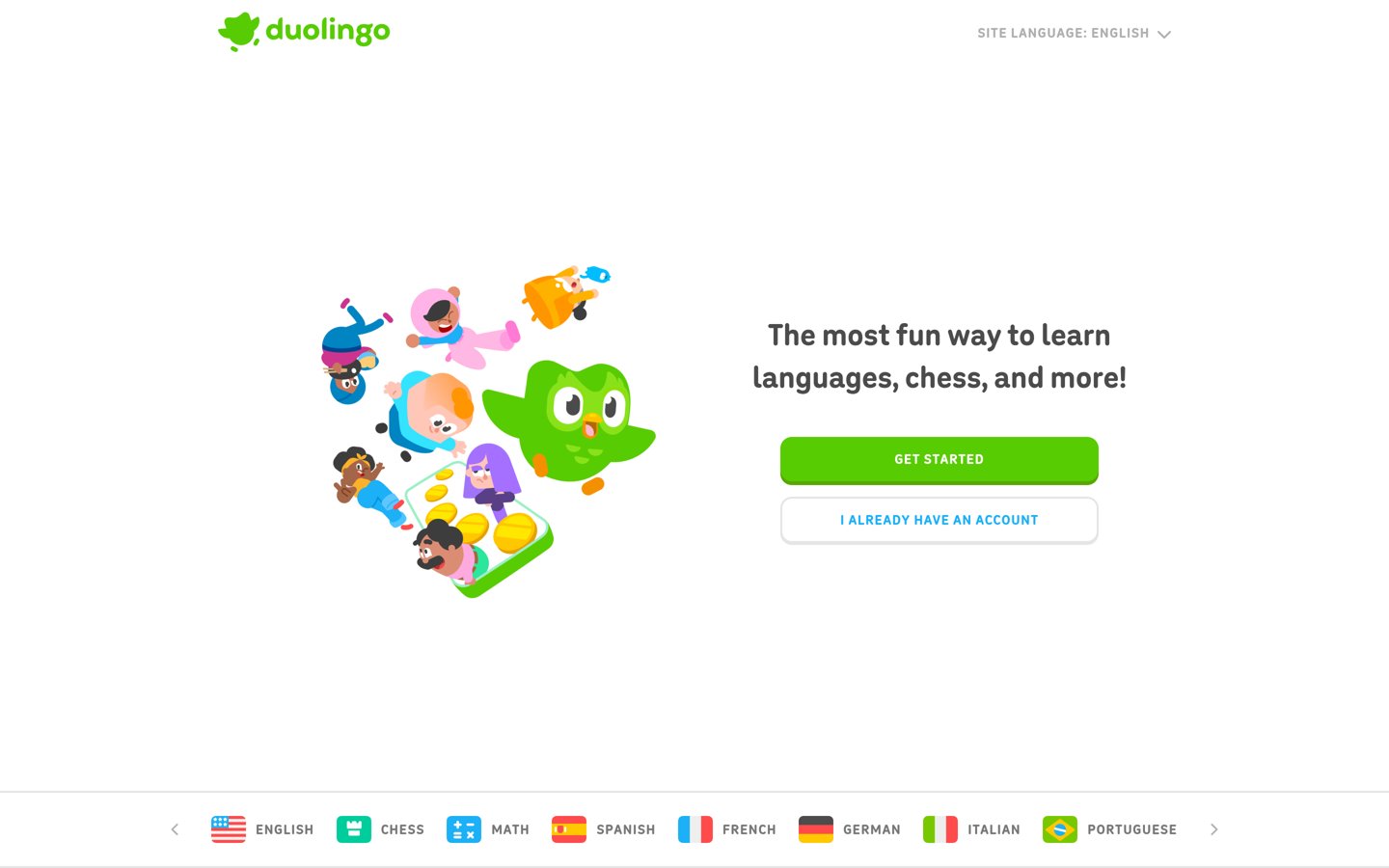
Duolingo homepage, captured Nov 2026.
Duolingo is the biggest free way to start Chinese, with a full course covering pinyin, characters, words and sentences in short game-like lessons. The free plan includes the whole course with ads and a daily energy limit, plus speaking and listening practice, and it works on phone and web.
The trade off is depth. Free lessons stay at beginner level, ads interrupt sessions, and the energy limit can stop a long study session until it refills. It suits complete beginners who want a free daily habit and plan to add a Chinese-only app later.
What we like
Whole Chinese course is free
Rated 4.7 from 5.6 million ratings
Works on phone and web, with streaks and leaderboards
Watch out for
Ads and an energy limit on the free plan
Stays at beginner level, with little grammar depth
4.9/5on App Store (23,898 reviews, checked Nov 2026)
Paid from$69.99/yr
Best Chinese-only course for beginners
Free lessonsFirst lessons of each course
Graded stories1,000+, Premium+
HSK coursesYes
Paid planPremium, $69.99/yr
hellochinese.cc
HelloChinese homepage, captured Nov 2026.
HelloChinese is a course built only for Mandarin, taking beginners from pinyin to conversational level through game-like lessons. The free version covers the first lessons of each course, and the app adds speech recognition, handwriting practice, HSK courses and more than 1,000 graded stories.
The trade off is the paywall. The free lessons end early, and Premium at $69.99 a year opens the full course, while the full story library needs Premium+ at $149.99 a year. It suits beginners who want one Chinese-only course that covers listening, speaking, reading and writing.
What we like
Built only for Chinese, from pinyin to conversation
Rated 4.9 out of 5
1,000+ graded stories and 2,000+ native-speaker videos
Watch out for
Free lessons end early
Full story library needs the pricier Premium+ plan
4.9/5on App Store (3,897 reviews, checked Nov 2026)
Paid from$59.99/yr
Best for scored speaking practice
Free accessLimited, with speaking scores
Course levels8, to HSK 5
Lessons1,000+, about 10 min
Paid planPLUS, $59.99/yr
superchinese.com
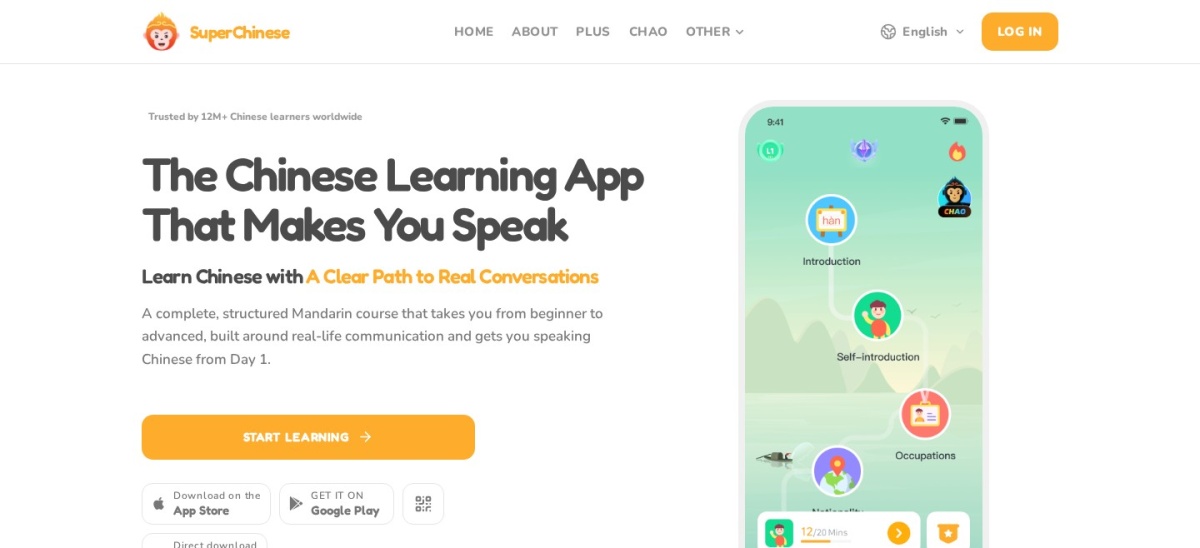
SuperChinese homepage, captured Nov 2026.
SuperChinese is an AI-scored Mandarin course with eight levels, from beginner to HSK 5, in more than 1,000 lessons of about ten minutes. The free version gives limited access to the course, including pronunciation scores, and every lesson is written by native Chinese teachers.
The trade off is price and scope. PLUS costs $59.99 a year in the App Store, and the AI tutor and role-plays sit in a separate CHAO plan at $109.99 a year. It suits learners who want a speaking score on every line they say.
What we like
Speaking score on every line
Eight levels up to HSK 5
Rated 4.9 out of 5
Watch out for
AI tutor costs extra in the CHAO plan
Website yearly price ($69.99) is higher than the App Store ($59.99)
4.8/5on App Store (15,400 reviews, checked Nov 2026)
Paid from$59.99/yr
Best for Mandarin and Cantonese
Free lessonsFirst lessons, tone training
VarietiesMandarin, Cantonese, Hokkien
Review systemSpaced repetition
Paid planPremium, $59.99/yr
chineseskill.com
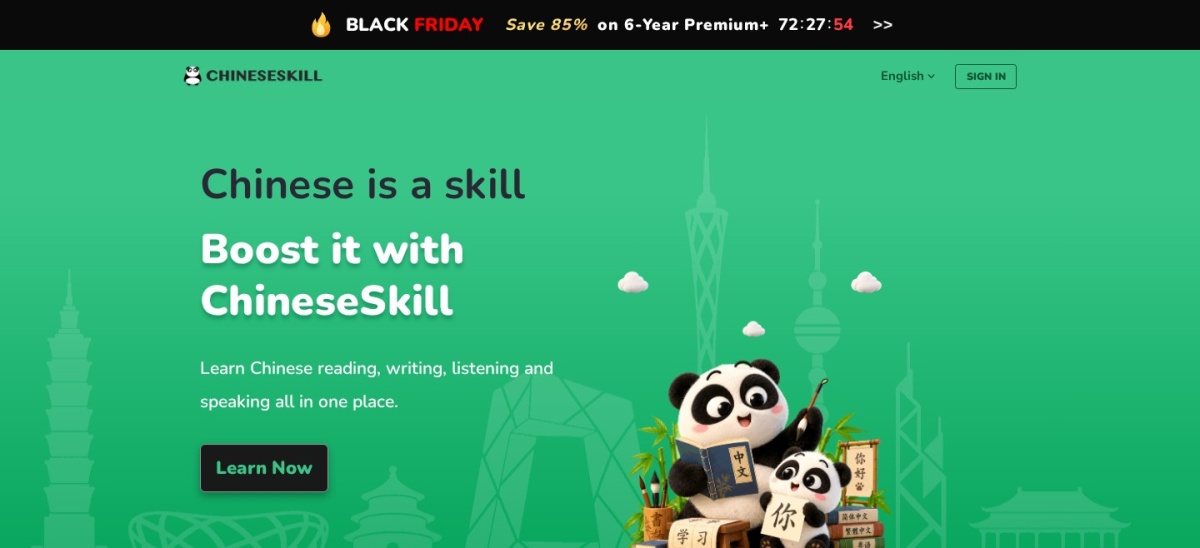
ChineseSkill homepage, captured Nov 2026.
ChineseSkill is a game-like Chinese course with separate tracks for Mainland Mandarin, Taiwan Mandarin, Hong Kong Cantonese and Hokkien. The free version covers the first lessons, and Premium adds the full course, tone training, a pinyin guide and spaced-repetition reviews.
The trade off is the crowded price list. Premium is listed at $11.99 a month or $59.99 a year in the App Store, but other Premium and lifetime items reach far higher, so check what your plan includes. It suits learners who also want Cantonese.
4.7/5on App Store (28,000 reviews, checked Nov 2026)
Paid from$159.99/yr
Best for grammar explained step by step
Free lessonsFirst lessons, phrasebook
Languages20, one subscription
Grammar notesYes, in lessons
Paid planPremium, $159.99/yr
lingodeer.com
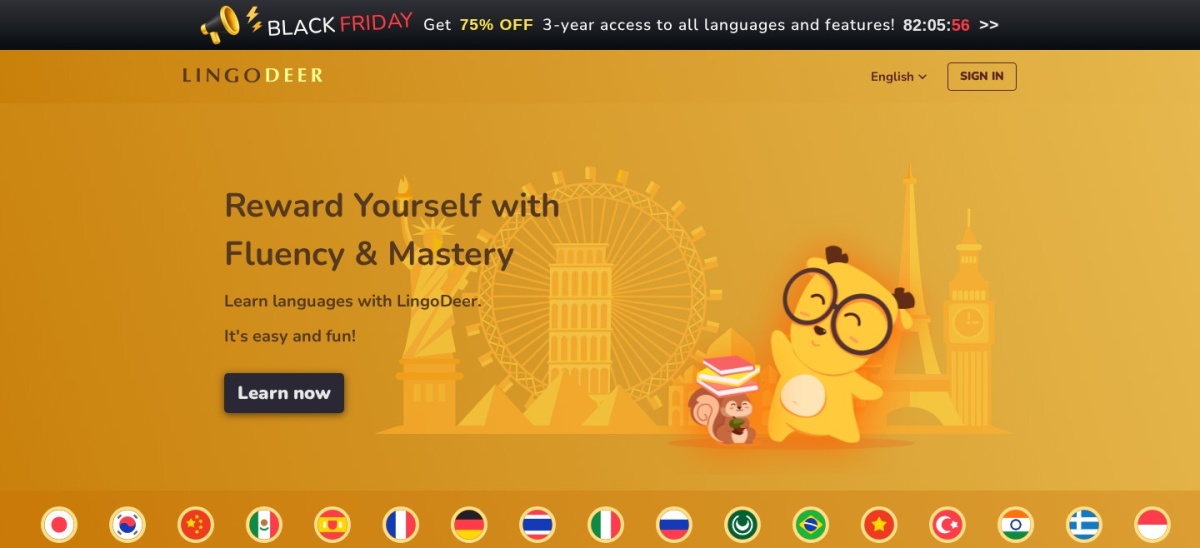
LingoDeer homepage, captured Nov 2026.
LingoDeer is a structured course built for Asian languages first, with grammar notes inside short lessons and native-speaker audio on every sentence. The free version opens the first lessons and a travel phrasebook, and character drills teach Chinese characters stroke by stroke.
The trade off is price. The regular annual price is $159.99, though the site often shows a $95.99 sale price, and a subscription is needed for full access to all 20 languages. It suits learners who want grammar explained step by step.
What we like
Grammar explained inside lessons
Native-speaker audio on every sentence
Character drills teach stroke order
Watch out for
Regular annual price is $159.99; $95.99 is a sale price
4.7/5on App Store (71,739 reviews, checked Nov 2026)
Paid from$69.99/yr
Best for five-minute vocabulary games
Free sessions5 min every 10 hours
Words3,000+ with pictures
Languages55+
Paid planPremium, $69.99/yr
languagedrops.com
Drops homepage, captured Nov 2026.
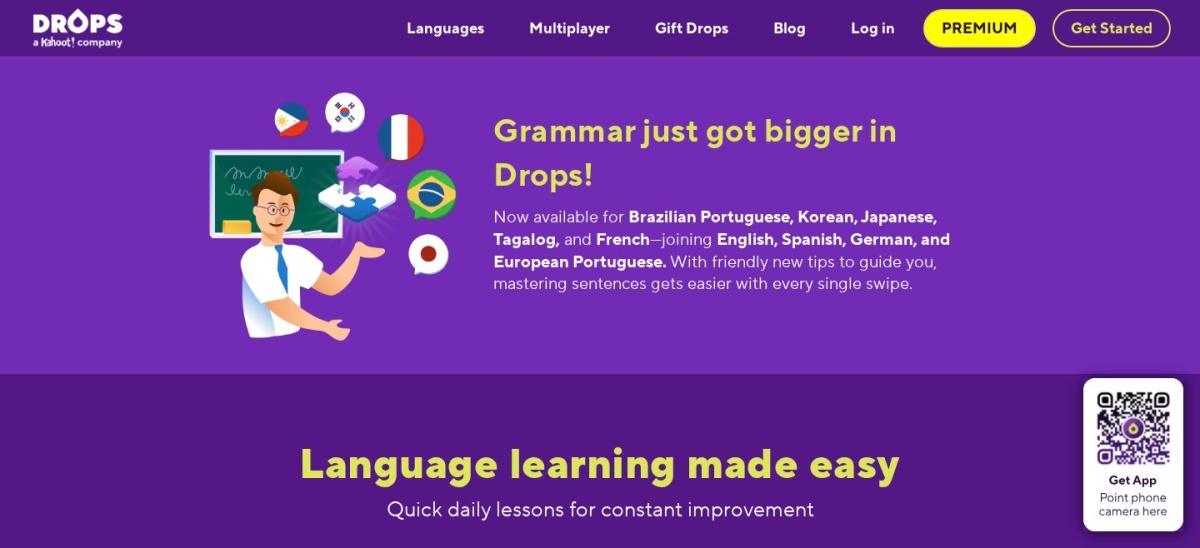
Drops is a vocabulary game that teaches Chinese words with a custom illustration and native-speaker audio for each one. The free plan gives five minutes of learning every ten hours, and the app covers more than 3,000 words and phrases across 55 languages.
The trade off is narrow scope. Drops teaches words only, with no grammar, sentences or conversation, so it works best beside a course app. Premium removes the time limit for $69.99 a year. It suits visual learners who want a five-minute daily habit.
4.8/5on App Store (218,000 reviews, checked Nov 2026)
Paid from$61.99/yr
Best for learning from native videos
Free lessonsLimited, with ads
Native videosYes, in lessons
Speaking practiceAI chat, Pro only
Paid planPro, $61.99/yr
memrise.com
Memrise homepage, captured Nov 2026.
Memrise is a language app built around short videos of native speakers, so you hear real pronunciation and everyday phrases from the start. The free plan includes limited lessons and videos, with ads, and paid Pro adds unlimited speaking practice with AI chat partners.
The trade off is that the free plan runs out fast. Pro costs $61.99 a year, and the monthly plan is listed at $24.99, so the yearly plan is far better value. It suits learners who want to hear how Chinese sounds in real life.
4.7/5on App Store (102,000 reviews, checked Nov 2026)
Paid from$70/yr
Best for a structured CEFR course
Free lessonsYes, with ads
Course levelCEFR, with certificates
Community correctionsYes
Paid planPremium, $70/yr
busuu.com
Busuu homepage, captured Nov 2026.
Busuu is a CEFR-structured language course with bite-size lessons, a personal study plan and corrections from native speakers in its community. The free plan covers lessons with ads, and the Chinese course is one of 14 complete courses in the app.
The trade off is price confusion. The App Store lists several Premium prices, from a $70.00 yearly plan to a $138.99 yearly plan, so check the price shown at checkout before paying. It suits learners who want a set study plan and feedback on their writing.
4.7/5on App Store (10,473 reviews, checked Nov 2026)
Paid from$119.99/yr
Best for reading real Chinese content
Free words20 saved words
Languages53
Content imports5 free, unlimited paid
Paid planPremium, $119.99/yr
lingq.com
LingQ homepage, captured Nov 2026.
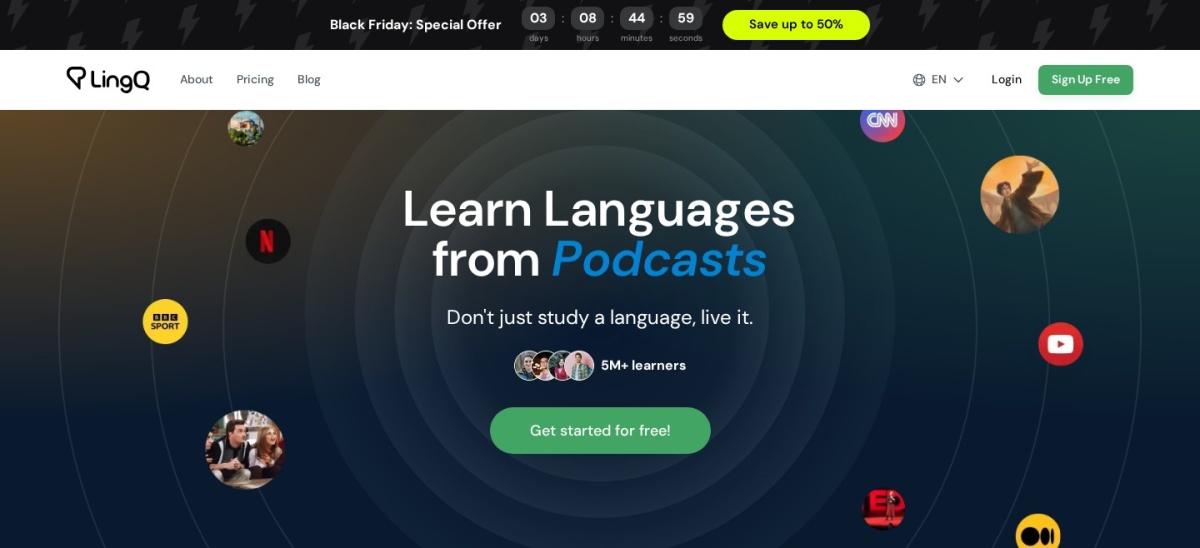
LingQ is a reader that turns real Chinese content into lessons, with tap-to-translate words, audio and a tracker for every word you know. The free plan opens the full lesson library, but it stops after 20 saved words and 5 imports, and it covers 53 languages.
The trade off is the thin free plan. Premium costs $119.99 a year and adds unlimited saved words, imports and offline lessons. It suits intermediate learners who want to read articles, books and subtitles in Chinese.
Free plans cover the basics well. Most include the first lessons, some speaking practice and a way to review words.
Paid plans mostly add more and faster. You get the full course, unlimited time, offline lessons and speaking practice without limits.
If you only study a few minutes a day, a free plan may be enough for months. Paying makes sense once you hit the free limit every day.
How we chose
We started from the most-installed Chinese learning apps on the App Store, then kept those with a useful free plan and a public rating.
Prices come from each app's US App Store listing, checked on 25 November 2026. Ratings and rating counts come from the App Store on the same day. Where an app shows more than one yearly price, the list shows the cheapest yearly plan and notes the others.
We left out apps with no free plan and apps that only teach characters or only offer tutors. No vendor paid for a place, and we do not claim to have used these tools ourselves.
How to choose a free app to learn Chinese
Start with your goal, then pick the app whose free plan covers it.
Decide what free must cover. If you want a full course, start with Duolingo or HelloChinese. If you only want vocabulary, Drops is enough.
Check where the free plan ends. Open the app and count the free lessons before you invest weeks in it. A paywall after three lessons is fine if you plan to pay, and a waste if you do not.
Pick one main course app. Two courses at once split your progress. Use Drops or LingQ beside your main app, not instead of it.
Test speaking early. An app with speech recognition or scored speaking shows you quickly whether your tones are close. If tones are your weak point, SuperChinese or HelloChinese fits best.
FAQ
What is the best free app to learn Chinese?
Duolingo is the best free app to learn Chinese for most beginners. Its full Chinese course is free, with pinyin, characters and speaking practice, and it is rated 4.7 out of 5 from 5.6 million ratings on the App Store.
Is HelloChinese really free?
HelloChinese is free to download, and the first lessons of each course are free. The full course needs Premium at $69.99 a year, and the full library of graded stories needs Premium+ at $149.99 a year.
Can I learn Chinese with Duolingo alone?
You can reach a basic level with Duolingo alone, since the free course covers pinyin, characters, words and simple sentences. For conversation, tones and reading, add a Chinese-only app such as HelloChinese or SuperChinese once the basics feel easy.
Which free app is best for learning Chinese characters?
LingoDeer is the strongest pick for characters, with drills that teach stroke order beside its grammar lessons. ChineseSkill and HelloChinese also include handwriting practice, while Drops teaches characters only as part of vocabulary.
Do I need to pay to learn Chinese?
No. Duolingo's whole course is free, and several other apps give free lessons every day. Paying removes ads and limits, and opens full courses, but you can study for months without spending anything.
What is the cheapest paid plan in this list?
ChineseSkill and SuperChinese share the cheapest yearly plans at $59.99 a year. Memrise Pro is close at $61.99 a year, while LingoDeer's regular annual price of $159.99 is the highest in this list.
SaaS SEO and WordPress specialist with about 8 years of experience. Rakib compares WordPress plugins, themes, hosting and software using public pricing, documentation and user reviews. See how we rank.