Apollo.io is the best of these Yesware alternatives, pairing a 275M-contact database with email sequences from $49 a user a month. Reply.io suits multichannel teams at the same $49 starting price, while HubSpot Sales Hub fits teams that want a CRM from $20 a seat a month.
How we make this list: we compare pricing pages, product documentation and public user reviews, then re-check every price before each update. No product paid for a place. Disclosure.
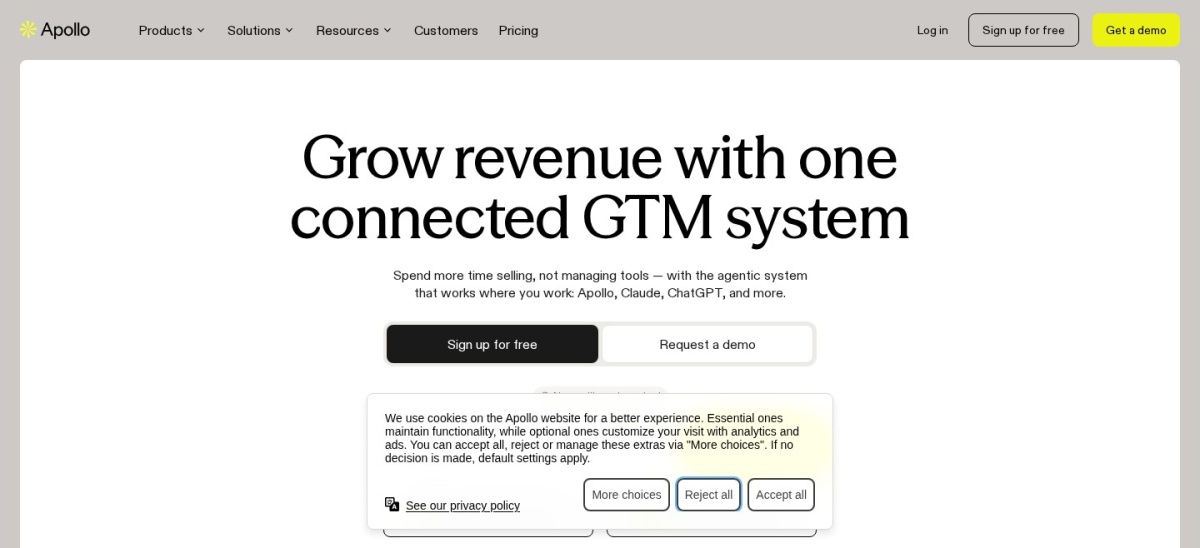
Apollo.io is the closest full replacement: contact data, sequences and a dialer from $49 a user a month, rated 4.7 out of 5 on G2.
Reply.io matches Apollo on price at $49 a month and adds LinkedIn, calls, SMS and WhatsApp steps in one sequence.
HubSpot Sales Hub is the cheapest paid start at $20 a seat a month, but sequences need the $100 Professional plan.
Instantly is the cheapest way to send volume: $37 a month per workspace with unlimited mailboxes and warm-up included.
Close starts at $9 a month for one user, and Streak is the only pick that runs its CRM inside Gmail.
Cheapest paid plans in this list run from $9 to $50 a user a month, and 4 of the 9 tools have a free plan.
How do you pick the right Yesware alternatives?
Yesware is mainly an inbox add-on for tracking opens, templates and reminders. A good replacement keeps those basics and adds the part Yesware lacks, which is usually sequences, a contact database or a real pipeline.
Start with where your reps live. If they work in Gmail all day, Streak keeps the CRM in the inbox, while Apollo, Reply and Klenty run as separate apps with Gmail and Outlook sync.
Price is quoted per user per month in this list, except Instantly, which charges per workspace. A $49 seat for one rep is cheap; the same seat for a team of 10 costs $490 a month, so check the plan that holds the features you need, not just the entry price.
Free plans help you compare the inbox feel before paying. Apollo, Reply, HubSpot and Streak all have one, while Lemlist, Klenty, Instantly, Close and Pipedrive offer a free trial instead. Our guide on growing an email list with WordPress covers the list-building side that feeds any of these tools.
Apollo.io is a sales platform that combines a 275M-contact database with email sequences, a dialer and basic deal tracking in one place. The free plan includes 2 sequences, and Basic at $49 a user a month billed annually adds unlimited sequences, more credits and A/B testing.
The trade off is credits. Basic includes 30,000 credits a year, and phone numbers cost 8 credits each, so heavy dialling burns through the allowance fast. It suits outbound teams that want prospecting data and outreach from one vendor instead of buying a database and a sequencer separately.
What we like
Database and sequences in one subscription
Free plan with 2 sequences to compare the workflow
Rated 4.7 out of 5 from nearly 10,000 G2 reviews
Dialer included, so calls stay in the same tool
Watch out for
Credit limits bite on high-volume phone work
Interface feels crowded once all modules are on
Contact accuracy varies by record, like any database
Professional at $79 adds AI features and more creditsVisit apollo.io
02
Reply.io
4.6/5on G2 (1,569 reviews, checked Nov 2026)
Paid from$49/mo
Best for multichannel sequences
ChannelsEmail, LinkedIn, calls, SMS
Email Volume plan$49/user/mo, annual
Free planYes, limited
Paid planEmail Volume, $49/user/mo
reply.io
Reply.io homepage, captured Nov 2026.
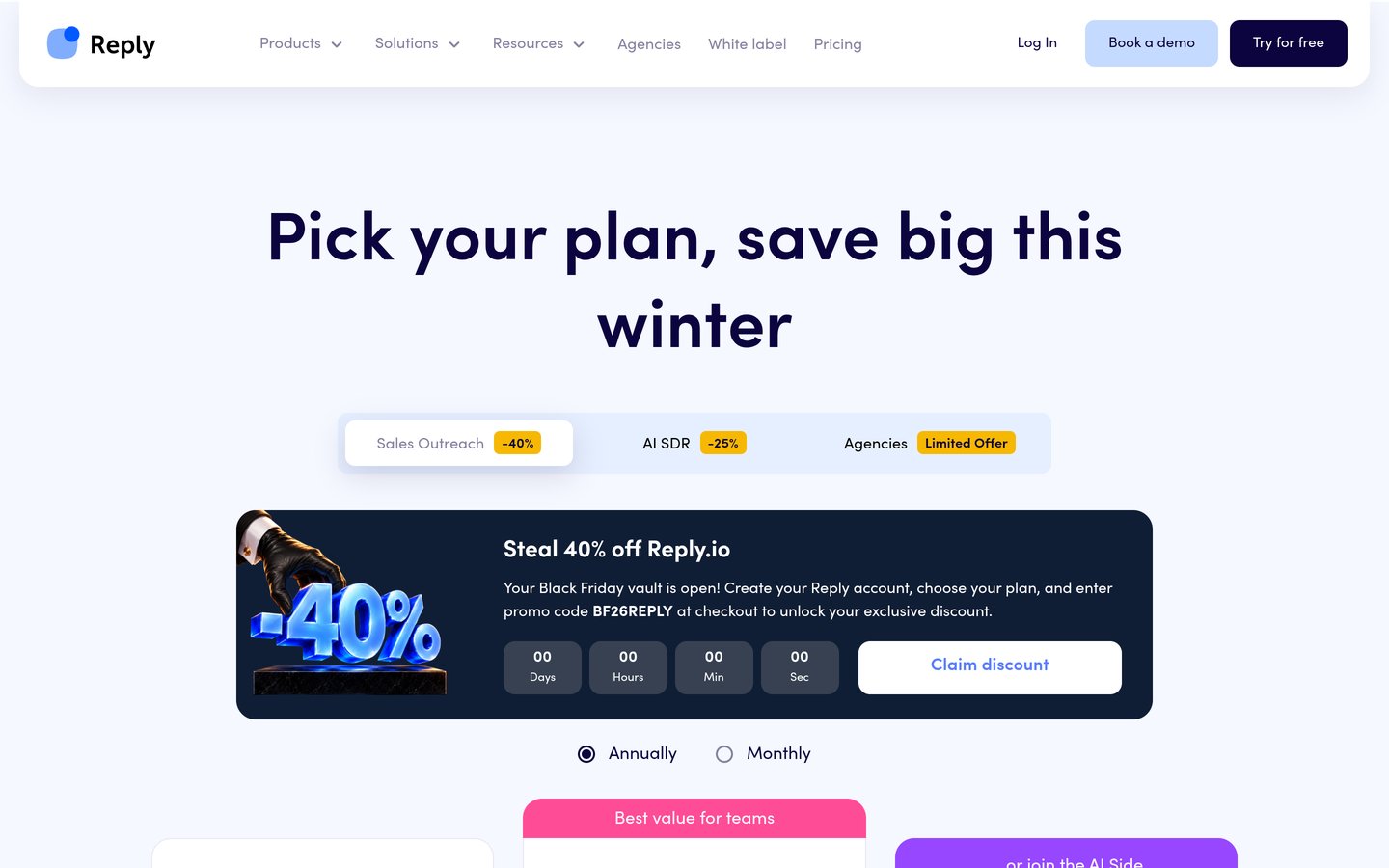
Reply.io is a sales engagement platform that runs one sequence across email, LinkedIn, calls, SMS and WhatsApp, with branches that change the next step based on a reply. Email Volume starts at $49 a user a month billed annually for 1,000 active contacts, with unlimited emails and mailboxes under fair use.
The trade off is add-ons. LinkedIn automation costs $69 a month per account on the email-only plan, and calls and SMS add $29 a user a month, so the real bill climbs past $49 fast. It suits teams that already sell across several channels and want the branching logic in one place.
What we like
True multichannel sequences with reply-based branches
AI SDR tier available on top of outreach
Rated 4.6 out of 5 from 1,569 G2 reviews
Warm-up and deliverability tools included
Watch out for
LinkedIn and calling are paid add-ons on the entry plan
Three-month minimum term reported by reviewers
Complex sequences take time to set up
Multichannel at $89 adds LinkedIn, calls and SMSVisit reply.io
03
HubSpot Sales Hub
4.4/5on G2 (13,913 reviews, checked Nov 2026)
Paid from$20/mo
Best for teams that want a CRM too
SequencesProfessional plan
Free CRMYes, up to 2 users
Email trackingYes
Paid planStarter, $20/seat/mo
hubspot.com
HubSpot Sales Hub homepage, captured Nov 2026.
HubSpot Sales Hub is the sales side of HubSpot, built on a free CRM with contact records, deal pipelines, email tracking and meeting scheduling. Starter costs $20 a seat a month and adds simple automation, goals and 500 calling minutes a month, with a free plan for up to 2 users.
The trade off is sequences. Real sequences need the Professional plan at $100 a seat a month, so a team switching from Yesware mainly for sequences pays five times the Starter price. It suits small teams that want tracking, templates and a CRM in one place and can live without full sequences at first.
Lemlist is a multichannel outreach platform known for personalised images and videos inside cold email, plus a built-in lead database and email warm-up. Email Starter costs $39 a user a month billed annually and covers email sequences, while Multichannel Expert at $99 adds LinkedIn and calls.
The trade off is that the cheapest plan is thin. The image builder and LinkedIn steps that make Lemlist stand out sit on the higher plans, so the $39 entry price buys a basic sequencer. It suits senders whose reply rates depend on standing out in the inbox rather than on volume.
Klenty is a sales engagement platform for small outbound teams, with email sequences, a parallel dialer, LinkedIn steps and CRM integrations in one app. The Starter plan costs $50 a user a month and covers personalised email outreach with unlimited inboxes on a single domain, plus a Gmail plugin.
The trade off is reporting. Reviewers praise the ease of use and the dialer, but note that reporting feels thin as a team grows, and the dialer is a separate paid line from $40 a user a month. It suits small teams that want Yesware-style sequencing with stronger calling built in.
Instantly is a deliverability-first cold email platform that charges per workspace instead of per seat. Growth costs $37 a month and includes unlimited email accounts and warm-up, 1,000 uploaded contacts and 5,000 emails a month, with an AI reply agent that sorts incoming replies by intent.
The trade off is scope. Instantly is built for email volume, so its lead database is a separate Credits add-on and LinkedIn or calling need another tool. It suits high-volume senders who run many inboxes and want deliverability controls without paying per seat.
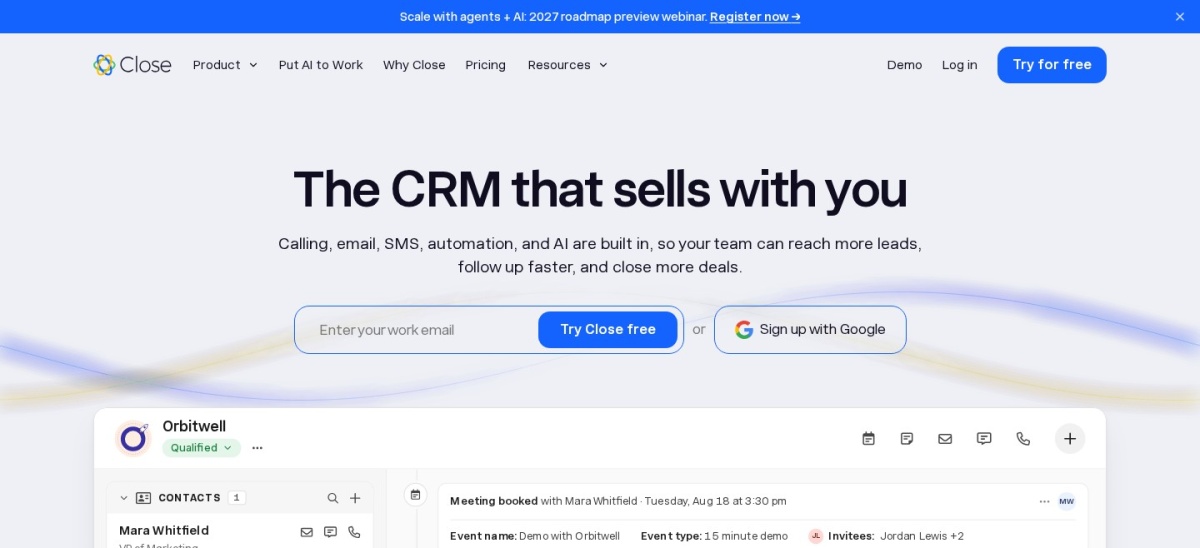
Close is a sales CRM built for teams that sell by phone and email, with calling, SMS, email sequences and pipelines in one fast interface. Solo costs $9 a month billed annually for one user with up to 10,000 leads, while Essentials at $35 a user a month billed annually is the team plan with unlimited leads.
The trade off is the Solo limit. One user and no workflows makes Solo a trial in all but name for a real team, and the power dialer needs the $99 Growth plan. It suits inside sales teams whose day is calls and follow-ups rather than bulk cold email.
What we like
Best built-in calling experience in this list
Rated 4.7 out of 5 from 2,089 G2 reviews
Fast interface that reps adopt quickly
Email, SMS and calls in one timeline
Watch out for
Solo plan is limited to one user, no workflows
Power dialer needs the $99 Growth plan
No WhatsApp integration, mobile app is limited
Essentials at $35 is the team plan with unlimited leadsVisit close.com
08
Streak
4.5/5on G2 (269 reviews, checked Nov 2026)
Paid from$49/mo
Best for teams that live in Gmail
Pro plan$49/user/mo, annual
Works inGmail and Google Workspace
Mail mergeUp to 1,500 a day
Free planYes, free email tools
streak.com
Streak homepage, captured Nov 2026.
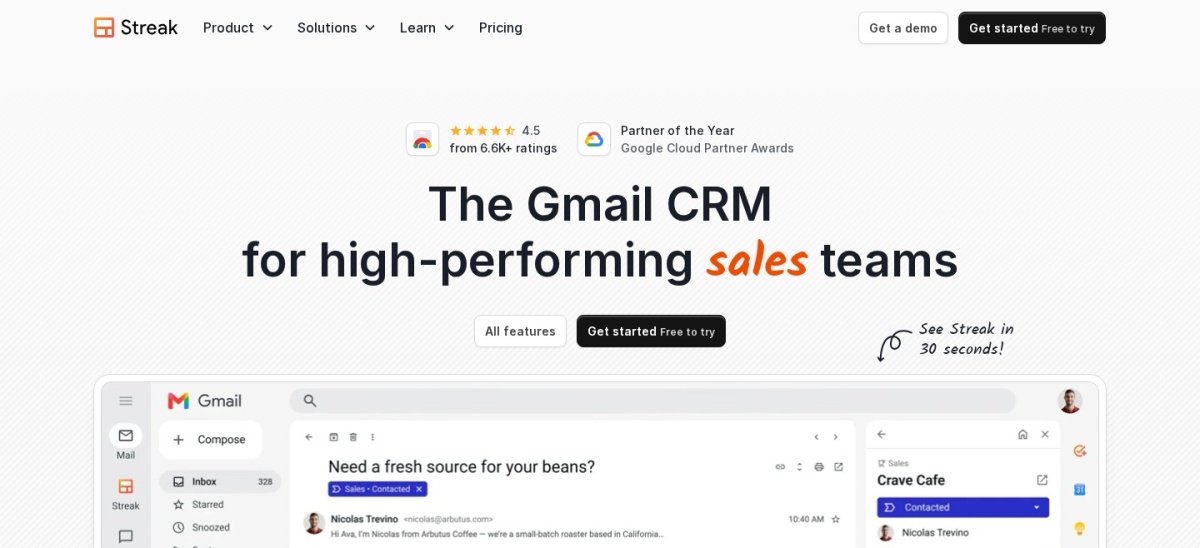
Streak is a CRM that runs inside Gmail, turning email threads into deals on pipelines with mail merge, email tracking and a sidebar next to the message. Pro costs $49 a user a month billed annually, and the free email tools cover tracking and scheduling without a pipeline.
The trade off is Gmail-only. Streak has no Outlook version, and reporting and automation feel thin as a team grows, so it fits simple pipelines rather than a full sales operation. It suits small teams that want the closest thing to Yesware inside Gmail, with a pipeline attached.
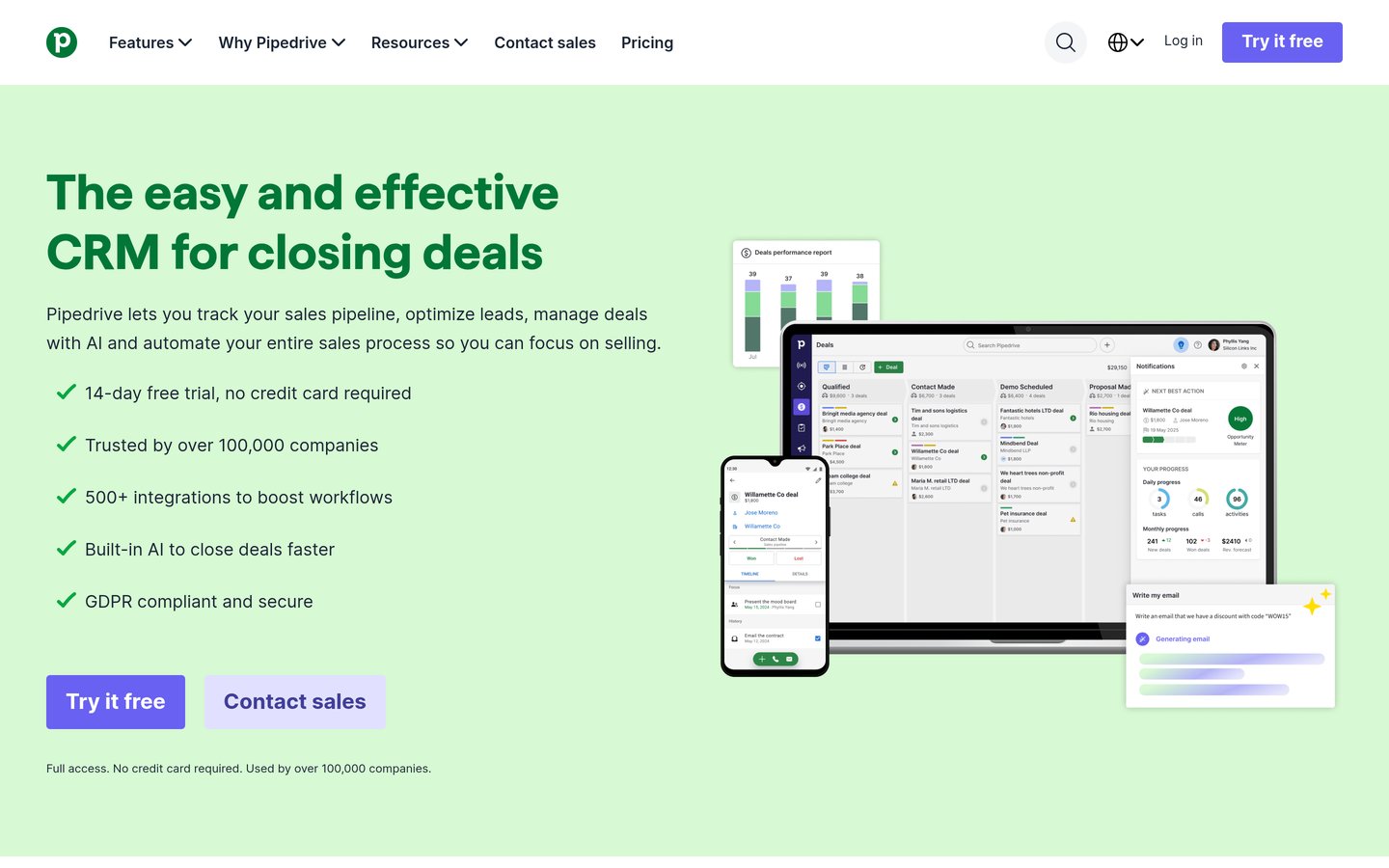
Pipedrive is a pipeline-first CRM for small sales teams, built around a visual kanban view of deals, with lead management and an AI assistant from the Lite plan. Lite costs $14 a user a month billed annually, or $24 billed monthly, and covers 3,000 open deals and more than 500 integrations.
The trade off is email. Two-way email sync, automations and sequences arrive on the Growth plan at $39 a user a month billed annually, so Lite alone is a pipeline, not a Yesware replacement. It suits teams that want a clear deal board first and will pay for the email tools on top.
Export your templates, snippets and sequence steps before you cancel. Most replacements import contacts easily, but templates and cadence logic usually need rebuilding by hand.
Check which inbox you use. Streak only works in Gmail, while Apollo, Reply, Klenty and HubSpot sync with Gmail and Outlook, so an Outlook team should rule Streak out on day one.
Run the free plan or trial with one rep first. Send a real sequence, check open and reply tracking against a known inbox, and confirm the CRM sync before moving the whole team.
How we chose
We started from the sales engagement and CRM tools most often named as Yesware replacements, then kept the 9 with published prices and a public G2 rating and review count.
Prices come from each vendor pricing page and G2 pricing listings, checked on 29 November 2026. Ratings and review counts come from G2 on the same day. Where a vendor shows a sale, the list shows the regular price.
We left out Outreach and Salesloft because neither publishes prices, so their cost cannot be compared fairly. No vendor paid for a place, and we do not claim to have used these tools ourselves.
How to choose a Yesware alternative
Start with the one Yesware job you cannot lose, then match the tool to it.
Name the job you are replacing. If it is open tracking only, a light tool like Streak is enough. If it is sequences, pick Apollo, Reply, Lemlist or Klenty.
Count the seats, not the headline price. Multiply the per-user price by your team size. Instantly charges per workspace, so it wins for large sending teams and loses for one rep.
Check the plan that holds your feature. Sequences, dialers and LinkedIn steps often sit one or two tiers above the entry price, as with HubSpot and Lemlist.
Trial it with one rep on real mail. Run a live sequence to a small list, check tracking and CRM sync, and only then move the team across.
FAQ
What is the best Yesware alternative in 2026?
Apollo.io is the best Yesware alternative for most teams. It pairs a 275M-contact database with email sequences and a dialer from $49 a user a month, and it is rated 4.7 out of 5 from 9,857 G2 reviews.
How much does a Yesware alternative cost?
Cheapest paid plans in this list run from $9 to $50 a user a month billed annually. HubSpot starts at $20 a seat, Pipedrive at $14, and Instantly at $37 per workspace, while Apollo and Reply both start at $49.
Is there a free Yesware alternative?
Yes. Apollo.io, Reply.io, HubSpot Sales Hub and Streak all have free plans, though each limits sequences, contacts or pipelines. Lemlist, Klenty, Instantly, Close and Pipedrive offer a free trial instead of a free plan.
Which Yesware alternative is best for small teams?
Apollo.io is the best fit for most small teams because its free plan covers a first sequence and Basic at $49 adds the database and dialer. Streak suits Gmail-only teams of one or two, and HubSpot fits teams that also need a free CRM.
Which Yesware alternative is best for beginners?
Streak is the easiest to start with because it lives inside Gmail and needs no new app to learn. Apollo.io is the next step up, with a free plan and a clear sequence builder, while Klenty is praised for easy setup.
Apollo.io vs Reply.io: which is better?
Apollo.io wins if you need contact data, because its 275M-contact database is built in. Reply.io wins if you sell across channels, because one sequence can mix email, LinkedIn, calls, SMS and WhatsApp with reply-based branches.
Does HubSpot Sales Hub replace Yesware?
Partly. HubSpot covers email tracking, templates and pipelines from $20 a seat a month, but full sequences need the Professional plan at $100 a seat. Teams that need sequences on day one should pick Apollo.io or Reply.io instead.
SaaS SEO and WordPress specialist with about 8 years of experience. Rakib compares WordPress plugins, themes, hosting and software using public pricing, documentation and user reviews. See how we rank.