Salesforce Health Cloud is what CRM software is the best for hospitals that run large care teams, with patient records, care plans and EHR links in one place. HubSpot suits smaller clinics on a budget, and Zoho CRM is the cheapest paid option for small practices.
How we make this list: we compare pricing pages, product documentation and public user reviews, then re-check every price before each update. No product paid for a place. Disclosure.
Salesforce Health Cloud is the only pick built for care plans, patient timelines and EHR data from the start.
HubSpot is the easiest start for small clinics, with a free plan for two users and paid seats from $20 a month.
Freshsales is the cheapest paid CRM here at $9 a user a month, with a built-in phone and free plan for three users.
Zoho CRM gives the most features per dollar at $14 a user a month, but setup takes longer than Pipedrive or HubSpot.
Keap costs $249 a month, so it only makes sense for small practices that want CRM plus marketing automation in one place.
How do you choose what CRM software is the best for hospitals?
Hospitals need a CRM that treats the patient as the record, not the deal. Appointment history, referrals, care plans and consent should sit on one timeline that every team can read.
Privacy rules shape the choice more than features do. A hospital CRM must support HIPAA-compliant handling, role-based access and audit trails, and vendors should state that support plainly.
Price per user hides the real cost. Implementation, EHR integration and training often cost more than the first year of seats, so ask for the full first-year figure before signing.
Small clinics can start simple. A general CRM with custom fields and pipelines covers referrals and follow-ups well until patient volumes or compliance needs force a healthcare-specific platform.
Salesforce Health Cloud homepage, captured Nov 2026.
Salesforce Health Cloud is a healthcare CRM built around the patient, not the sale. It brings clinical and non-clinical data into one Patient 360 record, with care plans, care-team tasks and EHR links using HL7 and FHIR standards.
The trade off is price and setup. Enterprise starts at $350 a user a month billed annually, and configuration usually needs experienced Salesforce staff or a partner. It suits large hospitals and health systems that can fund the rollout.
HubSpot is the easiest CRM for a small clinic to start with. The free plan covers two users and 1,000 contacts with deals, tasks, email tracking and a meeting scheduler, and paid Starter seats cost $20 a month.
The trade off is the price curve. Professional jumps to $90 a seat a month billed annually, and HIPAA-compliant handling needs a paid plan with a signed agreement. It suits clinics that want marketing and CRM on one record.
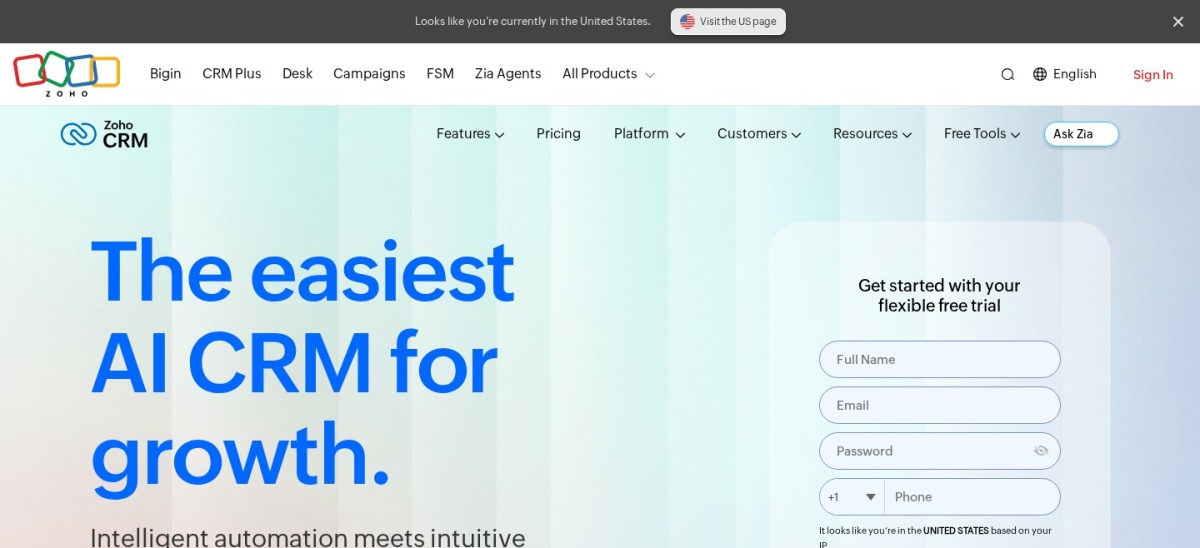
Zoho CRM is a low-cost CRM that covers leads, contacts, deals and follow-ups for small practices. The free edition supports three users, while Standard costs $14 a user a month billed annually and adds workflows, forecasting and custom reports.
The trade off is ease of use. Setup and customization take longer than HubSpot or Pipedrive, and support quality draws mixed reviews. It suits budget-conscious clinics that want deep features for little money.
What we like
Lowest cost for the features included
Free plan for three users
Wide Zoho suite and 500+ integrations
Watch out for
Steeper learning curve than rivals
Support draws mixed reviews
Professional adds more automation at $23/user/moVisit zoho.com
04
Freshsales
4.5/5on G2 (1,244 reviews, checked Nov 2026)
Paid from$9/mo
Best budget CRM with a built-in phone
Free planUp to 3 users
Paid entryGrowth, $9/user/mo
Built-in phoneDialer and call recording
AI scoringFreddy AI from Growth
freshworks.com
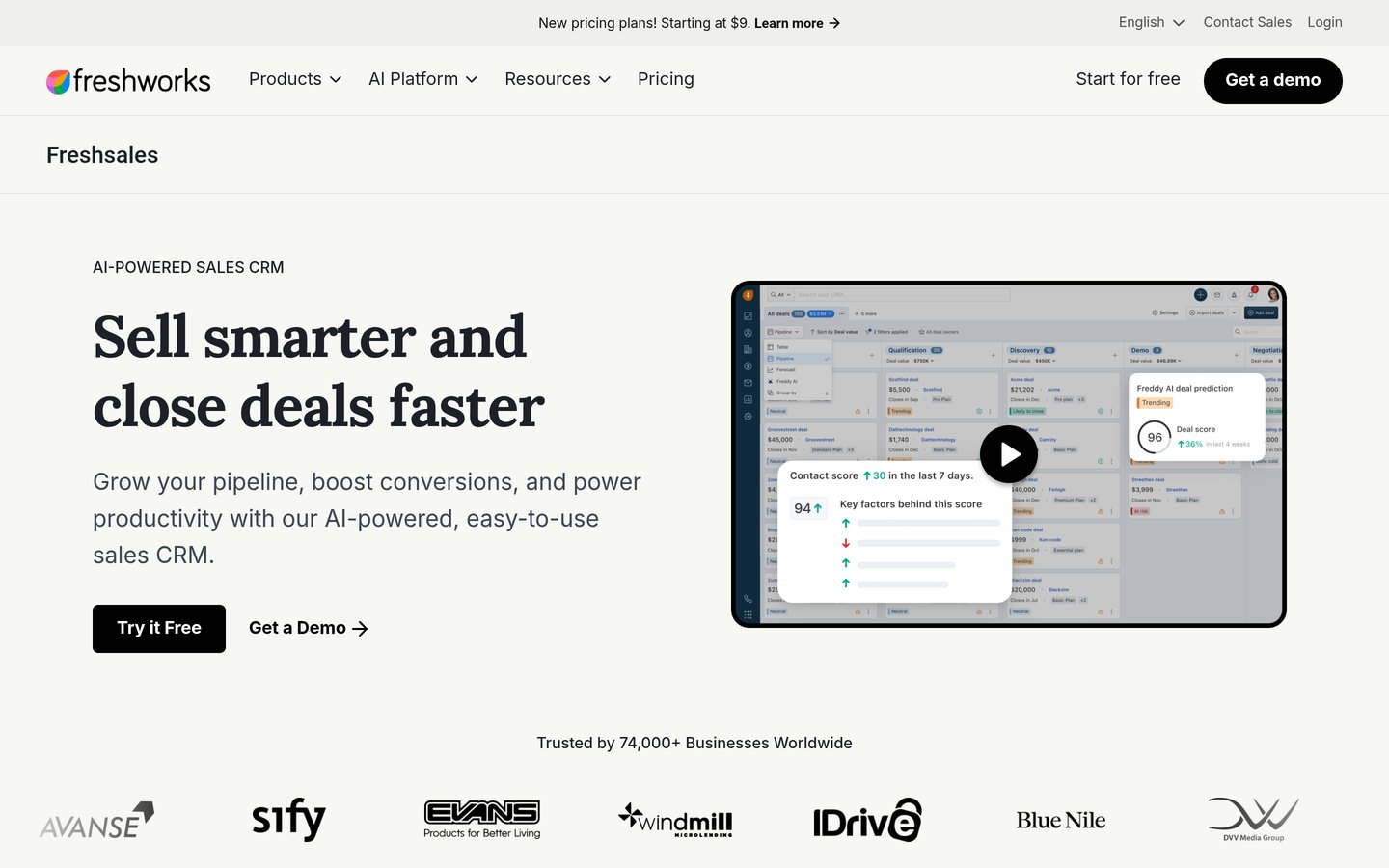
Freshsales homepage, captured Nov 2026.
Freshsales is Freshworks' sales CRM with Kanban deal boards, two-way email sync and a built-in phone. Its free plan supports up to three users, while Growth costs $9 a user a month billed annually and adds workflows, call recording and AI lead scoring.
The trade off is healthcare depth. It has no patient-specific features, so clinics must model referrals and follow-ups with custom fields. It suits small practices that call patients often and want the lowest paid price.
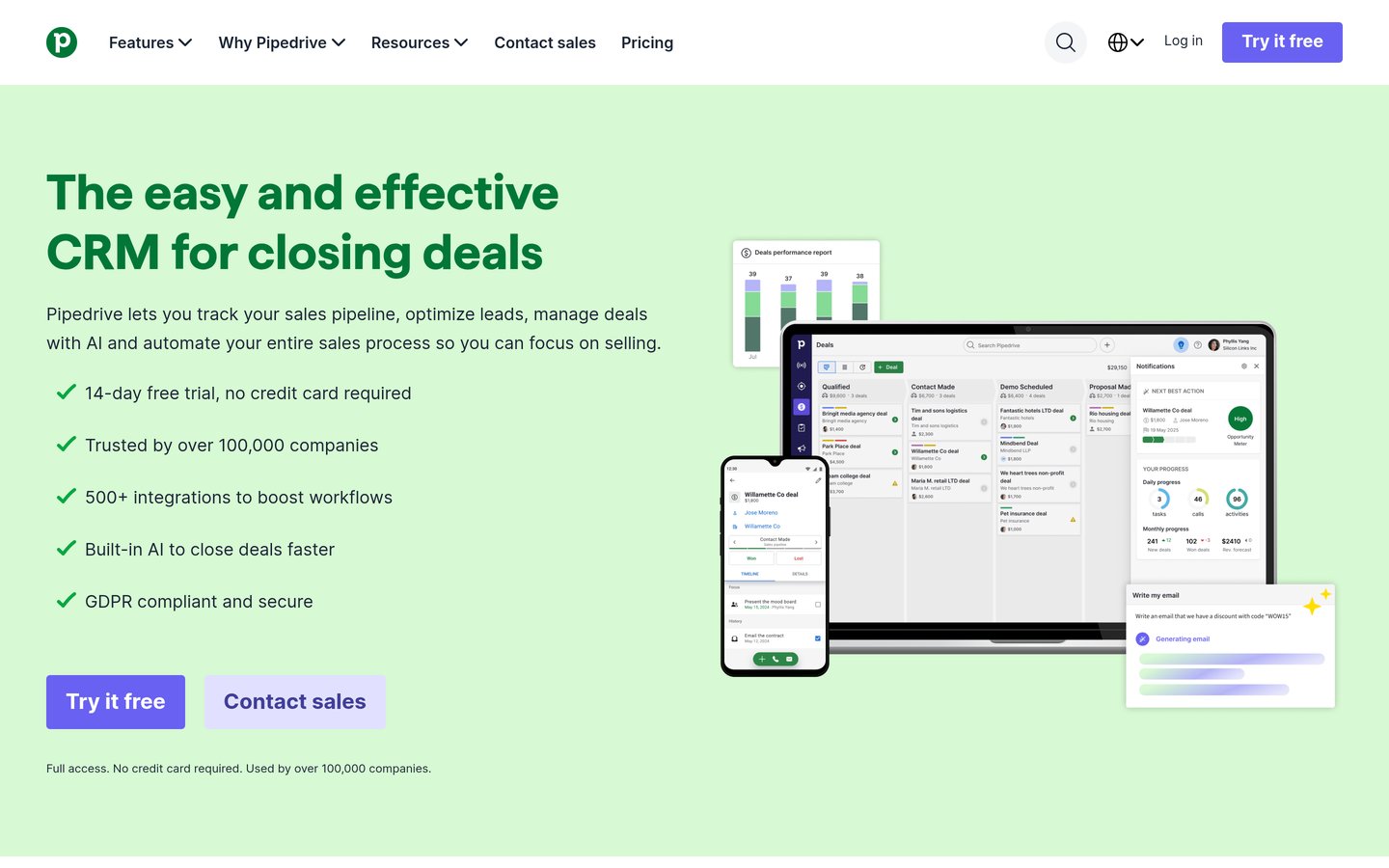
Pipedrive is a sales-focused CRM built around visual deal pipelines, activity reminders and quick follow-ups. Lite costs $14 a seat a month billed annually and includes customizable pipelines, calendar sync and an AI report builder.
The trade off is email. Two-way email sync and sequences need Growth at $39 a seat a month, and there is no free plan. It suits clinics that track referrals as a pipeline and want the simplest daily workflow.
Insightly is a unified CRM that pairs contact and pipeline management with built-in project tracking. Plus costs $29 a user a month billed annually and covers custom objects, workflow automation and reporting across sales and delivery.
The trade off is price for the basics. It costs more than Zoho or Freshsales while offering fewer healthcare features, and there is no free plan. It suits clinics that track care programs as projects after intake.
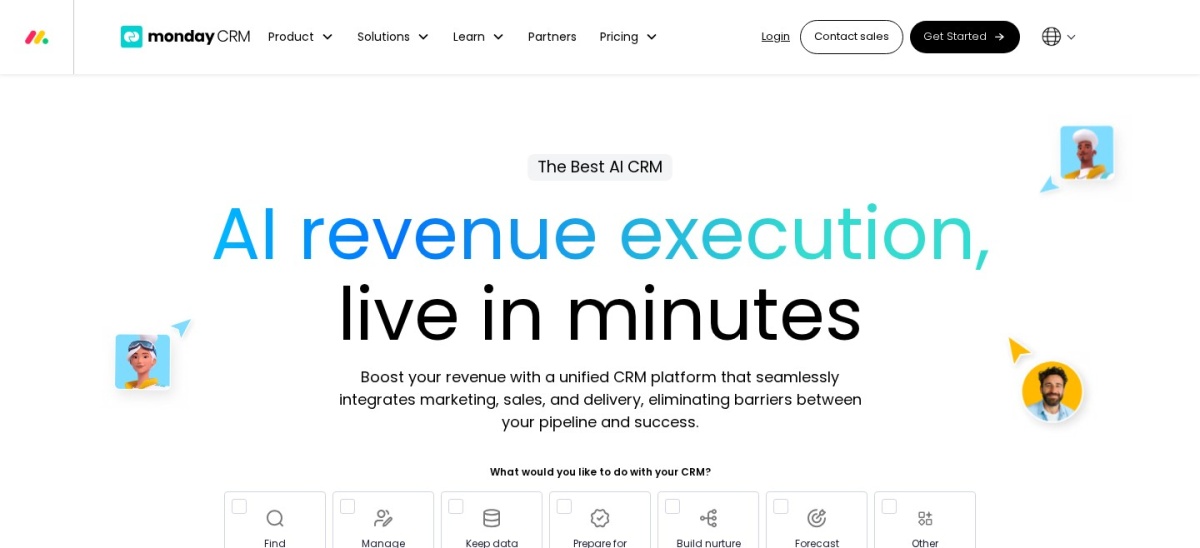
monday sales CRM is a visual CRM built on boards, with pipelines, contact records and automations in the same workspace as projects. Basic costs $12 a user a month billed annually, with a three-seat minimum.
The trade off is the seat minimum. A solo clinic pays for three seats, and automation and forecasting sit on higher plans. It suits teams that already run work on monday.com and want sales beside it.
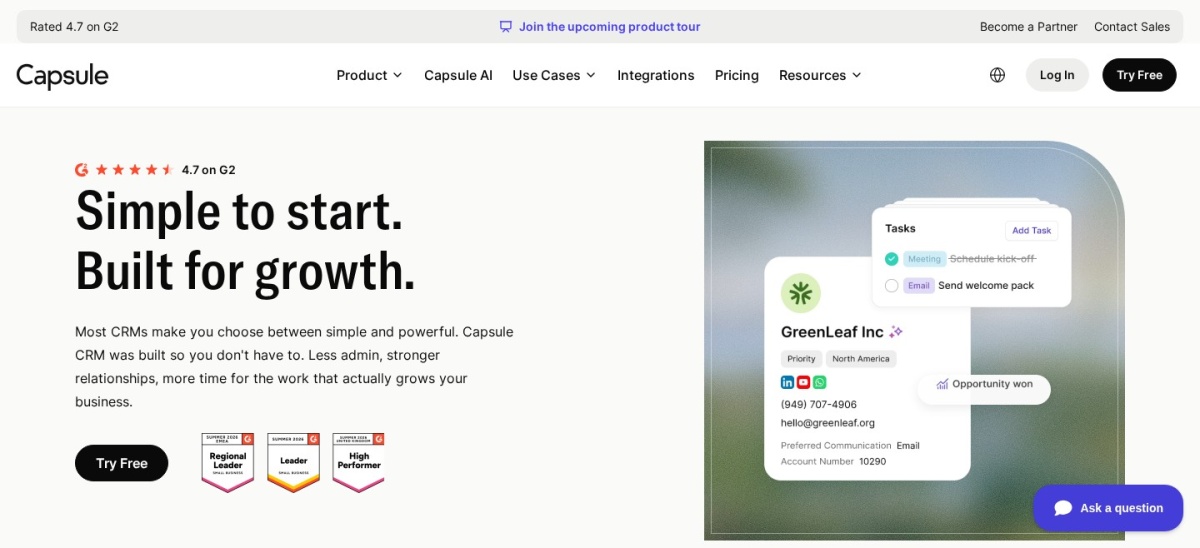
Capsule is a lightweight CRM that keeps one record per person or company with history, emails, tasks and custom fields. Its free tier supports two users and 250 contacts, while Starter costs $18 a user a month billed annually.
The trade off is depth. Automation and multiple pipelines need Growth at $36 a user a month, and reporting stays basic. It suits small clinics that want a clean, simple record without a long setup.
Keap is an all-in-one sales and marketing platform for small businesses, combining CRM, email marketing, appointments and payments. Pro costs $249 a month billed annually for two users and 1,500 contacts.
The trade off is cost and weight. It is the most expensive small-business option here, and automations take time to learn. It suits small practices that want follow-up sequences and payments in one tool.
We started from CRM platforms with a healthcare edition or a strong record in clinics and hospitals, then kept those with a published price and a G2 rating from real users.
Prices come from each vendor's pricing page, checked on 29 November 2026, using regular annual billing rates. Ratings and review counts come from G2 on the same day. Where a vendor shows a sale, the list shows the regular price.
We left out tools with no published price and no verifiable rating. No vendor paid for a place, and we do not claim hands-on testing for this list.
How to choose a CRM for a hospital
Start with the patient journeys your teams run every day, then judge each CRM on that work.
List the patient journeys first. Write down referral intake, appointment reminders, follow-ups and billing queries before comparing features, so the CRM is judged on real work.
Check HIPAA support in writing. Ask the vendor for its business associate agreement terms and audit trail before a trial, not after rollout.
Price the first year, not the first month. Add implementation, EHR integration and training to the seat price, and check what the second year costs when any discount ends.
Trial with one clinic, not the whole hospital. Run a single department on the shortlist for a month and measure follow-up speed and missed referrals before rolling out.
FAQ
What is the best CRM software for hospitals in 2026?
Salesforce Health Cloud is the best CRM software for hospitals with large care teams, because it is built around patient records, care plans and EHR data. Smaller clinics usually do better with HubSpot or Zoho CRM at a much lower price.
How much does a hospital CRM cost?
Prices in this list run from $9 a user a month for Freshsales to $350 a user a month for Salesforce Health Cloud. Implementation and EHR integration add to the bill, so budget for the first year, not just the monthly seat price.
Is HubSpot HIPAA compliant?
HubSpot offers HIPAA-compliant handling on paid plans when a business associate agreement is signed and the right settings are used. Check the current terms with HubSpot before storing patient health information in it.
Can a small clinic use a general CRM?
Yes. A small clinic can run referrals, reminders and follow-ups in HubSpot, Zoho CRM or Pipedrive with custom fields and pipelines. A healthcare-specific CRM becomes worth it when patient volumes grow or compliance needs get stricter.
What is the cheapest CRM for a hospital?
Freshsales is the cheapest paid option here at $9 a user a month billed annually, with a free plan for up to three users. Zoho CRM follows at $14 a user a month, and HubSpot starts free for two users.
Salesforce Health Cloud or HubSpot for a hospital?
Pick Salesforce Health Cloud for large hospitals that need care plans, patient timelines and EHR links. Pick HubSpot for smaller clinics that want a fast setup, marketing tools and a free starting plan.
SaaS SEO and WordPress specialist with about 8 years of experience. Rakib compares WordPress plugins, themes, hosting and software using public pricing, documentation and user reviews. See how we rank.