Modash is the strongest way technology can help your influencer marketing campaign, with a 4.9/5 G2 rating and AI search across Instagram, TikTok and YouTube. Heepsy is the best low-cost start at $69 a month, and GRIN covers gifting and payouts for ecommerce brands.
How we make this list: we compare pricing pages, product documentation and public user reviews, then re-check every price before each update. No product paid for a place. Disclosure.
Modash has the highest G2 rating here at 4.9/5, though from only 22 reviews.
Afluencer is the cheapest paid start at $49 a month, with a free plan for posting a first collab.
Heepsy gives 500 free search results a month, and Starter costs $69 a month billed annually.
GRIN is the only pick with a free plan that includes gifting, with Starter at $200 a month plus a 10% wallet fee.
Paid plans in this list run from $49 a month to $12,000 a year for SARAL Starter.
In what ways can technology help your influencer marketing campaign?
Technology turns influencer marketing from manual outreach into a repeatable process. Discovery tools search millions of creator profiles by niche, audience and engagement, so a shortlist that once took weeks now takes an afternoon.
Vetting is where the tools earn their keep. Audience checks flag fake followers and mismatched demographics before money changes hands, which matters because follower counts alone say little about who actually sees a post.
Campaign software then keeps the work organised. Briefs, contracts, content approvals, gifting and payments sit in one place, and affiliate links and discount codes tie each creator back to sales. Our guide on starting affiliate marketing on WordPress explains how tracking links work.
The right starting point depends on budget and volume. Free discovery and marketplaces cover a first campaign, while full platforms pay off once a brand runs creators every month.
The 9 best ways technology can help your influencer marketing campaign
01
Modash
4.9/5on G2 (22 reviews, checked Nov 2026)
Starts at$199/mo
Best overall tech for influencer campaigns
NetworksInstagram, TikTok, YouTube
Paid planEssentials, $199/mo
AI searchYes
Audience checksFake follower + overlap
modash.io
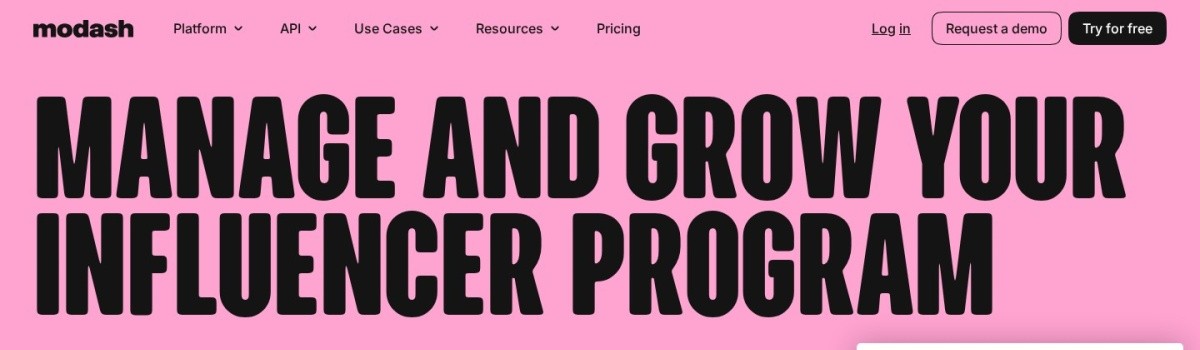
Modash homepage, captured Nov 2026.
Modash is an influencer platform that covers discovery, audience vetting, outreach, campaign tracking and creator payments in one login. Its AI search finds creators by niche and audience, and fake-follower and audience-overlap checks flag accounts that do not match your buyers.
The trade off is price. Essentials costs $199 a month billed annually, with a $99 usage-based Basic tier for lighter use, and the jump to the Performance plan is steep. It suits teams that want one tool from first search to final payout.
What we like
Highest G2 rating in this list at 4.9/5
AI search plus fake-follower checks
Discovery, outreach, tracking and payments in one place
Heepsy is an influencer discovery and campaign platform covering 20M+ creators across Instagram, TikTok, YouTube and LinkedIn. The free plan includes 500 search results, 10 advanced profiles and one project a month, with audience filters and lookalike discovery.
The trade off is tracking depth. Starter costs $69 a month billed annually, or $89 with monthly billing, and tracks only five creators. It suits small brands that want affordable discovery and outreach in one place.
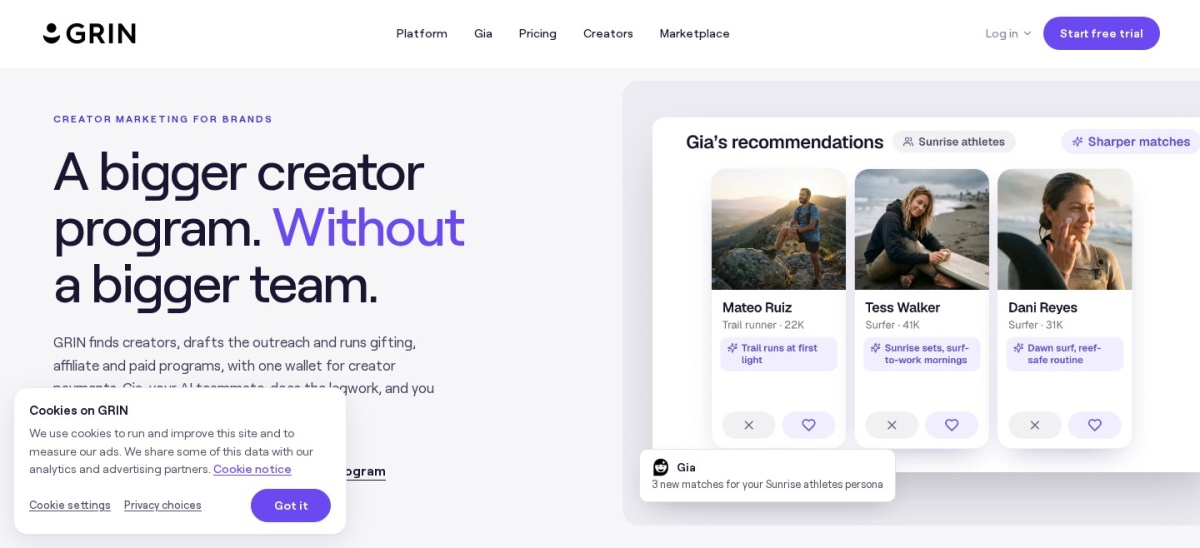
GRIN is a creator marketing platform built for ecommerce brands, with a marketplace of more than 700,000 creators and an AI agent called Gia that finds creators, drafts outreach and screens applications. The free plan includes 2 live campaigns, 10 gifts in total and 1,200 creator searches a month.
The trade off is the wallet fee. Starter costs $200 a month and adds a 10% fee on money deposited to pay creators, while the free plan charges 20%. It suits ecommerce brands that gift products and run many creator partnerships.
What we like
Free plan with a real creator marketplace
Month-to-month plans with no annual contract
AI agent drafts outreach and screens applicants
Watch out for
10% fee on wallet deposits on Starter
Free plan charges a 20% wallet fee
Built for ecommerce, less so for services
Starter adds unlimited campaigns and 100 gifts a monthVisit grin.co
04
HypeAuditor
4.6/5on G2 (264 reviews, checked Nov 2026)
Paid from$299/mo
Best for vetting creators before you pay
Free planYes, limited reports
Paid planBusiness, $299/mo
NetworksInstagram, TikTok, YouTube
Fraud checkAudience quality score
hypeauditor.com
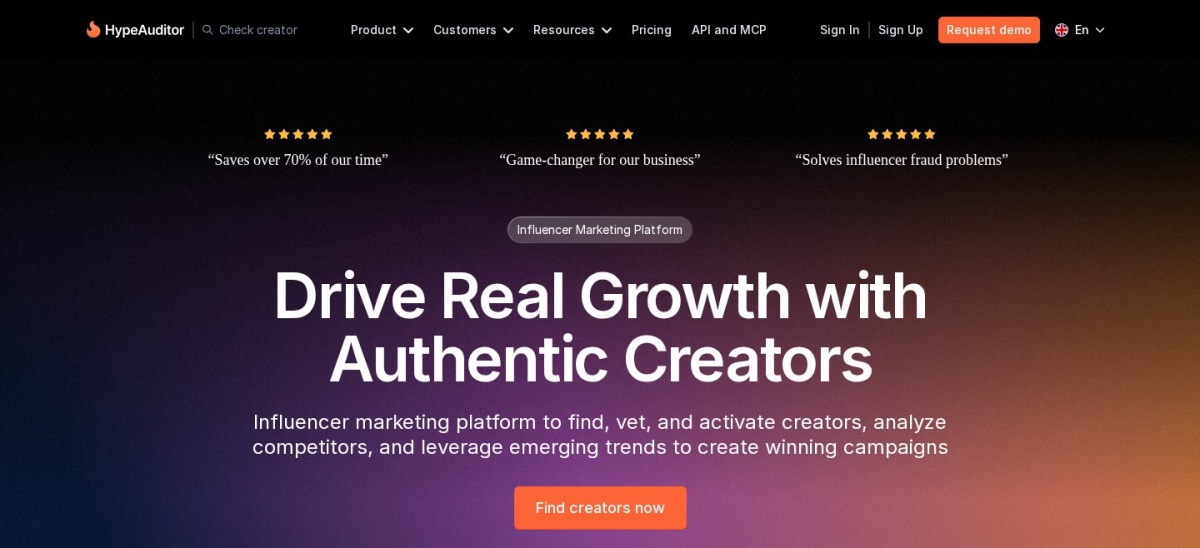
HypeAuditor homepage, captured Nov 2026.
HypeAuditor is an analytics platform for vetting influencers before a brand spends on them. It scores audience quality, flags fake followers and suspicious engagement, and reports on demographics, interests and brand safety across Instagram, TikTok and YouTube.
The trade off is that it is a vetting tool, not a campaign manager. Business costs $299 a month, and outreach, contracts and payments need another tool. It suits brands that already find creators and need proof an audience is real.
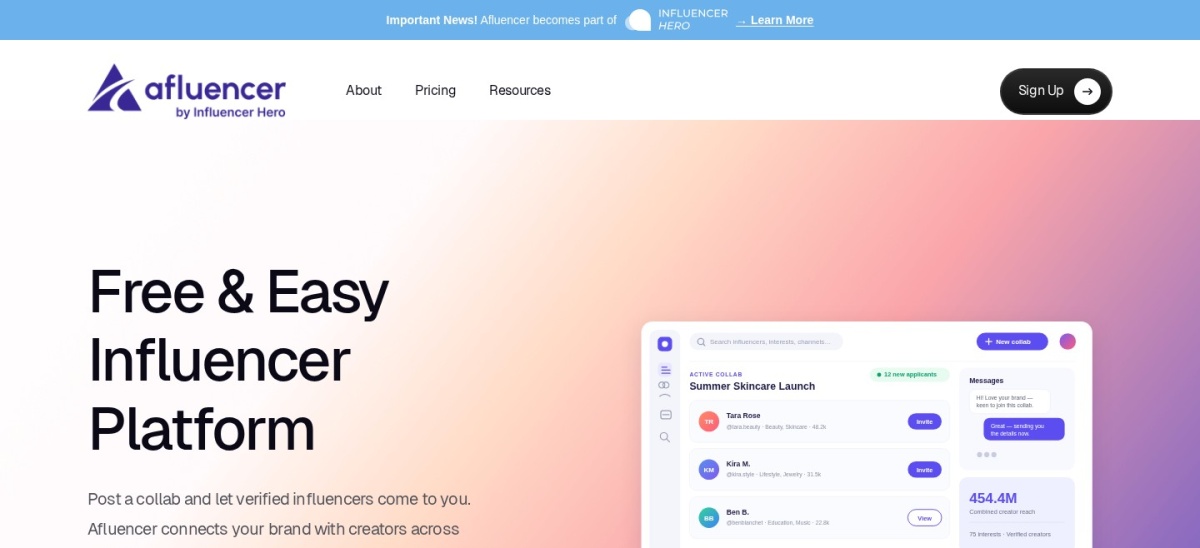
Afluencer is a marketplace where brands post collaborations and creators apply, covering nano creators through to larger names plus UGC makers. The free plan lets a brand set up a profile and post a collab, and VIP at $49 a month adds priority support and more outreach.
The trade off is depth. Afluencer is built for finding creators, not for deep sales attribution or campaign analytics. It suits small brands and first campaigns that need creators quickly at a low monthly cost.
What we like
Cheapest paid plan in this list at $49 a month
Largest review base here with 737 G2 reviews
Free plan lets brands post a first collab
Watch out for
No deep sales attribution or analytics
Free plan limits daily applications
Better for finding creators than managing campaigns
4.5/5on Trustpilot (503 reviews, checked Nov 2026)
Paid from$249/mo
Best for one-off UGC and sponsored posts
Free planYes, 10% fee
Paid planPro, $249/mo annual
Hiring fee10% per order
Creator count1.2M+ vetted
collabstr.com
Collabstr homepage, captured Nov 2026.
Collabstr is a self-serve marketplace where brands browse 1.2M+ vetted creators with prices published upfront and hire through escrow payments. The free plan covers search and direct hire with a 10% fee per order, and creators list fixed-price content packages across Instagram, TikTok and YouTube.
The trade off is the fee stack. Pro costs $249 a month billed annually and still charges the 10% hiring fee, while creators pay a separate 15% fee on payouts. It suits one-off UGC orders and small campaigns that want transparent creator prices.
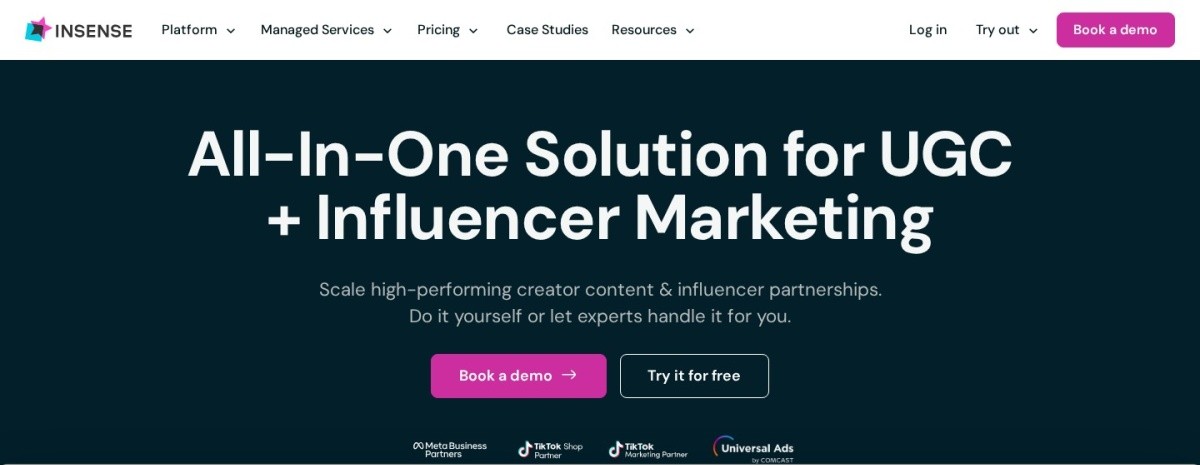
Insense is a UGC and influencer marketplace that handles briefs, contracts, usage rights, payments and Meta Partnership Ads in one flow. The Brand plan costs $500 a month billed quarterly and includes unlimited campaigns and creator hiring, with a 10% marketplace fee on creator payments.
The trade off is the entry cost and billing. There is no free plan or monthly billing, and a $650 Trial Month auto-upgrades to Brand unless cancelled. It suits DTC brands that run paid social every month and need ad-ready UGC at volume.
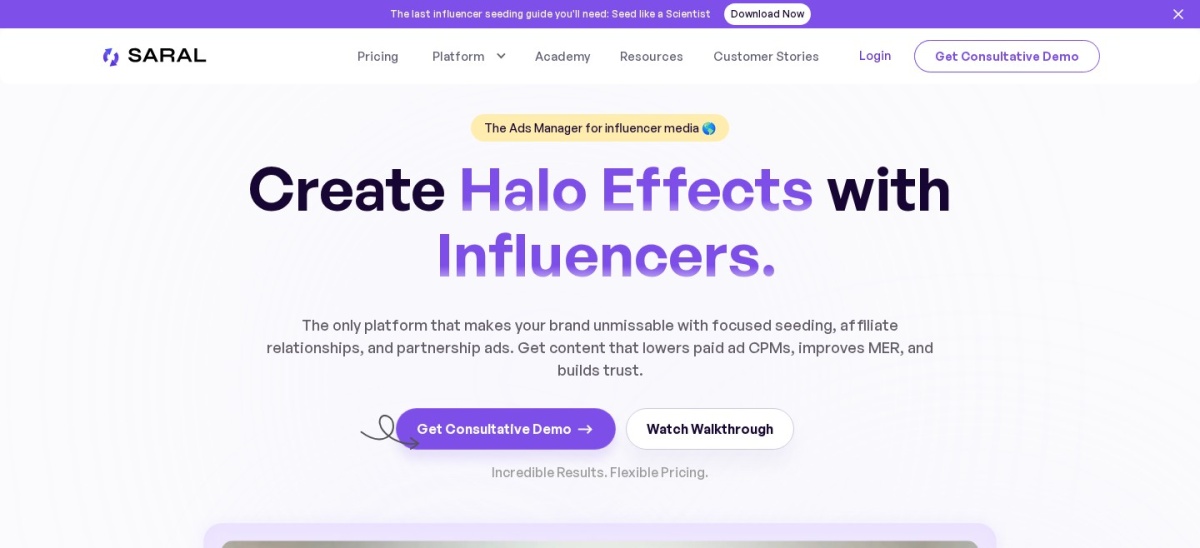
SARAL is an influencer platform built for small-to-mid DTC and ecommerce brands, with creator discovery, outreach, seeding, affiliate tracking and reporting in one place. Its AI assistant, SIA, helps with discovery and outreach, and Starter covers 100 active partnerships and one seat.
The trade off is commitment. Starter costs $12,000 a year or $3,600 a quarter, with no monthly billing, and a free trial only starts after a demo call. It suits lean ecommerce teams that want simple outreach and gifting without enterprise weight.
What we like
Highest-rated AI outreach here at 4.8/5
Transparent quarterly and annual pricing
No commission cut on creator sales
Watch out for
No monthly billing; smallest step is $3,600 a quarter
Trial only starts after a demo call
Discovery covers Instagram, TikTok and YouTube only
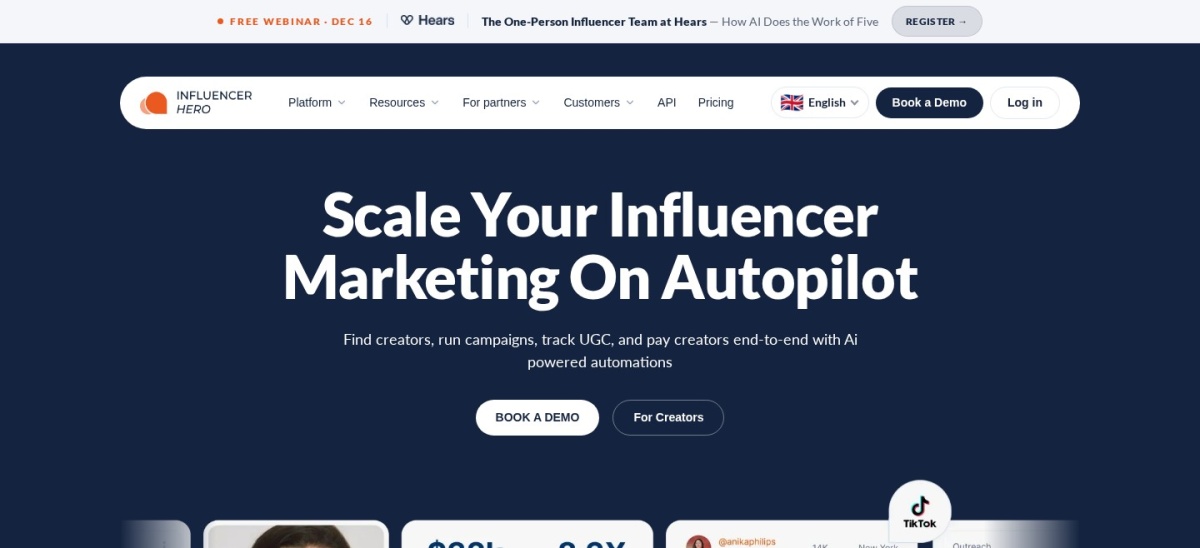
Influencer Hero is an all-in-one influencer platform covering discovery across a 450M+ creator database, outreach, gifting, affiliate tracking and payouts. Standard costs $649 a month for one seat and includes 1,000 monthly reach-outs, tracking for 200 UGC items and up to 20 automated payouts.
The trade off is price. Every plan carries a three-month minimum commitment, and pricing is per brand, so agencies pay the plan rate for each client. It suits growing DTC brands that run high-volume outreach every month.
What we like
450M+ creator database across three networks
1,000 monthly reach-outs on Standard
Discovery, gifting, affiliates and payouts in one login
At the discovery stage, search filters and AI matching replace scrolling and spreadsheets. A brand can filter by niche, location, audience size and engagement rate, then save the shortlist in a CRM instead of a shared sheet.
At the vetting stage, audience data does the work a gut feeling cannot. Fake-follower scores, audience overlap and engagement checks show whether a creator's followers match the brand's buyers.
At the management stage, automation keeps dozens of creators on track. Outreach sequences, content approvals, gifting and payouts run from one dashboard, so nothing stalls in an inbox.
At the measurement stage, tracking links and codes connect each post to clicks and sales. That is what turns a one-off campaign into a program a brand can repeat with confidence.
How we chose
We started from the influencer platforms most often recommended for discovery, vetting, outreach, UGC and payments, then kept the nine with a public rating and a published or directory-listed price.
Prices come from each vendor's pricing page or vendor-provided G2 pricing, checked on 29 November 2026. Ratings and review counts come from G2 or Trustpilot on the same day. Where a vendor shows a sale, the list shows the regular price.
We left out tools with no public rating and quote-only enterprise platforms with no list price. No vendor paid for a place, and this list is based on pricing pages, documentation and public reviews, not on running the tools ourselves.
How to choose technology for your influencer marketing campaign
Start with the job you need done first, then match the tool to your budget and volume.
Name the bottleneck first. If finding creators is the slow part, start with a discovery tool; if vetting or payments eat the time, pick a platform that covers those.
Try the free tier before paying. Heepsy, Afluencer, GRIN, HypeAuditor and Collabstr all have free plans, so run one real campaign on free before committing to a subscription.
Check the fees on top of the subscription. Marketplace fees, wallet fees and creator payouts add up fast, so add them to the monthly price before comparing tools.
Vet three creators with the tool before scaling. Run audience checks on a small shortlist first, and only expand the program once the reports match the results you see.
FAQ
How can technology help your influencer marketing campaign?
Technology helps by speeding up discovery, vetting, outreach and reporting. Tools like Modash search millions of creators and check audiences for fake followers, while platforms such as GRIN and SARAL automate outreach, gifting and payments in one place.
What is the best technology tool for influencer marketing in 2026?
Modash is the strongest overall pick, rated 4.9 out of 5 on G2, because it covers discovery, vetting, outreach and payments. Heepsy is the best low-cost start at $69 a month, and Afluencer is the cheapest paid option at $49 a month.
How much does influencer marketing technology cost?
Entry prices in this list run from $49 a month for Afluencer to $12,000 a year for SARAL Starter. Five of the nine tools have free plans, and most paid plans sit between $69 and $500 a month.
Is there a free way to find influencers with technology?
Yes. Heepsy gives 500 free search results a month, Afluencer lets brands post a collab for free, and GRIN, HypeAuditor and Collabstr all have free plans with real features.
Modash vs Heepsy: which is better for a small brand?
Heepsy is better for most small brands because it starts free and Starter costs $69 a month billed annually. Modash is the stronger tool overall with a 4.9 out of 5 G2 rating, but Essentials costs $199 a month and suits teams running creators every month.
Do I still need an agency if I use these tools?
Not always. The tools handle discovery, vetting, outreach and payments, which covers most of what an agency does for a small program. An agency still helps when a campaign needs creative strategy, negotiation or always-on management across many creators.
SaaS SEO and WordPress specialist with about 8 years of experience. Rakib compares WordPress plugins, themes, hosting and software using public pricing, documentation and user reviews. See how we rank.