Amwell is the best virtual care software for hospitals, with one Converge platform for scheduled visits, urgent care, behavioral health and automated care programs. Teladoc Health suits systems that want one bedside device for virtual nursing and telestroke, while eVisit fits health systems that need deep EHR integration.
How we make this list: we compare pricing pages, product documentation and public user reviews, then re-check every price before each update. No product paid for a place. Disclosure.
Amwell is the best pick for health systems that want one virtual care platform, with about 90 million members covered.
Teladoc Health's Solo platform runs virtual nursing, telestroke and AI monitoring from one bedside device.
Doxy.me and VSee both start at 29 dollars a month, and both offer a genuinely free plan.
Six of the nine tools sell by custom quote, so budget for a sales process and implementation fees.
Mend leads on ratings at 4.7 out of 5 on G2 from 137 reviews, while Coviu's 4.9 rests on only 12.
What should hospitals look for in virtual care software?
Start with where care happens. Amwell, eVisit and Mend serve outpatient and system-wide visits, while Teladoc Health's Solo platform is built for the bedside, with virtual nursing, telestroke and observation.
Price transparency is rare in this category. Doxy.me, VSee and SimplePractice publish prices from 29 dollars a month, while the other six sell by quote. Our telehealth software guide compares the wider market.
Check EHR integration before anything else. Amwell embeds in the EHR, eVisit is API-first, and VSee integrates with Epic and Cerner, so the visit data lands in the record without double entry.
Small hospitals should start with a free plan. Doxy.me and VSee both offer free HIPAA-compliant video visits, so a team can test virtual care before any sales call.
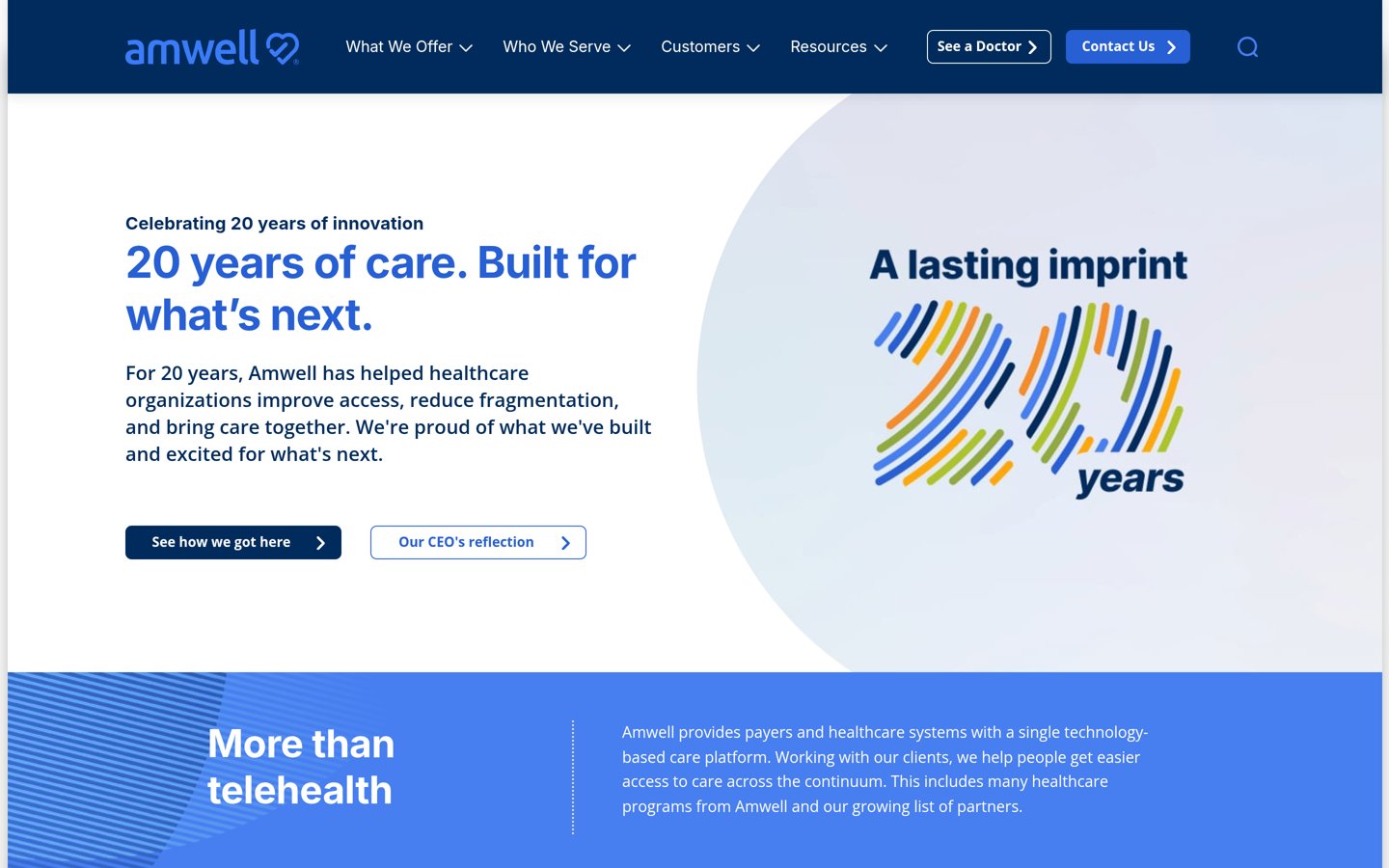
Amwell is a virtual care platform that runs scheduled visits, on-demand urgent care, behavioral health and automated care programs on one system. About 90 million members have Amwell as a covered benefit, and the Converge platform embeds in the EHR so clinicians work from one login.
The trade off is ratings and price. Amwell holds 3.5 out of 5 on Capterra from only three reviews, and enterprise pricing is quote-only with no published figures. It suits large health systems that want one platform across the care continuum.
Teladoc Health is a virtual care company whose Solo platform puts virtual nursing, virtual sitting, telestroke and AI monitoring on one bedside device. More than 60 percent of the top 100 United States hospitals and health systems work with Teladoc Health.
The trade off is the review record. Teladoc Health holds 3.0 out of 5 on G2 from 24 reviews, and Solo enterprise pricing is by quote, so hospitals should pilot before signing. It suits systems that want one device running many bedside programs.
Doxy.me is a browser-based telehealth tool that lets patients join a video visit from a link with nothing to install and no account to create. The free plan covers unlimited one-to-one visits with HIPAA compliance and a signed business associate agreement.
The trade off is scope. Doxy.me is a video tool, not a practice system, so scheduling, notes and billing live in the EHR or elsewhere, and paid plans start at 29 dollars a month billed annually. It suits hospitals that need simple video visits fast.
Best for health systems that need deep EHR integration
KLAS score90 out of 100
Digital encounters12M+
Beds covered35,000+
Paid planCustom quote
evisit.com
eVisit homepage, captured Nov 2026.
eVisit is an enterprise telehealth platform built for health systems and large care delivery organisations, with virtual visits, virtual nursing, tele-consult, urgent care and a digital front door. Its customers have run more than 12 million digital encounters across 35,000 beds in all 50 states.
The trade off is that eVisit sells by custom quote with no public price list, and its G2 base is small at 34 reviews. It suits health systems that want an API and EHR-integrated platform rather than a standalone video tool.
Mend is a patient engagement platform that combines telehealth with self-scheduling, digital intake, appointment reminders and check-in. It claims a 63 percent reduction in no-show rates, and every deployment includes Signal, its analytics layer.
The trade off is focus and price. Mend is built for behavioral health first, and pricing is custom by organisation size with no published figures. It suits hospitals and behavioral health groups that lose revenue to no-shows.
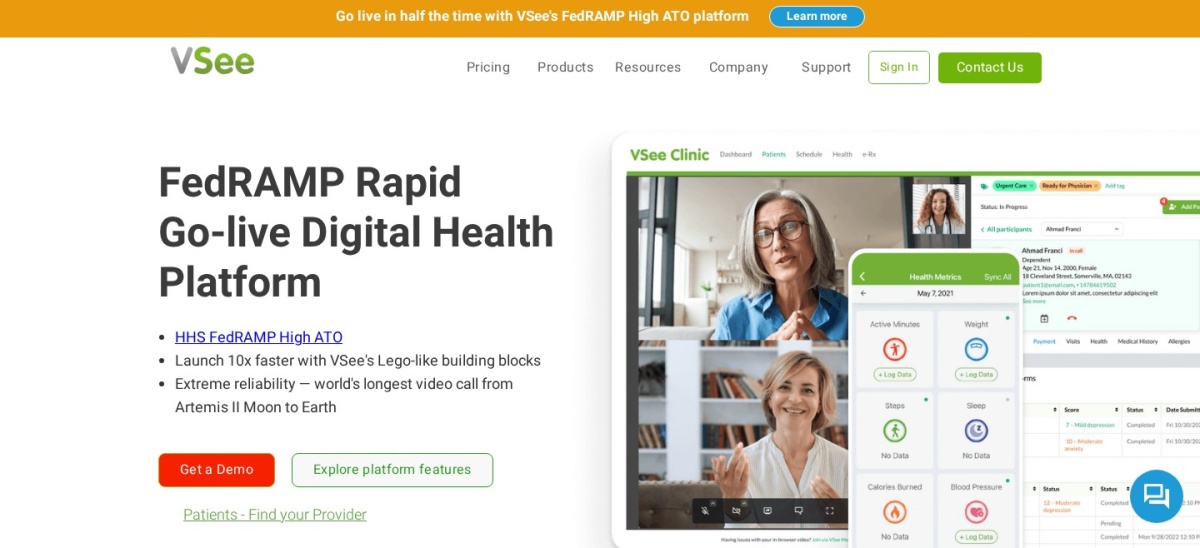
VSee is a telehealth platform that runs video visits, waiting rooms, scheduling, intake forms and remote patient monitoring from one clinic. The free plan covers unlimited one-to-one HD video for a solo provider, and paid plans start at 29 dollars a month per provider.
The trade off is the review record. VSee holds 4.0 out of 5 on G2 from 85 reviews, and the cheapest paid tier is month-to-month only, with no annual discount published. It suits clinics that want configurable visit workflows plus video.
Best for practices that bundle fax, reminders and video
Telehealth sessions75 on Standard
Patient remindersUp to 500
Electronic faxUp to 1,000 pages
Paid planCustom quote
updox.com
Updox homepage, captured Nov 2026.
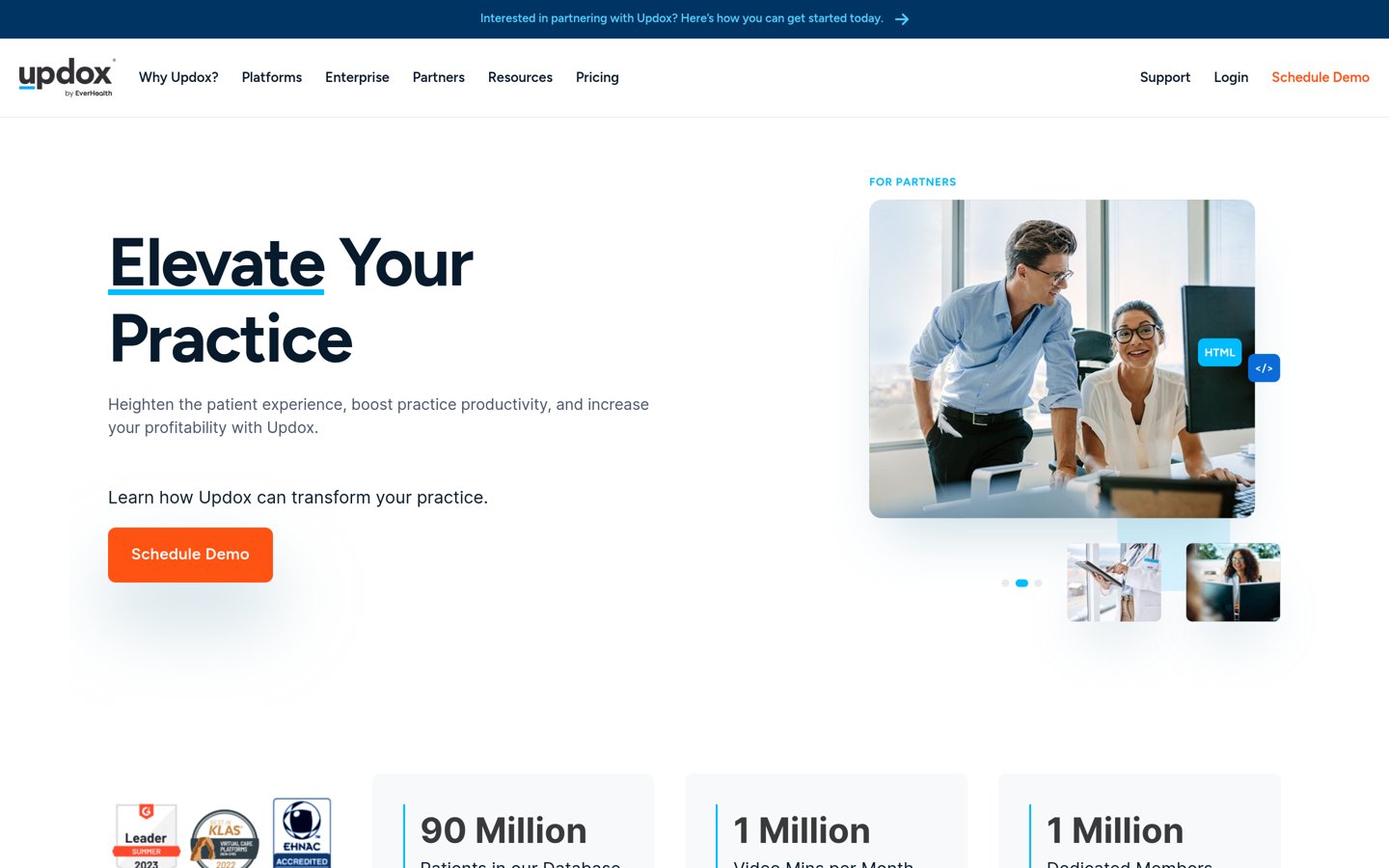
Updox is a healthcare communications platform that bundles telehealth with electronic fax, patient reminders, text messaging and charge capture. Its Standard plan includes up to 75 telehealth sessions, and its Enterprise plan is built for large practices and health systems.
The trade off is that telehealth is one module among many, and pricing is usage-based with no published dollar figures. It suits practices that want video visits inside a wider communications suite rather than a standalone tool.
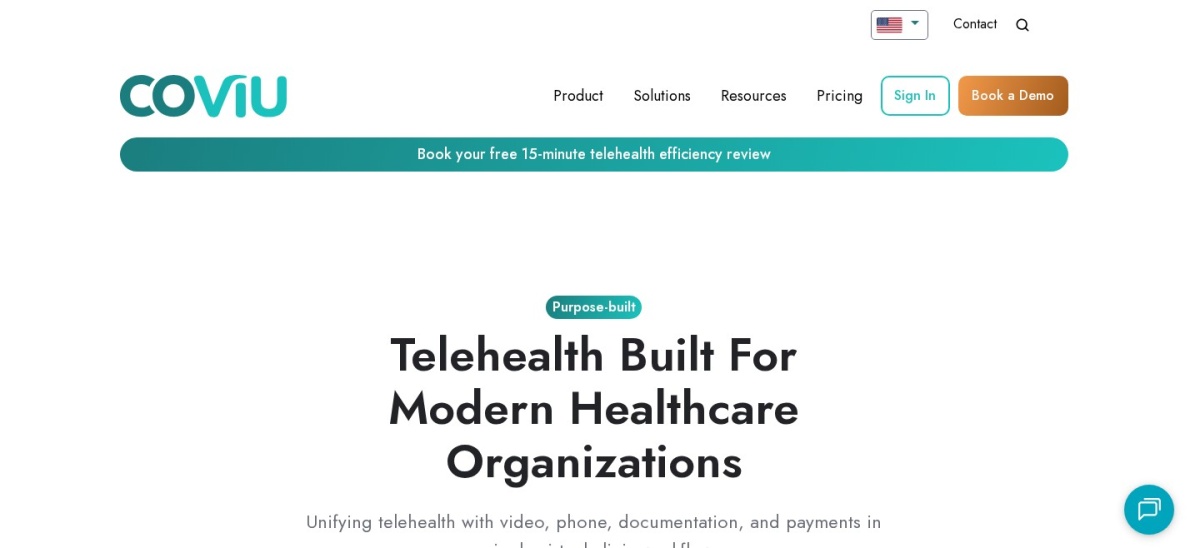
Coviu is a telehealth platform built for health professionals, with virtual waiting rooms, whiteboard tools, group calls and phone visits in one place. It holds 4.9 out of 5 on G2, the highest rating in this list, though from only 12 reviews.
The trade off is the thin review base and the quote-based pricing for organisations, since plan prices are not published on its pricing page. It suits clinics that want an exam-room style virtual visit experience.
Best for outpatient clinics that also need billing
Starter plan$49/mo
TelehealthEssential plan and up
Free trialYes
Paid planStarter, $49/mo
simplepractice.com
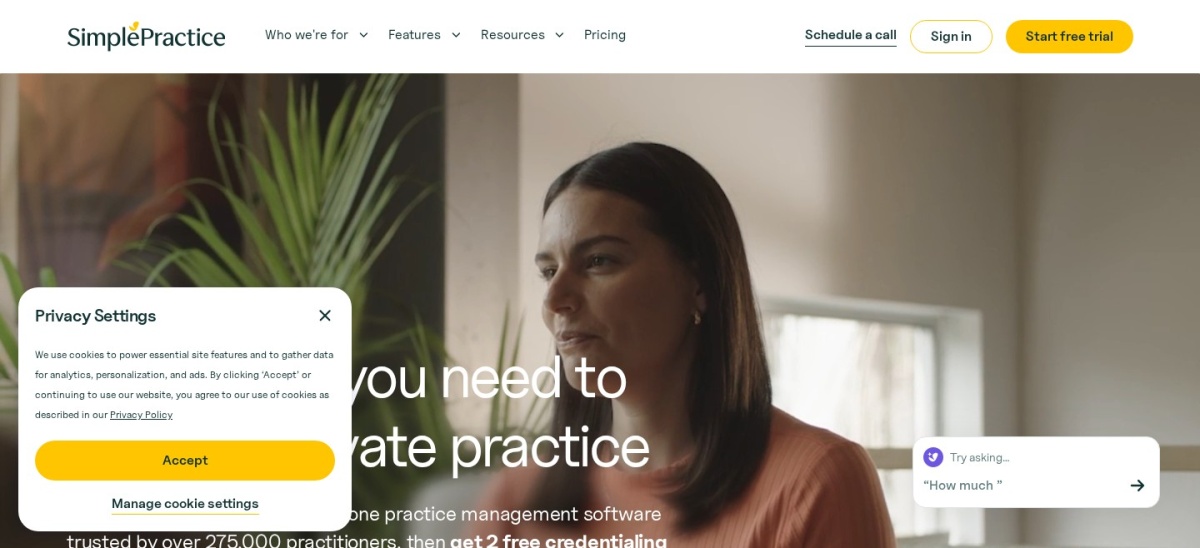
SimplePractice homepage, captured Nov 2026.
SimplePractice is a practice management platform for health and wellness professionals that adds telehealth to scheduling, documentation, billing and client messaging. The Starter plan costs 49 dollars a month, with telehealth included on the Essential plan at 79 dollars a month.
The trade off is fit. SimplePractice is built for solo and small-group mental health practices, not hospitals, and there is no free plan, only a trial. It suits hospital outpatient clinics that also need scheduling, notes and billing in one place.
Inpatient vs outpatient: which programs do you need?
Inpatient programs run at the bedside. Teladoc Health Solo covers virtual nursing, virtual sitting, telestroke and AI monitoring from one device, which is why hospitals pick it for wards and emergency departments.
Outpatient programs run from the clinic or the home. Amwell, eVisit, Mend and SimplePractice cover scheduled visits, urgent care and follow-up, with scheduling and intake built in.
Most health systems need both. A hospital that buys an outpatient platform and later adds inpatient programs will run two systems, so ask vendors about bedside programs before signing.
How we chose
We started from the virtual care platforms most often shortlisted by hospitals in 2026, then kept the nine with a real hospital-grade product and a public G2 or Capterra review base.
Prices come from each vendor's pricing page, checked on 30 November 2026. Ratings and review counts come from G2 or Capterra on the same day. Where a vendor publishes no price, the list shows Custom.
We left out Caregility and Fabric, which have no G2 or Capterra rating, and SOC Telemed, which has no public review base. No vendor paid for a place, and we do not claim hands-on testing for this list.
How to choose virtual care software for hospitals
Start with where care happens and how many clinicians will use it, then match the platform to that need.
Decide bedside or outpatient first. If you need virtual nursing or telestroke, shortlist Teladoc Health. If you need scheduled visits, start with Amwell or eVisit.
Check the EHR integration. Ask whether visits, notes and billing flow into Epic, Cerner or athenahealth without double entry.
Test the free plan. Doxy.me and VSee both offer free HIPAA-compliant video visits. Run a pilot clinic before any contract.
Get the full first-year cost in writing. Implementation, devices and add-on modules often sit outside the licence price. Ask for the total before signing.
FAQ
What is the best virtual care software for hospitals?
Amwell is the best pick for most hospitals. Its Converge platform covers scheduled visits, urgent care, behavioral health and automated care programs on one system, and about 90 million members have Amwell as a covered benefit.
How much does virtual care software for hospitals cost?
Doxy.me, VSee and SimplePractice publish prices from 29 dollars a month. Amwell, Teladoc Health, eVisit, Mend, Updox and Coviu sell by custom quote, so hospitals should budget for a sales process and implementation fees.
Is there free virtual care software for hospitals?
Yes, with limits. Doxy.me offers a free plan with unlimited one-to-one HIPAA-compliant visits, and VSee has a free plan for solo providers. Free tiers suit testing video visits, not running a hospital-wide program.
Amwell vs Teladoc Health: which is better for hospitals?
Amwell wins for system-wide virtual care, with one platform for scheduled visits, urgent care and behavioral health. Teladoc Health wins for inpatient programs, with one bedside device running virtual nursing, telestroke and AI monitoring.
What is the difference between Doxy.me and VSee?
Both offer free HIPAA-compliant video visits from 29 dollars a month for paid plans. Doxy.me is the simpler video tool, while VSee adds scheduling, intake forms, e-prescribing and remote patient monitoring.
Do hospitals need HIPAA-compliant virtual care software?
Yes. Any platform that handles patient video, messages or records must be HIPAA compliant and sign a business associate agreement. Every tool in this list offers HIPAA compliance with a signed agreement.
SaaS SEO and WordPress specialist with about 8 years of experience. Rakib compares WordPress plugins, themes, hosting and software using public pricing, documentation and user reviews. See how we rank.