UpGuard is the best vendor risk management software for most teams, with daily monitoring, security ratings and questionnaires in one platform for a published price. OneTrust suits large enterprises that need vendor risk inside a wider GRC suite, while LogicGate fits teams that build their own risk workflows.
How we make this list: we compare pricing pages, product documentation and public user reviews, then re-check every price before each update. No product paid for a place. Disclosure.
UpGuard is the only tool here with a published price: $1,750 a month billed annually for 50 vendors, with a free plan for five.
OneTrust is the enterprise pick, uniting vendor risk with privacy and AI governance for more than 14,000 customers.
Bitsight and SecurityScorecard lead for outside-in ratings, while LogicGate and ProcessUnity lead for workflow depth.
Seven of the nine tools hide prices behind a sales quote, so budget from UpGuard's published figures.
Vanta has the largest G2 review base here at 2,932 reviews, but its vendor risk work is document-led.
What should you look for in vendor risk management software?
Start with the job you do most. Ratings tools like Bitsight and SecurityScorecard score vendors from the outside in, while workflow tools like OneTrust, LogicGate and ProcessUnity run questionnaires and remediation, so pick the layer that matches your daily work.
Price transparency splits this market. UpGuard is the only tool here that publishes a price, at $1,750 a month billed annually for 50 vendors, while the other eight sell by quote. Our GRC software guide compares the enterprise suites head to head.
Count vendors before comparing prices. Most of these tools charge by vendor count, so the renewal price depends on how many suppliers you monitor, not just the starting plan.
Small teams should start with the published price. UpGuard's free plan covers five vendors, and SecurityScorecard's free plan covers self-monitoring, so a team can test ratings before any sales call.
Best for mid-market teams that want a published price
Free planYes, 5 vendors
Daily monitoringYes
QuestionnairesYes, built in
Paid planStandard, $1,750/mo
upguard.com
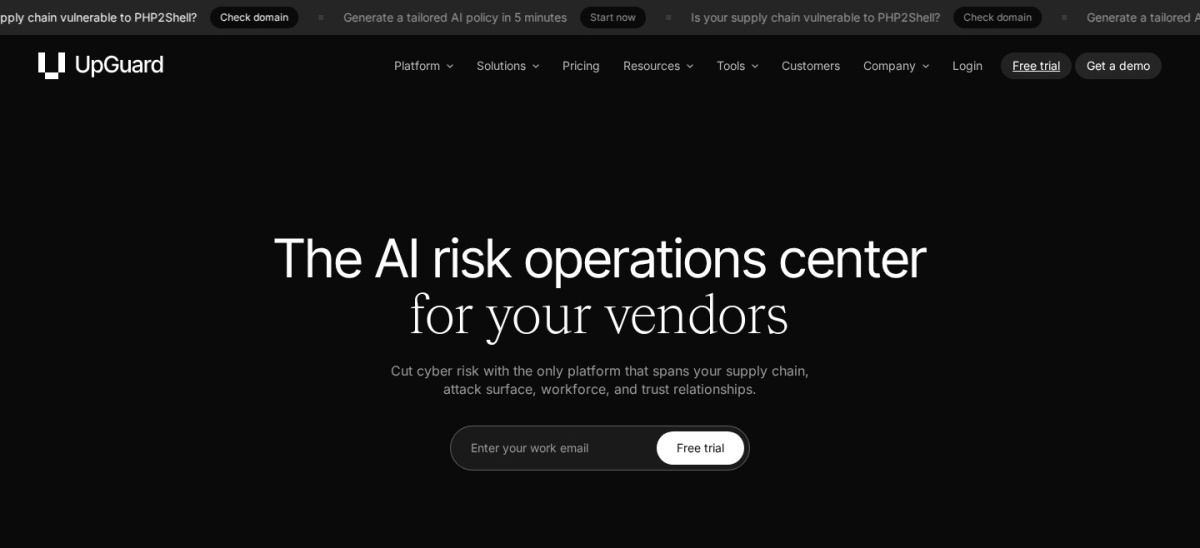
UpGuard homepage, captured Nov 2026.
UpGuard is a third-party cyber risk platform that combines daily attack surface scanning, security ratings, questionnaires, AI evidence review and remediation workflows in one place. The Standard plan costs $1,750 a month billed annually for 50 vendors, and a free plan covers five vendors.
The trade off is scope. UpGuard is cyber-first, so financial health, sanctions and ESG screening need another data source, and it does not translate risk into dollar figures. It suits mid-market teams that want ratings and assessments in one interface with a published price.
Best for enterprises unifying vendor risk and privacy
Third-party riskYes, dedicated module
Frameworks100+
Free trialSelect modules
Paid planCustom quote
onetrust.com
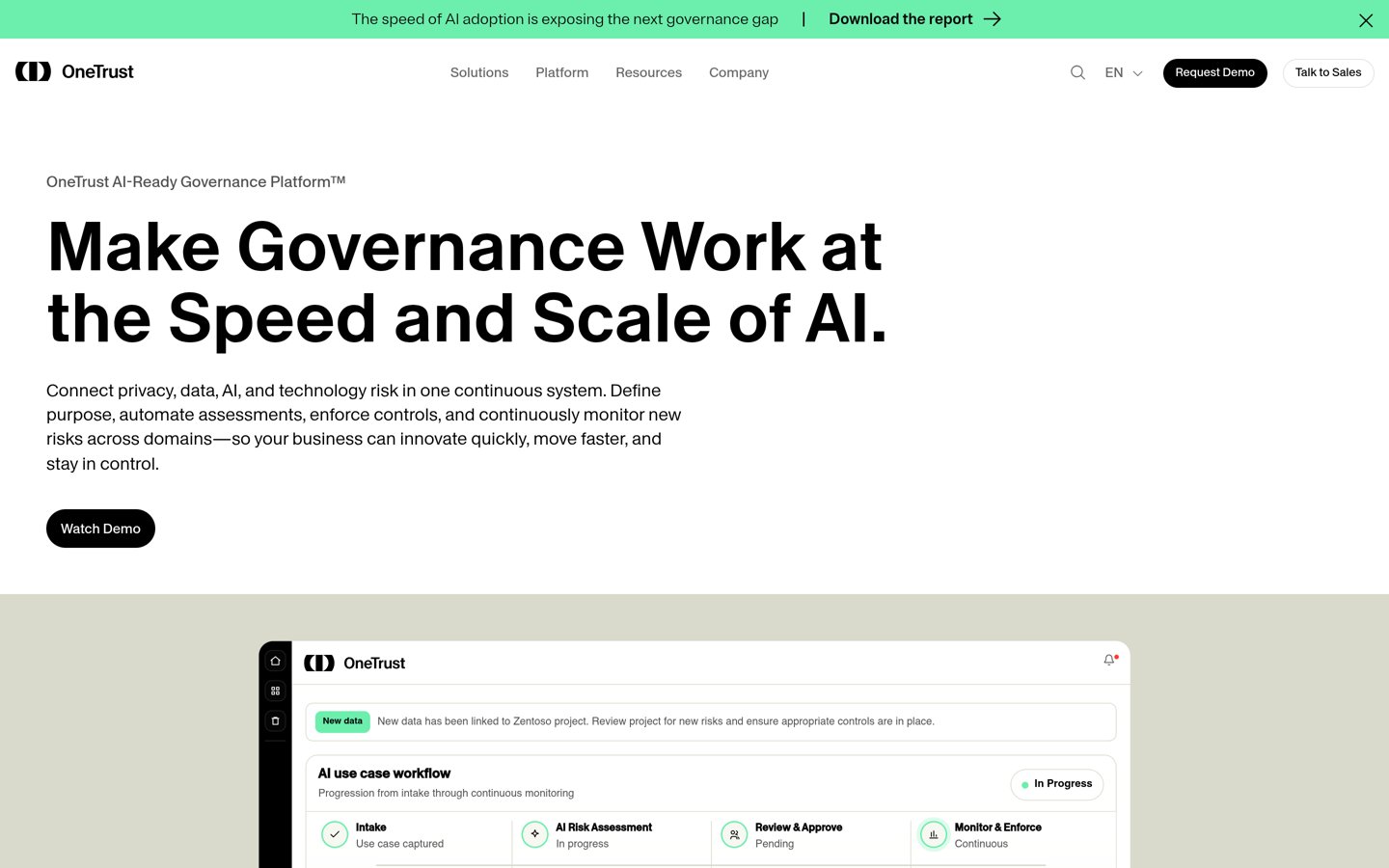
OneTrust homepage, captured Nov 2026.
OneTrust is an enterprise privacy, security and governance platform that runs third-party risk management alongside consent, data mapping and AI governance. More than 14,000 customers use it, and it maps vendor risk against more than 100 frameworks.
The trade off is cost and complexity. OneTrust publishes no prices, every deal is a custom quote with a $10,000-a-year minimum reported by buyers, and implementation typically takes about two months. It suits large enterprises that want vendor risk inside one GRC suite.
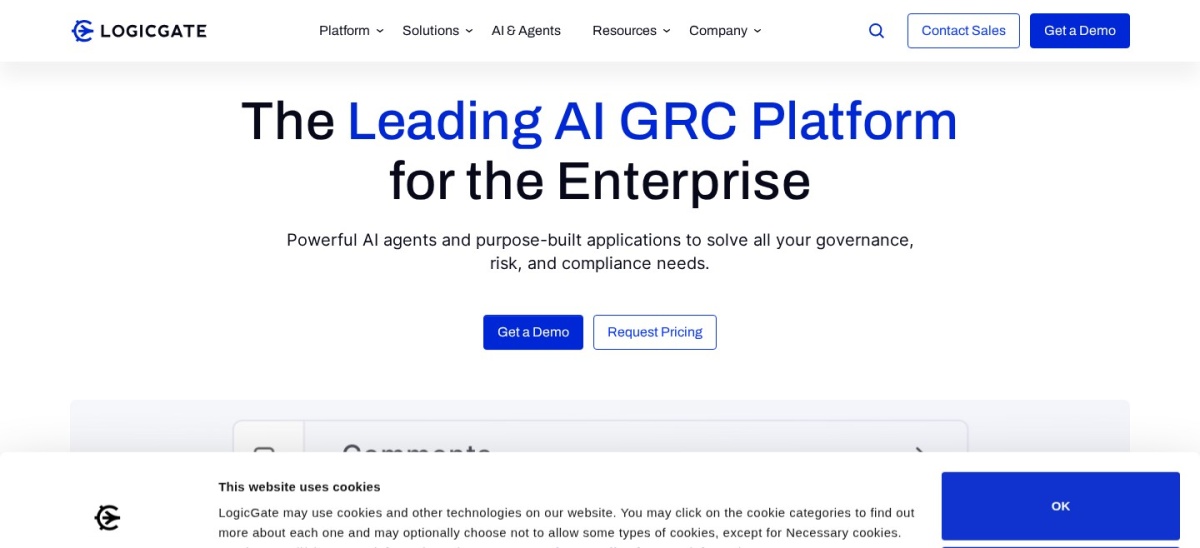
LogicGate Risk Cloud is a no-code governance, risk and compliance platform that lets teams build vendor risk, audit and compliance workflows without code. Only administrators need paid Power User licences, while standard and external users are included free.
The trade off is the learning curve. The flexibility that makes LogicGate powerful also makes setup slow, with implementation averaging about four months on G2, and costs rise as applications are added. It suits mid-market teams that want to design their own risk workflows.
Bitsight is a security ratings platform that scores vendors from the outside in, based on observed security practices rather than self-reported answers. Its ratings are independently verified to correlate with breach likelihood, which matters for cyber insurance and board reporting.
The trade off is that Bitsight is not a full vendor lifecycle system. It does not run questionnaires, contract tracking or remediation workflows, so most teams pair it with a workflow tool. It suits large enterprises that need daily ratings across many vendors.
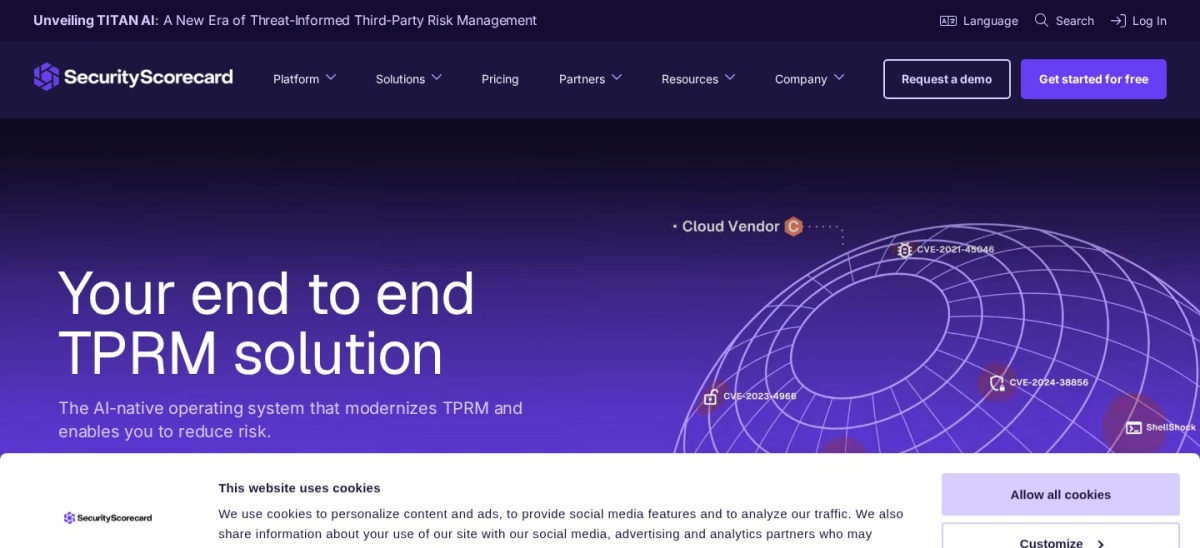
SecurityScorecard is a security ratings platform that grades organisations on an A to F scale using public, proprietary and dark web data. A free plan covers self-monitoring, and its database already holds ratings for millions of companies.
The trade off is that questionnaires run in a separate module, Atlas, and users report occasional IP misattribution that needs a support ticket to fix. It suits teams that want fast triage of a large vendor portfolio by letter grade.
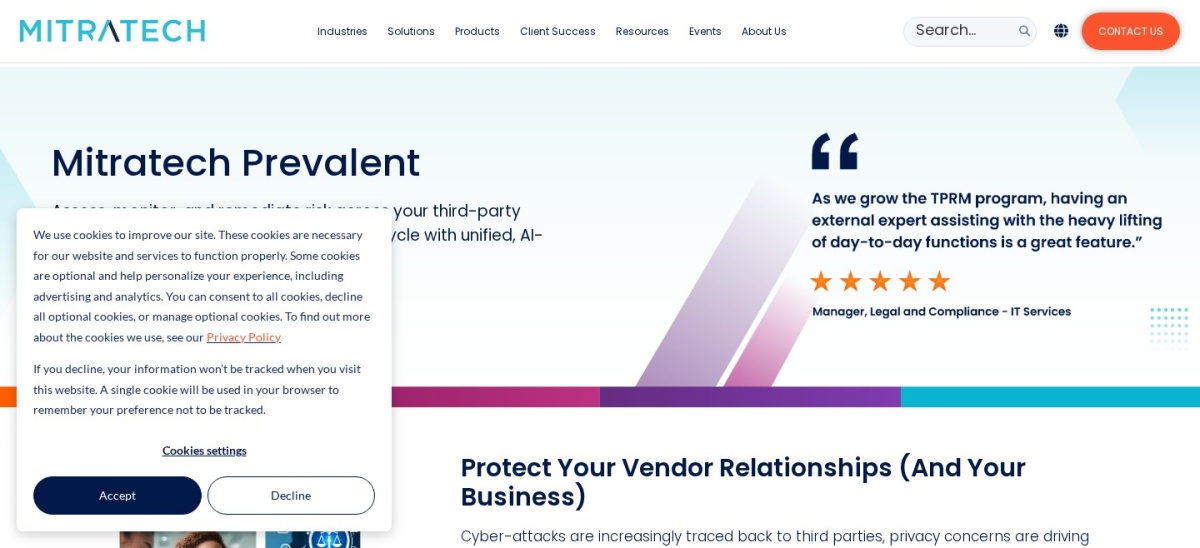
Prevalent is a third-party risk platform, now part of Mitratech, that pairs questionnaire-led assessments with risk intelligence and optional managed services. Its library holds more than 800 assessment templates mapped to common frameworks.
The trade off is freshness. Prevalent leans on point-in-time assessments more than daily external scanning, and reviewers report a steep learning curve. It suits teams that run deep questionnaire programs and want outsourced assessment help.
What we like
800+ assessment templates
Managed services for short-staffed teams
Covers cyber, financial, ESG and reputational risk
Best for lifecycle automation with a shared exchange
Global Risk ExchangeYes
AI agentsYes
Free trialNo
Paid planCustom quote
processunity.com
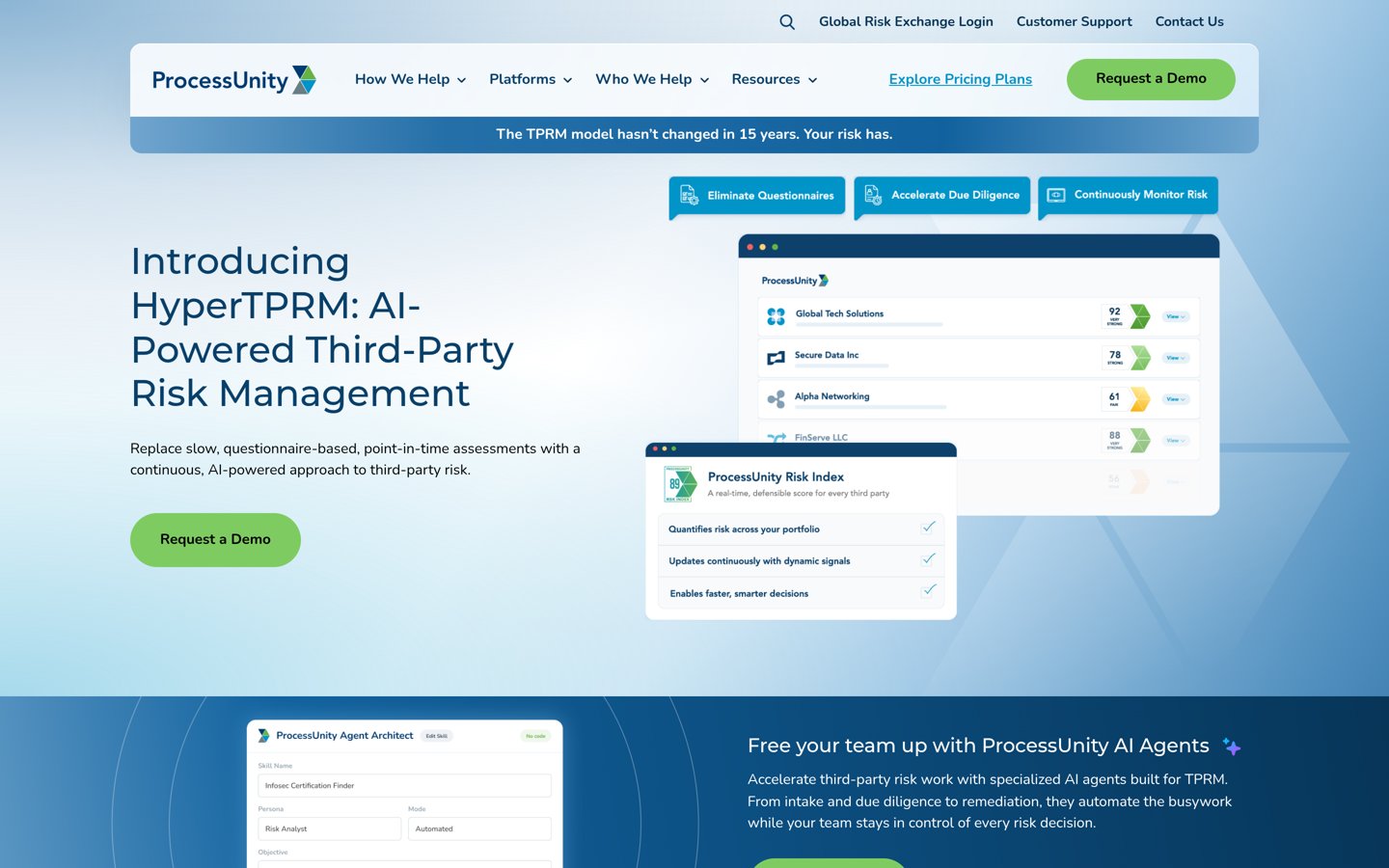
ProcessUnity homepage, captured Nov 2026.
ProcessUnity is a dedicated third-party risk platform that unifies the vendor lifecycle on one system, from intake through offboarding. Its Global Risk Exchange holds pre-completed vendor assessments, and AI agents automate assessment work.
The trade off is outside-in evidence. ProcessUnity has no native external scanning or security ratings and relies on rating partners, and exchange assessments can fall out of date. It suits enterprises that want workflow depth and a shared assessment library.
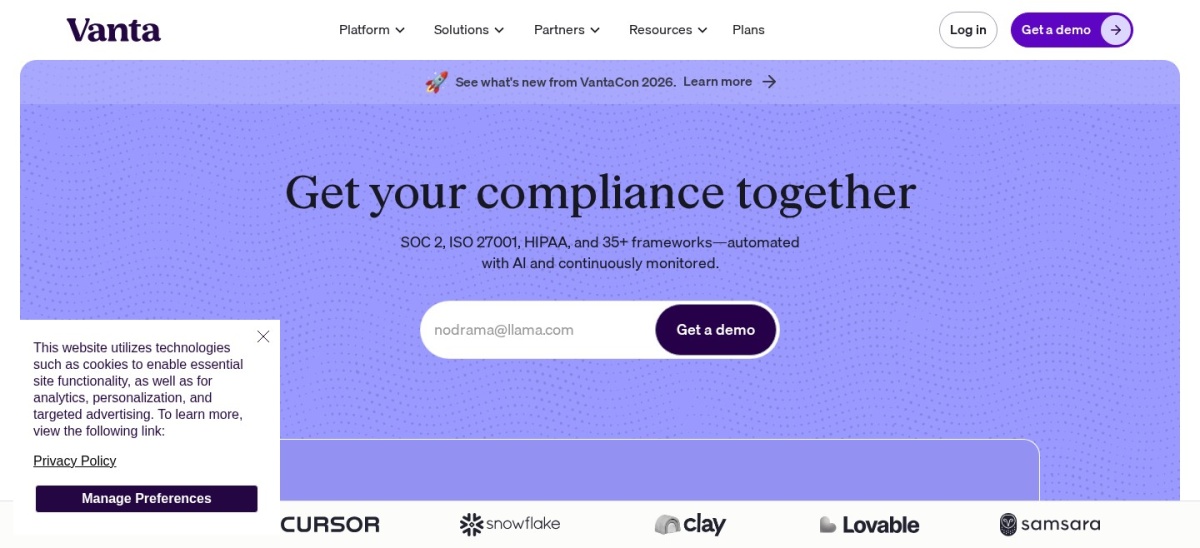
Vanta is a compliance automation platform that collects evidence for SOC 2, ISO 27001 and other frameworks continuously, with vendor reviews as one part of the program. It holds 4.5 out of 5 on G2 from 2,932 reviews, the largest review base in this list.
The trade off is focus. Vanta's vendor risk work is document-led and sits inside a compliance program, so teams that need deep vendor monitoring should pair it with a ratings tool. It suits growth-stage companies chasing SOC 2 or ISO 27001 fast.
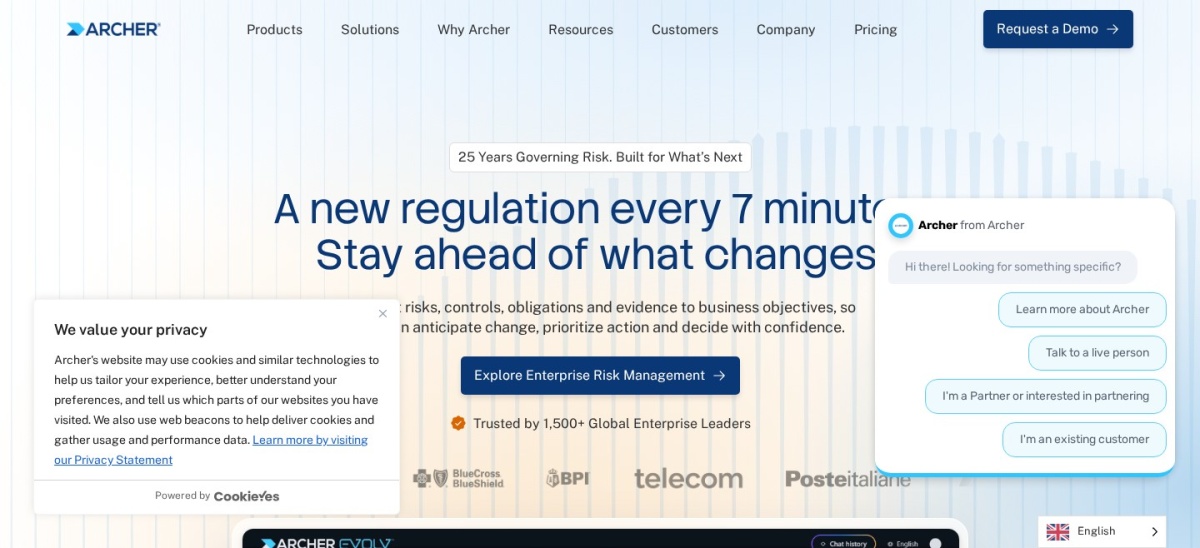
Archer is an enterprise governance, risk and compliance suite with a third-party risk module that connects vendor risk to enterprise, operational and audit risk. It suits organisations that already run Archer for GRC and want vendor risk on the same system of record.
The trade off is rating and fit. Archer holds 3.6 out of 5 on G2 from only 20 reviews, the lowest and thinnest base in this list, and its monitoring and ratings come as add-ons. It suits large enterprises already invested in Archer, not buyers starting fresh.
Ratings platforms watch vendors from the outside. Bitsight, SecurityScorecard and UpGuard scan the public internet and score each vendor, which is fast across hundreds of suppliers.
Workflow platforms ask vendors questions. OneTrust, LogicGate, ProcessUnity and Prevalent run questionnaires, collect evidence and track fixes, which is slower but deeper.
Most mature programs use both. A ratings tool flags the risky vendors, and a workflow tool runs the assessment and remediation that follows.
How we chose
We started from the third-party risk platforms most often shortlisted in 2026, then kept the nine with a real vendor risk product and a public G2 review base.
Prices come from each vendor's pricing page, checked on 30 November 2026. Ratings and review counts come from G2 on the same day. Where a vendor publishes no price, the list shows Custom.
We left out ratings tools with no G2 listing and niche monitors that do not run vendor assessments. No vendor paid for a place, and we do not claim hands-on testing for this list.
How to choose vendor risk management software
Start with your vendor count and your main risk, then match the tool type to that need.
Decide ratings or workflow first. If you triage hundreds of vendors, start with a ratings tool. If you run deep assessments, start with a workflow tool.
Count the vendors you will monitor. Most tools charge by vendor count, so get quotes on the same vendor number and module scope.
Check the free tier. UpGuard covers five vendors free and SecurityScorecard covers self-monitoring free. Test ratings before paying.
Ask what the quote includes. Implementation, onboarding and add-on modules often sit outside the licence price. Get the full first-year cost in writing.
FAQ
What is the best vendor risk management software?
UpGuard is the best pick for most teams. It combines daily monitoring, ratings and questionnaires in one platform, publishes its price at $1,750 a month billed annually, and holds 4.5 out of 5 on G2 from 732 reviews.
How much does vendor risk management software cost?
UpGuard publishes the only entry price here: $1,750 a month billed annually for 50 vendors. The other eight tools sell by custom quote, with reported contracts ranging from about $10,000 a year for OneTrust to over $50,000 for LogicGate.
Is there free vendor risk management software?
Yes, with limits. UpGuard has a free plan for five vendors and SecurityScorecard offers free self-monitoring. Free tiers suit testing ratings, not running a full vendor program.
UpGuard vs OneTrust: which is better for vendor risk?
UpGuard wins for mid-market teams that want a published price and daily monitoring in one licence. OneTrust wins for large enterprises that need vendor risk inside a wider privacy and GRC suite with 100+ frameworks.
What is the difference between Bitsight and SecurityScorecard?
Both sell outside-in security ratings, but Bitsight scores vendors on a numeric scale with breach correlation, while SecurityScorecard uses A to F letter grades. Bitsight holds 4.6 out of 5 on G2 from 44 reviews, against 4.2 from 75 for SecurityScorecard.
Do small businesses need vendor risk management software?
Most do not need an enterprise platform. A small team can start with UpGuard's free plan for five vendors or SecurityScorecard's free self-monitoring, and move to a paid plan once the vendor list grows past a handful.
SaaS SEO and WordPress specialist with about 8 years of experience. Rakib compares WordPress plugins, themes, hosting and software using public pricing, documentation and user reviews. See how we rank.