BitSight is the best of these UpGuard alternatives for board-level security ratings, with a 250 to 900 score and a 4.5 out of 5 G2 rating from 76 reviews. SecurityScorecard is the easiest free start, while Vanta suits teams that also need compliance automation.
How we make this list: we compare pricing pages, product documentation and public user reviews, then re-check every price before each update. No product paid for a place. Disclosure.
BitSight leads on ratings: a 250 to 900 score, 4.5 out of 5 on G2, and a Forrester Wave Leader placement in April 2026.
SecurityScorecard is the only tool here with a free plan, a free company scorecard across 12 million plus rated companies.
Only 4 of the 9 tools publish an entry price: Vanta from $14,000 a year, Drata from $15,000, Whistic from $15,500 and SecurityScorecard at $20,000.
Ratings scales do not match: BitSight runs 250 to 900, SecurityScorecard 0 to 100 with A to F grades, and UpGuard 0 to 950.
Prevalent has the thinnest review base in this list at 21 G2 reviews, against 2,711 for Vanta, so treat its 4.5 with more caution.
How do you pick from the UpGuard alternatives for your vendor list?
UpGuard alternatives fall into three camps, and buying the wrong camp is the usual mistake. Ratings platforms score vendors from outside, lifecycle tools run questionnaires and onboarding, and GRC suites put vendor risk inside a wider governance program.
Ratings are the fastest shortlist. BitSight and SecurityScorecard score vendors continuously from public data, so you can triage hundreds of vendors before sending a single questionnaire.
Questionnaires still matter for what a scan cannot see. Prevalent, Panorays and Whistic collect evidence, policies and SOC 2 reports, which is why ratings alone never replace a vendor assessment.
Price transparency is thin in this category. Most vendors sell by quote only, so our SOC 2 automation tools guide shows the same pattern: AWS Marketplace list prices where they exist, and Custom where the vendor publishes nothing.
Start with your vendor count and your main job. A ratings tool fits a large portfolio, a lifecycle tool fits a formal program, and a GRC suite fits an enterprise that already runs governance in one place.
BitSight is a security ratings platform that scores vendors from externally observable data on a 250 to 900 scale, like a credit score. It monitors vendors continuously, rescans after remediation events, and benchmarks each vendor against peers for board reporting.
The trade off is scope and price. BitSight is ratings-only, so questionnaires and onboarding need another tool, and pricing is quote-only with no published entry price. It suits large enterprises, insurers and financial teams that need one recognised rating.
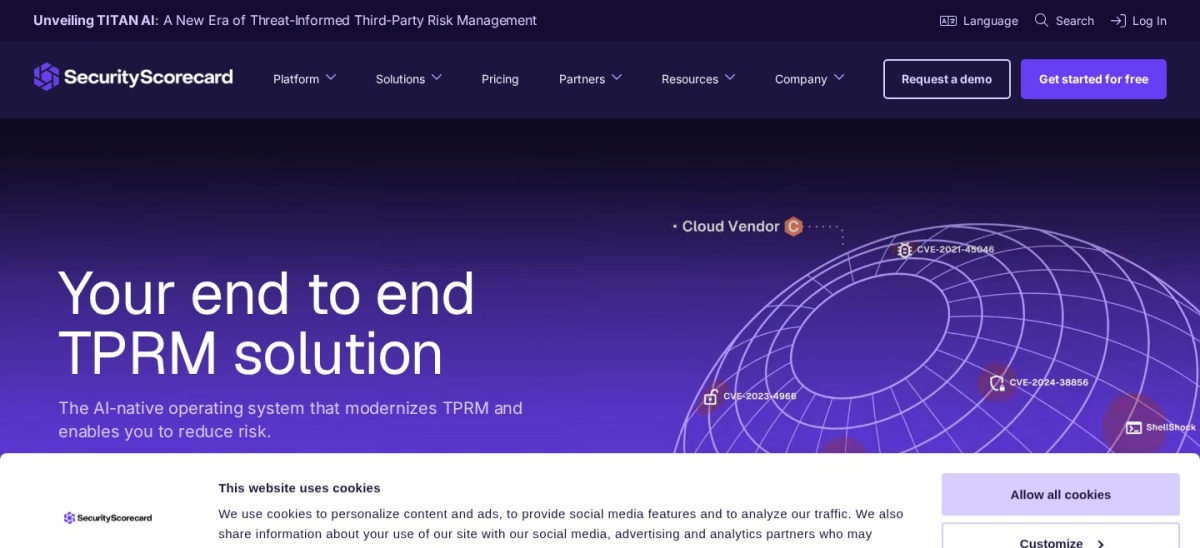
SecurityScorecard is a security ratings platform that grades companies from 0 to 100 with A to F letter grades across ten risk factors. It continuously rates more than 12 million companies, and anyone can check their own free company scorecard before buying.
The trade off is price. Vendor monitoring is quoted by organisation count, and G2 lists the Basic plan at $20,000 a year per user, with implementation fees reportedly $5,000 to $25,000 plus. It suits teams that want a free starting point and broad company coverage.
What we like
Free company scorecard for self-monitoring
Broadest coverage at 12 million plus companies
Daily external scanning for paying customers
14-day trial of vendor monitoring
Watch out for
Vendor monitoring is quote-only by organisation count
Implementation fees can add $5,000 to $25,000 plus
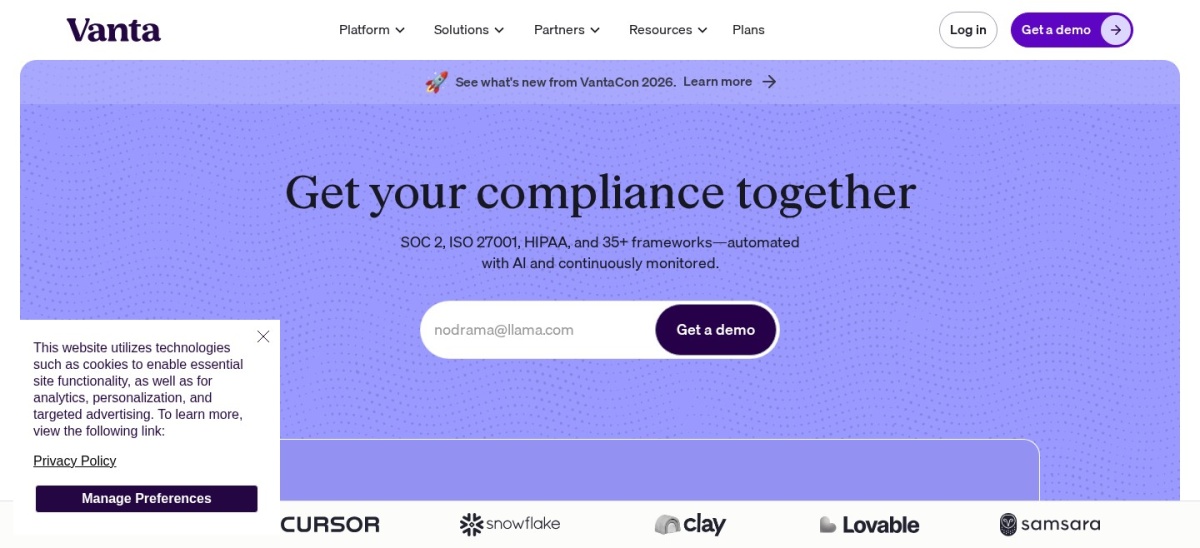
Vanta is a trust management and compliance automation platform that pulls evidence from more than 400 connected tools and tests controls continuously. It covers 35-plus frameworks, including SOC 2, ISO 27001 and HIPAA, and serves more than 16,000 customers, with vendor risk as an add-on module.
The trade off is that vendor risk is not the core product. Vanta publishes no prices on its own site, and its AWS Marketplace listing starts at $14,000 a year for 1 to 20 employees, before the separate audit fee. It suits SaaS teams already running compliance in Vanta.
What we like
Largest integration library in this list at 400+
Most G2 reviews here at 2,711
Trust Center lets buyers check posture without a call
Vendor risk sits beside 35+ frameworks
Watch out for
Vendor risk is an add-on, not the core product
Direct pricing is quote-only
Audit fee is separate from the platform price
$14,000/yr is the AWS Marketplace list price; direct is quote-onlyVisit vanta.com
04
Drata
4.7/5on G2 (1,400 reviews, checked Nov 2026)
Starts at$15,000/yr
Best for multi-framework compliance programs
Frameworks30+
IntegrationsHundreds
Entry planFoundation, 1-50 staff
Auditor directoryYes
drata.com
Drata homepage, captured Nov 2026.
Drata is a continuous compliance platform that connects to your cloud and SaaS stack, tests controls daily and updates each control pass or fail in real time. It covers more than 30 frameworks, including SOC 2, ISO 27001, HIPAA and PCI DSS, and its vendor risk tools sit beside that compliance core.
The trade off is price. Drata sells direct by quote only, and its AWS Marketplace Foundation package lists at $15,000 a year for 1 to 50 staff, before the audit fee. It suits engineering-led teams running several frameworks at once.
What we like
Highest G2 rating in this list at 4.7 out of 5
Deepest multi-framework automation here
Daily control testing with real-time status
Auditor directory connects teams with pre-vetted firms
Watch out for
Direct pricing is quote-only
Audit fee is separate from the platform price
Vendor risk is secondary to compliance automation
$15,000/yr is the AWS Marketplace Foundation list priceVisit drata.com
05
OneTrust
4.5/5on G2 (96 reviews, checked Nov 2026)
PricingCustom/yr
Best for privacy plus vendor risk in one platform
Customers14,000+
Third-party moduleIntake to offboarding
Privacy modulesYes, in same platform
Gartner TPRMLeader, April 2026
onetrust.com
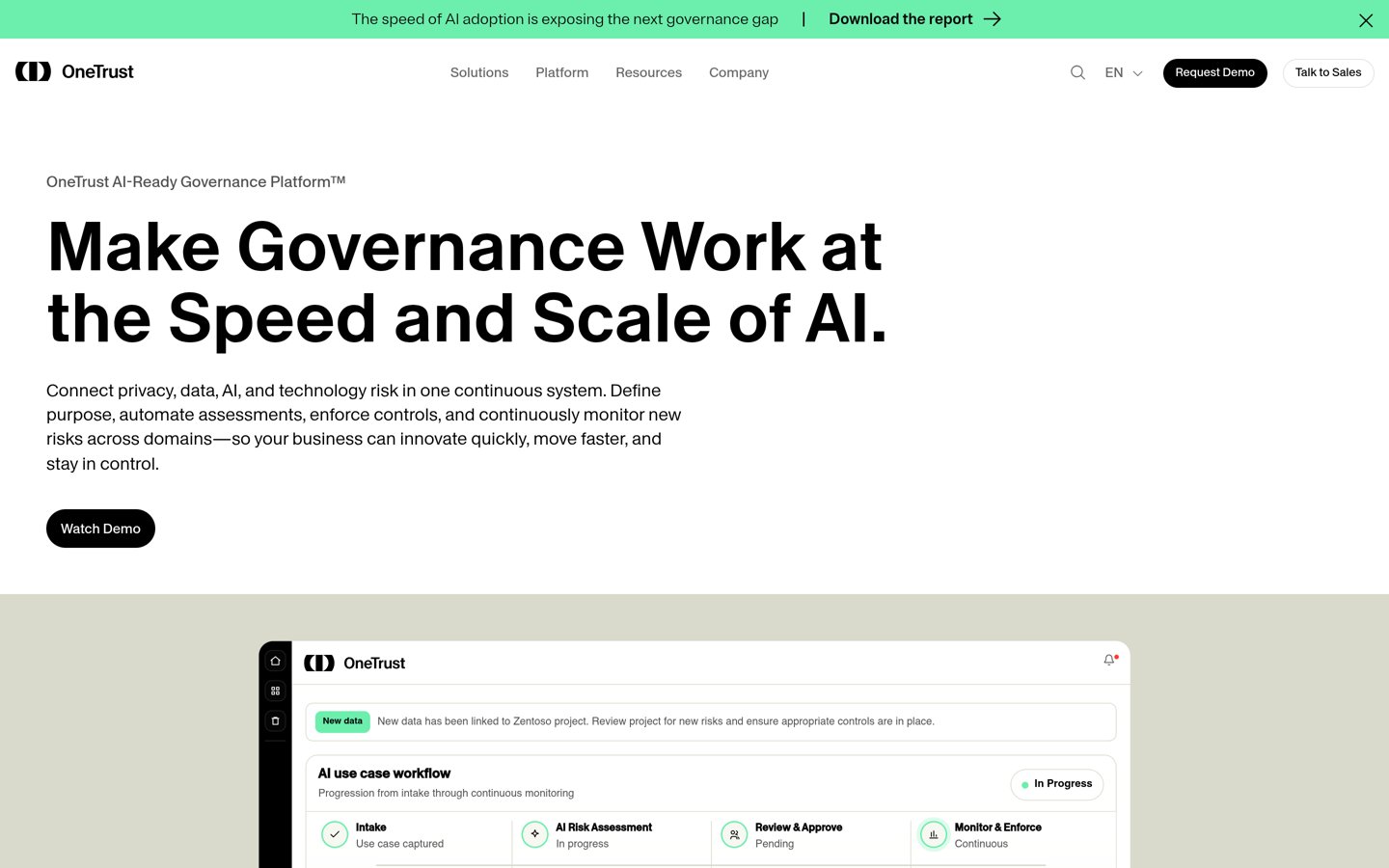
OneTrust homepage, captured Nov 2026.
OneTrust is a governance platform that covers privacy, data use, AI governance, technology risk and third-party management for large enterprises. Its third-party module spans intake, risk tiering, assessments, contract obligations and continuous monitoring, and it was named a Leader in Gartner's first Magic Quadrant for third-party risk management in April 2026.
The trade off is weight. Pricing is quote-only and metered on admin users and third-party inventory, and the platform needs dedicated risk staff to run well. It suits enterprises that already manage privacy in OneTrust.
What we like
Privacy, AI governance and vendor risk in one system
Gartner TPRM Leader in April 2026
More than 14,000 customers
500-plus pre-built plug-ins
Watch out for
Quote-only with no published pricing
Needs dedicated risk staff
Breadth can overwhelm a ratings-only buyer
Quote-only; priced on admin users and third-party inventoryVisit onetrust.com
06
LogicGate Risk Cloud
4.6/5on G2 (191 reviews, checked Nov 2026)
PricingCustom/yr
Best for configurable GRC workflows
Workflow builderNo-code, drag-and-drop
Standard usersFree, no licence
G2 support score9.6 out of 10
Entry planQuote-based
logicgate.com
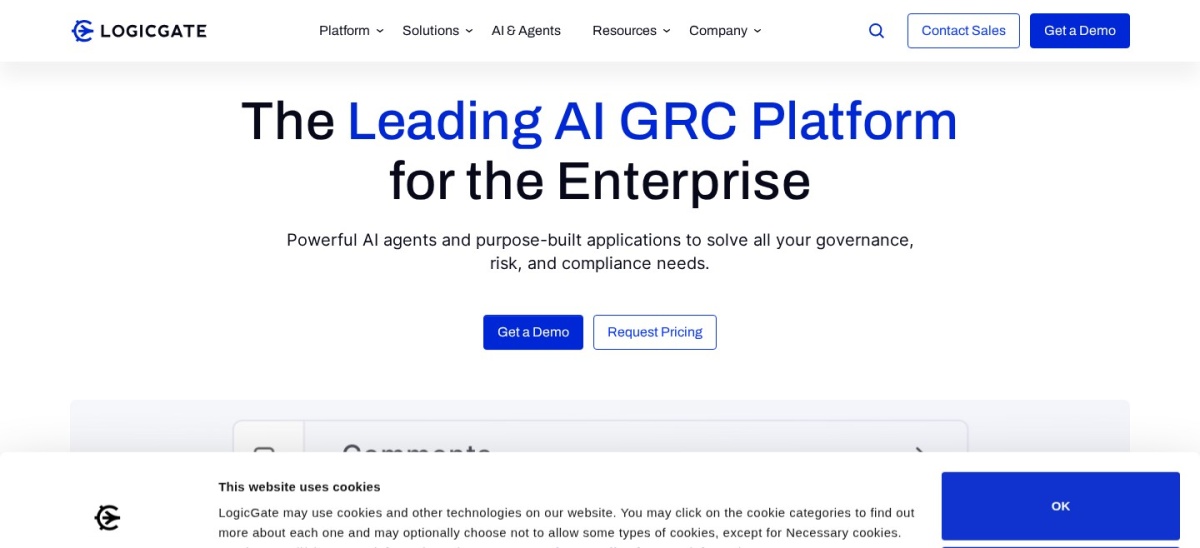
LogicGate Risk Cloud homepage, captured Nov 2026.
LogicGate Risk Cloud is a no-code GRC platform that lets risk teams build their own vendor intake, tiering and assessment workflows without code. It connects vendor risk to enterprise risk, controls and policy applications, and standard and external users carry no licence cost.
The trade off is configuration effort. Pricing is quote-only with modular applications and Power User licences, and ratings features are thinner than at BitSight or SecurityScorecard. It suits teams whose processes do not fit a vendor's default workflow.
What we like
Drag-and-drop builder, no code needed
Vendors and business stakeholders use it free
Strong G2 support score of 9.6 out of 10
Covers enterprise risk, compliance and audit too
Watch out for
Quote-only with no published pricing
Configuration takes dedicated GRC ownership
Ratings depth is thinner than dedicated ratings tools
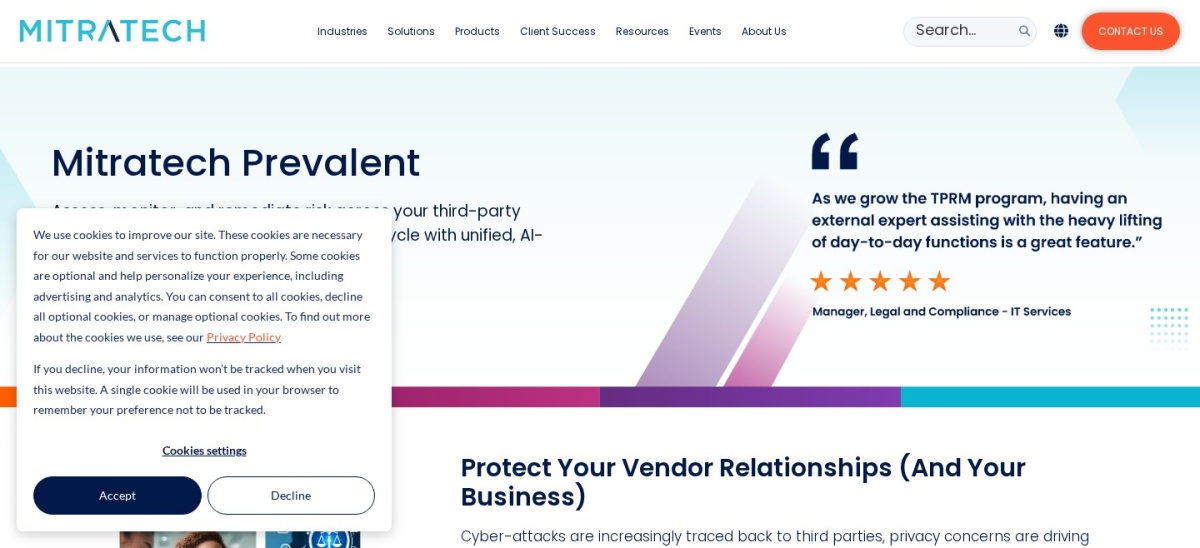
Prevalent is a third-party risk specialist that covers onboarding questionnaires, evidence collection, risk scoring, continuous monitoring and offboarding in one workflow. Assessment automation reduces the manual chasing that dominates most vendor programs.
The trade off is ratings depth and review volume. Its ratings are thinner than at BitSight or SecurityScorecard, pricing is quote-only, and G2 lists only 21 reviews. It suits a team running a formal program with many vendors at different lifecycle stages.
What we like
Full vendor lifecycle in one workflow
Assessment automation cuts manual chasing
Third-party specialist depth
Evidence collection built in
Watch out for
Quote-only with no published pricing
Only 21 G2 reviews, the thinnest base here
Ratings depth is thinner than dedicated ratings tools
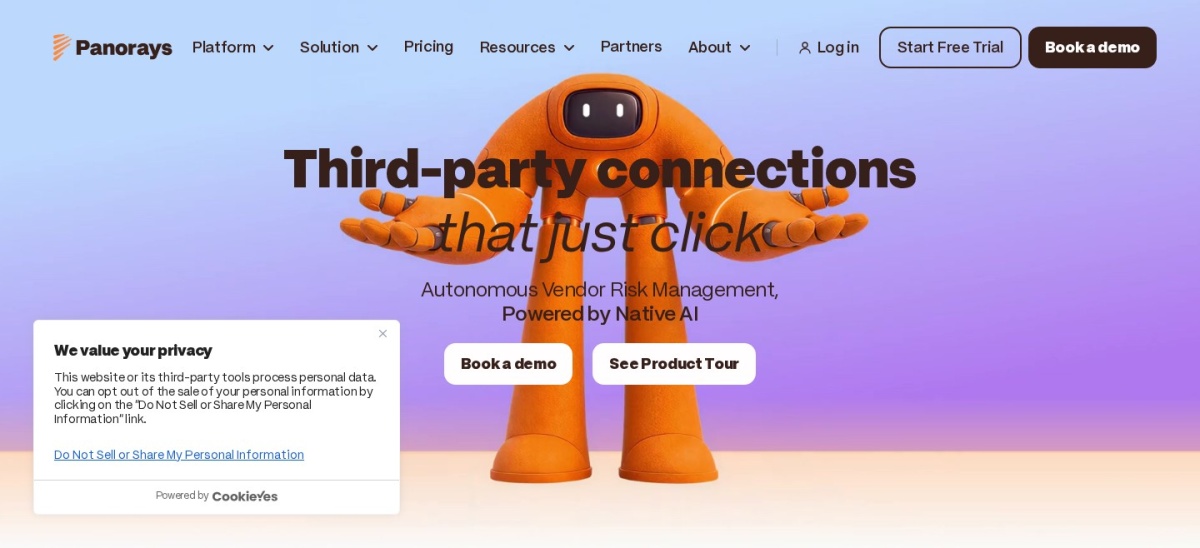
Panorays is a third-party cyber risk platform that combines automated questionnaires with outside-in scanning. It maps risk through third, fourth and Nth parties, which matters where a vendor's own vendors create exposure, and a free trial lets teams evaluate the assessment workflow before buying.
The trade off is breadth and price. Pricing is quote-only, based on the assessment types needed, and GRC breadth is narrower than at OneTrust or Archer. It suits teams worried about supply-chain depth rather than broad governance.
What we like
Maps risk through third, fourth and Nth parties
Automated vendor assessments
Questionnaires plus outside-in scanning
Free trial available
Watch out for
Quote-only, priced on assessment types needed
Narrower GRC breadth than OneTrust or Archer
Multi-tier mapping adds complexity for small programs
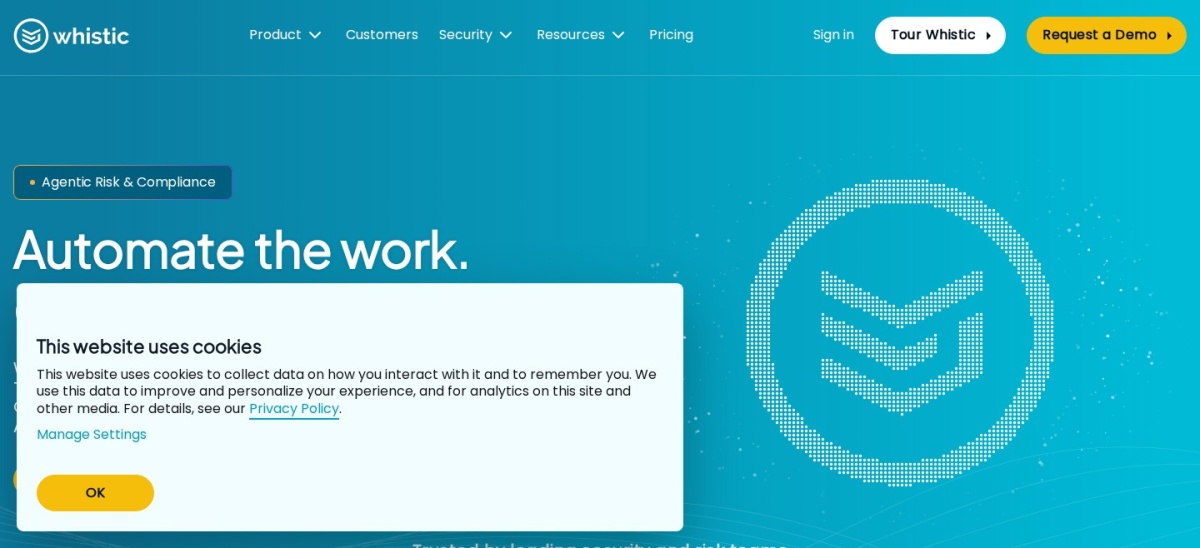
Whistic is a third-party risk platform built for security teams whose vendors are mostly software companies. Instead of sending every vendor a questionnaire, you can request the vendor's existing Whistic profile or trust center content, and AI summarises SOC 2 reports and other evidence against your requirements.
The trade off is fit. Whistic's own pricing page is quote-only, and its AWS Marketplace listing puts Core AI at $15,500 for 12 months, while Assess AI tiers run $31,750 to $76,000. It suits teams that review software vendors on both sides of the questionnaire.
What we like
Shared profiles cut repetitive questionnaires
AI summaries of SOC 2 reports and evidence
50-plus pre-built assessment templates
Customers include Airbnb, Okta and Atlassian
Watch out for
Own pricing page is quote-only
Assess AI tiers jump to $31,750 plus
Lighter for non-IT suppliers than enterprise GRC suites
Ratings platforms answer one question fast: how does this vendor look from outside right now? BitSight and SecurityScorecard are the two pure ratings tools here.
Lifecycle tools answer a longer question: can this vendor prove its controls, sign the right terms and stay compliant over years? Prevalent, Panorays and Whistic live in that camp.
GRC suites answer the widest question: how does vendor risk fit with privacy, audit and enterprise risk? OneTrust and LogicGate are the suite picks here, with Vanta and Drata adding vendor risk to compliance automation.
Many large teams end up with two tools: a ratings platform for triage and a lifecycle or GRC tool for the formal program. Budget for both before you sign either.
How we chose
We started from every third-party risk and security ratings tool with a public G2 rating, then kept the nine that cover the three camps buyers actually compare: ratings, vendor lifecycle and GRC suites.
Prices and ratings were checked on 29 November 2026. Ratings and review counts come from G2 on that day. Prices come from G2 vendor-provided listings and AWS Marketplace list prices where the vendor publishes no price, and quote-only tools are marked Custom.
We left out Black Kite, which has no G2 rating, and RiskRecon, with only 2 G2 reviews. No vendor paid for a place, and we do not claim testing of these tools for this list.
How to choose an UpGuard alternative
Start with the job you need done, not the brand name, then check price and proof before you sign.
Name your camp first. Ratings, lifecycle or GRC suite: pick the camp that matches your main problem, because no tool here leads in all three.
Check the rating scale before you compare scores. BitSight runs 250 to 900 and SecurityScorecard 0 to 100 with A to F grades, so the same vendor can look different on each platform.
Ask for the full first-year cost in writing. Most tools here are quote-only, and SecurityScorecard implementation fees reportedly run $5,000 to $25,000 plus on top of licensing.
Pilot on your top 20 vendors. Compare ratings, questionnaire effort and remediation workflow on the same vendors before committing, since those three experiences decide whether the program gets used.
FAQ
What is the best UpGuard alternative in 2026?
BitSight is the best UpGuard alternative for board-level security ratings, with a 250 to 900 score and a 4.5 out of 5 G2 rating from 76 reviews. SecurityScorecard is the easiest free start, and Vanta suits teams that also need compliance automation.
Which UpGuard alternative is cheapest?
Vanta has the lowest published entry price here at $14,000 a year on AWS Marketplace, followed by Drata at $15,000 and Whistic at $15,500. SecurityScorecard's free company scorecard is the cheapest way to start, though vendor monitoring is quoted.
Are BitSight, SecurityScorecard and UpGuard scores directly comparable?
No. BitSight uses a 250 to 900 scale, SecurityScorecard uses 0 to 100 with A to F grades, and UpGuard uses 0 to 950 with A to F bands, with different weighting methods. A vendor can look meaningfully different on the same day depending on which platform you check.
Is there a free UpGuard alternative?
SecurityScorecard offers a free company scorecard for self-monitoring, and Panorays offers a free trial of its assessment workflow. BitSight also offers a free self-rating and benchmark report. None of the nine tools here has a free vendor-monitoring plan.
Which UpGuard alternative is best for a small team?
Whistic fits small security teams that mostly review software vendors, because shared profiles cut questionnaire work, with Core AI listed at $15,500 a year. Vanta suits small SaaS teams that also need SOC 2, while the enterprise GRC suites here need dedicated staff.
BitSight vs SecurityScorecard: which should I pick?
Pick BitSight for board reporting and insurance or finance use, where its 250 to 900 rating is the recognised benchmark and it holds a 4.5 out of 5 G2 rating. Pick SecurityScorecard for a free starting point and broader company coverage at 12 million plus rated companies.
SaaS SEO and WordPress specialist with about 8 years of experience. Rakib compares WordPress plugins, themes, hosting and software using public pricing, documentation and user reviews. See how we rank.