Kinaxis Maestro is the top supply chain management software for large operations, because its concurrent planning updates demand, supply and inventory in one view. Pick SAP IBP if you already run SAP, or Cin7 Core if you want published pricing and a mid-market fit.
How we make this list: we compare pricing pages, product documentation and public user reviews, then re-check every price before each update. No product paid for a place. Disclosure.
Kinaxis Maestro leads on concurrent planning, rated 4.5 out of 5 on Capterra from 26 reviews.
SAP IBP has the deepest review base here at 4.3 out of 5 from 310 G2 reviews, and fits SAP shops best.
Eight of the 10 tools are quote-only, so budget for a sales process and a long implementation.
Cin7 Core is the only mid-market pick with published pricing, at $349 a month.
Zoho Inventory is the cheapest way in, free for 50 orders a month, with paid plans from $29 a month.
How do you choose the top supply chain management software?
Start with the planning problem, not the vendor list. Demand forecasting, inventory optimization, warehouse execution and transport planning are different jobs, and few tools cover all four well.
Ratings in this category come from small reviewer pools. Most enterprise tools here have fewer than 100 G2 reviews, so treat a 4.5 average from 26 reviews as weaker evidence than a 4.3 from 310.
Expect a quote and a long rollout for the enterprise suites. Kinaxis, SAP IBP, Blue Yonder, Oracle, o9, E2open and ToolsGroup do not publish prices, and SAP IBP averages 7 months to implement on G2.
Small teams should start at the priced end of the list. Cin7 Core at $349 a month and Zoho Inventory from $29 a month publish real prices, while Katana offers a free plan up to 30 SKUs.
The 10 best supply chain management software tools
01
Kinaxis Maestro
4.5/5on Capterra (26 reviews, checked Nov 2026)
PricingCustom/yr
Best for concurrent planning
Planning styleConcurrent planning
Free planNo
PricingCustom quote
DeploymentCloud
kinaxis.com
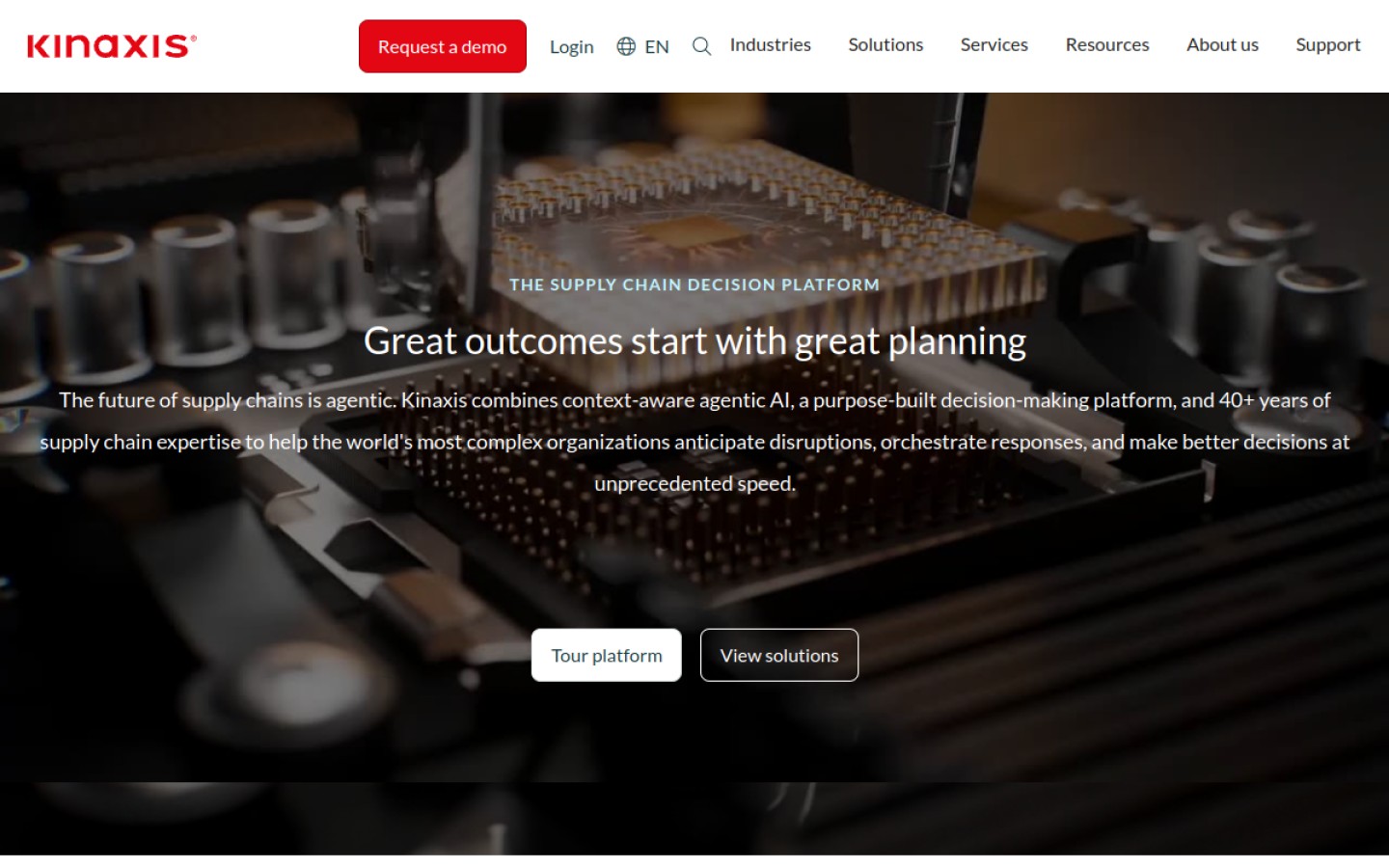
Kinaxis Maestro homepage, captured Nov 2026.
Kinaxis Maestro is a cloud planning platform built around concurrent planning, so a change to demand, supply or inventory shows up across the whole plan at once. It covers demand planning, supply planning, inventory optimization and S&OP on one data model, which is why large manufacturers and life sciences teams use it for fast scenario planning.
The trade off is cost and complexity. Pricing is by quote, the learning curve is steep for new planners, and retail planning is not its design centre. It suits large operations with complex, multi-site supply chains that need to re-plan quickly when demand shifts.
What we like
One data model updates demand, supply and inventory together
Fast what-if scenario planning across the whole network
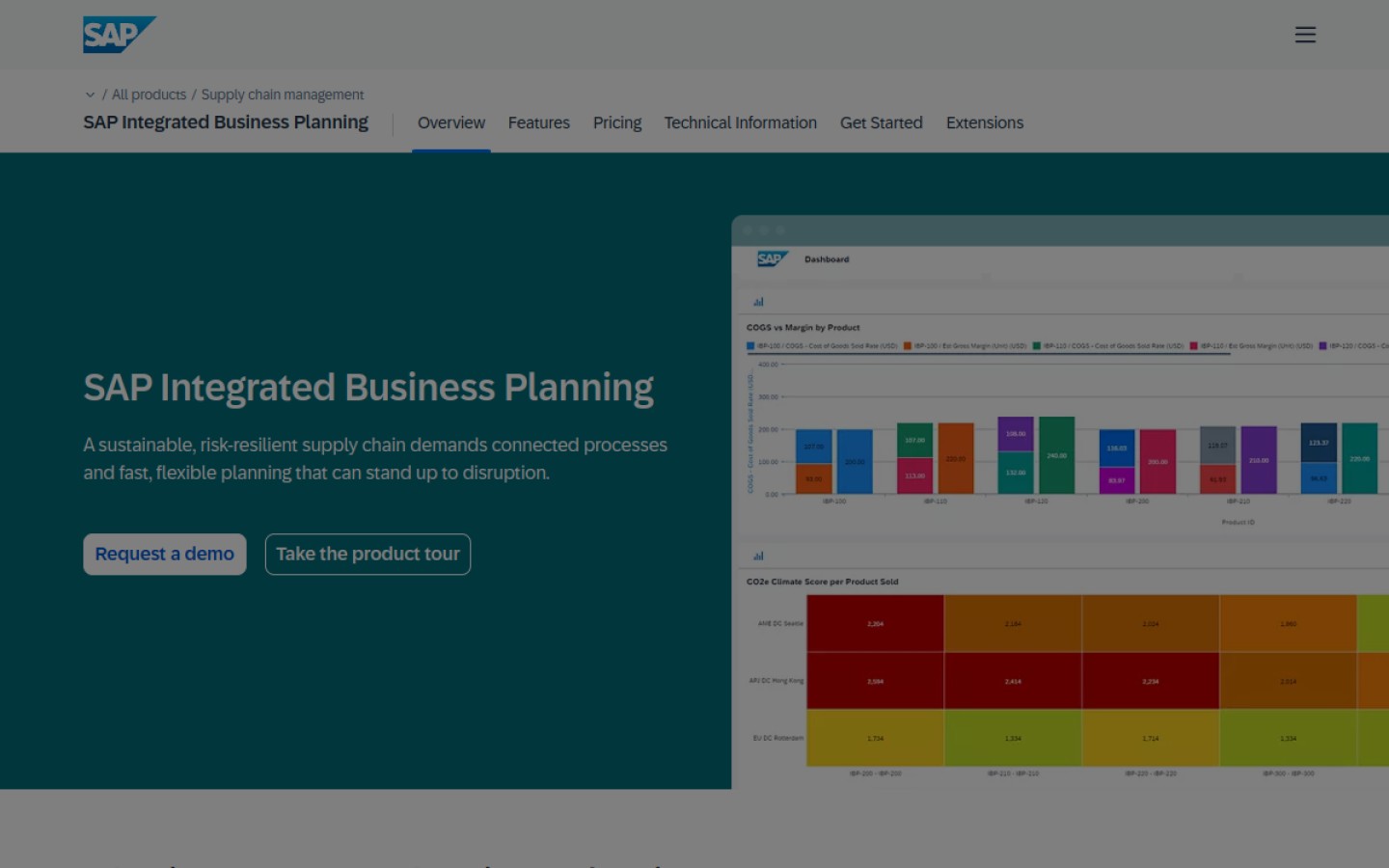
SAP IBP is SAP's cloud planning suite for demand, supply, inventory and sales and operations planning, built to run in real time on one model. It fits companies already running SAP, where it connects planning to execution data without a separate integration project, and it holds the deepest review base in this list.
The trade off is cost and setup time. Pricing is by quote, reviewers cite high licensing costs, and G2 lists an average implementation time of 7 months. It suits large SAP shops that can fund a long rollout and want planning inside their existing SAP landscape.
What we like
Forecasting accuracy is the most praised strength on G2
Tight integration with the rest of SAP
Deepest review base in this list at 310 G2 reviews
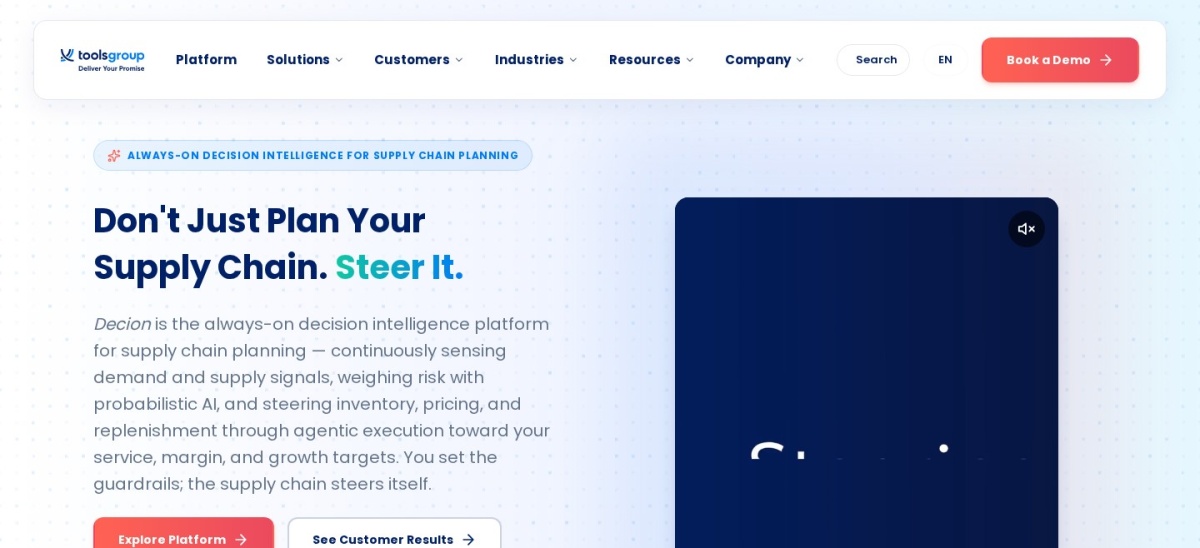
ToolsGroup is a planning platform focused on demand forecasting, inventory optimization and replenishment for distributors, manufacturers and retailers. Its models tune stock levels and service targets across many items and locations, and it is rated 4.5 out of 5 on G2 from 49 reviews.
The trade off is reach and transparency. Pricing is by quote with no public price, the review base is smaller than the big suites, and it is less known outside planning teams. It suits mid-size to large distributors and manufacturers that want demand-driven inventory planning without a full ERP suite.
o9 Solutions is an integrated planning platform that combines demand, supply, inventory and financial planning with AI-driven analytics. It is built for large enterprises that want one planning model across functions, and reviewers praise its business efficiency and planning depth.
The trade off is evidence and cost. It has only 19 G2 reviews, pricing is by quote, and recent reviewers cite high cost as a concern. It suits large enterprises that can run a full evaluation and want AI-led planning across the whole supply chain.
What we like
One planning model across demand, supply and finance
Blue Yonder is a large supply chain suite covering demand and supply planning, warehouse, transport and order management. Its planning tools handle complex, high-volume operations for retail, manufacturing and logistics companies, and it is rated 4.1 out of 5 on G2 from 55 reviews.
The trade off is polish. Reviewers praise the planning depth but report bugs, slow screens and uneven support, and pricing is by quote. It suits large companies that need broad execution coverage and have the team to manage a big suite.
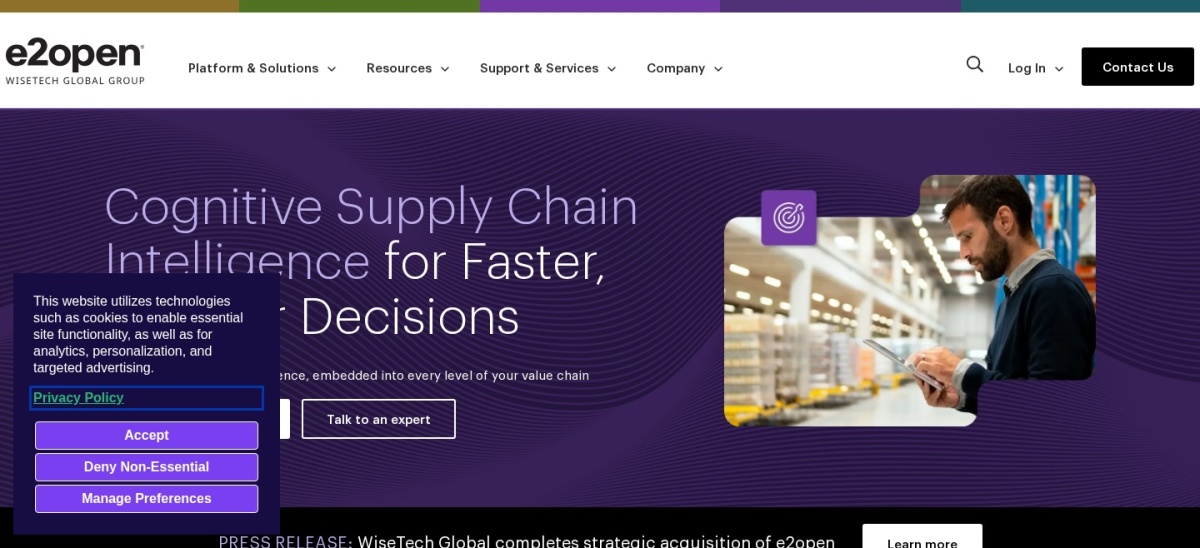
E2open is a network-based supply chain platform that connects a company with its suppliers, contract manufacturers and logistics providers on one system. It covers planning, logistics, global trade and channel collaboration, with multi-tier visibility as its main strength.
The trade off is thin public evidence. It has only 16 G2 reviews on its logistics suite, pricing is by quote, and implementation scope depends on how many partners join the network. It suits companies with complex, multi-party global supply networks.
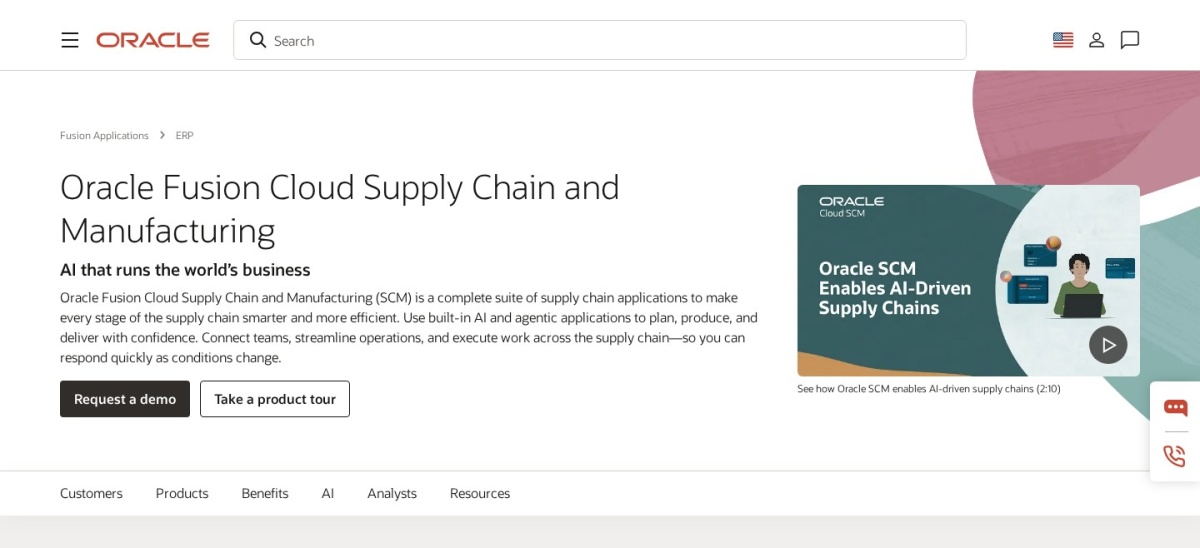
Oracle SCM Cloud is the supply chain suite inside Oracle Fusion Cloud, covering planning, manufacturing, inventory, logistics and procurement in one system. Reviewers call it simple to implement for an enterprise suite, and it is rated 4.0 out of 5 on G2 from 88 reviews.
The trade off is navigation and cost. Some reviewers find the planning screens less intuitive, pricing is by quote, and it is built for enterprise budgets. It suits large companies already running Oracle Fusion that want supply chain and ERP in one cloud.
What we like
Full suite from planning to procurement
Reviewers call it simple to implement for its size
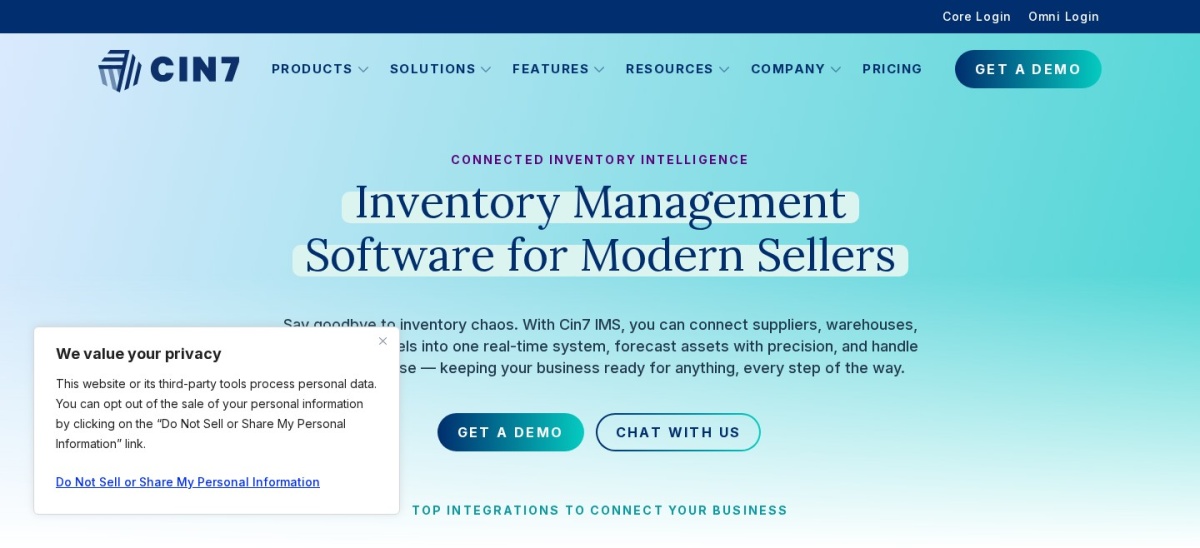
Cin7 Core is a cloud inventory and order platform for multichannel sellers, covering stock, purchase orders, sales orders and warehouse management. Core Standard at $349 a month includes 5 users, 2 integrations and 6,000 sale orders a year, with Pro at $599 adding users and order volume.
The trade off is the order ceiling. Standard covers 6,000 orders a year, and growing past that pushes you to Pro at $599, while the larger Omni product is quote-only. It suits distributors and multichannel sellers that want published pricing and connected inventory.
What we like
Published pricing from $349 a month
Covers stock, orders and warehouse in one place
Largest review base in this list at 353 G2 reviews
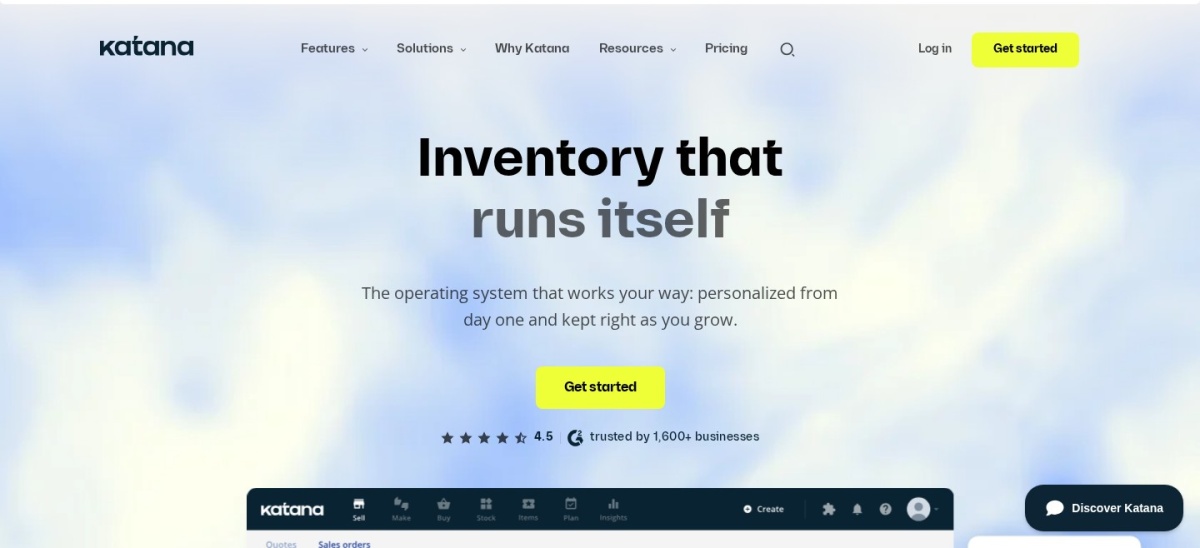
Katana is a cloud inventory and manufacturing tool that ties real-time stock to bills of materials, production orders and sales channels. The free plan includes all features up to 30 SKUs with unlimited users, and it is rated 4.4 out of 5 on G2 from 131 reviews.
The trade off is the new pricing model. Paid access is now Advantage, a custom annual contract with no published price, so small makers cannot budget it from the website. It suits small manufacturers that can start free and want production tied to stock.
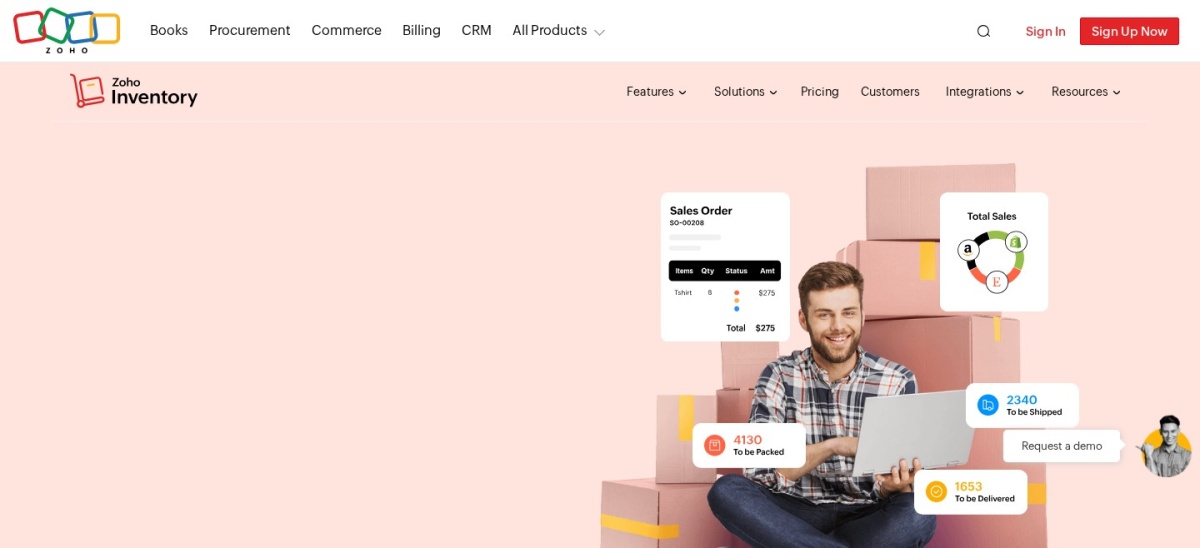
Zoho Inventory is a cloud inventory and order tool that tracks stock, purchase orders, sales orders and warehouses across Shopify, Amazon, eBay and WooCommerce. The free plan covers 50 orders a month for one user, and Standard starts at $29 a month billed annually.
The trade off is scope. It is an inventory tool, not a full planning suite, so demand forecasting and multi-site optimization are thinner than the enterprise picks. It suits small sellers inside the Zoho ecosystem that need multichannel stock tracking at a low price.
Eight of the 10 tools in this list publish no price, so the first number you see comes from a sales conversation, not a pricing page.
The quote usually covers the subscription plus implementation, integration and training, so ask for the whole first-year figure in writing before you compare tools.
Implementation time matters as much as price. SAP IBP averages 7 months to implement on G2, so plan the rollout beside the budget, not after it.
How we chose
We started from the supply chain platforms with public ratings on G2 or Capterra, then kept those still sold in 2026 with a clear planning or execution focus.
Prices come from each vendor's pricing page, checked on 29 November 2026. Cin7 Core at $349 a month was confirmed on its pricing page, and Katana's move to a custom Advantage contract was confirmed on its pricing page. The enterprise suites publish no prices, so they are listed as custom quote.
We left out tools with no verifiable rating on G2, Capterra or Trustpilot. No vendor paid for a place, and we do not claim hands-on testing for this list.
How to choose supply chain management software
Start with what you plan, then match the tool to that job.
Map your planning jobs first. List demand forecasting, inventory, warehouse and transport needs before you look at vendors, so you compare tools on the same jobs.
Check the review base, not just the score. A 4.5 from 26 reviews is weaker evidence than a 4.3 from 310, so weigh the count beside the rating.
Ask for the full implementation quote. Quote-only tools add implementation, integration and training costs, so get the whole figure in writing before you commit.
Trial the priced tools first. Cin7, Katana and Zoho Inventory let you start without a sales call, which tells you quickly whether the workflow fits.
FAQ
What is the top supply chain management software in 2026?
Kinaxis Maestro is the top pick for large operations, thanks to concurrent planning that updates demand, supply and inventory in one view. It is rated 4.5 out of 5 on Capterra, and SAP IBP is the strongest choice for companies already running SAP.
How much does supply chain management software cost?
Most enterprise tools in this list are quote-only, so there is no public price to compare. The priced exceptions are Cin7 Core at $349 a month and Zoho Inventory from $29 a month billed annually, while Katana now sells a custom annual contract.
Is there a free supply chain management software?
Katana and Zoho Inventory both offer free plans, with Katana covering 30 SKUs and Zoho Inventory covering 50 orders a month for one user. Neither is a full enterprise planning suite, so treat them as starting points for small product businesses.
Which supply chain software is best for small businesses?
Zoho Inventory is the best fit for small sellers, with a free plan and paid plans from $29 a month. Cin7 Core suits growing multichannel sellers at $349 a month, while Katana fits small makers who need production tied to stock.
Kinaxis vs SAP IBP: which is better?
Kinaxis Maestro wins on concurrent planning and fast scenario modelling, and it is rated 4.5 out of 5 on Capterra. SAP IBP wins for companies already running SAP, with the deepest review base here at 4.3 out of 5 from 310 G2 reviews.
Do I need an enterprise suite or a mid-market tool?
Choose an enterprise suite if you plan across many sites, suppliers and product lines with complex constraints. Choose a mid-market tool such as Cin7 Core or Zoho Inventory if you mainly need stock, orders and fulfilment in one place.
SaaS SEO and WordPress specialist with about 8 years of experience. Rakib compares WordPress plugins, themes, hosting and software using public pricing, documentation and user reviews. See how we rank.