Taggbox is the best of the top Olapic alternatives for most brands: it scores 4.8 out of 5 on G2 and turns customer photos into shoppable galleries from $19 a month. Bazaarvoice fits large retailers that need review syndication, while Juicer is the cheapest paid start at $15 a month.
How we make this list: we compare pricing pages, product documentation and public user reviews, then re-check every price before each update. No product paid for a place. Disclosure.
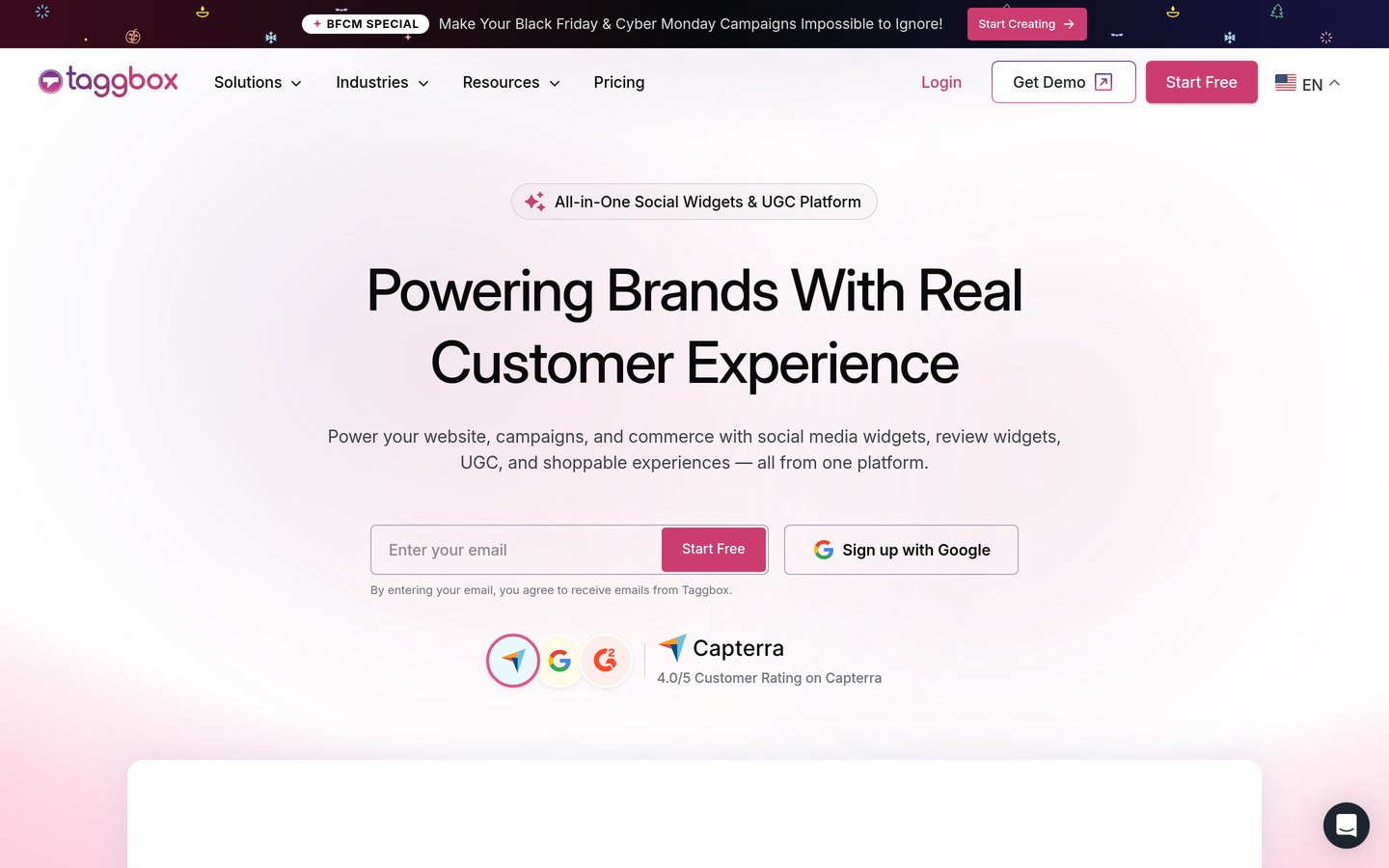
Taggbox is the closest Olapic replacement: shoppable galleries, a free plan, and paid plans from $19 a month.
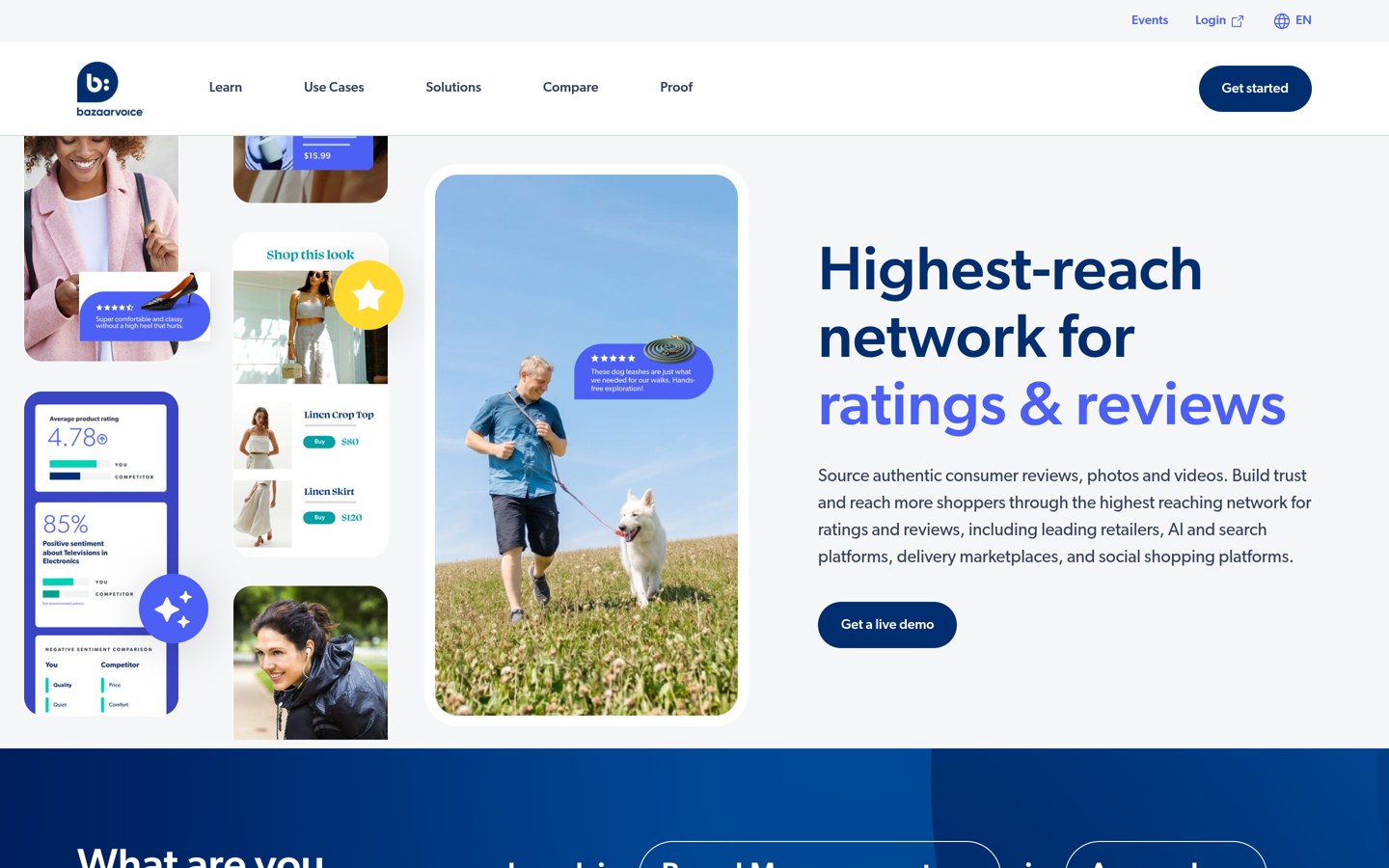
Bazaarvoice is the only enterprise-grade peer, with retail syndication to stores such as Walmart and Target, but pricing is by quote only.
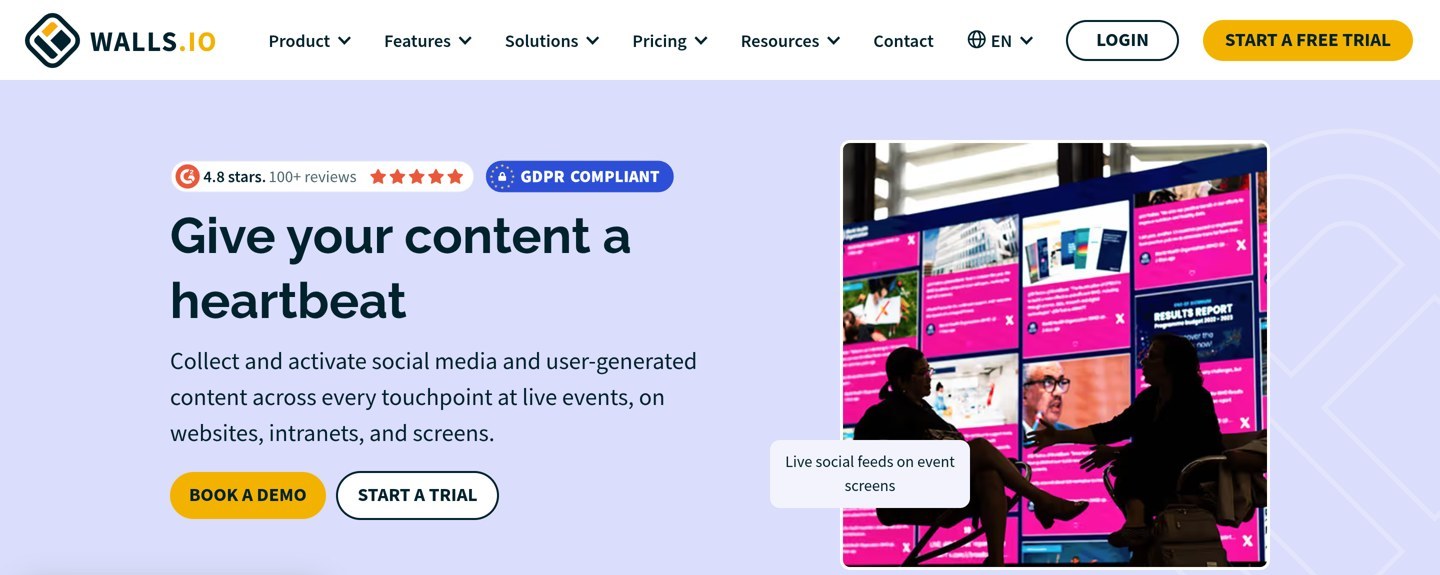
Walls.io is the highest-rated event wall at 4.8 out of 5, yet its $270-a-month entry price is the steepest here.
Six of the nine tools have a free plan; Juicer has the cheapest paid plan at $15 a month.
Olapic itself was acquired by Social Native in 2020, so every tool here is a move to a live, supported platform.
How do you pick from the top Olapic alternatives?
Olapic was a visual commerce platform that turned customer photos into shoppable galleries, and Social Native acquired it in 2020, folding it into its creator platform. That leaves brands on Olapic looking for a supported home for the same job: collect customer content, get rights to use it, and tag products in it.
Start with where the content will appear. If the goal is shoppable galleries on product pages, Taggbox and Bazaarvoice are the direct matches, while Walls.io and Flockler are stronger for event screens and social walls.
Price spreads are wide in this category. Entry plans run from $15 a month at Juicer to $270 a month at Walls.io, and Bazaarvoice does not publish prices at all, so enterprise buyers should budget for a sales conversation. See how the wider market splits in our Ecommerce Platform Market Share (2026) guide.
Rights management is the feature most buyers overlook. Taggbox keeps formal UGC rights workflows on its custom Enterprise plan, so brands that repurpose customer photos in ads should confirm what their tier covers before they sign up.
Taggbox is a UGC platform that collects customer photos, videos and reviews from social networks and turns them into embeddable website widgets and shoppable galleries. The free plan covers 1 feed and 300 monthly views, while Starter at $19 a month removes branding and raises limits to 2 feeds and 10,000 views.
The trade off is that product tagging for shoppable feeds needs the Growth plan at $29 a month billed annually, and formal UGC rights management is reserved for custom Enterprise plans. It suits ecommerce brands that want Olapic-style shoppable galleries without an enterprise sales process.
Bazaarvoice is an enterprise UGC platform that collects ratings, reviews, photos and videos and syndicates them to retailer product pages. It works with more than 13,000 brands and retailers, and its social commerce tools build shoppable photo and video galleries with revenue tracking.
The trade off is price and process. Bazaarvoice publishes no prices, sells annual contracts by quote, and reviewers report contracts in the tens of thousands a year. It suits large brands that sell through major retailers and need syndication at a scale no other tool here offers.
What we like
Widest retail syndication network in this list
Ratings, reviews, sampling and creator tools in one suite
Walls.io is a social wall platform that collects posts from 14 platforms and displays them on event screens, websites and intranets. The Professional plan starts at $270 a month and includes content updates every 5 minutes, while a $270 one-time Event Pass covers a single event.
The trade off is the entry price. At $270 a month it is the most expensive starting plan in this list, and there is no free plan, only a 14-day trial. It suits event teams and brands that run frequent live events and need a polished, GDPR-compliant wall.
What we like
Rated 4.8 out of 5 from 113 G2 reviews
Built for live events, screens and intranets
GDPR-compliant with EU hosting
Watch out for
Highest entry price in this list at $270 a month
No free plan, only a 14-day trial
Overkill for a simple website feed
Premium adds more sources and advanced featuresVisit walls.io
04
EmbedSocial
4.8/5on G2 (105 reviews, checked Nov 2026)
Paid from$29/mo
Best budget review and social widgets
Free plan1 source, 500 views/mo
SourcesGoogle, Facebook, TikTok and more
WidgetsUnlimited on every plan
Paid planPro, $29/mo
embedsocial.com
EmbedSocial homepage, captured Nov 2026.
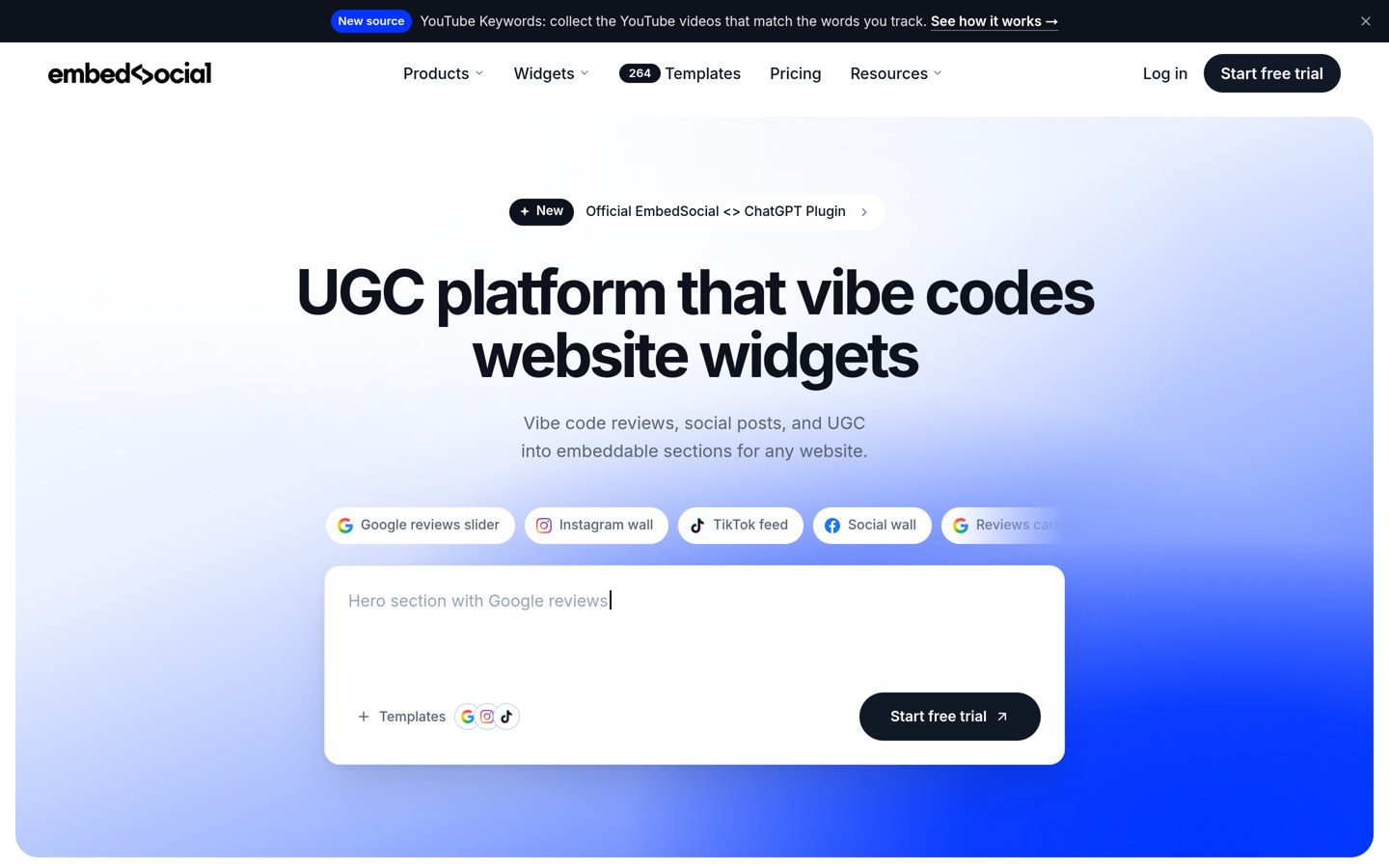
EmbedSocial is a UGC platform that pulls Google, Facebook and Trustpilot reviews plus Instagram and TikTok posts into widgets for any website. The free plan covers 1 source and 500 monthly views, and Pro at $29 a month adds more sources, moderation, analytics and shoppable feeds.
The trade off is that the cheapest paid plan is priced per source, so a business with several Google locations pays for each one. It suits small businesses that want review widgets and social feeds in one embed without an enterprise contract.
Tagembed is a social media aggregator that embeds Instagram feeds and customer reviews on any website, with a 4.7 out of 5 G2 rating from 97 reviews. The free plan covers 1 feed, 300 views a month and 100 posts, with manual updates once a day and embeds on unlimited websites.
The trade off is the monthly price. Starter costs $19 a month, or $228 a year, for 2 feeds and 10,000 views a month, and the free plan keeps Tagembed branding on the widget. It suits small sites that want feeds and reviews together in one embed.
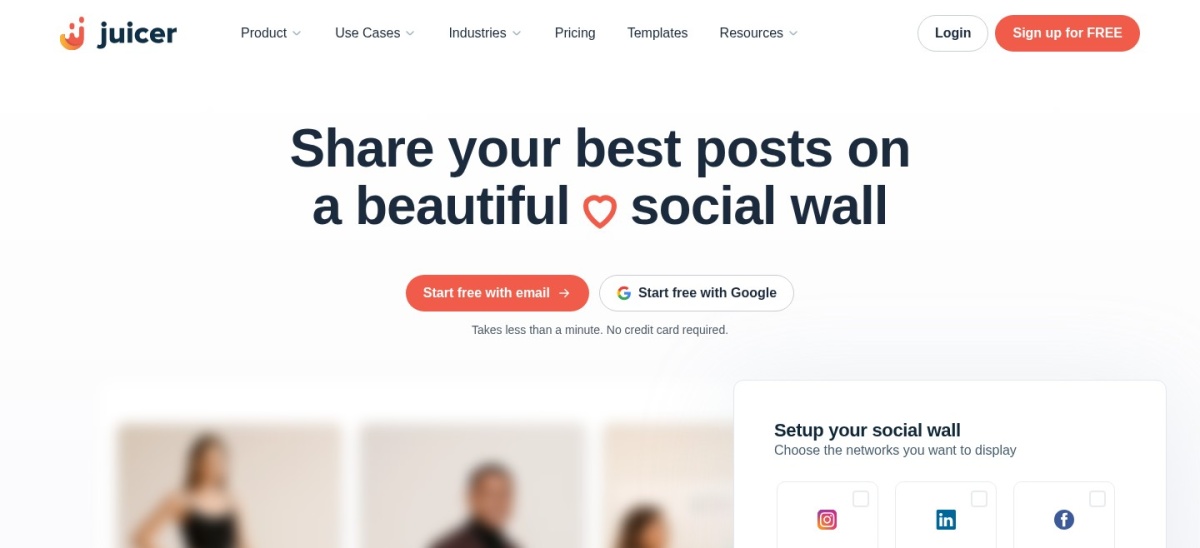
Juicer is a social media aggregator that pulls posts from 15 or more platforms into automatically updating feeds for a website. The free plan covers 1 source with daily refresh, and Lite at $15 a month billed annually adds 3 sources, hourly refresh and no Juicer branding.
The trade off is depth. Lite covers 1 feed and 3 sources, so brands with many accounts need Starter at $25 a month or Pro at $99 a month. It suits creators and small businesses that want a simple social wall at the lowest price here.
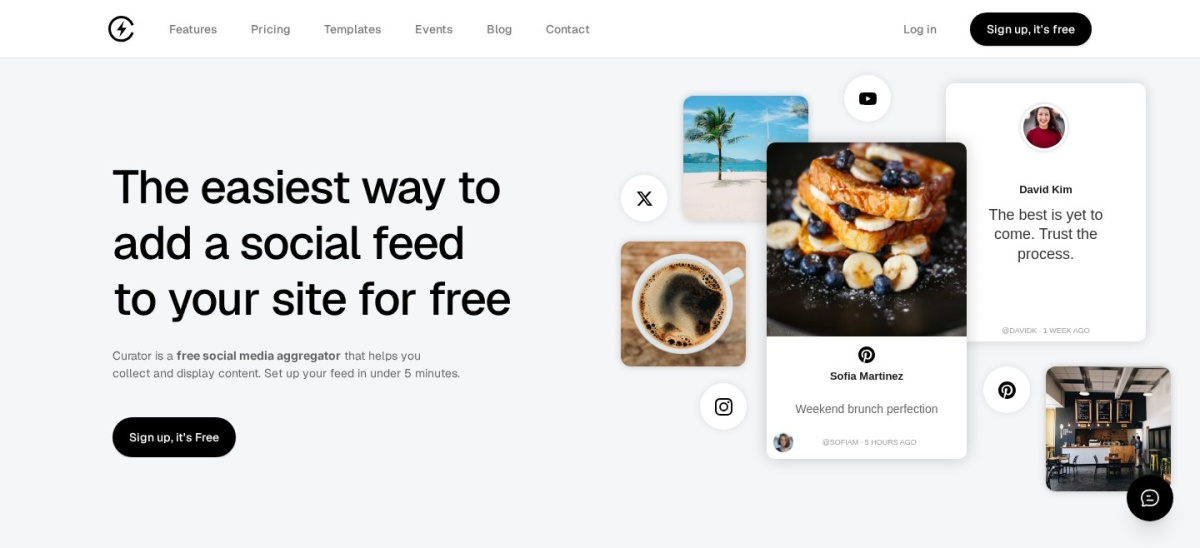
Curator.io is a lightweight social media aggregator that pulls hashtag mentions and brand accounts from Instagram, Facebook, YouTube and Reddit into responsive website feeds. Its free plan covers 3 sources and 2,000 monthly views, while Pro at $23 a month billed annually removes branding and raises limits to 5 sources and 15,000 views.
The trade off is the small review base and the price. Pro costs $23 a month billed yearly, or $276 a year, for 5 sources and hourly updates, and only 11 G2 reviews back the 4.5 rating. It suits small sites that want a clean, moderated feed without a big setup.
What we like
Generous free plan with 3 sources
Simple setup with 20+ display templates
Unlimited admin users on every plan
Watch out for
Only 11 G2 reviews, so the rating is a thin sample
Flockler is a social media aggregation platform that collects content from 8 sources on its Basic plan and embeds it across unlimited websites, apps and digital screens. Every plan includes unlimited layouts, page views and users, which suits teams managing several brands or sites at once.
The trade off is the entry price. Basic lists at $129 a month, with annual billing bringing it to about $110 a month, and there is no free plan beyond a 14-day trial. It suits mid-size teams that need one tool for many channels and many sites.
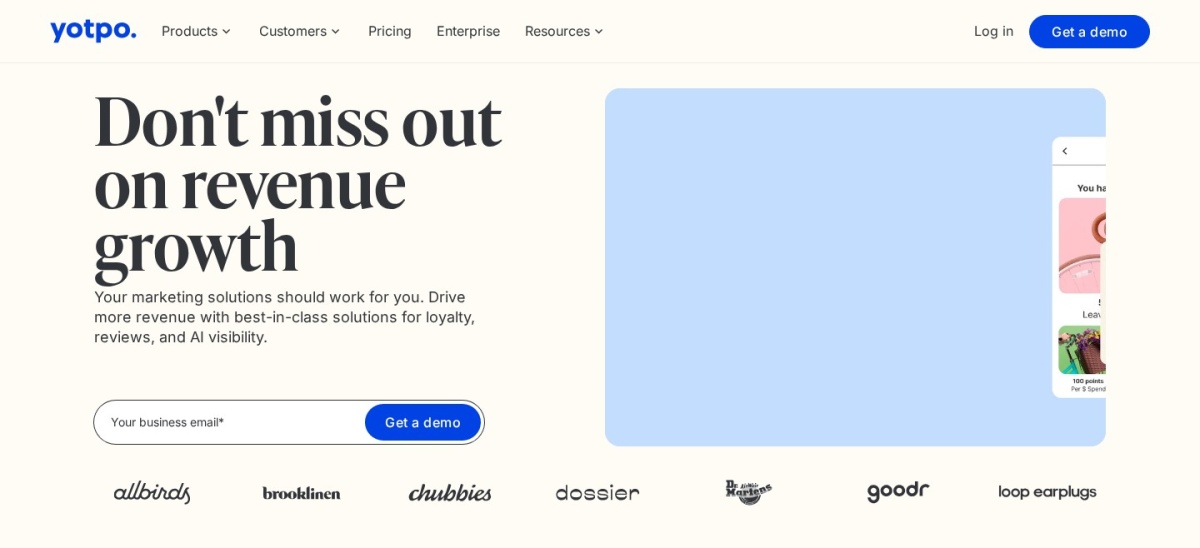
Yotpo is a retention platform that combines product reviews, loyalty programs and SMS, with UGC galleries that show customer photos beside products. The free plan supports up to 50 monthly orders, and Pro at $199 a month covers 500 orders with rewards pages and review request emails.
The trade off is cost and focus. At $199 a month it is the second-priciest entry plan here, and UGC galleries are one part of a wider retention suite rather than the core product. It suits Shopify and BigCommerce stores that want reviews and loyalty in one bill.
Olapic was acquired by Social Native in 2020, and its visual commerce tools now sit inside Social Native's creator platform. The standalone Olapic product is no longer sold as a separate platform.
That is why this list focuses on live platforms with the same core job: collecting customer photos and videos, moderating them, and turning them into shoppable galleries or social walls.
If you still have Olapic galleries running, check whether your content rights carry over before you migrate, since each platform tracks consent in its own way.
How we chose
We started from the platforms most often named as Olapic replacements on G2, SourceForge and Slashdot, then kept the nine with a public G2 rating and a real product behind it.
Prices come from each vendor's pricing page and G2's pricing data, checked on 29 November 2026. Ratings and review counts come from G2 on the same day. Where a vendor shows a sale or an annual discount, the list shows the regular monthly price.
We left out tools aimed only at influencer discovery, such as creator marketplaces, because Olapic's core job was on-site visual commerce, not finding creators. No vendor paid for a place, and we do not claim hands-on testing for this list.
How to choose an Olapic alternative
Match the tool to where your customer content will work hardest, then check the price of the tier that unlocks it.
Decide where the content goes. Shoppable product-page galleries need Taggbox or Bazaarvoice; event screens and intranets need Walls.io or Flockler; simple website feeds work fine with Juicer or Curator.io.
Check what the entry plan actually unlocks. Shoppable product tagging starts at $29 a month on Taggbox, and UGC rights management is Enterprise-only there, so read the plan table before you compare headline prices.
Test the free plan with real content. Six tools here have a free plan. Embed a feed with your own customer photos and check load time and mobile layout before you pay.
Confirm rights and moderation. Ask how the tool collects permission to reuse a customer's photo and whether moderation is automatic or manual, since both affect what your team does every week.
FAQ
What are the best Olapic alternatives in 2026?
Taggbox is the best Olapic alternative for most brands, with a 4.8 out of 5 G2 rating and shoppable galleries from $19 a month. Bazaarvoice suits large retailers that need review syndication, and Walls.io leads for live-event social walls.
What happened to Olapic?
Social Native acquired Olapic in 2020 and folded its visual commerce tools into its creator platform. The standalone Olapic product is no longer sold separately, which is why brands look for a live replacement.
What is the cheapest Olapic alternative?
Juicer is the cheapest paid option at $15 a month for its Lite plan, and Taggbox and Tagembed both start at $19 a month. Six of the nine tools in this list also have a free plan.
Is there a free Olapic alternative?
Yes. Taggbox, Tagembed, EmbedSocial, Juicer, Curator.io and Yotpo all have free plans, though they cap feeds, views or orders. Shoppable product tagging usually needs a paid tier.
Which Olapic alternative is best for small businesses?
Taggbox is the best fit for most small businesses: it has a free plan, paid plans from $19 a month, and shoppable galleries from $29 a month. Tagembed is a close second at the same starting price.
Taggbox vs Bazaarvoice: which is better?
Taggbox is better for small and mid-size brands that want published prices and a free plan. Bazaarvoice is better for large retailers that sell through major stores and need review syndication, but its pricing is by quote only.
SaaS SEO and WordPress specialist with about 8 years of experience. Rakib compares WordPress plugins, themes, hosting and software using public pricing, documentation and user reviews. See how we rank.