Epic is the top EMR EHR medical software for hospitals and large health systems, holding records for more than three hundred million patients. ModMed leads for specialty practices, while Tebra is the value pick for independent practices from forty-nine dollars per provider a month.
How we make this list: we compare pricing pages, product documentation and public user reviews, then re-check every price before each update. No product paid for a place. Disclosure.
Epic leads for hospitals and large health systems, with records for more than 300 million patients.
ModMed holds the highest G2 rating in this list at 4.5 from 362 reviews.
Tebra is the cheapest entry point, with plans listed from $49 per provider a month.
Practice Fusion is the simplest published price at $199 per provider a month with no tiers.
Five of the nine tools publish no price, so a sales call is the only way to compare them.
eClinicalWorks lists $499 a month for EHR alone and $599 with practice management.
How do you choose the top EMR EHR medical software?
EHR prices are rarely published. Only four of the nine tools in this list show a list price, so the rest need a sales call before you can compare them.
Small practices and hospitals buy different tools. A solo practice wants a low per-provider price and fast setup, while a hospital needs one record for every department.
Charting speed matters more than feature count. Templates, AI scribes and voice capture decide whether clinicians finish notes on time or after hours.
Billing is part of the EHR, not an add-on. Most of these tools bundle billing and revenue cycle work, and the real cost shows up in the bundle, not the entry price.
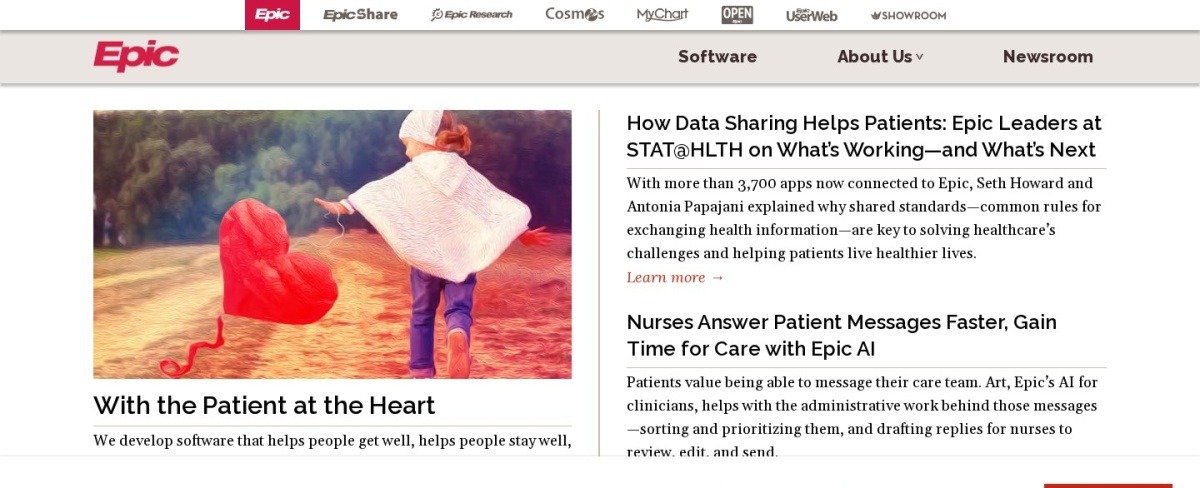
Epic is the electronic health record used by many of the largest hospitals and health systems, covering inpatient, ambulatory, emergency and billing work in one record. Its Care Everywhere network shares records across Epic and non-Epic systems, and it carries records for more than 300 million patients.
The trade off is scale and cost. Epic publishes no price, and implementations commonly run 12 to 18 months with costs in the millions for health systems. It suits large hospitals and academic medical centers that need one record for everything.
What we like
Deepest interoperability network
Strongest clinician satisfaction among large systems
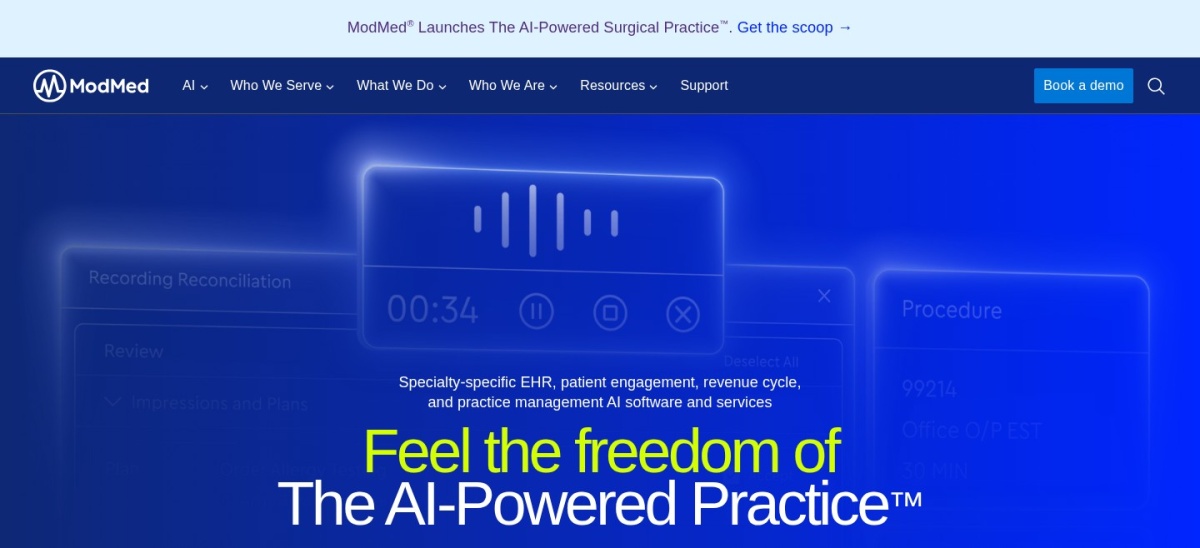
ModMed is a specialty-focused EHR built for practices such as dermatology, ophthalmology, orthopedics and gastroenterology, with charting templates shaped around each specialty. It holds the highest G2 rating in this list at 4.5 from 362 reviews.
The trade off is price transparency and scope. ModMed publishes no list price, and its specialty depth matters less to general practices that do not need it. It suits specialty practices that want charting built for their workflow.
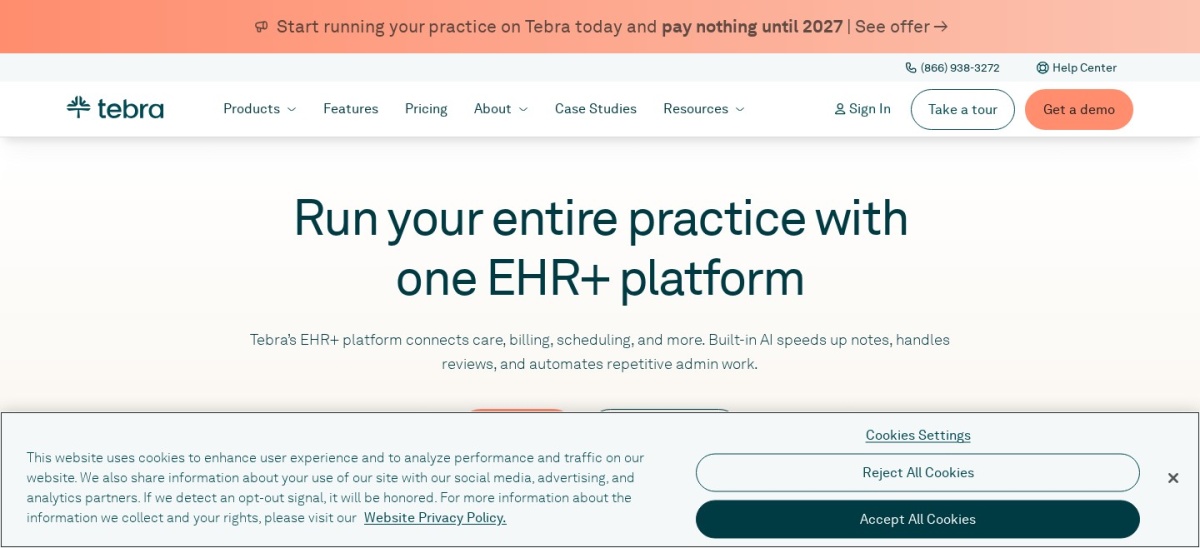
Tebra is the platform formed in 2021 from the Kareo and PatientPop merger, combining EHR, billing, scheduling, telehealth and patient growth tools for independent practices. Its pricing page lists plans from $49 a month, the lowest entry price in this list.
The trade off is depth at the low end. The cheapest tier covers the basics, and fuller billing and engagement features sit on higher plans, so the real cost depends on the bundle. It suits independent practices that want one system for clinical work and collections.
Practice Fusion is a cloud EHR for independent practices, owned by Veradigm, with charting templates, e-prescribing including controlled substances, lab and imaging orders and a patient portal. Its pricing page lists $199 a month per provider with no hidden tiers.
The trade off is depth and the small review base. Practice Fusion is a general EHR with no specialty workflows, and only 62 G2 reviews back its 3.8 rating. It suits solo and small practices that need a low-cost charting system.
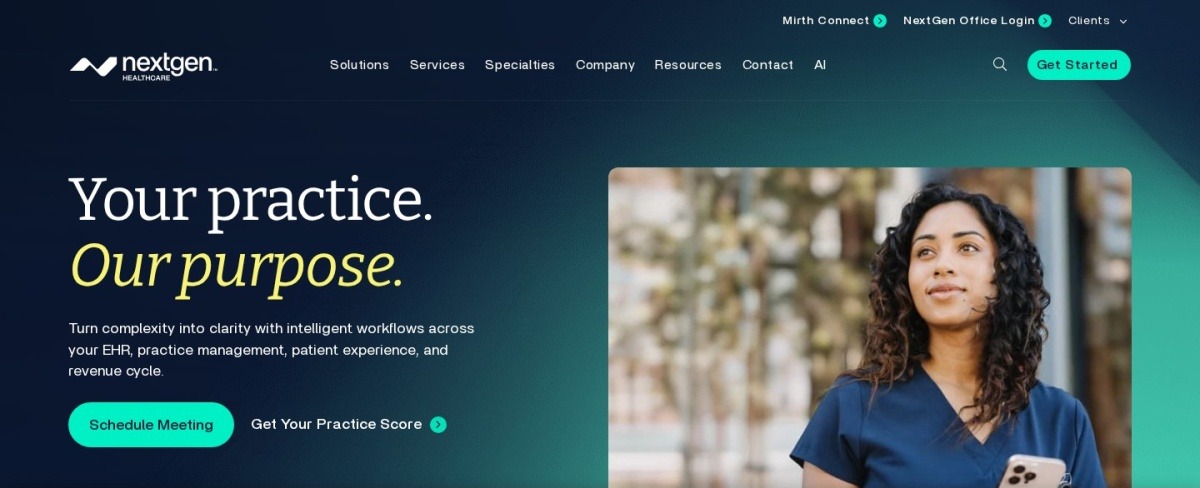
NextGen Healthcare is an EHR and practice management platform for ambulatory and specialty practices, with specialty-focused content, integrated scheduling and billing, and population health tools for value-based care. It covers many specialties and supports larger teams than the small-practice tools in this list.
The trade off is transparency. NextGen publishes no list price, and its G2 rating of 3.7 trails its Capterra score of 4.0, so buyer experience varies. It suits growing multi-provider groups that want one system for charting and billing.
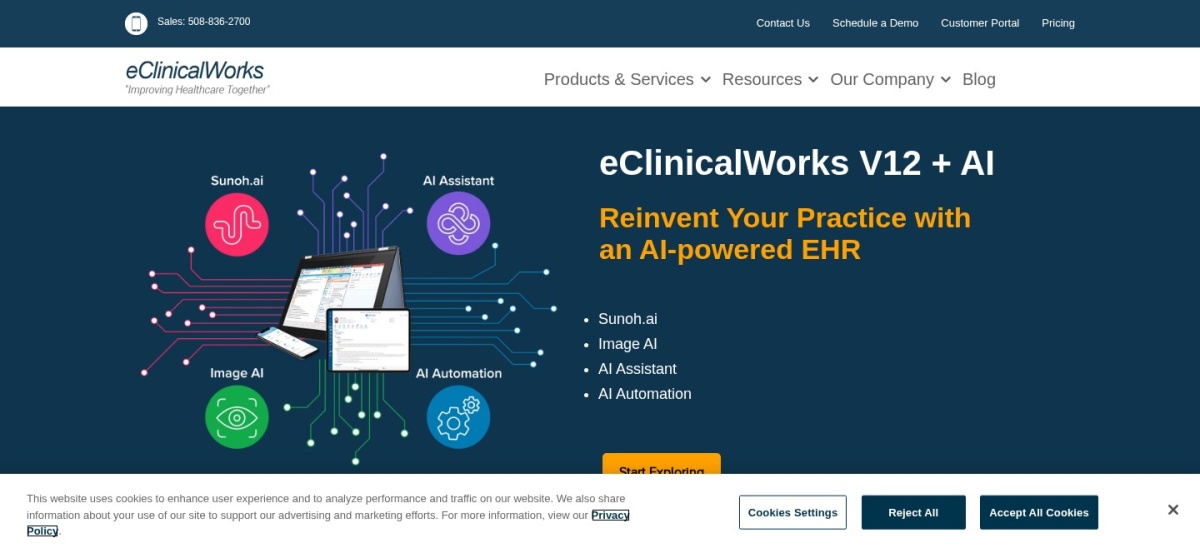
eClinicalWorks is a cloud EHR and practice management platform for ambulatory practices, used by more than 180,000 physicians and nurse practitioners according to the vendor. It covers EHR, practice management, telehealth and patient engagement, with the Sunoh.ai scribe for documentation.
The trade off is the price ladder. EHR alone costs $499 per provider a month, EHR with practice management costs $599, and the RCM service takes 2.9 percent of collections. It suits ambulatory groups that want a published price and deep telehealth tooling.
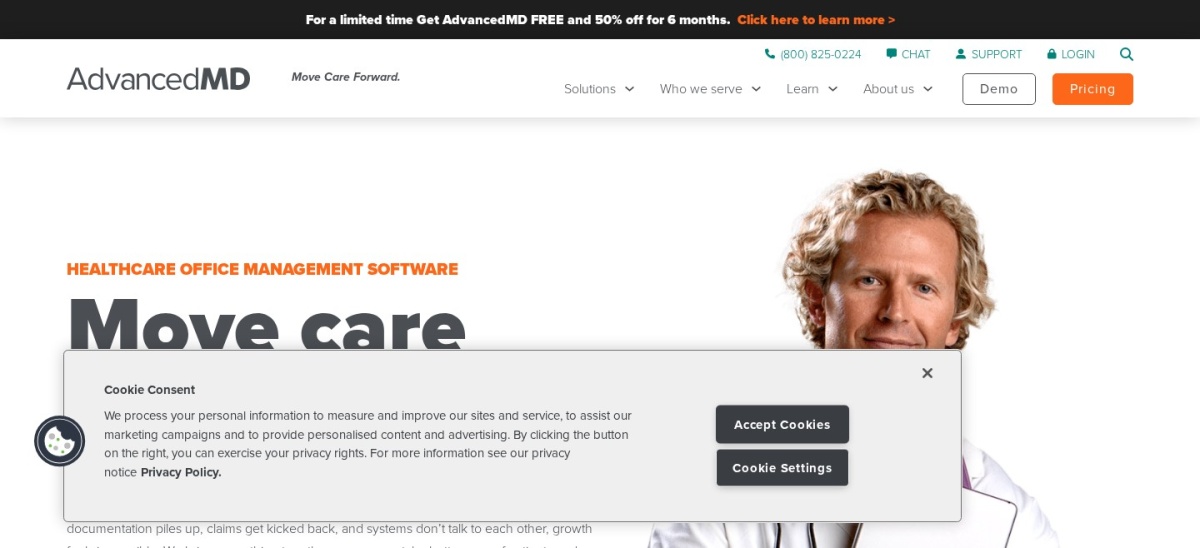
AdvancedMD is a cloud EHR, practice management and patient engagement suite for independent practices, with prices listed by specialty. Medical specialties start at $429 per provider a month, and the platform adds scheduling, billing and telehealth in one contract.
The trade off is cost and complexity. Realistic bundles land closer to $600 to $800 per provider a month once billing and engagement stack up, and reviewers call the learning curve steep. It suits insurance-heavy groups that want modular pricing.
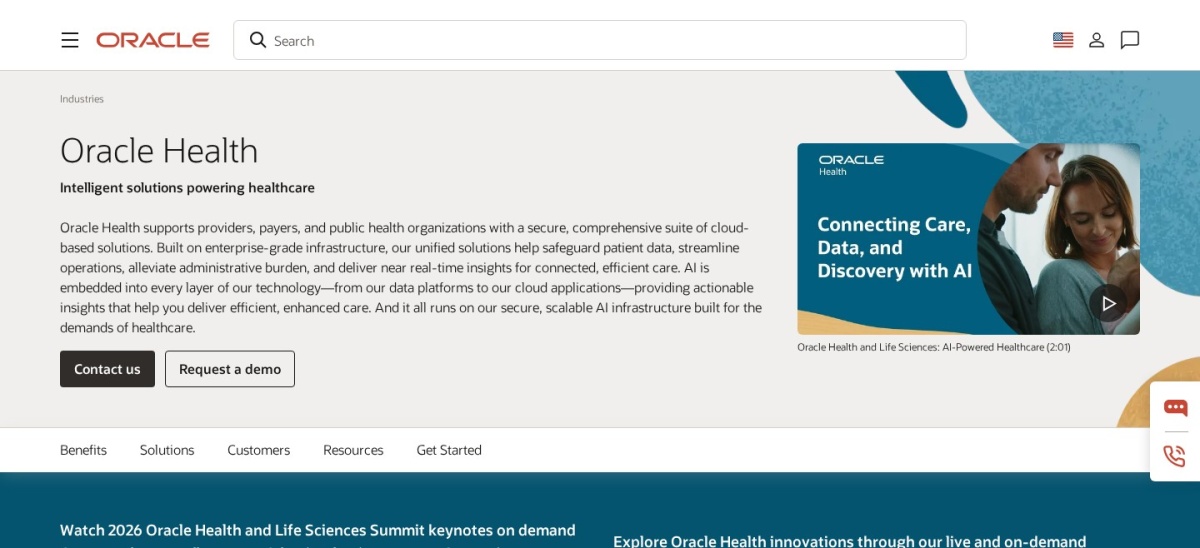
Oracle Health is the other enterprise EHR, formerly Cerner, covering clinical, revenue cycle and population health workflows on Oracle Cloud Infrastructure. Its Millennium hospital record supports documentation, ordering and review in one workflow, plus AI-powered clinical intelligence.
The trade off is satisfaction and scale. Oracle Health holds the lowest G2 rating in this list at 3.5, and implementations run for months, so it is a long commitment. It suits health systems already invested in Oracle's cloud and applications.
DrChrono is a mobile-first EHR by EverHealth, built around iPad charting, with billing automation, scheduling and a patient portal for small practices. Its iOS app lets clinicians chart at the bedside instead of at a desk, which G2 reviewers cite as its main strength.
The trade off is rating and price clarity. DrChrono holds a 3.4 G2 rating from 43 reviews, the lowest in this list, and it publishes no price. It suits small practices that want to chart on an iPad and automate billing.
No EHR in this list has a free plan. Every tool here is paid, and most of them quote a price only after a sales call.
Free EHR options exist outside this list, but they are limited. They usually cover basic charting and e-prescribing, with billing, telehealth and support behind a paywall.
For a small practice, the cheapest published entry is Tebra at $49 per provider a month. Practice Fusion is the next rung at $199, with no hidden tiers.
Hospitals do not get a free tier at all. Epic and Oracle Health sell enterprise contracts, so the negotiation itself is part of the purchase.
How we chose
We started from the G2 EHR leaders and high performers for Fall 2026, then kept the tools with a verifiable G2 rating and a real EHR product.
Prices come from each vendor's pricing page, checked on 29 November 2026, or from sources that read the vendor's own page this month. Ratings and review counts come from G2 on the same day. Where a vendor shows a sale, the list shows the regular price.
We left out tools with no verifiable rating on G2, Capterra or Trustpilot. No vendor paid for a place, and we do not claim hands-on testing for this list.
How to choose EMR EHR medical software
Start with your practice size, then check the published price against the real bundle cost.
Match the tool to your practice size. Solo and small practices do best with Tebra or Practice Fusion, while hospitals need Epic or Oracle Health.
Ask for the real bundle price. The entry price rarely covers billing and engagement, so get the full per-provider quote before you compare.
Test the charting, not the demo. Templates and AI scribes decide whether notes finish on time, so trial the workflow your clinicians will use daily.
Check migration and support terms. Moving records off an old EHR takes months, so confirm data migration help and support hours in the contract.
FAQ
What is the top EMR EHR medical software in 2026?
Epic is the top EMR EHR medical software for hospitals and large health systems, holding records for more than 300 million patients. ModMed leads for specialty practices, while Tebra is the value pick for independent practices from $49 per provider a month.
What is the cheapest EMR EHR software?
Tebra is the cheapest in this list, with plans listed from $49 per provider a month. Practice Fusion is the next cheapest published price at $199 per provider a month, while Epic, Oracle Health and ModMed are quote only.
Is there a free EMR or EHR system?
None of the nine tools in this list has a free plan. Free EHR options exist, but they usually cover only basic charting and e-prescribing, with billing, telehealth and support behind a paywall.
What is the difference between Epic and Oracle Health?
Epic is the largest EHR in the United States and holds the highest enterprise rating in this list at 4.2 on G2. Oracle Health, formerly Cerner, is the other enterprise hospital EHR, but it rates lower at 3.5 on G2.
Which EHR is best for small practices?
Tebra suits small independent practices best, with the lowest entry price and one system for EHR, billing and scheduling. Practice Fusion is the simpler alternative at $199 per provider a month.
Does eClinicalWorks cost $499 a month?
Yes, EHR alone costs $499 per provider a month, and EHR with practice management costs $599, according to multiple sources reading eClinicalWorks' own pricing page in 2026. A revenue cycle service adds 2.9 percent of collections.
SaaS SEO and WordPress specialist with about 8 years of experience. Rakib compares WordPress plugins, themes, hosting and software using public pricing, documentation and user reviews. See how we rank.