Icertis is the best contract management software for banks, with AI-powered contract intelligence and deep SAP integration for enterprise-scale portfolios. Sirion leads on post-signature obligation tracking, while CobbleStone is the cheapest paid option at $59 a user a month.
How we make this list: we compare pricing pages, product documentation and public user reviews, then re-check every price before each update. No product paid for a place. Disclosure.
Icertis leads for large banks, with AI contract intelligence and SAP integration no rival matches.
Sirion is the best pick for post-signature obligations, with AI tracking across 100+ languages.
Six of the nine tools sell by quote only, so ask for licence and implementation as separate lines.
CobbleStone is the cheapest paid option at $59 a user a month, with the highest G2 rating at 4.7.
ContractWorks charges a flat $600 a month for unlimited users, the simplest price in the list.
How do you choose the best contract management software for banks?
Banks buy contract software for audit readiness first and convenience second. Every vendor agreement, loan document and renewal date has to survive an examiner's review, so the repository, the audit trail and the obligation tracking matter more than the drafting interface.
Most enterprise CLM tools sell by quote only. Icertis, Sirion, Ironclad, Agiloft, DocuSign CLM and Contract Logix publish no prices, so a bank should ask for licence and implementation as separate lines before comparing them with the three tools that do publish a price.
Obligation tracking is the feature that separates bank CLM from generic contract tools. Sirion extracts obligations from signed contracts and tracks delivery, while Icertis structures contract data for reporting across the whole portfolio. Our guide on enterprise contract management tools compares the same platforms on governance and AI.
Smaller banks do not need an enterprise platform. CobbleStone starts at $59 per user a month, ContractWorks charges a flat $600 a month for unlimited users, and Concord covers five users for $499 a month. Start with the contract volume you actually hold, then buy the governance to match it.
The 9 best contract management software tools for banks
01
Icertis
4.2/5on G2 (93 reviews, checked Nov 2026)
PricingCustom/yr
Best contract management software for banks
PricingQuote only
G2 rating4.2/5, 93 reviews
SAP linkOnly Solution Extension partner
ImplementationAbout 6 months
icertis.com
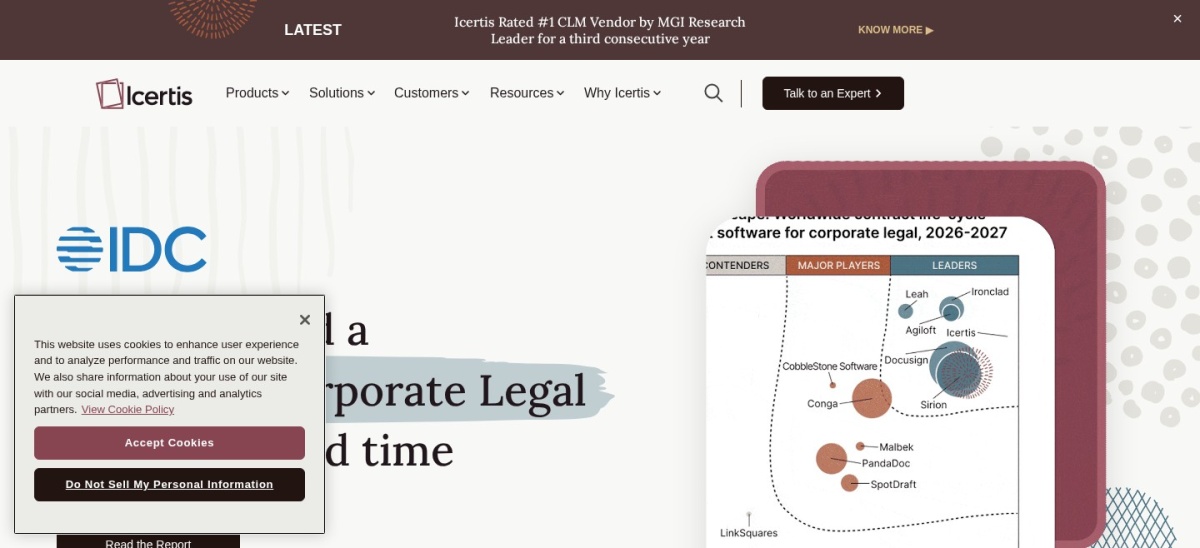
Icertis homepage, captured Nov 2026.
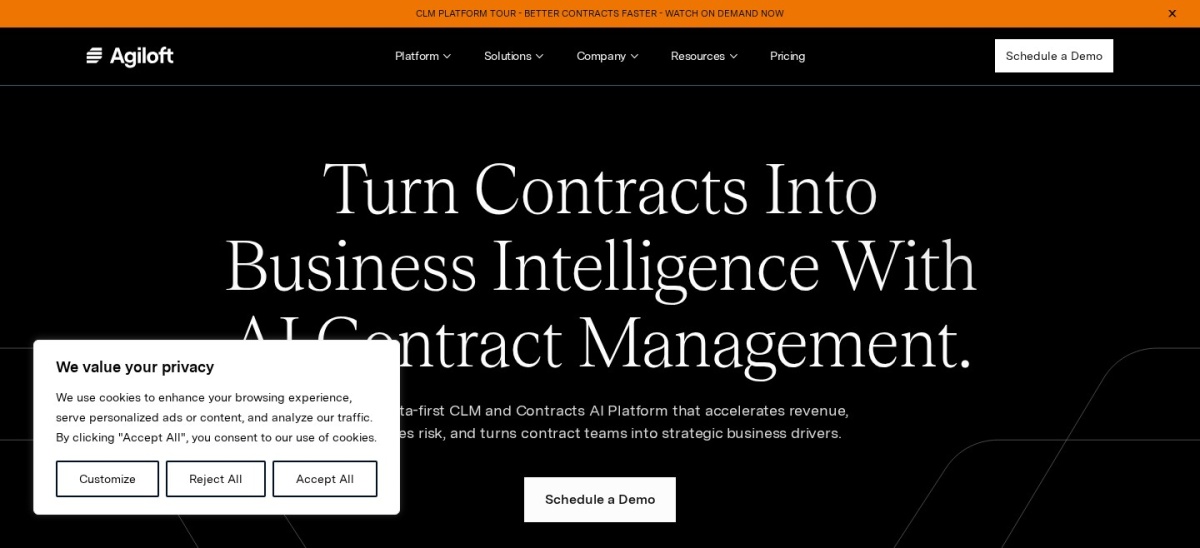
Icertis is an AI contract lifecycle platform built for large, regulated enterprises that run thousands of contracts across business units. Its Contract Intelligence system structures contract data so legal, procurement and finance teams can search obligations, track renewals and report on risk from one repository.
The trade off is scale and cost. Icertis sells by quote with no published price, and implementations average about six months, so it suits banks with dedicated contract teams and large portfolios. Smaller banks will find the platform heavier than the contract volume justifies.
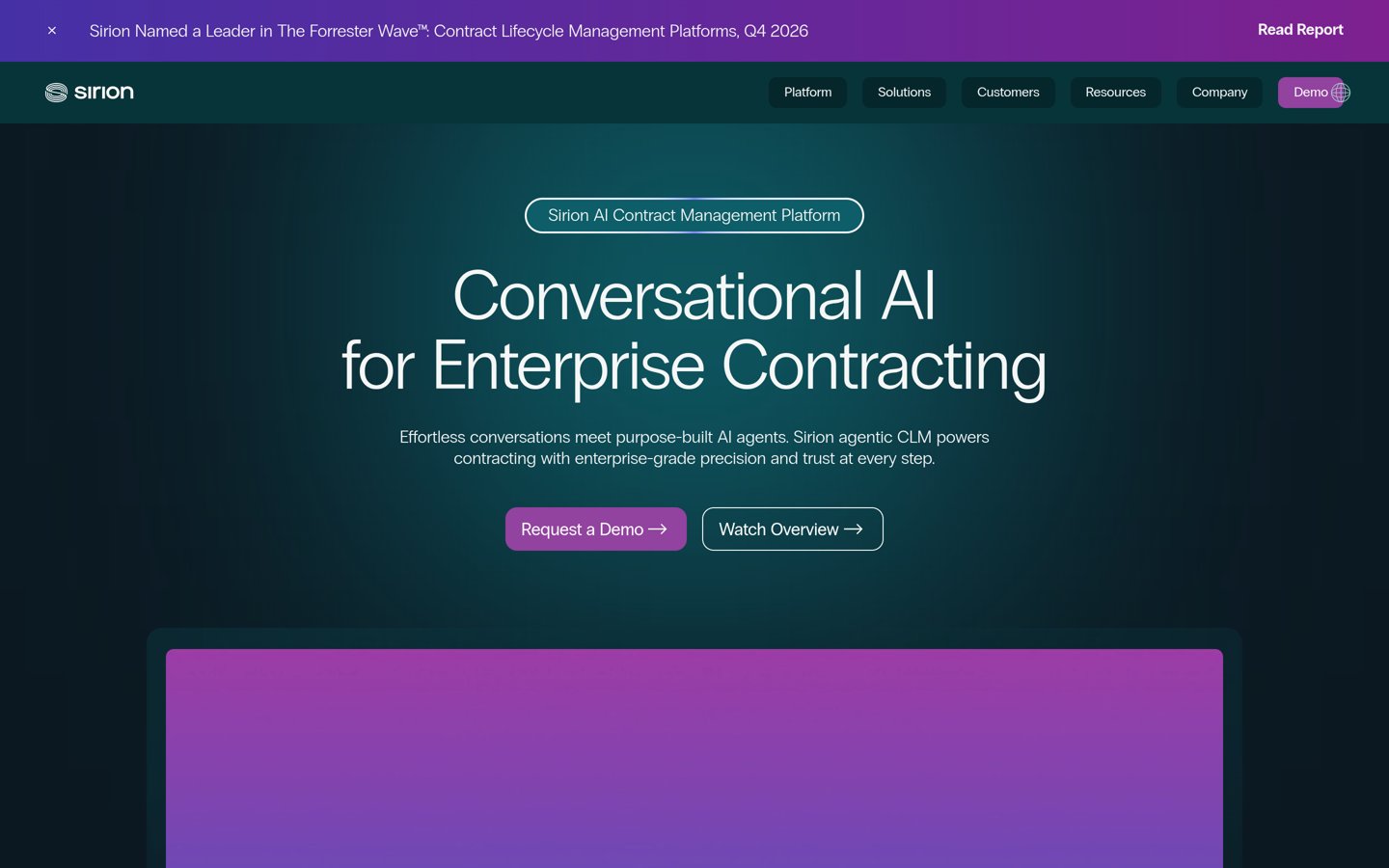
Sirion is an AI contract management platform whose strength sits after the signature. Its AI extracts obligations, deadlines and commitments from executed contracts and tracks delivery against them, and it holds a 4.5 out of 5 rating on G2 from 65 reviews.
The trade off is price and patience. Sirion sells by quote, with its AWS Marketplace listing at $150,000 a year for 100 users, and implementations commonly run six to twelve months. It suits banks that manage large supplier and loan portfolios where missed obligations cost real money.
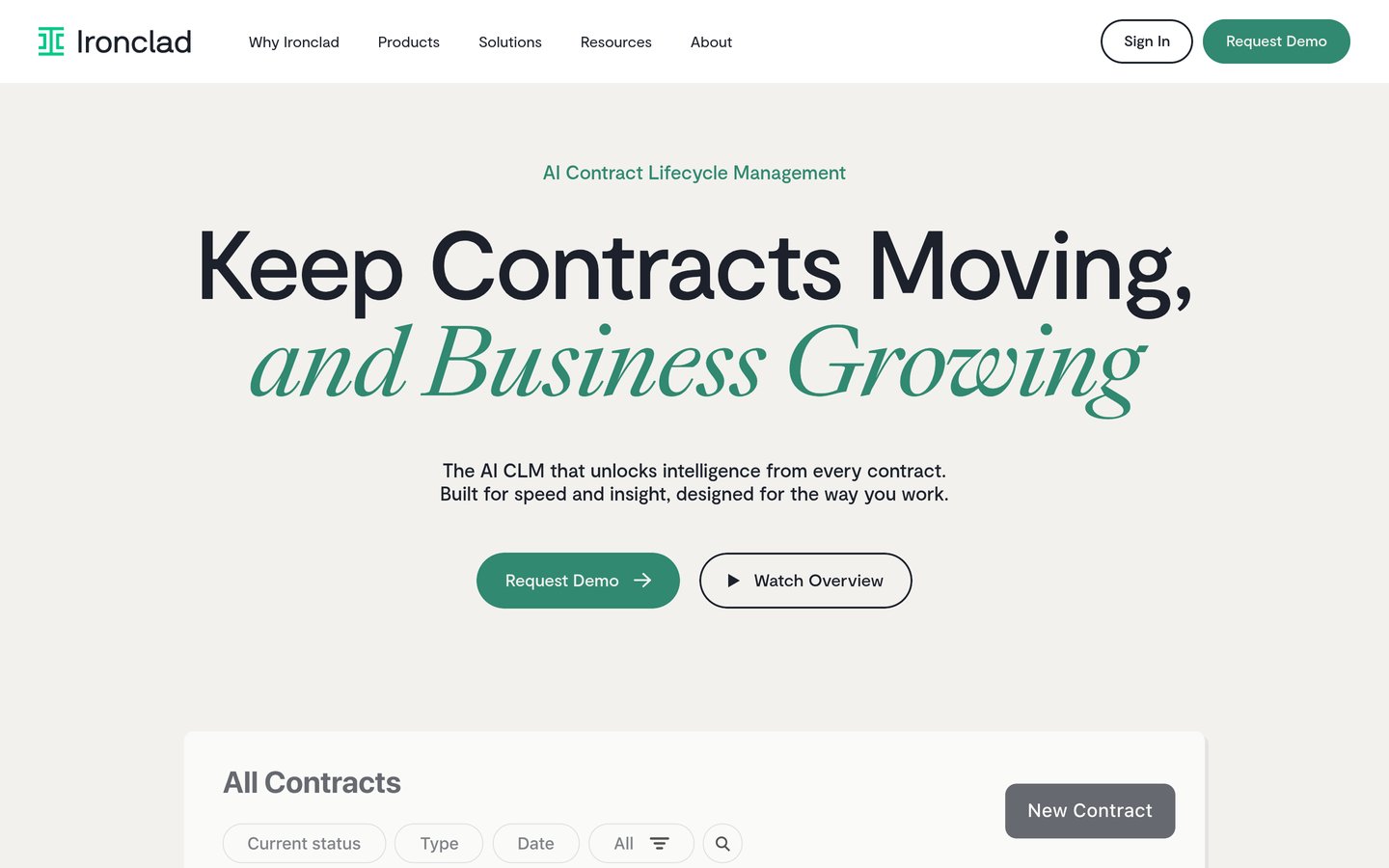
Ironclad is an AI contract lifecycle platform built for legal teams that run high volumes of sales and procurement contracts. Workflows, self-service contracting and AI review run through one system, and it holds a 4.4 out of 5 rating on G2 from 333 reviews.
The trade off is price and implementation. Ironclad sells by quote, with Vendr putting the median contract at $40,492 a year and implementation commonly $10,000 to $40,000 on top. It suits banks whose legal teams want business users to self-serve contracts without losing control.
Agiloft is a no-code contract lifecycle platform that lets administrators build complex approval workflows, data rules and obligation tracking without custom code. It holds a 4.5 out of 5 rating on G2 from 112 reviews, and its Astra AI reviews contracts inside Microsoft Word.
The trade off is complexity and cost. Agiloft publishes no prices and sells by quote, with Vendr putting the median contract at $67,132 a year, and reviewers cite a steep learning curve. It suits banks with unusual approval chains that off-the-shelf workflows cannot model.
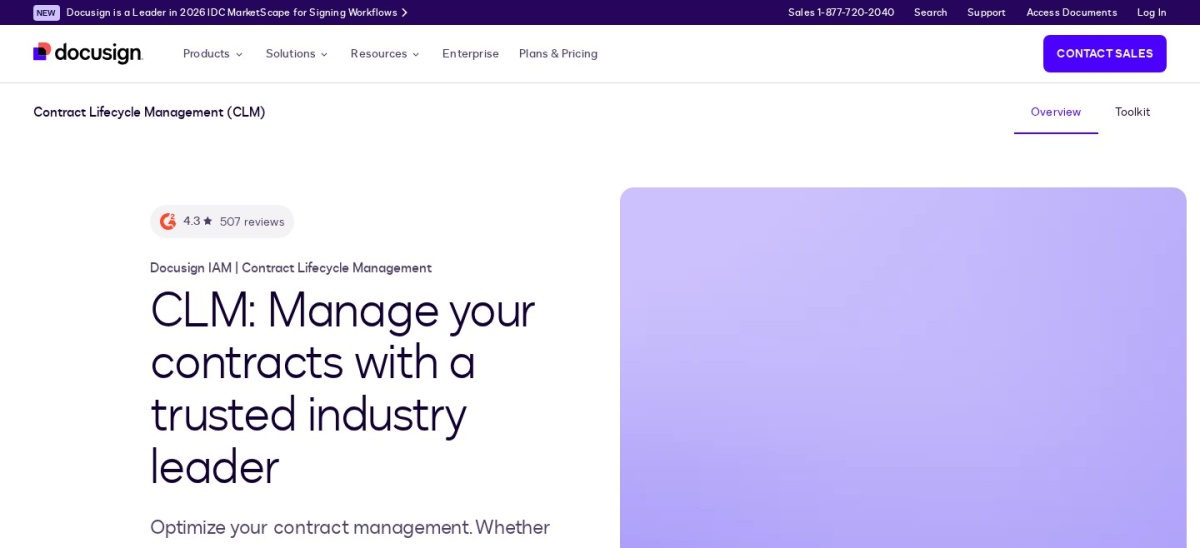
DocuSign CLM is a contract lifecycle platform that extends DocuSign e-signature into drafting, approvals, signing and renewals. It fits banks that already sign on DocuSign, and it holds a 4.3 out of 5 rating on G2 from 503 reviews.
The trade off is that the CLM is a separate product from the signature tool. DocuSign CLM sells by quote, and the separate IAM plans start at $40 per user a month, so the full stack costs more than the signature price suggests. It suits banks standardised on DocuSign end to end.
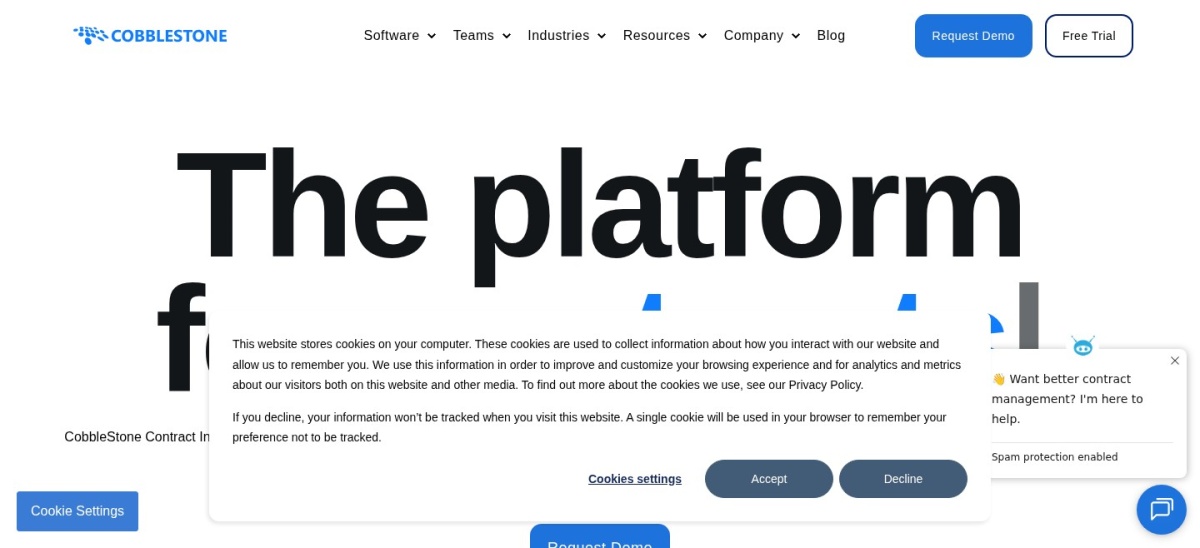
CobbleStone Contract Insight homepage, captured Nov 2026.
CobbleStone Contract Insight is a contract lifecycle platform for managing contracts, agreements and related documents, with a bids dashboard and vendor tracking built in. It holds the highest G2 rating in this list at 4.7 out of 5 from 59 reviews.
The trade off is that the headline price covers the Express edition only. Express costs $59 per user a month, while the Enterprise edition is quote-only, and reviewers say configuration can feel technical. It suits smaller banks that want a published price and strong vendor management.
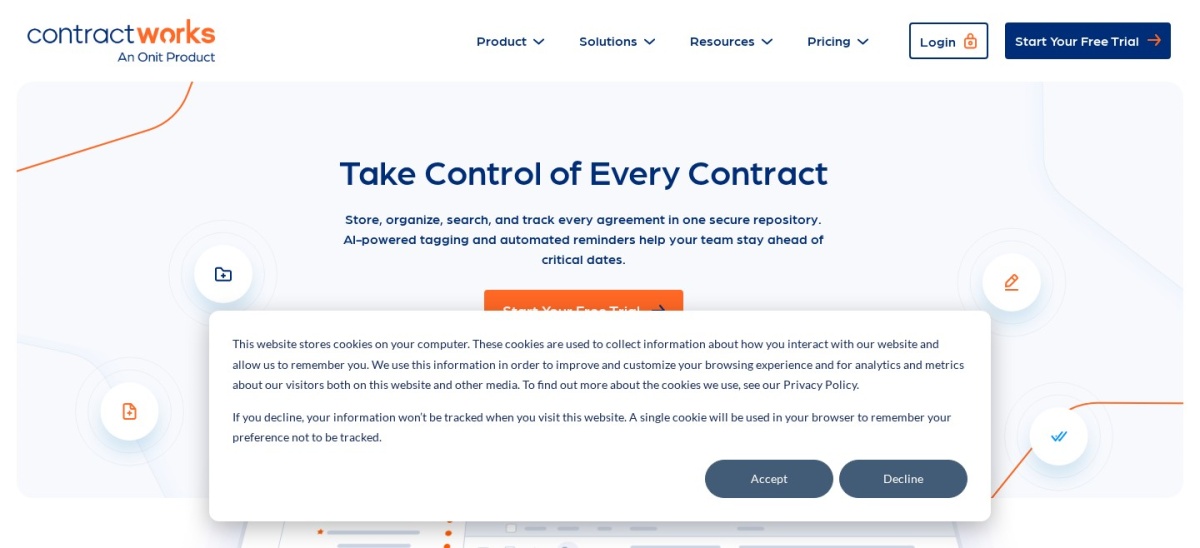
ContractWorks is a repository-first contract tool built for secure storage, search and tracking, with built-in e-signature and smart document tagging. Standard costs $600 a month billed annually with unlimited users, 2,500 documents and 5 e-signature licences.
The trade off is depth. ContractWorks covers storage and approvals well but leaves drafting, redlining and complex workflows to the Premium tier or a full CLM platform. It suits banks that mainly need a searchable, auditable home for signed contracts.
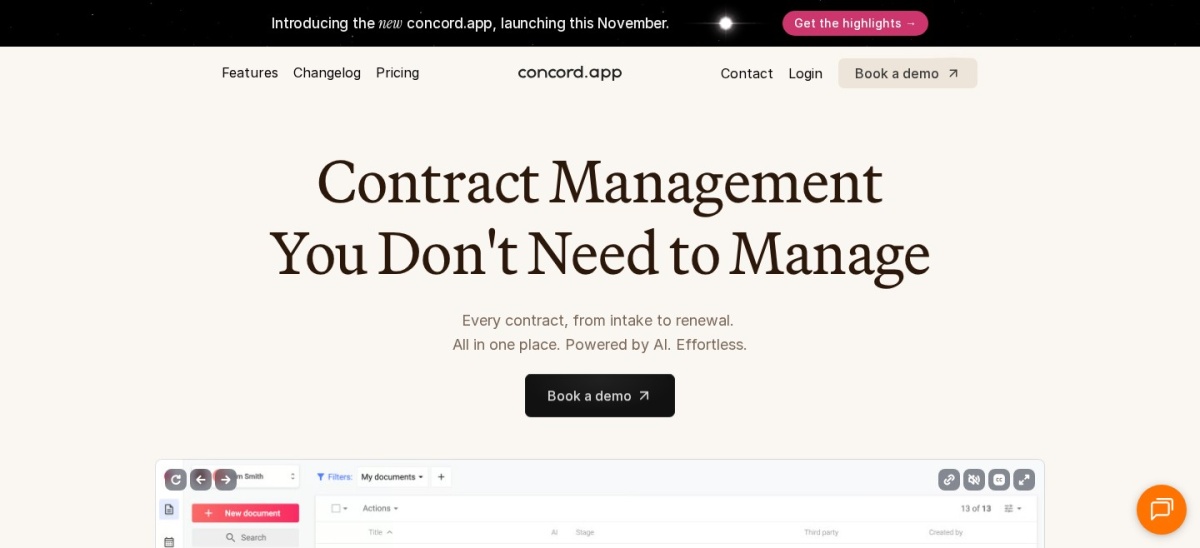
Concord is a contract management platform combining drafting, collaboration, negotiation and electronic signatures in one place. Essentials costs $499 a month billed annually and includes 5 users, unlimited documents, unlimited e-signatures, AI Copilot and deadline reminders.
The trade off is the five-seat minimum. Teams below five users still pay for five, and formal approval workflows and major CRM integrations need Business at $899 a month. It suits small bank teams that negotiate contracts together and want one flat rate.
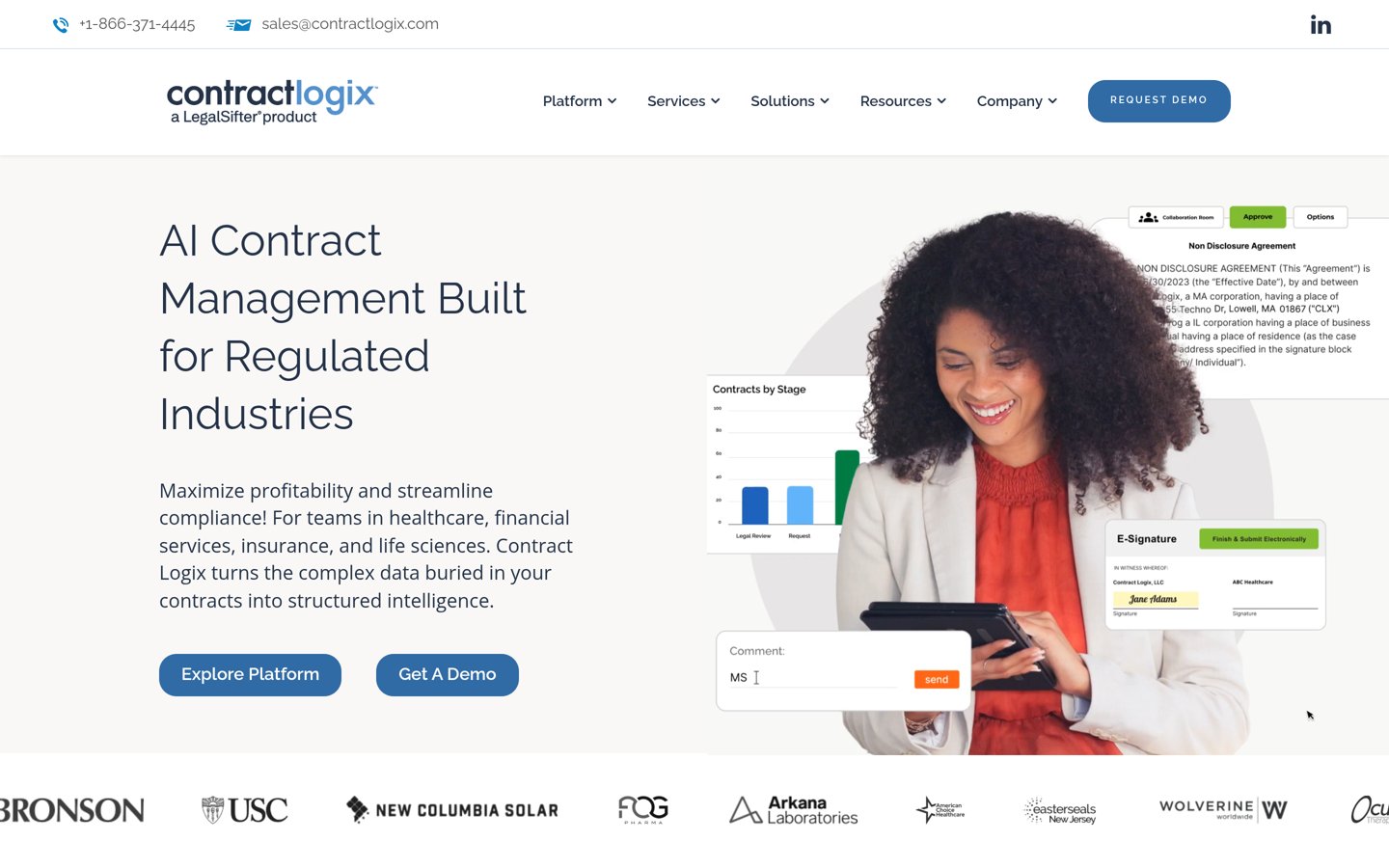
Contract Logix is a contract management platform built for regulated industries, with a configurable repository, automated alerts, workflow automation and DocuSign integration. It holds a 4.2 out of 5 rating on G2 from 146 reviews, with support rated 9.1 out of 10.
The trade off is that pricing is quote-only and setup takes time. G2 puts average implementation at four months, and reviewers note extra cost when adding users or locations. It suits mid-market banks that want a configurable system and strong support behind it.
Ask who owns the data on exit. A bank that cannot export its contracts with full history is locked in, and migration costs dwarf the licence fee.
Ask how the audit trail works. Examiners want to see who approved a contract, when, and on what terms, without a manual report build.
Ask about data residency and security certifications. Sirion lists ISO 27001, and most enterprise vendors will share SOC 2 reports under NDA.
Ask for a renewal-alert test. Load real contracts with known dates and check the alerts arrive before the deadline.
How we chose
We started from every CLM platform named in 2026 enterprise roundups and kept those with a verifiable rating on G2 and a reachable homepage. The nine here all hold G2 ratings from 4.2 to 4.7, with review bases from 59 to 503.
Prices come from vendor pricing pages, G2 provider data and cloud marketplaces, checked on 29 November 2026. Concord publishes Essentials at $499 a month and CobbleStone lists Express at $59 a user a month, while the six enterprise tools sell by quote only.
We left out tools with no verifiable rating on G2, Capterra or Trustpilot, including niche repository tools with no review base. No vendor paid for a place, and we do not claim hands-on testing for this list.
How to choose contract management software for banks
Start with the contract volume you hold, then match the governance to the risk.
Count the contracts you actually hold. A bank with 500 vendor agreements needs a repository and renewal alerts. A bank with 5,000 needs obligation tracking and AI extraction.
Ask for licence and implementation as separate lines. Six of the nine tools sell by quote, and implementation runs from $10,000 to $40,000 on top of the licence for Ironclad alone.
Check the audit trail before the demo. Ask how the tool proves who approved what and when, because that is what examiners ask for first.
Test the renewal alerts on real dates. Load a sample of contracts with known renewal dates and check the alerts fire before the deadline, not after.
FAQ
What is the best contract management software for banks?
Icertis is the best contract management software for banks, with AI-powered contract intelligence and deep SAP integration for enterprise-scale portfolios. Sirion leads on post-signature obligation tracking, while CobbleStone is the cheapest paid option at $59 a user a month.
How much does contract management software for banks cost?
Published prices run from $59 a user a month for CobbleStone Express to $600 a month for ContractWorks Standard and $499 a month for Concord Essentials. The six enterprise platforms sell by quote only, with median contracts reported from about $40,000 to $88,000 a year.
Do banks need CLM software or just a repository?
A repository suits banks that mainly store and track signed contracts, and ContractWorks or CobbleStone cover that well. Banks that draft, negotiate and approve contracts across departments need a full CLM platform such as Ironclad, Icertis or Agiloft, with workflows and obligation tracking.
Which contract software is best for tracking obligations?
Sirion is the best pick for obligation tracking, with AI that extracts deadlines and commitments from executed contracts and tracks delivery against them. Icertis is the alternative for banks that want obligation data structured across the whole contract portfolio.
Is there a free contract management tool for banks?
No tool in this list offers a free plan. CobbleStone, ContractWorks, Concord and Contract Logix offer free trials, and Agiloft offers a free tier of its Astra AI tool, but the CLM platform itself is paid. Budget for at least the cheapest published price.
How long does it take to implement bank contract software?
G2 puts average implementation at about 4 months for Contract Logix and about 6 months for Icertis, while Sirion implementations commonly run 6 to 12 months. Concord is the fastest here at about 2 months, and ContractWorks includes free implementation with its Standard plan.
SaaS SEO and WordPress specialist with about 8 years of experience. Rakib compares WordPress plugins, themes, hosting and software using public pricing, documentation and user reviews. See how we rank.