Visier leads this top 10 HR analytics software list for large employers, with more than 2,000 pre-built metrics and benchmarks from 250 million HR data points. Pick ChartHop for headcount planning on a live org chart and Lattice for engagement analytics from $4 a seat a month.
How we make this list: we compare pricing pages, product documentation and public user reviews, then re-check every price before each update. No product paid for a place. Disclosure.
Visier leads for enterprises, with 2,000+ pre-built metrics and benchmarks from 250 million HR data points.
ChartHop and One Model put headcount planning and governed people data first, but both sell by quote only.
Lattice is the cheapest published entry here at $4 a seat a month, with 4,117 G2 reviews.
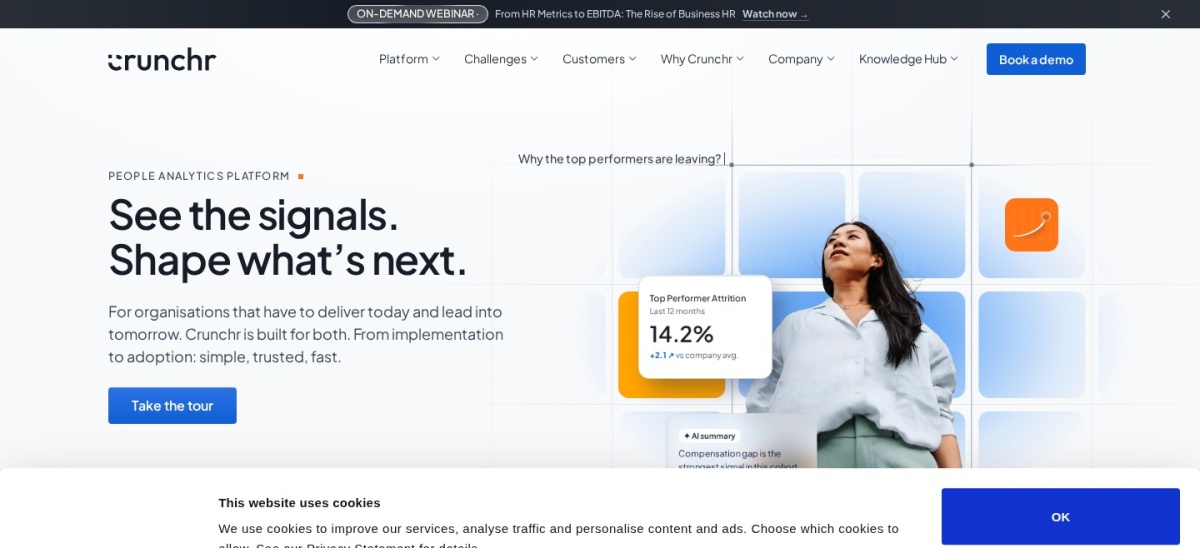
Crunchr is the strongest European pick, with EU data residency and a 4.8 G2 rating from 29 reviews.
Seven of the nine tools publish no price at all, so budget a sales cycle for every enterprise pick.
How do you choose the top 10 HR analytics software?
HR analytics splits two ways. Pure-play platforms such as Visier, One Model and Crunchr analyse HR data deeply: headcount, turnover, pay and hiring.
The other family builds analytics on top of an HR platform. Lattice, Culture Amp, BambooHR and HiBob start from surveys, reviews or core HR records, then add reporting and planning on top.
Price transparency splits the same way. The enterprise analytics vendors publish no prices and sell by quote, while Lattice and BambooHR publish per-seat rates from $4 and $10 a month.
Start from the question you need answered. Attrition and pay equity need a pure-play platform, while engagement trends and review data are covered by the HR platforms.
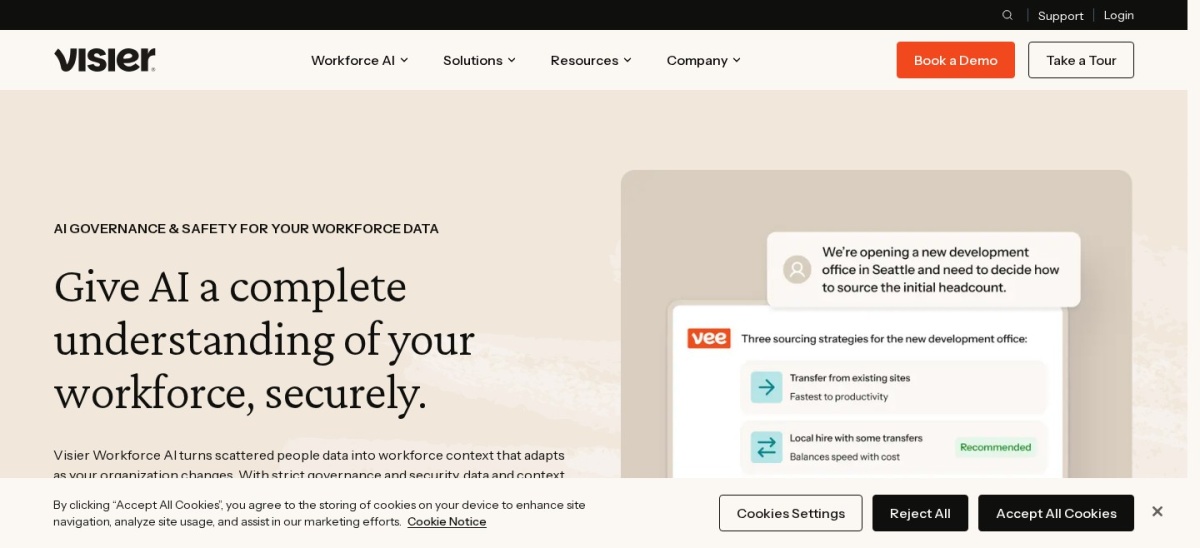
Visier is the reference people analytics platform, sitting on top of HRIS, payroll and engagement systems and mapping them into one workforce model. It ships with more than 2,000 pre-built metrics covering turnover drivers, retention risk, pay equity and hiring quality, plus benchmarks drawn from 250 million HR data points.
The trade off is the buy-in. Pricing is custom and enterprise-grade, implementations run for months, and the platform expects a real people-analytics function on your side. It suits large employers that report people data to the CFO and need depth no mid-market tool matches.
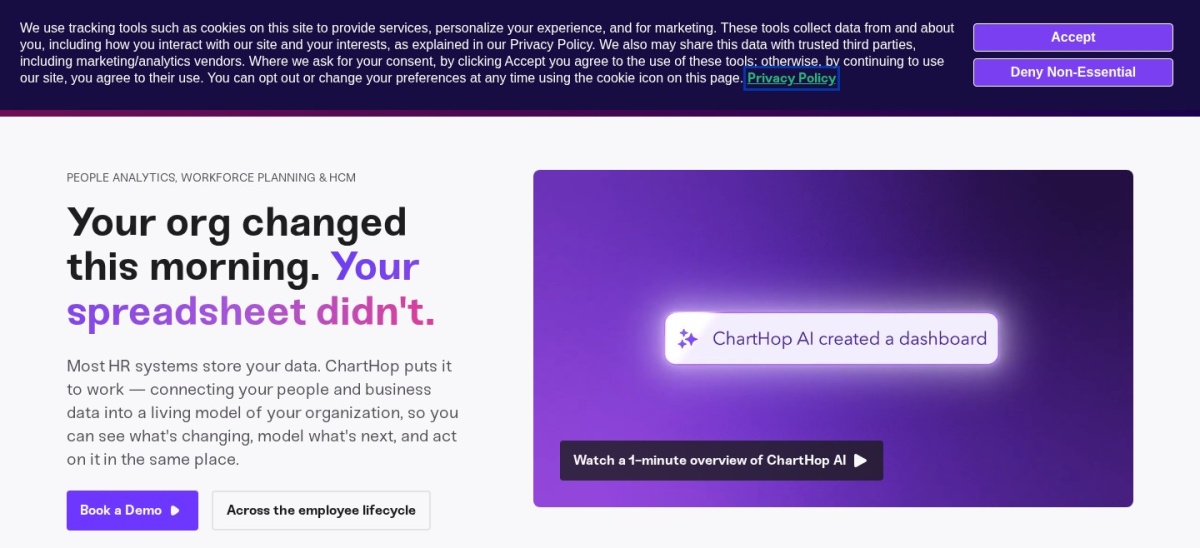
ChartHop is a people data platform built around a live org chart, combining headcount planning, compensation planning and analytics in one place. It pulls data from HRIS, payroll and ATS systems so managers see reporting lines, spans of control and open roles on the same screen as the numbers.
The trade off is price transparency. The pricing page now shows a quote form instead of published rates, so every deal is a sales conversation. It suits mid-market People Ops teams that plan headcount on a chart rather than in spreadsheets.
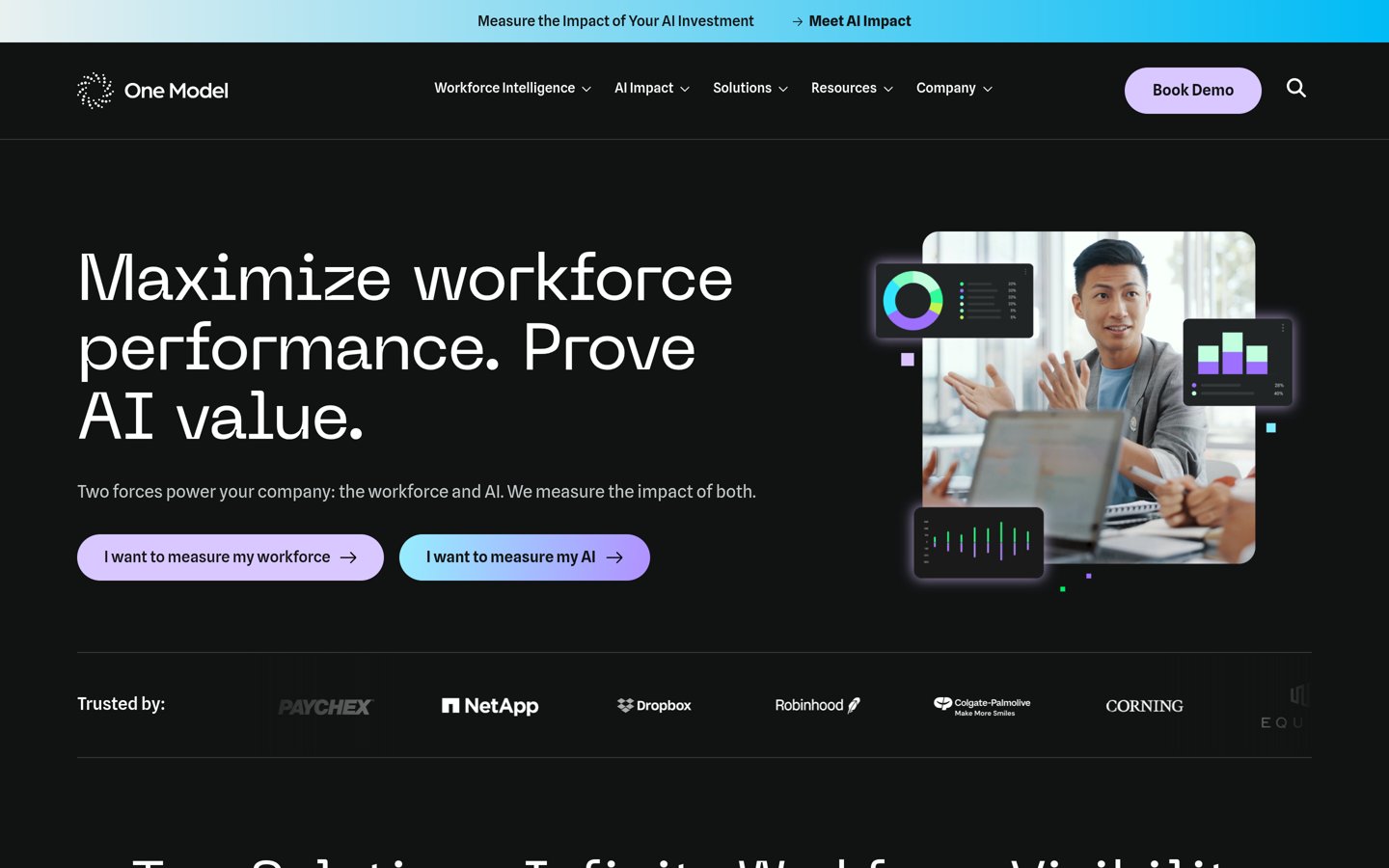
One Model is a people data cloud that pulls HRIS, ATS, payroll, engagement and finance data into a single governed model. It adds machine-learning storyboards and AI-generated narratives, so analysts can answer headcount and turnover questions without building a warehouse first.
The trade off is the thin review record. It holds the highest G2 rating here at 4.8 out of 5, but from only 12 reviews, and pricing is quoted by edition with no dollar figures published. It suits data-mature teams that want workforce data inside their own stack.
Crunchr is a Dutch people analytics platform built for European mid-market and enterprise employers, with EU data residency and GDPR handling as standard. It connects HR systems into one clean datastore and gives managers self-serve dashboards for headcount, turnover, absence and diversity.
The trade off is reach and review depth. Its G2 base is only 29 reviews, pricing is quoted per deal, and support and templates lean European. It suits European teams that need GDPR-safe analytics without an enterprise implementation project.
Orgvue is a UK-built org design and workforce planning suite that pairs people analytics with restructure modelling. It maps roles, costs and skills across the organisation, so leaders can model a reorganisation or operating-model change before announcing it.
The trade off is focus. It is strongest when a restructure or operating-model change is on the table, and thinner as a day-to-day HR dashboard, with only 16 G2 reviews. It suits enterprises planning a restructure rather than teams wanting simple headcount reports.
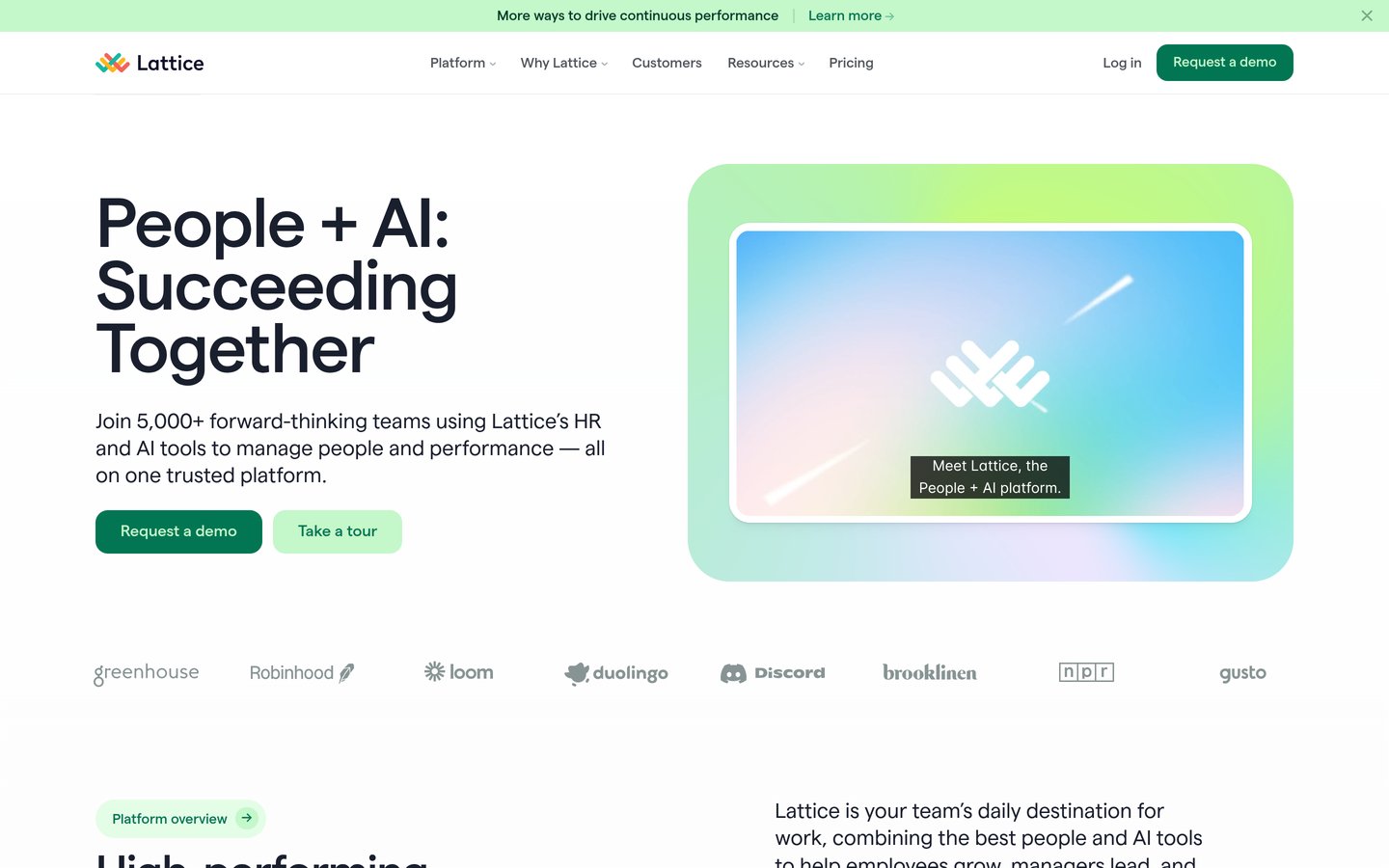
Lattice is a people platform that combines engagement surveys with performance reviews, goals and growth plans, so feedback and development sit in one system. Engagement starts at $4 a seat a month billed annually with a $4,000 annual minimum, and it holds 4.6 out of 5 on G2 from 4,117 reviews.
The trade off is that deep analytics cost more. The People Analytics add-on sits above the entry tiers, so the $4 entry price buys surveys and reviews, not the full analytics suite. It suits mid-market teams that want engagement and performance data together.
Culture Amp is the reference platform for employee engagement, built on research-backed survey templates and benchmarks from more than 6,000 companies. It covers engagement, performance and development, with action planning tools that help managers turn survey results into changes staff can see.
The trade off is price and scope. It sells by quote with no published rates, and its analytics strength is survey data rather than HRIS-wide modelling. It suits teams that live on survey data and want benchmarks no rival matches.
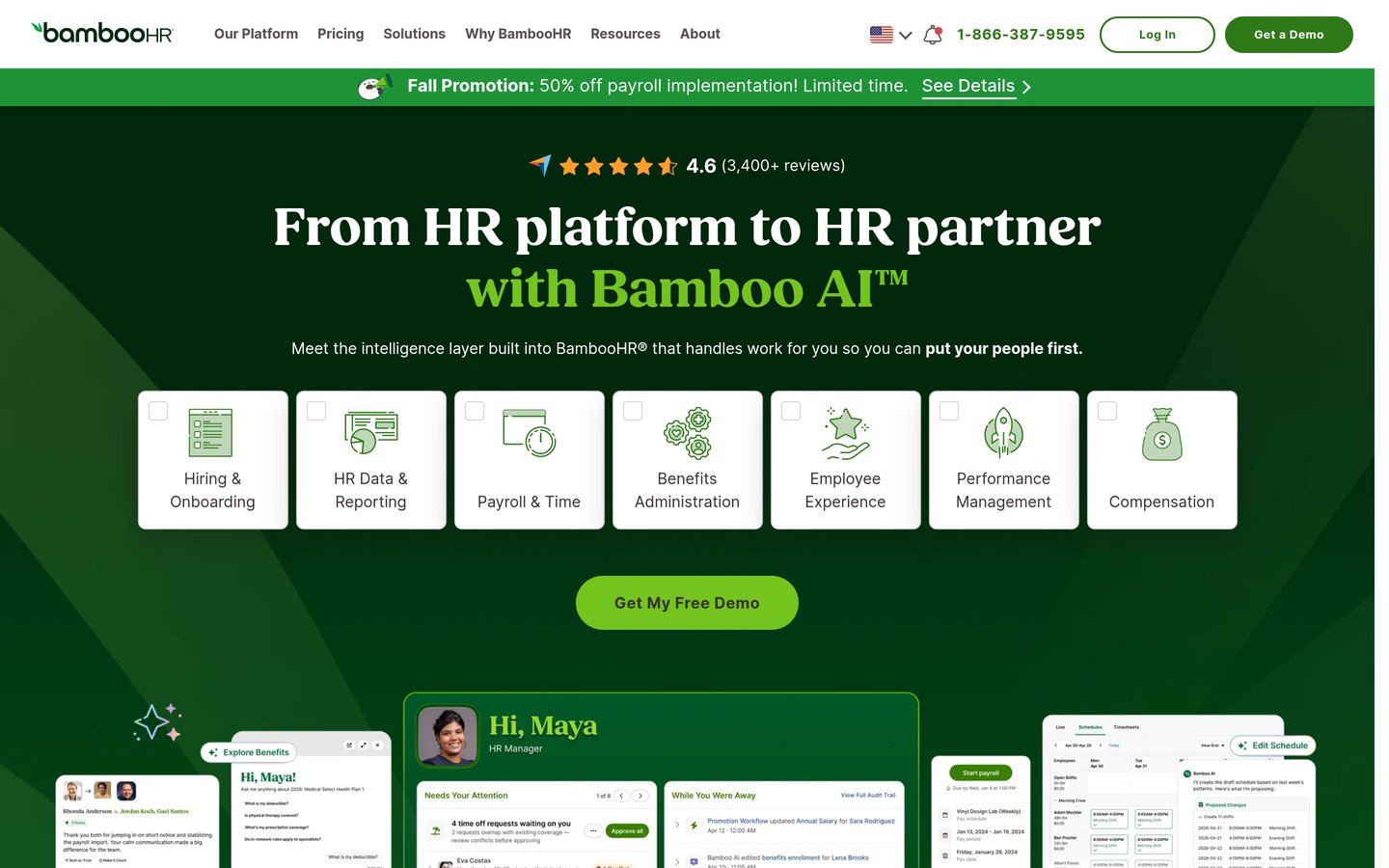
BambooHR is an HR platform for small businesses, covering employee records, hiring, onboarding, time off and performance, with custom reporting on top. Core costs $10 per employee a month for organisations over 25 employees, and it holds 4.4 out of 5 on G2 from more than 8,300 reviews.
The trade off is analytics depth. Its reporting covers the basics well but stops short of predictive modelling, and advanced analytics sit in the Pro tier at $17 per employee a month. It suits small teams that want HR records and reports in one simple system.
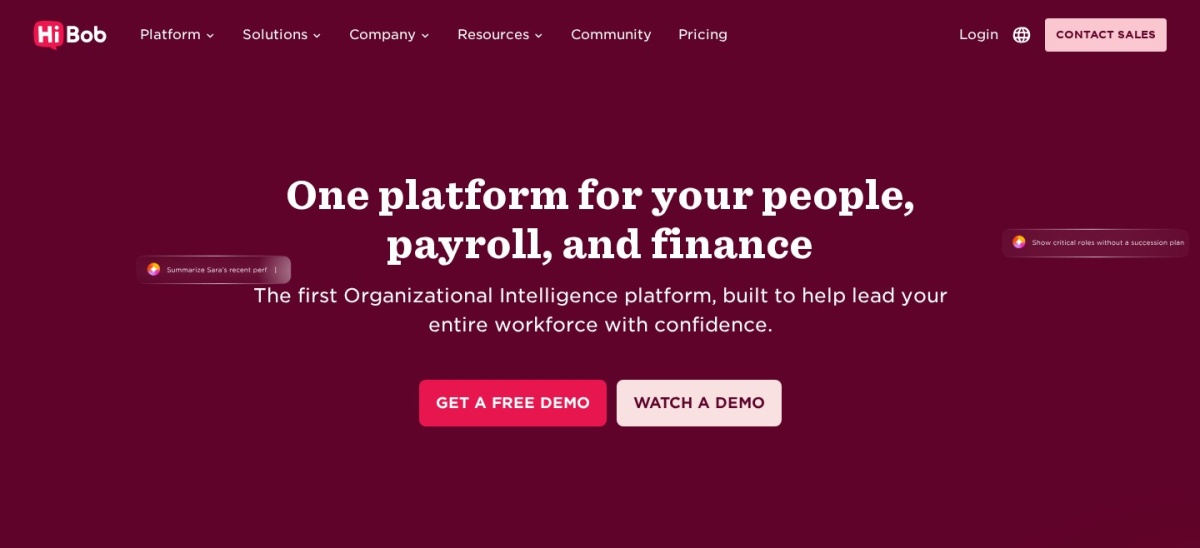
HiBob is an HR platform for growing companies of 100 to 1,000 people, combining core HR, payroll, performance and workforce planning on one record. Its planning tools show headcount, hiring plans and compensation together, and it holds 4.5 out of 5 on G2 from more than 2,700 reviews.
The trade off is price transparency and fit. It sells by quote with no published rates, and it is built for growing mid-market teams rather than small firms. It suits companies outgrowing a small HRIS that want planning next to payroll.
Pure-play analytics or analytics inside your HRIS?
Pure-play platforms go deeper. Visier, One Model, Crunchr and Orgvue model the whole workforce and answer questions a dashboard cannot, such as which teams lose people after a reorganisation.
HRIS analytics is cheaper and faster to start. Lattice, Culture Amp, BambooHR and HiBob report on the data they already hold, so there is no integration project and no second system to maintain.
The middle ground is ChartHop. It is a people data platform with its own org chart and planning, but it still plugs into the HRIS rather than replacing it.
If your team is under 500 people, start with the HRIS route. The pure-play platforms only pay off once headcount, turnover and pay questions need dedicated analysis.
How we chose
We started from every HR analytics platform with a G2 profile and a live pricing or quote page, then kept the nine that cover attrition, hiring, pay or headcount planning.
Prices and ratings were checked on 29 November 2026. Ratings and review counts come from G2 on the same day, and prices come from each vendor's pricing page or quote form where no price is published.
We left out productivity monitoring tools that track keystrokes or screen time, since they measure activity rather than people analytics. No vendor paid for a place, and we do not claim hands-on testing for this list.
How to choose HR analytics software
Start with the question you need answered, then match the tool to the size of your team.
Name the decision first. Write down the one question the tool must answer, such as why a team loses people, before comparing features.
Check what your HRIS already reports. BambooHR, HiBob and Lattice cover basic headcount and turnover, so a pure-play platform may add little.
Ask for a quote early. Seven of the nine tools here sell by quote, so start the sales conversation before shortlisting on price.
Trial the dashboards with your own data. A demo on vendor data hides gaps, so ask for a trial or a proof of concept on a real headcount file.
FAQ
What is the best HR analytics software in 2026?
Visier is the best HR analytics software for most large employers. It offers more than 2,000 pre-built metrics and benchmarks from 250 million HR data points, and it holds 4.6 out of 5 on G2 from 223 reviews.
How much does HR analytics software cost?
Prices split sharply. Lattice starts at $4 a seat a month and BambooHR at $10 per employee a month, while Visier, ChartHop, One Model, Crunchr, Orgvue, Culture Amp and HiBob all sell by custom quote.
Is there a free HR analytics tool?
No tool in this list offers a permanent free plan. BambooHR offers a free trial, and Lattice and the enterprise platforms start with a demo or a sales-led trial instead.
What is the best HR analytics software for small teams?
BambooHR is the best pick for small teams. It combines core HR records with custom reporting from $10 per employee a month, and its 8,300-plus G2 reviews are the largest base for an HRIS here.
Visier vs ChartHop: which is better?
Visier is better for deep enterprise analytics, with 2,000-plus metrics and predictive turnover modelling. ChartHop is better for mid-market teams that plan headcount and compensation on a live org chart.
Does HR analytics software need an HRIS?
Most tools need one. Visier, ChartHop, One Model and Crunchr all pull data from your HRIS, payroll and ATS, while Lattice, Culture Amp, BambooHR and HiBob hold the HR records themselves.
SaaS SEO and WordPress specialist with about 8 years of experience. Rakib compares WordPress plugins, themes, hosting and software using public pricing, documentation and user reviews. See how we rank.