iDenfy is the best Sumsub alternative for most teams, rated 4.9 out of 5 on G2 from 244 reviews with published pricing from $1.35 per check. Pick Veriff for the lowest self-serve start at $0.80 a check, or Didit for the cheapest full KYC bundle at $0.33.
How we make this list: we compare pricing pages, product documentation and public user reviews, then re-check every price before each update. No product paid for a place. Disclosure.
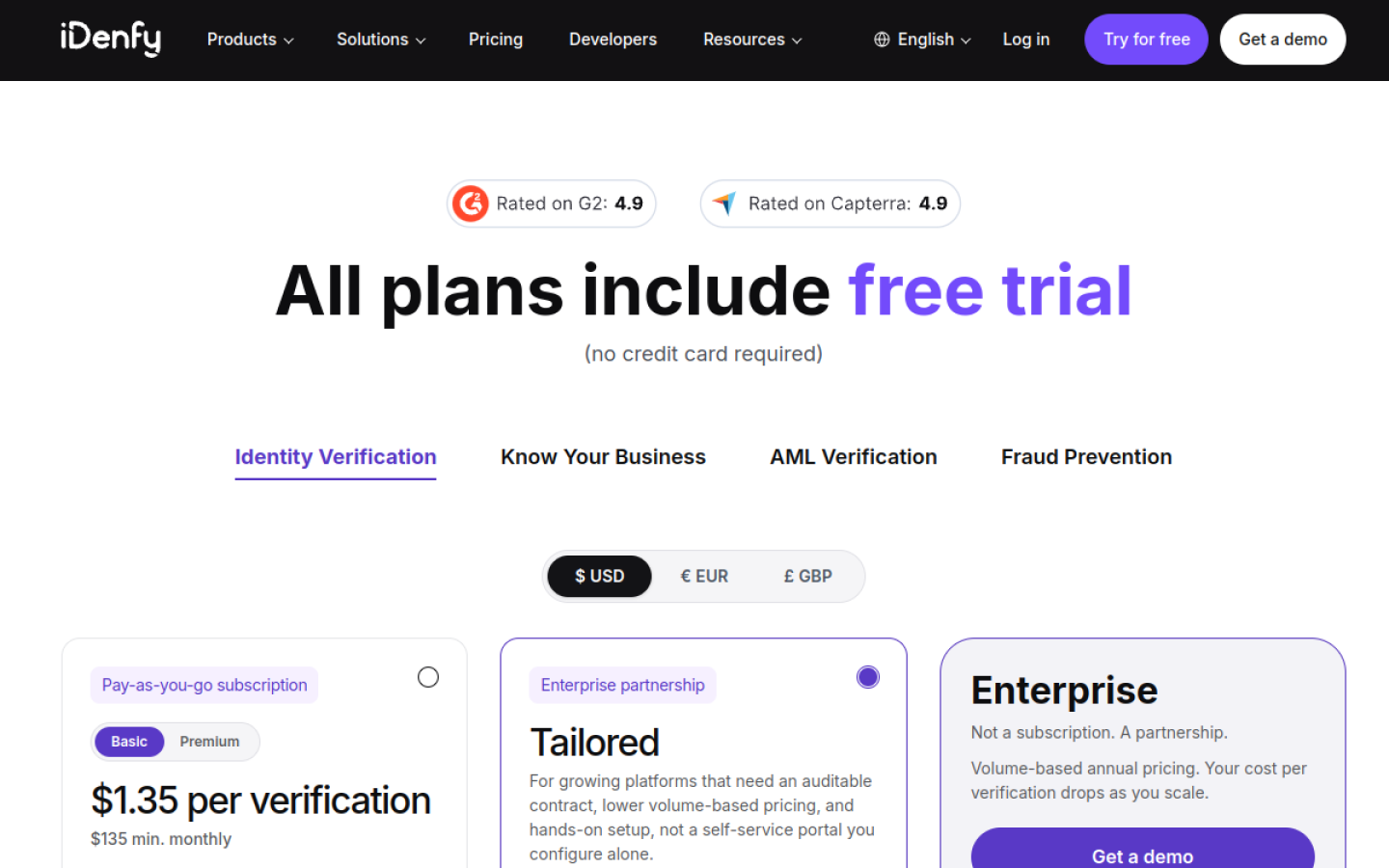
iDenfy leads with a 4.9/5 G2 rating from 244 reviews and published pricing from $1.35 a check.
ComplyCube holds a perfect 5.0/5 from 74 G2 reviews, with Starter at $99 a month credited against checks.
Veriff is the cheapest self-serve start: $0.80 a check with a $49 monthly minimum.
Didit undercuts every rival on price: a full KYC bundle costs $0.33, and the free plan adds $10 of credit a month.
Five of the nine publish prices; Socure, Trulioo and Jumio are quote-only, so budget them with a sales call.
How do you choose among Sumsub alternatives?
Price transparency is the first filter. Only five of the nine tools in this list publish prices, so a quote-only shortlist hides the real cost until late in the process.
Match the tool to the check you run most. Document verification, liveness, AML screening and business verification are priced separately at most vendors, so a cheap headline rate can grow fast once add-ons are included.
Coverage decides pass rates. A vendor that supports your customers' document types and data sources will approve more genuine users, and our guide on GDPR compliance for WordPress explains the data rules that apply when you store verification results.
Ratings are thin in this niche. G2 review counts here run from 23 to 244, so treat a 5.0 average from 74 reviews as weaker evidence than a 4.9 from 244, and always run a trial before signing a contract.
iDenfy is a KYC, KYB and AML platform that checks ID documents, matches selfies and runs liveness detection across more than 3,000 document types from 200-plus countries. The Basic plan costs $1.35 per check with a $135 monthly minimum, and a 14-day trial includes 10 free checks.
The trade off is the add-on bill. Sanctions screening, proof of address, 3D liveness and manual review each cost extra per check, from $0.10 to $1.90, so a full check costs more than the $1.35 headline rate. It suits teams that want published prices and the option to pay only for checks that pass.
What we like
Highest G2 rating in this list, 4.9 out of 5
Published prices with no sales call needed
Approved-only billing option avoids paying for failed checks
24/7 manual review with checks finished in about 3 minutes
Watch out for
Add-ons push the real per-check cost above $1.35
Premium needs a $325 monthly minimum
No free plan beyond the 14-day trial
Premium lowers the rate to $1.30 and cuts add-on pricesVisit idenfy.com
02
ComplyCube
5/5on G2 (74 reviews, checked Nov 2026)
Starts at$99/mo
Best rated alternative for small teams
Starter plan$99 a month
Document check$1.05 on Starter
Countries220+
Free trial14 days, 50 checks
complycube.com
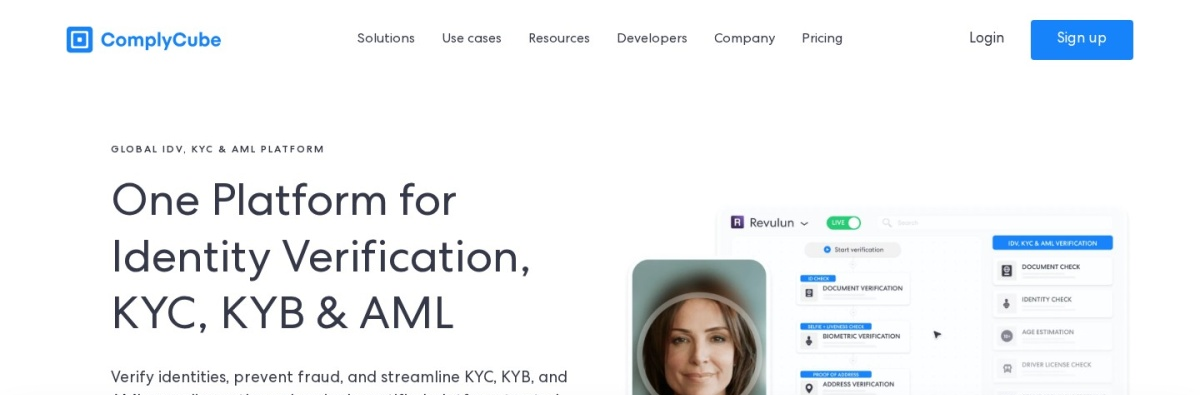
ComplyCube homepage, captured Nov 2026.
ComplyCube is an API-first KYC and AML platform that covers document verification, biometric checks, sanctions screening and business verification. The Starter plan costs $99 a month, credited against checks, and a document check costs $1.05 on Starter. It holds a 5.0 out of 5 G2 rating from 74 reviews.
The trade off is scale signals. ComplyCube is a smaller vendor than Jumio or Trulioo, and NFC chip verification and biometric enrolment sit on the quote-only Growth plan. It suits regulated teams that want published prices, no-code workflows and UK DIATF certification without an enterprise sales process.
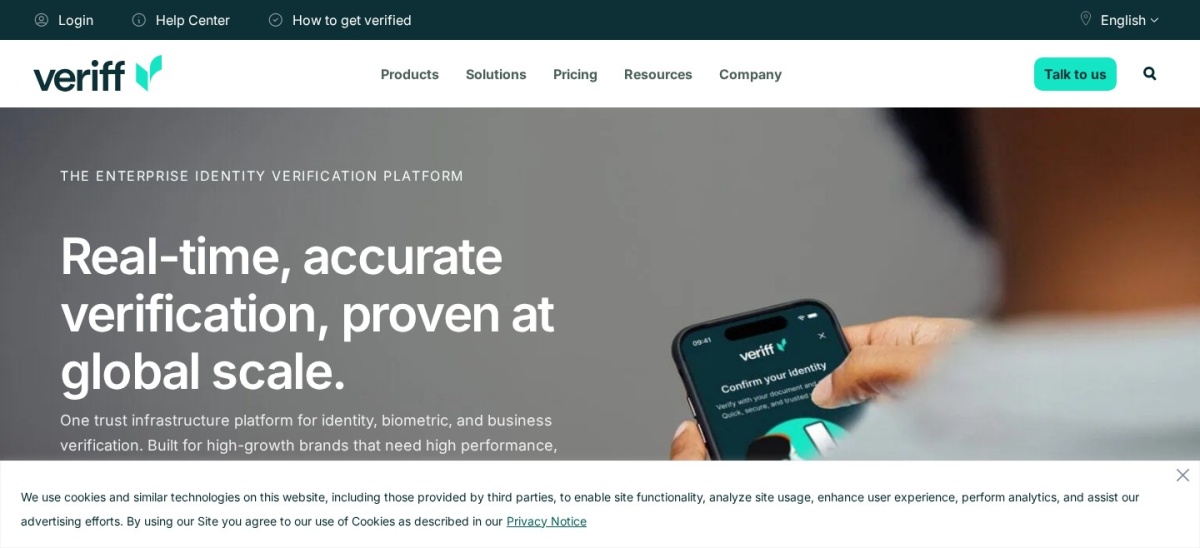
Veriff is a self-serve identity verification platform with published per-check prices and a 15-day trial of 50 live sessions. Its Essential plan costs $0.80 per check with a $49 monthly minimum, and decisions average 6 seconds across 12,500-plus documents from 230-plus countries.
The trade off is scope. AML screening and ongoing monitoring are paid add-ons, self-serve plans stop at 5,000 checks a month, and there is no KYB or transaction monitoring built in. It suits startups and scaling fintechs that want fast onboarding without a sales call.
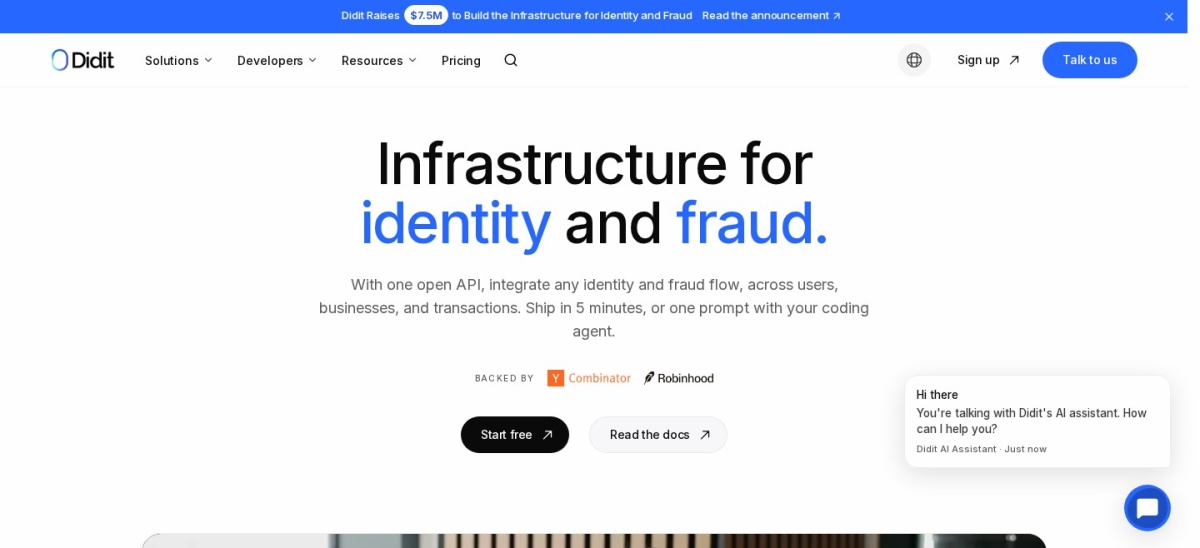
Didit is a low-cost identity platform that runs ID checks, liveness, face matching, AML screening and business verification through one API. A full KYC check costs $0.33, the free plan includes $10 of credit a month, and its checks cover 220-plus countries and 14,000-plus document types.
The trade off is track record. Didit has only 34 G2 reviews against 244 for iDenfy, and AML screening and business verification cost extra per check on top of the $0.33 bundle. It suits startups and crypto teams that want the lowest published price without a sales call.
What we like
Lowest published per-check price in this list
Free plan with $10 of credit every month
Every price is public, with no sales call
200-plus fraud signals on every check
Watch out for
Only 34 G2 reviews, far fewer than the leaders
AML screening and business checks cost extra
Newer vendor with fewer large enterprise references
Growth adds $115 of monthly credit and 4% off every checkVisit didit.me
05
Shufti Pro
4.5/5on G2 (158 reviews, checked Nov 2026)
Pricing$1.50/check
Best for on-premise hosting
Per-check price$1.50, Essentials
Free plan10 checks a month
Countries covered240+
Languages supported150+
shuftipro.com
Shufti Pro homepage, captured Nov 2026.
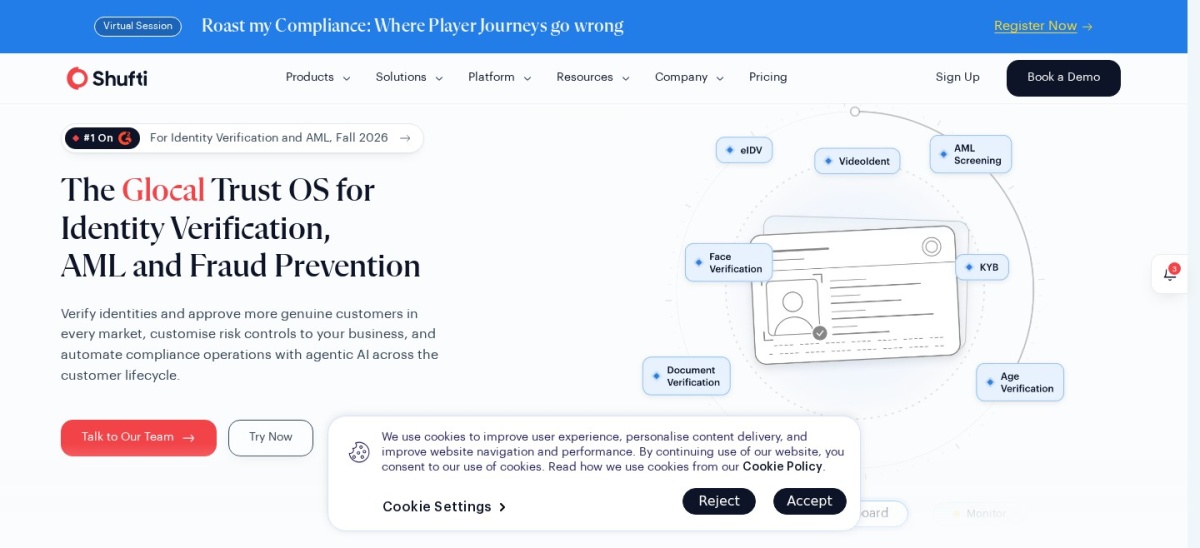
Shufti Pro is a KYC and AML platform with a free tier of 10 checks a month and paid checks from $1.50 per verification. It covers more than 240 countries, 10,000-plus document types and 150-plus languages, and its liveness check holds an iBeta Level 3 result.
The trade off is price at scale. At $1.50 a check it is the priciest published per-check rate in this list, and volume discounts are not published. It suits teams that need on-premise hosting or wide language coverage and want a free tier to start.
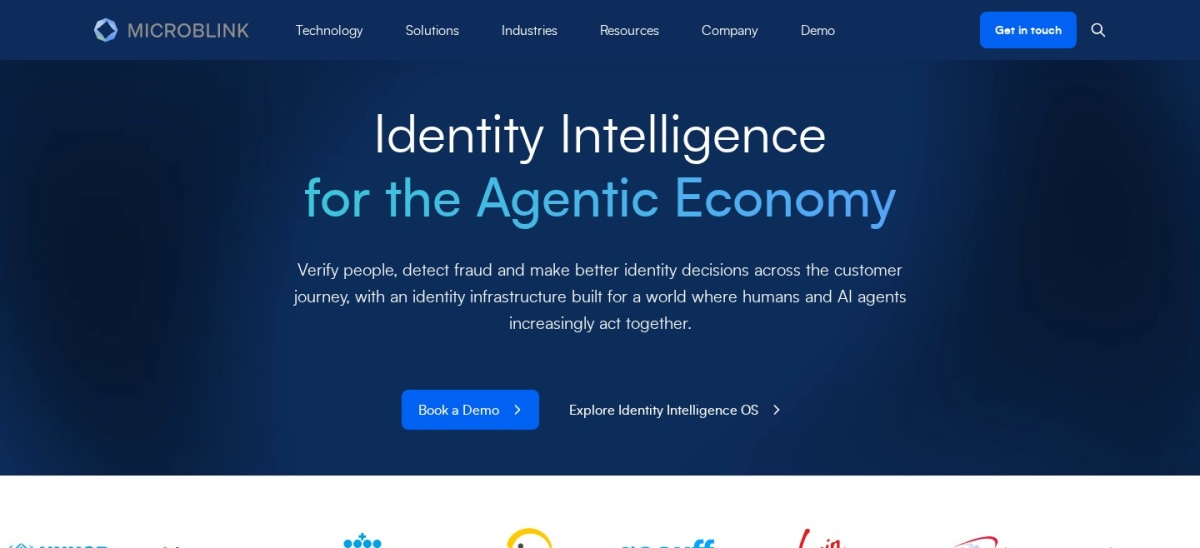
Microblink is an identity platform built around document verification that can run on the customer's device, in the cloud or self-hosted. Its BlinkID scanning plans start at $210 a month for 350 scans, and it processed 2.9 billion identities in 2025.
The trade off is scope. The full platform is priced by quote, and Microblink offers no KYB or transaction monitoring, so teams that need those layers must buy a second vendor. It suits teams where fake IDs are the main problem: it was the only vendor to meet every threshold in the DHS RIVR evaluation.
What we like
Only vendor to pass every DHS RIVR threshold
Checks can run on-device or self-hosted
2.9 billion identities processed in 2025
Sanctions, PEP and adverse media screening built in
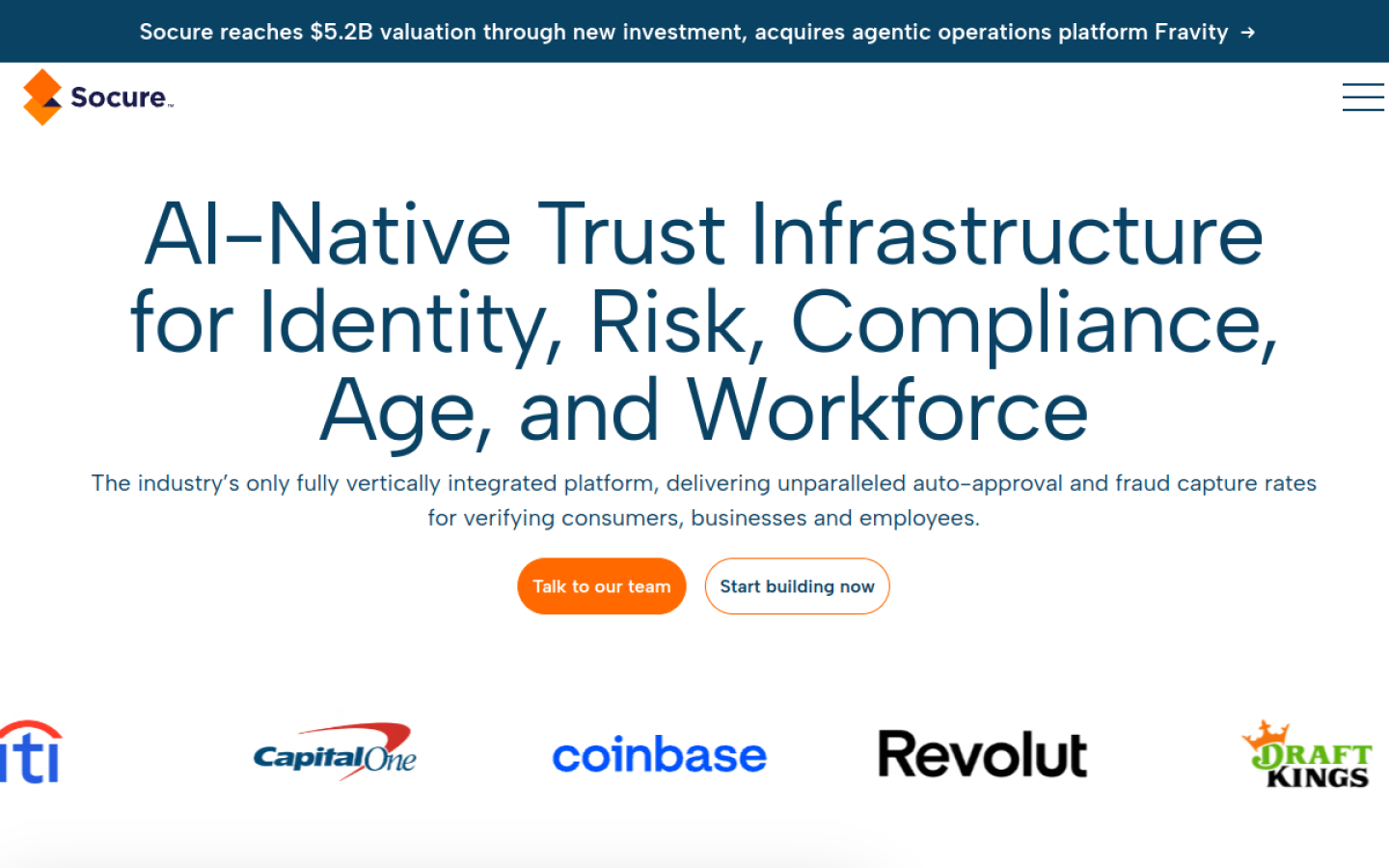
Socure is a US identity verification platform built for banks, fintechs and marketplaces. It counts more than 3,000 customers, including 19 of the 20 largest US banks, and runs identity, risk, compliance, age and workforce checks through one API.
The trade off is transparency. Socure publishes no prices, so every deal is quoted, and its strength is US data, which matters less for teams onboarding customers mainly outside the US. It suits US financial teams that want one API for identity, risk and compliance checks.
What we like
Used by 19 of the 20 largest US banks
One API for identity, risk and compliance
3,000-plus customers
Named to the CNBC Disruptor 50
Watch out for
No published pricing
US data depth matters less outside the US
Some reviewers note pricing pressure and setup complexity
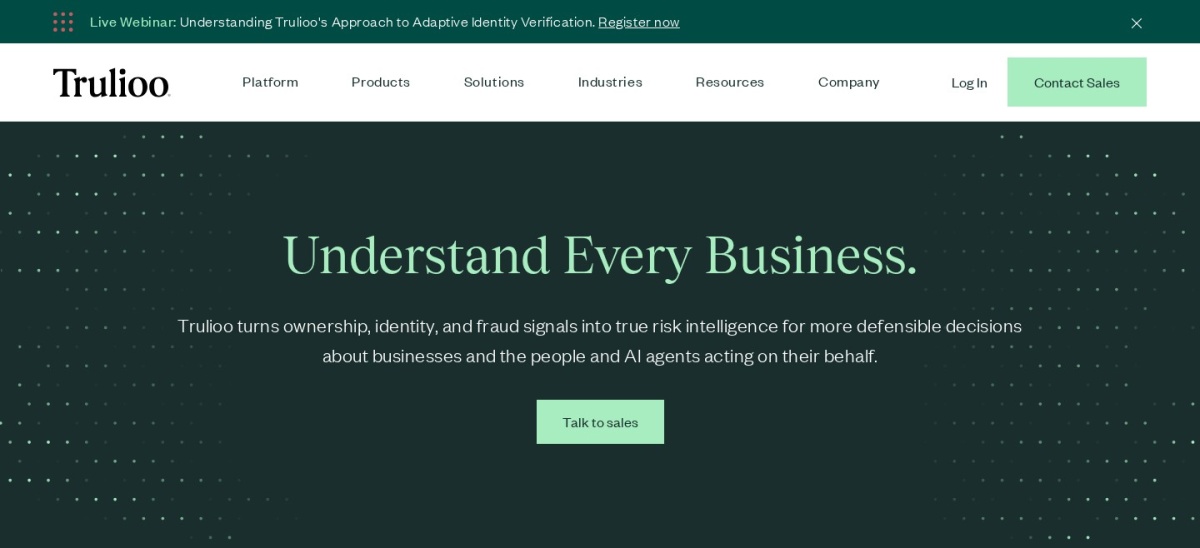
Trulioo is a global identity platform that verifies people through document checks and data sources instead of documents alone. It covers 65-plus countries, and its data checks let many customers pass without uploading an ID, which reviewers say lifts signup completion.
The trade off is cost. Trulioo publishes no prices, and reviewers call it expensive for international checks, though many say the coverage justifies the premium. It suits global teams that need data-source verification across many markets.
Jumio is a long-running identity verification vendor, founded in 2010, that checks documents and selfies for financial services, gaming and payments. It supports more than 5,000 ID subtypes from 200-plus countries and reports over 1 billion transactions processed.
The trade off is price and trial. Jumio publishes no prices and offers no free tier or trial, so evaluation needs a sales conversation. It suits large consumer brands that want verification during onboarding and again after it.
The headline rate is rarely the whole bill. Veriff charges $0.80 a check but needs a $49 monthly minimum, and Sumsub's own Basic plan needs $149 a month before volume pricing helps.
Add-ons stack up fast. AML screening, proof of address and manual review are usually priced per check on top of the base rate, and iDenfy lists them from $0.10 to $1.90 each.
Billing triggers differ too. ComplyCube charges only for successful verifications, while iDenfy charges per attempt unless you pay $0.50 more per check for approved-only billing.
How we chose
We started from the vendors G2 lists as Sumsub alternatives and the KYC platforms covered in recent independent comparisons, then kept nine established tools with a public G2 rating.
Prices come from each vendor's pricing page, checked on 29 November 2026, with review counts from G2 on the same day. Where a vendor shows a sale, the list shows the regular price.
We left out tools with no public rating and two well-known names, Persona and Entrust IDV, because no clean homepage screenshot could be captured for either. No vendor paid for a place, and we do not claim to have used these tools ourselves.
How to choose a Sumsub alternative
Start with your monthly volume and the checks you actually need, then shortlist on published prices.
Count your real monthly checks. Price the volume you run today, plus retries and failed checks, because minimums and per-check add-ons change the cheapest option fast.
List the checks you need. Document verification, liveness, AML screening and business verification are often separate modules, so pick a vendor that bundles the ones you run most.
Run the free trial or free tier first. Didit gives $10 of credit a month and Shufti Pro gives 10 free checks, so you can measure pass rates on your own documents before paying.
Ask for the quote-only total in writing. Socure, Trulioo and Jumio publish no prices, so get the per-check rate, minimums and add-on fees in writing before you commit.
FAQ
What is the best Sumsub alternative in 2026?
iDenfy is the best Sumsub alternative for most teams. It is rated 4.9 out of 5 on G2 from 244 reviews, covers KYC, KYB and AML in one platform, and publishes pricing from $1.35 per check with a $135 monthly minimum.
How much do Sumsub alternatives cost?
Published prices run from $0.33 per check with Didit to $1.50 with Shufti Pro, and monthly minimums run from $49 at Veriff to $210 at Microblink. Socure, Trulioo and Jumio publish no prices and are quoted by sales.
Is there a free Sumsub alternative?
Yes. Didit has a free plan with $10 of credit a month, enough for about 30 full KYC checks, and Shufti Pro gives 10 free verifications a month. Veriff, iDenfy and ComplyCube offer free trials instead of a permanent free plan.
Which Sumsub alternative is best for small teams?
ComplyCube is the best fit for small regulated teams. Its Starter plan costs $99 a month credited against checks, it holds a 5.0 out of 5 G2 rating from 74 reviews, and it includes no-code workflows and case management without an enterprise sales process.
Which Sumsub alternative is best for beginners?
Didit is the easiest start. Its prices are all public, the free plan needs no sales call, and a full KYC bundle costs $0.33 per check. iDenfy is the better pick once you need KYB and AML screening in the same platform.
Veriff vs iDenfy: which Sumsub alternative wins?
iDenfy wins on rating and breadth: 4.9 out of 5 from 244 G2 reviews against Veriff's 4.5 from 63, with KYC, KYB and AML in one platform. Veriff wins on entry price at $0.80 a check with a $49 monthly minimum, against iDenfy's $1.35 and $135.
SaaS SEO and WordPress specialist with about 8 years of experience. Rakib compares WordPress plugins, themes, hosting and software using public pricing, documentation and user reviews. See how we rank.