Microsoft Sentinel is the best SIEM alternative for most teams already on Azure, with a 4.4 out of 5 rating from 299 G2 reviews and pay-as-you-go ingestion pricing. Pick Wazuh if you want a free open-source SIEM, or Blumira from $12 per employee a month if you have no SOC staff.
How we make this list: we compare pricing pages, product documentation and public user reviews, then re-check every price before each update. No product paid for a place. Disclosure.
Microsoft Sentinel leads for Azure shops, rated 4.4 out of 5 from 299 G2 reviews, with pay-as-you-go ingestion pricing.
Wazuh is the only full SIEM here that costs nothing to self-host, and it holds a 4.5 out of 5 G2 rating.
Blumira has the cheapest published paid plan at $12 per employee a month, with unlimited log ingestion.
Elastic Cloud Hosted starts at $99 a month, while Graylog Enterprise starts at $15,000 a year.
Splunk, QRadar and Securonix are quote-only, so budget them by quote rather than by headline price.
Four of the nine have a free edition: Wazuh, Graylog, Sumo Logic and IBM QRadar.
How do you choose between SIEM alternatives?
A SIEM collects logs from across your systems, spots suspicious patterns and gives analysts one place to investigate. The right alternative depends on where your logs already live and who will watch the alerts.
Cloud-native teams should start with Microsoft Sentinel or Sumo Logic. Sentinel fits shops already on Azure and Microsoft 365, while Sumo Logic suits cloud-first teams that want a managed platform with nothing to install.
Budget is the deciding factor for most buyers. Per-gigabyte pricing looks cheap at first, then grows with every noisy log source, so model your daily volume before you commit. Our guide on limiting login attempts in WordPress shows how one noisy source can flood a SIEM with events.
Small teams should weigh the free options first. Wazuh and Graylog Community cover the core SIEM job for nothing, and Blumira adds guided response for teams without dedicated analysts.
Large enterprises should compare Splunk, QRadar and Securonix on detection quality and integration depth, not on price alone. All three are quote-only, and the real cost includes the engineers needed to run them.
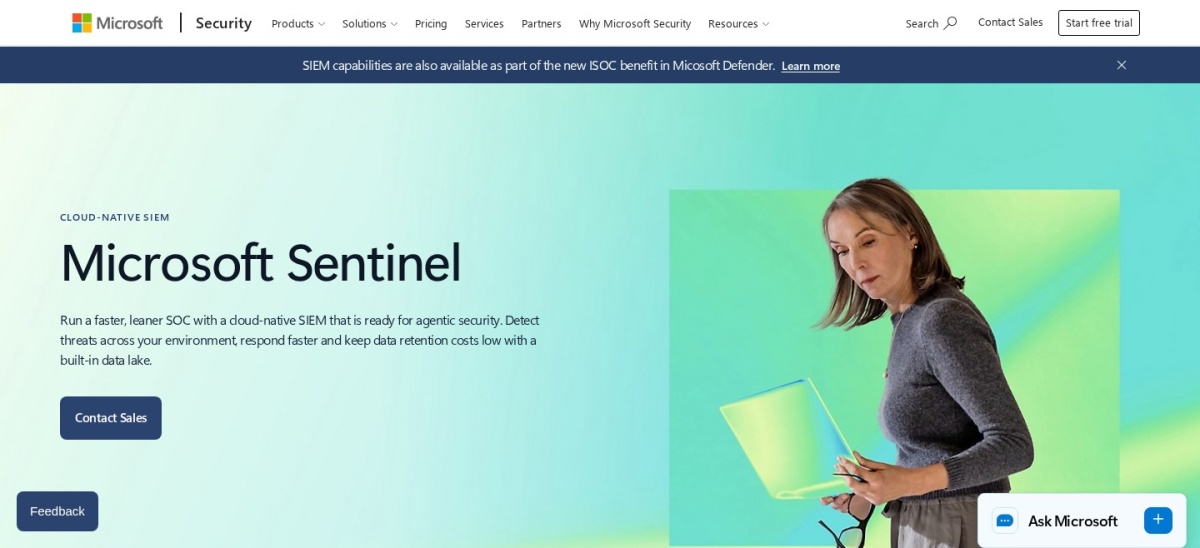
Microsoft Sentinel is a cloud-native SIEM built on Azure that collects logs from Microsoft 365, Defender, Azure and third-party sources into one workspace. It pairs detection rules written in KQL with automation playbooks and a data lake tier for long-term retention. Pricing is pay-as-you-go per gigabyte ingested, with commitment tiers from 100 GB a day at $123 a day.
The trade off is that the bill follows your data volume, so noisy sources can push costs up fast, and retention beyond 90 days costs extra. It suits teams already running Microsoft 365 or Azure, where native integrations and free ingestion for some Microsoft sources keep the setup simple.
What we like
Deep integration with Microsoft 365 and Defender
Pay-as-you-go pricing with no licence to buy
KQL hunting and automation playbooks built in
Data lake tier for long-term retention
Watch out for
Costs rise with log volume and are hard to predict
Splunk Enterprise Security homepage, captured Nov 2026.
Splunk Enterprise Security is the SIEM most other SIEMs are measured against, built on the Splunk platform for log search, correlation and investigation at large scale. It ships in Essentials and Premier editions with risk-based alerting, threat intelligence and SOAR workflows. Pricing is quote-based and depends on ingest volume or workload sizing.
The trade off is cost and complexity. Per-gigabyte pricing is the most cited complaint in G2 reviews, and running it well needs experienced engineers. It suits large enterprises with the budget and staff to run a full SOC on Splunk.
What we like
Strongest search and correlation in this list
Risk-based alerting cuts alert noise
Huge integration and app ecosystem
SOAR workflows built in
Watch out for
No public price; quote-only
Per-GB costs can grow fast at scale
Needs specialist skills to run well
Quote only; price depends on ingest volume or workloadVisit splunk.com
03
Elastic Security
4.4/5on G2 (39 reviews, checked Nov 2026)
Starts at$99/mo
Best open SIEM for search-driven teams
DeploymentCloud or self-hosted
Entry planCloud Hosted, $99/mo
Free trialYes
Paid planFrom $99/mo
elastic.co
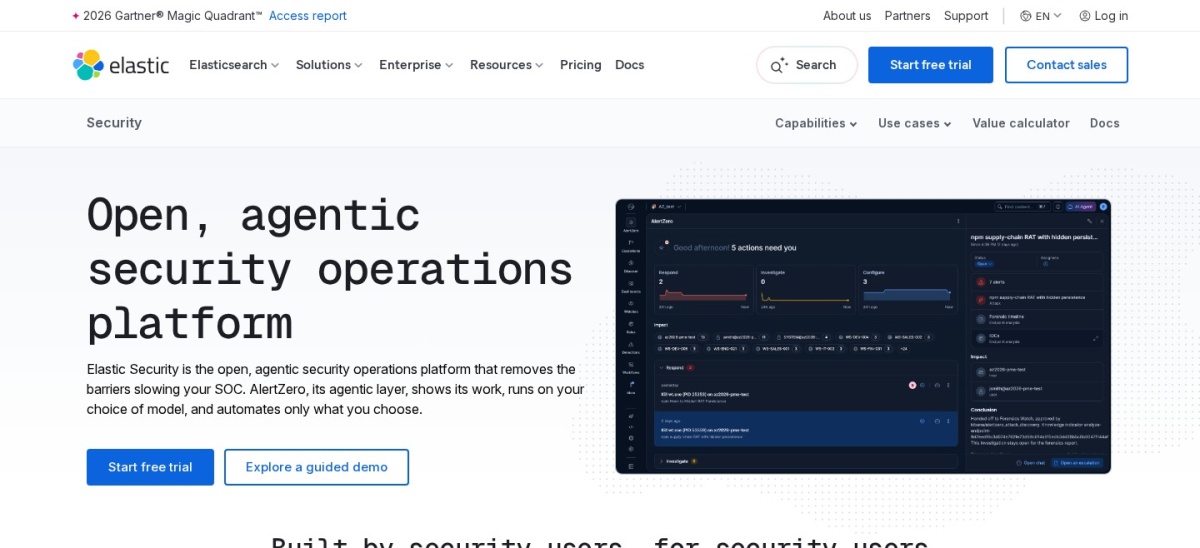
Elastic Security homepage, captured Nov 2026.
Elastic Security is an open SIEM built on Elasticsearch, combining log search, detection rules and endpoint protection in one platform. Elastic Cloud Hosted starts at $99 a month, and the self-managed version is free to run on your own hardware. Its search and visualisation tools are among the strongest in this list.
The trade off is resource use. Costs follow compute and storage rather than seats, so heavy queries or log spikes can raise the bill, and tuning takes skill. It suits teams that already know the Elastic Stack and want an open platform they can shape.
What we like
Powerful search and visualisation
Open platform with a free self-managed option
SIEM and endpoint protection in one place
Published $99 a month hosted entry price
Watch out for
Usage-based costs can be hard to predict
Needs skill to tune queries and storage
Smallest G2 review base in this list
Hosted from $99 a month; self-managed is free to runVisit elastic.co
04
Wazuh
4.5/5on G2 (71 reviews, checked Nov 2026)
PriceFree
Best free open-source SIEM
DeploymentSelf-hosted or Cloud
LicenceOpen source
Free planYes, full platform
Paid planCloud, by agents
wazuh.com
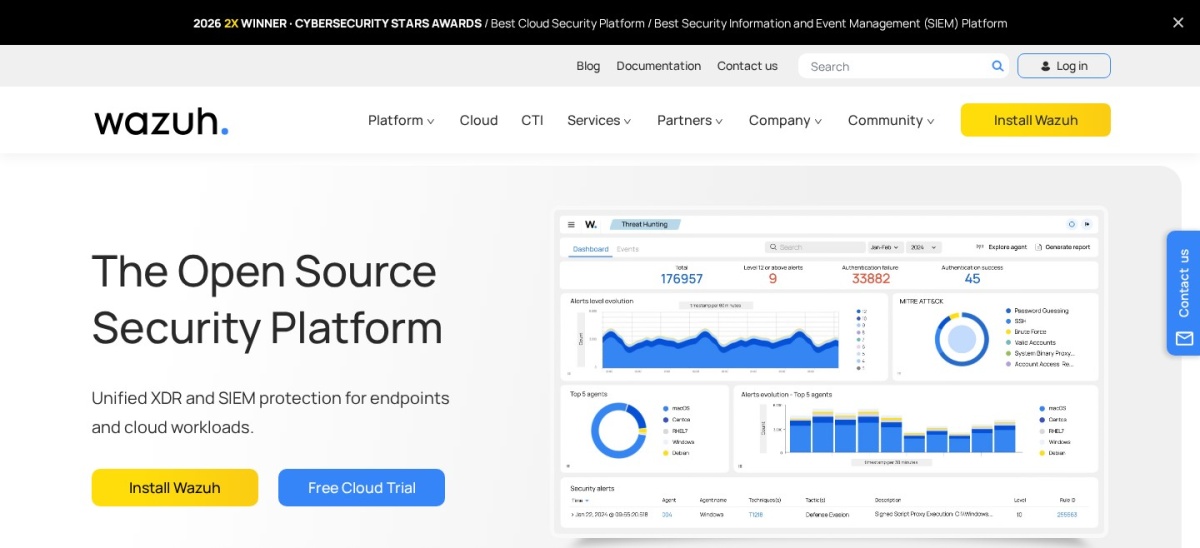
Wazuh homepage, captured Nov 2026.
Wazuh is a free, open-source security platform that unifies SIEM and XDR for endpoints and cloud workloads. It covers log analysis, file integrity monitoring, vulnerability detection and compliance checks with no licence fee. A paid managed option, Wazuh Cloud, is priced by active agents for teams that do not want to self-host.
The trade off is the work it takes to run. Deployment, storage sizing and rule tuning need solid system administration time, and there is no paid self-hosted tier with support bundled in. It suits small teams and labs that want a full SIEM without a licence bill.
What we like
Full SIEM with no licence fee
Rated 4.5 out of 5 from 71 G2 reviews
Covers endpoints, logs and compliance
Managed Cloud option for teams that skip self-hosting
Watch out for
Self-hosting needs real admin time
Rule tuning can be noisy at first
No paid self-hosted support tier
Free to self-host; managed Cloud is priced by agentsVisit wazuh.com
05
Blumira
4.6/5on G2 (124 reviews, checked Nov 2026)
Starts at$12/mo
Best SIEM for teams without a SOC
DeploymentCloud
Entry planDetect, $12/employee/mo
Free trial30 days
Data retention1 year
blumira.com
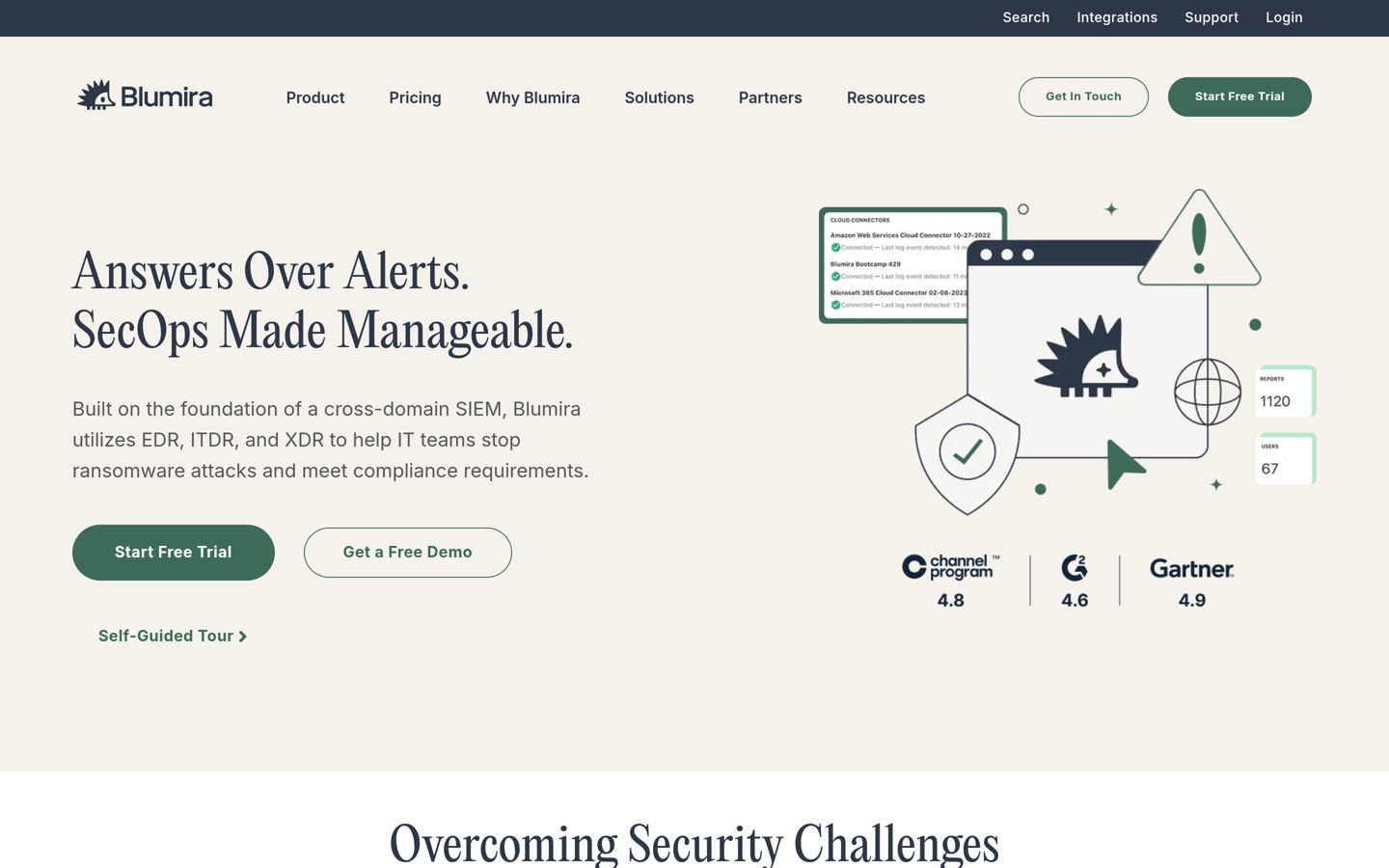
Blumira homepage, captured Nov 2026.
Blumira is a cloud SIEM built for small IT teams without a SOC, combining detection, investigation guidance and automated response. Its Detect edition starts at $12 per employee a month with unlimited log ingestion and one year of retention. Every edition includes expert-built detections and compliance reports.
The trade off is depth. It is not built for heavy custom detection engineering, and the bill grows with employee count rather than analysts. It suits growing teams that want practical detection and a 30-day trial before they commit.
What we like
Cheapest published paid plan in this list
Unlimited log ingestion with one year of retention
Guided response for teams without analysts
Highest G2 rating in this list at 4.6 out of 5
Watch out for
Not built for heavy custom detection work
Per-employee billing grows with headcount
No free plan, trial only
Detect adds guided response; Automate costs $21 a monthVisit blumira.com
06
Graylog
4.4/5on G2 (121 reviews, checked Nov 2026)
Paid from$15,000/yr
Best log-first SIEM for mid-market teams
DeploymentSelf-hosted or Cloud
Free editionCommunity, 5 GB/day
Entry paidEnterprise, $15,000/yr
SIEM tierSecurity, $18,000/yr
graylog.org
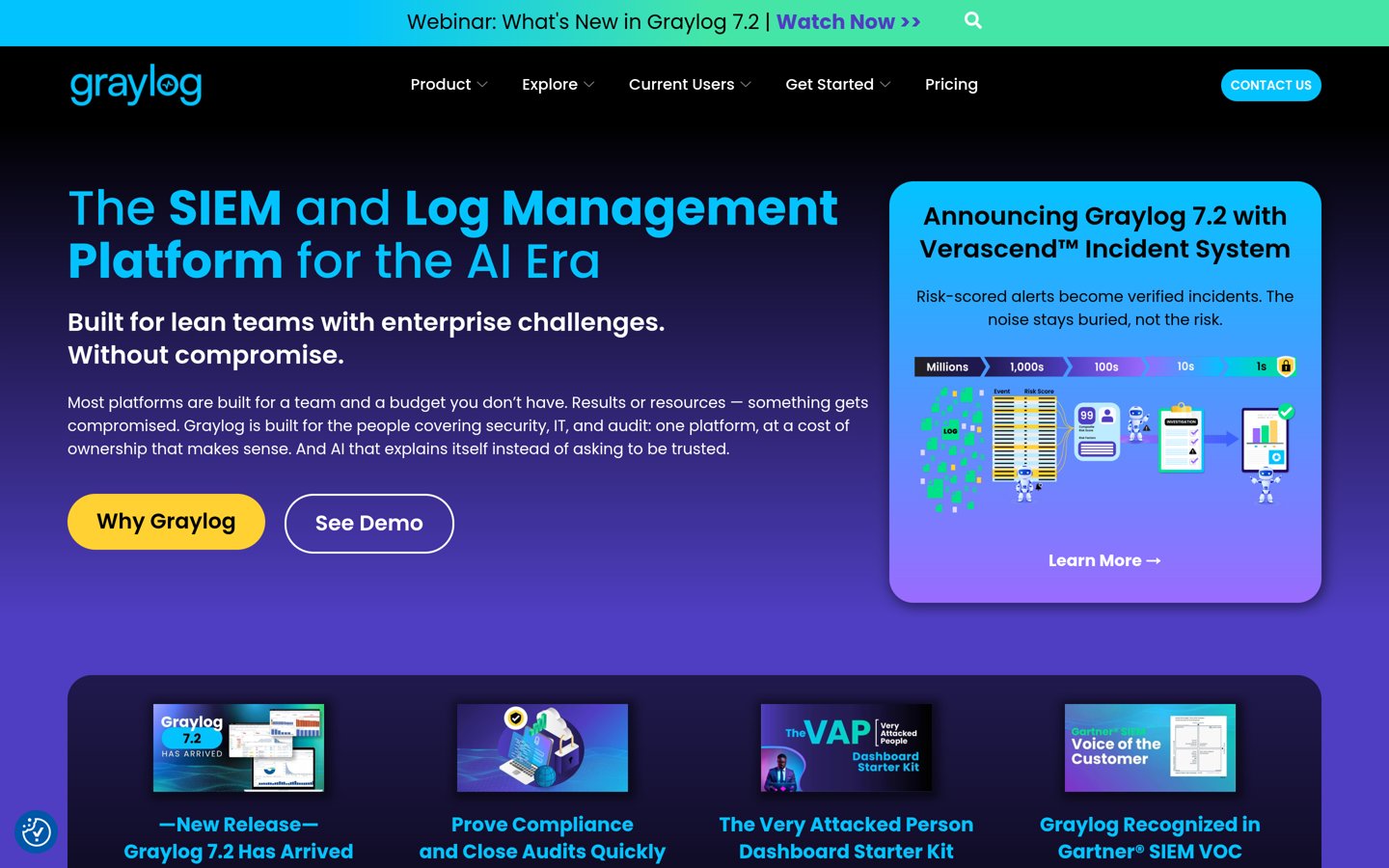
Graylog homepage, captured Nov 2026.
Graylog is a log management and SIEM platform with a free open-source community edition capped at 5 GB of logs a day. Paid Graylog Enterprise starts at $15,000 a year, and the Graylog Security tier starts at $18,000 a year with risk-based alerting and Sigma rule support. It is known for fast search and simple pipelines.
The trade off is that the free edition caps daily volume, so busy environments outgrow it, and the paid tiers start high for small teams. It suits mid-market teams that want a log-first SIEM without Splunk-level pricing.
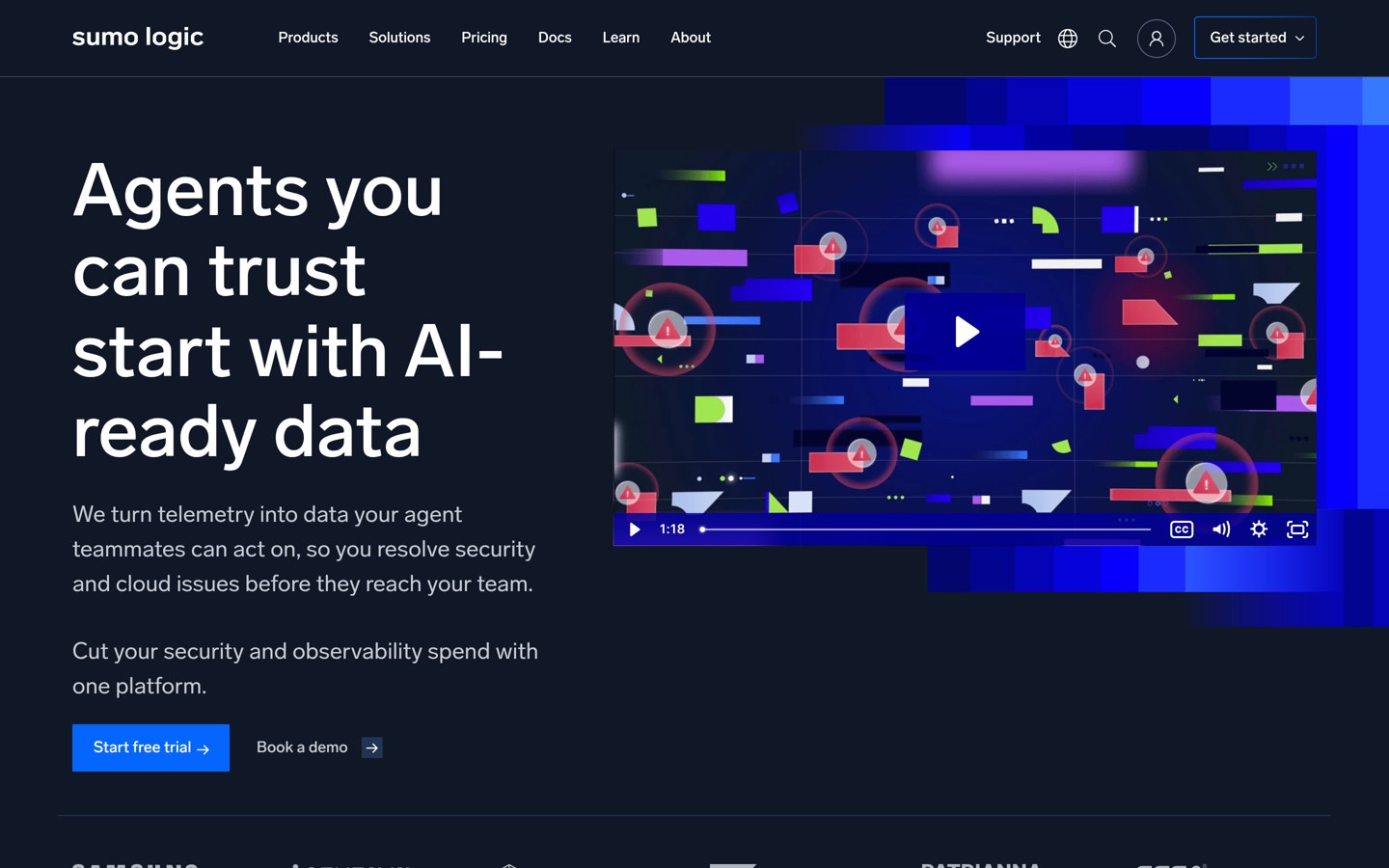
Sumo Logic is a cloud-native log analytics platform with built-in Cloud SIEM features, real-time alerting and compliance reporting. It has a free plan with limited features, while paid Essentials, Enterprise Suite and Flex plans are quote-based and billed by ingestion. Nothing needs to be installed or maintained on your side.
The trade off is predictability. Reviewers praise the search and integrations but warn that costs climb quickly as log volume grows. It suits cloud-first teams that want a managed SIEM and can govern what they ingest.
What we like
Fully managed, nothing to install
Largest G2 review base in this list at 425 reviews
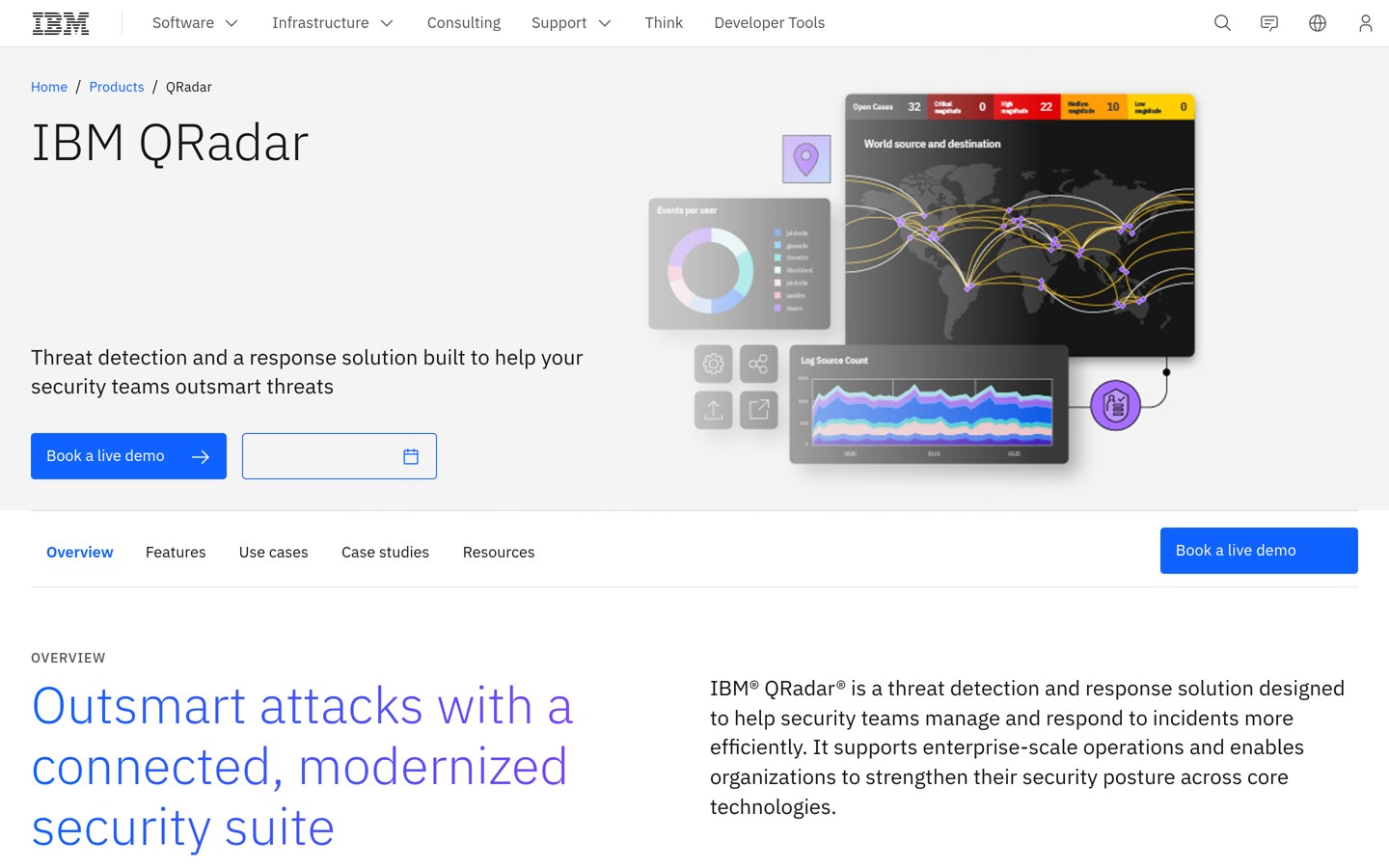
IBM QRadar SIEM is a long-running enterprise SIEM for threat detection, event correlation and compliance reporting. It runs on-premises or in the cloud, licenses by events per second and flows, and has a free Community Edition capped at 50 EPS. Its integration library is one of the widest in this list.
The trade off is cost and change. IBM does not publish list prices, reviewers cite high licensing and renewal costs, and the SaaS assets moved to Palo Alto Networks in 2024. It suits regulated enterprises that need on-premises deployment and deep compliance reports.
What we like
Very wide integration library
Strong compliance reporting depth
On-premises deployment option
Free Community Edition for small setups
Watch out for
No published list prices
Reviewers cite high licensing costs
SaaS assets moved to Palo Alto Networks in 2024
Quote only; Community Edition is free at 50 EPSVisit ibm.com
09
Securonix
4.7/5on Gartner Peer Insights (421 reviews, checked Nov 2026)
PricingCustom/yr
Best SIEM for behaviour-led detection
DeploymentCloud
Pricing unitIdentities
UEBABuilt in
Paid planCustom quote
securonix.com
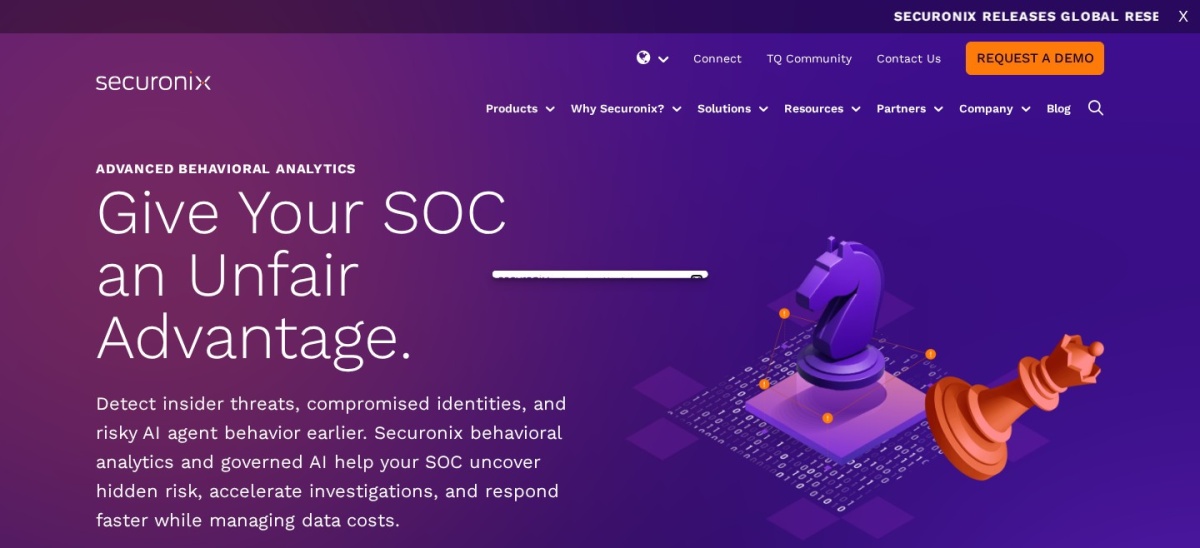
Securonix homepage, captured Nov 2026.
Securonix is a cloud SIEM that pairs log analytics with user and entity behaviour analytics, SOAR and threat intelligence in one platform. It prices by identities rather than gigabytes, and Gartner has named it a SIEM Leader six times. Its 4.7 out of 5 Gartner Peer Insights rating is the highest in this list.
The trade off is transparency and setup. Pricing is quote-only, reviewers say integrations take real work, and the G2 review base is small at 13 reviews. It suits large or regulated teams that value behaviour analytics and lower alert noise over a simple price list.
Free SIEM editions cover the core job well. Wazuh is free in full, while Graylog Community, Sumo Logic Free and QRadar Community cap volume or features.
Paid plans mostly add scale, support and automation. You get higher ingest limits, guided response, longer retention and someone to call when an alert looks wrong.
Per-gigabyte billing is where free stops being free. A paid plan with a flat rate, such as Blumira at $12 per employee a month, can cost less than a usage-billed SIEM once noisy sources are counted.
For a team with no dedicated analysts, a free SIEM plus a paid support plan often beats a free SIEM alone. The alerts still need someone to read them.
How we chose
We started from the SIEM platforms buyers compare most often on G2 and Gartner Peer Insights, then kept the nine with a public rating, a live product page and a clear deployment model.
Prices come from each vendor's pricing page or G2 vendor-supplied pricing, checked on 29 November 2026. Ratings and review counts come from G2 on the same day, except Securonix, which uses Gartner Peer Insights because its G2 base is only 13 reviews. Where a vendor shows a sale, the list shows the regular price.
We left out tools with no public rating and tools that are no longer sold under their own name. No vendor paid for a place, and we do not claim to have used these tools ourselves.
How to choose a SIEM alternative
Start with where your logs live and who will read the alerts, then let price follow.
Map your log sources first. List every system that sends logs, from firewalls and endpoints to cloud apps, and estimate daily volume. A SIEM that cannot ingest a key source is the wrong pick.
Match the billing model to your volume. Per-gigabyte pricing suits steady, well-governed volume. Flat per-employee or per-identity pricing suits teams whose log volume is spiky or hard to predict.
Check who will run it. A managed SIEM such as Blumira or Sumo Logic fits teams without analysts. Wazuh, Graylog and Elastic need someone in-house to tune rules and storage.
Trial the top two on real logs. Send a week of production logs through a trial and count the alerts that matter. The winner is the one whose alerts your team can actually act on.
FAQ
What is the best SIEM alternative?
Microsoft Sentinel is the best SIEM alternative for most teams, especially those already on Azure and Microsoft 365. It holds a 4.4 out of 5 rating from 299 G2 reviews, with pay-as-you-go ingestion pricing and no licence to buy.
Is there a free SIEM?
Yes. Wazuh is a full SIEM that is free to self-host, and Graylog Community, Sumo Logic Free and IBM QRadar Community Edition are free with volume or feature limits. Wazuh is the strongest free pick because it does not cap the core platform.
What is the cheapest SIEM alternative?
Wazuh is the cheapest because it is free to self-host. Among paid plans, Blumira Detect is the cheapest published price at $12 per employee a month, and Elastic Cloud Hosted starts at $99 a month.
Is Microsoft Sentinel better than Splunk?
Microsoft Sentinel is better than Splunk for teams already on Azure, because native integrations and pay-as-you-go pricing keep setup simple. Splunk is better for large enterprises that need the deepest search, correlation and custom detection work.
Which SIEM is best for a small team?
Blumira is the best SIEM for a small team without a SOC, because it adds guided response and expert-built detections from $12 per employee a month. Wazuh is the best free pick for small teams that can self-host.
How much does a SIEM cost?
SIEM costs range from free for Wazuh self-hosted to $12 per employee a month for Blumira and $99 a month for Elastic Cloud Hosted. Graylog Enterprise starts at $15,000 a year, while Splunk, QRadar and Securonix are quote-only.
Do I need a SOC team to run a SIEM?
No, but someone has to read the alerts. Managed options such as Blumira and Sumo Logic reduce the workload with guided response, while Wazuh, Graylog and Elastic need in-house staff to tune rules and investigate alerts.
SaaS SEO and WordPress specialist with about 8 years of experience. Rakib compares WordPress plugins, themes, hosting and software using public pricing, documentation and user reviews. See how we rank.