Medicat is the best student health EHR software for most college health centers, covering medical visits, counseling, immunization compliance and accessibility in one campus-built system used at more than 500 sites. Magnus Health is the stronger pick for K-12 schools, while CharmHealth is the only option here with a free plan for low-volume clinics.
How we make this list: we compare pricing pages, product documentation and public user reviews, then re-check every price before each update. No product paid for a place. Disclosure.
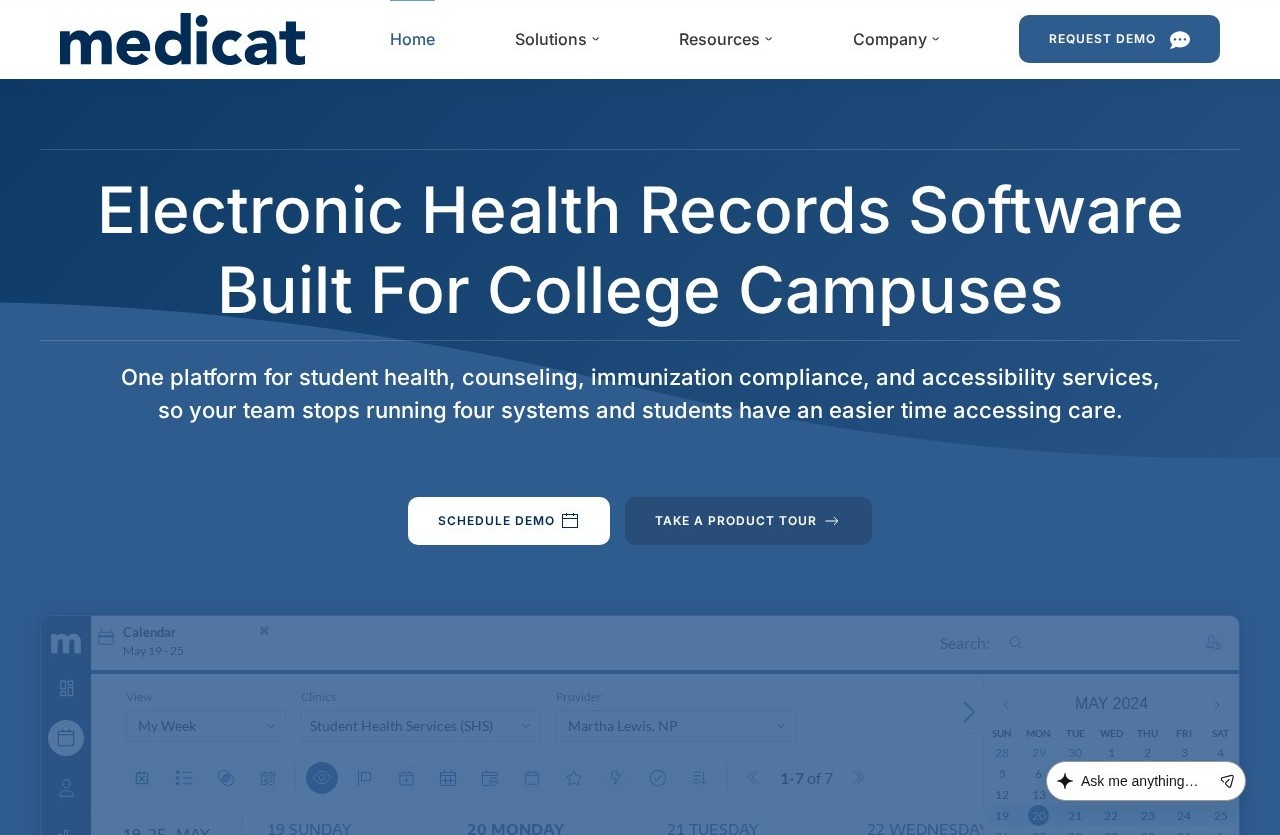
Medicat is the only EHR here built solely for campus health, used at more than 500 college health and counseling centers.
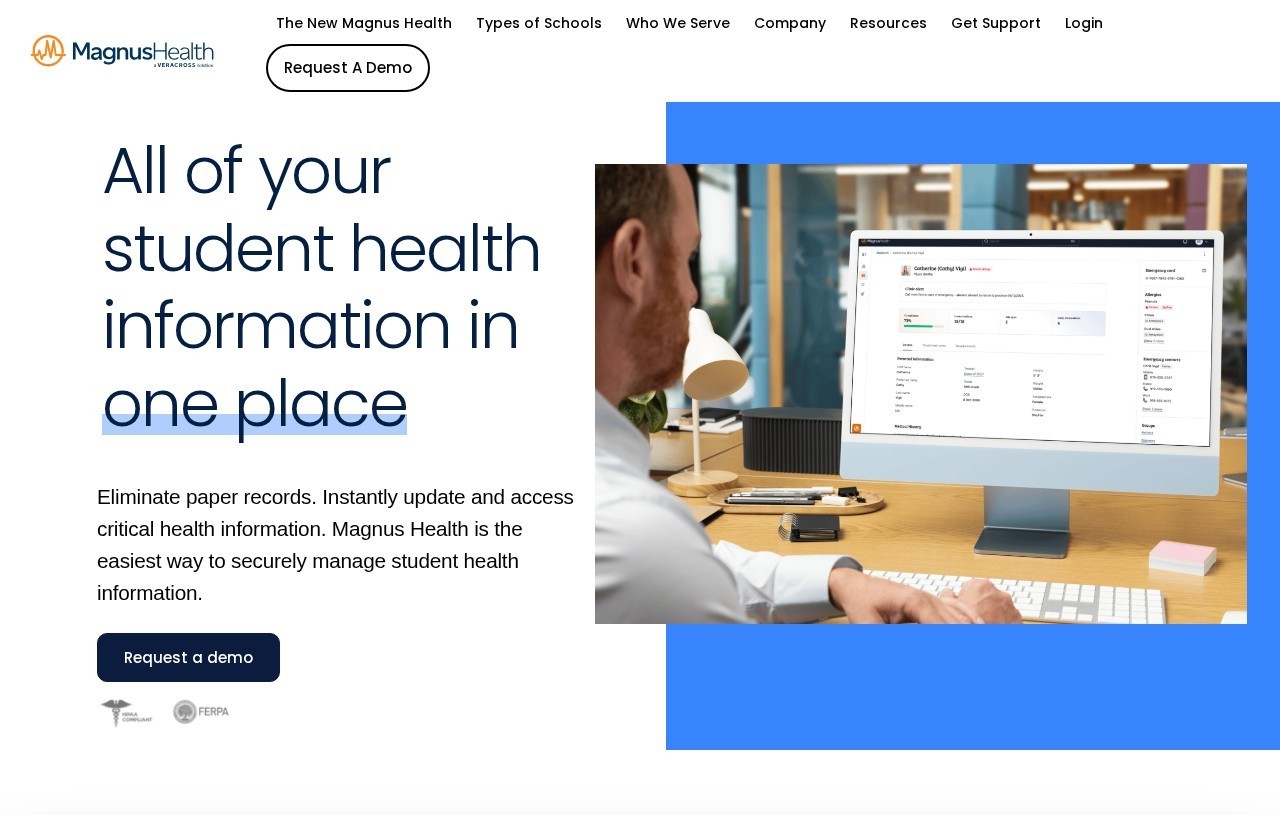
Magnus Health leads for K-12 schools, with parent-submitted forms, immunizations and visit notes in one record.
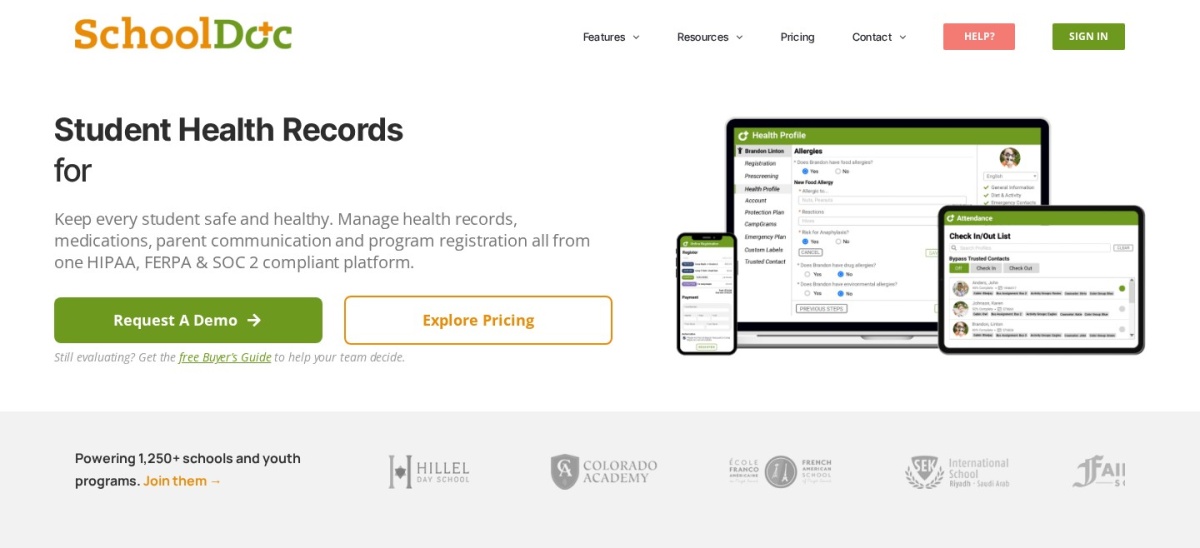
SchoolDoc is the only K-12 pick with a published price: plans start at $425 a month, and it serves 1,250+ schools and programs.
CharmHealth is the only free start: $0 under 50 encounters a month, then $0.50 per encounter with a $25 monthly minimum.
Five of the seven vendors publish a starting price; Medicat and Magnus Health are quote only, so budget for demos and implementation on top.
Titanium Schedule is the counseling-center specialist, from $1,750 for the first year at more than 1,400 facilities.
How do you choose student health EHR software?
Start with the setting, not the feature list. A college health center needs scheduling, clinical charting, labs, pharmacy and billing, while a K-12 health office needs visit logs, medication records, immunizations and parent forms.
Immunization compliance is the feature that separates campus-built tools from general EHRs. Medicat, Magnus Health and SchoolDoc track immunizations and holds as core workflows, while general EHRs such as Practice Fusion and eClinicalWorks need add-ons or manual steps for the same checks.
Pricing is mostly quote-only in this category. Only SchoolDoc, CharmHealth, Titanium Schedule, Practice Fusion and eClinicalWorks publish a starting figure, so get every quote in writing with implementation and training itemized. Our guide on GDPR compliance for WordPress explains the data protection basics that apply to any system holding student health records.
Privacy law decides part of the shortlist. Education records are generally covered by FERPA, while health information held by a clinic falls under HIPAA, so ask each vendor for its data processing terms, where records are stored and how you export the full record if you switch.
Medicat is a cloud EHR built only for colleges, universities, boarding schools and public health clinics, and the vendor reports more than 500 campus sites. It covers medical visits, counseling, immunization compliance, accessibility services, scheduling, labs and pharmacy in one record, with a student portal for booking and immunization uploads.
The trade off is price. Medicat publishes no price and offers no free trial, so a campus must go through sales and a demo before it can budget. It suits college health centers that want one campus-built record instead of stitching a general EHR to a counseling tool.
What we like
Built only for campus health and counseling
Immunization compliance and student portal included
Magnus Health is a cloud student health record system for private and independent K-12 schools, with parents submitting health forms, immunizations, sports physicals and emergency contacts online. Nurses track immunizations, log clinic visits with templates and manage medications from one record, with a mobile app for visits away from the clinic.
The trade off is cost. Magnus Health publishes no price, and G2 reviewers call it costly for small schools, with some features costing extra. It suits private and independent schools that want parent-collected records done well and can fund a premium system.
SchoolDoc is a web-based student health record system for K-12 schools, after-school programs and childcare, trusted by 1,250+ schools and programs. It covers digital health forms, allergies, immunizations, SOAP-format clinic visit logging, medication administration and parent communication, and states HIPAA, FERPA and SOC 2 compliance.
The trade off is scope. SchoolDoc is built around the school health office rather than a full clinic, so lab orders, pharmacy and insurance billing are not its focus. It suits K-12 schools that want one published-price system for forms, medications and parent communication.
What we like
Published starting price of $425 a month
Electronic medication administration records included
HIPAA, FERPA and SOC 2 compliance stated
Rated 4.5 out of 5 on Capterra from 22 reviews
Watch out for
No full clinic billing or lab workflows
Pricing is tailored, so the final quote varies by size
CharmHealth is a cloud EHR with practice management, billing, telehealth, e-prescribing and a patient portal for small clinics. The free plan costs $0 under 50 encounters a month, with 1 provider, 5 users and 1,000 patient records, and the Encounter plan then charges $0.50 per encounter with a $25 monthly minimum.
The trade off is add-ons. More than 25 features are billed separately, including e-prescribing, telehealth and the immunization registry, and passing 50 encounters auto-upgrades a free practice to paid Encounter pricing. It suits a small campus clinic with low visit volume that wants a free start.
What we like
Only free plan in this list
Per-encounter pricing suits low volume
Patient portal and telehealth included
Largest review base here, 153 Capterra reviews
Watch out for
Many features are paid add-ons
No native immunization compliance or SIS workflows
Titanium Schedule is an electronic medical records system for university and college counseling centers, used at more than 1,400 facilities worldwide. It covers appointment scheduling, clinical notes, treatment plans, outcome reporting and reminders, and lets staff customize forms and workflows without programming.
The trade off is scope. Titanium Schedule is built for counseling, not full medical care, so a health center that also runs labs, pharmacy and billing needs a second system. It suits a campus counseling center that wants an affordable, configurable record starting at $1,750 for the first year.
Practice Fusion is a cloud EHR for small ambulatory practices, owned by Veradigm, with charting templates, e-prescribing including controlled substances, lab and imaging orders, a patient portal and scheduling. The pricing page lists $199 per provider per month, billed monthly with a required annual commitment, and each license includes 3 signing staff seats.
The trade off is scope. Practice Fusion is a general-purpose EHR with no native immunization compliance or student information system workflows, and fully integrated billing is a separate, unpriced add-on. It suits a small campus clinic that wants a listed price and a free trial before signing.
eClinicalWorks is a cloud EHR and practice management platform for ambulatory practices, used by more than 180,000 physicians and nurse practitioners according to the vendor. The EHR Only plan is $499 per provider per month with no start-up costs, and it includes a patient portal, mobile app, e-prescribing and telehealth.
The trade off is cost creep. Per-statement and per-message fees sit outside the monthly price, and the Sunoh.ai scribe is a separate add-on. It suits a larger campus clinic that bills insurance heavily and wants a published per-provider price before talking to sales.
What we like
Published prices with no start-up costs
Used by more than 180,000 physicians and NPs
Patient portal, mobile app and e-prescribing included
K-12 health offices should shortlist Magnus Health and SchoolDoc first, because both are built around visit logs, medications, immunizations and parent forms.
College health centers should shortlist Medicat first, then Titanium Schedule for counseling and CharmHealth or Practice Fusion for a small clinic with low volume.
A general EHR only works when the clinic is small and the main needs are charting, scheduling, e-prescribing and lab orders. Check immunization compliance, counseling documentation and the student portal before shortlisting, and ask each vendor to show each workflow on a working screen.
How we chose
We started from every student health EHR built for K-12 schools or college health centers, then added general ambulatory EHRs that a campus clinic can use, using research and vendor-page checks completed on 30 November 2026.
Prices come from each vendor's pricing page or homepage where published, checked on 30 November 2026. Ratings come from G2 or Capterra on the same day. Where a vendor publishes no price, the list shows Quote.
We left out tools with no public rating, including PyraMED and Point and Click Solutions, and SNAP Health Center, whose public site serves only a login portal with no homepage to review. No vendor paid for a place, and we do not claim to have used these tools ourselves.
How to choose student health EHR software
Start with your setting, then check the five workflows every student health record runs each week.
Match the tool to your setting. A K-12 health office needs visit logs and parent forms; a college center needs scheduling, charting, labs and billing. Pick from the group built for your setting first.
Check immunization compliance first. Ask the vendor to show how holds, exemptions and state reports work on a working screen. General EHRs often handle this through add-ons or manual steps.
Get the full price in writing. Most vendors here quote by enrollment, providers or modules, and implementation, training and migration can cost more than the first year of subscription.
Confirm privacy and export terms. Ask where records are stored, who can access them, how long they are kept after a student leaves, and how you export the full record if you switch.
FAQ
What is the best student health EHR software in 2026?
Medicat is the best pick for most college health centers, because it is built only for campus health and covers medical visits, counseling, immunization compliance and accessibility in one system used at more than 500 sites.
How much does student health EHR software cost?
Published prices run from $0 on CharmHealth under 50 encounters a month to $499 per provider per month for eClinicalWorks, while Medicat and Magnus Health are quote only. Budget separately for implementation, training and migration.
Is there a free student health EHR?
CharmHealth is the only tool here with a free plan, at $0 under 50 encounters a month with 1 provider, 5 users and 1,000 patient records. The other tools offer demos or trials instead of a free plan.
Which student health EHR is best for a small school?
SchoolDoc fits a small K-12 school best, with a published starting price of $425 a month, medication records and parent communication in one system. Magnus Health suits private schools with more complex form needs.
Which is best for a college counseling center?
Titanium Schedule is the best fit for a college counseling center, with scheduling, clinical notes, treatment plans and outcome reporting from $1,750 for the first year. Medicat covers counseling inside a full health record instead.
Medicat vs Magnus Health: which is better?
Medicat is better for a college health center, with clinic charting, labs, pharmacy and counseling in one campus-built system. Magnus Health is better for a K-12 school, with parent-submitted forms and immunization tracking as its core.
SaaS SEO and WordPress specialist with about 8 years of experience. Rakib compares WordPress plugins, themes, hosting and software using public pricing, documentation and user reviews. See how we rank.