Square is the best Stripe alternative for most sellers because it pairs online checkout with in-person sales at no monthly fee on its free plan. Paddle suits software sellers who want tax handled, while a $25 monthly gateway suits stores that want recurring billing.
How we make this list: we compare pricing pages, product documentation and public user reviews, then re-check every price before each update. No product paid for a place. Disclosure.
Square takes online and in-person payments with no monthly fee on its free plan.
Paddle charges 5% plus 50 cents but handles global tax as merchant of record.
Authorize.Net costs $25 a month plus 2.9% plus 30 cents per transaction.
PayPal card processing starts at 2.89% plus 29 cents, but Checkout costs more.
Checkout.com and Adyen price by quote, so small sellers cannot compare them directly.
What Stripe alternatives cost the least per sale?
Per-transaction fees decide most Stripe switches, not monthly fees. A gateway with no monthly fee can still cost more per sale than one with a $25 monthly fee once volume grows.
The cheapest rate depends on how buyers pay. Cards, wallets, bank debits and buy-now-pay-later each carry their own rate, so compare the fee line your customers actually use.
Merchant of record models cost more per sale but remove tax work. Paddle charges 5% plus 50 cents, yet handles sales tax and VAT worldwide, which direct processors leave to you.
Payout timing and dispute rules matter as much as the headline rate. Check settlement speed, chargeback fees and reserve rules before moving checkout, since a cheap rate with slow payouts can still hurt cash flow.
Square is a payment and commerce suite that pairs online checkout, invoicing and booking with point-of-sale tools. Square Free charges $0 a month per location, with online card fees of 3.3% plus 30 cents and in-person fees of 2.6% plus 15 cents.
The trade off is the online rate. Free-plan online card fees run higher than the standard 2.9% plus 30 cents, and Plus costs $49 a month per location. It suits retail shops and service businesses that sell both online and in person.
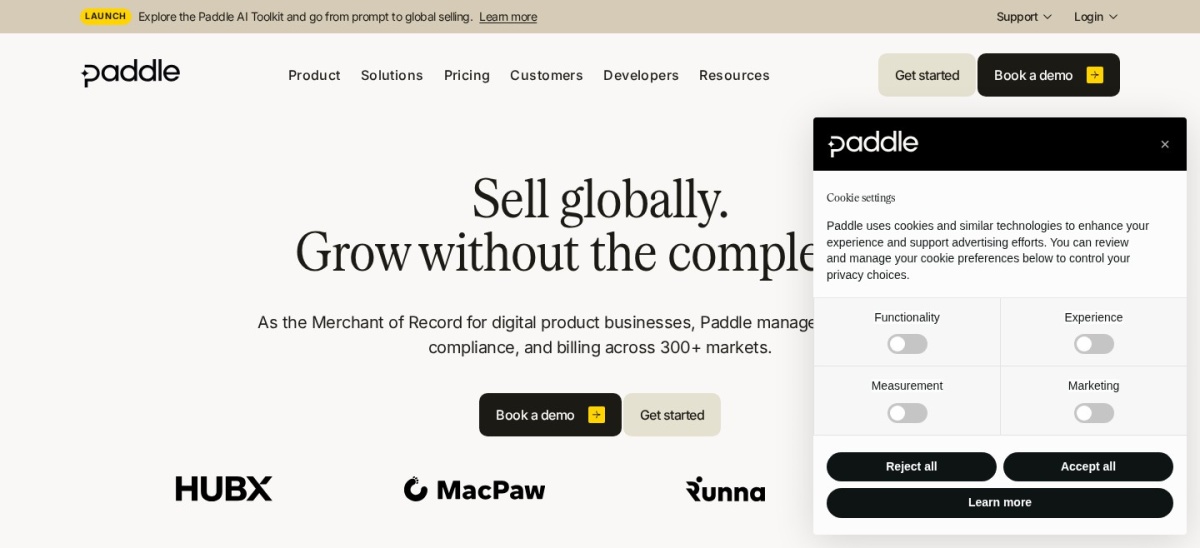
Paddle is a payments and billing platform that operates as a merchant of record, with no monthly fee on its pay-as-you-go plan. Its published rate is 5% plus 50 cents per checkout transaction, covering payments, subscriptions and global tax compliance.
The trade off is the per-transaction fee. At 5% plus 50 cents it costs more per sale than a direct card processor. It suits software and digital product sellers that want one vendor to handle international tax rules and subscription billing.
What we like
No monthly fee on pay-as-you-go Checkout
Handles global tax as merchant of record
Built-in subscription billing and invoicing
Watch out for
Higher per-transaction rate than direct processors
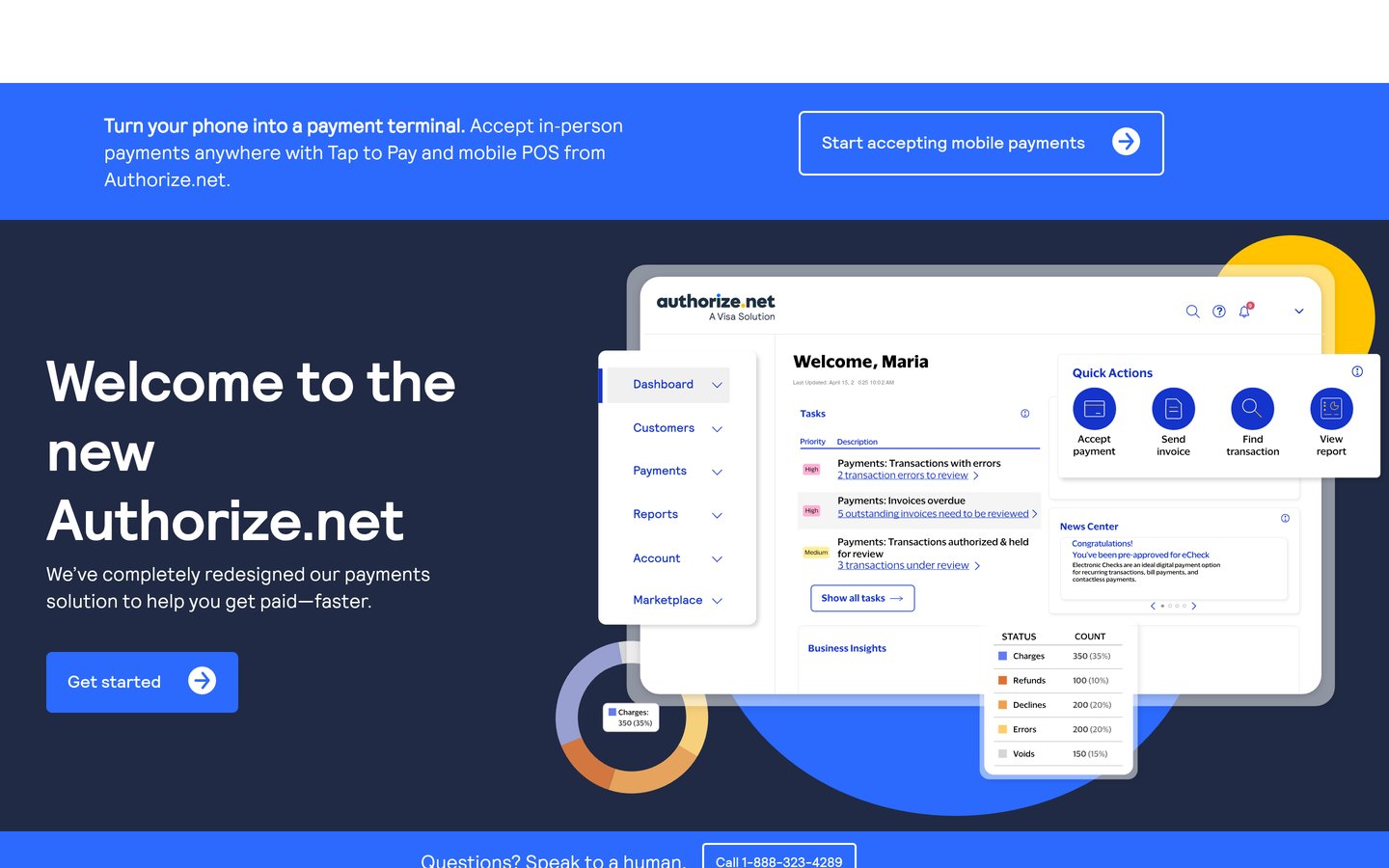
Authorize.Net is a payment gateway and processing service with plans starting at $25 a month and no setup fee. Its All-in-One plan charges $25 a month plus 2.9% plus 30 cents per transaction, while Gateway Only charges $25 a month plus 10 cents per transaction.
The trade off is the fixed monthly fee, which applies even in low-volume months. It suits businesses that want recurring billing, customer vaulting, fraud rules and a flat monthly gateway structure.
PayPal is a widely recognized payment gateway and wallet network with no monthly subscription fee for standard business accounts. Business card processing starts at 2.89% plus 29 cents for advanced card payments, while PayPal Checkout and Venmo cost more.
The trade off is the rate spread. PayPal Checkout runs 3.49% plus 49 cents and Pay Later runs 4.99% plus 49 cents, plus international and currency conversion costs. It suits online stores that want strong wallet recognition beside card checkout.
Checkout.com is a global payment acquirer for high-volume online merchants and marketplaces. Pricing is by quote on an interchange-plus model, with 150-plus payment methods and multi-currency payouts from one integration.
The trade off is access. There is no published self-serve rate, so small sellers cannot compare it without a sales conversation. It suits merchants processing enough volume to negotiate a quote and sell across borders.
Adyen is a single-platform acquirer that issues, processes and pays out without routing through a third-party gateway. It covers online, in-store and in-app payments in one system, with interchange-plus pricing quoted per merchant.
The trade off is fit. Adyen is built for large merchants, and smaller sellers will find the sales-led onboarding and minimums a poor match. It suits enterprises with high volume across several countries and channels.
Braintree is a payment gateway from PayPal built for custom web and mobile checkouts, with standard card and digital wallet processing at 2.89% plus 29 cents. It adds native PayPal and Venmo acceptance plus ACH Direct Debit in one integration.
The trade off is the rating. Braintree holds 3.4 out of 5 on G2, lower than its rivals here, and non-USD transactions add 1%. It suits engineering teams building tailored mobile or web payment flows.
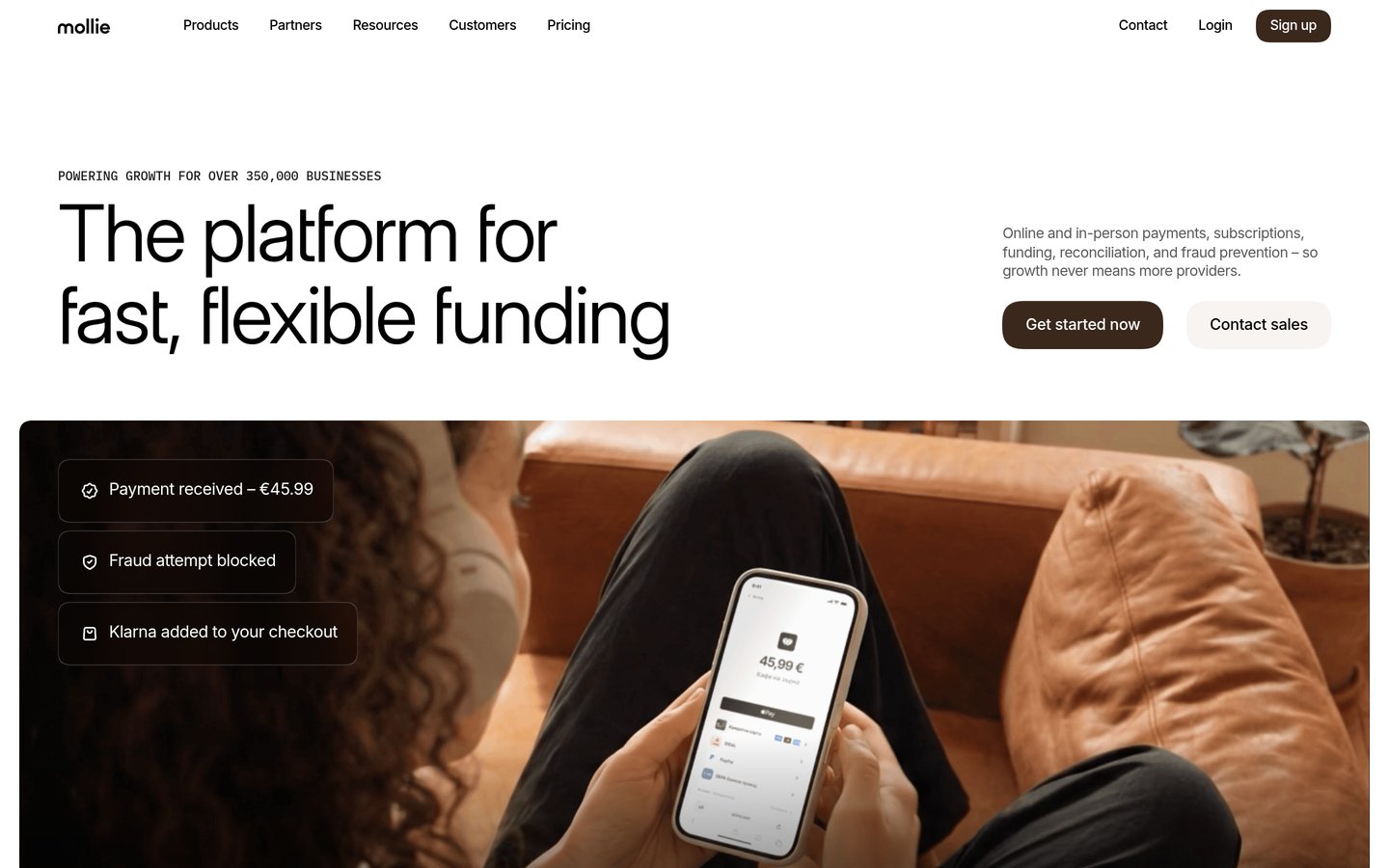
Mollie is a Dutch payment provider with self-serve sign-up, payment links, invoicing and recurring payments. It prices by payment method rather than by gateway plan, with no minimum costs and no contract, and it is licensed by the Dutch central bank.
The trade off is geography. Mollie is built for European buyers and methods such as iDEAL and Bancontact, so US-only sellers get less from it. It suits small and mid-size businesses selling online to European customers.
Helcim is a payment processor that uses interchange-plus pricing with no monthly fees or long-term contracts. For up to $50,000 in monthly volume, its published margin is interchange plus 0.50% plus 25 cents for online transactions.
The trade off is the review base. Helcim holds 3.7 out of 5 on G2 from only 20 reviews, and totals vary by card type. It suits businesses processing steady card volume that want transparent interchange-plus margins.
Flat-rate gateways charge one predictable percentage plus a fixed cent fee per card transaction. That structure makes estimating order costs simple when ticket sizes vary.
Interchange-plus gateways pass through wholesale card network fees plus a disclosed markup. It can save money on lower-cost debit cards while costing more on rewards or corporate cards.
If most of your sales are debit cards, ask for an interchange-plus quote. If they are mixed rewards cards, a flat rate is usually simpler to budget.
How we chose
We started from the established payment processors and gateways sellers actually move to from Stripe, then kept the nine with a verifiable rating on G2 or Capterra.
Rates come from each vendor's pricing page or a November 2026 read of it, checked on 29 November 2026. Ratings and review counts come from G2 or Capterra on the same day. Where a vendor prices by quote, the list shows Custom.
We left out providers with no published fee details and thin review coverage. No vendor paid for a place, and we do not claim hands-on testing for this list.
How to choose a Stripe alternative
Start with your payment mix, then compare the fee line your buyers actually use.
Map your payment mix first. List how customers pay across cards, digital wallets, bank transfers and installments so you compare the right fee line for each method.
Compare fixed fees against volume. Check whether a $0 monthly plan with higher per-transaction fees beats a monthly gateway fee with lower add-on rates for your order count.
Check international and currency rules. Look closely at cross-border surcharges, currency conversion spreads and tax duties if you sell to buyers in other regions.
Verify payout timing and dispute terms. Confirm how quickly funds settle to your bank account and what dispute or chargeback fees apply before going live.
FAQ
What are the best Stripe alternatives in 2026?
Square is the best Stripe alternative for most sellers, with free online and in-person payments. Paddle suits SaaS sellers, and Authorize.Net suits stores that want recurring billing.
Which Stripe alternative has the lowest fees?
It depends on volume and payment mix. Helcim adds interchange plus 0.50% plus 25 cents online, Square charges 3.3% plus 30 cents online on its free plan, and Paddle charges 5% plus 50 cents.
Is there a free Stripe alternative?
Yes, several charge no monthly fee. Square, PayPal, Braintree and Helcim all take payments with no monthly subscription, charging only per transaction or for optional add-ons.
What is the best Stripe alternative for SaaS?
Paddle is the best pick for SaaS sellers. It acts as merchant of record, handles sales tax and VAT worldwide, and bundles subscription billing for 5% plus 50 cents per transaction.
Square or PayPal: which replaces Stripe better?
Pick Square if you also sell in person, since it pairs a free online checkout with point-of-sale tools. Pick PayPal if buyer trust matters most, since its wallet buttons convert wallet-first shoppers.
Do Stripe alternatives charge monthly fees?
Some do and some do not. Square, PayPal, Paddle, Braintree and Helcim charge no monthly fee, while Authorize.Net charges $25 a month and Checkout.com and Adyen price by quote.
SaaS SEO and WordPress specialist with about 8 years of experience. Rakib compares WordPress plugins, themes, hosting and software using public pricing, documentation and user reviews. See how we rank.