Stripe is the best Square alternative for most sellers, with no monthly fee, online payments at 2.9% + 30¢, and in-person payments at 2.7% + 5¢. PayPal POS is the cheapest in-person option at 2.29% + 9¢, while Lightspeed Retail suits shops that need deep inventory control.
How we make this list: we compare pricing pages, product documentation and public user reviews, then re-check every price before each update. No product paid for a place. Disclosure.
Stripe is the top pick: no monthly fee, 2.9% + 30¢ online and 2.7% + 5¢ in person.
PayPal POS has the lowest in-person rate here at 2.29% + 9¢, with no monthly fee.
Six of the nine tools charge no monthly fee; you pay only per sale.
Lightspeed Retail at $89 a month and Shopify POS Pro at $89 a month are the priciest software here.
Toast is the only restaurant-first pick, with payroll bundled from $90 a month.
SumUp holds the highest G2 rating here at 4.6/5, from 24 reviews.
What should you look for in Square alternatives?
Start with how you sell, not with the brand. A market stall needs a pocket reader, a boutique needs inventory, and a restaurant needs table and kitchen tools, so the right Square alternative follows the job.
Monthly fees are the first split in this list. Six tools charge no monthly fee and take a cut of each sale instead, which keeps quiet months cheap but costs more as volume grows. Our guide on what a payment gateway is explains how that cut is set.
Per-sale rates look small until you multiply them. A 2.29% rate against a 2.9% rate saves $6.10 on every $1,000 of sales, so high-volume sellers should weigh interchange-plus options such as Helcim.
Hardware is the hidden second bill. Readers cost from $29, terminals from $199, and full counter systems run higher, so add the hardware to the monthly fee before you compare two tools.
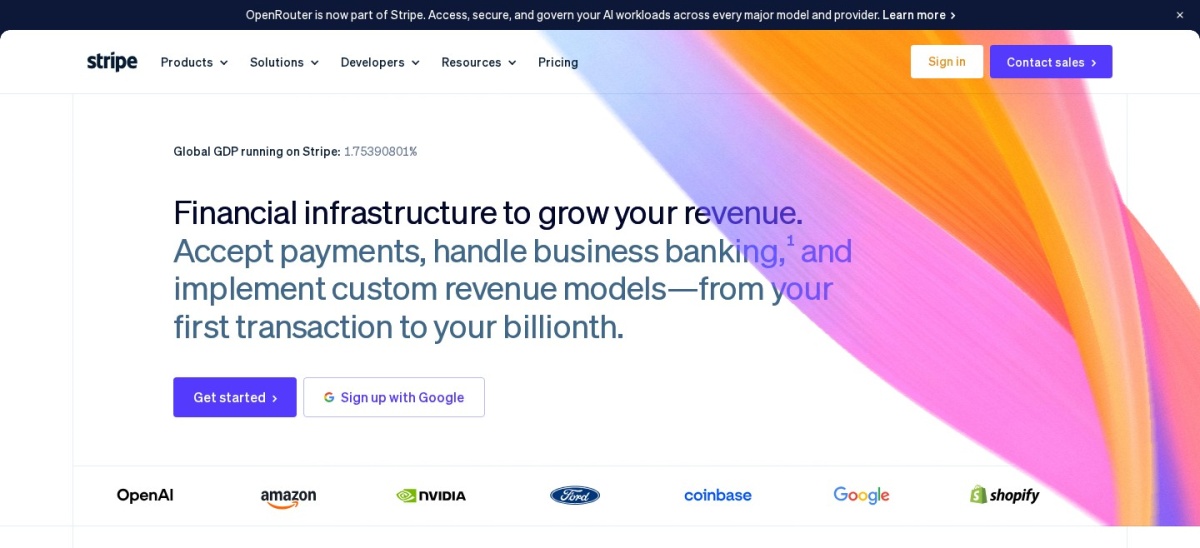
Stripe is a payments platform that covers online checkout, invoices, subscriptions and in-person sales through its Terminal readers. There is no monthly fee, so you pay only per transaction, and the dashboard tracks online and in-person sales together.
The trade off is price on small online sales, since the 30¢ fixed fee takes a bigger share of a $5 order than a $50 order. It suits online sellers who also take payments at markets, pop-ups or a counter, and who want one account for both.
What we like
No monthly or setup fees
One account for online and in-person sales
Strong invoicing, subscriptions and payment links
Card readers start at $59
Watch out for
Fixed 30¢ fee hurts very small orders
No built-in inventory or staff tools for a full POS
PayPal POS is a free app for phones and tablets that turns a mobile device into a card reader terminal. There is no monthly fee, in-person cards cost 2.29% + 9¢, and sales sync with a PayPal account.
The trade off is depth. There is no offline mode, and reporting and loyalty tools are basic beside full POS systems. It suits market stalls, food trucks and pop-ups that want the cheapest simple way to take cards.
What we like
No monthly or setup fees
Lowest in-person rate in this list
First card reader $29 for new users
Accepts PayPal, Venmo and QR payments
Watch out for
Needs an internet connection to take payments
Basic reporting and no loyalty tools
Terminal hardware costs $199; extra readers are $79 eachVisit paypal.com
03
Clover
3.8/5on G2 (109 reviews, checked Nov 2026)
PriceFree
Best all-in-one counter hardware
Monthly fee$0, pay per sale
In-person rateFrom 2.3% + 10¢
HardwareStation, Mini or Flex
App marketHundreds of apps
clover.com
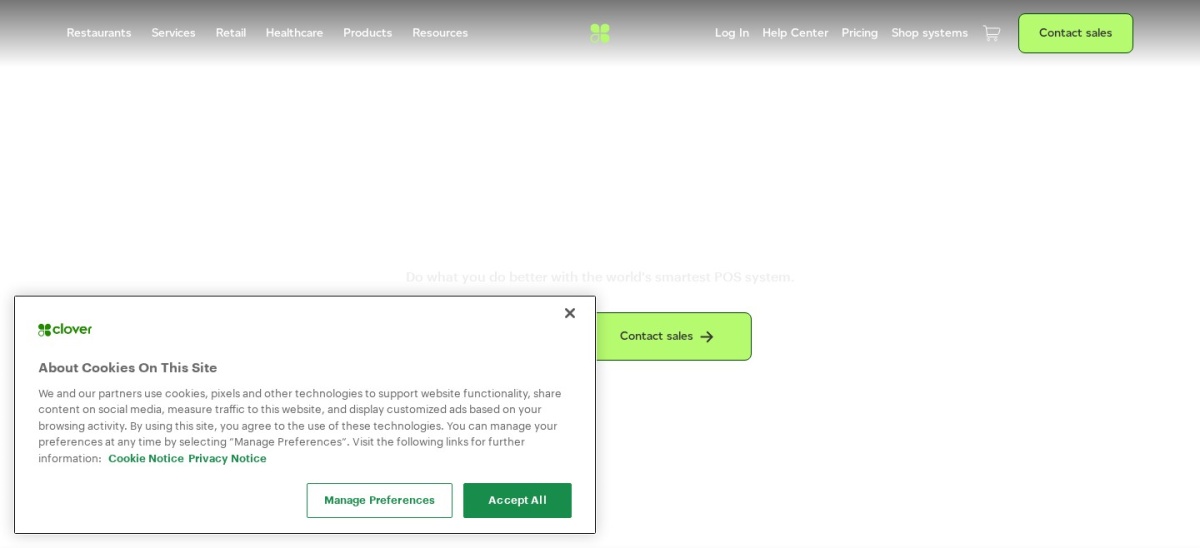
Clover homepage, captured Nov 2026.
Clover is a counter POS system that pairs its own hardware with software for sales, inventory and staff. Clover publishes no monthly software fee, with card rates from 2.3% + 10¢, and hardware bundles cover a register, a mini terminal or a handheld Flex.
The trade off is cost creep. Advanced inventory and many apps cost extra each month, and processing rates vary by card type. It suits cafes, salons and shops that want a complete counter setup in one box.
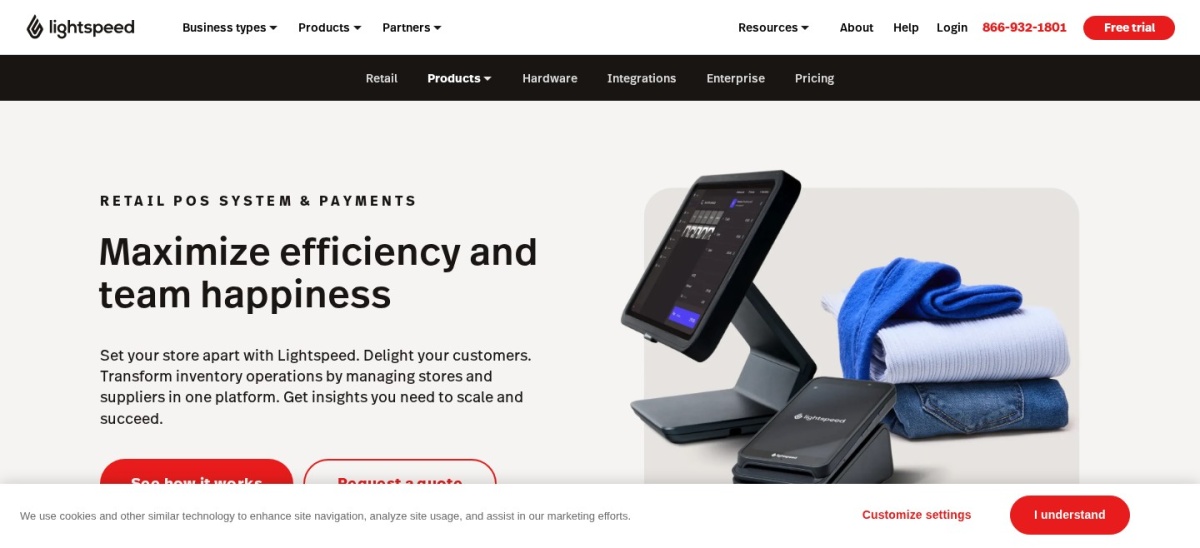
Lightspeed Retail is a cloud POS for shops that need serious inventory control across one or many locations. The Basic plan costs $89 a month billed annually, includes one register, and covers inventory, basic ecommerce and loyalty.
The trade off is price. At $89 a month it costs far more than the pay-as-you-go options, and extra registers cost $59 a month each. It suits boutiques and multi-location shops that outgrow a simple card reader.
Shopify POS is the in-store arm of Shopify, so online and in-person stock, orders and customer profiles stay in one place. POS Lite comes with a Shopify plan, and POS Pro costs $89 a month per location for staff roles, smart inventory and advanced reports.
The trade off is the double bill. Pro sits on top of a Shopify plan from $39 a month, so one location costs at least $128 a month before card fees. It suits retailers who already sell on Shopify and want one catalogue everywhere.
Toast is a restaurant POS that covers tables, handheld ordering, online ordering, kitchen displays and payroll in one system. The POS and payroll bundle lists at $90 a month, with a $69 a month offer for new restaurants.
The trade off is focus and cost. Toast is built for restaurants, so retailers get little from it, and the monthly fee plus hardware adds up. It suits restaurants that want one system from the dining room to payroll.
What we like
Built for restaurant workflows end to end
Trusted by 189,000 locations
Handhelds, kitchen displays and payroll in one system
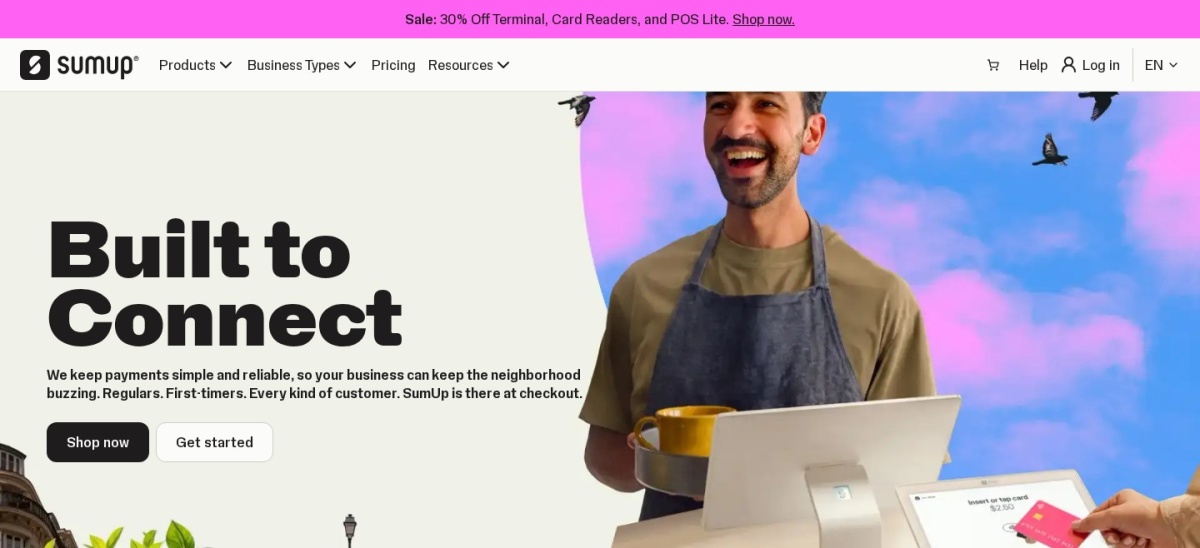
SumUp is a pocket-sized card reader and free POS app for sellers on the move. There is no monthly fee, in-person sales cost 2.6% + 10¢, and the free app covers sales, receipts and basic stock.
The trade off is scale. SumUp suits one-person stalls better than multi-staff shops, and the full POS subscriptions start at $99 a month. It suits markets, craft fairs and mobile sellers who want the smallest possible setup.
Helcim is a payment processor that passes wholesale interchange costs through and adds a fixed margin on top. There are no monthly, setup or PCI fees, and in-person cards cost interchange plus 0.40% + 8¢ on up to $50,000 a month in volume.
The trade off is that the final rate moves with interchange, so the per-sale cost is less predictable than a flat rate. It suits sellers who process enough volume to benefit from wholesale pricing and want no contracts.
What we like
No monthly, setup or PCI fees
Volume discounts lower the margin automatically
Free POS app, invoicing and virtual terminal
Watch out for
Final rate varies with interchange costs
Onboarding can ask for detailed financial documents
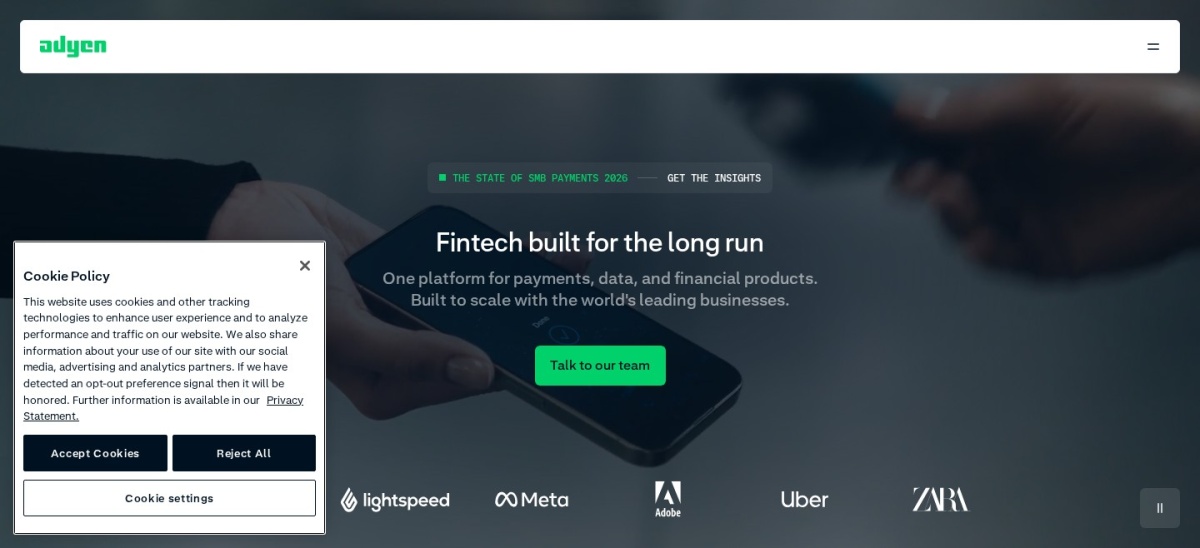
Adyen is a global payments platform that handles online, mobile and in-store payments in one account. There is no monthly fee, pricing is interchange-plus, and one portal covers payments, data and payouts across channels.
The trade off is complexity. Adyen is built for mid-market and enterprise sellers, so small shops may find the portal and pricing harder to follow than a flat-rate reader. It suits growing brands selling online and in stores across many markets.
What we like
One platform for every sales channel
Strong fraud tools and risk management
Wide payment-method coverage worldwide
Watch out for
Built for larger sellers, not hobby shops
Pricing is harder to follow than a flat rate
Extra products include capital, issuing and bankingVisit adyen.com
Flat rate or monthly fee: which costs less?
Flat-rate tools charge the same percentage on every sale. That is simple to budget, and it suits sellers whose volume changes month to month.
Monthly plans look expensive until volume rises. Lightspeed at $89 a month only beats a flat-rate reader once the lower per-sale rate saves more than $89.
Interchange-plus sits between the two. Helcim and Adyen pass wholesale costs through with a fixed margin, so the rate moves a little each month but usually lands lower than a flat rate.
How we chose
We started from the payment and POS tools most often named as Square replacements, then kept nine established options that cover online sales, counter sales, retail and restaurants.
Prices come from each vendor's pricing page, checked on 29 November 2026. Ratings and review counts come from G2 on the same day. Where a vendor shows a sale price, the list shows the regular price.
We left out tools with no public pricing or no public rating. No vendor paid for a place, and we do not claim to have used these tools ourselves.
How to choose a Square alternative
Match the tool to where and how you sell before you compare rates.
List where you take payments. Counter, market stall, online store or restaurant each point to a different tool, so write down your channels first.
Compare the full monthly cost. Add the subscription, the per-sale rate on your typical volume, and the hardware before you pick the cheapest headline rate.
Check the hardware you need. A phone reader suits a stall, while a busy counter needs a terminal, a cash drawer and a receipt printer.
Try the free tier first. Most pay-as-you-go tools cost nothing until you sell, so run a few real sales before you commit to a monthly plan.
FAQ
What is the best Square alternative in 2026?
Stripe is the best Square alternative for most sellers in 2026. It charges no monthly fee, takes 2.9% + 30¢ online and 2.7% + 5¢ in person, and covers invoicing and subscriptions in the same account.
What is the cheapest Square alternative?
PayPal POS is the cheapest for in-person sales at 2.29% + 9¢ with no monthly fee. For online sales, Stripe at 2.9% + 30¢ is the cheapest flat rate here, while Helcim's interchange-plus pricing can cost less at higher volumes.
Is there a free alternative to Square?
Yes. Stripe, PayPal POS, Clover, SumUp, Helcim and Adyen all charge no monthly fee, so you pay only when you sell. You still pay a per-sale fee and buy any hardware, and the fuller POS plans on Lightspeed, Shopify and Toast are paid.
Which Square alternative is best for small businesses?
PayPal POS suits the smallest sellers, with no monthly fee and a $29 first reader. SumUp is the simplest pocket option, while Stripe fits small sellers who also sell online and want invoicing and subscriptions.
Stripe vs PayPal POS: which is better?
Stripe is better for sellers who sell online as well as in person, with invoicing, subscriptions and a 4.4/5 G2 rating from 143 reviews. PayPal POS is better for in-person-only sellers, with a lower 2.29% + 9¢ rate and a 4.4/5 rating from 34 reviews.
Which Square alternative is best for restaurants?
Toast is the best restaurant pick, with table service, kitchen displays, online ordering and payroll in one system from $90 a month. Clover is the simpler choice for cafes that want a counter terminal without a restaurant-only system.
Which Square alternative is best for retail stores?
Lightspeed Retail is the best retail pick, with deep inventory, variants and multi-location stock at $89 a month. Shopify POS is better if you already sell on Shopify, since it keeps online and in-store stock in one place.
SaaS SEO and WordPress specialist with about 8 years of experience. Rakib compares WordPress plugins, themes, hosting and software using public pricing, documentation and user reviews. See how we rank.