HubSpot Sales Hub is the best sales software for scaling teams because it starts with a free two-user tier and scales cleanly across marketing, sales, and service from $20 per seat per month. Teams that prioritize fast pipeline setup choose Pipedrive from $14 per seat per month, while high-volume outbound callers prefer Close from $9 per seat per month.
How we make this list: we compare pricing pages, product documentation and public user reviews, then re-check every price before each update. No product paid for a place. Disclosure.
Entry prices start at $9/seat/mo on Close and Freshsales, while Salesforce Sales Cloud starts at $25/seat/mo.
Mid-tier automation unlocks create steep cost cliffs, jumping from $20 to $90/seat/mo on HubSpot and $25 to $100/seat/mo on Salesforce.
Seat minimums and bucket billing on monday CRM require buying 3 seats minimum and jumping in multiples of 5 above that.
HubSpot Sales Hub adds mandatory one-time onboarding fees of $1,500 on Professional and $3,500 on Enterprise.
Attio and HubSpot both offer usable free tiers with 50,000 records and 2 to 3 seats before paid upgrades kick in.
What makes sales software actually work when a team is scaling?
Scaling breaks sales tools that rely on manual data entry or rigid single-user views. When a team grows from three founders to twenty reps, handoffs between marketing, SDRs, and account executives become the primary bottleneck.
Published entry prices rarely reflect what a growing sales floor pays after six months. Most vendors advertise $9 to $25 entry plans that omit automated email sequences, custom workflows, and multi-pipeline forecasting—forcing an upgrade to $59 to $100 per seat.
Seat structure matters just as much as per-user rates. Some platforms enforce three-seat minimums or five-seat buckets, while others meter AI actions and outbound phone minutes separately from base licenses.
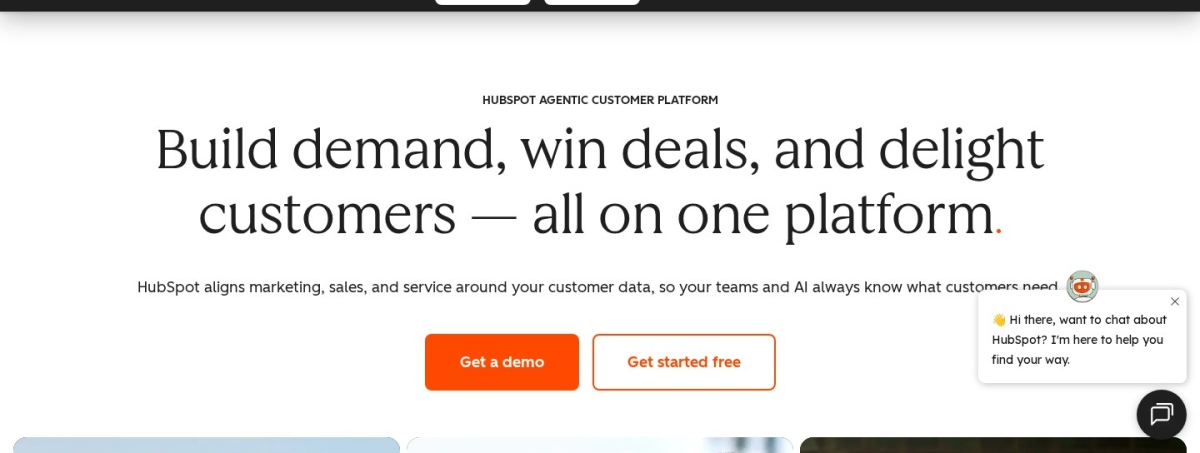
HubSpot Sales Hub is an all-in-one sales CRM built on the same database as HubSpot marketing and service tools. Its free tier covers up to 2 users with deal tracking, 1 pipeline, and 3 email templates, while Starter removes branding at $20 per seat per month regular price ($7 per seat per month promo for new customers) and adds 500 calling minutes.
The trade off is the steep price jump when your team needs automated email sequences and custom forecasting on Professional at $90 per seat per month billed annually, plus a required $1,500 one-time onboarding fee. It suits growing B2B teams that want marketing attribution and sales pipelines in one system.
What we like
Shared database links marketing forms and ad attribution directly to deal records
Usable permanent free tier for up to 2 users without credit card lock-in
Mix-and-match Core Seats ($50/mo) and Sales Seats ($90/mo) on Professional
14,417 G2 reviews confirm fast rep adoption and clean contact timelines
Watch out for
Regular Starter price jumps from $20 to $90/seat/mo for email sequences
Mandatory $1,500 Professional and $3,500 Enterprise onboarding fees
AI agents consume HubSpot Credits that add variable usage costs
Starter removes HubSpot branding and adds 500 monthly calling minutes and up to 15 pipelines.Visit hubspot.com
02
Pipedrive
4.3/5on G2 (5,134 reviews, checked Nov 2026)
Starts at$14/mo
Best for visual pipeline adoption without an admin
Entry paid plan$14/seat/mo billed annually
Free tier14-day trial only
AutomationStarts on Growth at $39/seat/mo
Integrations500+ marketplace apps plus MCP
pipedrive.com
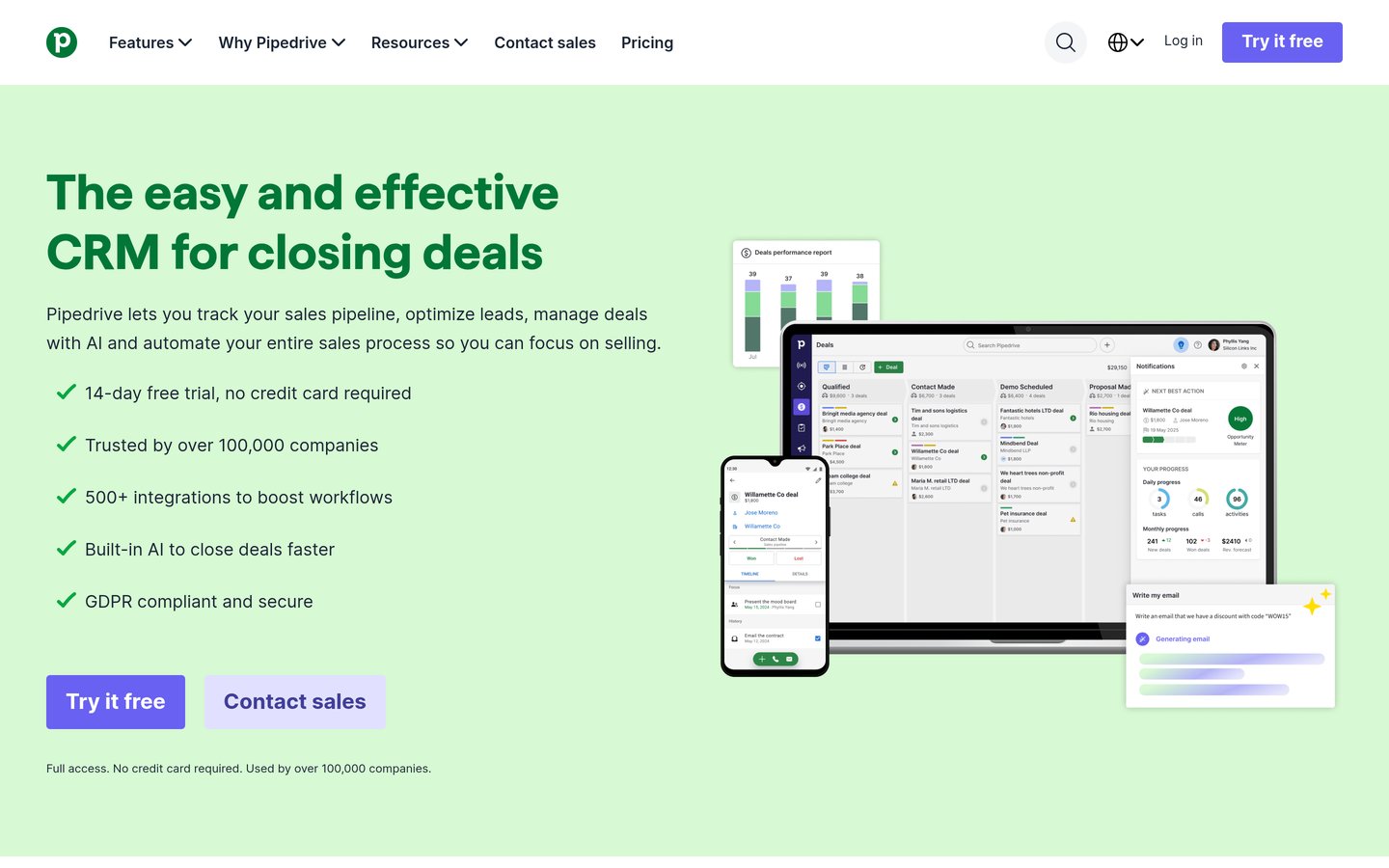
Pipedrive homepage, captured Nov 2026.
Pipedrive is a pipeline-first sales CRM designed around visual deal stages, activity reminders, and fast rep onboarding. There is no permanent free plan, so entry starts on Lite at $14 per seat per month billed annually ($168 per year), which includes deal pipelines, AI meeting summaries, and an MCP connector for Claude and ChatGPT.
The trade off is that workflow automation, full two-way email sync, and the built-in call dialer require Growth at $39 per seat per month, while quotes and AI email drafts sit on Premium at $59. It suits small and mid-sized B2B sales teams that want reps updating deals daily without hiring a CRM administrator.
What we like
Transparent step-up pricing across four tiers ($14, $39, $59, $79 billed annually)
AI meeting notes and CRM field updates included even on the $14 Lite tier
Over 500 native marketplace apps and straightforward 10-minute setup
Watch out for
No permanent free tier beyond the 14-day trial
Workflow automation and email sync are locked behind the $39 Growth tier
Lacks multi-level territory hierarchies for large enterprise orgs
Lite unlocks unlimited visual deal pipelines, AI call summaries, and API access.Visit pipedrive.com
03
Close
4.7/5on G2 (2,173 reviews, checked Nov 2026)
Starts at$9/mo
Best for high-volume outbound calling teams
Entry paid plan$9/mo annual (Solo, 1 user)
Team plan$35/seat/mo annual (Essentials)
DialersPower on Growth ($99), Predictive ($139)
AI credits500 to 2,000 credits/user/mo
close.com
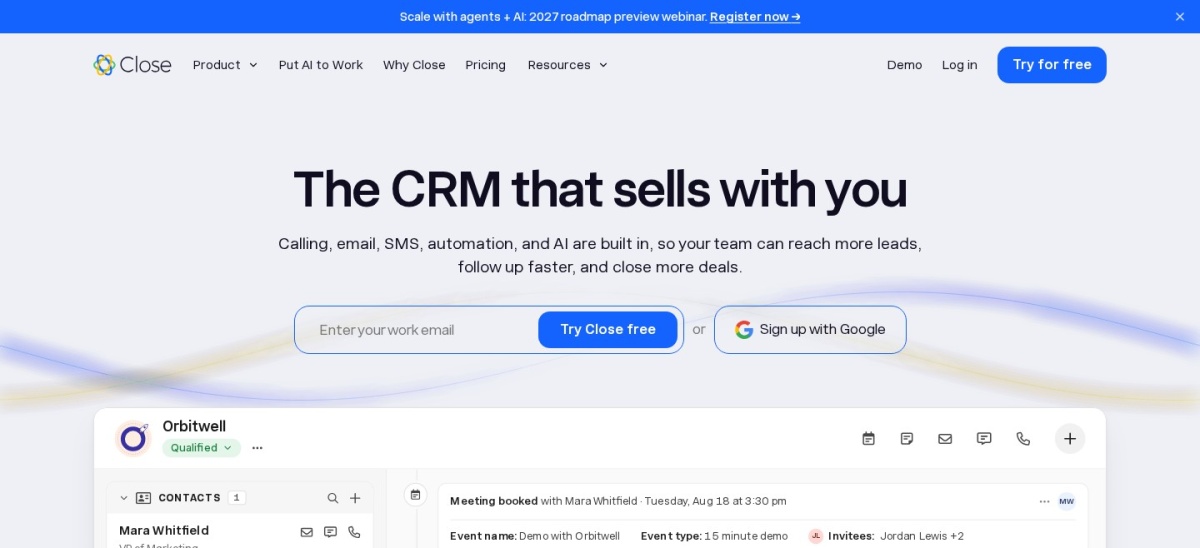
Close homepage, captured Nov 2026.
Close is a communication-focused CRM that embeds calling, SMS, and email directly into lead timelines without third-party dialer plugins. It has no free tier, opening with the single-user Solo plan at $9 per month billed annually ($19 monthly) for up to 10,000 leads, built-in calling, and 500 monthly AI credits.
The trade off is that multi-user teams must start on Essentials at $35 per seat per month billed annually, and automated sequences plus the Power Dialer require Growth at $99 per seat per month, with calling minutes billed separately around $0.02 per minute. It suits inside sales teams whose reps make 50 or more outbound calls daily.
What we like
Highest G2 rating on this list at 4.7 out of 5 across 2,173 reviews
Native click-to-call, SMS, Power Dialer, and Predictive Dialer with automatic logging
Includes Chloe AI assistant and AI notetaker on every paid plan
Watch out for
No free plan, and Solo is strictly capped at 1 user and 10,000 leads
Phone numbers (~$1/mo), outbound minutes (~$0.02/min), and Call Assistant ($50/mo) cost extra
Smaller third-party app ecosystem than HubSpot or Salesforce
Solo provides built-in calling, email, SMS, and 500 AI credits for one seller.Visit close.com
04
Salesforce Sales Cloud
4.4/5on G2 (27,607 reviews, checked Nov 2026)
Paid from$25/mo
Best for complex mid-market and enterprise orgs
Entry paid plan$25/seat/mo (Starter Suite)
Free tierFree Suite for up to 2 users
Full editionsCore $195, Advanced $395, Max $550/mo
AI credits500K Flex Credits/yr on Core
salesforce.com
Salesforce Sales Cloud homepage, captured Nov 2026.
Salesforce Sales Cloud is an enterprise-grade CRM built to handle complex territories, custom objects, and multi-stage approval rules at scale. Its Free Suite supports up to 2 users with basic account and opportunity tracking, while Starter Suite opens paid access at $25 per seat per month with built-in sales flows and email analytics.
The trade off is a fourfold price jump to Pro Suite at $100 per seat per month billed annually for quotes and forecasting, while full API access and Premier Success require Core at $195 per seat per month plus consultant implementation costs. It suits scaling mid-market companies with dedicated RevOps or admin support.
What we like
Unmatched customization for complex territories, roles, and approval chains
Massive ecosystem with 27,607 G2 reviews and thousands of AppExchange integrations
Watch out for
4x price jump between Starter ($25) and Pro Suite ($100) with annual lock-in
Web Services API costs an extra $25/user/mo on Pro Suite
Implementations frequently require paid external consultants and months of setup
Starter Suite adds email marketing, lead routing, and activity capture for small teams.Visit salesforce.com
05
Zoho CRM
4.1/5on G2 (2,968 reviews, checked Nov 2026)
Paid from$14/mo
Best budget full-featured CRM for small teams
Entry paid plan$14/seat/mo billed annually
Free tierUp to 3 users, 5,000 records
Zia AI assistantStarts on Enterprise at $40/seat/mo
Tier mixingNot allowed; all seats share one tier
zoho.com
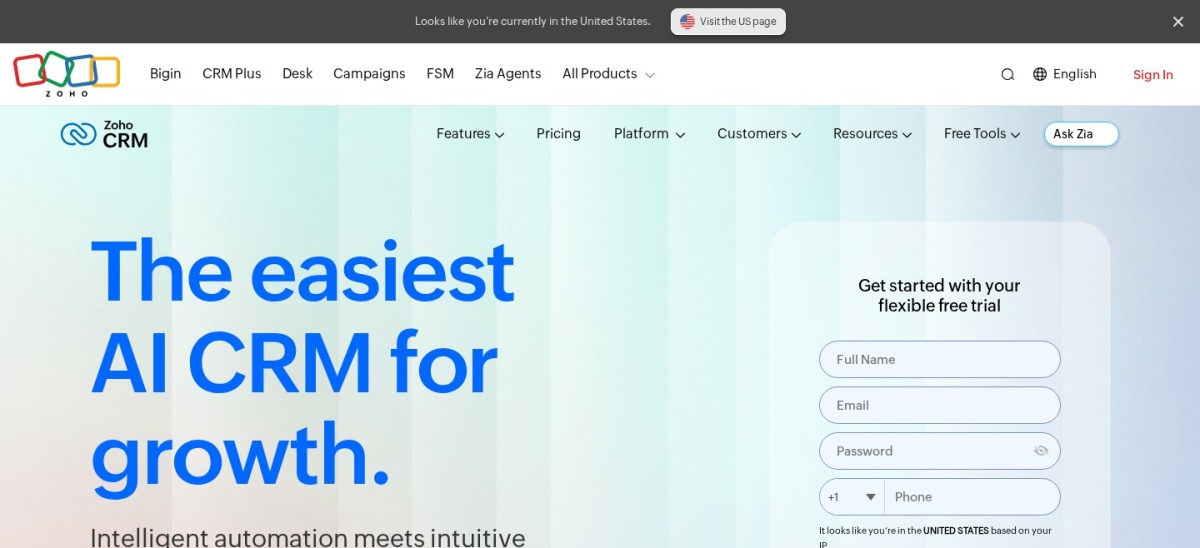
Zoho CRM homepage, captured Nov 2026.
Zoho CRM is a multi-channel sales platform that connects tightly with Zoho finance, helpdesk, and marketing applications. Its free edition covers up to 3 users and 5,000 records, while Standard starts at $14 per seat per month billed annually ($20 monthly) for 100,000 records, scoring rules, custom fields, and sales forecasting.
The trade off is that Zoho prohibits mixing license tiers on one account, and Zia AI agents plus territory management require Enterprise at $40 per seat per month billed annually across every user. It suits cost-conscious growing teams that want deep customization without enterprise per-seat rates.
What we like
Free plan covers 3 users, and paid tiers top out at $52/seat/mo annual on Ultimate
Connects natively to 50+ Zoho apps for invoicing, support, and email campaigns
Includes scoring rules and sales forecasting on the $14 Standard plan
Watch out for
All users in an organization must be on the exact same license tier
Zia AI assistant and territory management sit behind the $40 Enterprise tier
Interface navigation and custom module setup feel dated compared to newer CRMs
Standard expands capacity to 100,000 records and adds workflow rules and forecasting.Visit zoho.com
06
Freshsales
4.5/5on G2 (1,243 reviews, checked Nov 2026)
Paid from$9/mo
Best low-cost CRM with built-in phone and chat
Entry paid plan$9/seat/mo billed annually
Free tierUp to 3 users with built-in phone
Mid & top tiersPro $39/mo, Enterprise $59/mo annual
Included channelsPhone, email, chat, SMS, WhatsApp
freshworks.com
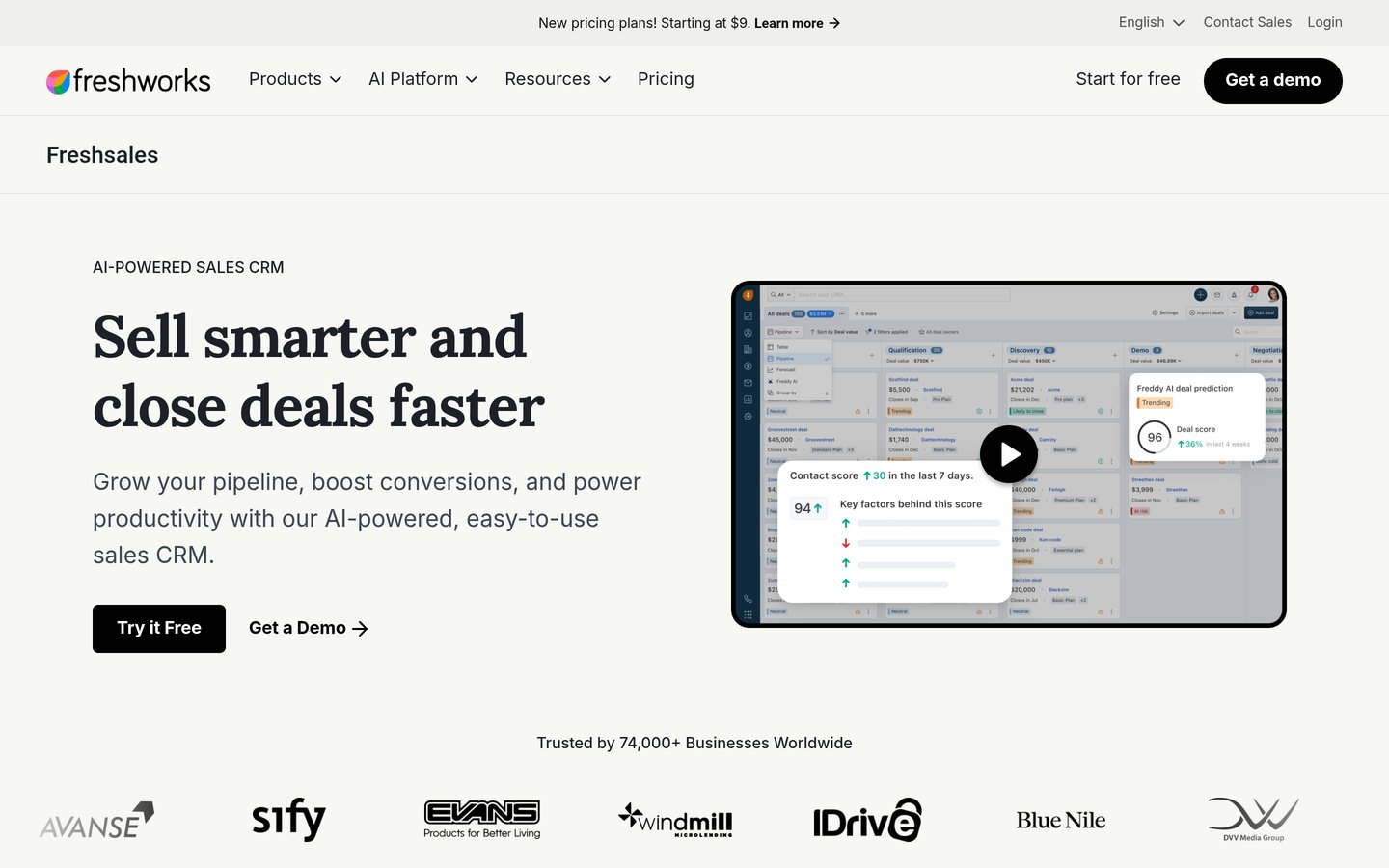
Freshsales homepage, captured Nov 2026.
Freshsales is Freshworks' sales CRM combining visual deal pipelines, built-in telephony, and multi-channel messaging in one clean workspace. Its free plan supports up to 3 users with contact management and a built-in phone widget, while Growth starts at $9 per seat per month billed annually with 20 workflows, call recording, and WhatsApp integration.
The trade off is that custom modules, multiple sales pipelines, and advanced Freddy AI forecasting require Pro at $39 per seat per month billed annually, and phone minutes require separate calling credits starting at $5. It suits lean SMB teams that want phone, chat, and pipeline tracking live in under an hour.
What we like
Starts at $9/seat/mo billed annually with built-in phone, SMS, and WhatsApp
4.5 out of 5 G2 rating with consistent praise for fast day-one setup
Enterprise tier stays affordable at $59/seat/mo billed annually
Watch out for
Multiple pipelines and custom modules require jumping to the $39 Pro tier
Outbound calling minutes and extra workflows incur separate add-on charges
Custom cross-object reporting is more limited than HubSpot or Salesforce
Best for combining B2B lead data with outbound sequences
Entry paid plan$49/seat/mo billed annually
Free tier$0 with 900 credits/yr granted monthly
Database scale240M contacts and 30M companies
Credit rules1 credit per email, 8 per mobile number
apollo.io
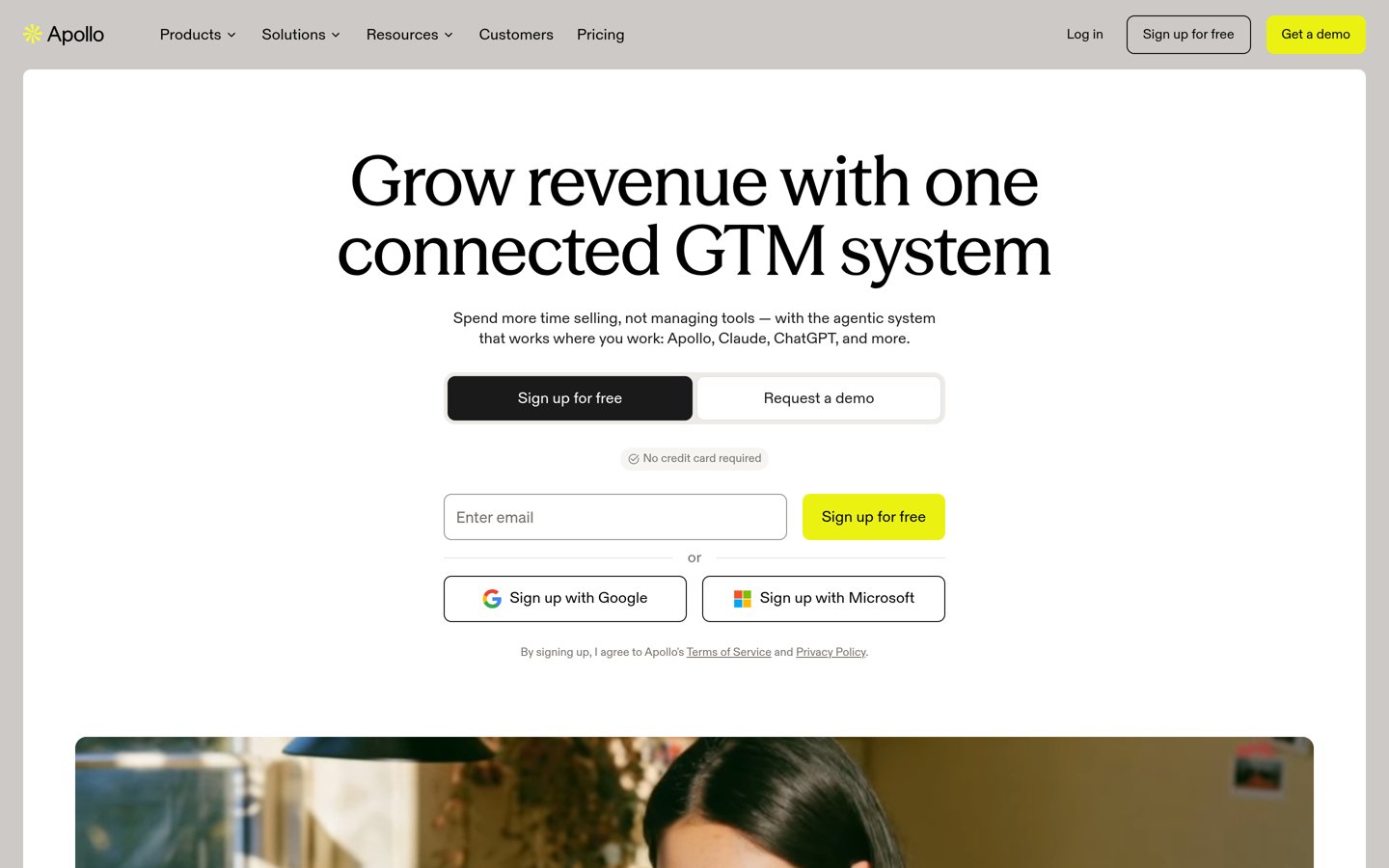
Apollo.io homepage, captured Nov 2026.
Apollo.io is a B2B sales intelligence and outreach platform that pairs a database of 240 million contacts with multi-step email sequences and a dialer. Its free tier grants 900 credits per seat per year (75 monthly) and 2 sequences, while Basic costs $49 per seat per month billed annually ($65 monthly) with 30,000 annual credits.
The trade off is that unused credits expire without rolling over, mobile numbers consume 8 credits each, and unlimited mailboxes plus A/Z sequence testing require Professional at $79 per seat per month. It suits outbound-driven teams that want prospecting data and sequence execution in one subscription.
What we like
Eliminates paying separately for a B2B contact database and sequence sender
4.7 out of 5 rating across 9,865 G2 reviews for search filters and data accuracy
Bi-directional sync pushes enriched leads directly into HubSpot or Salesforce
Watch out for
Higher starting price ($49/seat/mo annual) than standalone pipeline CRMs
Unused monthly credits expire, raising effective cost per lead for light users
International and parallel dialing require a $119/team/mo add-on
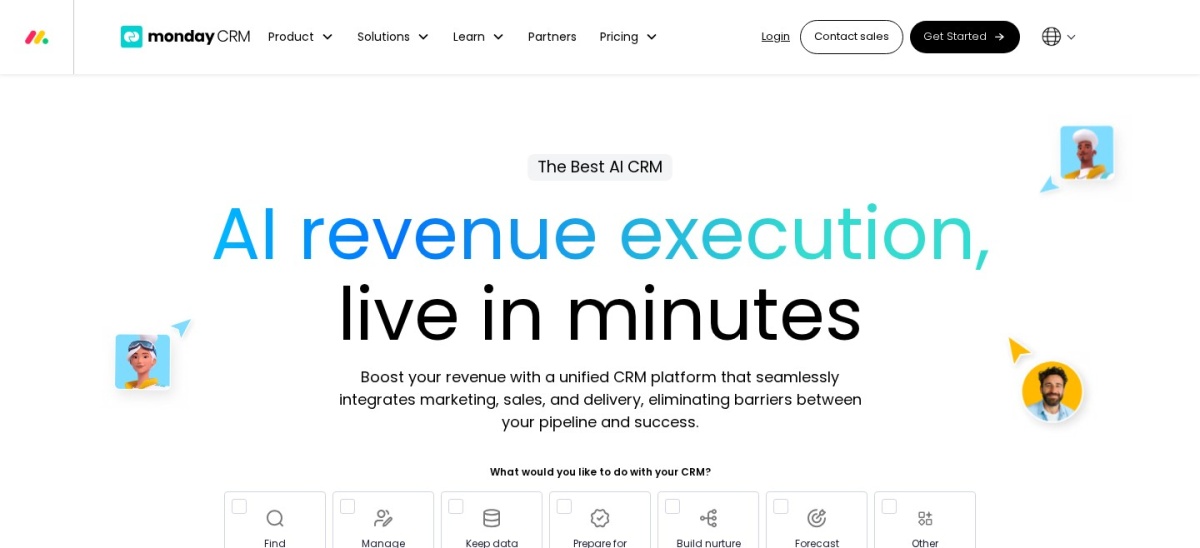
monday CRM is a no-code sales platform built on monday.com's visual boards, making it easy to connect deal pipelines with post-sale onboarding and project delivery. There is no free CRM plan, and Basic starts at $12 per seat per month billed annually ($18 monthly) with a 3-seat minimum ($432 per year) for up to 1,000 active contacts.
The trade off is bucketed seat pricing—a 6-person team must pay for 10 seats—and zero automations on Basic, while Standard ($17 per seat per month) caps automations at 250 actions monthly before Pro ($28) unlocks 25,000 actions. It suits operations-heavy teams that manage both sales and client delivery on one board.
What we like
Flexible no-code boards unify pre-sale pipelines with post-sale fulfillment
Pro tier stays comparatively affordable at $28/seat/mo billed annually
4.5 out of 5 rating across 2,080 G2 reviews for visual clarity
Watch out for
Enforces a 3-seat minimum and 5-seat increments, creating unused seat waste
No free plan for monday CRM, and Basic includes zero workflow automations
Standard's 250 monthly automation actions run out quickly on active pipelines
Basic unlocks unlimited pipelines and boards for up to 1,000 active contacts and deals.Visit monday.com
Three pricing traps that hit scaling sales teams
Per-seat entry rates only tell half the story when headcount grows. HubSpot Sales Hub jumps from $20 to $90 per seat per month once your reps need automated email sequences, and Salesforce jumps fourfold from $25 to $100 per seat per month when you add quotes and forecasting.
Seat packaging rules can inflate bills before you hire a tenth rep. monday CRM sells seats in buckets of 3, 5, 10, and 15—meaning a 6-person sales team pays for 10 seats—while Zoho CRM forces every user in your company onto the highest license tier any single manager needs.
Usage-based metering adds a third variable layer. Close charges around $0.02 per outbound call minute plus $50 per month for its Call Assistant, Apollo.io expires unused monthly lead credits, and HubSpot meters AI agents through HubSpot Credits.
How we chose
We evaluated established B2B sales platforms with proven adoption among growing teams, verifying current product pages, public review scores on G2, and regular published pricing tiers.
All prices, review counts, and plan limits were verified on 30 Nov 2026 using regular annual billing rates rather than temporary new-customer promotional discounts.
We excluded platforms without transparent public pricing for entry tiers, discontinued tools, and products with fewer than 500 verified user reviews. No vendor paid for a place, and we do not claim testing for this list.
How to choose sales software for scaling
Calculate your true 12-month cost at double your current headcount before signing an annual contract.
Map which tier unlocks sequences and workflow automation. Entry plans between $9 and $25 per seat rarely include automated follow-up sequences or custom workflow triggers. Price your team at the mid-tier rate where automation actually unlocks.
Check seat minimums and tier-mixing rules. Verify whether you can assign cheaper view-only or core seats to executives and support staff, or whether rules like Zoho's single-tier policy and monday CRM's 5-seat buckets force you to overbuy.
Separate outbound prospecting from core CRM records. If your SDRs need verified emails and direct dials every week, compare an all-in-one data tool like Apollo.io ($49/seat/mo) against pairing a $14/seat/mo CRM like Pipedrive with a separate lead database.
Audit usage caps on calling, AI credits, and contacts. Count how many active contacts, monthly call minutes, and automated actions your team runs today so contact-band upgrades or expired AI credits do not surprise your budget mid-quarter.
FAQ
What is the best sales software for scaling in 2026?
HubSpot Sales Hub is the best overall choice for scaling because it offers a free 2-user tier, starts paid plans at $20 per seat per month regular price, and unifies marketing, sales, and service data in one CRM.
Which sales CRM has the best free plan for growing startups?
HubSpot Sales Hub and Zoho CRM both offer permanent free plans for up to 2 and 3 users respectively. Zoho's free tier includes up to 5,000 records, while HubSpot's free CRM connects directly to free marketing forms and email tools.
Why does sales software get so expensive as a team grows?
Costs spike because vendors gate automated email sequences, multi-pipeline forecasting, and API access behind mid-tier plans costing $39 to $100 per seat per month, while adding onboarding fees, seat buckets, and metered AI or calling credits.
What is the cheapest paid sales software for a small team?
Close and Freshsales both start at $9 per seat per month billed annually, though Close's $9 Solo plan is capped at 1 user. For multi-user teams, Freshsales ($9/seat/mo) and Pipedrive ($14/seat/mo) offer the lowest annual entry rates.
HubSpot Sales Hub vs Pipedrive: which is better for scaling?
Choose HubSpot Sales Hub if you want marketing attribution, landing pages, and sales pipelines in one database. Choose Pipedrive if you want a pure, visual deal pipeline with lower mid-tier pricing ($39 vs $90/seat/mo) and zero mandatory onboarding fees.
When should a scaling team choose Salesforce Sales Cloud?
Choose Salesforce Sales Cloud once your organization needs complex territory hierarchies, custom objects, and strict role permissions—and has the budget for $100 to $195 per seat per month plus dedicated CRM administration.
SaaS SEO and WordPress specialist with about 8 years of experience. Rakib compares WordPress plugins, themes, hosting and software using public pricing, documentation and user reviews. See how we rank.