RudderStack is the best of the Segment alternatives for most teams, with a free plan covering 250,000 events a month and a 4.7/5 G2 rating from 52 reviews. Pick Amplitude for the biggest free allowance at 2 million events a month, or PostHog if you want analytics, replay and feature flags under one free plan.
How we make this list: we compare pricing pages, product documentation and public user reviews, then re-check every price before each update. No product paid for a place. Disclosure.
RudderStack is the closest Segment swap: a free plan with 250,000 events a month, Growth at $265 a month for 1 million events, and a 4.7/5 G2 rating from 52 reviews.
Amplitude has the biggest free allowance here at 2 million events a month, with Plus at $94 a month once you pass 3 million events.
Mixpanel is free to 1 million events a month with unlimited seats, and Growth costs $140 a month at 1.5 million events.
PostHog charges no base fee: 1 million events a month are free, then analytics costs $0.00005 per event.
Paid plans run from $26 a month for Matomo Cloud to $999 a month for Woopra Pro, so the dearest start costs 38 times the cheapest.
How do you choose the best Segment alternatives?
Start with the job Segment does for you today. RudderStack and Jitsu replace the pipeline that collects and routes events, while Amplitude, Mixpanel and PostHog replace the analysis you run on those events, so the right swap depends on which half you need.
Free allowances decide the shortlist. Amplitude gives 2 million events a month free, Mixpanel and PostHog give 1 million each, Woopra Core gives 500,000 actions, and RudderStack gives 250,000 events, so most small products can run for months without paying.
Price follows volume, not seats. Every tool here bills on events, hits or actions, and none charges per seat on its entry plan, so compare the bill at your volume: Amplitude costs $94 a month at 3 million events, Mixpanel $140 at 1.5 million, and PostHog about $50 for each extra million.
Self-hosting changes the maths for privacy-minded teams. Jitsu is MIT licensed with no usage limits when self-hosted, Matomo On-Premise is free with unlimited hits, and Countly Lite is free to self-host, so the software can cost nothing if you run the servers.
Check the destination list before you switch. A CDP is only useful if it sends data where you need it, so confirm your warehouse, CRM and ad tools are covered, and read our guide on Google Analytics vs privacy-friendly analytics for WordPress if privacy rules shape the choice.
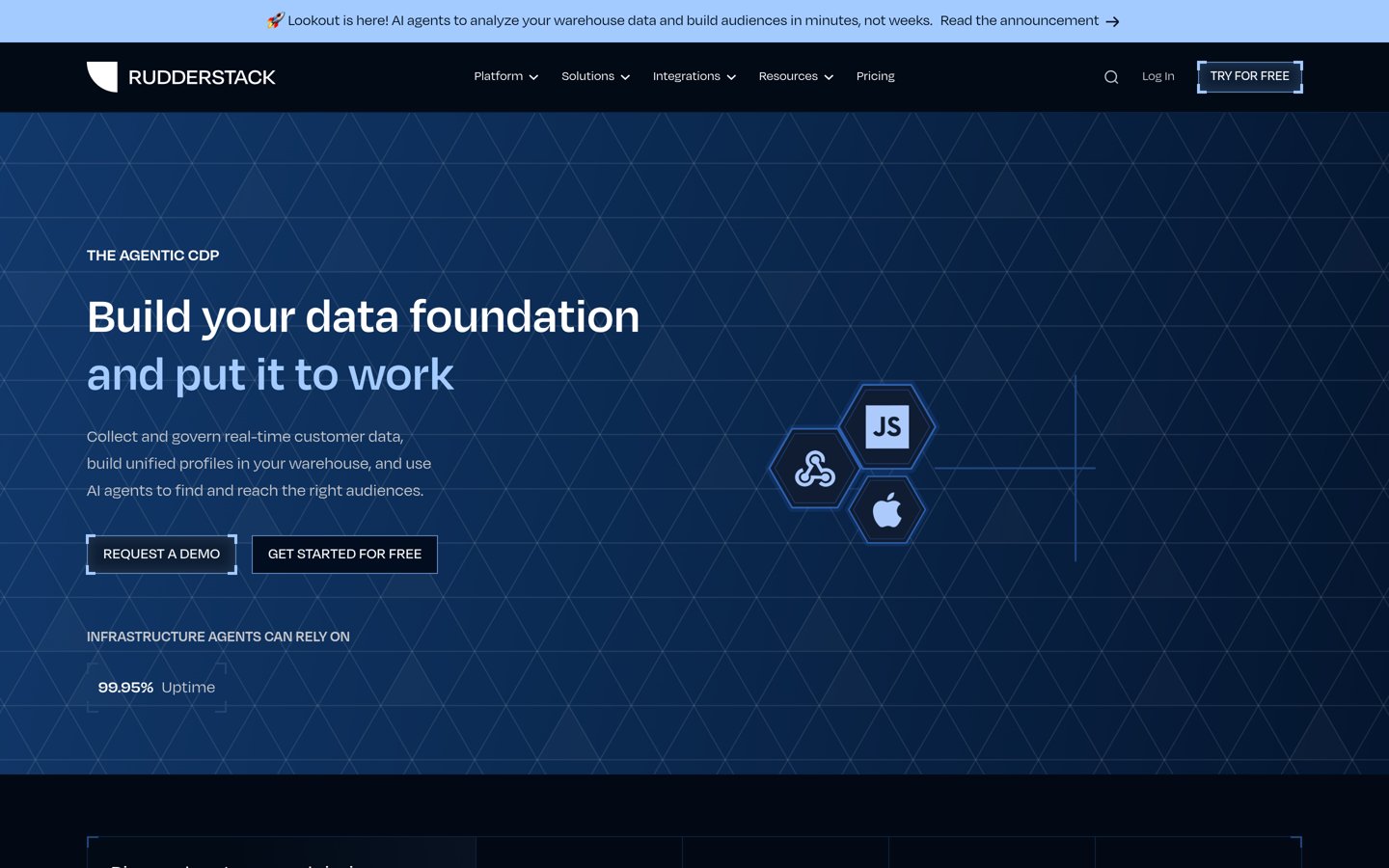
RudderStack is a warehouse-first customer data platform that collects events from websites, apps and servers and routes them to warehouses and 200+ destinations. Its Free plan costs nothing for 250,000 events a month, 16 SDK sources and reverse ETL, and it speaks the same tracking API as Segment, so migration is mostly a config change.
The trade off is the jump to paid. Growth starts at $265 a month for 1 million events, and the identity resolution and audience features sit on the custom-priced Enterprise plan. It suits engineering-led teams that already run a warehouse and want to own their customer data.
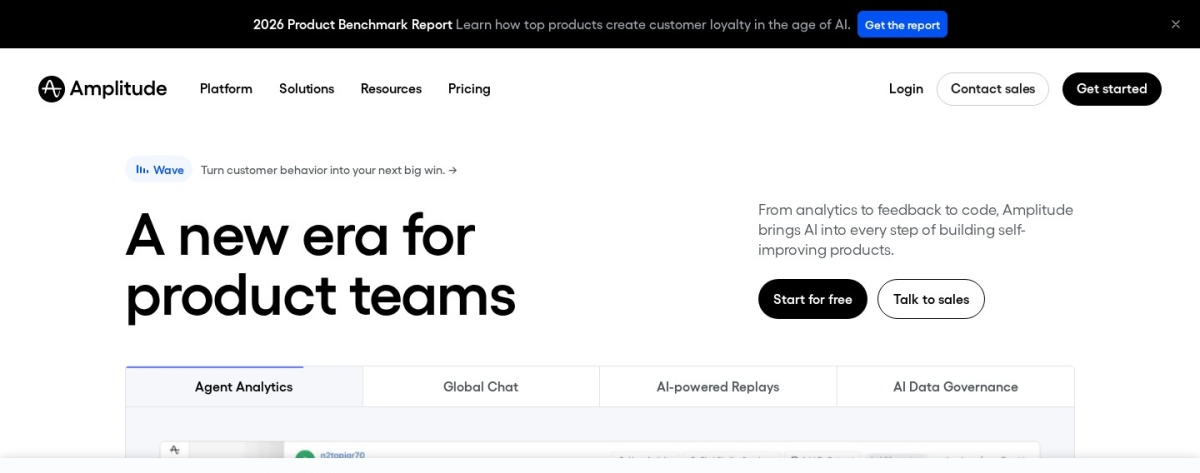
Amplitude is a product analytics platform with funnels, retention, cohorts, session replay and experimentation in one place. Its Free plan covers 2 million events a month with no time limit, double the Mixpanel allowance, and Plus starts free and scales with volume to 70 million events.
The trade off is that the bill is hard to predict. Plus costs $94 a month at 3 million events and $720 at 10 million, and the Growth plan above it is a custom quote. It suits product teams that want deep behavioural analysis and a generous free tier.
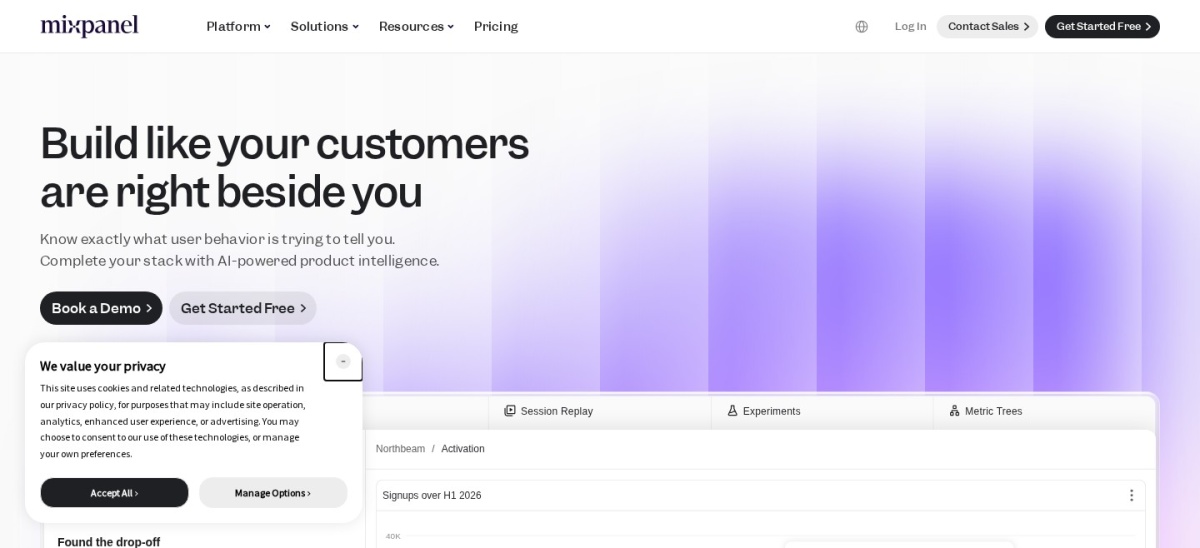
Mixpanel is an event-based product analytics platform for funnels, retention, session replay and experiments, with a free plan covering 1 million events a month and unlimited seats. Growth starts at $0 for the first million events, then costs $140 a month on monthly billing for 1.5 million events.
The trade off is the price curve. Growth rises to $613 a month at 5 million events and $1,176 at 10 million on monthly billing, so a growing product outgrows the cheap tiers quickly. It suits small teams that want a fast, self-serve analytics tool.
What we like
Free plan with unlimited seats
Rated 4.5/5 from 1,371 G2 reviews
Published price for every volume tier
Fast setup, reviewers say
Watch out for
Bill rises steeply past 1M events
Add-ons cost extra on Growth
Reports take planning to set up well
Growth adds saved cohorts, alerts and warehouse connectorsVisit mixpanel.com
04
PostHog
4.5/5on G2 (1,057 reviews, checked Nov 2026)
PriceFree
Best all-in-one free plan
Free plan1M events/mo
Paid planPay-as-you-go, $0 base
Extra events$0.00005 each
Self-hostYes, open source
posthog.com
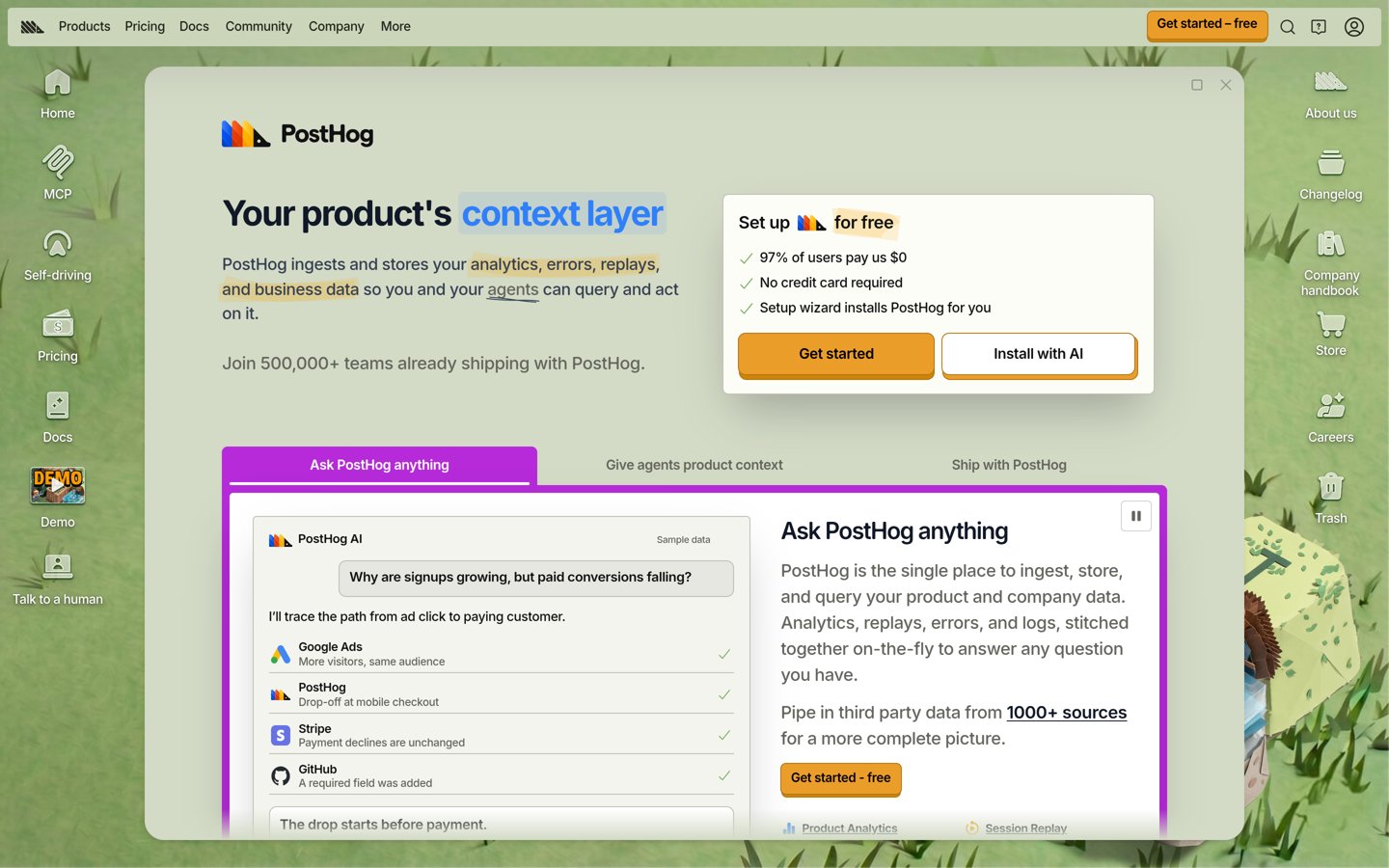
PostHog homepage, captured Nov 2026.
PostHog is an open-source product platform that bundles analytics, session replay, feature flags, experiments and surveys under one account. Its free tier covers 1 million analytics events, 5,000 session recordings and 1 million flag requests every month, with no seat fees.
The trade off is complexity. Pay-as-you-go starts at $0 and bills $0.00005 per event past the free million, but identified events cost more, and the interface can feel crowded. It suits teams that want one tool instead of four subscriptions.
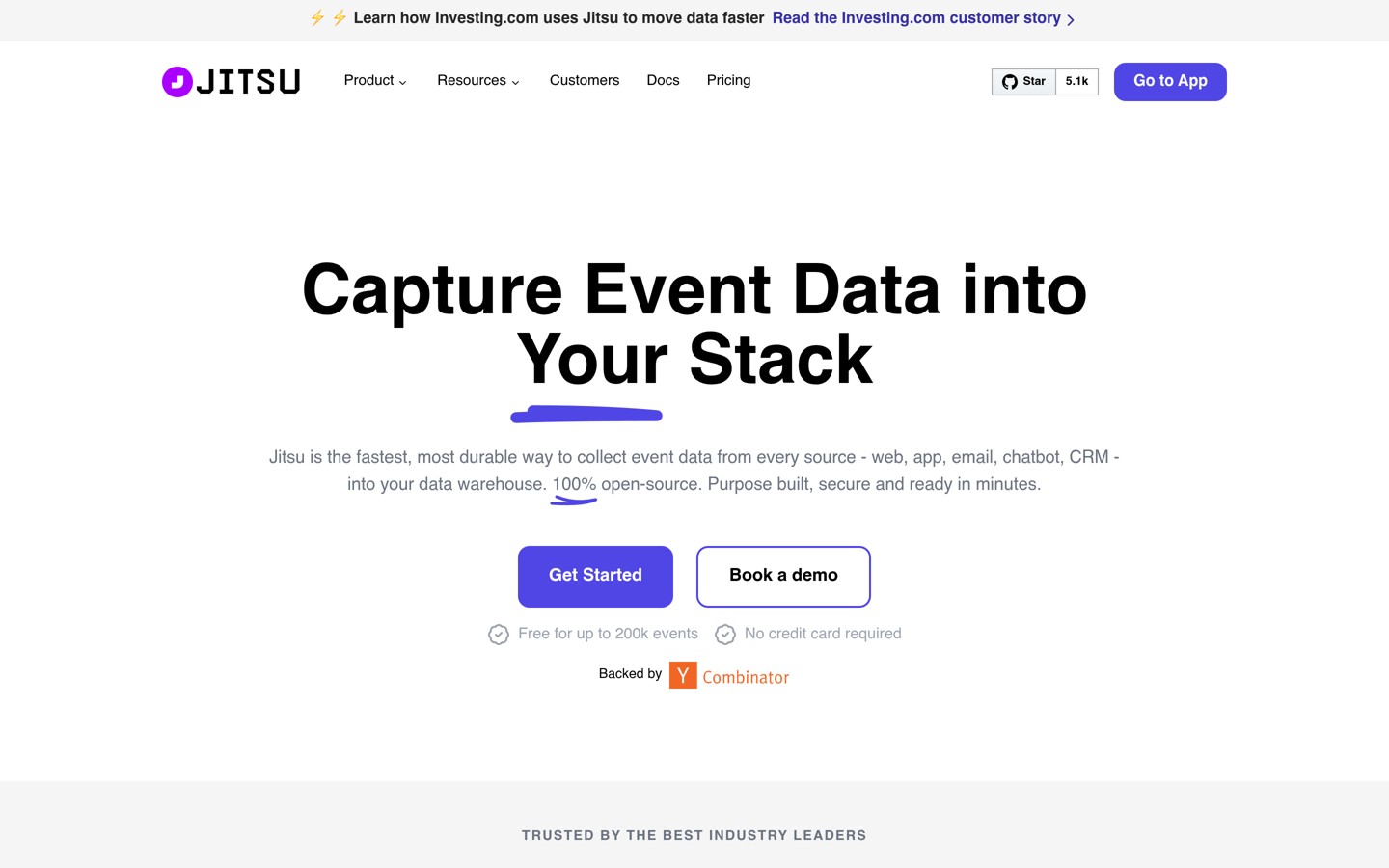
Jitsu is an open-source event pipeline that streams data from websites, apps, email and CRMs straight into your warehouse. Its Cloud Free plan covers 200,000 active events a month with unlimited captured events, and the MIT-licensed edition can be self-hosted with no usage limits.
The trade off is scope. Jitsu moves events but has no identity resolution, audience building or reverse ETL, so marketing teams expecting full CDP features will miss them. It suits data teams that only need clean events in Snowflake or BigQuery.
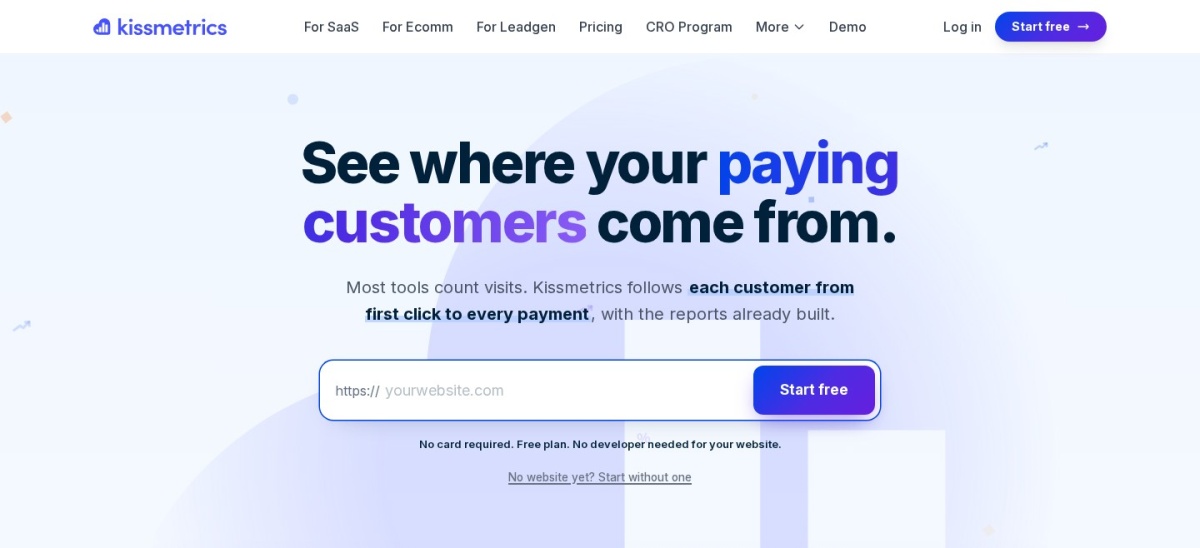
Kissmetrics is a person-based analytics tool that follows each customer from first click to every payment, with funnels, cohorts and revenue reports built in. Its Free plan covers 100,000 events a month and 3 seats with no card, and Growth costs $99 a month for 500,000 events.
The trade off is the small free tier. 100,000 events a month runs out fast on a busy site, and the setup takes real effort, reviewers say. It suits ecommerce and SaaS teams that need to tie campaigns to paying customers.
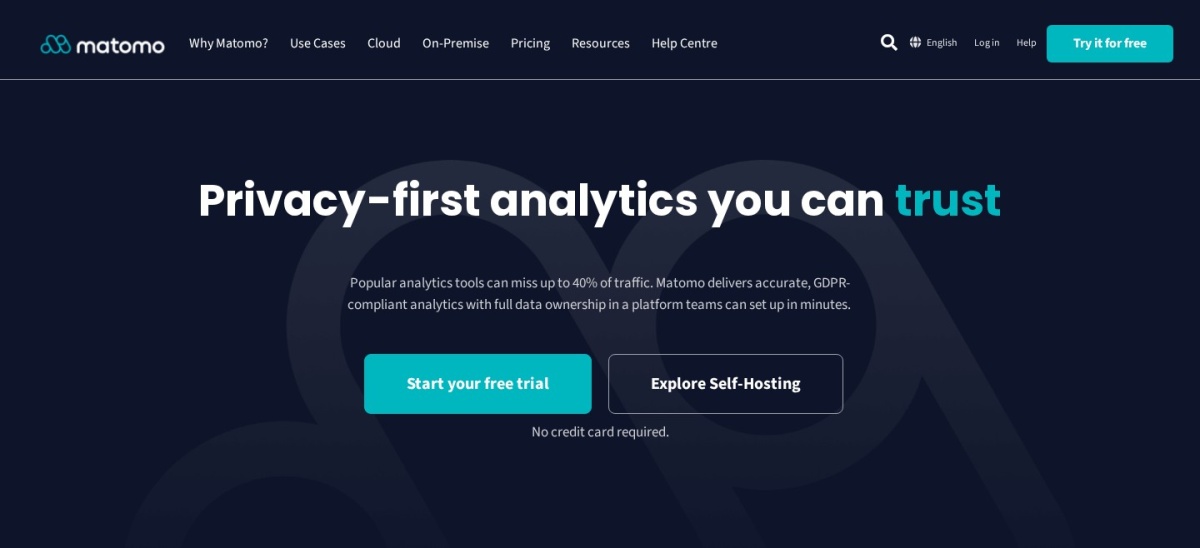
Matomo is a privacy-first web analytics platform with funnels, heatmaps, session recording and a tag manager, offered as free self-hosted software or a hosted Cloud plan. The On-Premise Community edition is free with unlimited hits and users, and Cloud starts at $26 a month for 50,000 hits.
The trade off is that it is analytics, not a CDP. Matomo tracks site behaviour but does not route events to ad platforms or sync warehouse data back to tools, so it replaces only the reporting half of Segment. It suits teams that must own their data.
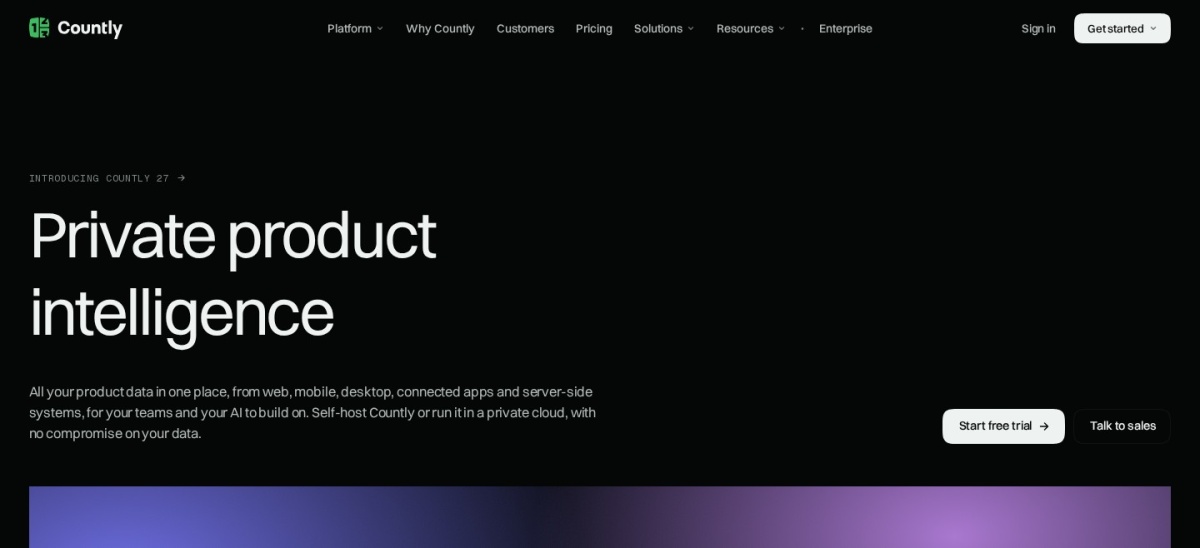
Countly is a product analytics platform for web, mobile and desktop apps, with funnels, cohorts, crash reports and push notifications in one place. Its Lite edition is free to self-host, and the managed Flex cloud plan starts at $175 a month for 5,000 monthly active users and 5 million data points.
The trade off is the small review base and the price jump. Flex starts at $175 a month with no autocapture, so events need manual naming, and only 20 G2 reviews sit behind the rating. It suits teams that will not send user data to a third-party cloud.
Woopra is a customer journey analytics platform that builds a 360-degree profile for each user from web, product and marketing events, with journey, retention, cohort and attribution reports. Its free Core tier covers 500,000 actions a month, and Pro starts at $999 a month for 5 million events.
The trade off is price. Pro costs $999 a month with no middle tier, so the jump from the free Core plan is steep, and there is no reverse ETL. It suits mid-sized teams that want journey reports and triggers in one place.
Free plans in this list range from Amplitude's 2 million events a month to Kissmetrics' 100,000, so read the cap before you build your tracking around one.
Paid plans mostly add volume, longer retention and more seats. Matomo Cloud is the cheapest way in at $26 a month, while Woopra Pro is the dearest at $999.
If you only need to collect events and analyse them, RudderStack, PostHog or Jitsu cost nothing at low volume and never ask for a card to start.
How we chose
We started from the tools most often named as Segment replacements, then kept 9 with published pricing and a public rating.
Prices come from each vendor's pricing page, checked on 29 November 2026, and show regular monthly prices, not introductory offers. Ratings come from G2 on the same day, except Jitsu, whose rating comes from GetApp.
We left out tools with no public rating or no published pricing, including Heap, Freshpaint and Hightouch. No vendor paid for a place, and we do not claim to have used these tools ourselves.
How to choose a Segment alternative
Start with your monthly event volume, then check whether you need a pipeline, analytics, or both.
Count your monthly events. Amplitude gives 2 million events free and Mixpanel gives 1 million, while RudderStack gives 250,000, so pick a plan whose free cap sits above your busiest month.
Decide which half of Segment you need. RudderStack and Jitsu replace event collection and routing, while Amplitude, Mixpanel and PostHog replace the analysis. Pick a pipeline if your warehouse is the destination.
Check the destination list. A CDP is only useful if it sends data where you need it, so confirm your warehouse, CRM and ad tools are covered before you migrate any tracking code.
Test the free plan before paying. Send real events for a month, build one report, and check the numbers against Segment. Pay only when the free cap or a missing feature gets in your way.
FAQ
What is the best Segment alternative in 2026?
RudderStack is the best Segment alternative for most teams in 2026. Its free plan covers 250,000 events a month with reverse ETL included, Growth costs $265 a month for 1 million events, and it holds a 4.7/5 G2 rating from 52 reviews.
What is the best free alternative to Segment?
Amplitude is the best free alternative to Segment. Its free plan covers 2 million events a month with no time limit, double the Mixpanel allowance, and includes funnels, cohorts and session replay. RudderStack is the better free pick if you need a pipeline rather than analytics.
How much does a Segment alternative cost?
Paid plans in this list run from $26 to $999 a month. Matomo Cloud is cheapest at $26 a month for 50,000 hits, Jitsu and Kissmetrics cost $99, and Woopra Pro is dearest at $999. PostHog has no base fee and bills $0.00005 per event past 1 million.
Which Segment alternative is best for beginners or small teams?
PostHog is the easiest starting point for beginners and small teams, because its free tier covers 1 million events, 5,000 session recordings and 1 million flag requests a month with no card. Mixpanel is the simpler pick for teams that only need funnels and retention.
RudderStack vs Amplitude: which is the better Segment alternative?
RudderStack is better if you need a Segment-like pipeline, with event routing to 200+ destinations and reverse ETL on the free plan. Amplitude is better if you need product analytics, with the biggest free allowance at 2 million events a month and deeper funnels and cohorts.
Do Segment alternatives have a free plan?
All nine tools in this list have a free plan or a free self-hosted edition. Amplitude, Mixpanel, PostHog, RudderStack, Jitsu, Kissmetrics and Woopra all offer a free cloud tier, while Matomo and Countly offer a free edition you can self-host.
SaaS SEO and WordPress specialist with about 8 years of experience. Rakib compares WordPress plugins, themes, hosting and software using public pricing, documentation and user reviews. See how we rank.