Lovable is the best Replit alternative for most people, turning a plain-language prompt into a full-stack app with a database and hosting for $25 a month, rated 4.6 out of 5 on G2. Bolt.new is the fastest free start for prototypes, and GitHub Copilot in VS Code is the cheapest route for developers who write code by hand.
How we make this list: we compare pricing pages, product documentation and public user reviews, then re-check every price before each update. No product paid for a place. Disclosure.
Lovable is the top pick: full-stack apps from prompts at $25 a month, rated 4.6 out of 5 on G2 from 501 reviews.
Bolt.new has the most generous free tier at 1M tokens a month, with Pro at $20 a month for 10M tokens.
v0 is the pick for React and Next.js interfaces, but its $30 per user Plus plan is the dearest prompt builder here.
GitHub Copilot is the cheapest paid route at $10 a month, with a free tier of 2,000 completions a month.
Softr is the highest rated tool here at 4.7 out of 5, but its Basic plan costs $49 a month.
All 9 tools have a free plan. Paid plans run from $10 to $49 a month.
How do you choose the best replit alternatives?
Replit's appeal was the all-in-one bundle: editor, runner, database and hosting in one tab. No single alternative copies that whole bundle, so the best pick depends on which part of Replit you actually used.
Prompt builders win for speed. Lovable, Bolt.new and v0 turn a sentence into a working app or interface in minutes, but they charge by credits or tokens, so a long debugging session can cost more than the monthly plan price.
Cloud IDEs and AI assistants win for real code. GitHub Copilot and Devin Desktop work on a standard codebase with normal git workflows, which matters once a prototype has to become a product a team maintains. Our guide on vibe coding a WordPress website shows the same split between prompting and hand-written code.
Free plans decide the first month. Bolt.new gives 1M tokens a month free, Copilot gives 2,000 completions, and every tool here has a free tier, so try two before paying for one.
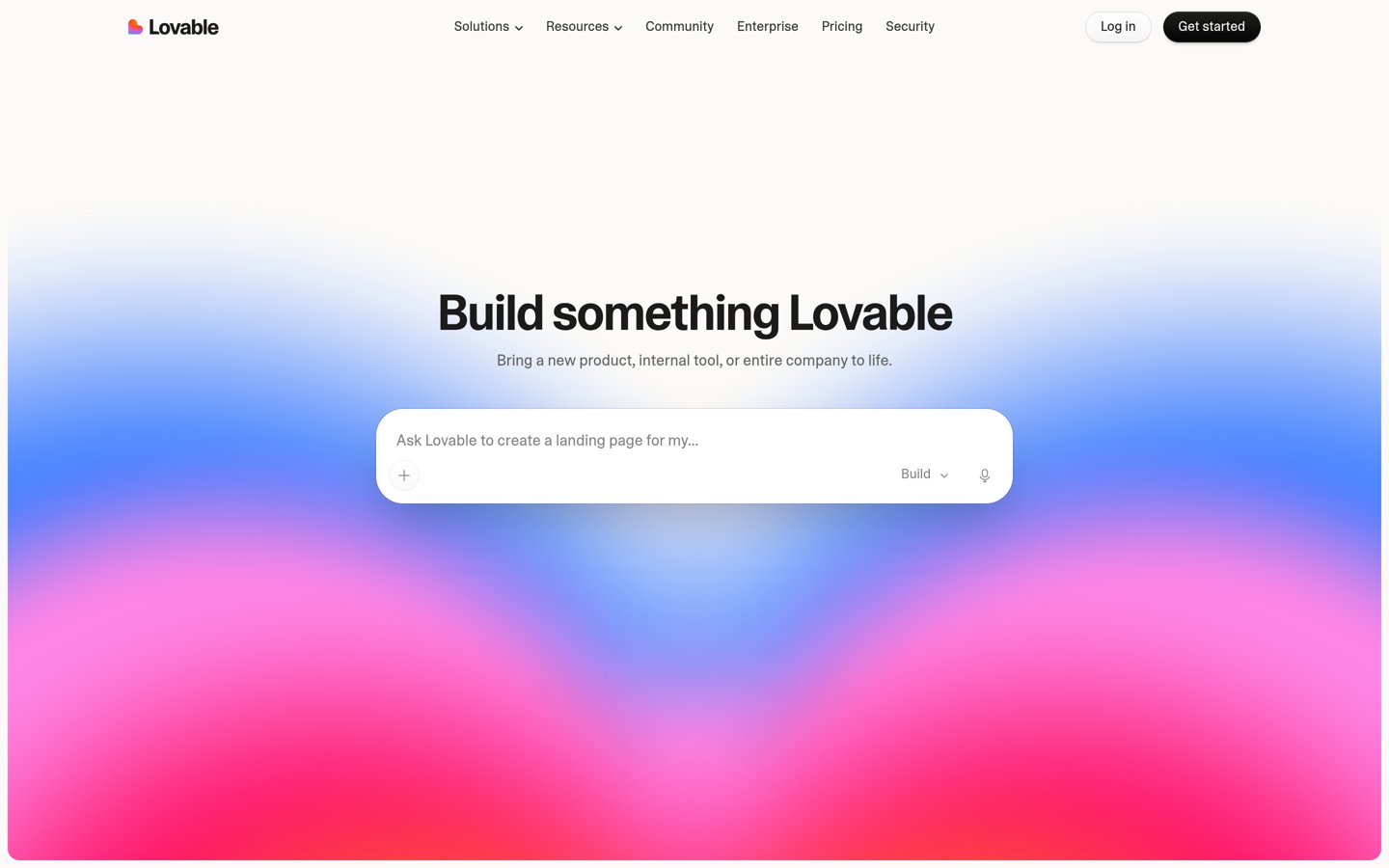
Lovable is a prompt-to-app builder that turns plain-language descriptions into working full-stack web apps with a React front end, a Supabase database, authentication and one-click deploy. The free plan gives 5 build credits a day, capped at 30 a month, and includes GitHub sync.
The trade off is credits. Pro costs $25 a month for 100 monthly credits, and fixes on complex builds can burn through them fast, with top-ups at $15 per 50 credits. It suits founders and small teams who want a working product fast and can budget for busy months.
What we like
Closest match to Replit for prompt-led app building
Strong G2 base at 4.6 out of 5 from 501 reviews
GitHub sync and one-click deploy included
Free plan to try before paying
Watch out for
Credits run down quickly on complex builds
Free plan blocks code editing and download
Pro adds 100 monthly credits, private projects and custom domainsVisit lovable.dev
02
Bolt.new
4.3/5on G2 (174 reviews, checked Nov 2026)
Paid from$20/mo
Best for fast prototypes
Prompt to appYes, in browser
Free plan1M tokens a month
Runs onWebContainers
Paid planPro, $20/mo
bolt.new
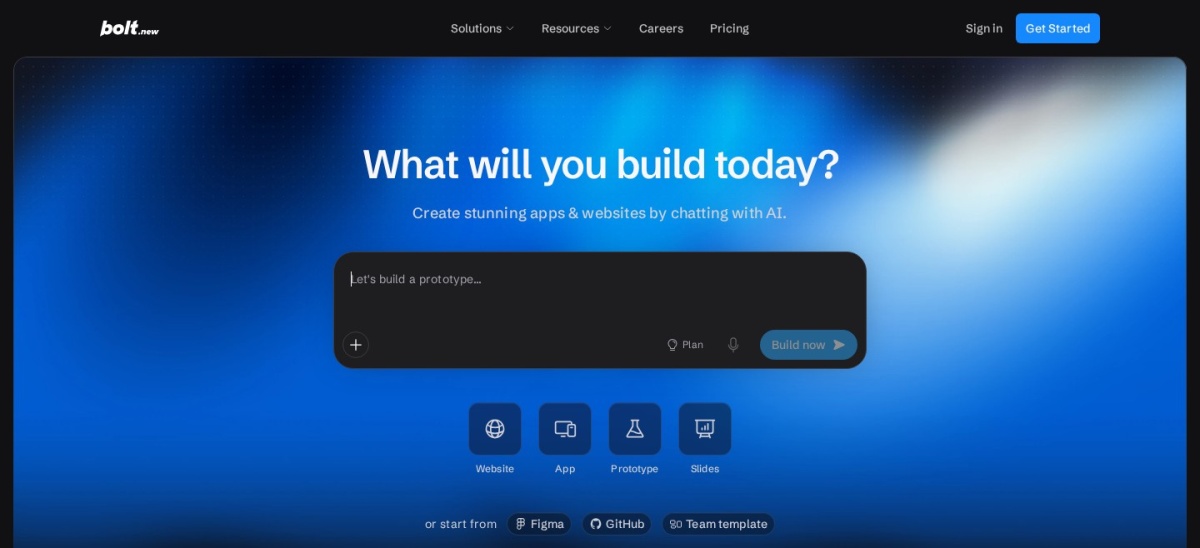
Bolt.new homepage, captured Nov 2026.
Bolt.new is StackBlitz's prompt-to-app builder, and it runs a full Node.js environment in the browser through WebContainers, so a prompt becomes a working app with a live preview in the same tab. The free plan gives 1M tokens a month with a 300K daily limit, plus hosting and GitHub sync.
The trade off is token burn. Pro costs $20 a month for 10M tokens, and long debugging sessions on a large project can use a big share of that allowance. It suits developers who want to move from an idea to a deployed prototype fast and like owning the code.
What we like
Most generous free tier in this list at 1M tokens a month
Full Node.js environment runs in the browser
One-click deploy and GitHub export
Pro tokens roll over for an extra month
Watch out for
Token use climbs as a project grows
No real-time collaboration or pair programming
Pro adds 10M monthly tokens, custom domains and no daily limitVisit bolt.new
03
v0
4.6/5on G2 (51 reviews, checked Nov 2026)
Paid from$30/mo
Best for React and Next.js UI
Prompt to UIYes, React
Free plan$5 in credits
Deploys toVercel
Paid planPlus, $30/mo
v0.app
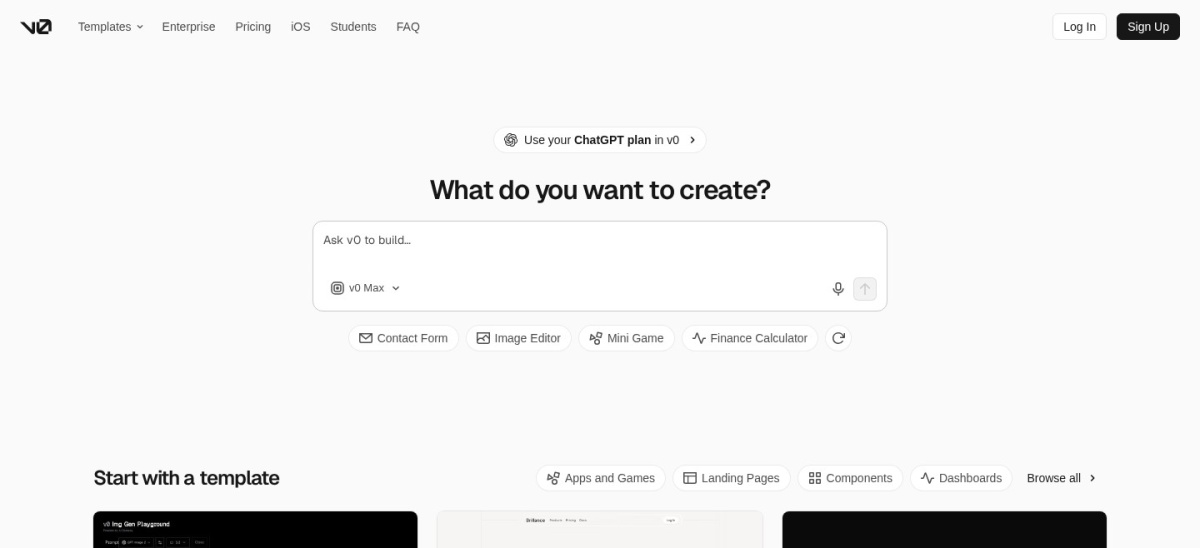
v0 homepage, captured Nov 2026.
v0 is Vercel's AI builder for React and Next.js interfaces, and it generates clean components with shadcn/ui styling that deploy straight to Vercel hosting. The free plan includes $5 in credits, and every chat runs on its own branch with a pull request for review.
The trade off is scope and price. v0 builds interfaces rather than full back ends, and Plus costs $30 per user a month, the dearest prompt builder here. It suits teams already shipping Next.js on Vercel who want AI-generated UI that fits their stack.
What we like
Best raw React and Next.js code in this list
Pull-request workflow keeps code reviewable
Deploys straight to Vercel hosting
Free plan to try before paying
Watch out for
No back end, so you bring your own database
Plus at $30 a user is the dearest prompt plan here
Plus adds $30 of monthly credits and team featuresVisit v0.app
04
GitHub Copilot
4.4/5on G2 (397 reviews, checked Nov 2026)
Paid from$10/mo
Best budget AI coding assistant
AI agent modeYes, multi-file
Free plan2,000 completions
EditorVS Code
Paid planPro, $10/mo
github.com
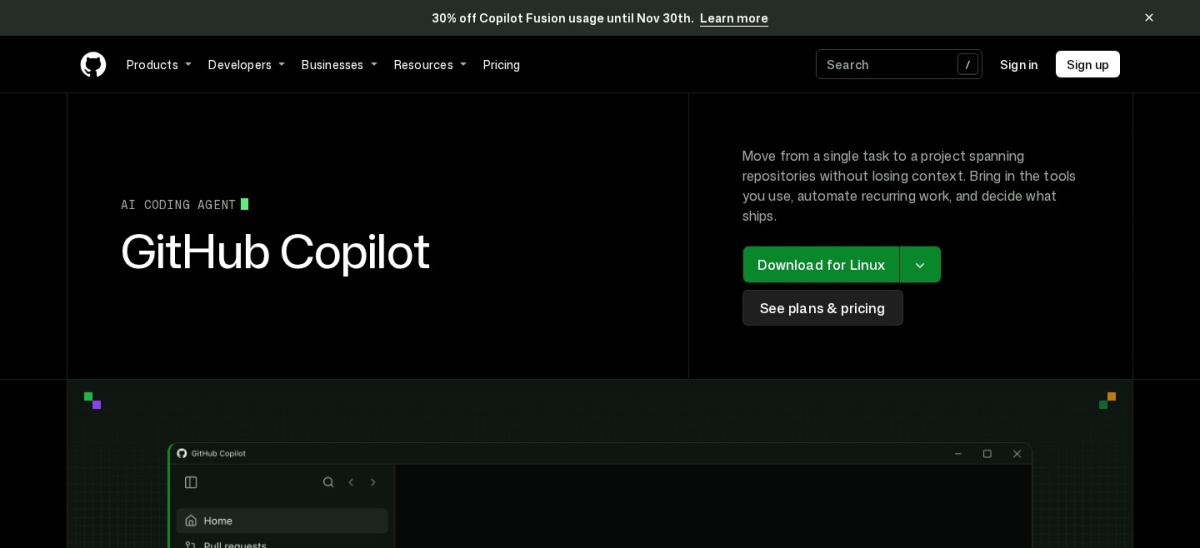
GitHub Copilot homepage, captured Nov 2026.
GitHub Copilot is an AI coding assistant that works inside VS Code, which is free, and its agent mode plans and carries out multi-file changes across a whole project. The free tier includes 2,000 code completions a month, and Pro adds wider agent use for $10 a month.
The trade off is assembly. Copilot writes code but does not host or deploy it, so you build your own pipeline with GitHub Actions or another host. It suits developers who already live in VS Code and want the cheapest AI help that works on a real codebase.
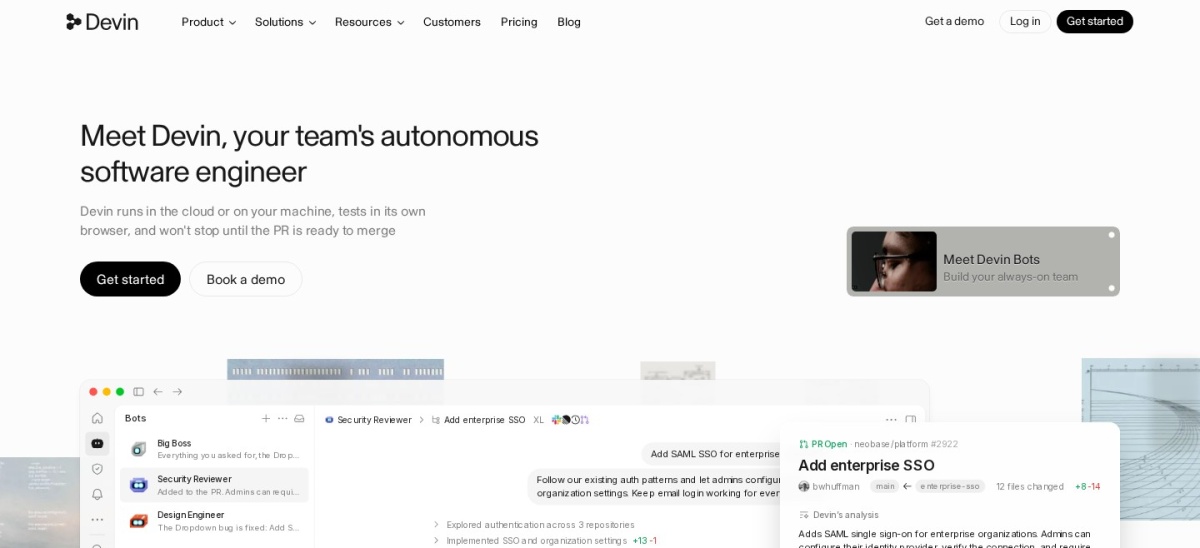
Devin Desktop is Cognition's AI-native editor, formerly Windsurf, built around the Cascade agent, which tracks context across files and editing sessions. The free tier includes 25 prompt credits, and Pro costs $20 a month with Codemaps visual code navigation.
The trade off is change. The product has been renamed three times in 18 months, from Codeium to Windsurf to Devin Desktop, which makes the roadmap harder to trust. It suits developers who want an AI-first editor with agent mode and visual code navigation for $20 a month.
What we like
Cascade agent keeps context across files
Codemaps give visual code navigation
Free tier to try the agent before paying
Watch out for
Three rebrandings in 18 months
Desktop only, with no browser editing
Pro adds more prompt credits and team featuresVisit devin.ai
06
Bubble
4.4/5on G2 (166 reviews, checked Nov 2026)
Paid from$39/mo
Best no-code full app builder
No-code appsYes, full-stack
Free planYes
Back endBuilt-in database
Paid planStarter, $39/mo
bubble.io
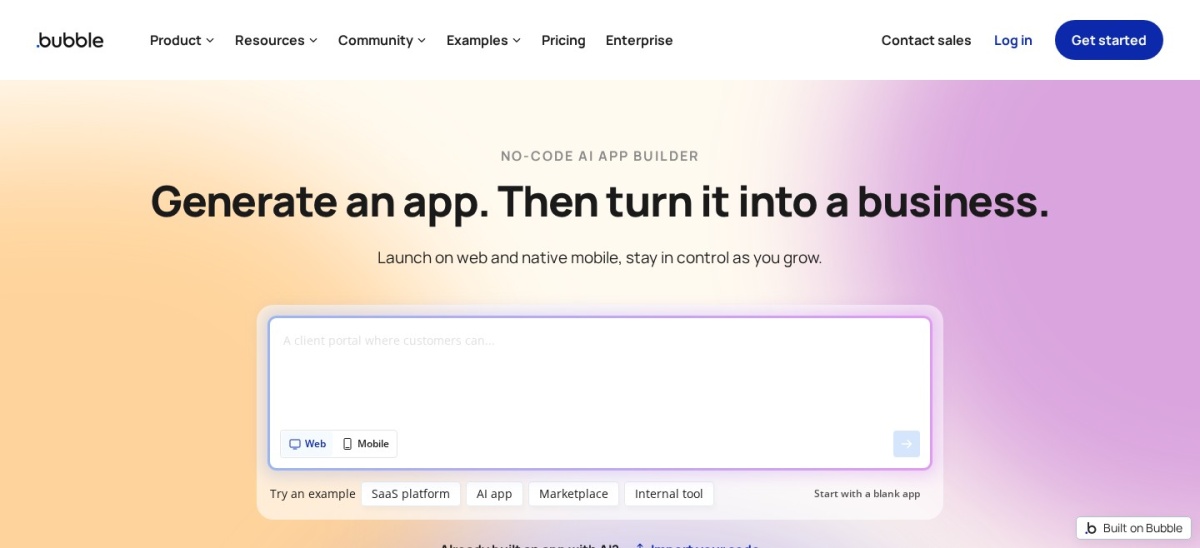
Bubble homepage, captured Nov 2026.
Bubble is a no-code platform for building full web apps with a visual editor, a built-in database and hosting in one place. The free plan covers learning and small tests, and the Starter plan costs $39 a month with 175,000 workload units and 1,000 AI credits.
The trade off is lock-in and learning curve. Apps run on Bubble's platform, and the visual editor takes time to master before complex logic feels easy. It suits founders who want a real database-backed product without writing code and can accept staying on Bubble.
What we like
Full apps with a database and hosting, no code needed
Strong plugin library for payments and logins
Free plan for learning and small tests
Watch out for
Apps stay on Bubble's platform
Visual editor takes time to learn
Starter adds a live domain, more workload units and AI creditsVisit bubble.io
07
Softr
4.7/5on G2 (726 reviews, checked Nov 2026)
Paid from$49/mo
Best for portals from spreadsheets
No-code appsYes, portals
Free plan10 app users
Data sourceAirtable, Sheets
Paid planBasic, $49/mo
softr.io
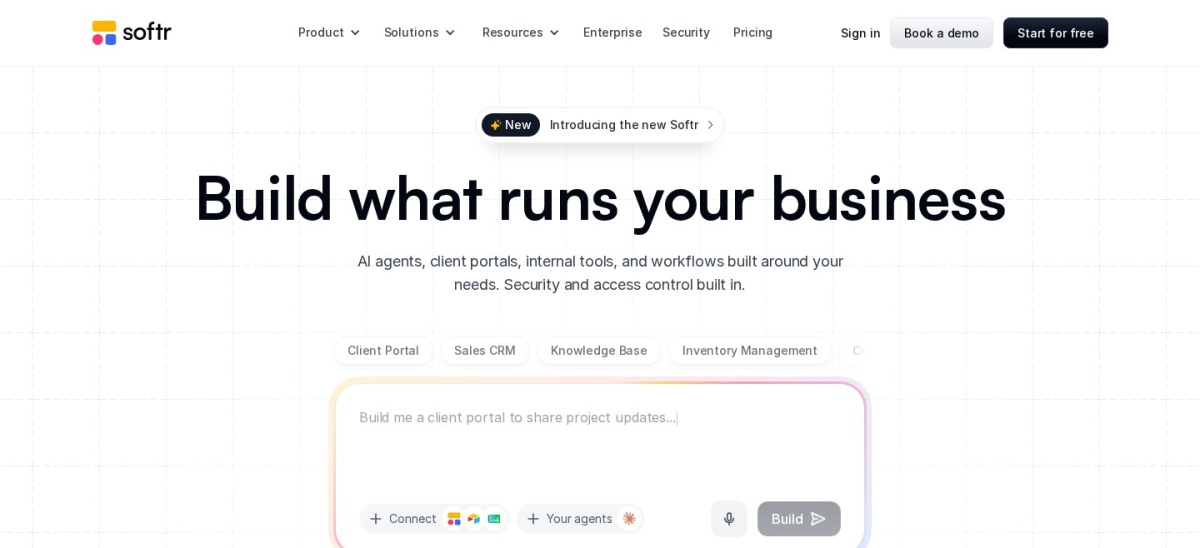
Softr homepage, captured Nov 2026.
Softr is a no-code builder that turns Airtable or Google Sheets data into web apps, client portals and internal tools without code. The free plan covers small apps with up to 10 app users, and Basic costs $49 a month with more users and custom domains.
The trade off is price and depth. At $49 a month, Basic is the dearest plan in this list, and Softr is not the tool for custom logic or heavy back-end work. It suits small teams that already keep data in Airtable and want a polished portal fast.
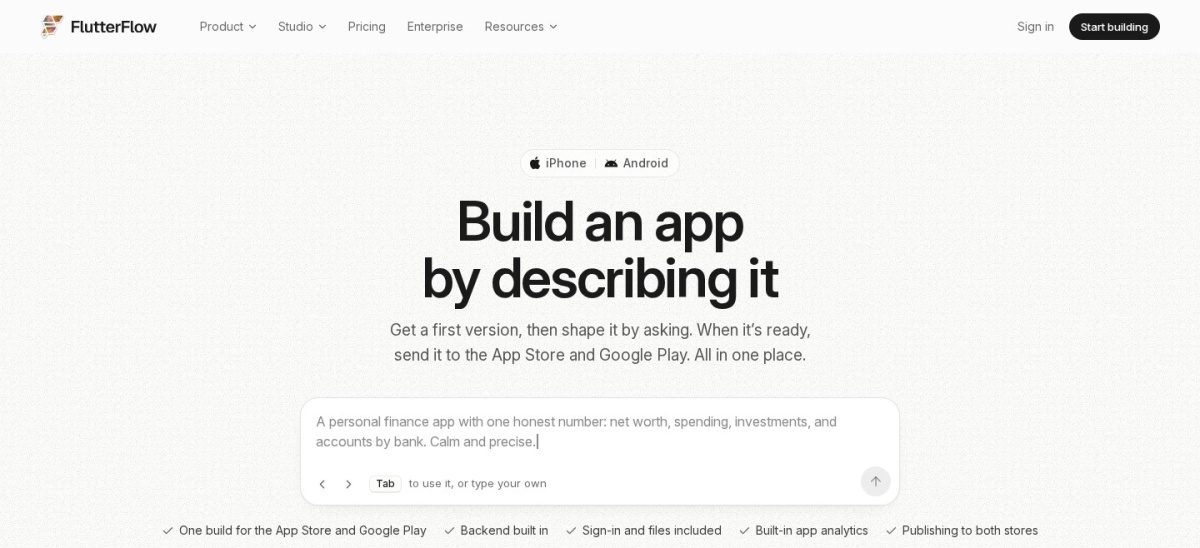
FlutterFlow is a visual builder for mobile and web apps on Google's Flutter framework, with Firebase and Supabase back ends and code export on paid plans. The free plan covers 2 projects, and Basic costs $39 a month with code download and custom domains.
The trade off is the free plan. Two projects and no code export mean serious work needs Basic at $39 a month, and the visual approach still needs real app thinking. It suits teams shipping an iOS and Android app from one codebase without hiring mobile developers.
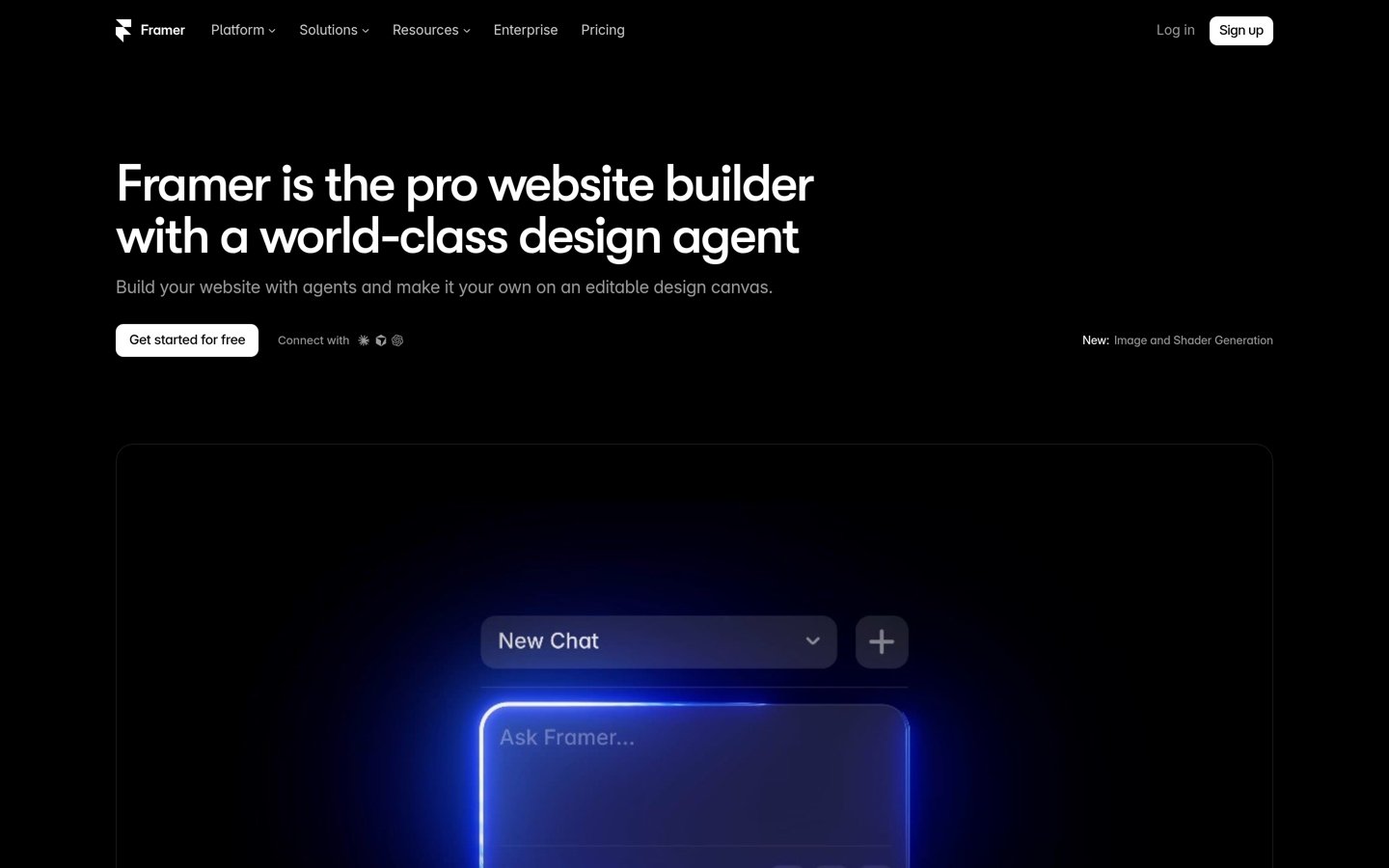
Framer is a website builder with AI site generation, and it turns a prompt into a designed site with pages, forms and hosting on Framer's platform. The free Mini plan includes 500 AI credits, and Basic costs $10 a month when billed yearly, with a custom domain.
The trade off is scope. Framer builds marketing sites and landing pages, not database apps, so it covers only the front-end half of what Replit did. It suits founders and marketers who need a fast, good-looking site and can use another tool for the app itself.
Free plans are real here, not demos. Every tool in this list lets you build something without a card, from Bolt.new's 1M monthly tokens to Copilot's 2,000 completions.
Paid plans mostly buy usage, not features. Lovable's Pro adds 100 credits, Bolt.new's Pro adds 10M tokens, and v0's Plus adds $30 of credits, so the bill grows with how much you build.
The cheapest paid plan is $10 a month, for Copilot Pro or Framer Basic on yearly billing, and the dearest is Softr Basic at $49 a month. A solo builder can stay under $25 a month, while a team sharing credits should budget by usage, not by seats.
Watch the meter, not the headline price. Credit and token plans can cost more in a busy month than a flat seat price, so check what a typical week of building uses before committing.
How we chose
We started from every tool named as a Replit alternative in 2026 roundups and review sites, then kept the nine with a public G2 rating and a live free plan.
Prices come from each vendor's pricing page as reported in November 2026 checks, and ratings and review counts come from G2 on 29 November 2026. Where a vendor shows a sale, the list shows the regular price.
We left out Cursor, because its pricing page no longer shows the editor plans, and Gitpod, whose managed cloud closed to new sign-ups, Glitch, whose hosting shut down in July 2025, and Firebase Studio, which sunsets in March 2027. No vendor paid for a place, and we do not claim to have used these tools ourselves.
How to choose a Replit alternative
Start with what you build most, then match the billing model to how often you build.
Decide whether you prompt or code. If you describe apps in words, pick Lovable, Bolt.new or v0. If you write code by hand, pick Copilot or Devin Desktop.
Try the free plan for a real task. Build one small but real feature, not a demo, and watch how fast the free credits or tokens run down.
Check the exit route. Lovable and Bolt.new export to GitHub, and v0 works through pull requests, so your code is not trapped if you leave.
Budget by usage, not by the headline price. Credit and token plans can cost more in a busy month, so price a typical week before you commit.
FAQ
What is the best free alternative to Replit?
Bolt.new is the best free alternative to Replit for most people. Its free plan gives 1M tokens a month with a 300K daily limit, plus hosting and GitHub sync, which is enough for several small prototypes. Lovable's free plan is tighter at 5 credits a day, capped at 30 a month.
What is the best Replit alternative overall?
Lovable is the best Replit alternative overall. It turns a prompt into a full-stack app with a Supabase database, authentication and hosting for $25 a month, and it is rated 4.6 out of 5 on G2 from 501 reviews. Bolt.new is faster for prototypes, and Copilot is cheaper for hand-written code.
How much do Replit alternatives cost?
Paid plans in this list run from $10 to $49 a month. GitHub Copilot Pro and Framer Basic cost $10 a month, Lovable and Bolt.new cost $25 and $20, and Softr Basic is the dearest at $49 a month. Most charge by credits or tokens, so heavy use costs more.
Which Replit alternative is best for beginners?
Lovable is the best pick for beginners who do not code, because a plain-language prompt produces a working app with a database and hosting. Softr is the easiest no-code option if your data already lives in Airtable or Google Sheets.
Which Replit alternative is best for small teams?
Lovable suits small teams best, because Pro credits are shared across a workspace with unlimited members. Bubble is the better pick if the team needs a database-backed product with user accounts and no code.
Lovable vs Bolt.new: which is better?
Lovable is better for shipping a finished product, with a Supabase back end, authentication and private projects on Pro. Bolt.new is better for fast prototypes, with the most generous free tier at 1M tokens a month and a full Node.js environment in the browser.
SaaS SEO and WordPress specialist with about 8 years of experience. Rakib compares WordPress plugins, themes, hosting and software using public pricing, documentation and user reviews. See how we rank.