Portainer is the best of these Rancher alternatives for most teams, rated 4.8 out of 5 on G2 with a free Community Edition and paid plans from $1,045 a year. Choose Red Hat OpenShift for regulated enterprise fleets, or Platform9 when you want Kubernetes managed for you on your own hardware.
How we make this list: we compare pricing pages, product documentation and public user reviews, then re-check every price before each update. No product paid for a place. Disclosure.
Portainer tops the list at 4.8 out of 5 on G2, with a free Community Edition and paid plans from $1,045 a year.
OpenShift is the fullest platform here, with CI/CD, monitoring and security built in from $0.076 an hour on reserved instances.
Three tools charge by the cluster hour: GKE and EKS at $0.10 an hour, while AKS charges nothing for the control plane.
Platform9 and Spectro Cloud suit fleets spread across data centers, clouds and edge sites, but both need a sales quote for exact pricing.
Qovery is the pick for developers who want self-service deploys, with a free plan for 3 users and paid plans from $299 a month.
How do you pick the right Rancher alternative?
A Rancher alternative should manage more than one cluster from one place. Rancher's strength is multi-cluster fleet management, so a replacement that only watches a single cluster leaves the main job undone.
Price is the deciding factor for most teams leaving Rancher. Paid plans here run from $0 for a control plane to $5,760 a year for managed Kubernetes, so check whether you pay per cluster, per node or per hour before you commit.
Pipelines matter as much as the console. OpenShift and Qovery include CI/CD, while Portainer and the cloud services expect you to bring your own pipeline. Our guide on deploying with GitHub Actions shows one way to add that piece.
Support is where the cheap options show their limits. Community editions rely on forums and docs, while paid plans add named support, SLAs and help with upgrades, which matters most when a cluster fails at night.
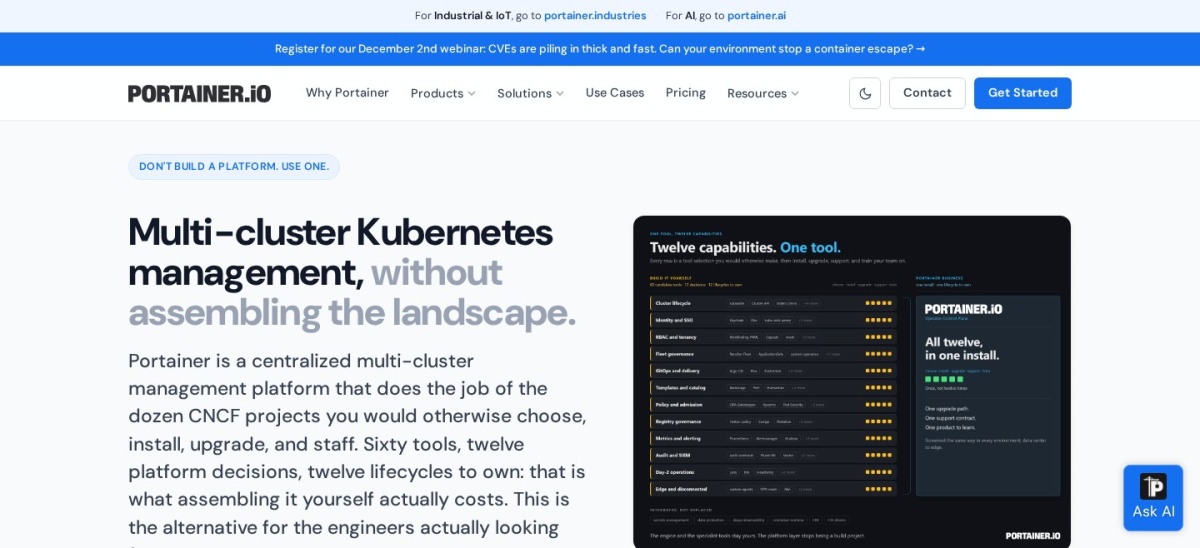
Portainer is a lightweight web console for Docker, Swarm and Kubernetes under one login. The free Community Edition is open source, Business Edition is free for up to 3 nodes, and paid plans add role-based access control, audit logs and GitOps.
The trade off is depth. Portainer manages workloads well but does not provision cloud clusters or run a full fleet lifecycle the way Rancher or Spectro Cloud do. Starter costs $1,045 a year for 5 to 15 nodes. It suits small teams that want a simple governed console without a heavy platform.
What we like
Highest G2 rating in this list at 4.8/5
Covers Docker and Swarm beside Kubernetes
Node-based pricing suits teams with many operators
Red Hat OpenShift is a full application platform built on Kubernetes, with CI/CD, monitoring, logging and security included rather than added on. Cloud services start from $0.076 an hour on reserved instances, and a free developer sandbox lets you try it first.
The trade off is weight. OpenShift is a larger, more opinionated platform than Rancher, so small teams can find it heavy and self-managed pricing is quote-based. It suits regulated teams that want security and compliance built in from the start.
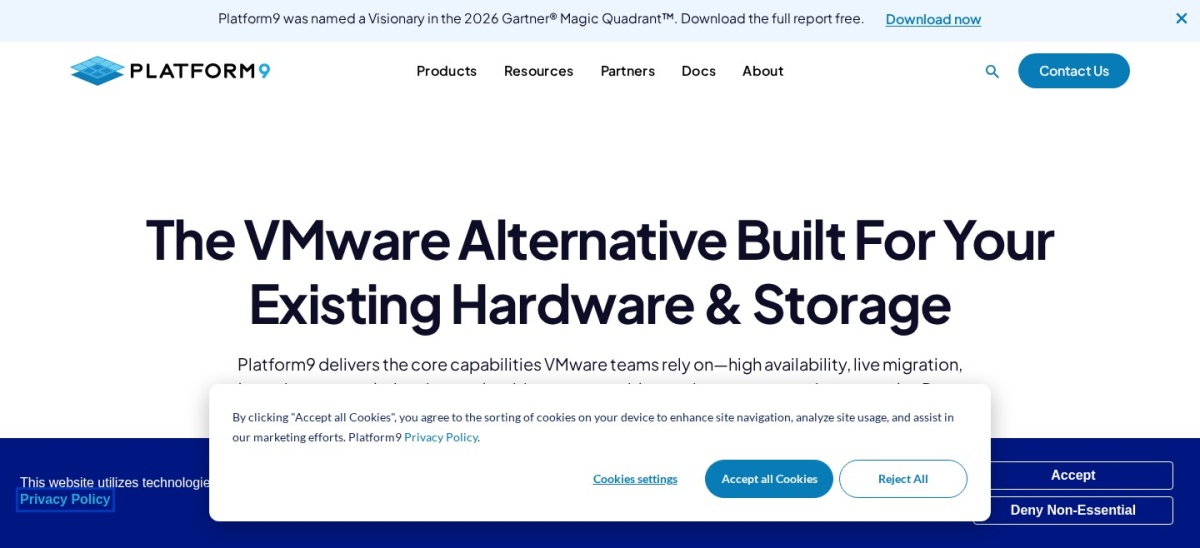
Platform9 is a SaaS-managed Kubernetes service that runs clusters on your own hardware, in the cloud or at the edge. Its control plane handles upgrades, patching and day-2 operations, so your team does not run the management layer itself.
The trade off is cost and review depth. Paid plans start at $480 a month, the highest starting price in this list, and its 4.8 G2 rating rests on only 21 reviews. It suits teams with on-prem hardware that want managed Kubernetes without hiring for it.
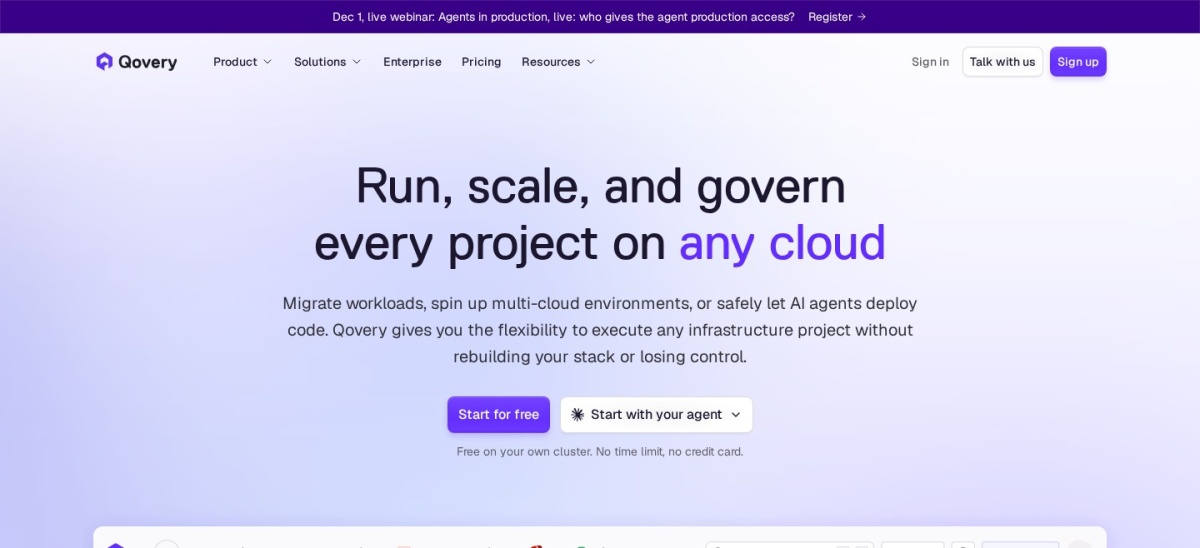
Qovery is a developer platform that deploys applications onto Kubernetes in your own cloud account, with preview environments, built-in CI/CD and an AI copilot for troubleshooting. The free plan covers 3 users, 1 cluster and 1,000 deployment minutes a month.
The trade off is control. Qovery hides the cluster behind its own workflow, so platform teams that want direct control over Kubernetes will find it limiting. Starter costs $299 a month billed yearly. It suits product teams that want developers to ship without waiting on ops.
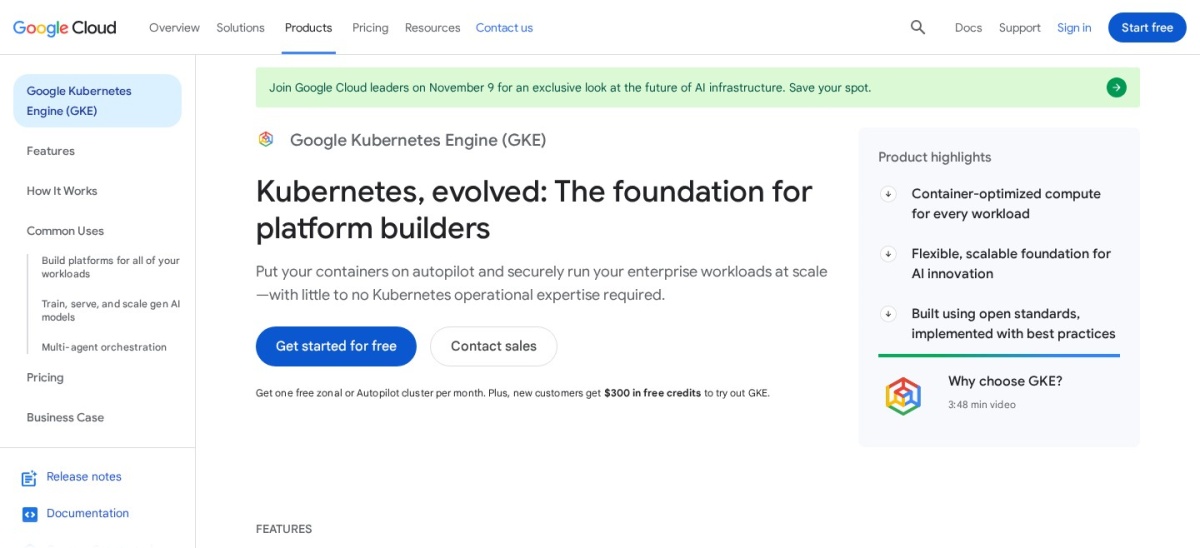
Google Kubernetes Engine homepage, captured Nov 2026.
Google Kubernetes Engine is Google's managed Kubernetes service, with automated upgrades, autoscaling and multi-cluster fleets included. The cluster fee is $0.10 an hour, and the free tier gives $74.40 in monthly credits, enough for one small cluster.
The trade off is lock-in. GKE fits best when your workloads already run on Google Cloud, and the node costs sit on top of the cluster fee. It suits Google Cloud teams that want managed Kubernetes with little platform work.
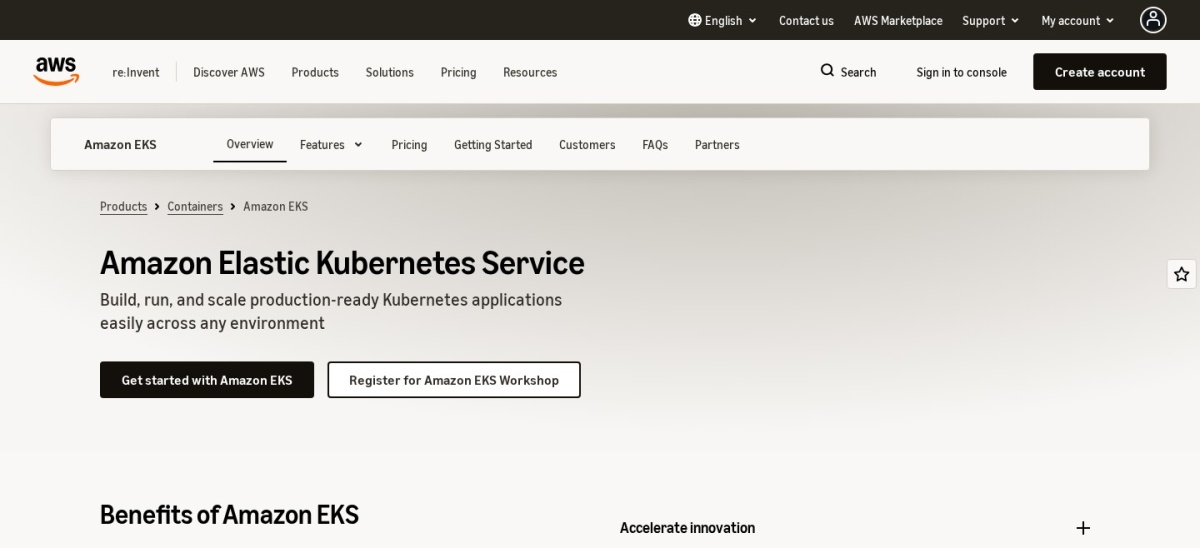
Amazon Elastic Kubernetes Service homepage, captured Nov 2026.
Amazon Elastic Kubernetes Service is AWS's managed Kubernetes service, running the control plane so you do not patch or scale it yourself. Standard support costs $0.10 an hour per cluster, and EKS also runs on Outposts and hybrid nodes in your own data center.
The trade off is the bill beyond the cluster fee. You still pay for EC2 nodes, storage and traffic, and versions past standard support cost $0.60 an hour. It suits AWS teams that want Kubernetes without running a control plane.
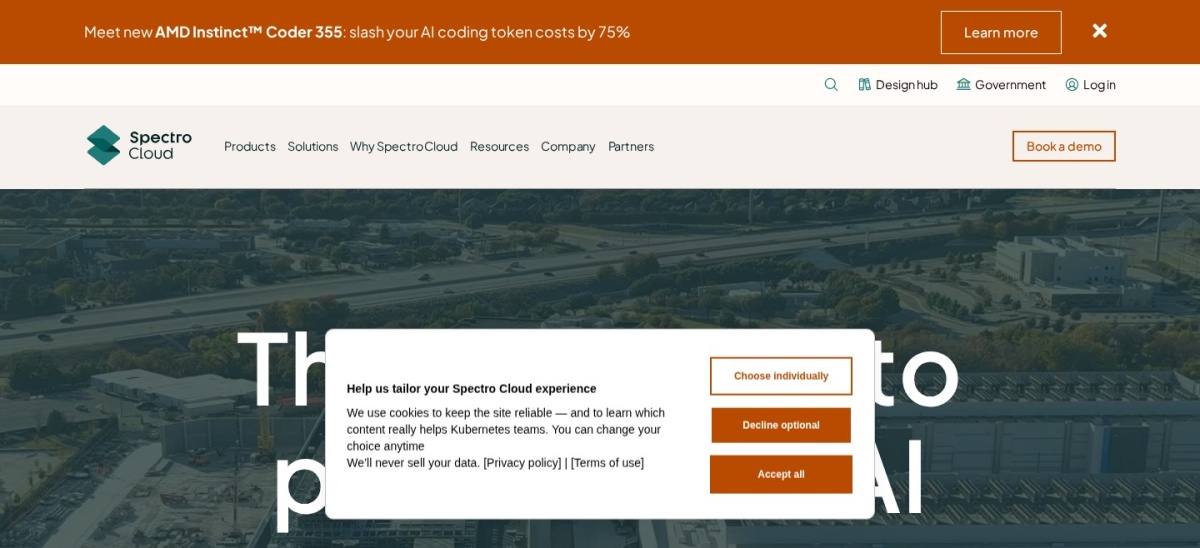
Spectro Cloud Palette homepage, captured Nov 2026.
Spectro Cloud Palette is a platform that manages Kubernetes, VMs and AI workloads across clouds, data centers and edge sites from one console. Cluster profiles declare the full stack, and updates roll out to whole fleets at once, including sites with limited connectivity.
The trade off is pricing and proof. Rates are quote-only, and its 4.5 G2 rating rests on only 13 reviews, so small teams should get a written quote early. It suits platform teams running hundreds of edge sites or mixed fleets.
Mirantis Kubernetes Engine homepage, captured Nov 2026.
Mirantis Kubernetes Engine is the enterprise container platform that grew out of Docker Enterprise, running Kubernetes and Docker Swarm side by side. It is built for self-hosted, regulated estates that need supported orchestration on their own infrastructure.
The trade off is price transparency. MKE is quote-only, so there is no public starting price to compare against the per-hour cloud services. It suits teams moving legacy Swarm workloads to Kubernetes without a rip-and-replace.
Azure Kubernetes Service homepage, captured Nov 2026.
Azure Kubernetes Service is Microsoft's managed Kubernetes service, and its control plane is free: you pay only for the Azure VMs and storage your nodes use. A paid tier adds an uptime SLA for production clusters.
The trade off is scope. AKS fits best inside Azure, and like the other cloud services it does not manage clusters outside its own cloud. It suits Azure teams that want the cheapest managed control plane in this list.
Managed service or multi-cluster platform: which fits?
Pick a managed service if your workloads already live in one cloud. GKE, EKS and AKS run the control plane, patch it and scale it, and the fee is $0.10 an hour per cluster or nothing at all on AKS.
Pick a platform if your clusters live in more than one place. OpenShift, Platform9 and Spectro Cloud manage clusters across clouds, data centers and edge sites from one console.
Pick a console such as Portainer if the clusters already exist and the problem is day-to-day work. Portainer covers deploys, access and GitOps without taking over provisioning.
How we chose
We started from the most-used Rancher alternatives: multi-cluster platforms, web consoles, developer platforms and the three big managed cloud services.
Prices come from vendor pricing pages, checked on 29 November 2026, with Platform9's $480 a month from vendor-supplied pricing on G2. Ratings and review counts come from G2, checked between 24 and 29 November 2026. Where a vendor shows a sale, the list shows the regular price.
We left out tools with no public rating. No vendor paid for a place, and we do not claim to have used these tools ourselves.
How to choose a Rancher alternative
Start from where your clusters live today, then match the tool to that shape.
Count your clusters and where they live. One cloud means a managed service is enough. Several clouds, a data center and edge sites point to a multi-cluster platform.
Work out what you pay per cluster. Compare per-hour fees with per-node and per-month plans at your real cluster count, and include the worker nodes you pay the cloud provider for.
Check the free plan limits. Portainer Business is free to 3 nodes, Qovery Free covers 3 users and 1 cluster, and GKE credits cover one small cluster a month.
Test access control before you commit. Role-based access, audit logs and SSO sit on paid plans for most tools here, so confirm they are in the tier you would buy.
FAQ
What is the best Rancher alternative in 2026?
Portainer is the best Rancher alternative for most teams. It is rated 4.8 out of 5 on G2 from 297 reviews, its Community Edition is free, and paid plans start at $1,045 a year for 5 to 15 nodes.
How much do Rancher alternatives cost?
Prices run from $0 for the AKS control plane to $5,760 a year for Platform9's managed Kubernetes. GKE and EKS charge $0.10 an hour per cluster, Portainer starts at $1,045 a year, and OpenShift, Mirantis and Spectro Cloud are quote-based.
Is there a free Rancher alternative?
Yes. Portainer's Community Edition is free, Qovery's free plan covers 3 users and 1 cluster, and GKE credits cover one small cluster a month. AKS charges nothing for the control plane, so you pay only for nodes.
Which Rancher alternative is best for a small team?
Portainer is the best fit for a small team. It installs as one lightweight container, covers Docker and Kubernetes from one console, and Business Edition is free for up to 3 nodes before paid plans start at $1,045 a year.
Portainer vs OpenShift: which should I choose?
Choose Portainer if you want a light console over clusters you already run, at $1,045 a year with a 4.8 G2 rating. Choose OpenShift if you need a full platform with CI/CD, monitoring and compliance built in, and can accept a heavier, quote-priced product.
Do I still need to manage clusters with these tools?
It depends on the type. Managed services such as GKE, EKS and AKS run and patch the control plane for you, while platforms such as OpenShift and Platform9 manage clusters across your infrastructure but still need your team to plan upgrades.
SaaS SEO and WordPress specialist with about 8 years of experience. Rakib compares WordPress plugins, themes, hosting and software using public pricing, documentation and user reviews. See how we rank.