Mixpanel is the best PostHog alternative for most teams, with a free plan covering 1 million events a month and Growth from $20 a month. Amplitude suits deeper behavioral analysis, while Plausible is the cheapest privacy-first option at $9 a month.
How we make this list: we compare pricing pages, product documentation and public user reviews, then re-check every price before each update. No product paid for a place. Disclosure.
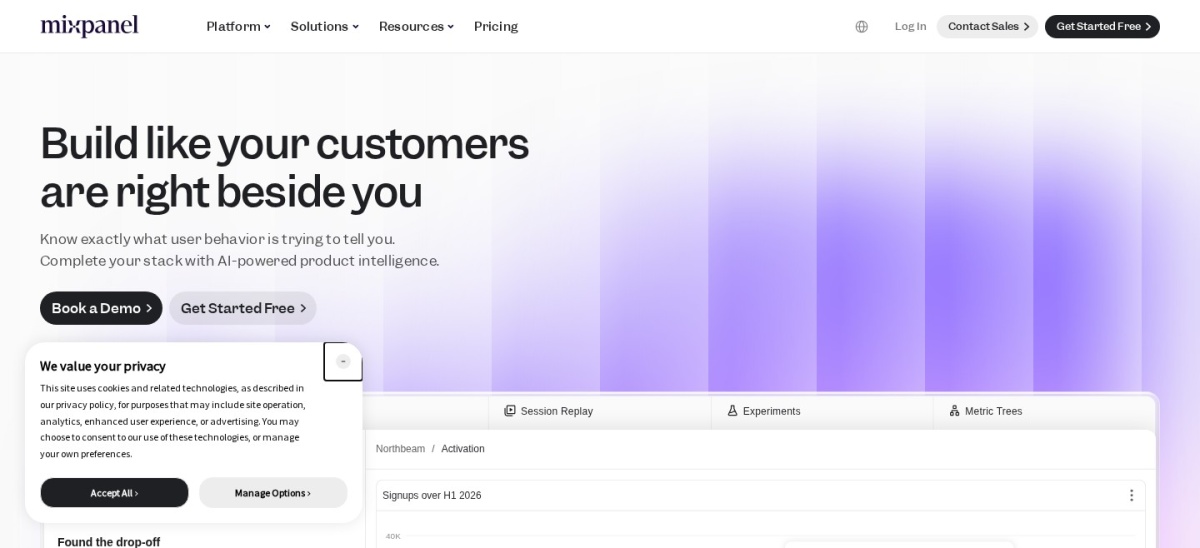
Mixpanel's free plan covers 1 million events a month, and Growth starts at $20 a month billed annually.
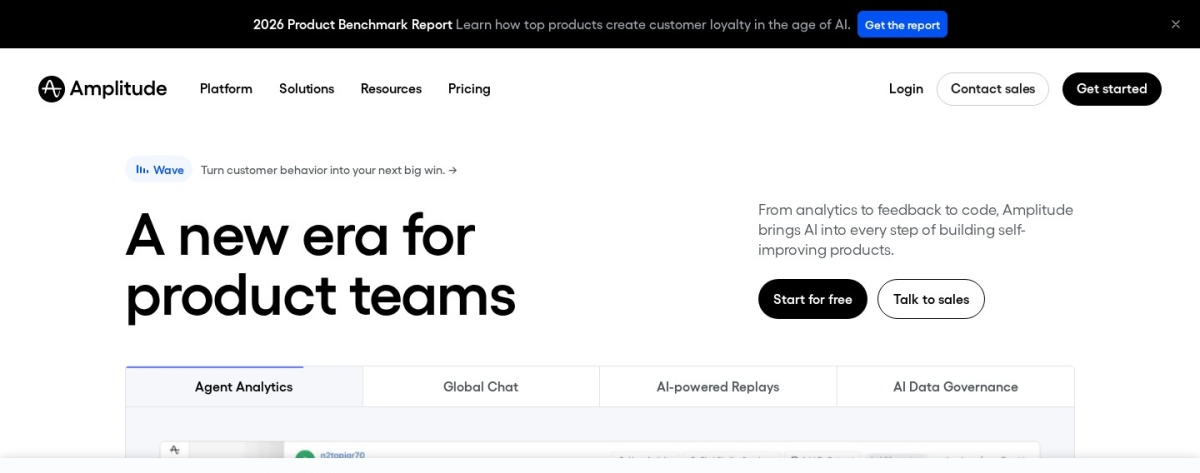
Amplitude's free plan is the most generous at 2 million events a month, but Plus reaches $75 a month at 3 million events.
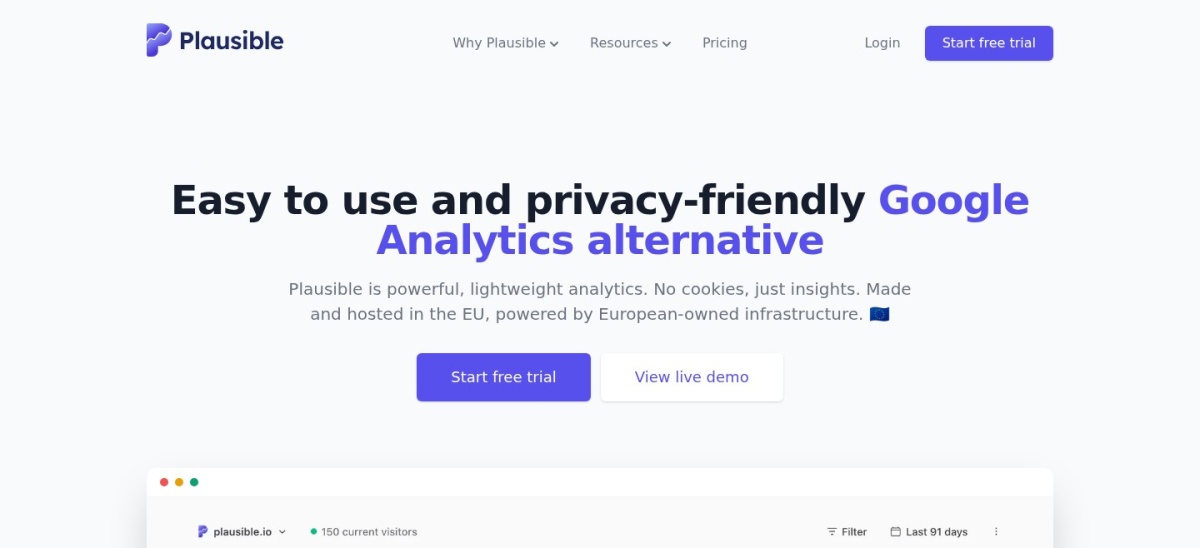
Plausible is the cheapest paid option at $9 a month, and Fathom follows at $15 a month with 50 sites included.
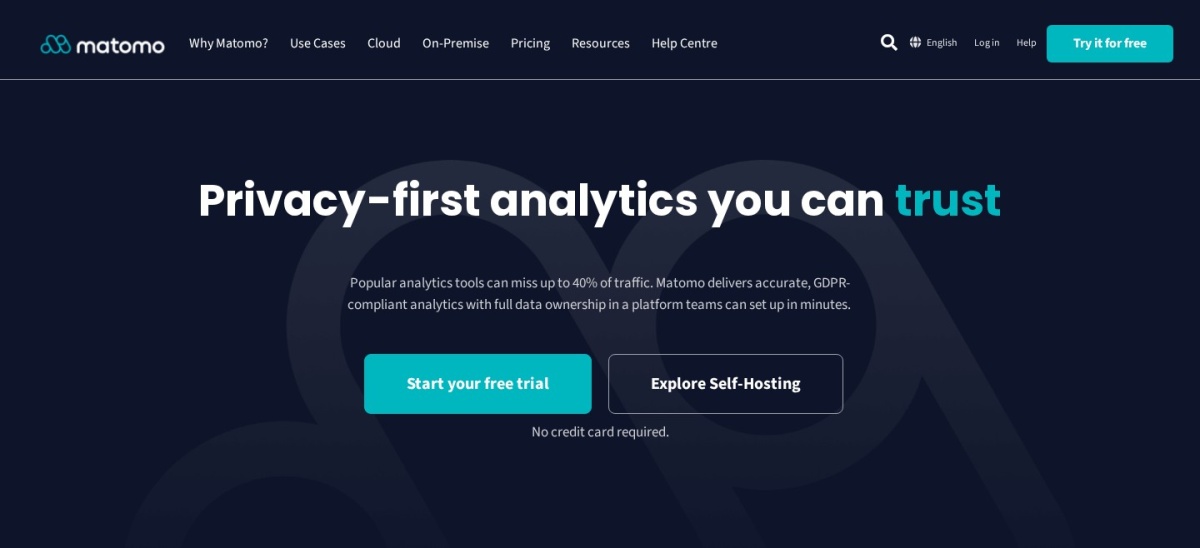
Matomo and Countly both offer a free self-hosted edition, so your data stays on your own servers.
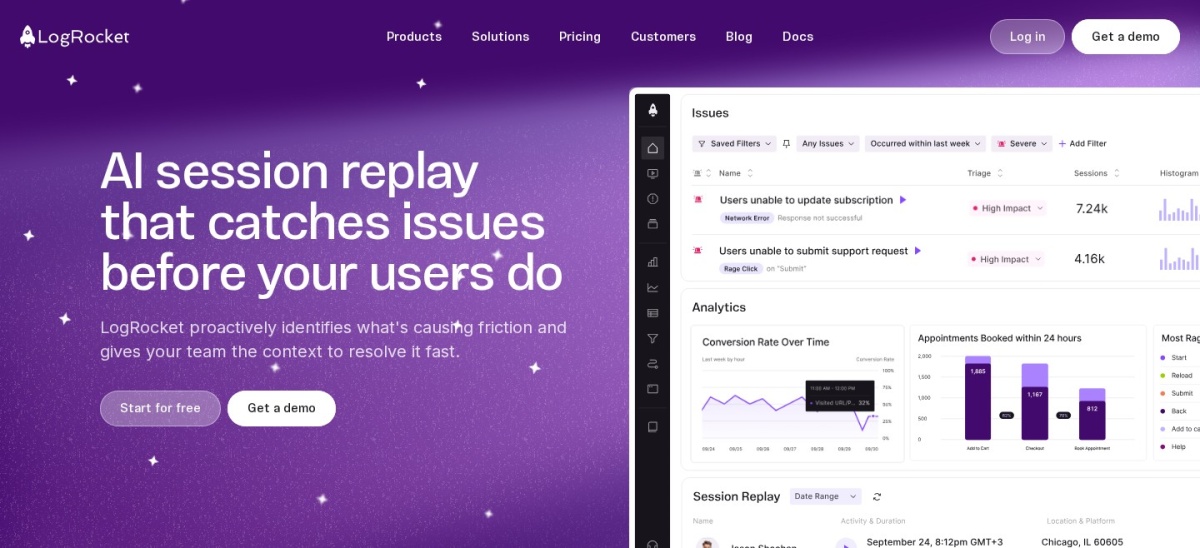
LogRocket is the only pick built around session replay first, with a free tier of 1,000 sessions a month.
What is the best PostHog alternative for your team?
PostHog is a product analytics platform, so the closest alternatives are event-based tools such as Mixpanel, Amplitude, and Statsig. These track what signed-in users do inside a product, with funnels, retention cohorts, and feature adoption reports.
Web analytics tools answer a different question. Plausible, Fathom, and Matomo count visits, sources, and goals on a site, which fits marketing pages better than in-app behavior. Our guide on adding Google Analytics 4 to WordPress covers the free starting point for site traffic.
Billing meters shape the real cost more than the entry price. Event-based tools charge by logged actions, session tools charge by replays, and privacy tools charge by pageviews, so a busy product can outgrow a cheap entry tier fast.
Privacy is the other split. Matomo, Countly, and Plausible all offer a self-hosted edition, so data stays on your own servers. Our privacy-friendly analytics comparison explains when that trade-off is worth the extra upkeep.
Mixpanel is an event analytics platform built around interactive funnels, retention cohorts, and user flow reports for web and mobile apps. The free plan covers 1 million events a month, 10,000 session replays, and unlimited seats.
The trade off is that costs rise with event volume, and group analytics for B2B accounts costs extra. Growth starts at $20 a month billed annually for 1,000 monthly tracked users. It suits product managers who want quick, self-serve answers without writing SQL.
Amplitude is an event-based product analytics platform with funnels, retention analysis, user journeys, and behavioral cohorts. The free Starter plan includes 2 million events a month, 10,000 monthly session replays, and unlimited seats.
The trade off is that Plus starts at $0 for the first 2 million events, then reaches $75 a month billed annually at 3 million events, with steep volume scaling above that. It suits product and growth teams that want self-serve behavioral analysis without writing SQL.
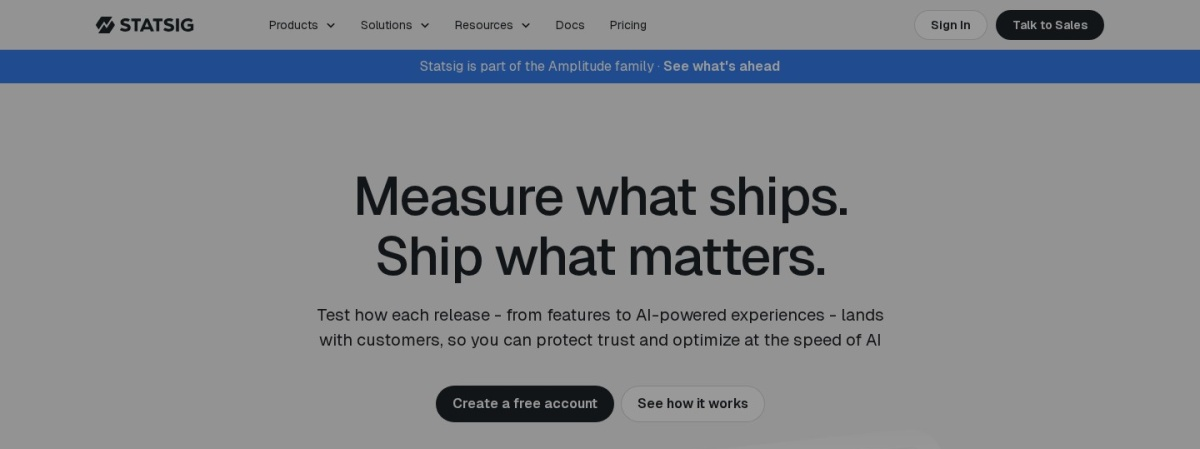
Statsig is a product development platform that pairs event analytics and session replay with feature flags and dynamic configuration. Its free Developer plan includes 2 million events a month, unlimited flag checks, and 50,000 session replays a month.
The trade off is the step up to Pro at $150 a month ($1,800 a year) for 5 million included events and 100,000 replays. It suits engineering and product teams that tie feature rollouts directly to usage metrics and experiment results.
LogRocket is a session replay and frontend monitoring platform that records user sessions, surfaces errors, and links replays to product analytics. The free plan covers 1,000 sessions a month with 3 seats and 1-month retention.
The trade off is that the Team plan starts at $99 a month for 10,000 sessions, and costs climb fast once full-session retention is switched on. It suits support and engineering teams that debug production issues from real user sessions.
Matomo is an open-source web analytics platform with funnels, cohorts, heatmaps, session recordings, and A/B testing. The On-Premise Core edition is free to self-host with no hit cap, while Cloud starts at $26 a month for 50,000 hits.
The trade off is that Cloud has no permanent free plan, only a 21-day trial, and several reporting modules are paid extras on self-hosted installs. It suits teams that must own their data and meet strict privacy rules.
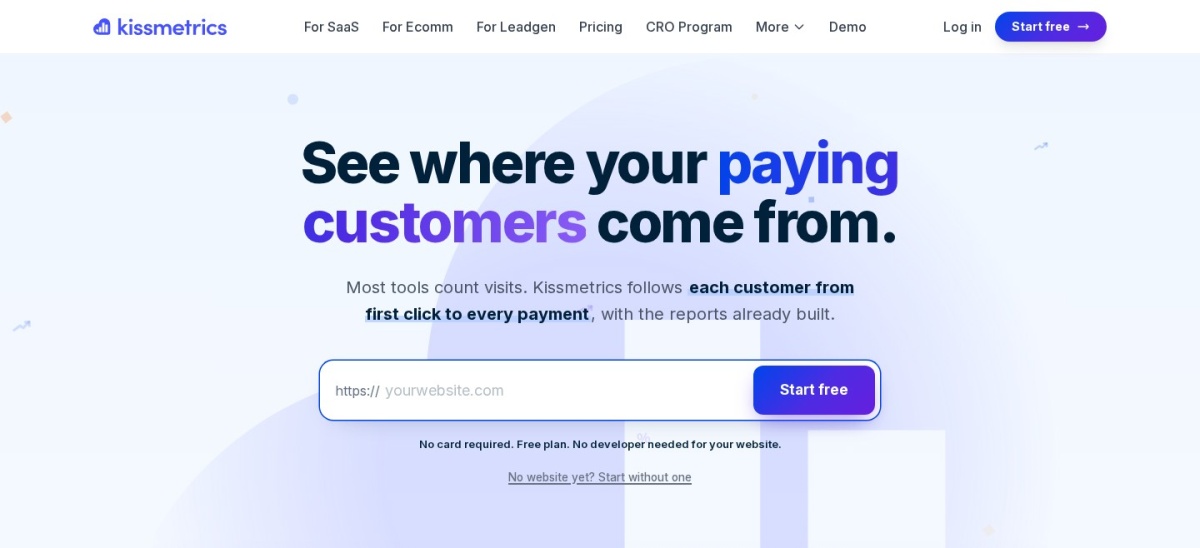
Kissmetrics is a customer analytics platform that follows each person from first click to every payment, with funnels, cohorts, and revenue reports already built. The free Starter plan covers basic tracking, and Growth starts at $99 a month for 500,000 events.
The trade off is that Growth is the first plan with the full report set, and reviewers note upgrades get expensive as volume grows. It suits SaaS and ecommerce teams that need revenue tied to individual customer journeys.
Plausible is a lightweight, privacy-first web analytics tool with a one-page dashboard for visitors, sources, pages, and goals. The hosted Starter plan costs $9 a month for 10,000 pageviews, and the open-source Community edition is free to self-host.
The trade off is depth: there is no session replay, no heatmaps, and no multi-step product funnels. It suits site owners who want simple traffic and conversion numbers without cookies or consent banners.
Fathom is a cookieless website analytics service with event and revenue tracking, EU data isolation, and built-in uptime monitoring. The Standard plan costs $15 a month for up to 100,000 monthly pageviews across 50 sites after a 7-day trial.
The trade off is that there is no free tier and no multi-step funnels, path maps, or session replays. It suits site owners and small teams that want simple event and conversion numbers without cookie banners.
Countly is an open-source product analytics platform for web, mobile, desktop, and IoT apps, with funnels, retention, crash reports, and push notifications. The Lite edition is free to self-host, and managed Flex cloud starts at $175 a month for 5,000 monthly active users.
The trade off is price and evidence: Flex is the most expensive entry here, and only 20 G2 reviews back the 4.1/5 rating. It suits product teams that will not send user data to a shared third-party cloud.
PostHog bundles event analytics, session replay, feature flags, and surveys in one workspace with one bill. Most alternatives in this list cover one or two of those jobs, so replacing PostHog can mean two subscriptions instead of one.
Statsig comes closest to the bundle, with analytics, replay, flags, and experiments together. Mixpanel and Amplitude cover analytics well but charge separately for replay depth or add-ons.
If you only use PostHog for one job, a focused tool is cheaper. Plausible at $9 a month beats PostHog for plain site stats, and LogRocket beats it for replay-led debugging.
How we chose
We started from the product analytics platforms most often named as PostHog replacements, then added privacy-first web analytics tools for teams that only need site stats.
Prices come from each vendor's pricing page, checked on 29 November 2026. Ratings and review counts come from G2 on the same day, except Plausible, whose G2 base is only 6 reviews. Where a vendor shows a sale, the list shows the regular price.
We left out Heap and Pendo, which publish no paid price, Fullstory, which prices by quote, and Hotjar, which folded into Contentsquare on 1 July 2025. No vendor paid for a place, and we do not claim hands-on testing for this list.
How to choose a PostHog alternative
Start with the job PostHog does for you today, then match the meter to your volume.
Name the job you are replacing. Analytics, replay, flags, and surveys are different jobs. Pick a bundle such as Statsig if you need several, or a focused tool if you need one.
Check the free plan against your volume. Mixpanel covers 1 million events a month free and Amplitude covers 2 million, so small products may pay nothing for months.
Price the meter, not the headline. Event, session, and pageview meters grow differently. Model your current PostHog usage before comparing entry prices.
Decide where your data may live. If privacy rules bar third-party clouds, shortlist Matomo, Countly, or Plausible Community and budget for self-hosting. See how to measure blog traffic in WordPress for a light first step.
FAQ
What is the best PostHog alternative in 2026?
Mixpanel is the best PostHog alternative for most teams. Its free plan covers 1 million events a month, Growth starts at $20 a month billed annually, and it holds a 4.5/5 rating from 1,401 G2 reviews.
Is there a free alternative to PostHog?
Yes. Mixpanel and Amplitude both have free plans covering 1 million and 2 million events a month, and Matomo, Countly, and Plausible all offer a free self-hosted edition. Fathom is the only pick here with no free plan, only a 7-day trial.
What is the cheapest PostHog alternative?
Plausible is the cheapest paid option at $9 a month for 10,000 pageviews, followed by Fathom at $15 a month. Both are web analytics tools, so they fit site stats better than in-app product funnels.
Which PostHog alternative is best for privacy?
Matomo is the strongest privacy pick because its free Core edition is open source and self-hosted, with EU Cloud hosting as the managed option. Countly and Plausible also offer self-hosted editions for teams that must own their data.
Mixpanel vs Amplitude: which is better as a PostHog alternative?
Mixpanel wins on price and speed, with Growth from $20 a month and fast self-serve funnels. Amplitude wins on depth, with stronger behavioral cohorts and journey maps, but Plus reaches $75 a month at 3 million events.
Can I self-host a PostHog alternative?
Yes. Matomo Core, Countly Lite, and Plausible Community are all free to self-host on your own servers. You take on updates, backups, and scaling, while the vendors' Cloud plans remove that work for a monthly fee.
Which PostHog alternative has session replay?
LogRocket is the replay-first pick, with 1,000 free sessions a month and Team from $99 a month. Statsig includes 50,000 free replays a month, Mixpanel includes 10,000, and Amplitude includes 10,000 on its free plan.
SaaS SEO and WordPress specialist with about 8 years of experience. Rakib compares WordPress plugins, themes, hosting and software using public pricing, documentation and user reviews. See how we rank.