MX is the best Plaid alternative for most US teams, with bank-account connectivity and data enrichment rated 4.7 out of 5 on G2 from 14 reviews. TrueLayer leads in Europe with pay-by-bank payments, while Flinks is the only pick with a published price, from $500 a month.
How we make this list: we compare pricing pages, product documentation and public user reviews, then re-check every price before each update. No product paid for a place. Disclosure.
MX leads at 4.7 out of 5 on G2, but only 14 reviews sit behind that score.
TrueLayer is the strongest European pick, with 38 G2 reviews and pay-by-bank payments.
Flinks is the only tool with a published monthly price: Connect from $500 a month.
Seven of the eight tools show Custom in the price ladder, so budget by quote, not by list.
GoCardless replaces only Plaid's payment side; it reads no bank data.
Codat replaces Plaid only for accounting-led jobs such as lending.
How do you choose between Plaid alternatives?
Geography decides the shortlist first. Plaid's strength is US coverage, so a US team should start with MX or Mastercard Open Banking, a European team with TrueLayer, Powens or Yapily, and a Canadian team with Flinks.
The second split is data versus payments. MX, Powens, Flinks and Yapily read bank accounts; GoCardless and TrueLayer's Payments API move money; only TrueLayer and Mastercard Open Banking do both in one platform.
Price is the hardest part to compare, because seven of the eight vendors publish no monthly price. Flinks is the exception, with Connect from $500 a month, while GoCardless charges 1% per transaction with no monthly fee, so model your real connection and payment volumes before you shortlist.
Coverage claims hide the gaps that matter. Every vendor counts institutions differently, so bring a list of the exact banks your customers use and check each one live, including whether the connection is OAuth or credential-based. Our guide on creating a custom REST API endpoint in WordPress shows how much plumbing a unified API is meant to remove.
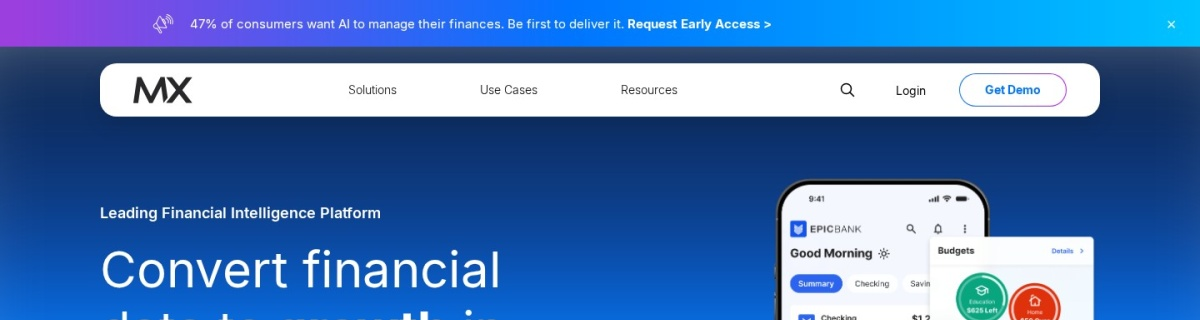
MX is a financial data platform that connects bank accounts for banks, credit unions and fintech apps, then cleans and enriches the transaction data. Its platform covers account aggregation, verification, enrichment and money-management widgets, with a hosted connect flow for end users.
The trade off is price and sales process. MX publishes no price list and sells custom enterprise contracts, so small teams cannot self-serve or budget from the site. It suits US financial institutions and fintechs that want a managed data partner rather than a bare API.
What we like
Highest G2 rating in this list, 4.7 out of 5
Strong data enrichment and categorisation
Reviewers praise responsive support and partnership
Hosted connect flow for end users
Watch out for
No published pricing or self-serve plan
Only 14 G2 reviews, so the rating is thin
Aimed at institutions more than small startups
Paid plans are custom enterprise contracts by quoteVisit mx.com
02
TrueLayer
4.5/5on G2 (38 reviews, checked Nov 2026)
PricingCustom/yr
Best for Europe and pay by bank
CoverageUK and 22 European countries
Pay by BankYes, instant settlement
Data APIAccounts, transactions, identity
SandboxFree for testing
truelayer.com
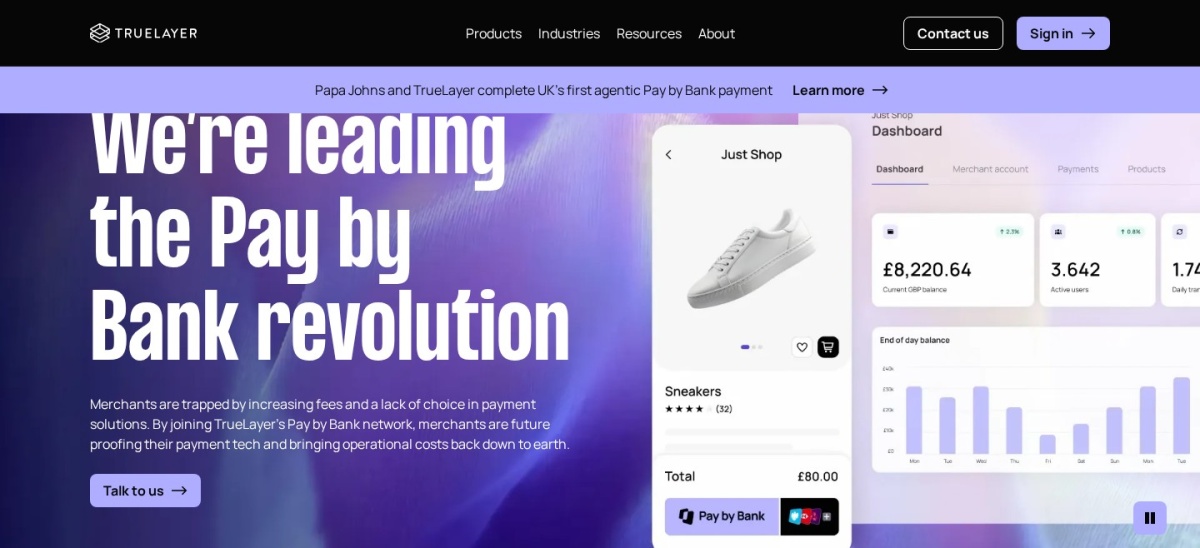
TrueLayer homepage, captured Nov 2026.
TrueLayer is a London open-banking platform that covers account data and pay-by-bank payments across the UK and Europe. Its Data API reads accounts, balances and transactions, while Payments moves money directly between bank accounts without cards, and it holds its own FCA and Central Bank of Ireland licences.
The trade off is price transparency. TrueLayer publishes no rate card and prices live data and payments by contract, though the sandbox is free for testing. It suits merchants and platforms in the UK and Europe that want data and payments from one regulated vendor.
Codat is a unified API for small-business financial data, covering accounting, banking and commerce systems through one integration. Lenders use it for underwriting, and software vendors use it to pull live ledger data instead of building dozens of direct integrations.
The trade off is fit. Codat reads business systems, not consumer bank accounts, so it replaces Plaid only for accounting-led jobs such as lending and embedded finance. It suits lenders and B2B platforms; consumer apps that need personal bank data should look at MX or TrueLayer.
What we like
Rated 4.6 out of 5 on G2 from 28 reviews
One API across accounting, banking and commerce
Reviewers praise support and fast integration
Free to test before talking to sales
Watch out for
No published pricing
Not a consumer bank-data replacement
Pricing page routes everything to sales
Production pricing is custom, by connected companyVisit codat.io
04
GoCardless
4.6/5on G2 (310 reviews, checked Nov 2026)
PricingCustom/yr
Best for recurring bank payments
Payment typesDirect debit, pay by bank
Entry price1% per transaction
Monthly feeNone on Standard
Free trial90 days
gocardless.com
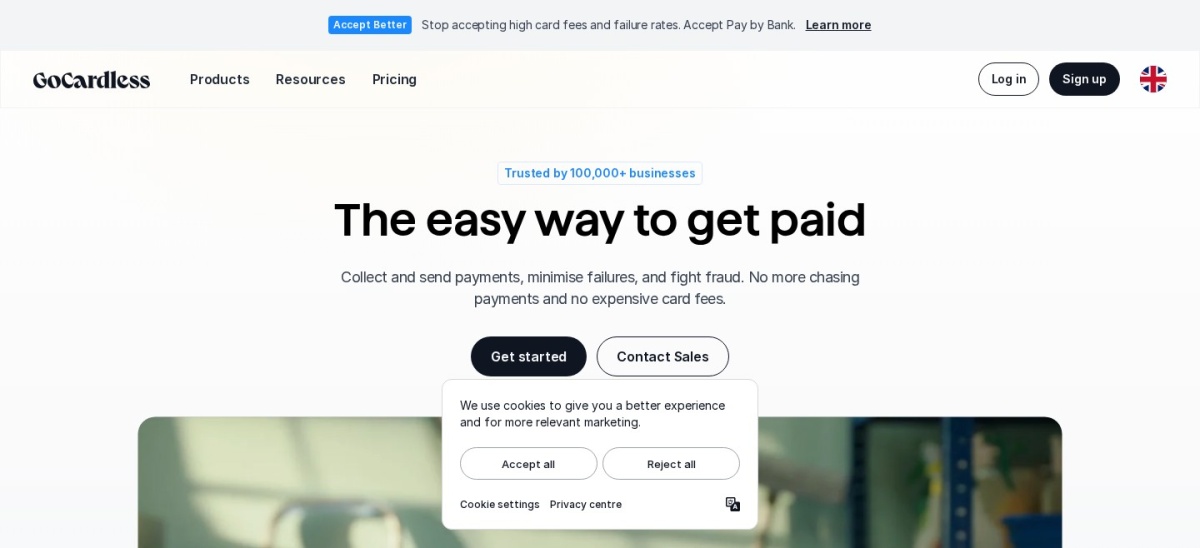
GoCardless homepage, captured Nov 2026.
GoCardless is a bank-payment company that collects recurring and one-off payments directly from bank accounts, through direct debit schemes and open-banking pay by bank. Standard starts at 1% per transaction with no monthly fee, and the platform covers ACH, Bacs and SEPA rails.
The trade off is scope. GoCardless moves money but does not read bank balances or transaction history, so it replaces only Plaid's payment side. It suits subscriptions, invoices and memberships that want bank payments without card fees.
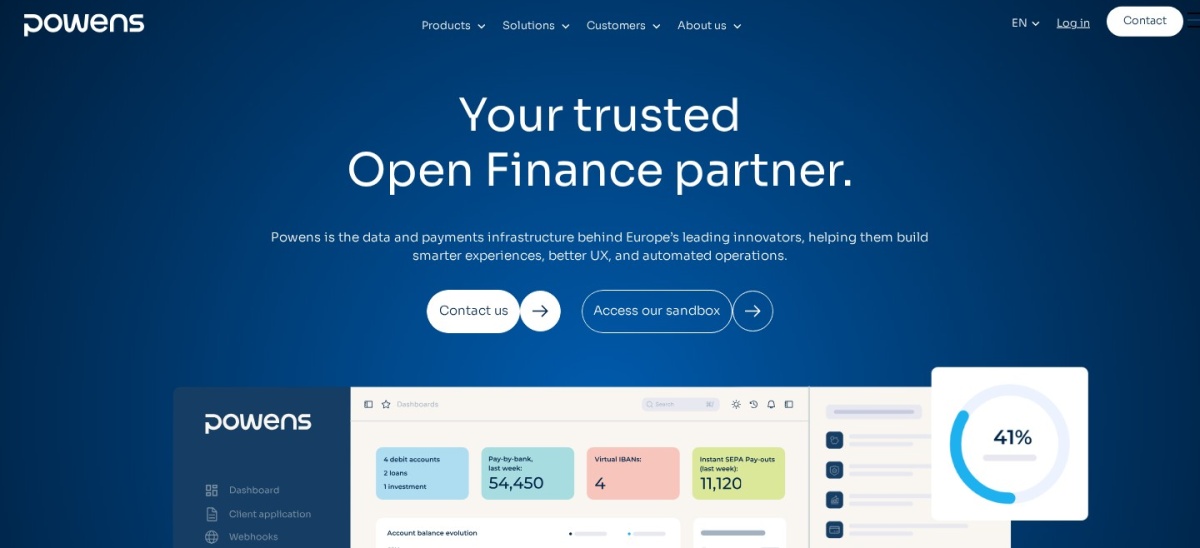
Powens, formerly Budget Insight, is a European open-finance API for account aggregation, enrichment and SEPA payment initiation. One integration covers bank data and payments for product teams building in Europe, with a free sandbox for testing.
The trade off is review depth. Its 4.5 out of 5 G2 rating rests on only 10 reviews, and Capterra shows 3.8 out of 5 from 4 reviews, so treat the score as a weak signal. It suits European teams that need French and wider EU bank coverage in one API.
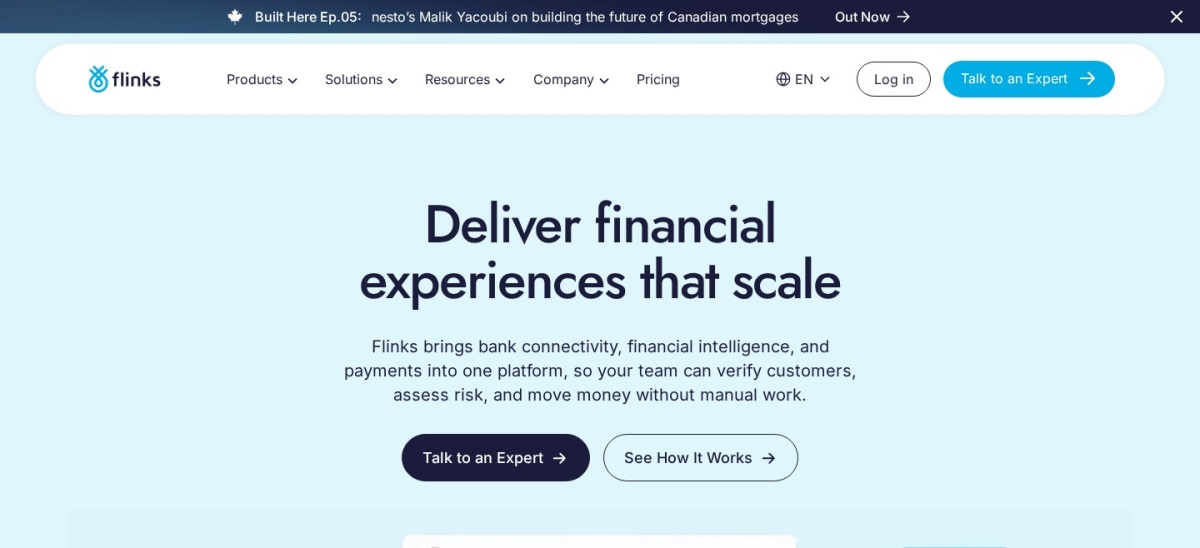
Flinks is a Canadian financial-data platform for bank connectivity, enrichment and payments, built for lenders and fintechs verifying customers and assessing risk. Connect Starter costs $500 a month for 200 monthly unique connections, and Enrich starts at $250 a month for 100 API calls.
The trade off is the contract. Plans carry a monthly minimum commitment and a standard one-year term, and Flinks Pay is quote-based and Canada-only. It suits Canadian teams that want a published price and strong local bank coverage.
What we like
Only published monthly price in this list
Strong Canadian institution coverage
60 G2 reviews, the second-largest base here
No separate platform or integration fees
Watch out for
Monthly minimum and one-year term
Enrich is a separate paid module
US and European coverage is thinner than local rivals
Connect Scale is $1,250 a month for 1,100 connectionsVisit flinks.com
07
Yapily
4.2/5on G2 (3 reviews, checked Nov 2026)
PricingCustom/yr
Best European pay-by-bank API
CoverageEurope, 11+ markets
ProductsData, payments, verification
Bank verificationYes, for Google Cloud
Entry planCustom, by quote
yapily.com
Yapily homepage, captured Nov 2026.
Yapily is a European open-banking infrastructure provider with payment initiation and pay-by-bank products for businesses and payment service providers. Its APIs cover account data, verification and payments, and it supplies bank verification for Google Cloud customers in 11 European markets.
The trade off is evidence. Its 4.2 out of 5 G2 rating rests on only 3 reviews, the thinnest base in this list, and pricing is sales-quoted. It suits European teams that want a developer-first open-banking API and can validate coverage bank by bank.
Mastercard Open Banking homepage, captured Nov 2026.
Mastercard Open Banking, formerly Finicity, is a US open-banking platform for account data, income verification and bank payments. Its Lend, Pay and Manage products serve lenders that need verified income and assets, with tokenized access through Mastercard's network.
The trade off is the rating. It scores 3.7 out of 5 on G2 from only 9 reviews, the lowest rated pick here, and reviewers report delays refreshing financial data. It suits US lenders that value Mastercard's network and verification depth over review scores.
What we like
Mastercard network behind the data
Built for lending and income verification
Tokenized access, no credential sharing
Verification, aggregation and payments in one platform
Bank data vs bank payments: which job are you hiring for?
A data API replaces Plaid's aggregation. It reads accounts, balances and transactions with the user's permission and returns structured data your product builds on.
A payments API answers a different question: how does money move. GoCardless collects by direct debit, TrueLayer settles pay by bank instantly, and neither reads a balance.
Many products end up needing one of each. A lender, for example, may run Mastercard Open Banking for verification and GoCardless for repayments, under two contracts.
Decide the job first, then compare coverage and price inside that group. Comparing GoCardless with MX on price alone misses the point, because they do not do the same job.
How we chose
We started from every open-banking vendor named as a Plaid competitor in G2 comparisons and buyer guides, then kept the eight with a verifiable numeric rating on G2.
Prices come from each vendor's pricing page, checked on 29 November 2026. Ratings and review counts come from G2 on the same day. Seven of the eight publish no monthly price, so the list shows Custom and the body says what is known.
We left out vendors with no verifiable rating, including Akoya, Belvo, Salt Edge and Tink. No vendor paid for a place, and this list is built from pricing pages, documentation and public reviews, not from product testing.
How to choose a Plaid alternative
Start with your customers' banks, then match the job to the vendor.
List the banks your customers actually use. Check each one live on the vendor's coverage page. A vendor with 15,000 institutions can still miss your top three banks.
Decide whether you need data, payments, or both. Data APIs read accounts; payment APIs move money. Only TrueLayer and Mastercard Open Banking do both here.
Ask for a quote against real volumes. Seven of the eight vendors price by quote or by usage, so bring monthly connection and transaction counts to the sales conversation.
Test the sandbox before you sign. TrueLayer, Powens and Codat all offer free testing. A sandbox that connects to your test banks beats any sales deck.
FAQ
What is the best Plaid alternative in 2026?
MX is the best Plaid alternative for most US teams. Its bank-account connectivity and data enrichment are rated 4.7 out of 5 on G2 from 14 reviews, and it covers aggregation, verification and enrichment in one platform.
How much do Plaid alternatives cost?
Most publish no monthly price. Flinks is the exception, with Connect from $500 a month, and GoCardless charges 1% per transaction with no monthly fee. MX, TrueLayer, Codat, Powens, Yapily and Mastercard Open Banking all price by quote.
Is there a free Plaid alternative?
Not as a full replacement. TrueLayer, Powens and Codat offer free sandboxes or free testing, and GoCardless gives a 90-day free trial, but live bank data always runs on a paid or quoted plan.
Which Plaid alternative is best for Europe?
TrueLayer is the strongest European pick, rated 4.5 out of 5 on G2 from 38 reviews, with UK and European data plus pay-by-bank payments. Powens and Yapily are the main alternatives for EU-only coverage.
MX vs TrueLayer: which is better?
MX fits US teams, with the highest G2 rating in this list at 4.7 out of 5 and deep enrichment for banks and fintechs. TrueLayer fits European teams, with broader pay-by-bank payments and 38 G2 reviews behind its 4.5 rating.
Can I replace Plaid with GoCardless?
Only for payments. GoCardless collects direct debits and pay-by-bank payments, rated 4.6 out of 5 on G2, but it does not read bank balances or transaction history, so pair it with a data API if you need both.
SaaS SEO and WordPress specialist with about 8 years of experience. Rakib compares WordPress plugins, themes, hosting and software using public pricing, documentation and user reviews. See how we rank.