Perfion is the best PIM software for electronics brands that run on Microsoft Dynamics or SAP, with native ERP links and a 4.6 out of 5 G2 rating from 40 reviews. Pick inriver for selling across many markets, or Plytix if you are a small brand starting with a free plan.
How we make this list: we compare pricing pages, product documentation and public user reviews, then re-check every price before each update. No product paid for a place. Disclosure.
Perfion leads for electronics makers on Dynamics or SAP, with native ERP links and a 4.6 out of 5 G2 rating from 40 reviews.
inriver is the multi-market pick: completeness scoring flags missing specs before a channel rejects a listing.
Akeneo Growth starts at $45,000 a year, while Pimcore Professional starts at $9,900 and Plytix Pro at $149 a month.
Four of the nine tools publish no starting price: Perfion, inriver, Catsy and Sales Layer all need a quote.
Catsy has the highest G2 rating here at 4.8 out of 5 from 156 reviews; Apimio's 4.5 rests on a single review.
What should PIM software for electronics brands handle?
Electronics catalogs break on specs first. A TV, a laptop or a sensor can carry dozens of attributes — voltage, wattage, dimensions, compatibility, certifications — and one wrong value can send a listing back from a retailer or a marketplace.
A good PIM keeps one record per product with those specs, images, manuals and datasheets together. Our guide on adding products in WooCommerce shows how messy a catalog gets when that data lives in spreadsheets.
Syndication is the second job. The PIM should push each channel its own format — a store, Amazon, a distributor feed — without retyping specs, and hold back products that are missing a required field.
ERP links matter most for makers. If the ERP already holds stock, cost and supplier data, the PIM should read it, not duplicate it — which is why Perfion and inriver lead this list for manufacturers.
The 9 best PIM software tools for electronics brands
01
Perfion
4.6/5on G2 (40 reviews, checked Nov 2026)
PricingQuote/yr
Best ERP-native PIM for electronics makers
ERP linksDynamics 365, SAP Business One
Languages71
Time to implementAbout 3 months
Paid planQuote only
perfion.com
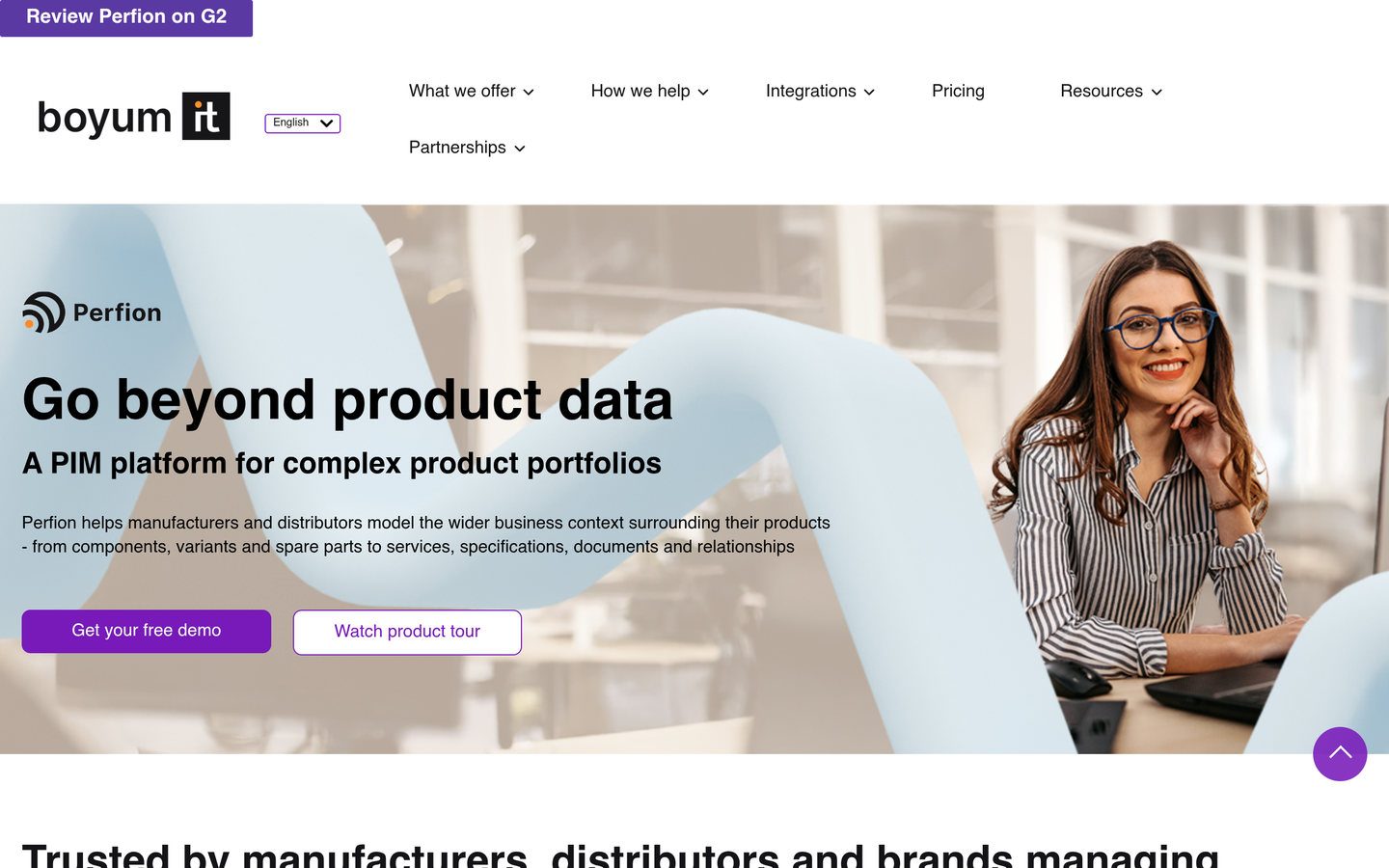
Perfion homepage, captured Nov 2026.
Perfion is a PIM from Boyum IT Solutions built for manufacturers and distributors that keep product data close to their ERP. It models components, variants, spare parts, services, specifications, documents and relationships in one place, and it links natively with Microsoft Dynamics 365 and SAP Business One. The Supplier Portal and Content Store add supplier collaboration and multi-channel publishing.
The trade off is price transparency. Perfion publishes no prices, so budgeting means a quote tied to modules and catalog size, and setup runs through a partner over about three months. It suits electronics makers and distributors that already run Dynamics or SAP and want the ERP to stay the system for transactions.
What we like
Native Dynamics 365 and SAP Business One links
Models parts, variants and spare parts well
71 languages for multi-market catalogs
Modular pricing, pay for what you use
Watch out for
Quote-only pricing, no published starting price
Partner-led setup takes about three months
No free plan or free trial
Paid modules add DAM, print publishing and supplier portalVisit perfion.com
02
inriver
4.2/5on G2 (168 reviews, checked Nov 2026)
PricingQuote/yr
Best for electronics brands in many markets
Gartner 2026Leader, Magic Quadrant for PIM
Brands using it1,600+
Catalog size1,000 to 1,000,000+ items
Paid planQuote only
inriver.com
inriver homepage, captured Nov 2026.
inriver is a PIM aimed at manufacturers and brands that sell the same products in many markets and languages. It tracks how complete each product record is and flags missing specs, images or compliance marks before a channel rejects the listing. It also covers syndication and the digital shelf, so listings stay correct on retailer sites.
The trade off is cost and setup. Pricing is quote only, reviewers call it expensive, and onboarding is a project with data modeling and channel mapping that takes weeks. It suits mid-sized and large electronics brands that sell across borders and need product data to stay correct in every language.
What we like
Completeness scoring catches gaps before publish
Strong multi-language and multi-channel support
Named a Leader in the 2026 Gartner Magic Quadrant
Used by more than 1,600 brands
Watch out for
Quote-only pricing with high cost flagged in reviews
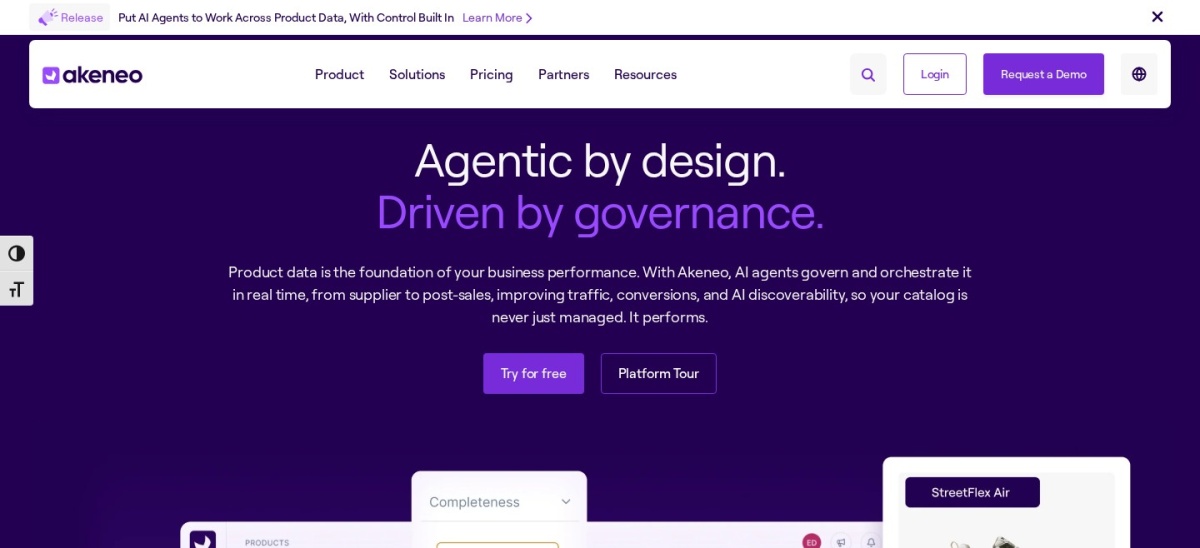
Akeneo is a mainstream PIM, now sold as Akeneo Product Cloud, that manages product experience data across channels. It handles catalogs with many SKUs and attributes, with enrichment workflows, a rules engine and translation management for localised listings. A free Community Edition is available to self-host.
The trade off is the jump from free to paid. The Community Edition is limited, and the Growth package starts at $45,000 a year, with enrichment workflows and activation modules reserved for higher tiers. It suits mid-market and enterprise electronics brands with complex attribute models and many locales.
What we like
Flexible attribute and product hierarchy models
Strong enrichment workflows and rules engine
Free Community Edition to start
AI features included at no extra cost
Watch out for
Growth starts at $45,000 a year
Best features sit in higher tiers
Community Edition is limited next to paid plans
Growth adds core enrichment, rules and catalog toolsVisit akeneo.com
04
Salsify
4.4/5on G2 (137 reviews, checked Nov 2026)
Starts at$1,500/mo
Best for retailer syndication and digital shelf
Paid planBasic $1,500/mo
RetailersAmazon, Walmart, Target
IncludesPIM, DAM, syndication, analytics
Free trialNot listed
salsify.com
Salsify homepage, captured Nov 2026.
Salsify is a product experience management platform that combines PIM, digital asset management and syndication in one place. It pushes product content to retailers such as Amazon, Walmart and Target in each one's format, and adds digital shelf analytics that show how listings perform. G2 lists a Basic plan at $1,500 a month.
The trade off is cost beyond the headline. Reviewers note extra costs for additional retailer connections and features, and third-party buyer data puts the median contract far above the Basic list price. It suits electronics brands that sell through large retailers and need strict content rules met on every shelf.
Pimcore is an open-core platform that covers PIM, digital asset management, master data and content in one system. Its flexible data model suits electronics catalogs with deep spec hierarchies, compatibility rules and linked documents, and it publishes to many channels. A free Community Edition covers non-production use and smaller businesses.
The trade off is that it is a framework, not a finished app. Plan on a developer or a partner to model the data and build the links, and implementation costs sit on top of the licence. It suits electronics brands with unusual catalogs and technical staff or a partner on hand.
Catsy is a combined PIM and DAM for brands, retailers and distributors that sell across many channels. It centralises product data and images, checks data quality, and publishes catalogs and listings to Shopify, Amazon, Walmart and retailer portals. A 14-day free trial is available, and the Essential plan connects up to 3 Shopify stores.
The trade off is price transparency. Catsy publishes its plan tiers but no dollar prices, so a buyer must request a quote to compare it with published-price rivals. It suits electronics brands that publish the same catalog to a store, marketplaces and retailer portals and want one workflow for specs and assets.
Sales Layer is a cloud PIM for manufacturers, brands, retailers and distributors with multichannel catalogs. It offers flexible data models with classification inheritance, bulk editing and product feeds, plus a 30-day free trial. G2 reviewers rate it 4.6 out of 5 from 333 reviews, one of the largest review counts in this list.
The trade off is that pricing is quote only. There is no published starting price, so budgeting means asking sales for a figure tied to catalog size, seats and channels. It suits electronics brands that sell heavily through distributors and need dependable feeds more than a retailer network.
Plytix is a cloud PIM and DAM for small and mid-sized brands, built around a spreadsheet-style product grid. The free Standard plan covers a small catalog with unlimited seats and unlimited file storage, and it includes product families, bulk editing and feeds to Shopify, BigCommerce and marketplaces.
The trade off is price by catalog size. Pro starts at $149 a month and climbs as the SKU count grows, so a large electronics catalog costs more than the headline figure, and native ERP depth is limited. It suits small electronics brands that want a free start and a published price path as they grow.
Apimio is a PIM built for Shopify stores whose catalogs have outgrown the Shopify admin. Basic costs $199 a month for one store, 10,000 SKUs, 50 GB of storage and 3 team members, with a Quality Guard that holds incomplete products back from publishing. A 14-day free trial covers the Advanced feature set.
The trade off is scope. Apimio is built around Shopify, so other platforms are not the focus, and feeds, scheduled imports and workflows need Advanced at $399 a month. It suits small electronics brands that sell mainly on Shopify and want to be running fast.
Free plans cover the basics well. Plytix, Pimcore and Akeneo all let an electronics brand start without paying, though the free limits are small.
Paid plans mostly add scale and support. You get more SKUs, more users, more channels and help when imports go wrong.
Quote-only tools hide the bill until you talk to sales. Ask for the price at your SKU count and store count in writing before you migrate a catalog.
If your catalog is under 500 SKUs, start free. Our inventory guide explains how to keep stock counts straight while the catalog moves into a PIM.
How we chose
We started from the PIM tools most often recommended for electronics catalogs, then kept nine with public G2 ratings and a free plan, a free trial or a published price.
Prices come from each vendor's pricing page or vendor-provided G2 pricing, checked on 30 November 2026. Ratings and review counts come from G2 on the same day. Where a vendor shows a sale, the list shows the regular price.
We left out tools with no public rating. No vendor paid for a place, and we do not claim to have used these tools ourselves.
How to choose PIM software for electronics brands
Start with your spec sheets and your sales channels, then match the tool to both.
List your hardest attributes first. Voltage, compatibility, certifications and spare parts decide the data model. A tool that cannot model them will force workarounds from day one.
Check the ERP link before anything else. If you run Dynamics or SAP, a native link saves more time than any feature list. Ask for a live import of your own product file.
Count SKUs, stores and languages. Prices here scale with catalog size, seats and channels. Get the quote at your real numbers, not the headline tier.
Trial with a real product range. Import one category with full specs and datasheets, then publish it to one channel. See our variable products guide for how variants should behave.
FAQ
What is the best PIM software for electronics brands?
Perfion is the best pick for electronics manufacturers and distributors, with native links to Microsoft Dynamics 365 and SAP Business One and a 4.6 out of 5 G2 rating from 40 reviews. inriver is the stronger choice for selling across many markets.
How much does PIM software for electronics brands cost?
Published prices here run from free to $149 a month for Plytix Pro and $199 a month for Apimio Basic. Akeneo Growth starts at $45,000 a year and Pimcore Professional at $9,900 a year, while Perfion, inriver, Catsy and Sales Layer are quote only.
Is there a free PIM for electronics brands?
Yes. Plytix has a free Standard plan for a small catalog, and Pimcore and Akeneo both have free open-source editions. Free plans have small limits, so check the SKU and user caps before you commit.
Which PIM is best for a small electronics brand?
Plytix is the best start for a small electronics brand. Its free plan covers a small catalog with unlimited seats, Pro starts at $149 a month, and G2 reviewers rate it 4.7 out of 5 from 452 reviews.
Perfion or inriver: which is better for electronics?
Perfion fits makers and distributors that run Microsoft Dynamics or SAP, because it links natively with those ERPs. inriver fits brands selling the same products in many markets, with completeness scoring that flags missing specs before a channel rejects a listing.
Can a PIM manage datasheets and compliance documents?
Yes, most tools in this list store manuals, datasheets and compliance documents beside the product record. Perfion models documents and relationships directly, while Pimcore and Catsy bundle a DAM for images, manuals and certificates.
SaaS SEO and WordPress specialist with about 8 years of experience. Rakib compares WordPress plugins, themes, hosting and software using public pricing, documentation and user reviews. See how we rank.