Activepieces is the best open source n8n alternative for most teams: its MIT-licensed builder is free to self-host and rated 4.8 out of 5 on G2. Pick Node-RED for free event-driven flows, or Kestra if you prefer declarative YAML orchestration.
How we make this list: we compare pricing pages, product documentation and public user reviews, then re-check every price before each update. No product paid for a place. Disclosure.
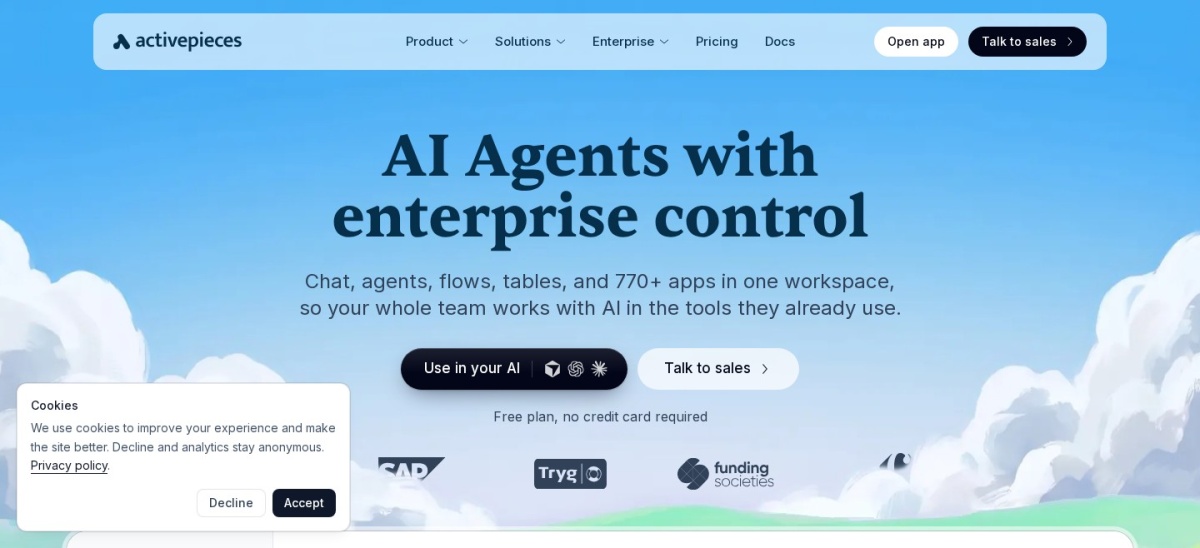
Activepieces is the closest like-for-like swap: a visual builder, 770+ integrations and an MIT licence, with Plus at $20 a month.
Node-RED and Apache Airflow are completely free, with no paid plan at all, but both need more technical skill than n8n.
Kestra, Prefect, Temporal and Dagster are code-first orchestrators, not visual builders, so they suit developers and data teams.
Windmill's G2 rating of 5.0 rests on only 2 reviews, and Dagster's 4.5 on only 2, so treat those two scores as thin evidence.
Every tool in this list is free to self-host; paid plans start at $10 a month for Dagster Solo and reach $120 a month for Windmill Enterprise.
How do you choose the best open source n8n alternatives?
The licence is the first thing to check. n8n itself uses a fair-code licence, so teams that want to embed or resell their automation look for a truly open licence such as MIT or Apache 2.0 instead.
The builder decides who can use it. Activepieces and Node-RED keep a visual canvas, while Kestra, Prefect, Temporal, Airflow, Windmill and Dagster expect code, YAML or Python, so match the tool to the people who will own the workflows.
Self-hosting is free, but it is not free of work. You own upgrades, backups and monitoring, so a small team should weigh the free cloud tiers against the hours spent running a server. Our guide on how to use the WordPress REST API shows the same trade-off at a smaller scale: an API you control is flexible, and it is also yours to maintain.
Pricing units differ more than headline prices. Activepieces charges per credit, Temporal per million actions and Dagster per credit on top of a monthly fee, so count your volume before comparing plans. Our guide on what the WordPress REST API is explains how APIs move data between apps, which is the same idea behind most of these workflows.
Review counts matter as much as scores. A 4.8 from 142 reviews says far more than a 5.0 from 2, so check the base behind every rating in this list before you decide.
Activepieces is a visual workflow builder with MIT-licensed core code and more than 770 integrations, called pieces. The free cloud plan includes 1,000 credits a month and up to 5 users, and the Community Edition is free to self-host on your own server.
The trade off is control. The builder is simpler than n8n, so power users who want fine control over data may find it limiting, and runs past the Plus allowance cost $0.007 per credit. It suits small teams that want a like-for-like n8n swap without fair-code licence limits.
What we like
MIT licence, with no fair-code limits
Free self-hosting and a free cloud plan
AI agents with approval pauses and MCP support
More than 770 integrations
Watch out for
Builder is simpler than n8n, with less fine control
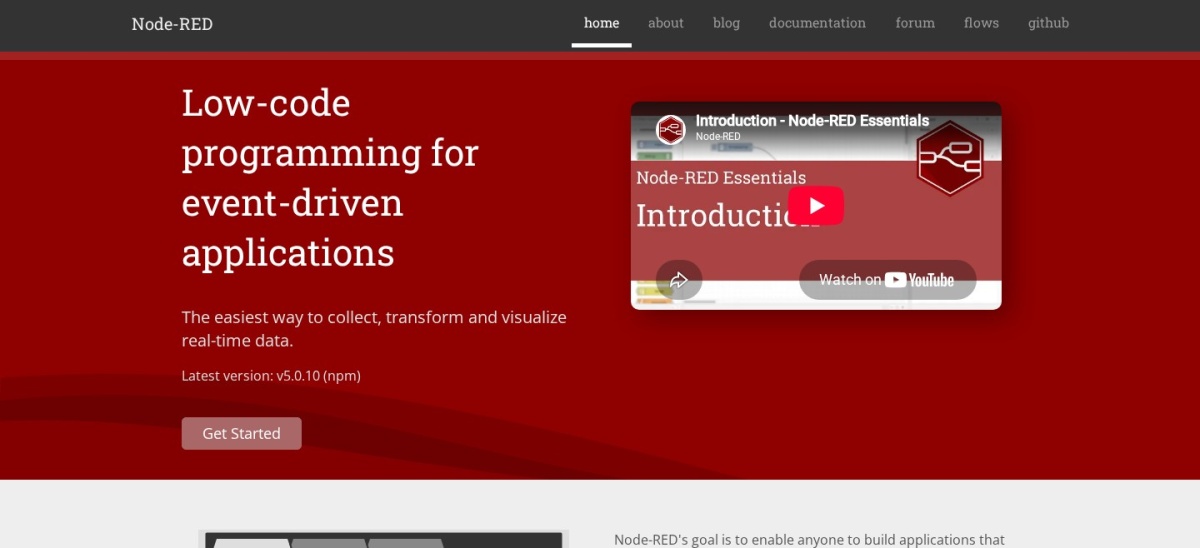
Node-RED is a low-code, flow-based editor that runs on Node.js and is maintained under the OpenJS Foundation. Version 5.0.10 is current, and thousands of community nodes cover HTTP, MQTT, databases and many web APIs.
The trade off is polish. There are no polished connectors for marketing tools such as HubSpot, and no built-in AI agent features like n8n. It suits anyone who wants a completely free, lightweight tool for webhooks and data plumbing.
What we like
Completely free, with no paid tier
Runs on almost any hardware
Large library of community nodes
Watch out for
Weak marketing-app connectors
No built-in AI agents
Flows get hard to read at scale
No paid plan; support comes from the community or FlowFuseVisit nodered.org
03
Kestra
4.6/5on G2 (25 reviews, checked Nov 2026)
PriceFree
Best declarative YAML orchestration
LicenceApache 2.0
Plugins2,600+
FlowsUnlimited, self-hosted
Paid planCloud, usage-based
kestra.io
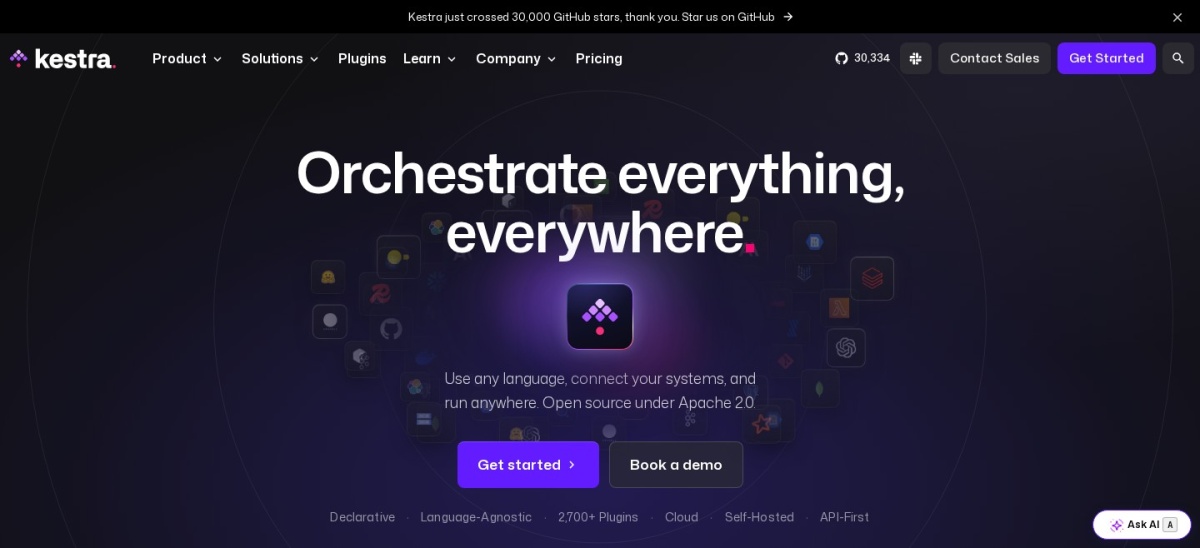
Kestra homepage, captured Nov 2026.
Kestra is an open-source orchestration platform where workflows are declared in YAML, with a visual editor that stays in sync and Git-based versioning. The free Core edition includes more than 2,600 plugins, scheduling and unlimited flows and executions.
The trade off is governance. SSO, role-based access, audit logs and a secrets manager are in the paid Enterprise edition, which is priced per instance by quote, and Cloud has no published rate. It suits data and operations teams that want declarative workflows.
What we like
Free Core with unlimited flows
YAML flows are self-documenting
More than 2,600 plugins
Watch out for
Governance features need a sales quote
No self-serve paid plan
YAML learning curve for non-developers
Enterprise adds SSO, audit logs and support by quoteVisit kestra.io
04
Prefect
4.5/5on G2 (125 reviews, checked Nov 2026)
Paid from$100/mo
Best light start for Python teams
DefinitionPython decorators
Free planHobby, 2 users
Starter$100/mo, 3 users
BillingBy seats, not volume
prefect.io
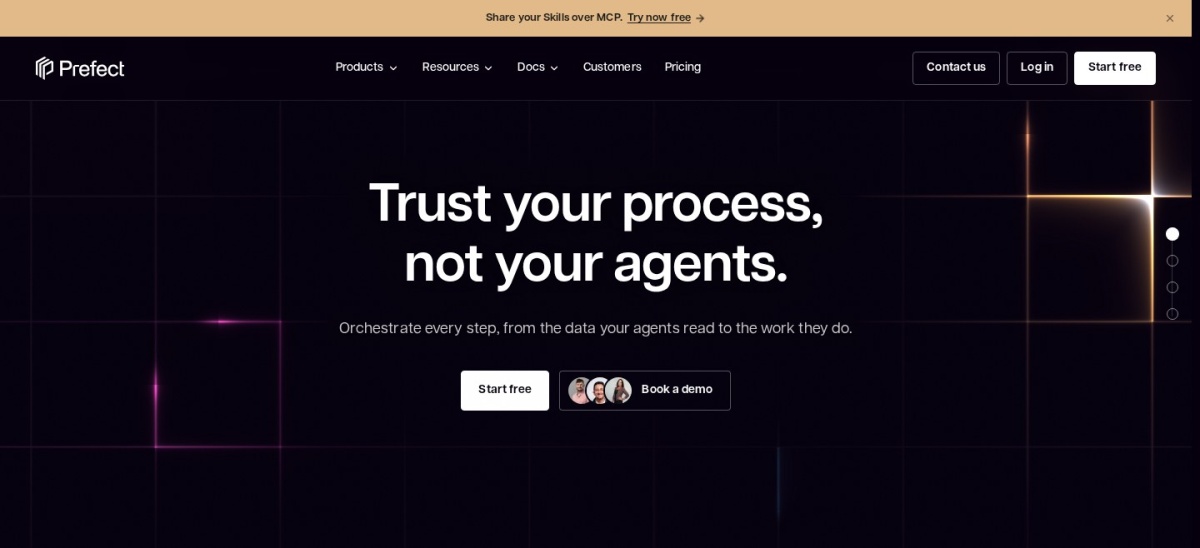
Prefect homepage, captured Nov 2026.
Prefect is a Python-native orchestration platform where a plain function becomes a workflow with a decorator, adding scheduling, retries and observability. The free Hobby tier covers 2 users and 5 deployments with 500 serverless minutes a month.
The trade off is price by seats. Starter costs $100 a month for 3 users, and the Team plan charges $100 per user a month, so a growing team pays more per head. It suits Python-first data teams that want the lightest setup.
What we like
Lightest setup of the code-first tools
Flat pricing by seats, not volume
Free Hobby tier with full core
Watch out for
Team plan is $100 per user a month
Weaker for long-lived business processes
Annual pricing only on sales-assisted plans
Starter adds 3 users and 20 deployments for $100 a monthVisit prefect.io
05
Temporal
4.5/5on G2 (46 reviews, checked Nov 2026)
Paid from$50/1M actions
Best for durable, long-running workflows
DefinitionCode, not DAGs
Free tier$150 cloud credits
Cloud price$50 per 1M actions
SDKsGo, Java, Python, TS, .NET
temporal.io
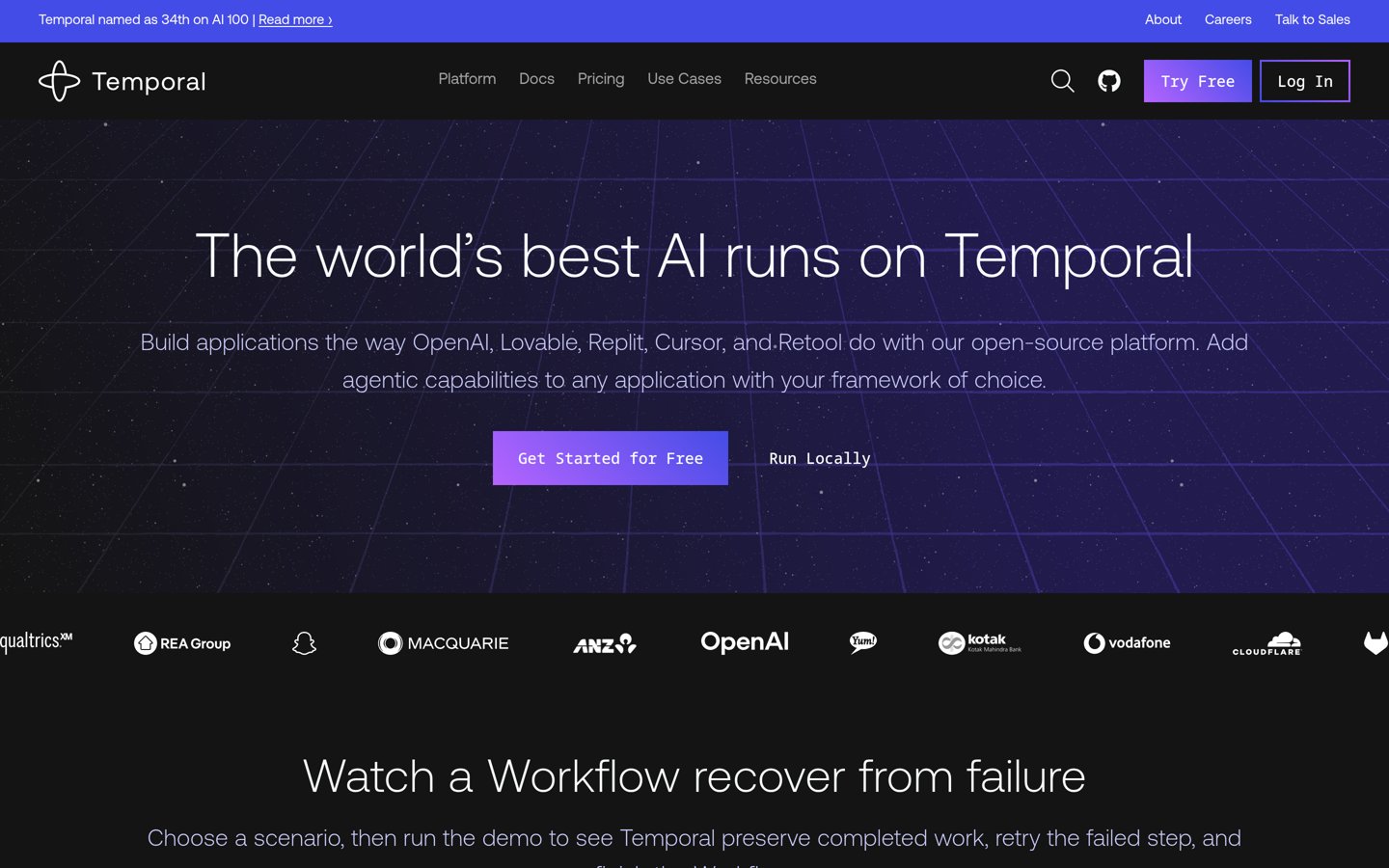
Temporal homepage, captured Nov 2026.
Temporal is a code-first durable execution platform where workflows are written as ordinary code and the platform records every step. The open-source server is free to self-host, and Temporal Cloud starts at $50 per million actions with $150 in free credits.
The trade off is billing. Usage-based pricing means a busy system needs careful estimates of actions and storage, and there is no fixed monthly plan to budget against. It suits engineering teams running long-lived processes that must survive failures.
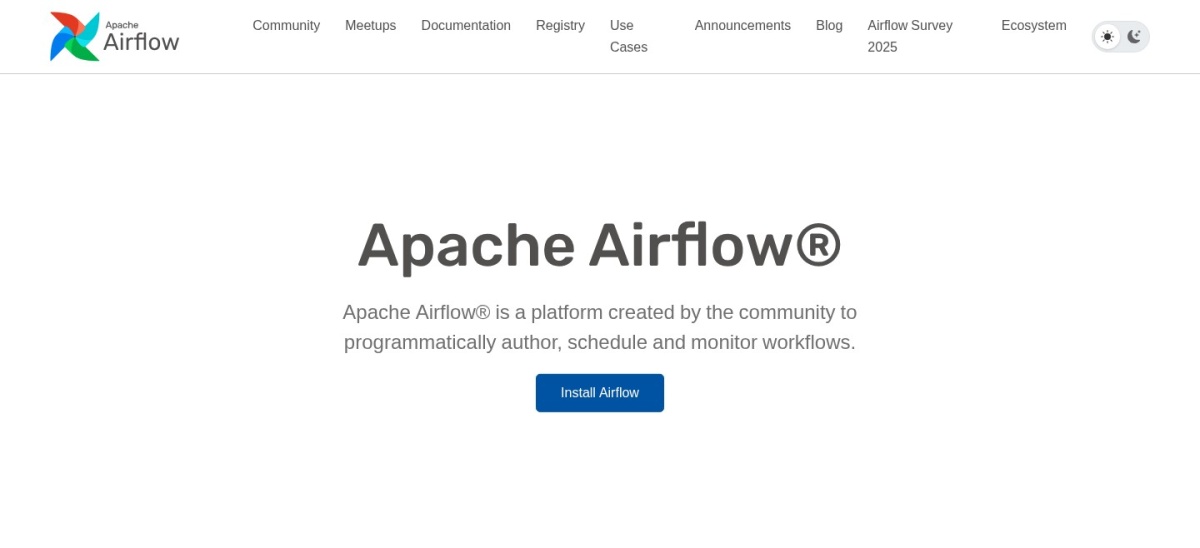
Apache Airflow is the open-source standard for data pipeline orchestration, defining pipelines as Python DAGs with a scheduler, a web UI and a large library of provider integrations. It is free to self-host under the Apache licence.
The trade off is operations. Running Airflow well in production means managing the scheduler, workers and upgrades yourself, and G2 reports a typical setup time of 3 months. It suits data engineering teams with Python expertise.
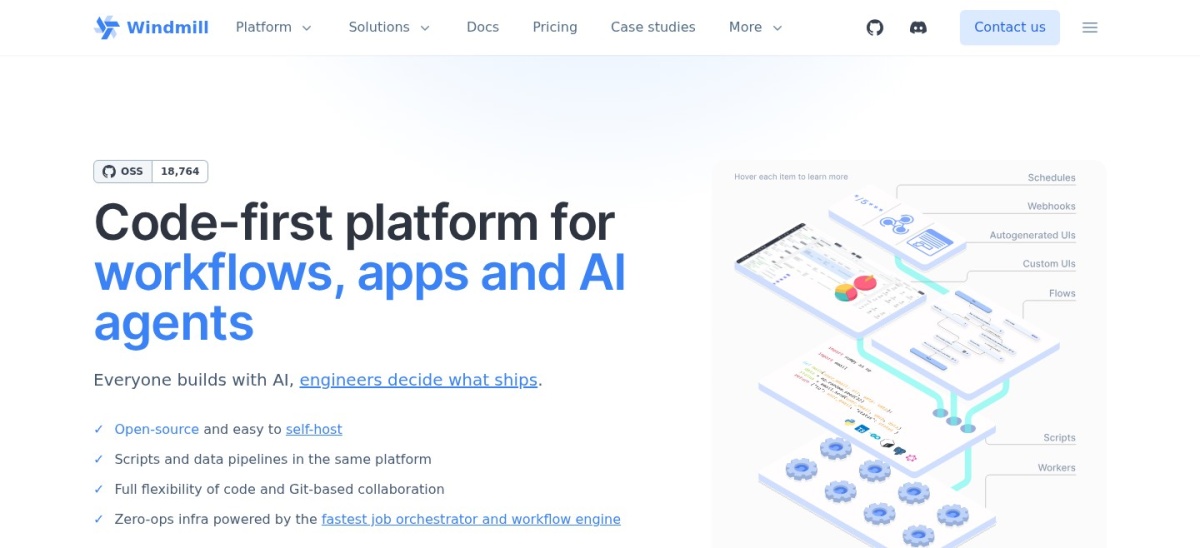
Windmill is an open-source, code-first platform that turns scripts in TypeScript, Python, Go, SQL and more than ten other languages into workflows, scheduled jobs and internal apps. The free Community Edition gives unlimited executions for up to 50 users.
The trade off is openness and audience. The core is AGPL-3.0, but the Community Edition images also contain proprietary code, and the G2 rating rests on only 2 reviews. It suits developer teams that already write scripts and want them run reliably.
What we like
Unlimited executions in the free edition
Scripts in more than ten languages
Git-based deployment with environments
Watch out for
G2 rating rests on only 2 reviews
Few ready-made connectors
Non-coders take time to get productive
Enterprise adds SAML, audit logs and support from $120 a monthVisit windmill.dev
08
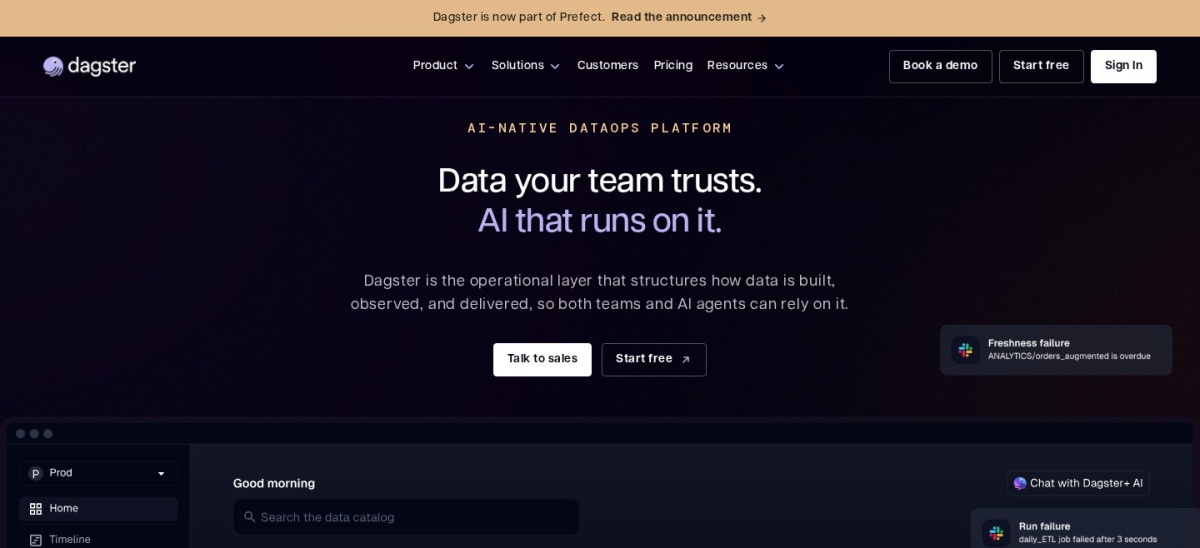
Dagster
4.5/5on G2 (2 reviews, checked Nov 2026)
Paid from$10/mo
Best asset-based data orchestration
ModelSoftware-defined assets
LineageBuilt in, asset-level
Free tierOpen-source core
Solo$10/mo plus credits
dagster.io
Dagster homepage, captured Nov 2026.
Dagster is an asset-based orchestrator that treats data assets, not tasks, as the unit of work, inferring execution order and tracking lineage and asset health automatically. The open-source core is free, and Dagster+ Solo costs $10 a month plus credits.
The trade off is the thin review base. G2 shows a 4.5 rating from only 2 reviews, so the score says little, and reviewers warn of a steep learning curve. It suits modern data teams that think in assets and want dbt integration.
What we like
Asset lineage and health built in
Cheapest managed start in this list
Strong dbt integration
Watch out for
G2 rating rests on only 2 reviews
Steep learning curve
Credit usage adds up with every run
Solo adds managed hosting for $10 a month plus creditsVisit dagster.io
Free vs paid: what the free tiers really cover
Free tiers in this list are real plans, not trials. Activepieces, Node-RED, Kestra, Prefect, Temporal, Airflow, Windmill and Dagster all let you run a small setup without paying, and Node-RED and Airflow have no paid plan at all.
The limits that bite first are users, governance and volume. Kestra keeps SSO and audit logs for Enterprise, Windmill caps the free edition at 50 users, and Activepieces, Temporal and Dagster all meter usage once the free allowance runs out.
If your workflows run a business process every day, budget for the paid tier from the start. A failed overnight workflow costs more than a month of the cheapest plan in this list.
How we chose
We started from the tools most often named as open source n8n alternatives, then kept only those with a free self-hosted edition and a public rating on G2.
Prices come from each vendor's pricing page, checked on 29 November 2026. Ratings and review counts come from G2 on the same day. Where a vendor shows a usage-based price, the list shows the published unit rate.
We left out Automatisch and Huginn, which have no public rating on G2, Capterra or Trustpilot, and Camunda, whose current platform is not fully open source. No vendor paid for a place, and we do not claim to have used these tools ourselves.
How to choose an open source n8n alternative
Start with who will build the workflows, then check the licence and the hosting you are willing to run.
List every app your workflows must touch. Count the connectors you cannot replace. Activepieces covers most SaaS apps, while Node-RED and the code-first tools need custom nodes or code for the same job.
Decide who builds and maintains the flows. Pick a visual builder such as Activepieces if non-developers will own them, and a code-first tool such as Kestra or Temporal if engineers will.
Check the licence against your plans. MIT and Apache 2.0 licences allow embedding with few limits. Read the AGPL terms on Windmill before embedding it in a commercial product.
Price the volume, not just the plan. Credit, action and per-user billing scale very differently. See how to connect an AI model to WordPress for the same kind of API cost thinking at a smaller scale.
FAQ
What are the best open source n8n alternatives?
Activepieces is the best open source n8n alternative for most teams, with an MIT licence, a visual builder and a 4.8 out of 5 G2 rating from 142 reviews. Node-RED is the best fully free option, and Kestra is the best choice for YAML-based orchestration.
How much does an open source n8n alternative cost?
Self-hosting is free for every tool in this list. Paid cloud plans start at $10 a month for Dagster Solo and $20 a month for Activepieces Plus, while Prefect Starter costs $100 a month and Windmill Enterprise starts at $120 a month.
Is there a completely free open source n8n alternative?
Yes. Node-RED and Apache Airflow are completely free, with no paid plan at all. Both are open source and free to self-host, though both need more technical skill than n8n and neither has a managed free cloud tier.
Which open source n8n alternative is best for beginners?
Activepieces is the best pick for beginners, because it keeps n8n's visual canvas, adds AI agents with approval pauses and offers a free cloud plan with 1,000 credits a month. Node-RED is free but expects more comfort with APIs and devices.
Is Activepieces or Node-RED better than n8n?
Activepieces is better than n8n if the licence matters, because its MIT licence has fewer limits than n8n's fair-code licence. Node-RED is better if you want a completely free tool for event-driven flows, but it has fewer polished SaaS connectors than n8n.
Do I need to self-host an open source n8n alternative?
No. Activepieces, Prefect, Temporal, Dagster and Windmill all offer managed cloud plans, and Activepieces has a free cloud tier. Self-hosting only matters if you want full control of your data or you want to avoid usage-based cloud bills.
Which open source n8n alternative is best for developers?
Kestra is the best pick for developers who want declarative YAML workflows with Git versioning. Windmill suits teams that already write scripts, and Temporal suits teams running long-lived workflows that must survive crashes and deploys.
SaaS SEO and WordPress specialist with about 8 years of experience. Rakib compares WordPress plugins, themes, hosting and software using public pricing, documentation and user reviews. See how we rank.