OpenPhone is the best of these Google Voice alternatives for small teams, with unlimited calls and texts in the US and Canada from 15 dollars a user a month. Nextiva is the cheapest at 10 dollars a user, and Zoom Phone suits teams already on Zoom.
How we make this list: we compare pricing pages, product documentation and public user reviews, then re-check every price before each update. No product paid for a place. Disclosure.
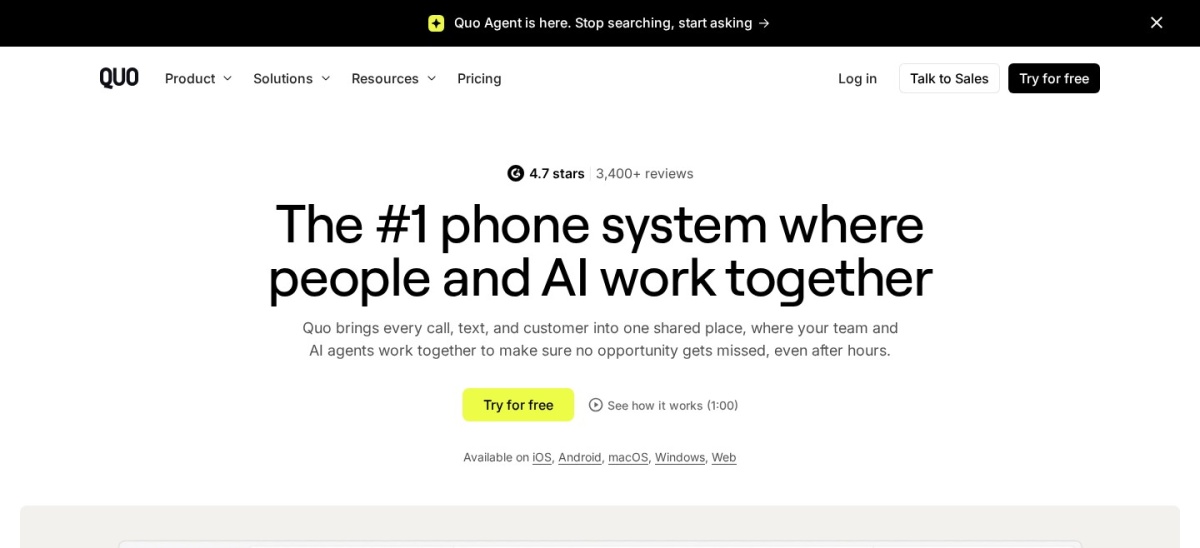
OpenPhone leads for small teams at $15 per user a month, with the highest G2 rating here at 4.7 from 3,431 reviews.
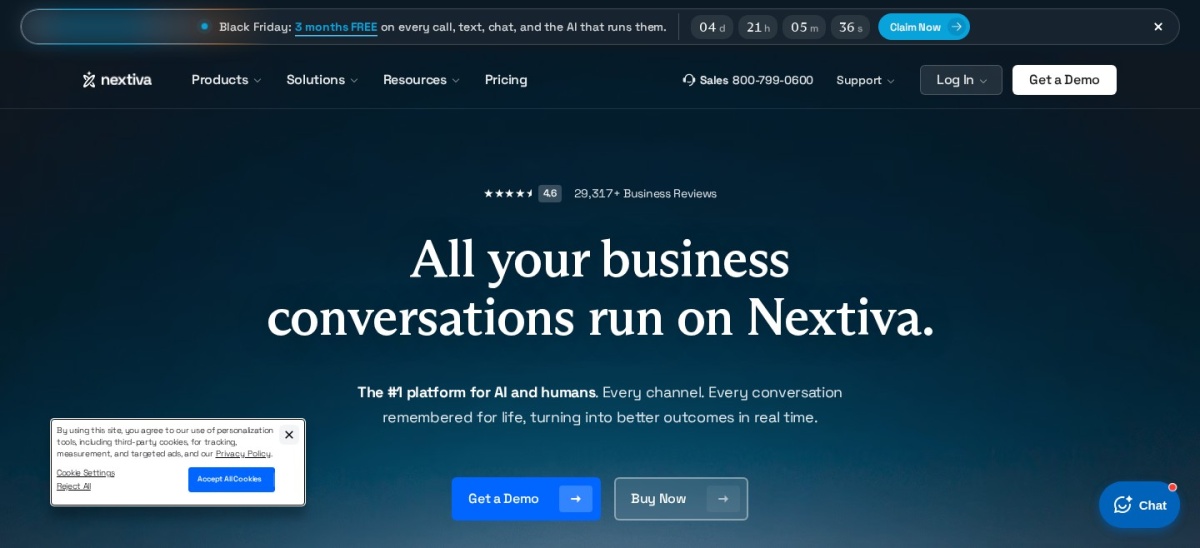
Nextiva is the cheapest start at $10 per user a month on its new Go plan, with an AI receptionist included.
Zoom Phone is the cheapest add-on for Zoom shops, with unlimited US and Canada calling at $16 per user a month.
Dialpad puts AI transcription and call summaries on every plan, starting at $15 per user a month.
Grasshopper is the only flat-rate option at $14 a month per account, not per user, for solo owners.
How do you choose the best Google Voice alternative?
Google Voice is cheap and simple, but it needs Google Workspace, offers little support and has almost no AI, so a good alternative fixes at least one of those gaps without doubling the bill.
Start with price per user. Entry plans here run from 10 to 30 dollars a user a month on annual billing, and most vendors charge far more month to month, so compare the annual rate before you decide.
Then check AI. Dialpad puts transcription and summaries on every plan, Nextiva includes an AI receptionist on every plan, and OpenPhone includes credits for its Sona voice agent, while Google Voice offers none of that.
Finally, check texting and shared numbers. A team that answers texts together needs a shared inbox and a shared number, which rules out the cheapest solo plans and points to OpenPhone, Nextiva or RingCentral.
OpenPhone is a cloud business phone system for small teams that need a shared business number on every device. The Starter plan costs $15 per user a month billed annually and includes unlimited calls and texts in the US and Canada, one number per user, voicemail transcription and credits for its Sona AI voice agent.
The trade off is depth. Phone menus, group calling, AI call summaries and CRM integrations with HubSpot and Salesforce need the Business plan at $23 per user a month. It suits small teams that answer calls and texts together. OpenPhone rebranded to Quo in September 2025, so older reviews use the old name.
Nextiva is a unified communications platform built around reliability and human support, trusted by more than 100,000 businesses. Its new Go plan starts at $10 per user a month on annual billing and includes an AI receptionist on every plan.
The trade off is AI depth. AI transcription and call summaries sit on the Scale plan at $75 per user a month, and the wider Core bundle costs $15 a user a month. It suits traditional offices and teams that need desk phones or HIPAA support.
Zoom Phone is a cloud phone system that adds business calling to the Zoom app your team already uses for video meetings. The US and Canada Unlimited plan costs $16 per user a month billed annually and includes unlimited domestic calling, domestic SMS and MMS, online fax of 50 pages a month, voicemail transcription, auto attendant and call queues.
The trade off is that it is an add-on. Zoom Phone sits on top of a Zoom Workplace license, and the cheaper metered plan at $10.50 per user a month charges per minute on outbound calls. It suits teams already standardized on Zoom.
Dialpad is an AI-first phone system that puts live transcription, call summaries and real-time coaching on every plan. The Standard plan costs $15 per user a month billed annually and includes AI transcription, call recaps, voicemail transcription and unlimited calling in the US and Canada.
The trade off is integrations and monthly billing. CRM integrations need the Pro plan at $25 per user a month with a 3-seat minimum, and paying monthly jumps to $27 a user. It suits sales and support teams that want AI on every call.
RingCentral is the most complete business phone system in this list, combining calling, video meetings, team messaging and fax in one app. The Core plan costs $20 per user a month billed annually and includes unlimited US and Canada calling, video meetings, team chat and call routing.
The trade off is price and tiering. CRM integrations start on Advanced at $25 per user a month billed annually, and monthly billing costs $30 a user. It suits established companies with 50-plus users that need global reach and 600-plus integrations.
Ooma Office is a small-business phone service with month-to-month billing and no annual contract. The Essentials plan costs $19.95 per user a month and includes a virtual receptionist, call routing, a mobile app and voicemail transcription.
The trade off is features. The desktop app, call recording and texting start on Pro at $24.95 per user a month, and Ooma has fewer advanced features than RingCentral. It suits small offices that want a simple phone without a contract.
Vonage is a cloud phone system from the company behind one of the largest communications APIs, sold as Vonage Business Communications. The Mobile plan costs $19.99 per line per month as the regular rate, with a $13.99 promotional rate for the first 12 months ending 31 December 2026.
The trade off is support and tiering. Support quality varies by plan, and CRM integrations sit on the higher Premium and Advanced plans. It suits teams that also build on Vonage APIs.
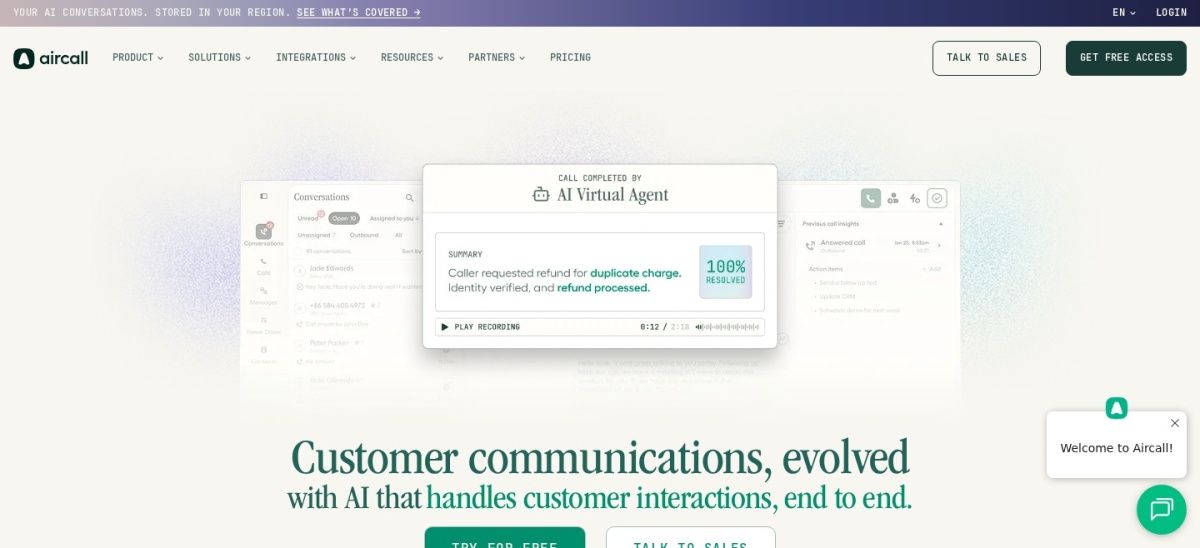
Aircall is a cloud phone system for sales teams that live in a CRM, with deep Salesforce and HubSpot integrations and 250-plus apps in total. The Essentials plan costs $30 per license per month billed annually, with a 3-license minimum and unlimited calling in the US and Canada.
The trade off is price and AI. AI call summaries need the AI Assist add-on from $9 per user a month, and $30 a license is the highest entry price here. It suits sales teams of 10 to 100 people that need CRM data on every call.
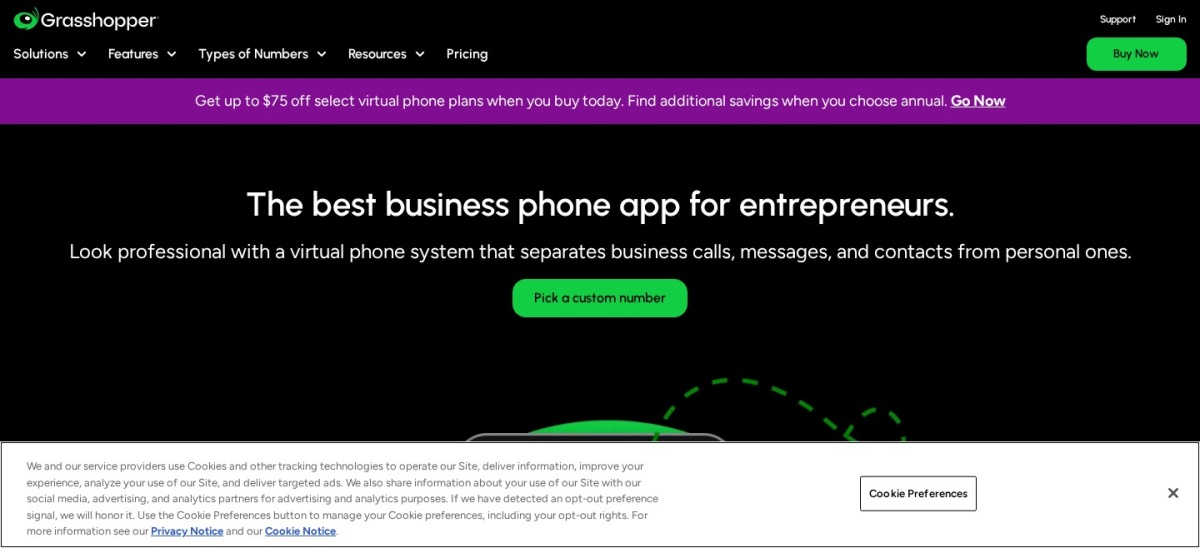
Grasshopper is a virtual phone system that adds a professional business number to your existing mobile phone. The True Solo plan costs $14 a month billed annually for 1 user, 1 number, unlimited minutes and voicemail transcription.
The trade off is scope and rating. There is no call recording on True Solo, features are thin for larger teams, and its 3.9 G2 rating is the lowest in this list. It suits a solo owner who wants a second number without a per-user bill.
Google Voice costs 10 dollars a user a month, but it needs a Google Workspace subscription on top, billed separately from 6 dollars a user a month, so the real floor is higher than it looks.
Support is the second gap. Google Voice offers limited support options, while Nextiva and RingCentral promise 24/7 human support, which matters when the phones stop working.
The third gap is AI. Google Voice has no call transcription, summaries or AI receptionist, while Dialpad, Nextiva and OpenPhone include some AI on every plan.
If you only need a second number on your own mobile, Google Voice is fine. If a team answers calls and texts together, an alternative pays for itself quickly.
How we chose
We started from the business phone systems most often named as Google Voice alternatives in 2026 comparisons, then kept 9 established products with published prices and a public G2 rating.
Prices come from each vendor's pricing page, checked on 29 November 2026, with OpenPhone confirmed on its official pricing page today. Ratings and review counts come from G2 on the same day. Where a vendor shows a sale, the list shows the regular price.
We left out tools with no verifiable rating or no published price. No vendor paid for a place, and we do not claim hands-on testing for this list.
How to choose a Google Voice alternative
Compare the annual per-user price first, then check AI, texting and support.
Count your users and numbers. Per-user pricing compounds with every hire, so a flat plan such as Grasshopper wins for a solo owner, while per-user plans suit teams.
Compare the annual rate, not the monthly one. Most vendors charge far more month to month, so check the annual per-user price before you rank the tools.
Check AI and texting on the entry plan. Dialpad includes transcription on Standard, Nextiva includes an AI receptionist on Go, and shared texting needs at least the Business tier on OpenPhone.
Trial the top two with real calls. Port one number, take a week of calls and texts, and check call quality and support response before moving the whole team.
FAQ
What is the best Google Voice alternative in 2026?
OpenPhone is the best Google Voice alternative for most small teams. Its Starter plan costs $15 per user a month on annual billing, with unlimited calls and texts in the US and Canada, and it is rated 4.7 out of 5 on G2 from 3,431 reviews.
What is the cheapest Google Voice alternative?
Nextiva is the cheapest, with its new Go plan at $10 per user a month on annual billing, including an AI receptionist on every plan. Grasshopper is the cheapest flat rate at $14 a month per account, not per user, for solo owners.
Is there a free Google Voice alternative?
There is no free business phone plan in this list. Google Voice itself is free for personal use, but business use needs Workspace. Every tool here offers a free trial instead, from 7 days on OpenPhone to 30 days on Ooma.
Which Google Voice alternative is best for small teams?
OpenPhone suits small teams best, with a shared business number, unlimited calls and texts, and the Sona AI agent from $15 per user a month. Dialpad is the better pick if the team wants AI call summaries on every plan.
OpenPhone or RingCentral: which is better?
OpenPhone is better for small teams that want a shared number and texting at $15 per user a month. RingCentral is better for larger companies that need video meetings, team chat and 600-plus integrations, from $20 per user a month.
Why switch from Google Voice at all?
Switch if you need real support, AI call summaries, a shared team inbox or call routing beyond the basics. Google Voice stays the cheapest option for a solo owner who already pays for Workspace and only needs a second number.
SaaS SEO and WordPress specialist with about 8 years of experience. Rakib compares WordPress plugins, themes, hosting and software using public pricing, documentation and user reviews. See how we rank.