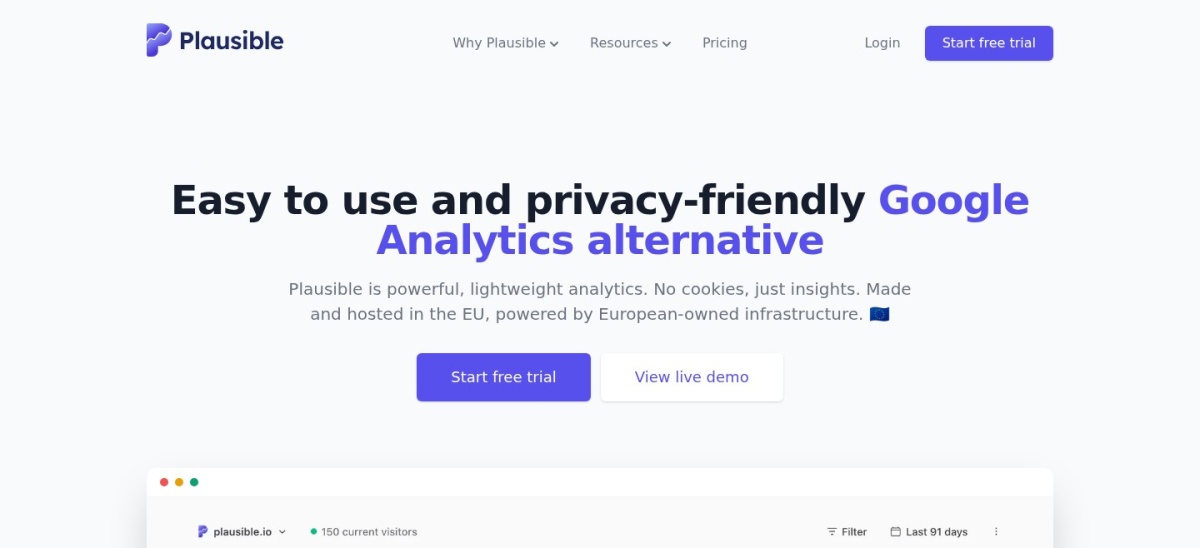
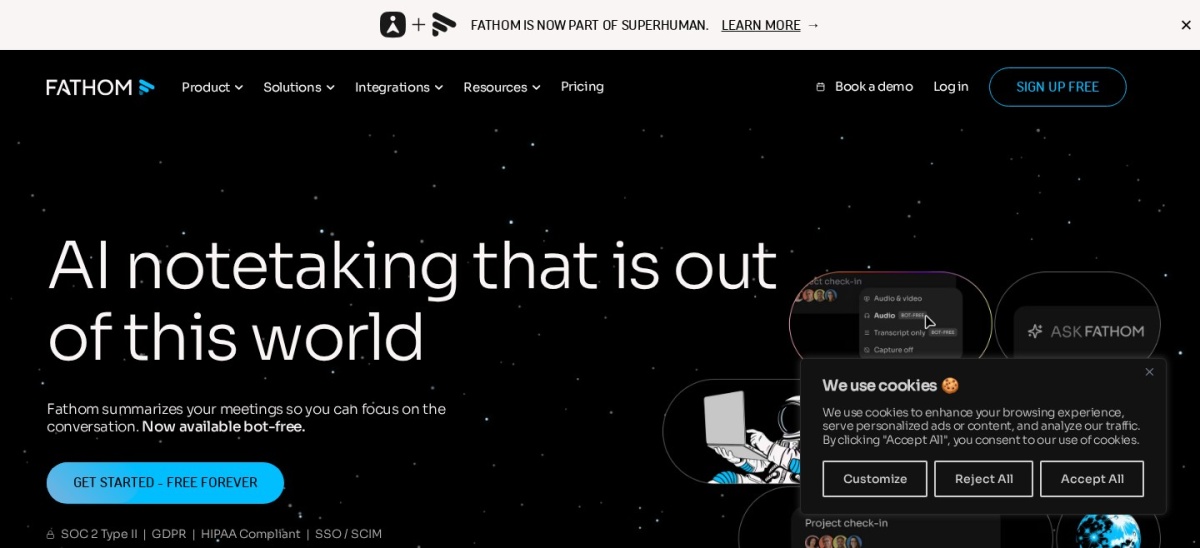
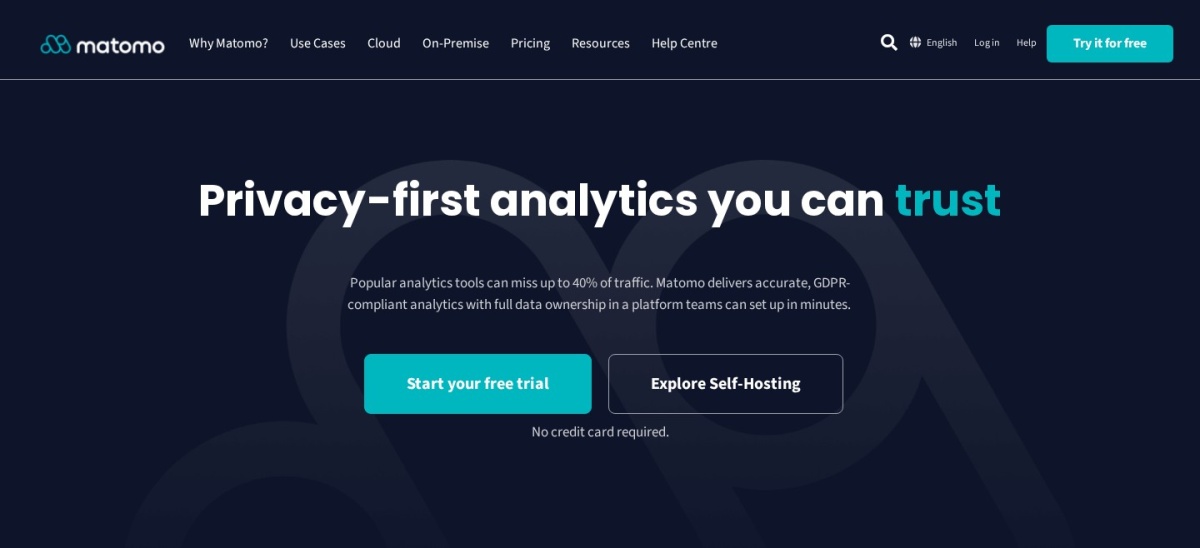
Plausible is the best Google Analytics alternative for most sites, starting at $9 a month with no cookies and no consent banner. Fathom suits teams that want every feature on one $15 plan, while Matomo fits anyone who needs full data ownership.
How we make this list: we compare pricing pages, product documentation and public user reviews, then re-check every price before each update. No product paid for a place. Disclosure.
Plausible leads for simple sites at $9 a month, with no cookies and a 30-day free trial.
Fathom gives every feature on every plan from $15 a month, with unlimited team members.
Matomo is the only self-hosted pick here, with a free open-source edition and full data ownership.
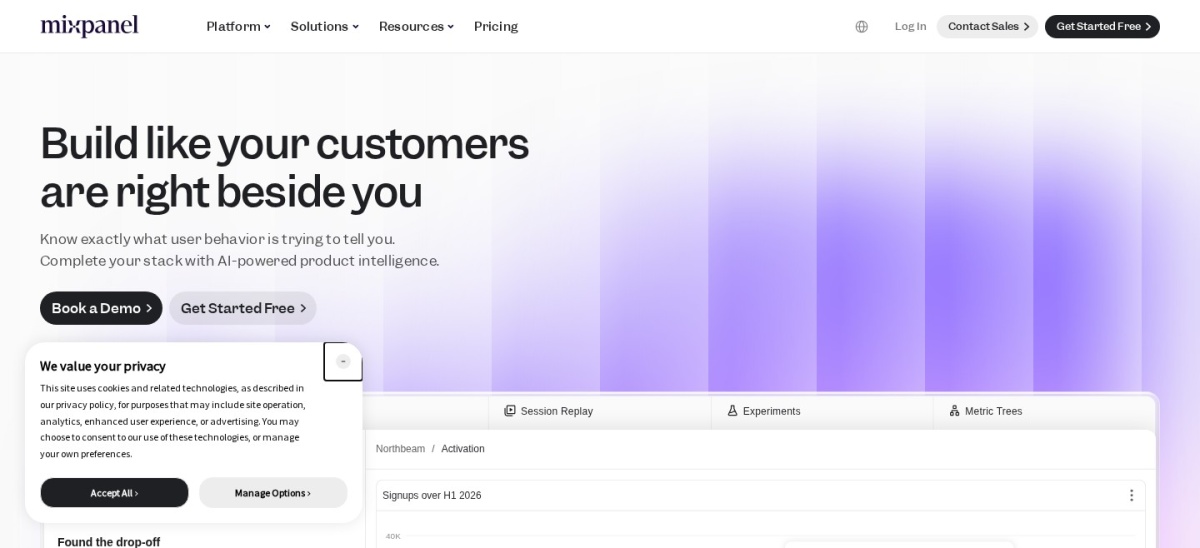
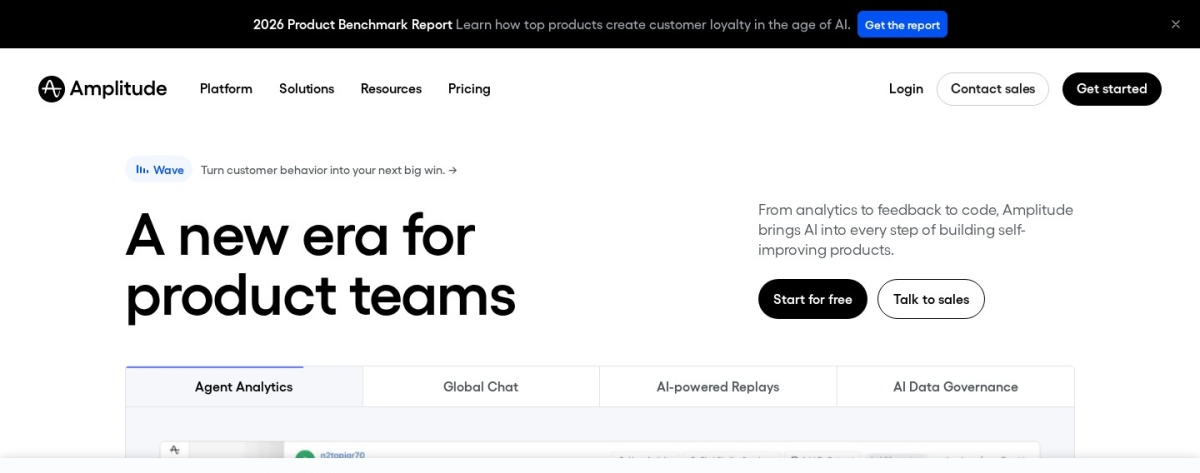
Mixpanel and Amplitude both start free, but paid plans are usage-based and climb with events.
Heap publishes no paid prices at all, so budget it only after a sales quote.
How do you choose a Google Analytics alternative?
Start with privacy law, because it decides the shortlist. Plausible, Fathom, Matomo and Simple Analytics all run without cookies, so most sites need no consent banner.
Match the tool to the question you ask. Simple traffic questions suit Plausible or Fathom, while product questions about funnels and retention need Mixpanel, Amplitude or PostHog.
Watch the billing unit. Plausible and Fathom charge by pageviews, Mixpanel and Amplitude by events, and Matomo Cloud by hits, so compare the unit before the price.
Free plans are real but limited. Mixpanel, Amplitude, PostHog and Heap all start free, yet the free allowance runs out fast on a busy site.
Data ownership is the quiet divider. Matomo and PostHog let you self-host, while the rest keep your data on their servers.
Plausible is a privacy-first analytics platform that tracks pageviews, referrers and goals without cookies or personal data. The Starter plan costs $9 a month for one site and up to 10,000 monthly pageviews, with a 30-day free trial and a Google Analytics import.
The trade off is depth. There are no session recordings or heatmaps, and funnels and revenue tracking wait for the Business plan at $19 a month. It suits small sites that want a simple dashboard and no cookie banner.
Fathom is a privacy-first analytics tool that gives every plan the same full dashboard, with no cookies, no consent banner and unlimited data retention. Plans start at $15 a month for up to 100,000 monthly pageviews across 50 sites, with a 7-day free trial.
The trade off is the pageview meter. Costs rise as traffic grows, and there is no free plan, so a busy site pays more than the $15 entry rate. It suits small businesses that want one honest dashboard without per-seat charges.
Matomo is an open-source analytics platform that mirrors Google Analytics reports while keeping 100% of the data on servers you control. Matomo Cloud starts at $26 a month for 50,000 hits with hosting included, and the On-Premise Community edition is free forever.
The trade off is setup and cost at scale. Self-hosting needs your own server and upkeep, while Cloud pricing climbs with hits and the page's price calculator did not render in our check. It suits teams that need full data ownership and GA-style depth.
Mixpanel is a product analytics platform that tracks events, funnels and retention instead of pageviews, so it shows what users do after they sign up. The free plan includes 1 million monthly events and 10,000 session replays, and Growth costs $100 a month billed yearly at 1.5 million events.
The trade off is cost at scale. Growth pricing rises with event volume and some features need add-ons, so the bill grows as the product grows. It suits product teams that need funnels, retention and cohort analysis.
Amplitude is a product analytics platform with deep funnel, retention and cohort tools, plus session replay, experimentation and guides on higher tiers. The free plan covers 2 million events a month, and Plus starts at $75 a month billed yearly at 3 million events.
The trade off is pricing complexity. Amplitude switched to per-event billing in 2026, Growth and Enterprise are quote-only, and the free tier locks after repeated overages. It suits product teams that want answers without writing SQL.
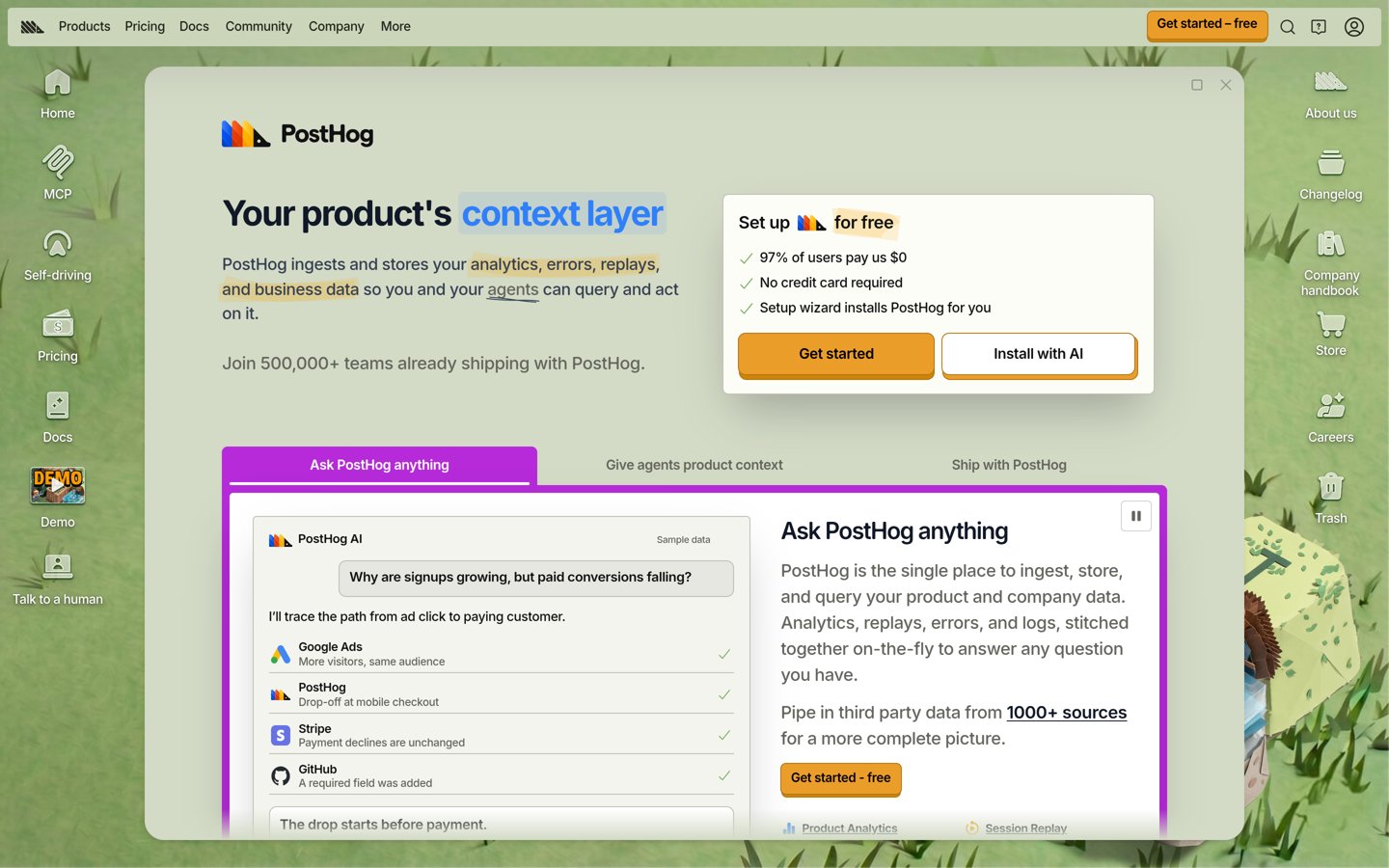
PostHog is an open-source analytics suite that combines product analytics, session replay, feature flags, surveys and experiments in one platform. The free plan includes 1 million monthly events and 5,000 session recordings, with usage billing after that at $0.00005 per event.
The trade off is the number of meters. Each product bills separately, so the total is harder to predict than a flat subscription, and self-hosting means you run the upgrades. It suits engineering-led teams that want one open platform.
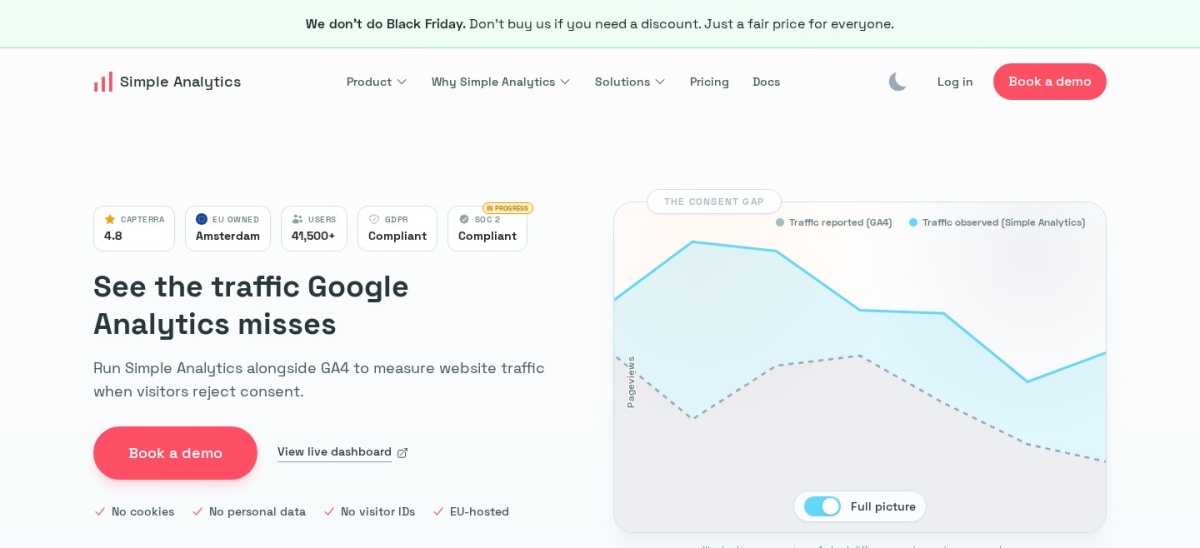
Simple Analytics is a Dutch privacy-first analytics tool that drops every IP address and uses no visitor IDs, cookies or cross-site tracking. The free hobby plan covers 5 websites with one month of history, and the paid Simple plan costs $15 a month.
The trade off is attribution depth. Without cookies you lose the full customer journey and repeat-conversion tracking, and funnels need event setup. It suits solo founders and EU small businesses that want the simplest privacy-safe dashboard.
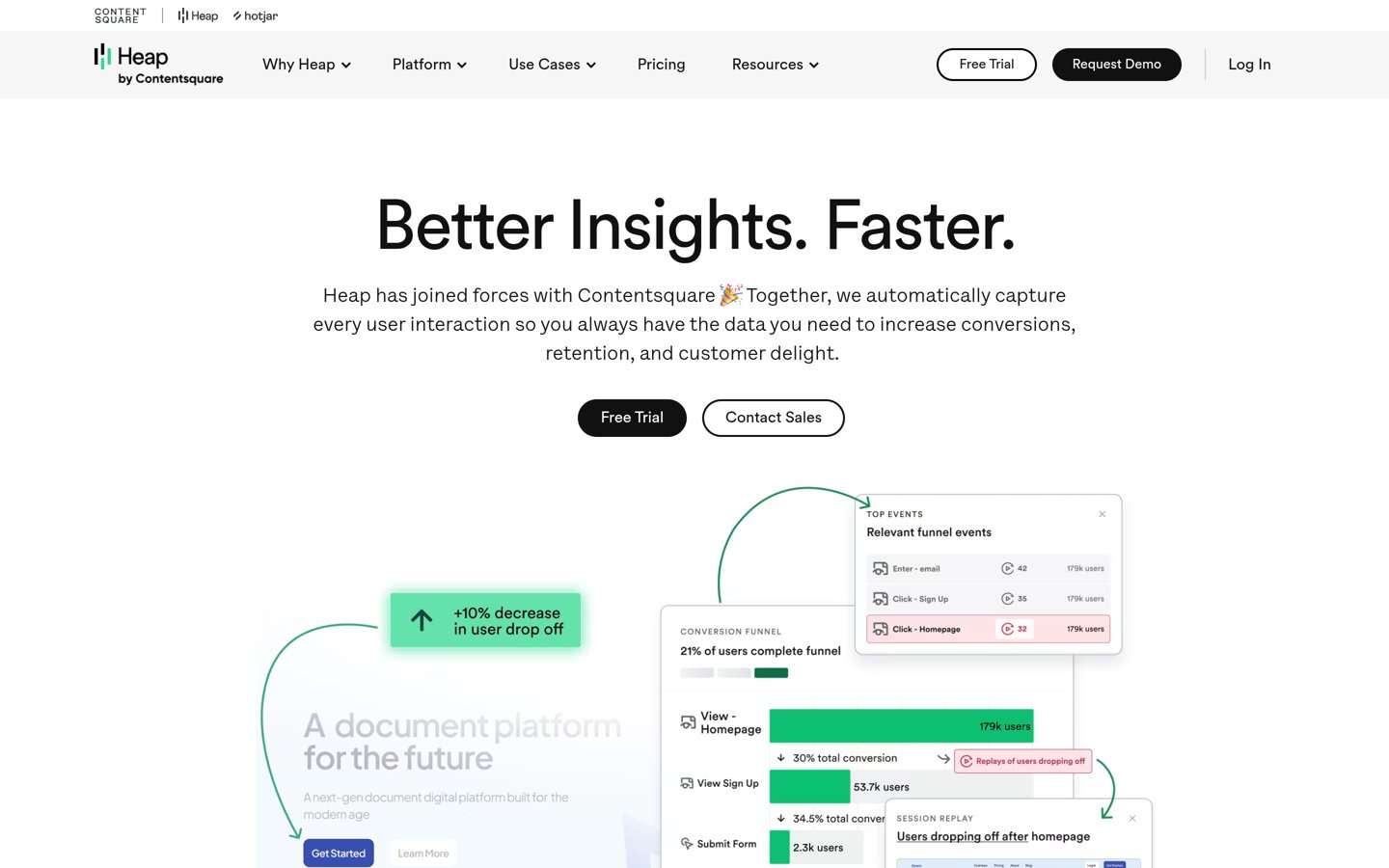
Heap is an analytics platform that automatically captures every click, pageview and form interaction, so you can define an event today and see its history from the day you installed it. The free plan covers 10,000 monthly sessions, and paid plans are quote-based.
The trade off is price transparency. Heap publishes no paid prices, so the real cost only appears in a sales quote, and session-based packaging can surprise growing teams. It suits teams that want retroactive analysis without upfront instrumentation.
What we like
Autocapture records everything automatically
Define events retroactively from history
Free plan with 10,000 sessions a month
Watch out for
No paid prices published
Session-based pricing can surprise
Replay and accounts need higher plans
Paid plans add replay and account analyticsVisit heap.io
Free vs paid: what you give up
Free plans cover the basics well. Mixpanel gives 1 million events a month, Amplitude gives 2 million, and PostHog gives 1 million events plus 5,000 replays.
Paid plans mostly add depth and limits. Funnels, revenue tracking, APIs and longer retention sit behind the paywall on most tools here.
Usage billing is the trap to watch. A free plan that freezes queries past its limit, or a paid plan that climbs with every event, can cost more than a flat subscription.
If privacy is the reason you are leaving Google Analytics, a paid privacy tool such as Plausible or Fathom costs less than one consent-management setup.
How we chose
We started from the Google Analytics alternatives with the largest review bases on G2 and Capterra, then kept the eight with verifiable ratings, real pricing and a clear privacy or product angle.
Prices come from each vendor's pricing page, checked on 29 November 2026. Ratings and review counts come from G2 or Capterra on the same day. Where a vendor shows a sale, the list shows the regular price.
We left out tools with no verifiable rating and tools that do not publish any price. No vendor paid for a place, and we do not claim hands-on testing for this list.
How to choose a Google Analytics alternative
Decide what you need to measure, then check the billing unit.
List the questions you need answered. Traffic questions suit simple tools, while funnel and retention questions need a product analytics platform.
Check the privacy rules for your visitors. Cookieless tools remove the consent banner in most regions, while event tools still collect user-level data.
Compare the billing unit, not the headline. Pageviews, events and hits are different meters, so estimate your monthly volume before comparing prices.
Try the free plan with real traffic. Import your Google Analytics data first, then run the new tool alongside it for a week before switching.
FAQ
What is the best Google Analytics alternative in 2026?
Plausible is the best pick for most sites, with a simple dashboard, no cookies and a $9 a month starting price. Fathom is the closest rival at $15 a month, and Matomo suits teams that need full data ownership.
Is there a free Google Analytics alternative?
Yes. Matomo On-Premise is free and open source, and Mixpanel, Amplitude, PostHog and Heap all have free plans. Plausible and Fathom have no free plan, only a 7-day or 30-day trial.
How much does a Google Analytics alternative cost?
Prices run from free to about $26 a month for small sites. Plausible starts at $9 a month, Fathom at $15, and Matomo Cloud at $26, while product tools such as Mixpanel start at $100 a month.
Plausible or Fathom: which is better?
Plausible is cheaper at $9 a month and open source, with a 30-day trial. Fathom costs $15 a month but includes every feature and unlimited team members on every plan, so it suits teams better.
Do I need to replace Google Analytics completely?
Not always. Many sites run a privacy tool beside Google Analytics, using the new tool for the daily dashboard and keeping Google Analytics for ad attribution and Search Console data.
Which Google Analytics alternative is best for privacy?
Plausible, Fathom and Matomo all run without cookies and keep data in the EU or on your own server. Simple Analytics goes furthest, dropping every IP address and using no visitor IDs at all.
SaaS SEO and WordPress specialist with about 8 years of experience. Rakib compares WordPress plugins, themes, hosting and software using public pricing, documentation and user reviews. See how we rank.