Confluent is the best Flink alternative for most teams, because its managed Kafka platform includes serverless Apache Flink and starts at $0 on the Basic tier. Databricks suits Spark streaming at scale, while Redpanda is the pick for low-latency Kafka-compatible workloads.
How we make this list: we compare pricing pages, product documentation and public user reviews, then re-check every price before each update. No product paid for a place. Disclosure.
Confluent is the only pick with serverless Flink built in, and its Basic cluster starts at $0 a month.
Databricks has the highest G2 rating here at 4.6 out of 5 from 1,401 reviews, with Jobs Compute from $0.15 per DBU.
Apache Kafka and Apache Beam are both free and open source, but you run and monitor them yourself.
Kinesis costs $0.015 per shard-hour and Dataflow $0.069 per streaming vCPU-hour, so both bills follow usage exactly.
Estuary Flow is the cheapest way in for CDC, with a free tier of 10 GB a month and Cloud from $0.50 per GB.
How do you choose from the best Flink alternatives?
Start from what you already run. A team on Kafka gets the most from Confluent or Redpanda, while a Spark shop gets more from Databricks and a Google Cloud team from Dataflow.
Managed services trade control for time. Confluent, Databricks, Kinesis, Dataflow and Pub/Sub remove servers from your week, while Kafka and Beam cost $0 in licences and ask for your operations time instead.
Price follows a meter, not a seat. Check the unit that drives your bill, such as eCKUs, DBUs, shard-hours or gigabytes, and size one real workload before you commit.
Confluent is a managed data streaming platform built on Apache Kafka, and it is the only pick here with serverless Apache Flink built in. The Basic cluster starts at $0 a month with pay-as-you-go use, and the platform includes more than 80 fully managed connectors plus ksqlDB for SQL stream processing.
The trade off is usage billing. Clusters bill on Elastic CKUs, so a production Standard cluster starts at about $385 a month and costs rise with throughput and storage. It suits teams that want Kafka and Flink without running either themselves.
What we like
Only managed option here with Flink built in
Basic tier starts at $0 a month
More than 80 fully managed connectors
99.99% uptime SLA on Standard clusters
Watch out for
Production pricing starts near $385 a month
Usage billing is hard to forecast
Learning curve for new streaming teams
Standard adds high availability, infinite storage and audit logsVisit confluent.io
02
Databricks
4.6/5on G2 (1,401 reviews, checked Nov 2026)
PriceFree
Best for Spark streaming at scale
Streaming engineSpark Structured Streaming
Jobs Compute$0.15/DBU
Free tierFree Edition
Paid planPay as you go
databricks.com
Databricks homepage, captured Nov 2026.
Databricks is a unified data and AI platform that runs Apache Spark as a managed service, with Structured Streaming for continuous jobs. Jobs Compute starts at $0.15 per DBU, and the platform adds notebooks, Delta Live Tables and governance in one place.
The trade off is billing complexity. DBU rates change with the workload type, and cloud VM costs sit on top of the Databricks bill. It suits large teams already running Spark batch jobs that want streaming on the same platform.
Redpanda is a Kafka-compatible streaming platform written in C++, so it runs as a single binary with no JVM and no ZooKeeper or KRaft quorum to manage. The Cloud Serverless tier has no base cost, and the platform includes a web console, more than 300 managed connectors and tiered storage.
The trade off is price transparency. Serverless is pay-as-you-go with no published unit rates, and Dedicated and BYOC clusters are quote-based. It suits teams that want Kafka compatibility with lower latency and less tuning.
What we like
Rated 4.6 out of 5 on G2 from 67 reviews
Single binary, no JVM to tune
Existing Kafka clients work unchanged
Serverless tier has no base cost
Watch out for
No published price for paid cloud clusters
Core is source-available under BSL, not open source
Apache Kafka is the free, open-source event streaming platform that Flink usually sits beside, with durable logs, replay and stream processing through Kafka Streams. It is a proven core: more than 80% of Fortune 100 companies use it, and the software itself costs nothing to download.
The trade off is operations. You run the brokers, storage, monitoring and upgrades yourself, and stream processing still needs Kafka Streams code or a separate engine. It suits teams with the staff to operate infrastructure and no budget for a managed service.
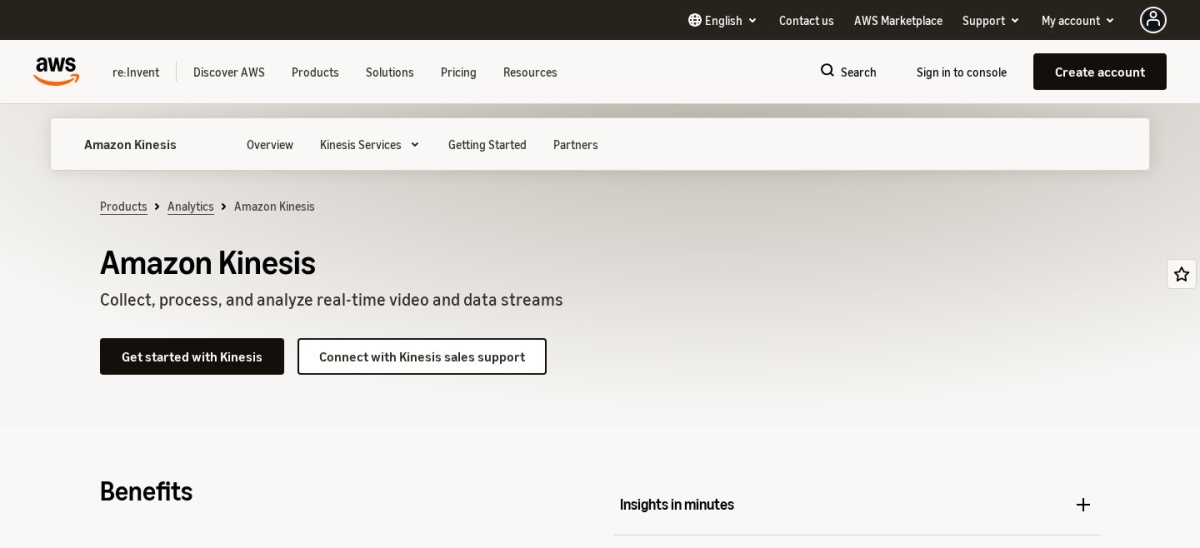
Amazon Kinesis Data Streams homepage, captured Nov 2026.
Amazon Kinesis Data Streams is the managed AWS service for ingesting and replaying ordered event streams, with deep links to Lambda, Firehose and Managed Flink. Each shard costs $0.015 an hour and handles 1 MB a second of writes, with $0.014 per million PUT payload units on top.
The trade off is that it is a transport layer, not a processor. You still need Lambda, Managed Flink or your own consumers to transform the data, and costs grow shard by shard. It suits AWS teams that need durable ingestion with little to run.
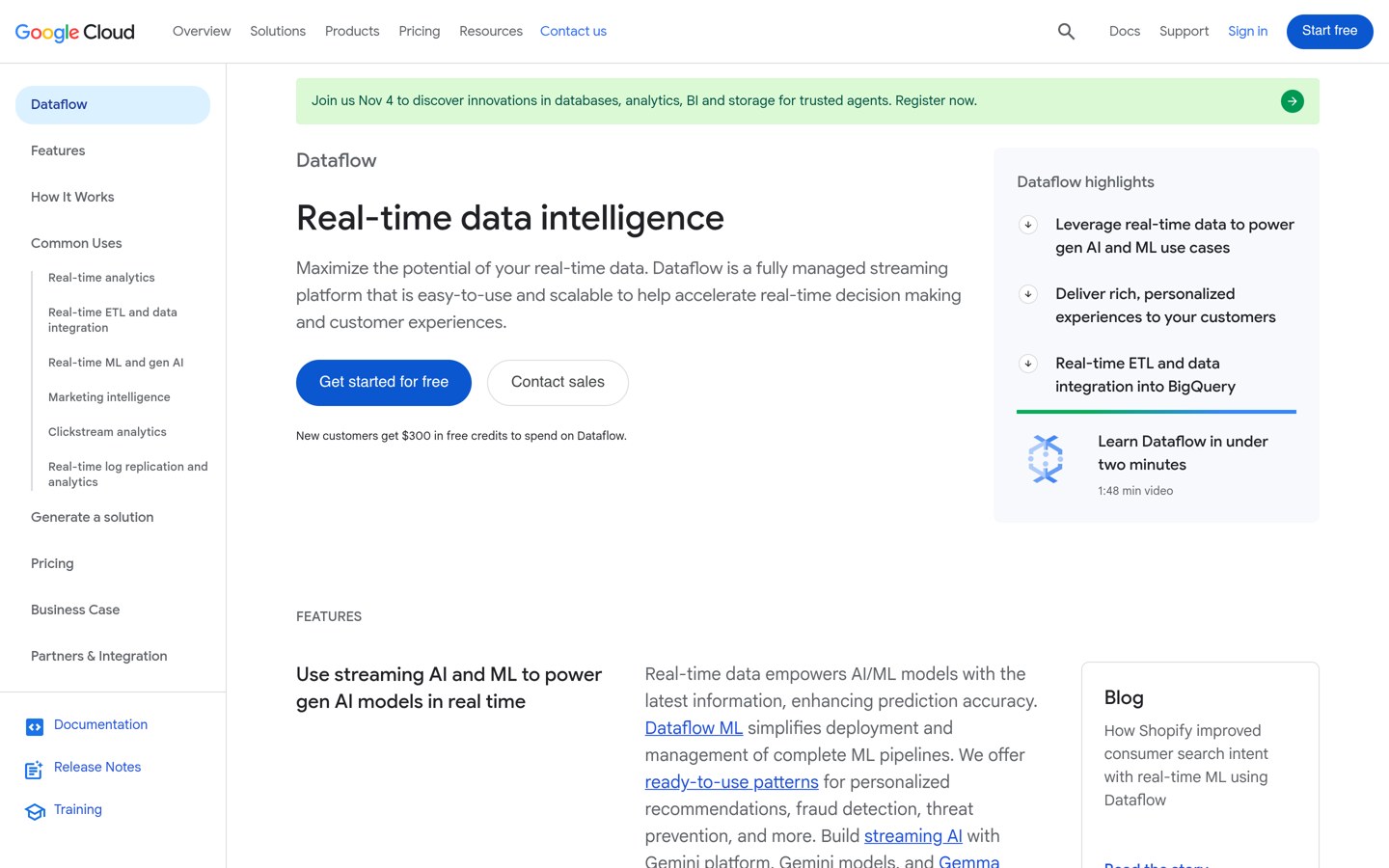
Google Cloud Dataflow homepage, captured Nov 2026.
Google Cloud Dataflow is a fully managed service that runs Apache Beam pipelines for batch and streaming, with autoscaling workers and a Streaming Engine for low-latency jobs. Streaming workers cost $0.069 per vCPU-hour, and templates cover common loads into BigQuery.
The trade off is lock-in and cost control. It runs only on Google Cloud, and reviewers note bills climb fast without careful configuration. It suits Google Cloud teams that already write Beam and want no servers to manage.
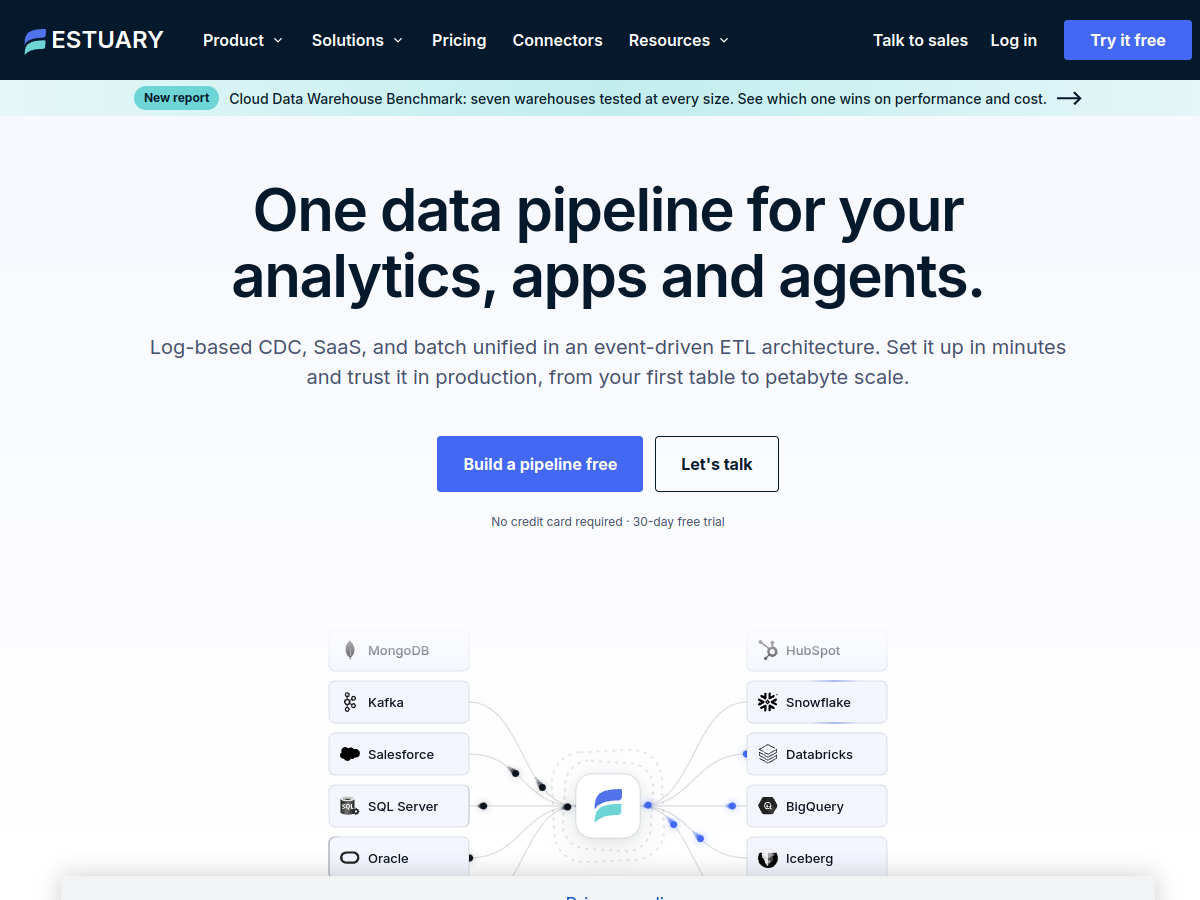
Estuary Flow is a managed streaming platform that unifies CDC, streaming and batch pipelines in one place. It captures changes from databases such as Postgres and MongoDB and lands them in warehouses in under 100 milliseconds, with more than 200 source and destination connectors.
The trade off is scope. Estuary is not a replacement for Kafka as an application messaging backbone; it is the pipeline layer that feeds analytics. Cloud costs $0.50 per GB plus $100 per connector instance a month, with a free Developer tier. It suits teams whose main job is CDC into a warehouse.
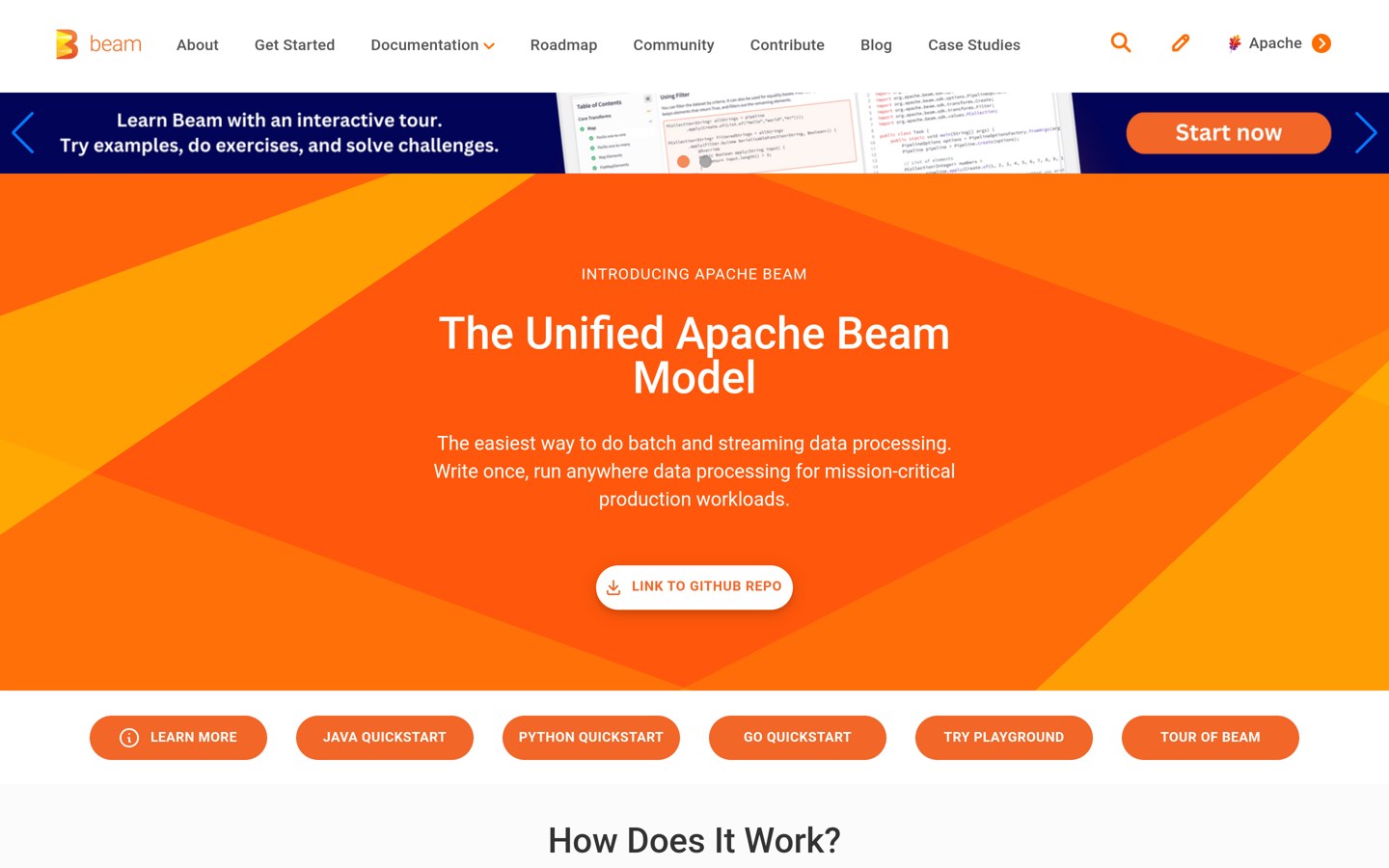
Apache Beam is a free, open-source programming model for batch and streaming pipelines, so one pipeline can run on Dataflow, Flink or Spark without rewrites. It covers ETL, windowing and event-time logic in Java, Python or Go, with strong documentation and examples.
The trade off is that Beam is a model, not a system. You still need a runner and somewhere to run it, and reviewers note debugging can be tedious for newcomers. It suits teams that want portable pipelines and already run a Beam runner.
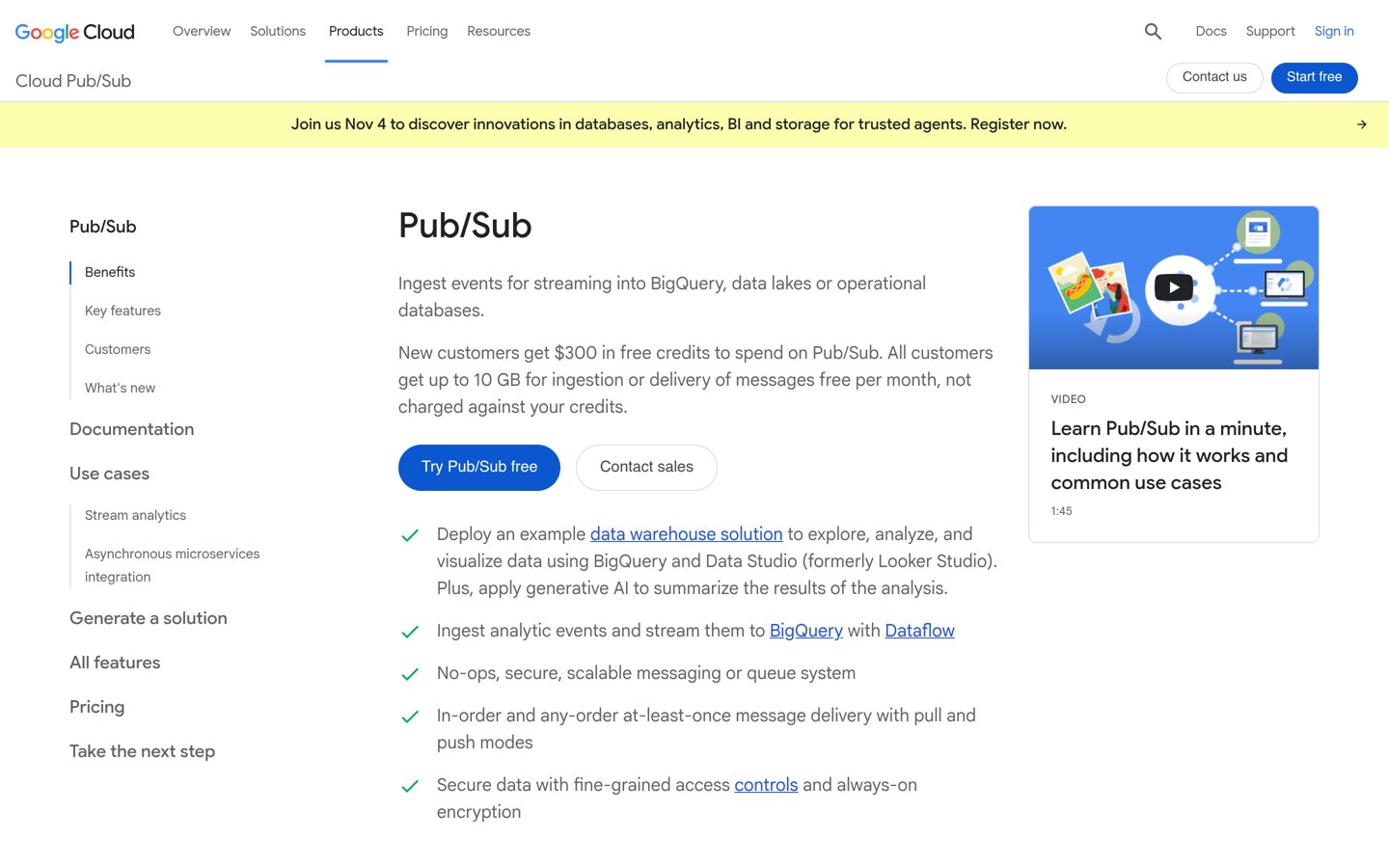
Google Cloud Pub/Sub is a fully managed messaging service that moves events between applications with no partitions or capacity to manage. It bills $40 per TiB after the first 10 GiB a month, with exactly-once delivery and global scale built in.
The trade off is that Pub/Sub is messaging only. It does no stream processing, so transforms still need Dataflow or another engine, and each subscription re-bills the same bytes. It suits Google Cloud teams that need simple, durable event ingestion.
A managed service bills for use and handles brokers, upgrades and scaling. Confluent, Databricks, Redpanda Cloud, Kinesis, Dataflow, Estuary and Pub/Sub all fit this shape.
Self-hosted Kafka and Beam cost nothing in licences, but they ask for staff time on every upgrade, outage and capacity question.
The middle path is BYOC. Redpanda runs its managed control plane inside your own cloud account, so data stays put while operations stay managed.
Pick managed when streaming is a means to an end, and self-hosted when the pipeline itself is your product and your team can run it.
How we chose
We started from the tools most often named as Flink replacements in streaming comparisons, then kept those with a public rating and a published price or free tier.
Prices come from each vendor's pricing page, checked on 29 November 2026. Ratings and review counts come from G2 on the same day. Where a vendor shows a sale, the list shows the regular price.
We left out tools with no public rating, such as RisingWave and Materialize, whose G2 listings are thin or hard to attribute. No vendor paid for a place, and we do not claim to have used these tools ourselves.
How to choose a Flink alternative
Start with the cloud and the engine you already use, then match the tool to the job.
Check what you already run. Kafka teams should shortlist Confluent, Redpanda or plain Kafka. Spark teams should look at Databricks first, and Google Cloud teams at Dataflow.
Decide how much you want to operate. Pick a managed service if no one on the team wants pager duty for brokers. Pick Kafka or Beam if you have the staff and want full control.
Price one real workload. Take a single pipeline and cost it on each meter: eCKUs, DBUs, shard-hours or gigabytes. A headline rate says little until it meets your volume.
Match the tool to the job. Use Estuary for CDC into a warehouse, Pub/Sub for simple ingestion, and Confluent or Databricks when you need real stream processing.
FAQ
What is the best alternative to Flink in 2026?
Confluent is the best Flink alternative for most teams. Its managed Kafka platform includes serverless Apache Flink, starts at $0 on the Basic tier, and is rated 4.3 out of 5 on G2 from 144 reviews.
How much do Flink alternatives cost?
Costs run from $0 for self-hosted Kafka and Beam to about $385 a month for a production Confluent Standard cluster. Most managed options bill by use: Kinesis at $0.015 per shard-hour and Dataflow at $0.069 per streaming vCPU-hour.
Is there a free Flink alternative?
Yes. Apache Kafka and Apache Beam are free and open source. Confluent Basic starts at $0 a month, Redpanda Serverless has no base cost, and Estuary Flow includes 10 GB a month free.
Which Flink alternative is best for beginners or small teams?
Estuary Flow is the easiest start for CDC work, with a free tier and no cluster to run. Small teams on AWS should look at Kinesis, and Google Cloud teams at Pub/Sub with Dataflow.
Confluent vs Databricks: which is the better Flink alternative?
Confluent wins when you need Kafka and Flink together in one managed service, with serverless Flink built in. Databricks wins for Spark shops, with the highest G2 rating here at 4.6 out of 5 and Jobs Compute from $0.15 per DBU.
Is Apache Kafka a good Flink alternative?
Kafka is a good base, not a full replacement. It stores and moves events well, but stream processing needs Kafka Streams code or a separate engine such as Flink. It is free and rated 4.5 out of 5 on G2 from 132 reviews.
SaaS SEO and WordPress specialist with about 8 years of experience. Rakib compares WordPress plugins, themes, hosting and software using public pricing, documentation and user reviews. See how we rank.