Logikcull is the best of the Everlaw alternatives for most small and mid-size teams, rated 4.7 out of 5 on G2 from 517 reviews, with self-serve pay-as-you-go pricing. Pick DISCO for fast AI-assisted review on larger matters, or GoldFynch when one small case must stay cheap.
How we make this list: we compare pricing pages, product documentation and public user reviews, then re-check every price before each update. No product paid for a place. Disclosure.
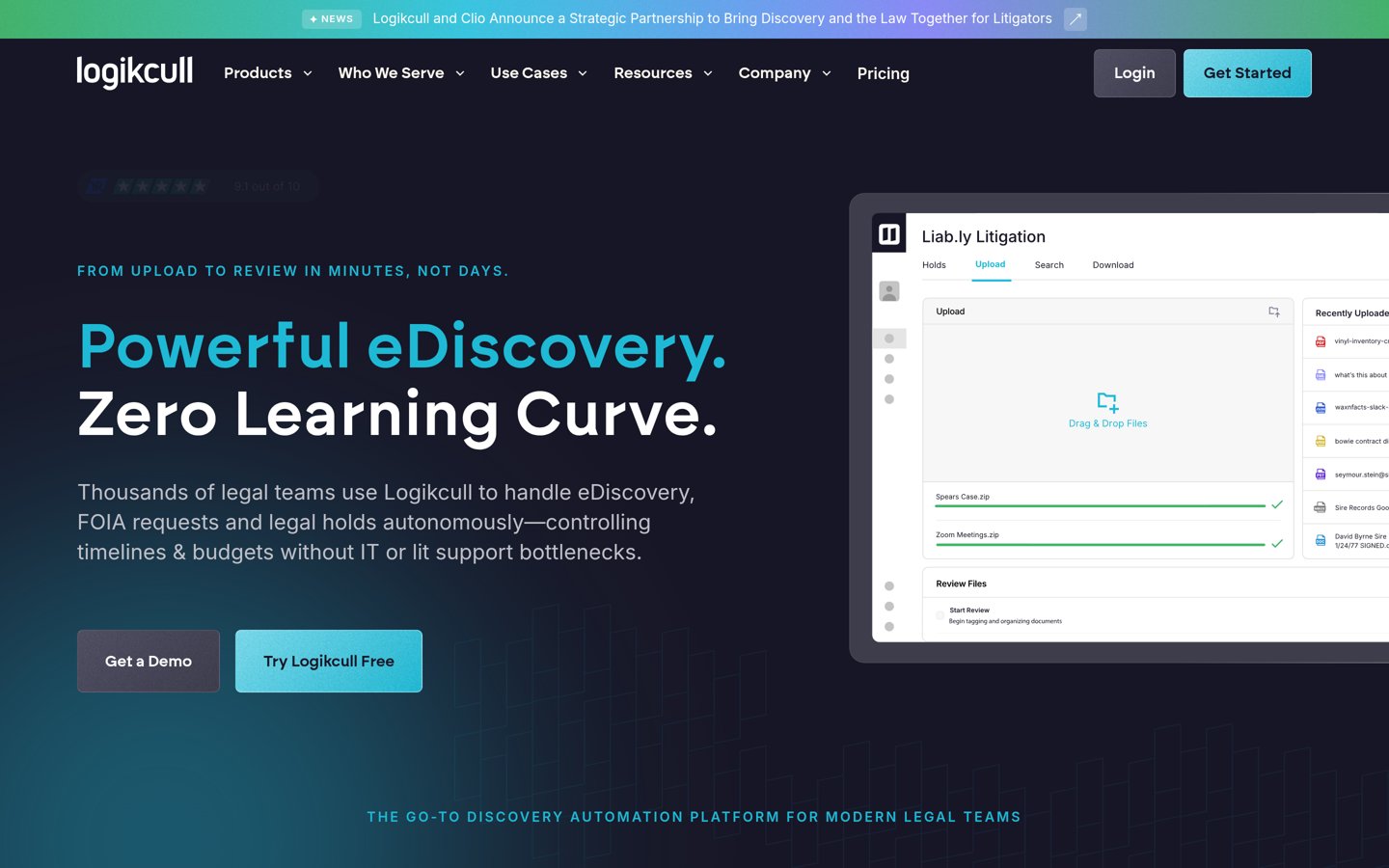
Logikcull is a cloud eDiscovery platform built for teams that run discovery themselves, without a vendor services engagement. Its pay-as-you-go plan charges $40 per GB a month with unlimited users, unlimited projects and unlimited downloads, and its subscription adds legal hold, PII detection and Microsoft 365 uploads.
The trade off is scale. Reviewers note the per-GB bill grows fast on large data volumes, and advanced features sit behind the subscription quote. It suits small and mid-size firms that want to upload a matter and start reviewing the same day.
What we like
Most reviewed tool in this list, with 517 G2 reviews
Self-serve setup with no minimum commitment on pay as you go
Unlimited users, so co-counsel costs nothing extra
Strong support scores in G2 reviews
Watch out for
No dollar figure on the current pricing page; $40/GB/mo is the last printed rate
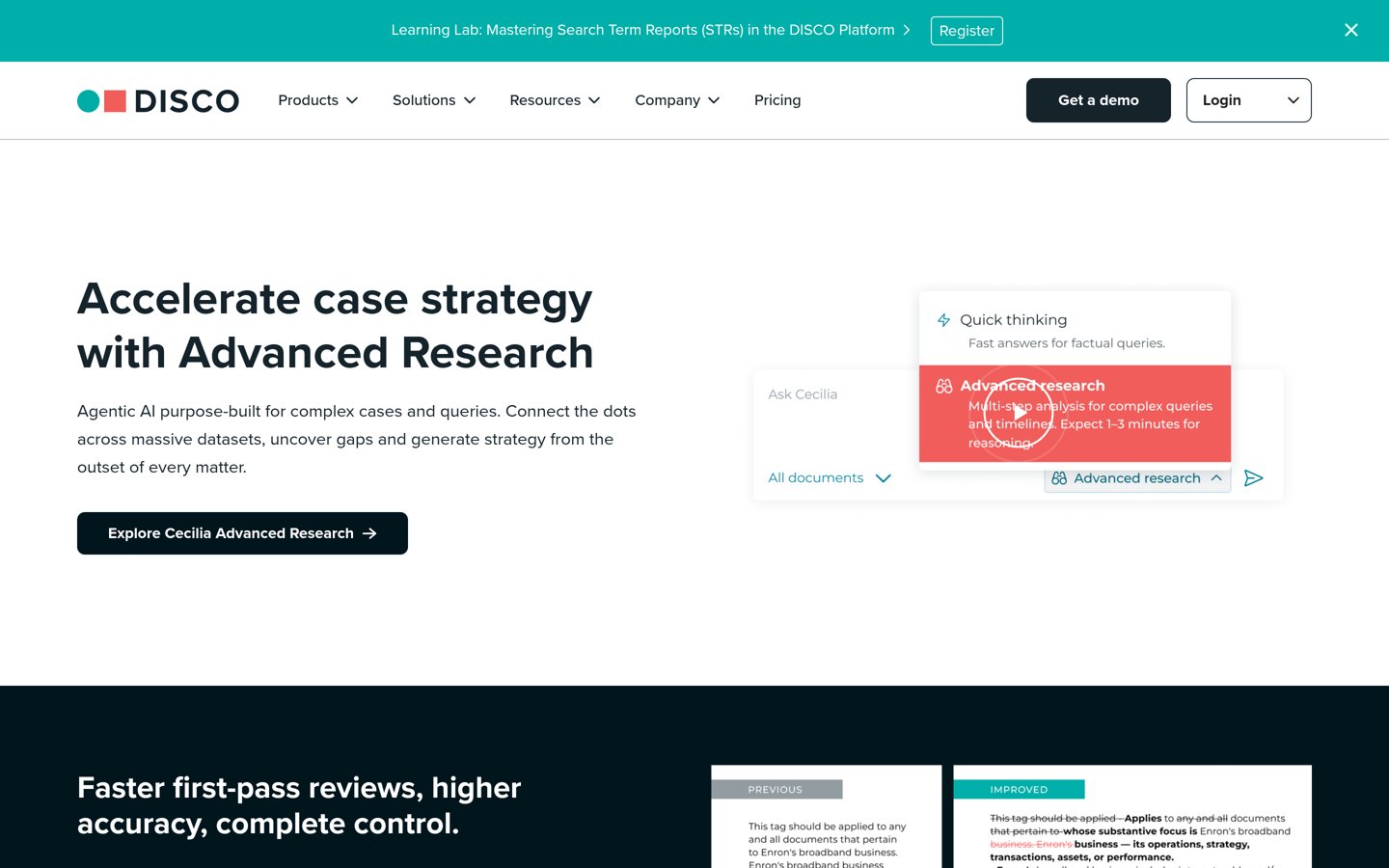
DISCO is a cloud eDiscovery platform built around speed, with Cecilia AI included in its single per-GB price and case-building tools for witness preparation. Reviewers praise its easy interface and strong support, and per-GB billing means adding reviewers does not raise the bill.
The trade off is price opacity. DISCO publishes no price, with third-party reports putting it near $15 to $25 per GB a month, and reviewers flag a high minimum database fee. It suits teams that value review speed over a published price list.
What we like
Cecilia AI included with no separate AI charge
Per-GB billing, so reviewer seats cost nothing extra
Case Builder included for deposition and trial prep
Relativity is the category standard for eDiscovery, used by 198 of the Am Law 200 firms, with the deepest tooling and the largest pool of trained reviewers. Its aiR for Review and aiR for Privilege tools are now included with committed data volume, with no separate AI licences and no per-user fees.
The trade off is cost and complexity. Relativity publishes no price, and the nearest printed figure is a federal list price of $7.25 per GB a month, so budgeting needs a quote and large matters need trained staff. It suits big, complex litigation with support behind it.
What we like
Most reviewed tool here: 653 G2 reviews
Used by 198 of the Am Law 200 firms
aiR for Review and Privilege now included
Deepest analytics and customisation in the category
Casepoint is a cloud eDiscovery and legal data platform covering review, legal hold, collections, investigations and FOIA work in one system. Its all-inclusive model bundles processing and analytics into the per-GB price, so reviewers can run analytics without worrying about extra charges.
The trade off is review volume. Casepoint is rated 4.7 out of 5 on G2 but from only 25 reviews, and there is no flat-fee subscription, so costs still move with data volume. It suits enterprise and government teams that need strong security and predictable billing.
GoldFynch is a cloud eDiscovery service built for solo lawyers and small firms, with pricing by case size and nothing else. A 3 GB case costs $27 a month, processing, OCR and productions are included, and the case can be shared with any number of people while only the owner pays.
The trade off is evidence depth. Its 5.0 out of 5 G2 rating rests on only 6 reviews, and billing is prorated by the second, so a case that grows past its size band moves up a tier. It suits a single small matter that must stay cheap.
What we like
Cheapest published entry in this list at $27 a month
Price follows case size only, with no user or processing fees
Reveal is a comprehensive AI-powered eDiscovery platform for disputes and investigations, with fast processing across more than 900 file types. Its generative AI searches by meaning, identifies the most relevant material and synthesizes answers, and the platform is used by more than 4,000 customers worldwide.
The trade off is price clarity. G2 lists cloud hosting at $25 per user a month beside a Basic tier at $800 per user a month, so confirm which tier a quote covers. It suits corporate legal and investigation teams that need deep AI analysis on large data.
Exterro is a data risk management platform that combines legal hold, eDiscovery, digital forensics and privacy tools in one suite. Its automated legal hold workflows, reminders and escalations are the most praised part, and flat-rate storage avoids per-GB hosting fees during a matter.
The trade off is price. Exterro publishes no price, and third-party directories list the eDiscovery suite from around $50,000 a year, which is an estimate rather than a list price. It suits corporate legal teams that want hold, review and forensics from one vendor.
What we like
Hold, review, forensics and privacy in one suite
Automated legal hold workflows
Flat-rate storage, not per-GB hosting
Rated 4.4 out of 5 from 171 G2 reviews
Watch out for
Quote only, with no published price
The $50,000 a year directory figure is an estimate
Quote-only pricing: how to compare what you cannot see
Four of the seven tools here publish no price, so the price ladder only ranks the three that do.
For the quote-only tools, ask for the same three numbers in writing: the per-GB or per-user rate, the minimum commitment, and what AI review costs.
Everlaw itself is quote-only too, so an alternative only saves money if its billing model fits your matters better.
A short trial on your own data tells you more than any quote, so run the same matter through two trials before you sign.
How we chose
We started from the established eDiscovery platforms most often compared with Everlaw in 2026, then kept seven with a verifiable product page and a public G2 rating.
Prices come from vendor pricing pages and published review-site listings, checked on 29 November 2026. Ratings and review counts come from G2 on the same day. Where a vendor publishes no price, the list says Quote and shows no starting figure, and the price ladder only ranks the three tools with published prices.
We left out tools with no product-level public rating. No vendor paid for a place, and we do not claim to have used these tools ourselves.
How to choose an Everlaw alternative
Start with your billing model, then test the two finalists on the same matter.
Match the billing model to your matters. Per-GB pricing fits changing data volumes, per-user pricing fits large review teams, and per-case pricing fits single small matters.
Check the trial before the quote. Upload a real matter and confirm processing, search and production work on your file types before you negotiate.
Ask what AI review costs. Some tools include AI review in the base price and others meter it, so get the AI charge in writing.
Confirm the production format. Check that the tool produces in the format your court or opposing counsel requires, with a privilege log included.
FAQ
What is the best alternative to Everlaw in 2026?
Logikcull is the best Everlaw alternative for most small and mid-size teams. It is rated 4.7 out of 5 on G2 from 517 reviews, offers self-serve pay-as-you-go pricing, and includes unlimited users, so small teams can start a matter without a vendor engagement.
How much do Everlaw alternatives cost?
Published prices run from $27 a month for a 3 GB GoldFynch case to $25 per user a month for Reveal cloud hosting. Four of the seven tools publish no price, and Everlaw itself is quote-only, with reports putting it near $25 per GB a month on its federal list.
Is there a free Everlaw alternative?
No tool in this list has a free plan. Logikcull and DISCO offer free trials, and GoldFynch offers a free 512 MB trial case for 90 days, so you can run a real matter before paying.
Which Everlaw alternative is best for a small law firm?
Logikcull is the best fit for most small firms, with the highest review volume and self-serve pricing. GoldFynch is cheaper for a single small case at $27 a month, and Reveal suits teams that want AI analysis without enterprise services.
Logikcull vs DISCO: which is better?
Logikcull wins on rating and ease of starting, at 4.7 out of 5 from 517 reviews against DISCO at 4.6 from 173, with published pay-as-you-go pricing. DISCO wins on review speed and AI, with Cecilia AI included and case-building tools, but it publishes no price.
Do any Everlaw alternatives include Storybuilder-style trial prep?
Yes. DISCO includes Case Builder for witness preparation, so it covers the closest equivalent. Logikcull, Relativity and Reveal focus on review and production rather than trial presentation, so plan trial prep as a separate step if you pick one of those three.
SaaS SEO and WordPress specialist with about 8 years of experience. Rakib compares WordPress plugins, themes, hosting and software using public pricing, documentation and user reviews. See how we rank.