Descartes MacroPoint is the best container tracking software for trucking fleets, because it tracks truckload freight through carrier ELDs and telematics across 435,000+ carriers and drivers. Pick project44 for enterprise multimodal coverage, or Terminal49 if you want a free start on ocean and rail containers.
How we make this list: we compare pricing pages, product documentation and public user reviews, then re-check every price before each update. No product paid for a place. Disclosure.
Descartes MacroPoint leads for trucking fleets, with ELD and telematics tracking across 435,000+ carriers and drivers at $1,000 per user per year on G2.
project44 covers the most ground after the truck leg, with 246,000 carriers across 180+ countries and 700+ ports, on a custom quote.
FourKites adds yard and dock visibility to container tracking, with 500,000+ carriers across 176 countries.
Terminal49 is the only free start here, tracking 10 active containers for 3 users, with US terminal holds and last-free-day dates.
Only two tools publish a starting price: Safecube at $15 a month and MacroPoint at $1,000 a year. The other six are custom quotes.
How do you choose container tracking software for trucking fleets?
A container on a truck is the hardest leg to track. Ocean milestones stop at the port, and the drayage move that follows depends on the carrier, the chassis and the terminal gate.
Good container tracking software for trucking fleets closes that gap with live truck positions. Look for ELD and telematics feeds, geofenced arrival alerts and terminal hold data, not just vessel positions.
Price follows volume, not seats, for most of these tools. Our guide on setting up shipping in WooCommerce shows the same pattern at a smaller scale: the cheapest plan is rarely the cheapest at real volume.
Check rail and yard coverage before you sign. A tool that tracks ocean containers well may have no view of the intermodal rail leg or the yard where the box waits for a truck.
The 9 best container tracking software tools for trucking fleets
01
Descartes MacroPoint
4.7/5on G2 (921 reviews, checked Nov 2026)
Starts at$1,000/yr
Best for truckload and drayage tracking
Carrier network435,000+ carriers and drivers
Tracking sourceELD, telematics or driver app
Per-load pricing$0.42-$3.75 at 1,000+ loads a year
Free planNo, demo on request
macropoint.com
Descartes MacroPoint homepage, captured Nov 2026.
Descartes MacroPoint is a truckload visibility network that tracks freight through carrier ELDs, telematics and driver mobile apps. It connects shippers to 435,000+ carriers, logistics providers and drivers, and G2 lists its Basic plan at $1,000 per user per year.
The trade off is that it is a tracking layer, not a full visibility suite. It plugs into a TMS you already run instead of replacing it, and per-load pricing varies by mode and volume. It suits fleets and brokers that need truck positions without an enterprise platform.
What we like
Largest truckload carrier network in this list
Tracks through ELDs, so no extra hardware is needed
Rated 4.7 out of 5 across 921 G2 reviews
Plugs into an existing TMS instead of replacing it
Watch out for
No ocean container dashboard of its own
Per-load costs vary by mode and volume
Setup is quoted separately, typically $3,000 to $20,000
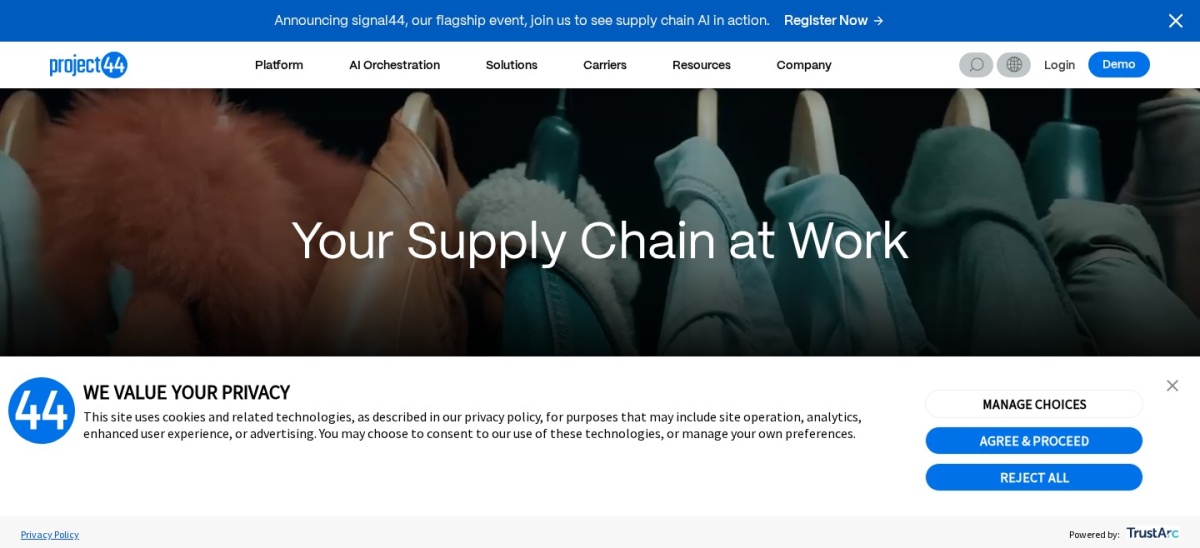
project44 is an enterprise supply chain visibility platform covering ocean containers, rail, air, truckload and parcel in one feed. Its network spans 246,000 carriers across 180+ countries, with ocean coverage of 700+ ports and 5,000 vessels.
The trade off is price and weight. Pricing is a custom enterprise quote based on volume, modes and modules, and G2 lists $500 per user per month as a starting signal. It suits large shippers unifying global freight, not small fleets.
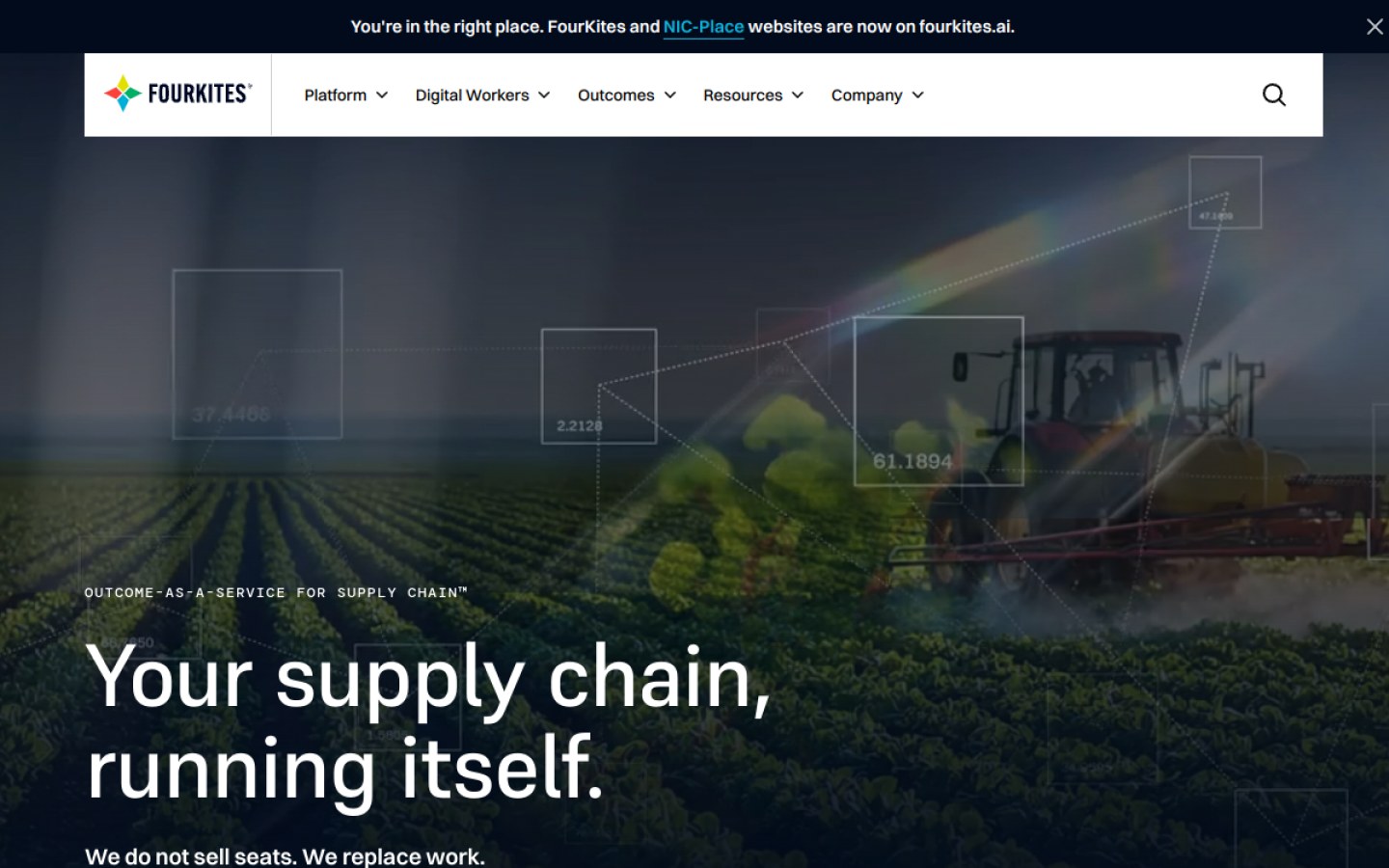
FourKites is a system-agnostic visibility and control tower platform that pulls signals from carriers, ELDs and telematics into one view. It tracks truckload, LTL, rail, intermodal, ocean and air, and adds yard and dock visibility where containers wait.
The trade off is that pricing is a custom enterprise quote with no published rate card. It suits large shippers whose cost driver is detention and appointment scheduling rather than in-transit ETAs alone.
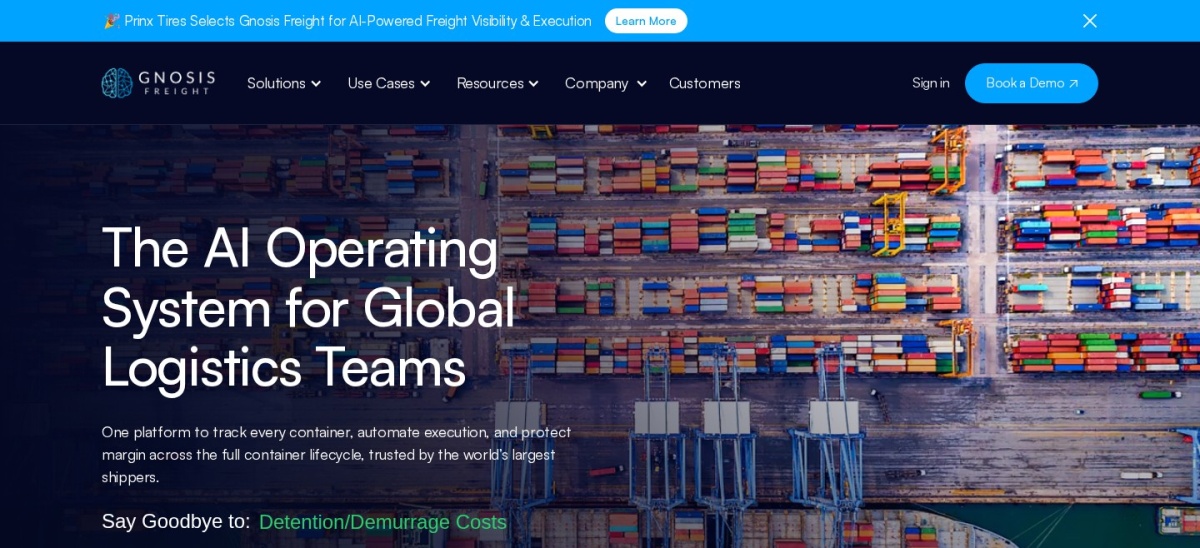
Gnosis Freight is a container lifecycle platform that tracks ocean freight from booking to final delivery. Tracking starts with just the master bill of lading number, and the platform adds rail and drayage data, demurrage and detention alarms, and a container payment portal.
The trade off is focus. Gnosis Freight is built for containers, so road and air visibility are thinner than the multimodal platforms here, and pricing is usage-based and quoted by volume. It suits importers moving high container volumes.
What we like
Rated 4.8 out of 5 across 194 G2 reviews
Tracks the full container lifecycle from one number
Demurrage and detention alarms included
Drayage optimisation as an add-on module
Watch out for
No published prices, quote only
Thinner road and air coverage than multimodal rivals
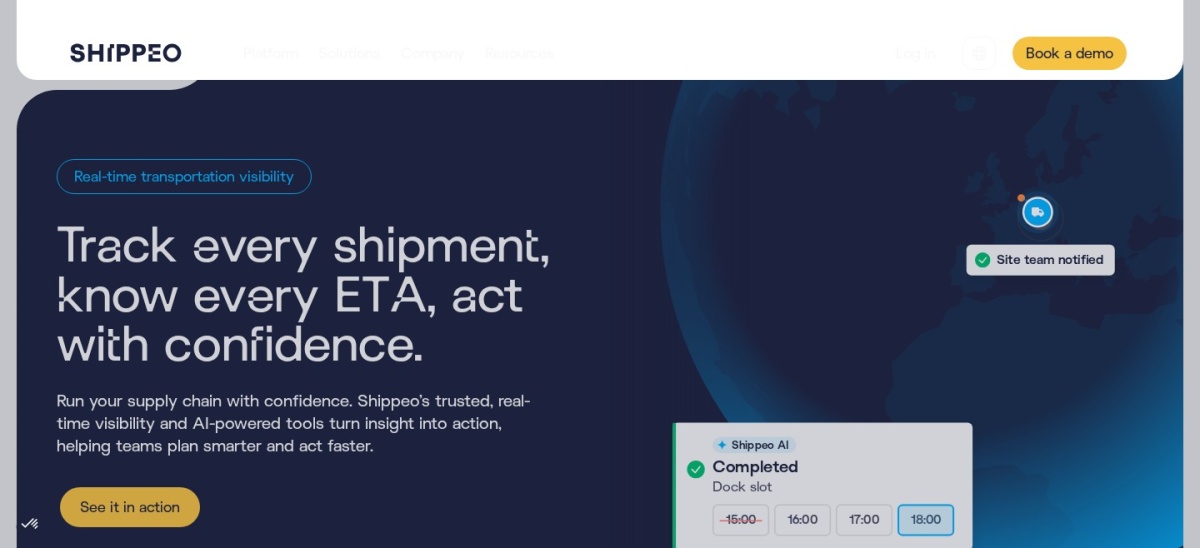
Shippeo is a real-time transportation visibility platform with predictive ETAs across road, ocean, air, rail and parcel. Its machine-learning ETA model flags delays early, and automated carrier onboarding reports a 98% carrier satisfaction rate.
The trade off is that Shippeo sells enterprise annual subscriptions with no published list price. It suits shippers that want accurate arrival predictions and fewer manual status checks from carriers.
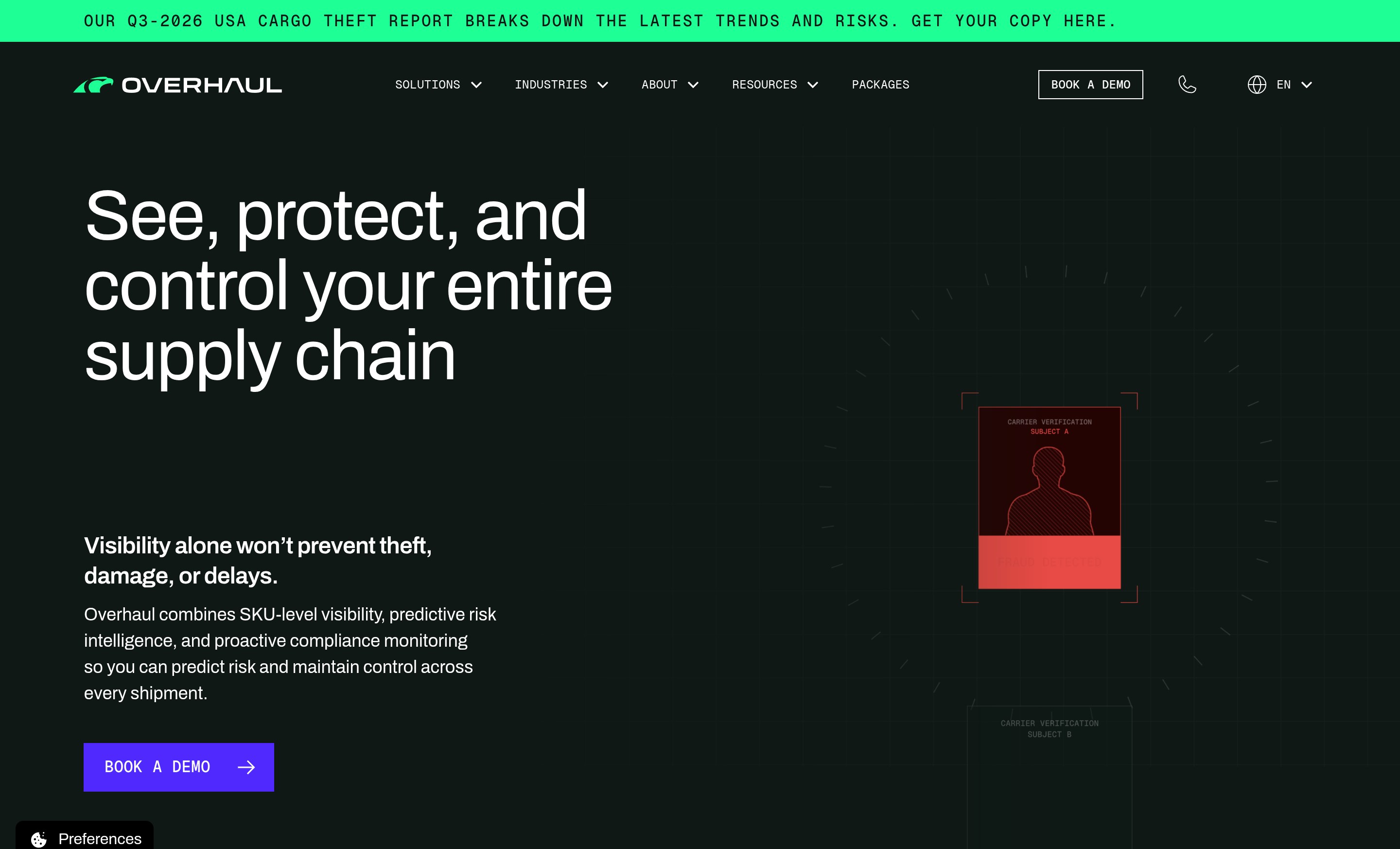
Overhaul is a visibility and risk platform for high-value freight, covering road, rail, ocean, air and final mile in 170+ countries. Its Risk Monitor watches shipments live, flags theft and route deviations, and a 24/7 security team can intervene and coordinate recovery.
The trade off is that Overhaul is built for cargo at risk. Shippers moving routine freight may pay for protection they do not need, and G2 reports a typical go-live of 4 months. It suits fleets hauling pharma, electronics and other theft-prone loads.
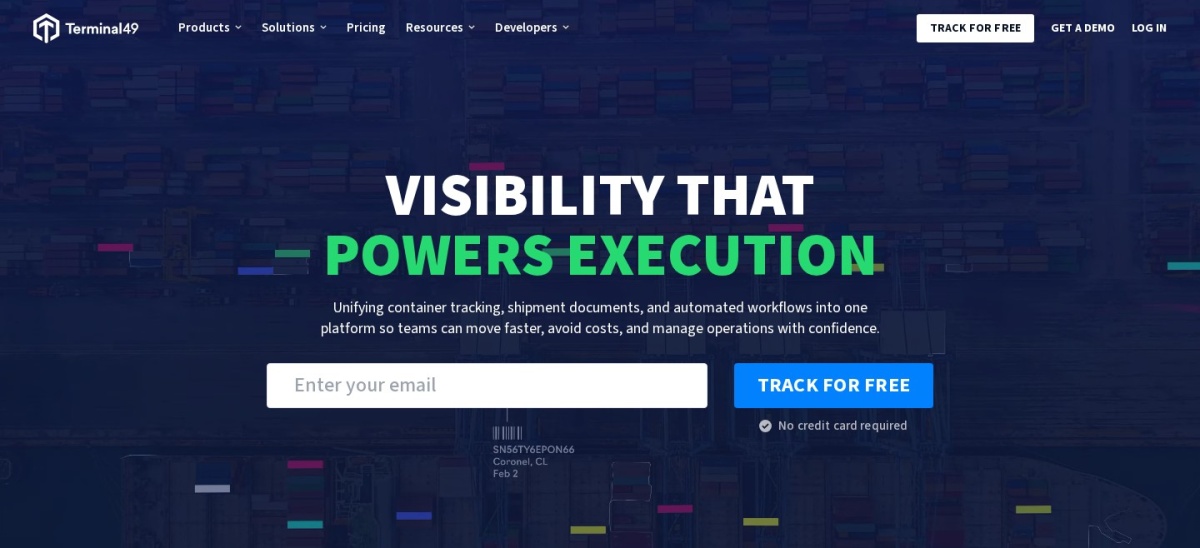
Terminal49 is a container tracking dashboard and API that combines ocean carrier, terminal and North American rail milestones with hold and last-free-day data. Its free plan tracks up to 10 active containers for up to 3 users and includes 50 document credits.
The trade off is that paid plans require a custom quote rather than a self-serve public price, and terminal hold depth centres on the US and Canada. It suits drayage teams that plan pickups around terminal availability.
What we like
Free plan includes up to 10 active containers
Tracks terminal holds, pickup availability and last-free-day dates
GoComet is a cloud logistics platform combining ocean and air container tracking with predictive ETAs, demurrage and detention monitoring, and freight rate procurement. Its modules cover tracking, rate requests, invoicing and shipment execution in one place.
The trade off is that full deployments rely on custom vendor quotes rather than a published price list. It suits import-export and procurement teams that want tracking and rate workflows in one contract.
What we like
Rated 4.9 out of 5 across 242 G2 reviews
Combines tracking with freight quoting and invoice tools
Predictive ETAs plus demurrage tracking
Free trial available before a sales conversation
Watch out for
No published list pricing, quote only
Full multi-module pricing needs a sales quote
Some reviewers report search lag and slower quoting
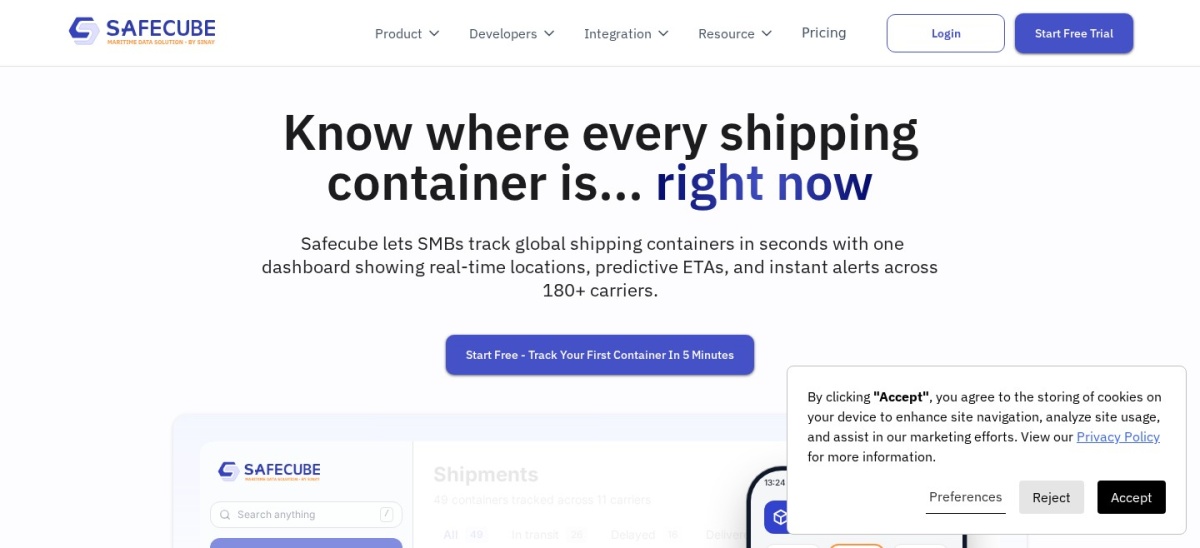
Safecube is a container visibility platform that tracks containers, Bills of Lading and bookings across 180+ carriers with API and webhook access. Its Basic plan begins at $15 a month for up to 10 shipments, with extra shipments at $1.60 each.
The trade off is that higher shipment tiers climb quickly, such as $120 a month for up to 100 shipments on Starter. It suits small businesses starting with low monthly shipment counts that want API access early.
What we like
Lowest published starting price in this list
API access and webhooks from the entry plan
14-day free trial with no card required
Tracks by container, Bill of Lading or booking
Watch out for
Costs rise steeply at higher shipment volumes
Smaller review footprint than the enterprise tools
Drayage tracking is not the same as ocean tracking
Ocean tracking answers where the vessel is. Drayage tracking answers whether a truck can pick the box up, and when the terminal will release it.
The drayage leg needs terminal hold data, last-free-day dates and live truck positions. A tool with vessel data alone leaves dispatchers calling the terminal.
Fleets that run both legs should pair an ocean tracker with an ELD-based truck tracker, or pick a multimodal platform that covers both in one feed.
How we chose
We started from the container tracking and freight visibility tools with the strongest G2 review bases, then kept the ones that cover the truck leg: ELD and telematics feeds, drayage data, intermodal rail or yard visibility.
Prices and ratings were checked on 30 November 2026. Ratings and review counts come from G2 on the same day. Where a vendor publishes no price, the list shows Custom rather than an estimate.
We left out tools with no verifiable third-party rating and tools that track ocean containers only, with no truck, rail or yard view. No vendor paid for a place, and we do not claim to have used these tools ourselves.
How to choose container tracking software for trucking fleets
Start with the leg that costs you the most time, then check the price model against your volume.
Map the legs you actually run. Ocean, rail, drayage and yard are four different data sources. List which ones you need before you compare tools.
Check the truck data source first. ELD and telematics feeds give live truck positions without extra hardware. Ask each vendor whether your carriers already feed their network.
Price it at your real volume. Per-load, per-shipment and per-user pricing cross over at different volumes. See how to set up shipping in WooCommerce for the same volume-first habit at a smaller scale.
Trial the terminal data, not just the map. Run a live container through the trial and check holds, last-free-day dates and alerts before you sign.
FAQ
What is the best container tracking software for trucking fleets?
Descartes MacroPoint is the best pick for most trucking fleets. It tracks truckload freight through carrier ELDs and telematics across 435,000+ carriers and drivers, and it is rated 4.7 out of 5 across 921 G2 reviews.
How much does container tracking software for trucking fleets cost?
Most tools in this list are custom quotes, so expect a sales call for an exact price. The published exceptions are Descartes MacroPoint at $1,000 per user per year and Safecube from $15 a month, while Terminal49 starts free.
Is there a free container tracking tool for trucking fleets?
Yes. Terminal49 offers a free plan for up to 10 active containers and 3 users, with terminal holds and last-free-day dates. Safecube and GoComet offer free trials instead of a free plan.
Which container tracking software is best for small trucking fleets?
Safecube is the best low-cost start, at $15 a month for up to 10 shipments with API access included. Terminal49 is the best free start if your work centres on US ports and North American rail.
What is the difference between Descartes MacroPoint and project44?
MacroPoint is a truckload tracking layer that plugs into a TMS you already run, priced from $1,000 per user per year. project44 is a full enterprise visibility platform across ocean, rail, air, truck and parcel, on a custom quote.
Do I need GPS trackers on my containers?
Not always. ELD and telematics feeds cover trucks you already run, and carrier milestone data covers ocean and rail legs. Add GPS trackers only for high-value or temperature-sensitive loads, where tools such as Overhaul add live monitoring.
SaaS SEO and WordPress specialist with about 8 years of experience. Rakib compares WordPress plugins, themes, hosting and software using public pricing, documentation and user reviews. See how we rank.