CrowdStrike Falcon is the best of the Carbon Black alternatives for most teams, with published prices from sixty dollars a device a year. Huntress suits small teams that want a human SOC, while Defender fits Microsoft shops.
How we make this list: we compare pricing pages, product documentation and public user reviews, then re-check every price before each update. No product paid for a place. Disclosure.
CrowdStrike Falcon Go costs $59.99 a device a year with published pricing and a 15-day trial.
Huntress holds the highest G2 rating at 4.8 out of 5 from 989 reviews, with a 24/7 human SOC.
Microsoft Defender for Business is the cheapest real EDR here at $3 a user a month, covering five devices.
Sophos and Cortex XDR publish no list price, so only seven of the nine tools show a clear price.
Palo Alto Cortex XDR is quote-only, with a small G2 base of 85 reviews.
How do you choose the best Carbon Black alternative?
Start with the price you can actually see. Only seven of the nine tools here publish a list price, so quote-only vendors need a written quote before you compare them fairly.
Match the product to your team size. Managed services suit small teams with no security staff, while full EDR suits teams with analysts who can investigate alerts.
Check the unit the price is charged on. Per-device, per-user and per-endpoint pricing differ, and one user with three devices changes the bill on per-device plans.
Look at the review base, not just the score. A 4.5 from 85 reviews is weaker evidence than a 4.7 from 800, so weigh the count beside the rating.
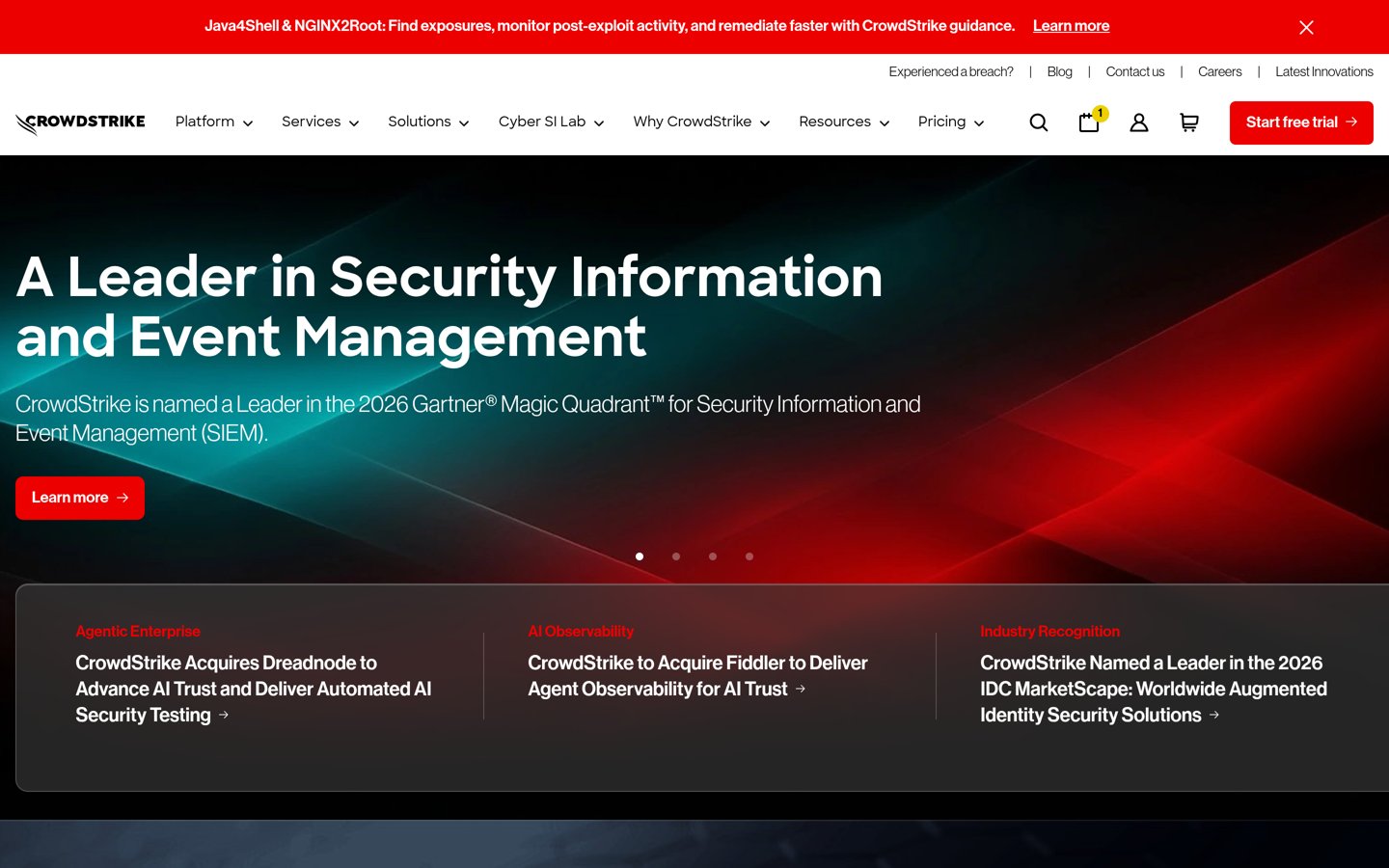
CrowdStrike Falcon is a cloud-native endpoint platform that runs next-generation antivirus, device control and mobile protection from one lightweight sensor. Falcon Go costs $59.99 per device a year for up to 100 devices, with a 15-day free trial.
The trade off is the EDR tier. Full detection and response with threat hunting arrives with Falcon Enterprise at $184.99 per device a year, and the managed tier is quote-only. It suits teams that want published prices.
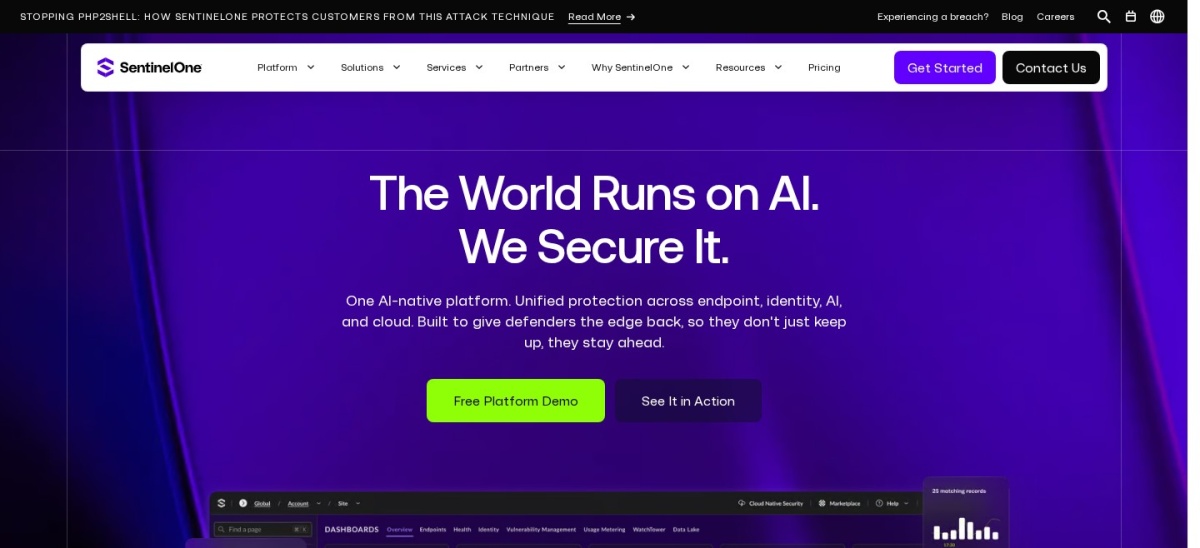
SentinelOne is a platform built to act without waiting for an analyst. Its agent can isolate a compromised device and roll back ransomware damage on its own, and endpoint and cloud workload protection share one agent and console.
The trade off is the tier split. Core starts at $69.99 an endpoint a year, but full EDR, rollback and the AI assistant sit in Complete at $179.99, and every purchase goes through an authorized partner. It suits lean IT teams.
Huntress is a managed detection and response service with a human-led 24/7 security operations centre. It runs over Microsoft Defender antivirus and adds detection, investigation and one-click remediation, with a 4.8 out of 5 rating on G2.
The trade off is scope. Huntress is an EDR service, not a full security suite, so it needs Defender antivirus underneath and adds no firewall or email security. It suits small teams with no security staff.
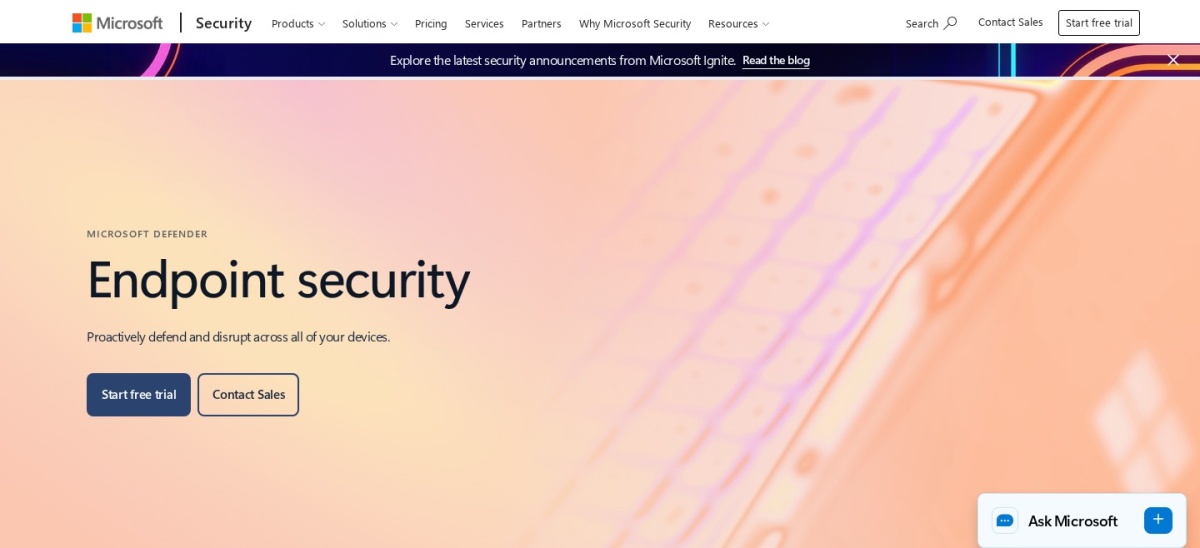
Microsoft Defender for Business homepage, captured Nov 2026.
Microsoft Defender for Business is an endpoint platform that brings enterprise technology to companies of up to 300 users, with next-generation antivirus, detection and response, and automated remediation. Standalone it costs $3 a user a month, and each licence covers five devices.
The trade off is the Microsoft lock-in. It needs a Microsoft 365 subscription to buy, and it is already included in Business Premium, so standalone buyers pay twice. It suits teams already on Microsoft 365.
Sophos Endpoint is a unified endpoint protection and EDR platform with deep-learning malware detection and CryptoGuard anti-ransomware. It is managed through Sophos Central alongside firewall and email, with a 4.7 out of 5 rating on G2.
The trade off is the price source. Sophos publishes no list price, and the $28 a user a year figure rests on third-party reads of vendor pricing, so confirm it in writing. It suits teams already using Sophos firewalls.
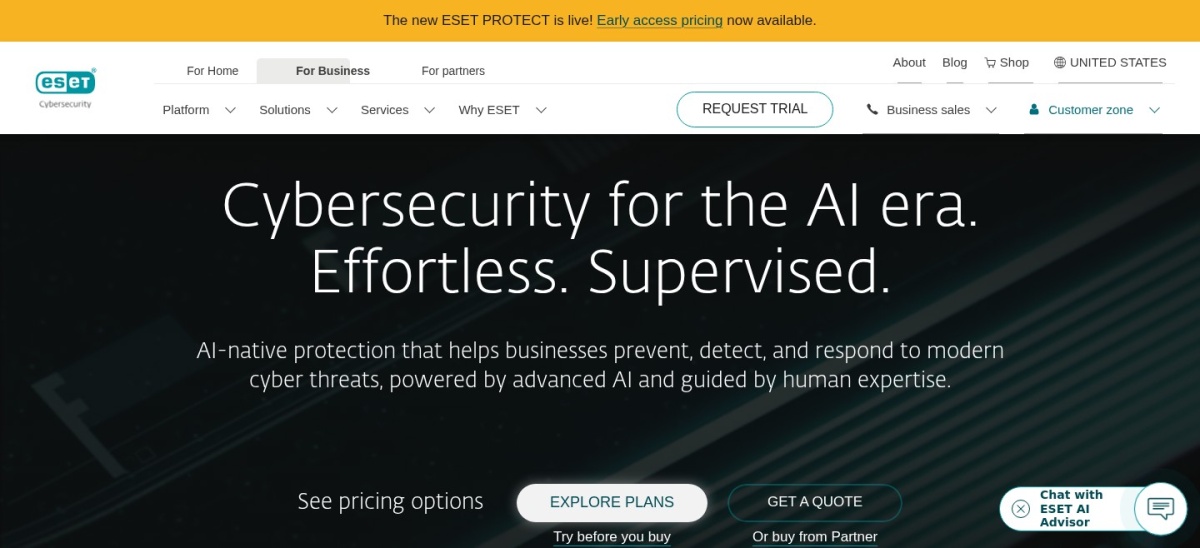
ESET PROTECT is a cloud-based endpoint platform known for low system overhead and fast scans, with prevention, detection and response in one console. Core costs $54.90 a device a year for five devices, with a 30-day free trial.
The trade off is the tier climb. Advanced features such as full disk encryption and cloud app protection sit on higher tiers, so the bill grows with the feature list. It suits mixed environments that prize performance.
ThreatDown is the business endpoint product from Malwarebytes, built around a remediation engine that removes every trace of malware after an infection. Core costs $69 a device a year, with a 14-day free trial.
The trade off is depth. ThreatDown is simpler than CrowdStrike or SentinelOne, with less threat hunting and fewer enterprise controls, so large SOCs outgrow it. It suits lean teams that want simple, strong cleanup.
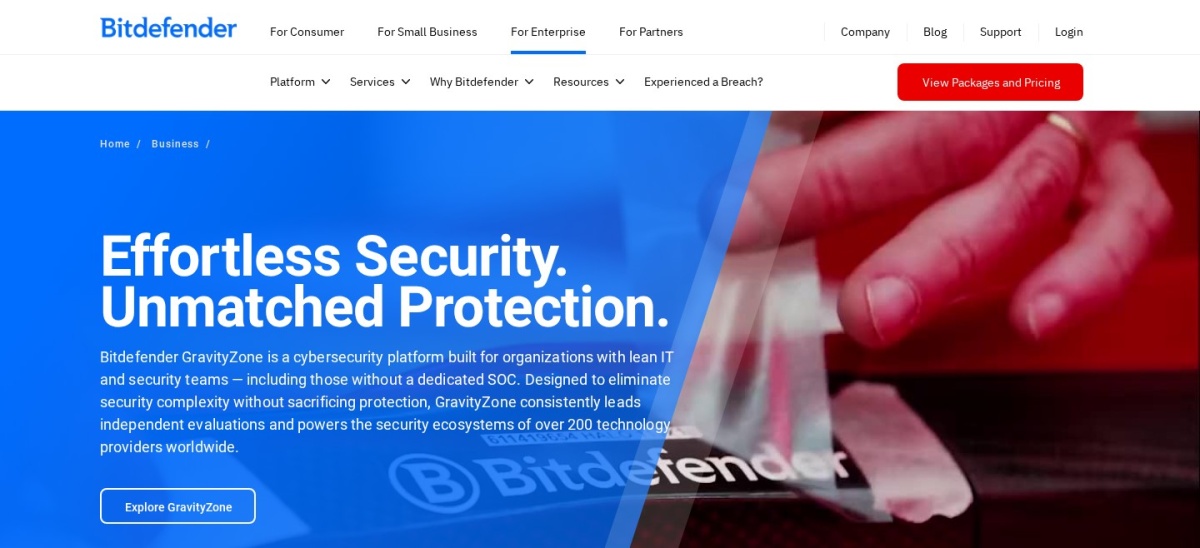
Bitdefender GravityZone homepage, captured Nov 2026.
Bitdefender GravityZone is a cloud-managed endpoint platform whose detection engine ranks at or near the top of independent lab tests year after year. Entry pricing is listed at $38 an endpoint a year, with a 30-day free trial.
The trade off is the G2 base and the price spread. Its G2 rating of 4.2 rests on only 113 reviews, and bundled Small Business Security lists at $324.99 a year, so confirm the per-endpoint price. It suits cost-focused teams.
Palo Alto Cortex XDR is an extended detection and response platform that correlates alerts across endpoints, network and cloud in one console. Pricing is by quote only, and it integrates with Palo Alto firewalls and the wider Palo Alto stack.
The trade off is cost and complexity. Licensing is expensive and complex, and the G2 base is small at 85 reviews, so small teams should get a written quote first. It suits enterprises already running Palo Alto gear.
EDR or managed detection: which does your team need
Full EDR gives your team the tools to investigate alerts. CrowdStrike, SentinelOne, ESET and Cortex XDR all work this way, and they need analysts to use them well.
Managed detection hands the work to a vendor team. Huntress watches alerts around the clock and tells you what to do, which suits teams with no security staff.
The middle ground is automation. SentinelOne can isolate a device and roll back ransomware on its own, while Defender automates investigation and remediation.
For a small team, managed detection usually wins. For a team with analysts, full EDR gives more control for the same money.
How we chose
We started from the endpoint platforms most often named as Carbon Black replacements, then kept the nine with a verified rating on G2 and a published price or a stated quote model.
Prices come from each vendor pricing page, checked on 29 November 2026, and show the regular list price, not a sale. Where a vendor publishes no price, the list says quote-only. Ratings come from G2 on the same day.
We left out tools with no verifiable rating. No vendor paid for a place, and we do not claim hands-on testing for this list.
How to choose a Carbon Black alternative
Start with whether you have analysts to investigate alerts, then compare published prices on the same unit.
Decide EDR or managed first. Teams with no security staff should start with a managed service such as Huntress.
Compare prices on the same unit. Per-device, per-user and per-endpoint prices differ, so convert every quote to a yearly cost per device.
Check the trial terms. Most tools here offer a 14 to 30 day trial, so test the agent on your own machines before buying.
Get quote-only prices in writing. Sophos and Cortex XDR publish no list price, so confirm the quote before you commit.
FAQ
What is the best Carbon Black alternative in 2026?
CrowdStrike Falcon is the best Carbon Black alternative for most teams. Falcon Go costs $59.99 a device a year with published pricing, and it holds a 4.7 out of 5 rating on G2 from 679 reviews.
What is the cheapest Carbon Black alternative?
Microsoft Defender for Business is the cheapest at $3 a user a month, with each licence covering five devices. Sophos Endpoint is next at $28 a user a year, though its price rests on third-party reads of vendor pricing.
Is there a free alternative to Carbon Black?
No. None of the nine alternatives offers a free plan, though most offer a 14 to 30 day trial. Microsoft Defender for Business is included in Microsoft 365 Business Premium at no extra cost.
Which Carbon Black alternative is best for small businesses?
Huntress is the best pick for small businesses, with a 4.8 out of 5 G2 rating and a human team watching alerts around the clock at $8.99 an endpoint a month. CrowdStrike Falcon Go suits teams that want published prices.
CrowdStrike or SentinelOne: which is better?
CrowdStrike is better for published pricing and detection depth, with Falcon Go at $59.99 a device a year. SentinelOne is better for autonomous response, with ransomware rollback in Complete at $179.99 an endpoint a year.
Does Carbon Black have a free plan?
Carbon Black does not offer a free plan for its endpoint products, and neither do the nine alternatives here. Trials of 14 to 30 days are the usual way to test before buying.
SaaS SEO and WordPress specialist with about 8 years of experience. Rakib compares WordPress plugins, themes, hosting and software using public pricing, documentation and user reviews. See how we rank.