Calabrio ONE is the best WFM software for most call centers, combining forecasting, scheduling, quality management and analytics in one suite rated 4.5/5 on G2. Pick Assembled for transparent $25 per-agent pricing, or NICE CXone when a large enterprise center needs the deepest AI forecasting.
How we make this list: we compare pricing pages, product documentation and public user reviews, then re-check every price before each update. No product paid for a place. Disclosure.
Calabrio ONE leads for most centers: WFM, quality and analytics in one suite, rated 4.5/5 on G2.
Assembled is the only standalone WFM tool here with a published price, from $25 per agent a month.
NICE CXone adds WFM only in its $169 Core Suite; Genesys needs the $155 CX 3 plan and Talkdesk the $165 Elite plan.
Calabrio ONE, Verint and Peopleware sell by quote only, so budget for a sales conversation.
Playvox has the highest G2 rating here at 4.7/5, but its WFM module is custom-quoted.
What WFM software should cover
Workforce management is about matching agents to demand. A good tool forecasts call and chat volume, builds shifts around it, and tracks whether agents stick to the plan.
Forecasting quality matters more than the schedule grid. Look for tools that learn from past volume, holidays and campaigns instead of copying last week's rota.
Adherence and time-off handling are where cheap tools fall short. The schedule is only useful if supervisors can see who is late, who is on break, and approve leave without breaking coverage.
Cutting volume helps as much as staffing it. Our guide on adding an AI chatbot to WordPress shows how deflection takes routine questions out of the queue before WFM has to staff them.
Suites such as NICE, Genesys and Talkdesk fit teams that want routing, quality and scheduling in one contract, with one vendor to call when something breaks.
Calabrio ONE is a workforce engagement suite that combines forecasting, scheduling, quality management, recording and analytics in one platform. It forecasts in 15-minute intervals, builds multi-skill schedules, tracks adherence in real time and links adherence patterns to quality scores, and it is rated 4.5 out of 5 on G2 from 394 reviews.
The trade off is pricing and setup. Calabrio publishes no price, with third-party figures near $75 per agent a month, and implementation takes 2 to 4 months. It suits centers with 200 to 2,000 agents that want quality and workforce management from one vendor.
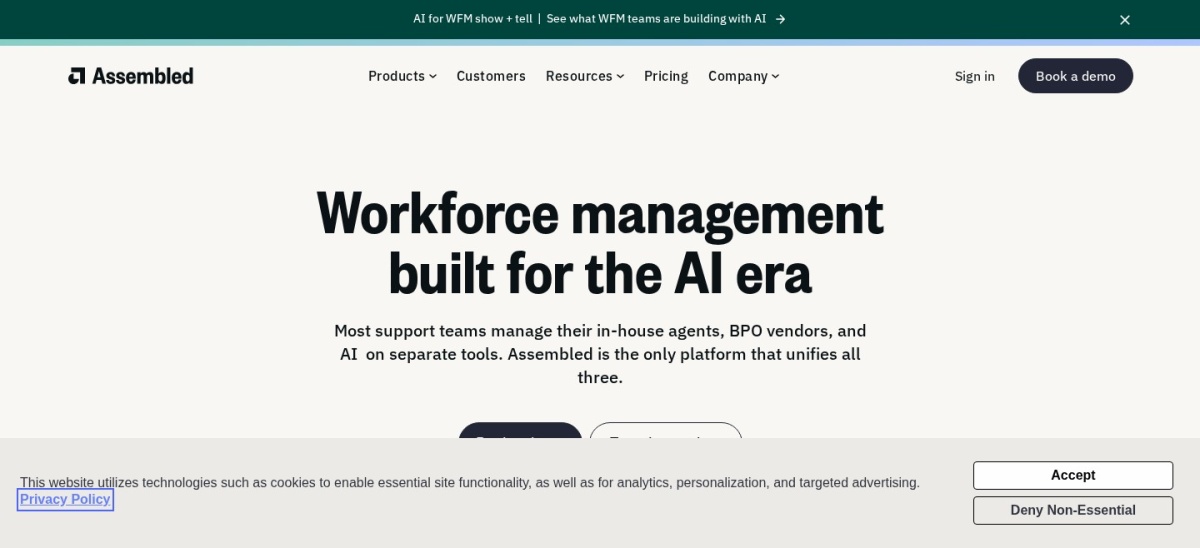
Assembled is a workforce management platform built for modern support teams. Its WFM Core plan starts at $25 per agent a month and covers scheduling templates, time tracking, real-time adherence and staffing analytics, with Pro at $45 and Enterprise at $75 per agent a month.
The trade off is forecasting depth and fees. Machine-learning forecasting sits in Pro at $45 per agent a month, not Core, and an unpublished platform fee sits on top of the per-agent price. It suits SaaS and ecommerce support teams with 25 to 500 agents that want fast setup.
NICE CXone is an enterprise contact center suite with deep workforce management. The Core Suite at $169 per agent a month adds WFM with AI forecasting and performance reporting, while the cheapest Digital Agent plan starts at $71 per agent a month for digital channels only.
The trade off is cost and complexity. Full scheduling sits two tiers above entry, and the platform needs a dedicated WFM analyst to run well. It suits large centers with multi-skill, multi-site staffing and strict service levels.
Genesys Cloud CX is a cloud contact center platform with workforce engagement built in. The entry CX 1 plan costs $75 per user a month for voice, while workforce management, forecasting and scheduling arrive in CX 3 at $155 per user a month, billed annually.
The trade off is the tier jump. WFM costs twice the entry price, and digital channels are an add-on until CX 2 at $115 per user a month. It suits centers already on Genesys Cloud that want scheduling on native routing data.
What we like
WFM shares data with native routing
Four published tiers from $75 to $240
Rated 4.4/5 from 1,550 G2 reviews
Watch out for
WFM needs the $155 CX 3 plan
WFM is a bundled feature, not a standalone product
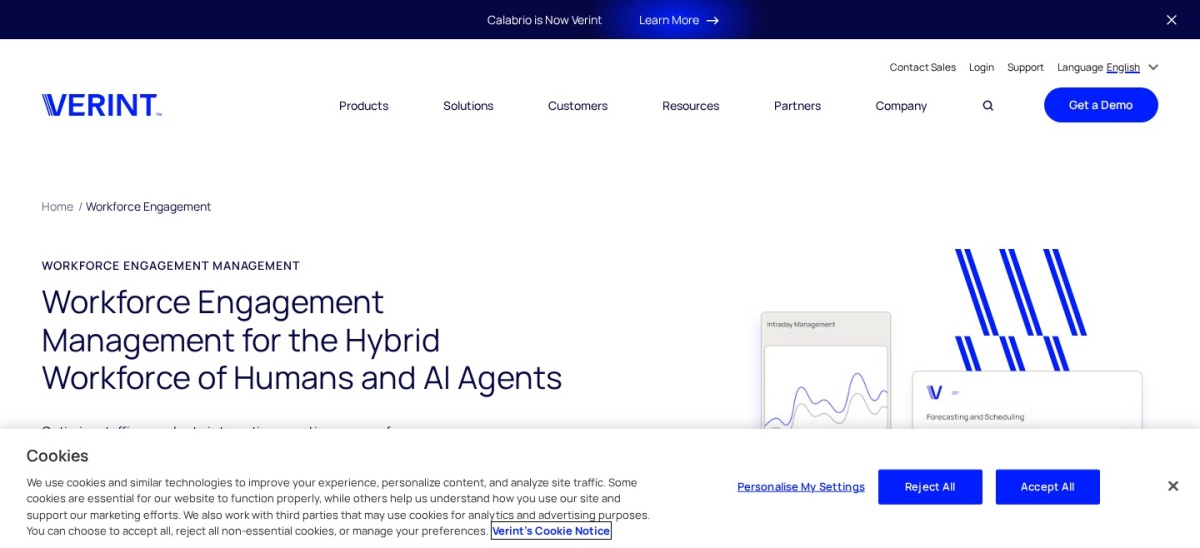
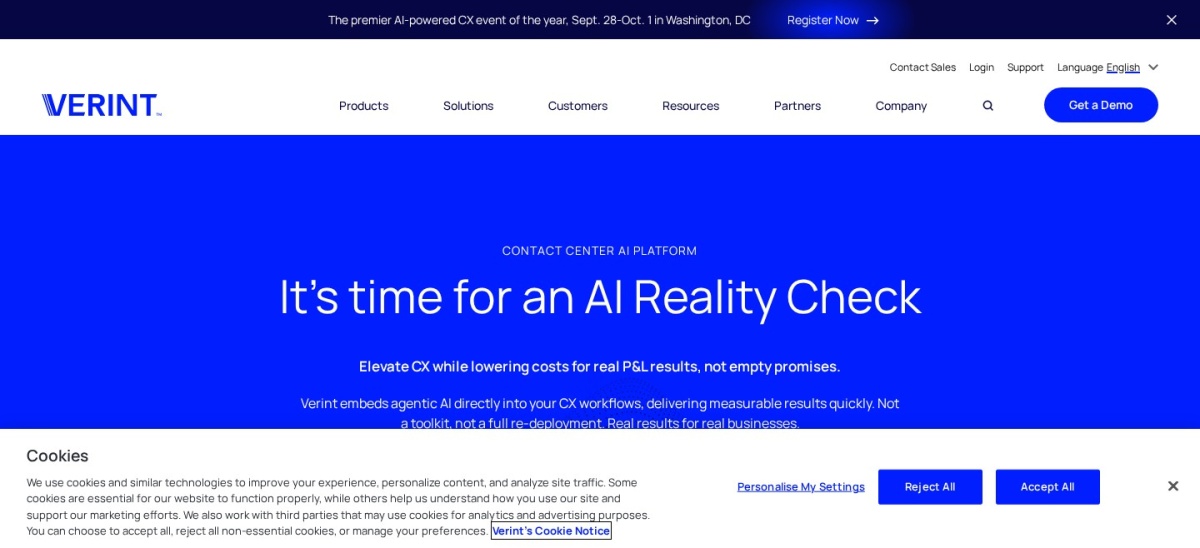
Verint Workforce Management homepage, captured Nov 2026.
Verint Workforce Management is an enterprise scheduling platform with flexible named-employee and volume-based licensing. It covers forecasting, multi-skill scheduling, real-time adherence and automated time-off management, and it is rated 4.2 out of 5 on G2 from 213 reviews.
The trade off is setup time and price opacity. G2 data puts average implementation at 6 months, and Verint publishes no price, so every deal needs a sales conversation. It suits large, regulated centers that need long-term capacity planning beside day-to-day scheduling.
Playvox WFM is part of a workforce engagement platform, now owned by NICE, that pairs scheduling with quality management and coaching. Its Starter tier lists at $15 per user a month, and it is rated 4.7 out of 5 on G2 from 129 reviews, the highest rating in this list.
The trade off is module pricing. The WFM module itself is custom-quoted on top of the tier price, and setup fees run about $3,000 to $7,000. It suits digital-first centers that want scheduling, scorecards and coaching from one vendor.
Talkdesk is a cloud contact center platform with workforce management on its Elite plan. Digital Essentials starts at $85 per user a month and Voice Essentials at $105, while Elite at $165 per user a month adds true omnichannel routing, workforce management and screen recording.
The trade off is the jump to Elite. Scheduling is not in the two cheaper plans, and listed prices rest on a three-year commitment. It suits mid-market teams that want industry-ready workflows with scheduling in one platform.
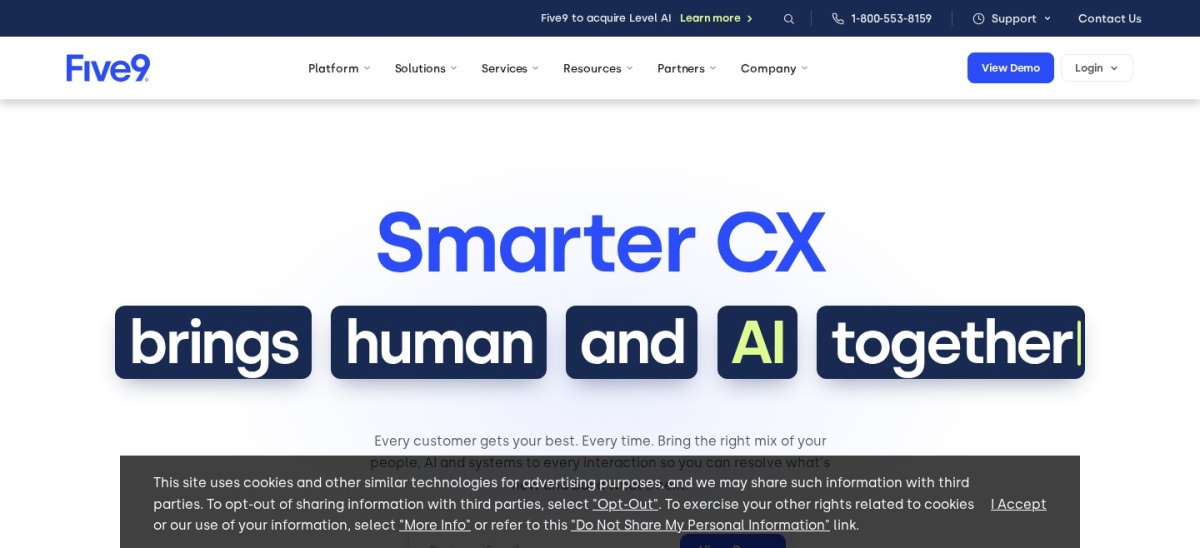
Five9 is a cloud contact center platform with workforce engagement management on its Pro plan. Digital starts at $119 per concurrent seat a month and Core at $159, both with a 50-seat minimum, while Plus, Pro and Enterprise are priced by quote.
The trade off is the seat floor. A team of 15 agents still pays for 50 seats, so the real entry cost is about $5,950 a month on Digital. It suits large centers running blended inbound and outbound work at scale.
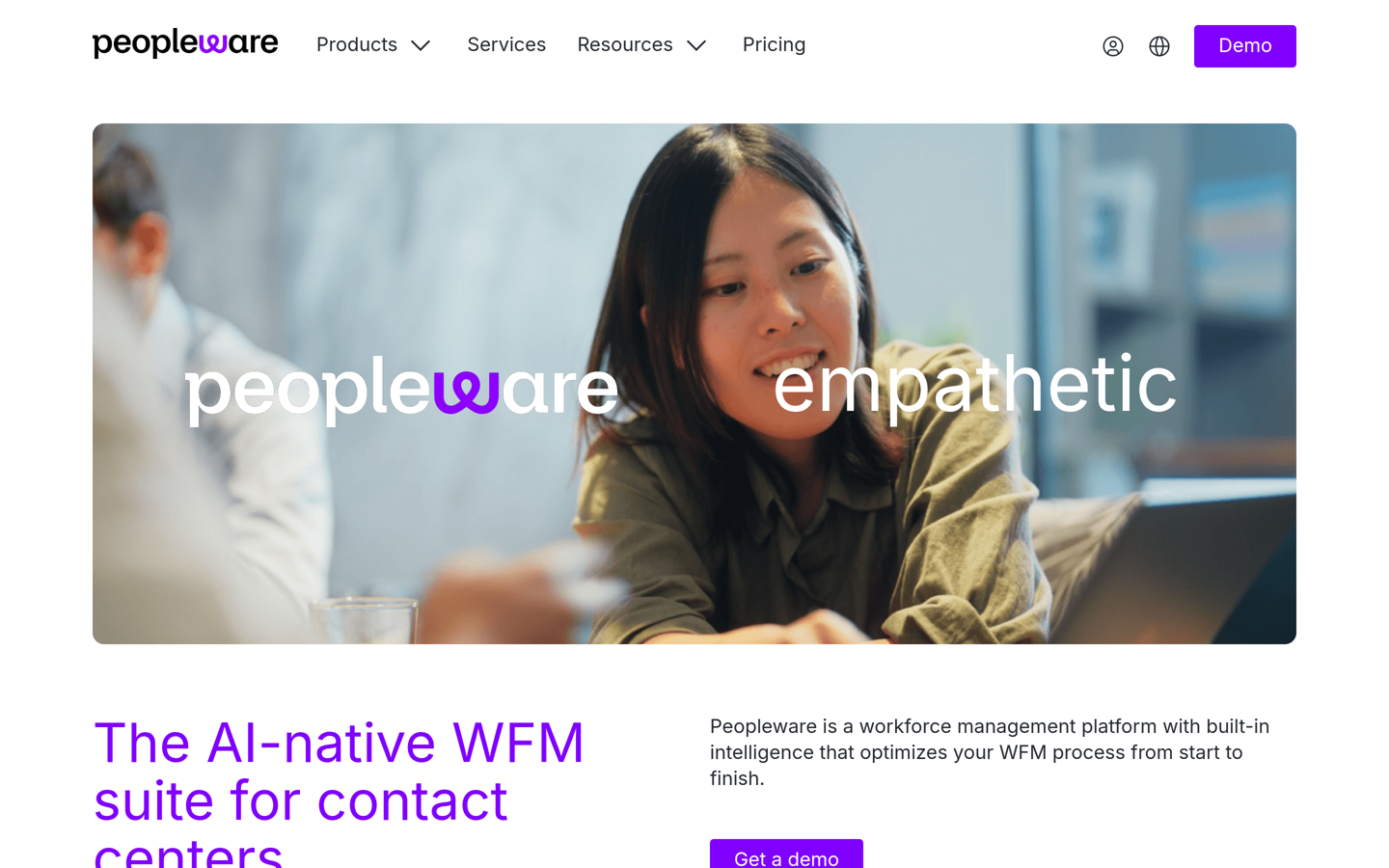
Peopleware is the cloud workforce management platform formerly sold as injixo, from InVision Group, covering forecasting, scheduling, intraday management and agent self-service. It is rated 4.4 out of 5 on G2 from 30 reviews, and it works with most contact center platforms through an open API.
The trade off is pricing transparency. Injixo used to publish prices from 299 euros a month, but since the January 2025 rebrand to Peopleware, pricing is by quote only. It suits mid-market centers that want true cloud WFM without enterprise weight and a 2-month setup, per G2.
Standalone tools such as Calabrio ONE, Verint, Assembled, Playvox and Peopleware sell workforce management as the product. They plug into the phone system you already run, so you can keep your routing and swap the WFM layer later.
Built-in WFM comes inside a contact center suite. NICE puts it in the $169 Core Suite, Genesys in the $155 CX 3 plan, Talkdesk in the $165 Elite plan and Five9 in its quote-only Pro plan, so the scheduling price is really the price of the whole platform tier.
Pick standalone when your phone system already works and you only need better staffing. Pick built-in when you are buying or replacing the contact center platform anyway and want one contract.
How we chose
We started from the WFM tools most often shortlisted for call centers, then kept nine with a public G2 rating and a real call-center install base.
Prices come from each vendor's pricing page or G2 pricing data, checked on 26 November 2026. Ratings and review counts come from G2 on the same day. Where a vendor shows no price, the list shows Quote.
We left out shift schedulers without call-volume forecasting. No vendor paid for a place, and we do not claim to have used these tools ourselves.
How to choose WFM software for your call center
Start with your channel mix, then match the tool to your team size.
Count the channels you staff. Voice-only teams can use a lighter tool; blended voice, chat and email need multi-skill scheduling and intraday tools.
Check whether WFM is bundled or separate. Suites such as NICE, Genesys and Talkdesk hide WFM in a higher tier, while standalone tools price it directly.
Ask for a quote early on quote-only tools. Calabrio ONE, Verint and Peopleware publish no price, so get numbers before you shortlist.
Trial forecasting on your own history. Ask each vendor to forecast a past month from your call volumes and compare the error before you sign.
FAQ
What is the best WFM software for call centers?
Calabrio ONE is the best pick for most call centers. It combines forecasting, scheduling, quality management and analytics in one suite, rated 4.5 out of 5 on G2 from 394 reviews, and it fits centers from about 200 to 2,000 agents.
How much does WFM software for call centers cost?
Published prices in this list run from $15 to $119 per user a month, while WFM itself sits in higher tiers at $155 to $169 a month. Calabrio ONE, Verint and Peopleware sell by quote only, so their cost depends on agent count and modules.
Is standalone WFM better than built-in WFM?
Standalone WFM suits teams that already have a phone system and only need better staffing, since it plugs into what you run. Built-in WFM suits teams buying a new contact center platform anyway, because scheduling, routing and quality share one contract and one data set.
What is the difference between WFM and scheduling software?
Scheduling software builds shifts. WFM adds forecasting of call volume, capacity planning, real-time adherence tracking and time-off management on top of the schedule, so staffing matches demand instead of copying last week's rota.
How long does WFM software take to set up?
Setup varies widely. G2 data puts Assembled at about 1 month and Playvox and Peopleware at about 2 months, while Verint averages 6 months and Calabrio ONE 2 to 4 months. Large enterprise rollouts take the longest.
Can small call centers use WFM software?
Yes. Assembled starts at $25 per agent a month with a published price, and Playvox lists a $15 Starter tier, though its WFM module is quoted separately. Small teams should avoid the quote-only enterprise suites, which are priced and built for hundreds of agents.
SaaS SEO and WordPress specialist with about 8 years of experience. Rakib compares WordPress plugins, themes, hosting and software using public pricing, documentation and user reviews. See how we rank.