Best Software for Contact Center Scheduling in 2026: 9 Tools Compared
WLWPLegible EditorsLast verified 24 Nov 2026How we rank13 min read
★ Short answer
NICE CXone is the best software for contact center scheduling for most large centers. Its Core Suite adds workforce management with AI forecasting at $169 per agent a month, and it is rated 4.3/5 on G2. Pick Assembled for modern support teams and Talkdesk for mid-market omnichannel centers.
How we make this list: we compare pricing pages, product documentation and public user reviews, then re-check every price before each update. No product paid for a place. Disclosure.
NICE CXone Core adds workforce management with AI forecasting at $169 per agent a month, with a 4.3/5 G2 rating from 1,730 reviews.
Assembled is the only standalone scheduling tool here with a published price, from $25 per agent a month.
Talkdesk Elite adds workforce management at $165 per user a month, with no seat minimum on published plans.
Five9 requires a 50-seat minimum on its published plans, so small teams pay for seats they do not use.
Calabrio ONE and Verint sell by quote only, so budget for a sales conversation and a 2-4 month setup.
What contact center scheduling software should cover
Contact center scheduling is about matching agents to demand. A good tool forecasts call and chat volume, builds shifts around it, and tracks whether agents stick to the plan.
Forecasting quality matters more than the schedule grid. Look for tools that learn from past volume, holidays and marketing campaigns instead of copying last week's rota.
Adherence and time-off handling are where cheap tools fall short. The schedule is only useful if supervisors can see who is late, who is on break, and approve leave without breaking coverage.
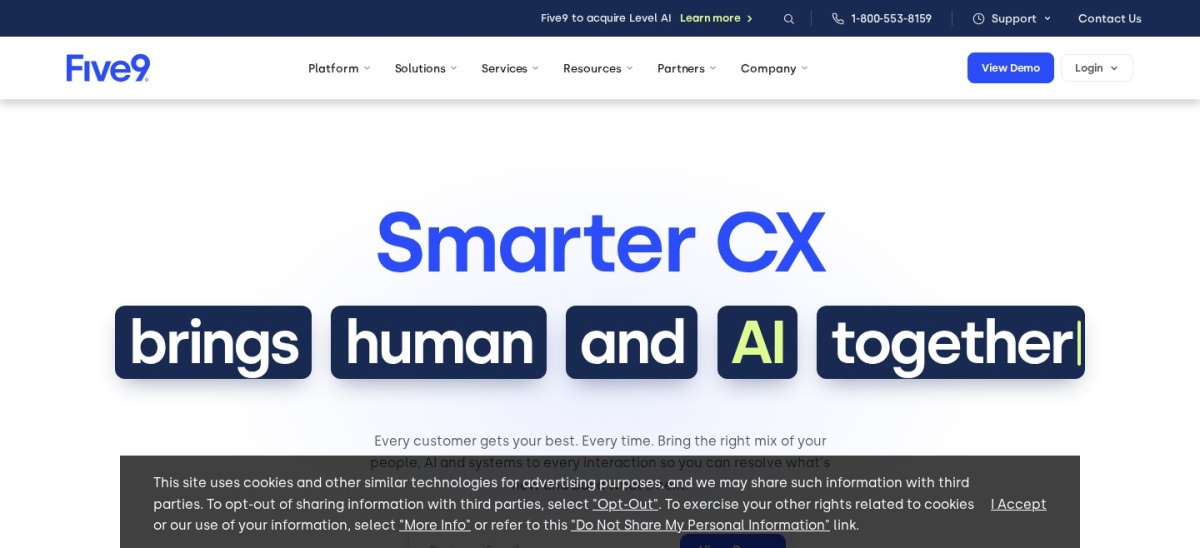
Suites such as NICE, Talkdesk and Five9 fit teams that want routing, quality and scheduling in one contract, with one vendor to call when something breaks.
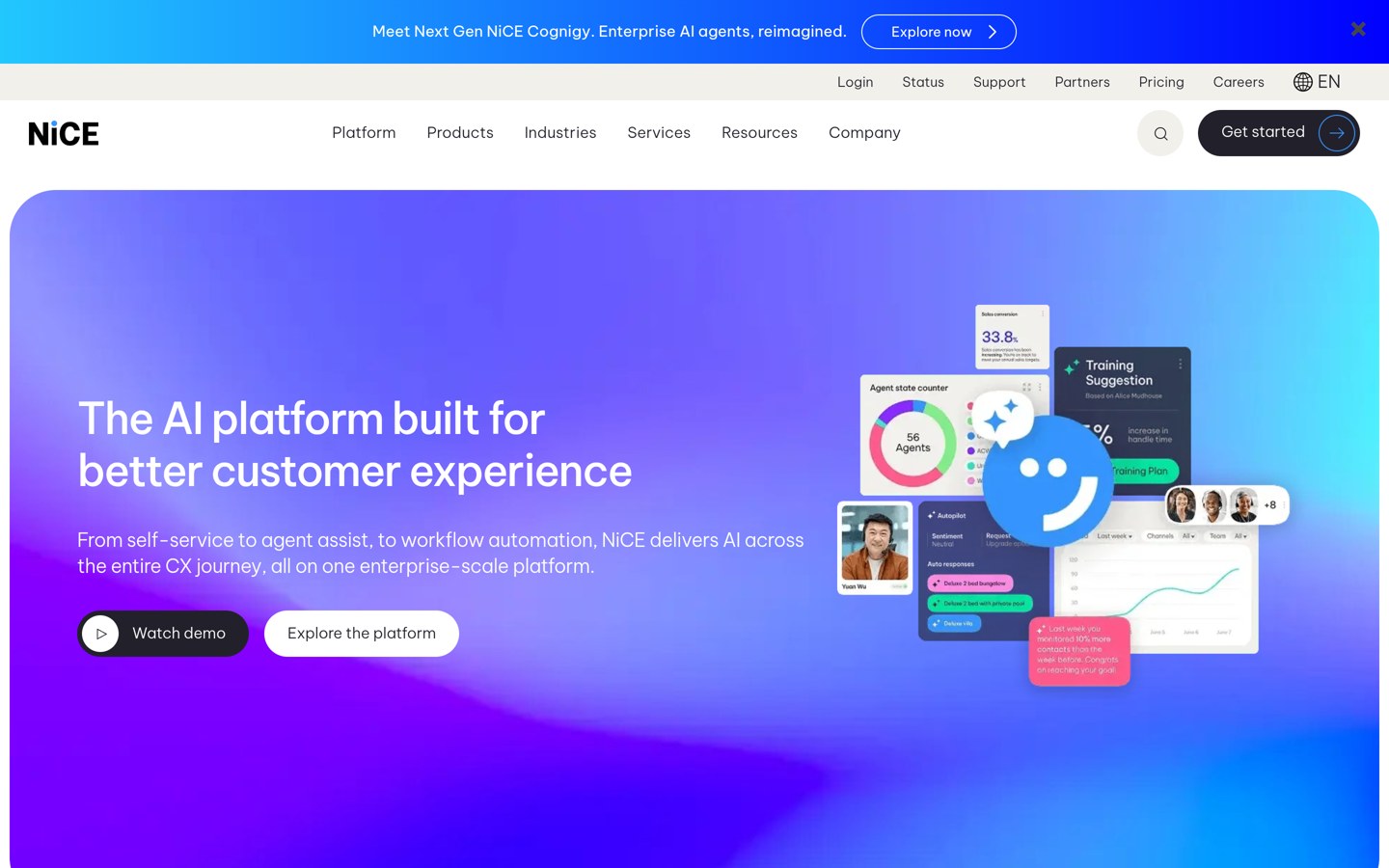
NICE CXone is an enterprise contact center suite with deep workforce management. The Core Suite at $169 per agent a month adds WFM with AI forecasting and performance reporting, while the cheapest Digital Agent plan starts at $71 per agent a month for digital channels only.
The trade off is cost and complexity. Full scheduling sits two tiers above entry, and the platform needs a dedicated WFM analyst to run well. It suits large centers with multi-skill, multi-site staffing and strict service levels.
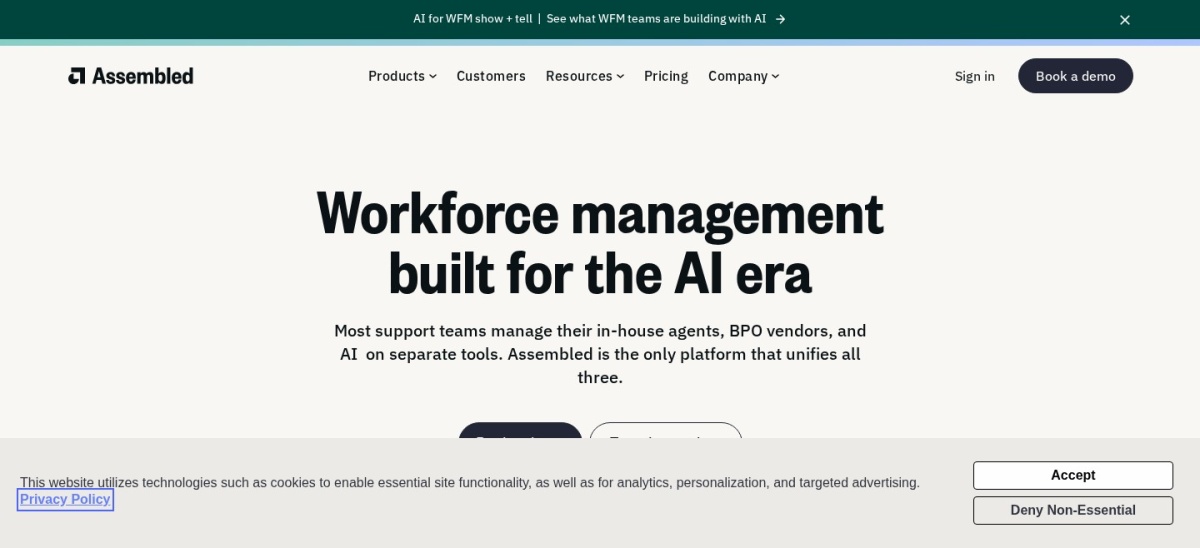
Assembled is a workforce management platform built for modern support teams. Its WFM Core plan starts at $25 per agent a month and covers AI scheduling, machine-learning forecasting and real-time adherence, with Pro at $45 and Enterprise at $75 per agent a month.
The trade off is long-range planning. Reviewers praise the fast setup and live dashboards but note lighter capacity planning than legacy suites. It suits SaaS and ecommerce support teams with 25 to 500 agents.
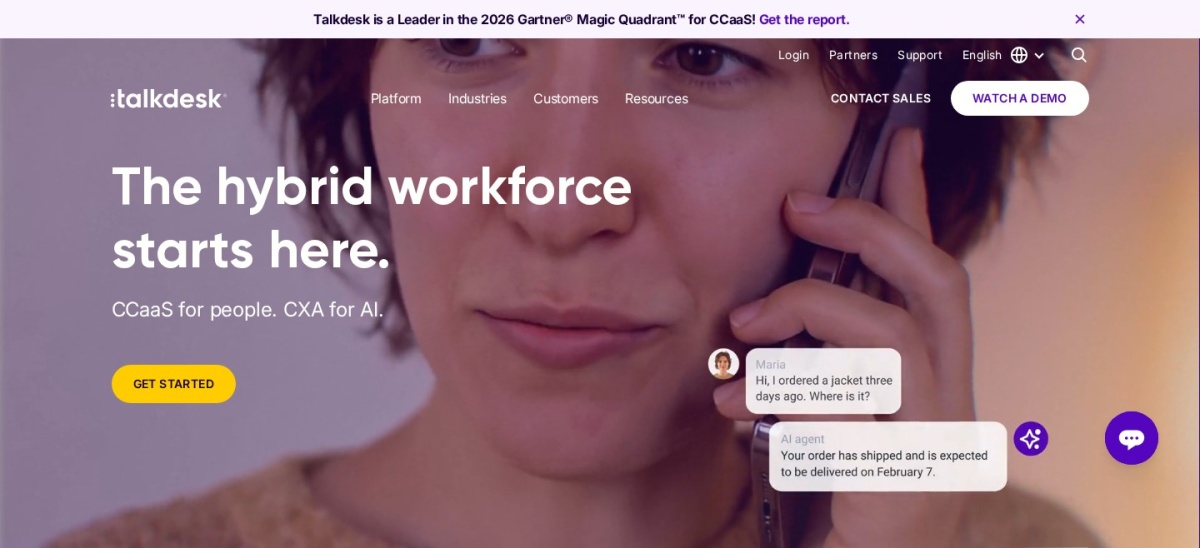
Talkdesk is a cloud contact center platform with workforce management on its Elite plan. Digital Essentials starts at $85 per user a month and Voice Essentials at $105, while Elite at $165 per user a month adds true omnichannel routing, workforce management and screen recording.
The trade off is the jump to Elite. Scheduling is not in the two cheaper plans, and listed prices rest on a three-year commitment. It suits mid-market teams that want industry-ready workflows with scheduling in one platform.
Five9 is a cloud contact center platform with workforce engagement management on its Pro plan. Digital starts at $119 per concurrent seat a month and Core at $159, both with a 50-seat minimum, while Plus, Pro and Enterprise are priced by quote.
The trade off is the seat floor. A team of 15 agents still pays for 50 seats, so the real entry cost is about $5,950 a month on Digital. It suits large centers running blended inbound and outbound work at scale.
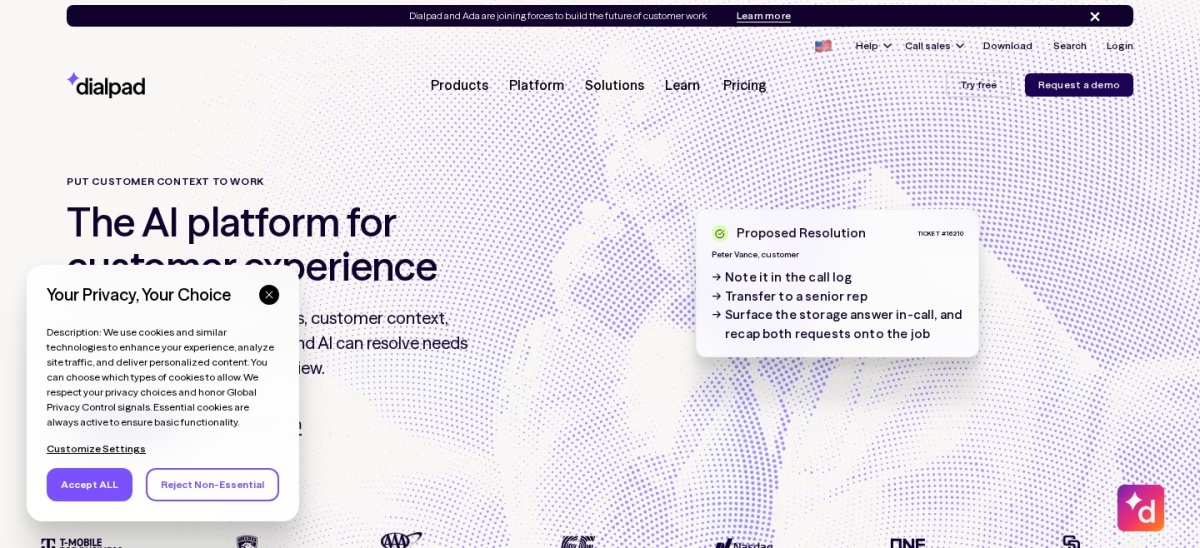
Dialpad Ai Contact Center homepage, captured Nov 2026.
Dialpad Ai Contact Center puts AI transcription, summaries and sentiment analysis in every plan. Essentials starts at $80 per user a month billed annually, Advanced at $115 adds live coaching, and Premium at $150 adds workforce management.
The trade off is that scheduling doubles the entry price. Premium is the only tier with WFM, so teams that only need scheduling pay for the full AI coaching stack too. It suits mid-market teams that want one vendor for phones and the contact center.
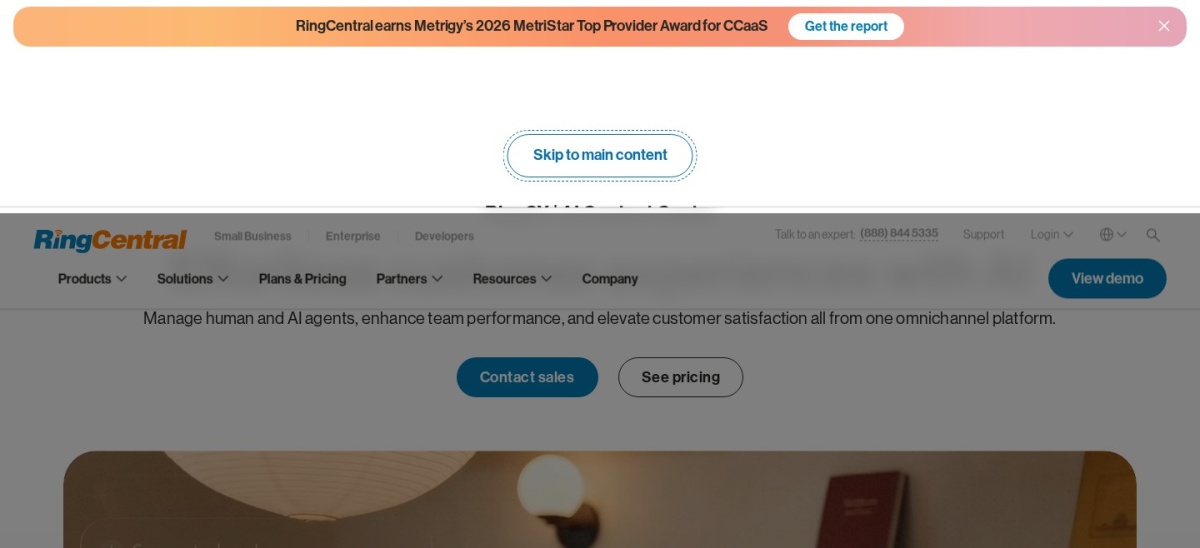
RingCX is RingCentral's AI contact center, with voice and more than 20 digital channels. Standard starts at $65 per user a month billed annually, Professional at $95 adds AI quality tools, and Elite at $145 adds AI Supervisor Assist and AI Workforce Management.
The trade off is that scheduling is a top-tier feature. Standard and Professional have no WFM, and AI add-ons cost from $20 per user a month each on lower plans. It suits teams already on RingCentral that want scheduling without a second vendor.
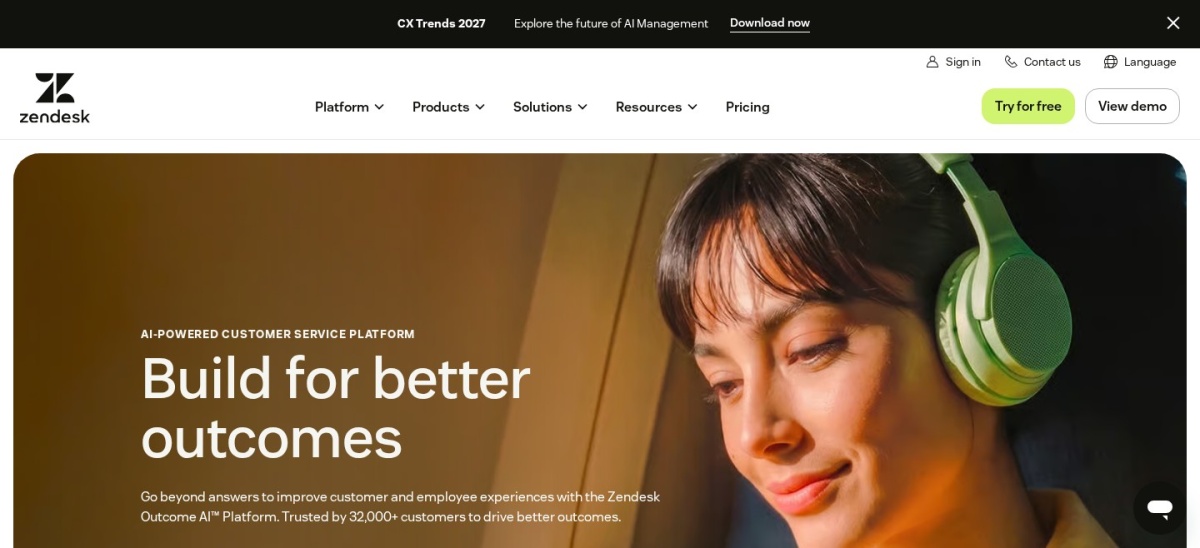
Zendesk sells workforce management inside its Workforce Engagement Bundle at $50 per agent a month paid yearly, on top of a Suite plan. It adds forecasting, auto-scheduling, real-time adherence and agent self-service inside the agent workspace, on native ticket, voice and chat data.
The trade off is the add-on stack. The $50 bundle applies to all licensed seats, and Support Team starts at $19 per agent a month, so the all-in cost climbs fast past 50 agents. It suits teams that already live inside Zendesk and want scheduling without a second login.
Calabrio ONE combines workforce management, quality management, analytics and performance management in one suite. It forecasts in 15-minute intervals, builds schedules, records calls and links adherence patterns to quality scores, and it is rated 4.4/5 on G2 from 449 reviews.
The trade off is pricing and setup. Calabrio publishes no price, with third-party figures near $75 per agent a month, and implementation takes 2 to 4 months. It suits centers with 200 to 2,000 agents that want QM and WFM from one vendor.
Verint Workforce Management homepage, captured Nov 2026.
Verint Workforce Management is an enterprise scheduling platform with flexible named-employee and volume-based licensing. It covers forecasting, multi-skill scheduling, real-time adherence and automated time-off management, and it is rated 4.2/5 on G2 from 213 reviews.
The trade off is price and weight. Verint publishes no list price, implementation runs 3 to 6 months, and smaller operations often find the cost hard to justify. It suits large regulated centers that need on-premise or hybrid deployment and deep customization.
Standalone scheduling or a full contact center suite?
Standalone tools such as Assembled fit teams that already have a contact center or helpdesk and only need better forecasting and scheduling.
Suites such as NICE, Talkdesk and Five9 fit teams that want routing, quality and scheduling in one contract, with one vendor to call when something breaks.
The suite route costs more per seat, but it removes integration work. The standalone route is cheaper and faster to set up, but you still pay for the contact center underneath.
How we chose
We started from the contact center platforms and standalone WFM tools most often named in 2026 comparison lists, then kept those with real scheduling and forecasting features.
Prices come from each vendor's pricing page and G2 pricing pages, checked on 24 November 2026. Ratings and review counts come from G2 on the same day. Where a vendor shows a sale, the list shows the regular price.
We left out tools with no scheduling feature and tools that only sell rostering for retail or hospitality. No vendor paid for a place, and we do not claim hands-on testing for this list.
How to choose contact center scheduling software
Start with your channel mix and agent count, then check where scheduling actually lives in each price list.
Count the agents you schedule at once. Concurrent-seat pricing suits shift teams, while named-user pricing suits teams where everyone works the same hours.
Check which tier holds scheduling. In most suites, scheduling sits one or two tiers above entry, so compare the WFM tier price, not the headline price.
Test the forecast against your own data. Ask for a trial with last quarter's volume and see how close the forecast lands before you sign.
Confirm time-off and adherence tools. A schedule that cannot handle leave requests or show live adherence will fall apart in the first busy week.
FAQ
What is the best software for contact center scheduling?
NICE CXone is the best pick for most large centers. Its Core Suite adds workforce management with AI forecasting at $169 per agent a month, and it is rated 4.3 out of 5 on G2 from 1,730 reviews.
Is there a standalone scheduling tool for contact centers?
Yes. Assembled is a standalone workforce management tool with AI scheduling from $25 per agent a month. It connects to Zendesk, Salesforce Service Cloud and Intercom.
How much does contact center scheduling software cost?
Published prices run from $25 per agent a month for Assembled to $169 per agent a month for NICE CXone Core. Enterprise tools such as Calabrio ONE and Verint sell by quote only.
Do I need workforce management or just a rota tool?
A rota tool is enough for a small team with steady volume. Workforce management pays off once you have shifting demand, multiple skills and more than about 25 agents to schedule.
Can scheduling software handle time off?
Most tools in this list handle time-off requests and show their effect on coverage. NICE, Calabrio and Verint all automate time-off management as part of WFM.
What is the cheapest contact center scheduling option?
Assembled is the cheapest published option at $25 per agent a month. Among full suites, RingCX Standard starts at $65 per user a month, but scheduling needs the $145 Elite plan.