Best Tools for Entity Optimization in 2026: 9 Tools Compared
WLWPLegible EditorsLast verified 24 Nov 2026How we rank12 min read
★ Short answer
InLinks is the best tool for entity optimization, with automated internal linking and entity audits from $49 a month, rated 4.9/5 on Capterra. WordLift is the best WordPress-native option, and Schema App is the best choice for enterprise schema at scale.
How we make this list: we compare pricing pages, product documentation and public user reviews, then re-check every price before each update. No product paid for a place. Disclosure.
InLinks is rated 4.9/5 on Capterra from 11 reviews, with automated internal linking from $49 a month.
WordLift is rated 4.7/5 on G2 from 41 reviews, built for WordPress with a Starter plan at €59 a month.
Surfer is rated 4.8/5 on G2 from 537 reviews, from $49 a month, with entity coverage in its editor.
Clearscope is rated 4.9/5 on G2 from 92 reviews, from $129 a month, the highest starting price here.
Frase is rated 4.8/5 on G2 from 309 reviews, from $39 a month, the cheapest paid plan here.
What a tool for entity optimization should do
Entity optimization is the work of making sure search engines and AI answers understand what your content is about. It covers entities, schema markup, internal linking and knowledge graphs, so a page ranks for a topic, not just a keyword.
Two kinds of tools do this job. Entity tools such as InLinks, WordLift and Schema App build the structured data and the links between topics, while content optimizers such as Surfer, Clearscope, Frase and MarketMuse check that a page covers the entities a topic needs.
Schema markup is the foundation. Without it, search engines guess what a page is about, and AI answers cite the pages that are clearest. WordLift and Schema App automate the markup at scale.
Free plans are rare here. InLinks has a free plan, and most others start at $39 to $49 a month, with enterprise tools sold by quote.
List prices in each vendor's currency, checked Nov 2026
Schema AppCustom
KalicubeCustom
MarketMuseCustom
Yoast SEOFREE$119
Frase$468
InLinksFREE$588
Surfer$588
WordLift€708
Clearscope$1,548
The 9 best tools for entity optimization
01
InLinks
4.9/5on Capterra (11 reviews, checked Nov 2026)
Paid from$49/mo
Best tool for entity optimization
Starting price$49/mo
Free planYes
Schema markupYes, automated
Internal linkingYes, automated
inlinks.com
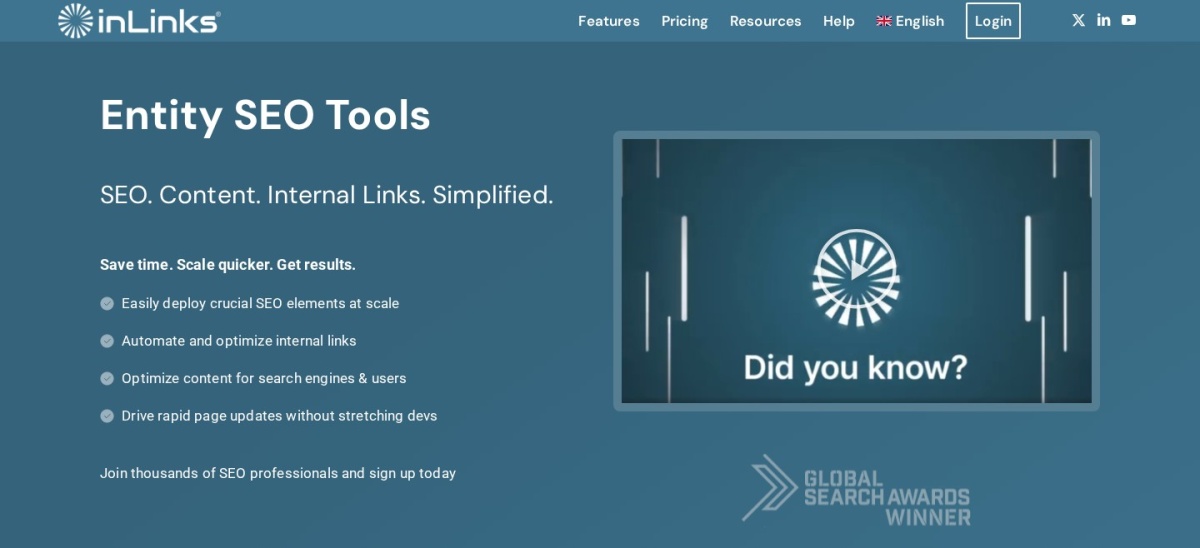
InLinks homepage, captured Nov 2026.
InLinks is the entity optimization tool built for the job. It audits a site for entities, adds schema markup automatically, and builds internal links between related topics, with a free plan and paid plans from $49 a month. It is rated 4.9/5 on Capterra from 11 reviews.
The trade off is the small review base. Eleven Capterra reviews is few, and there is no confirmed G2 rating, so the score should be read with care. It suits teams that want automated internal linking and schema without an enterprise price.
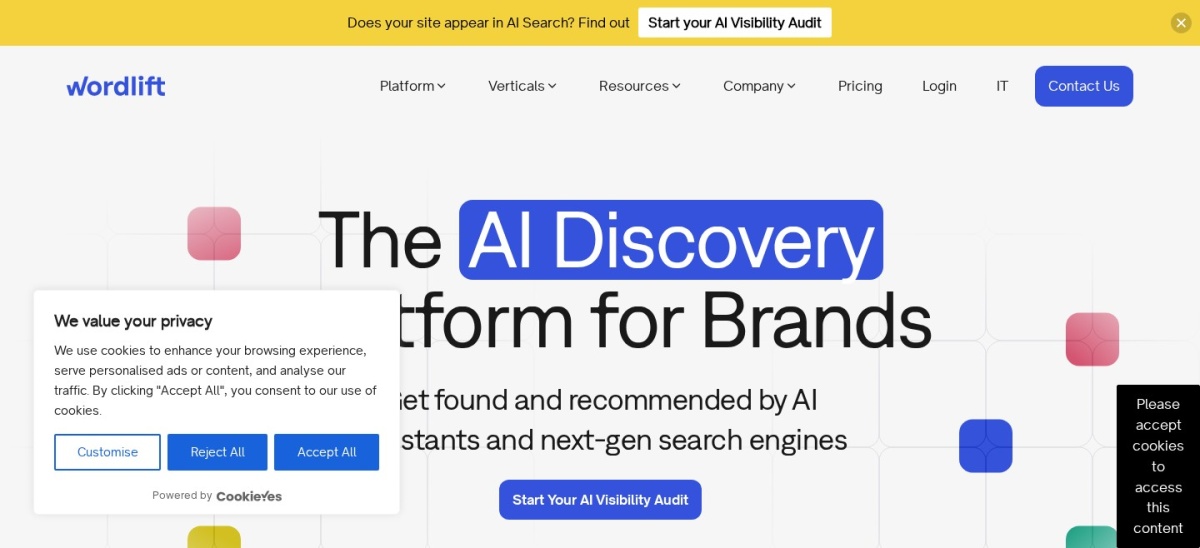
WordLift is the entity tool built for WordPress. Its plugin adds schema markup, builds a knowledge graph and links related content automatically, so a WordPress site gets entity optimization without manual work. It is rated 4.7/5 on G2 from 41 reviews.
The trade off is price and currency. The Starter plan is €59 a month, priced in euros, and other sources list higher tiers, so the cost needs checking in your currency. It suits WordPress sites that want entity optimization inside the CMS.
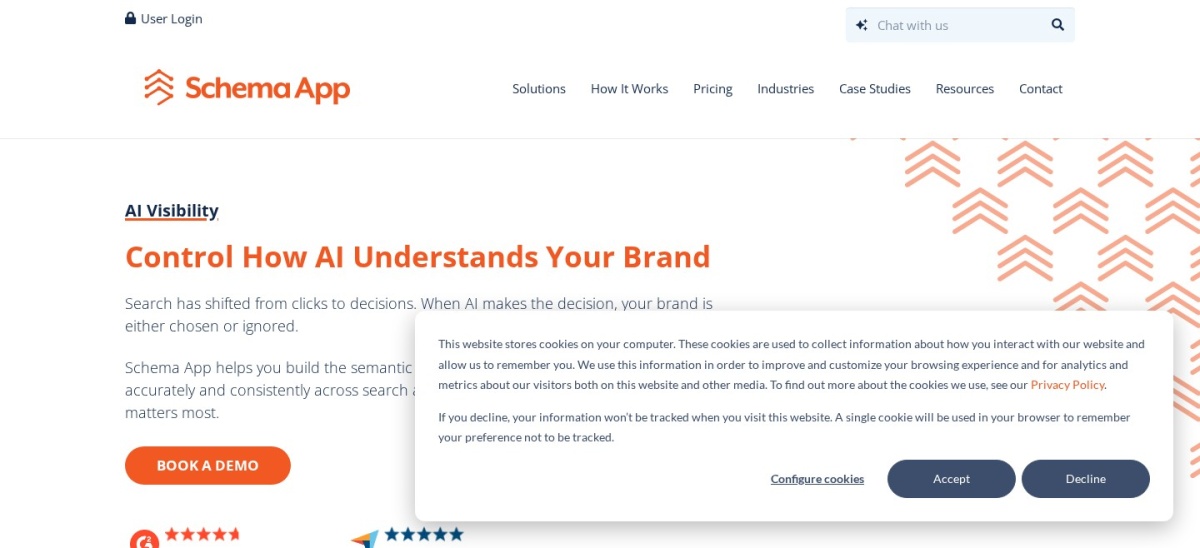
Schema App is the enterprise tool for schema markup at scale. It manages structured data across large sites, with a platform for creating, testing and deploying schema, and it is rated 4.7/5 on G2 from 19 reviews. Pricing is quote-only, with a $50 a month figure listed on its support page.
The trade off is the small review base and quote-only pricing. Nineteen G2 reviews is few, and the cost needs a sales conversation to judge. It suits large sites that need schema managed as a program.
Kalicube Pro is the brand entity tool. It manages a brand's knowledge panel, tracks how search engines and AI answers describe the brand, and builds the entity signals that feed knowledge panels. It is rated 5.0/5 on Capterra from 5 reviews and 4.6/5 on Trustpilot from 21 reviews, and pricing is quote-only.
The trade off is that Kalicube is a consultancy as much as a tool. Its services start from $12,000, and the small review base means the scores should be read with care. It suits brands that need a knowledge panel fixed or built.
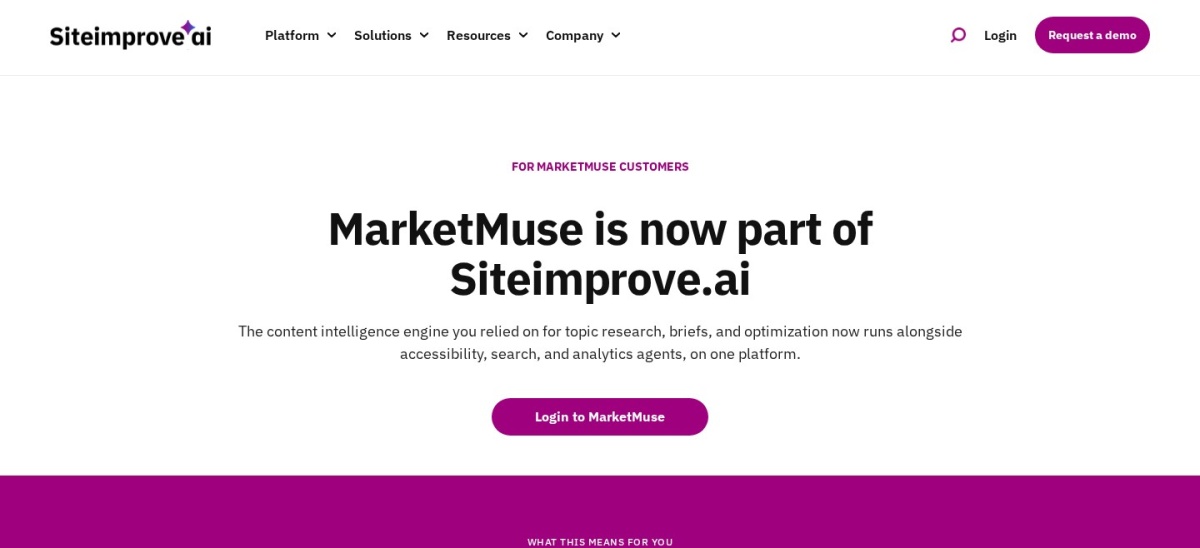
MarketMuse is the AI content research platform. It audits a site for topical authority, finds content gaps, and shows which entities a topic needs, with a workflow that plans clusters around entities. It is rated 4.6/5 on G2 from 216 reviews, and pricing is quote-only.
The trade off is that MarketMuse is a research platform, not a schema tool. It tells you what to write, but it does not add the markup. It suits content teams that plan around topical authority.
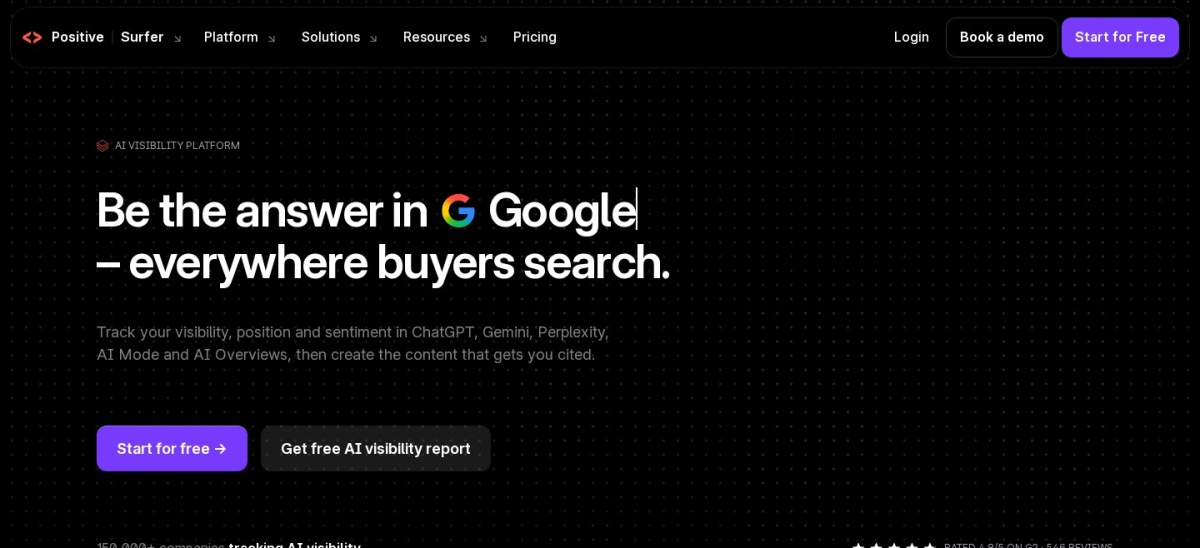
Surfer is the content editor that checks entity coverage. Its editor compares a draft to the top-ranking pages and lists the entities and terms it is missing, so a page covers a topic fully. It is rated 4.8/5 on G2 from 537 reviews, and pricing starts at $49 a month.
The trade off is that Surfer is an optimizer, not an entity platform. It checks coverage for each page, but it does not build a knowledge graph. It suits teams that publish often and want each page to cover its topic.
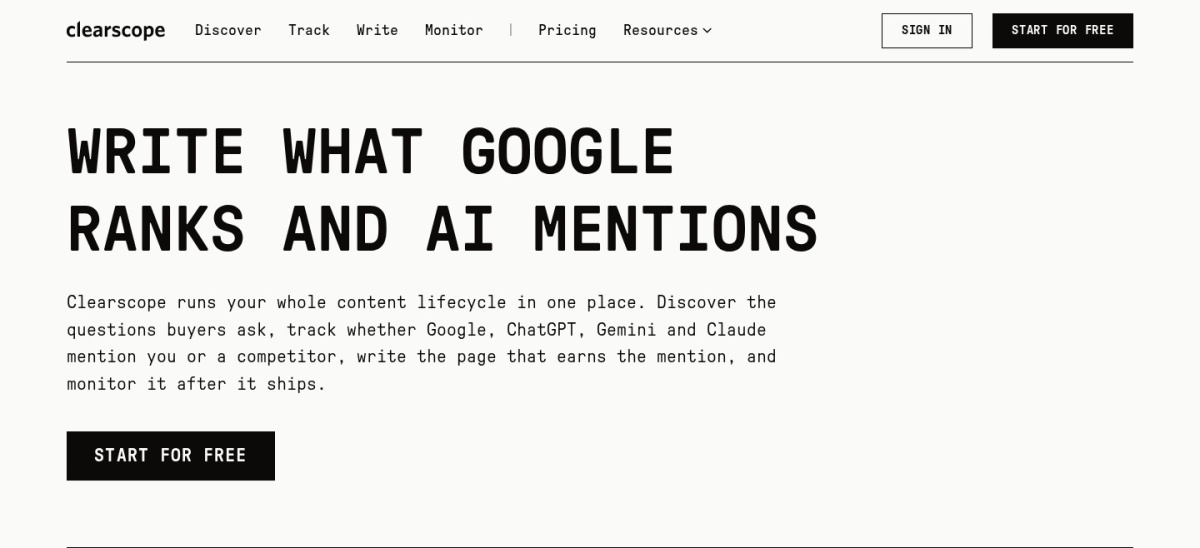
Clearscope is the content grading tool. Its reports score a draft on entity and term coverage, with a clear grade that shows how close a page is to the top-ranking content. It is rated 4.9/5 on G2 from 92 reviews, the joint highest score in this list, and pricing starts at $129 a month.
The trade off is price. One hundred twenty-nine dollars a month is the highest starting price here, so it suits teams that grade content every day, not occasional publishers. It suits content teams that want a clear grade for each draft.
Frase is the cheapest content optimizer here, from $39 a month. Its AI research and content editor check entity coverage, draft outlines and answer questions, with a workflow that is fast for small teams. It is rated 4.8/5 on G2 from 309 reviews.
The trade off is depth. Frase is lighter than Surfer or Clearscope on grading, and it does not build schema or a knowledge graph. It suits small teams that want a cheap optimizer with AI help.
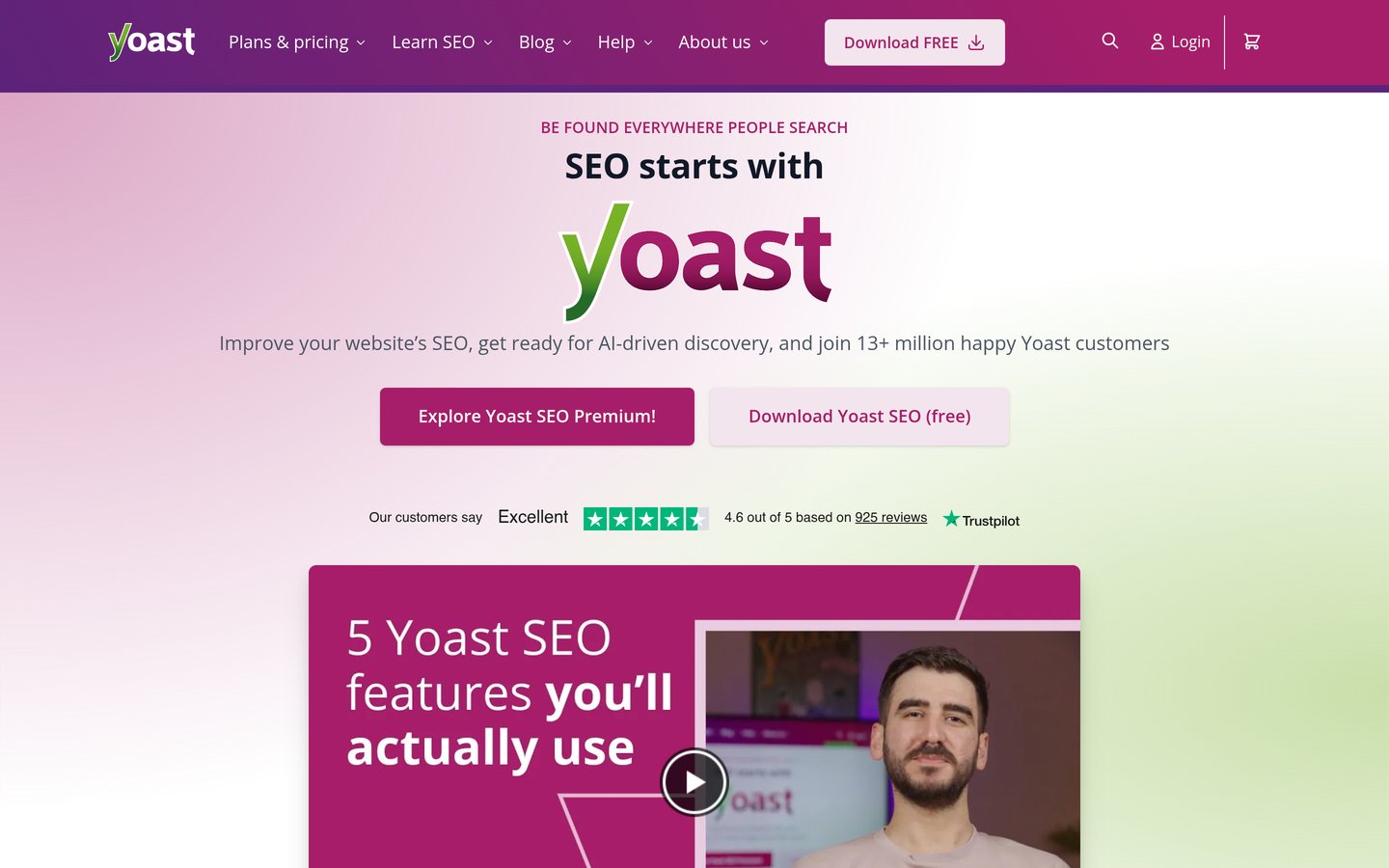
Yoast SEO is the WordPress plugin that adds schema markup to every page. Its Premium plan starts at $9.90 a month and covers schema, internal linking suggestions, redirects and AI features, with a free version that covers basic schema. It is rated 4.7/5 on G2.
The trade off is that Yoast is a general SEO plugin, not a dedicated entity tool. Its schema is solid, but it does not build a knowledge graph. It suits WordPress sites that want schema as part of a wider SEO plugin.
What we like
Rated 4.7/5 on G2
Schema on every page in WordPress
Free version available
Watch out for
General SEO plugin, not a dedicated entity tool
No knowledge graph built in
Premium from $9.90 a month; free version availableVisit yoast.com
Entity tools vs content optimizers
Entity tools build the structure: schema markup, knowledge graphs and internal links between topics. InLinks, WordLift and Schema App work this way, and they change how search engines read a site.
Content optimizers check coverage: they compare a draft to the top-ranking pages and list the entities and terms it is missing. Surfer, Clearscope, Frase and MarketMuse work this way.
Most teams need both: an entity tool for the structure, and a content optimizer for each new page. If you can only buy one, pick the entity tool if your site is large, and the optimizer if you publish often.
How we chose
We started from the entity optimization tools most often recommended for SEO and AI search, then kept nine that cover schema, internal linking and entity coverage.
Prices come from each vendor's pricing page and dated November 2026 checks. Ratings and review counts come from G2 and Capterra, checked in November 2026.
We left out general SEO suites without a dedicated entity feature. No vendor paid for a place, and we do not claim hands-on testing for this list.
How to choose a tool for entity optimization
Start with whether you need structure for the whole site or coverage for each new page.
Decide structure or coverage. If your whole site needs structure, pick an entity tool. If each new page needs coverage, pick a content optimizer.
Check your platform. WordLift and Yoast work inside WordPress, while Schema App and InLinks work on any site. Pick the tool that fits your stack.
Trial the schema output. Add schema to a few real pages in the trial and check it in Google's rich results test before you buy.
Check AI search visibility. Search your target topics in an AI answer engine and see whether the tool's pages are cited, not just ranked.
FAQ
What is the best tool for entity optimization?
InLinks is the best pick, with automated internal linking and entity audits from $49 a month, rated 4.9/5 on Capterra. WordLift is the best WordPress-native option, and Schema App is the best enterprise choice.
What is entity optimization in SEO?
Entity optimization is making sure search engines and AI answers understand the topics your content covers. It uses schema markup, internal linking and knowledge graphs to connect pages to entities such as people, places and products.
How much does entity optimization software cost?
Paid plans start at $39 a month on Frase and $49 a month on InLinks and Surfer, rising to $129 a month on Clearscope. Schema App, Kalicube Pro and MarketMuse are sold by quote.
Is WordLift good for WordPress?
Yes. WordLift is built for WordPress, with a plugin that adds schema markup and internal links automatically. It is rated 4.7/5 on G2 from 41 reviews, and its Starter plan is €59 a month.
Does Surfer do entity optimization?
Yes. Surfer's content editor checks entity coverage against top-ranking pages, so a draft covers the entities a topic needs. It is rated 4.8/5 on G2 from 537 reviews, from $49 a month.