Best To-Do List Apps for Small Business in 2026: 7 Tools Compared
WLWPLegible EditorsLast verified 22 Nov 2026How we rank12 min read
★ Short answer
Todoist is the best to-do list app for most small businesses, with a free plan covering 5 personal projects and Pro at $60 per year. Trello is better for visual task boards, while TickTick suits business owners who want calendar planning, reminders and daily productivity tools.
How we make this list: we compare pricing pages, product documentation and public user reviews, then re-check every price before each update. No product paid for a place. Disclosure.
Todoist Pro costs $60/year and expands the free plan's 5 personal projects to 300, with calendar views and full activity history.
Trello Standard costs $5/user/month billed annually and adds unlimited boards, advanced checklists and custom fields.
TickTick Premium costs $49.99/year, expanding the free plan's 9 lists to 299 and adding calendar views.
Any.do Premium starts at $4.99/month billed annually, while its Teams plan adds collaborative boards and workflows.
ClickUp Core lists a regular price of $12/user/month, with a promotional $9 rate for annual billing.
Asana Starter costs $10.99/user/month billed annually and adds unlimited automations, forms and reporting dashboards.
What small businesses need from a to-do list app
A useful to-do list app does more than collect unfinished work. It should show what needs attention, who owns each task and when it must be completed.
For solo business owners, reminders, recurring tasks and calendar views often matter most. A simple interface helps keep daily administration, customer follow-ups and deadlines manageable.
For teams, look for task assignments, shared lists, comments, subtasks and notifications. These features reduce the need to repeatedly ask colleagues about progress.
The biggest pricing difference is often the billing model. Some apps charge individuals a fixed subscription, while others charge for every team member. A low entry price can become expensive when your business grows.
Start with the smallest workflow that fits your needs. A dedicated checklist app may be enough for daily work, while businesses coordinating several projects may benefit from boards, automation and reporting.
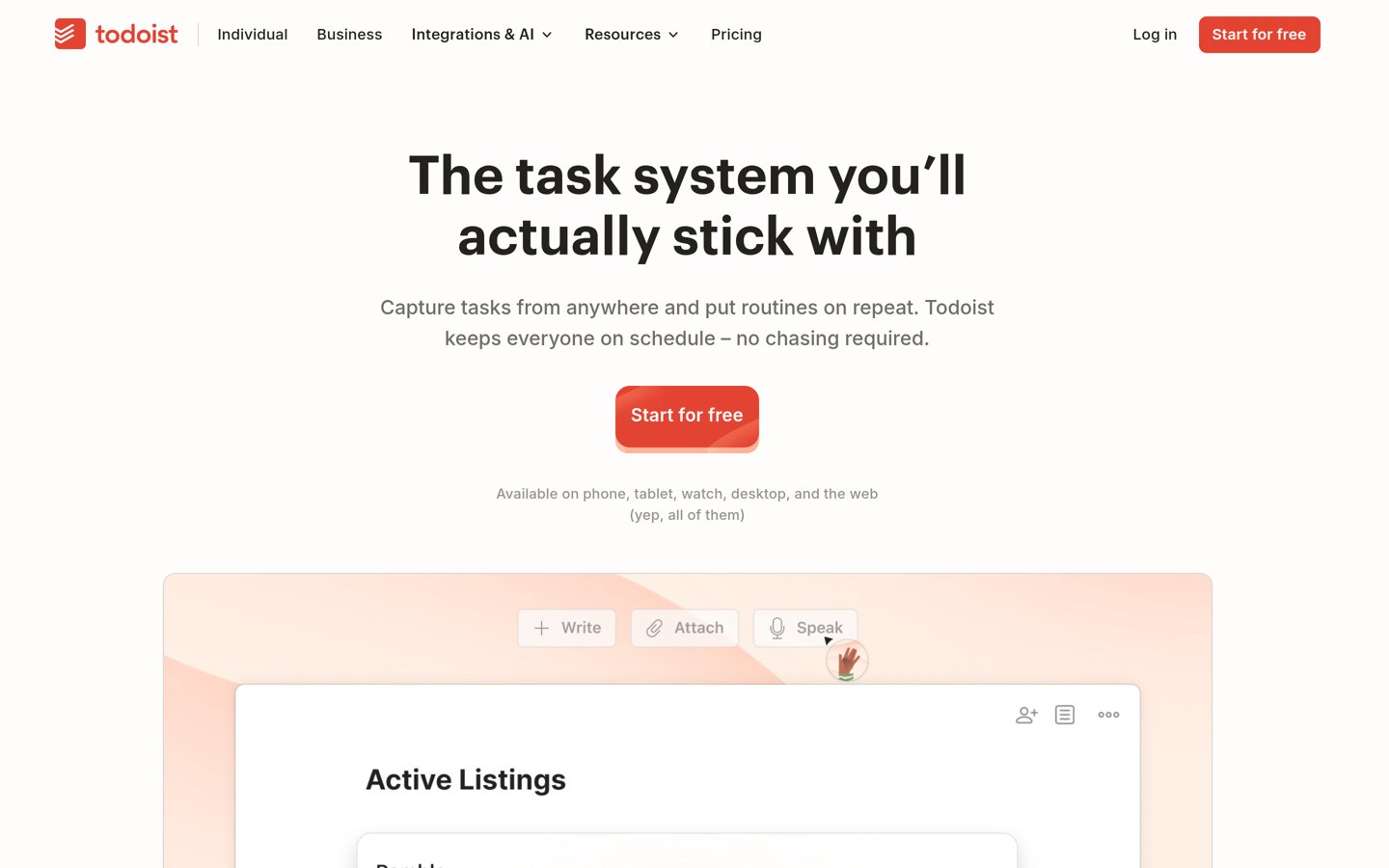
Todoist is a task management app for organizing personal work and shared business projects. Its free Beginner plan includes 5 personal projects, task reminders, list and board views, and 3 filter views. Pro expands capacity to 300 personal projects and adds calendar layouts, deadlines, custom reminders and full reporting history.
The trade off is that dedicated team administration and granular team reports require Business, which costs $8 per user monthly with annual billing. Pro costs $5 per month billed annually or $7 with monthly billing. It suits small business owners who prefer straightforward task management without complex project software.
What we like
Clean interface for daily task management
Free plan includes reminders and shared tasks
Recurring tasks and natural-language entry
Pro adds calendar layouts and deadlines
Business supports dedicated team workspaces
Watch out for
Free plan limits personal projects
Advanced team features require Business
Not designed for detailed resource planning
Pro adds larger project capacity, calendar views, custom reminders and complete activity history.Visit todoist.com
02
Trello
4.4/5on G2 (14,078 reviews, checked Nov 2026)
Paid from$5/mo
Best for visual task boards and small teams
Free boards10 per Workspace
Free cardsUnlimited
Free automation250 command runs/month
Paid planStandard, $5/user/mo annually
trello.com
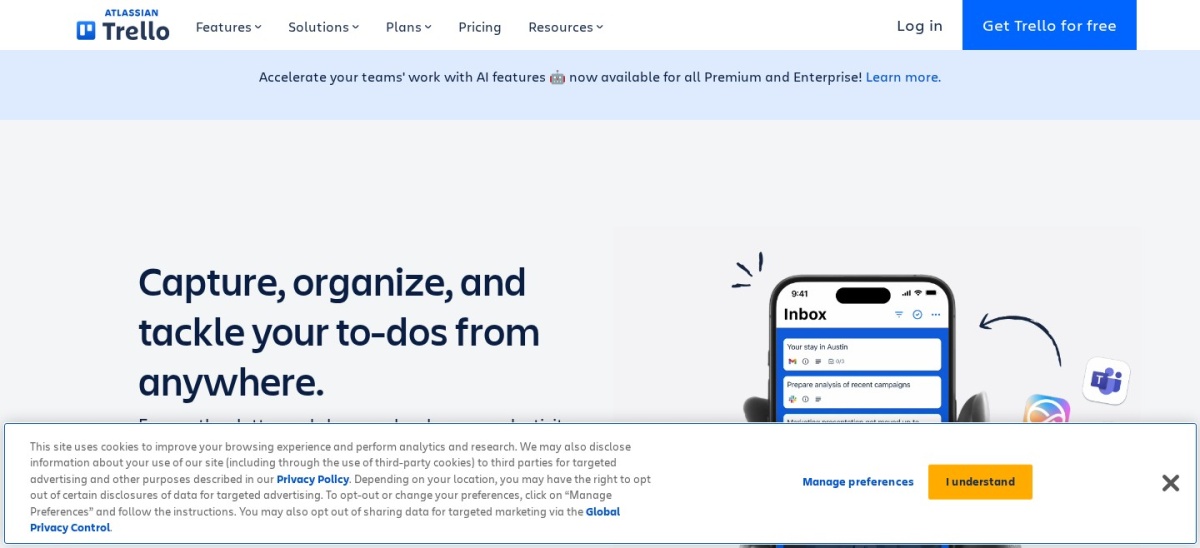
Trello homepage, captured Nov 2026.
Trello is a visual task management platform built around boards, lists and cards. Its free plan includes unlimited cards, up to 10 boards per Workspace, assignees, due dates, an activity log and 250 automation command runs per month. Teams can move tasks between columns representing different workflow stages.
The trade off is that advanced checklists, custom fields and unlimited boards require Standard at $5 per user monthly with annual billing, or $6 with monthly billing. It suits small teams that want a clear view of pending, active and completed work.
What we like
Visual drag-and-drop task boards
Unlimited cards on the free plan
Due dates and assignments included
Built-in automation capabilities
Large integration ecosystem
Watch out for
Advanced reporting is limited
Complex boards can become difficult to navigate
Timeline and advanced views require Premium
Standard adds unlimited boards, advanced checklists, custom fields and more automation runs.Visit trello.com
03
TickTick
4.5/5on G2 (114 reviews, checked Nov 2026)
Paid from$49.99/yr
Best for daily planning and recurring tasks
Free lists9
Free task capacity99 tasks per list
Premium lists299
Paid planPremium, $49.99/yr
ticktick.com
TickTick homepage, captured Nov 2026.
TickTick is a personal productivity and task management app combining to-do lists, reminders, habits and calendar planning. Its free plan supports 9 lists, 99 tasks per list, Kanban views and cross-platform syncing. Premium expands capacity to 299 lists and 999 tasks per list while adding multiple calendar views, task duration and additional reminders.
The trade off is that TickTick emphasizes individual productivity more than centralized business management. Premium costs $49.99 annually, and its collaboration features are less extensive than dedicated team platforms. It suits freelancers, business owners and small teams that need recurring reminders and daily scheduling.
What we like
Task lists and calendar planning together
Free reminders and cross-platform syncing
Habit tracking and productivity features
Premium provides substantial task capacity
Kanban views available without payment
Watch out for
Limited advanced project reporting
Not a complete business operations platform
Some calendar features require Premium
Premium expands list limits, calendar options, reminders and productivity features.Visit ticktick.com
04
Any.do
4.2/5on G2 (205 reviews, checked Nov 2026)
Paid from$4.99/mo
Best for reminders and everyday business planning
Free featuresTasks, reminders and calendar
Daily planningMy Day planner
Teams plan$4.99/member/mo annually
Paid planPremium, $4.99/mo annually
any.do
Any.do homepage, captured Nov 2026.
Any.do is a to-do list and daily planning app for managing tasks, calendars and reminders. Its free Personal plan provides task lists, reminders, calendar access, a daily planner and device syncing. Premium adds recurring tasks, color tags, location reminders, WhatsApp reminders and AI-assisted features.
The trade off is that shared business workspaces and collaborative project boards belong to Teams rather than the individual Premium subscription. Premium costs $4.99 monthly with annual billing or $7.99 monthly. It suits business owners who frequently manage appointments, customer follow-ups and personal work alongside business tasks.
What we like
Simple daily planning interface
Free reminders and calendar support
Recurring and location-based reminders on Premium
Teams plan supports collaborative boards
Works across mobile and desktop devices
Watch out for
Advanced team features require Teams
Premium reminders require payment
Less detailed reporting than project management suites
Premium adds recurring tasks, location reminders, WhatsApp reminders and AI features.Visit any.do
05
ClickUp
4.6/5on G2 (15,880 reviews, checked Nov 2026)
Paid from$12/mo
Best for growing businesses with multiple projects
Free task capacityUnlimited tasks and subtasks
Free storage60 MB
Free membersUnlimited
Paid planCore, regular $12/user/mo
clickup.com
ClickUp homepage, captured Nov 2026.
ClickUp is a work management platform combining tasks, subtasks, documents, boards, calendars and collaboration tools. Its Free Forever plan includes unlimited tasks, unlimited free members, 60 MB of storage, Kanban boards, calendar views and time tracking. Core adds unlimited storage, custom fields, Gantt charts and expanded automation.
The trade off is complexity: configuring spaces, views and workflows can take more effort than using a dedicated checklist app. Core lists a regular price of $12 per user monthly, with a promotional annual-billing rate of $9. It suits growing businesses coordinating multiple departments or client projects.
Best for team accountability and structured projects
Free users2
Free tasksUnlimited
Free viewsList, board and calendar
Paid planStarter, $10.99/user/mo annually
asana.com
Asana homepage, captured Nov 2026.
Asana is a work management platform for assigning tasks, coordinating projects and tracking deadlines. Its free Personal plan supports 2 users, unlimited tasks and projects, list, board and calendar views, and integrations. Starter adds Timeline and Gantt views, reporting dashboards, forms, custom fields and unlimited automations.
The trade off is that the free plan is limited to a very small team, while paid subscriptions are charged per user. Starter costs $10.99 per user monthly with annual billing or $13.49 with monthly billing. It suits small businesses that need clear responsibilities and project progress tracking.
Starter adds reporting dashboards, Gantt views, custom fields, forms and automations.Visit asana.com
07
monday.com
4.7/5on G2 (17,975 reviews, checked Nov 2026)
Paid from$9/mo
Best for customizable business task workflows
Free usersUp to 2 seats
Free boards3
Templates200+
Paid planBasic, $9/seat/mo annually
monday.com
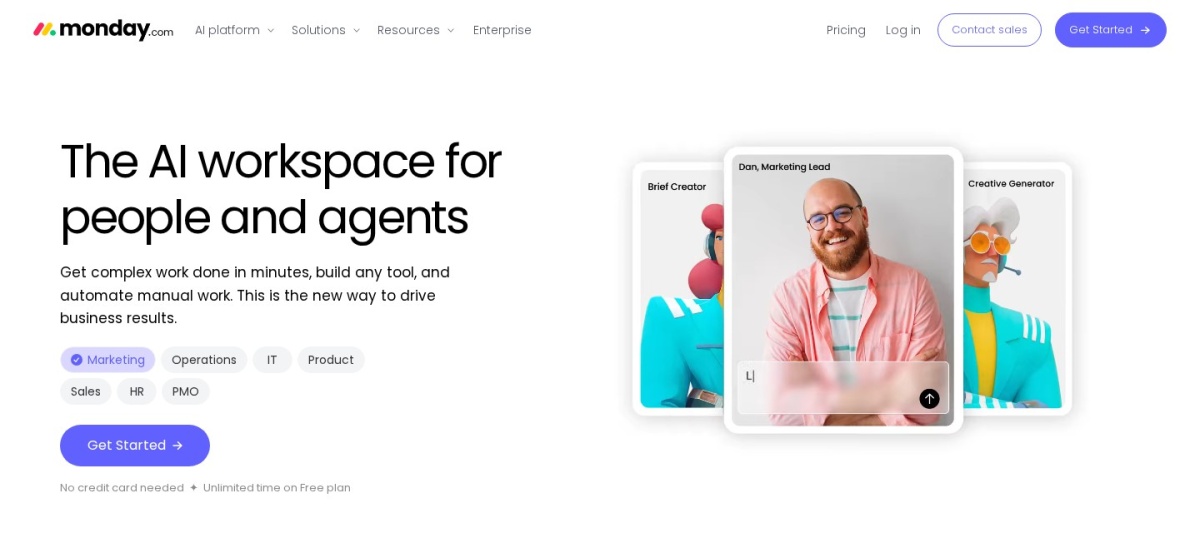
monday.com homepage, captured Nov 2026.
monday.com is a customizable work management platform for tracking tasks, projects and business processes. Its free plan supports 2 seats, 3 boards, 3 documents, mobile apps and over 200 templates. Basic expands workspace capacity and adds features for managing ongoing work across business teams.
The trade off is that many workflow automations, integrations and advanced project views require higher plans, while paid subscriptions use seat-based pricing. Basic starts at $9 per seat monthly with annual billing, excluding temporary promotional discounts. It suits businesses that want customized task boards across sales, operations and administration.
What we like
Customizable task and workflow boards
Free plan available for small teams
Large library of workflow templates
Useful for coordinating several business functions
Supports automation on higher plans
Watch out for
Free plan limits seats and boards
Advanced automations need higher plans
Seat-based pricing can increase overall costs
Basic expands workspace capacity and storage; higher plans add automation and integrations.Visit monday.com
Should your small business use a personal or team to-do list app?
A personal to-do list app is usually enough for freelancers and solo business owners. Todoist, TickTick and Any.do offer reminders, recurring work and daily planning without requiring a complex project structure.
A shared team app becomes more useful when work passes between employees. Task assignments, comments, shared boards and visible deadlines help everyone understand responsibilities.
Trello is a practical middle ground for teams wanting visual workflows. Asana, ClickUp and monday.com offer broader project structures when work becomes more complicated.
Avoid buying advanced project management software solely for its features. Start with your actual task volume, collaboration needs and reporting requirements.
How to organize a small business to-do list
Separate daily operations from longer-term projects. Customer follow-ups, invoices and administrative work need different attention from marketing campaigns and product launches.
Give each shared task a clear owner and deadline. Use subtasks or checklists when an assignment involves several actions.
Set recurring reminders for regular responsibilities such as reporting, billing and maintenance. A reliable reminder system reduces dependence on memory.
Review unfinished tasks regularly and archive completed work. Keeping active lists focused makes priorities easier to identify and prevents overdue tasks from disappearing.
How we chose
We selected established task management products suitable for freelancers, small business owners and teams. The comparison covers dedicated to-do list apps alongside visual boards and broader project management platforms, with attention to reminders, assignments, recurring tasks, integrations and collaboration.
Vendor pricing pages and public G2 review listings were opened and checked on 24 Nov 2026 for this article dated 22 Nov 2026. Annual price equivalents reflect the published regular entry-plan pricing or stated annual billing rates, while temporary promotions are identified separately.
We excluded discontinued apps, products without accessible regular paid pricing and tools that primarily serve unrelated business functions. We did not rank products by rating alone because ease of use, team capacity and subscription costs matter differently across businesses. No vendor paid for a place, and we do not claim testing for this list.
How to choose a to-do list app for your small business
Identify your daily workflow and collaboration needs before comparing features and subscription prices.
Decide whether you need individual or team task management. Choose Todoist, TickTick or Any.do when personal reminders and planning are the main requirements. Consider Trello, Asana or ClickUp when several people regularly share responsibility for tasks.
Choose the task view your team will actually use. Lists work well for straightforward assignments and daily priorities. Kanban boards help visualize workflow stages, while calendar and timeline views become useful when multiple deadlines overlap.
Calculate the full team subscription cost. Compare per-user pricing with fixed personal plans and check whether annual billing is required for the advertised rate. Include the number of employees who will need paid access rather than evaluating only the entry price.
Check reminders, integrations and reporting before upgrading. Confirm whether your plan includes recurring tasks, notifications, calendar integration, attachments and the reporting you need. Start with a free plan when available and upgrade when a specific limitation affects the business.
FAQ
What is the best to-do list app for a small business?
Todoist is our top choice for small businesses seeking simple task management. Its free plan supports 5 personal projects, reminders and multiple task views. Pro costs $60 annually and adds calendar layouts, expanded project capacity and full reporting history.
What is the best free to-do list app for small teams?
Trello and ClickUp are strong free options for teams. Trello supports unlimited cards and up to 10 boards per Workspace, while ClickUp includes unlimited tasks and free members. Asana offers unlimited tasks but limits its free Personal plan to 2 users.
Is Todoist better than Trello for small businesses?
Todoist is generally better for personal task lists, recurring responsibilities and daily planning. Trello is better when teams need a visual board showing work moving through different stages. The right choice depends on whether individual productivity or shared workflow visibility matters more.
Can small businesses use a to-do list app for project management?
Yes. Many to-do apps support assignments, subtasks, due dates, comments and project boards. Trello works well for straightforward workflows, while ClickUp and Asana add more detailed planning tools. Complex projects may require reporting, dependencies and workload features beyond basic checklists.
How much does a business to-do list app cost?
Many apps provide free plans. Paid options include TickTick Premium at $49.99 yearly, Todoist Pro at $60 yearly and Trello Standard at $5 per user monthly with annual billing. Team-focused platforms may cost more because subscriptions typically charge for each user.
Which to-do list app is best for recurring business tasks?
Todoist, TickTick and Any.do are useful for recurring responsibilities such as invoices, customer follow-ups and administrative work. Todoist offers flexible recurring task scheduling, TickTick combines reminders with calendar planning, and Any.do includes recurring tasks in its Premium plan.
Is ClickUp too complicated for a small business?
ClickUp may be more than necessary if you only need a daily checklist. However, it can be useful when your business manages several projects, employees and processes. Its free plan allows unlimited tasks, so businesses can begin with a simple setup before introducing advanced features.
Which to-do list app is best for freelancers?
Todoist and TickTick are practical options for freelancers. Todoist emphasizes task capture, projects and deadlines, while TickTick combines tasks, reminders, habits and calendar planning. Both offer free plans and paid upgrades for users who need additional capacity.