Best Sports Analytics Tools for Player Data in 2026: 7 Tools Compared
WLWPLegible EditorsLast verified 22 Nov 2026How we rank12 min read
★ Short answer
STATSports Academy is our top pick for physical player-performance data, offering 24 GPS metrics without recurring software fees and a $320 regular equipment price. Trace specializes in personalized match footage, while TriDot provides data-driven triathlon training plans starting at $14.99 per month.
How we make this list: we compare pricing pages, product documentation and public user reviews, then re-check every price before each update. No product paid for a place. Disclosure.
STATSports Academy tracks 24 performance metrics and costs $320 at its regular equipment price, without a subscription.
Trace PlayerFocus Basic costs $180 annually with a camera lease included, while Pro adds player analytics for $300 annually.
TriDot starts at $14.99 per month, with higher tiers supporting more races, advanced training preferences and coaching.
Strava Premium costs $79.99 annually and adds advanced workout analysis, activity trends and segment leaderboards.
Veo combines automated match recording with player-linked video and optional analytics, but its published pricing page does not display a confirmed numeric starting rate.
Catapult One Team focuses on GPS-based player workload tracking, while Hudl Sportscode supports detailed event coding and video analysis.
What to look for in sports analytics tools for player data
Sports analytics tools collect and organize information about athletes, but they measure different things. Some capture physical workload through GPS sensors, while others analyze match footage, training sessions or competitive performance.
For physical performance, prioritize distance covered, maximum speed, sprint frequency, acceleration and training intensity. Wearable tracking systems are especially useful when coaches need comparable data across repeated sessions.
For tactical analysis, look for event tagging, searchable clips, player identification and match statistics connected to video. These features help coaches examine decisions and performance rather than relying exclusively on physical measurements.
Individual endurance athletes may benefit more from training-load trends, workout history and personalized training plans. Team sports departments may need centralized athlete records, shared dashboards and data export options.
Consider the total cost before choosing a platform. GPS products may require hardware purchases, video systems may require camera leases or subscriptions, and enterprise analytics products often need negotiated contracts.
4.2/5on Trustpilot (3,280 reviews, checked Nov 2026)
Starts at$320 one-time
Best for GPS player-performance tracking
Performance metrics24 GPS metrics
Regular equipment price$320
Software subscriptionNot required
Training resources200+ drills and masterclasses
statsports.com
STATSports Academy homepage, captured Nov 2026.
STATSports Academy is a wearable GPS tracking system for monitoring athletic performance during training and matches. Its Academy package includes a GPS tracker, performance vest and app access to 24 metrics covering speed, distance, sprints and intensity, along with 200+ drills and masterclasses.
The trade off is the upfront equipment cost of $320 at the regular listed price, although the vendor currently advertises a reduced $240 price and requires no recurring subscription. It suits individual athletes and coaches who want measurable physical-performance data without an ongoing software bill.
What we like
Tracks speed, distance, sprint activity and intensity
No recurring software subscription required
Includes wearable GPS hardware and app access
Training resources accompany performance measurements
Large public customer-review base
Watch out for
Requires wearing and maintaining dedicated hardware
Not designed for detailed tactical video analysis
Team-level professional systems may require separate arrangements
The one-time purchase includes the tracker and app; higher equipment packs add accessories.Visit statsports.com
02
Trace
1.7/5on Trustpilot (31 reviews, checked Nov 2026)
Starts at$180/yr
Best for personalized player video highlights
Entry planPlayerFocus Basic
Annual subscription$180
Camera leaseIncluded with annual plan
Player analyticsPlayerFocus Pro
traceup.com
Trace homepage, captured Nov 2026.
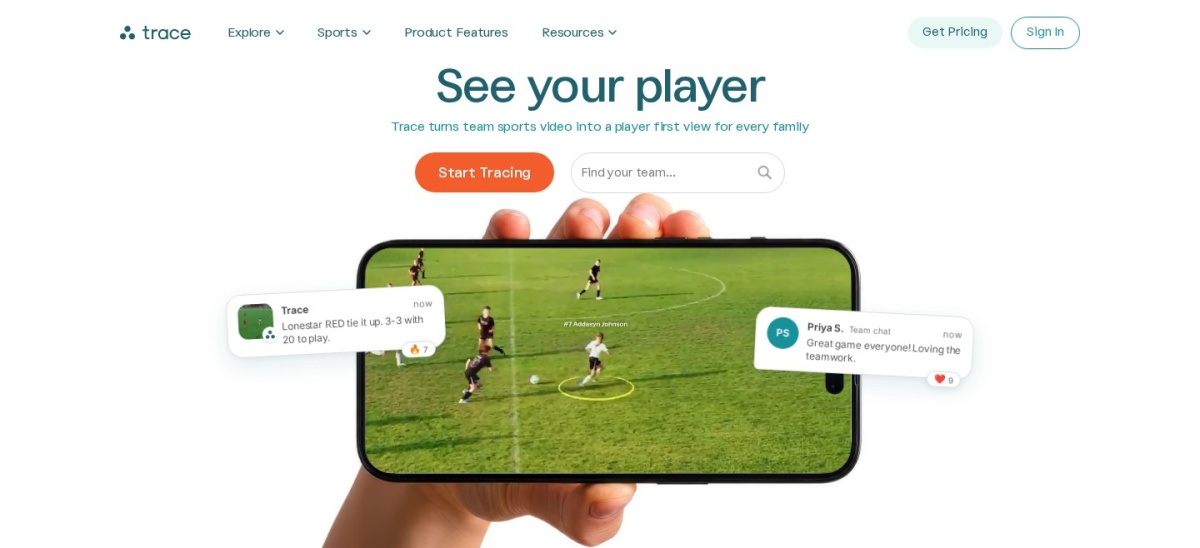
Trace is an AI-assisted sports camera and video platform that creates personalized highlights from recorded matches. PlayerFocus Basic costs $180 annually and includes a camera lease, automatic player spotlight, full-game footage and access to the most recent 5 games.
The trade off is that detailed PlayerFocus Analytics, downloads and additional video features require Pro at $300 annually, and its Trustpilot score is a low 1.7/5 from 31 reviews. It suits teams and families prioritizing individual player footage, provided they assess the reported software and support problems.
Annual subscription includes camera equipment lease
Supports full-game and player-focused viewing
Pro provides player and team analytics
Footage can be shared with coaches and families
Watch out for
Basic plan does not include full player analytics
Trustpilot feedback raises reliability and support concerns
Camera is leased rather than purchased
Monthly billing includes an additional equipment fee
PlayerFocus Pro adds performance analytics, longer video access and downloadable highlights.Visit traceup.com
03
TriDot
3.5/5on Trustpilot (109 reviews, checked Nov 2026)
Starts at$14.99/mo
Best for triathlon training analytics
Entry planLifestyle
Monthly price$14.99
Scheduled race1 short-course race
Training optimizationWeekly
tridot.com
TriDot homepage, captured Nov 2026.
TriDot is a data-driven training platform for triathletes, using athlete information and training history to create adaptive workout plans. The $14.99 monthly Lifestyle subscription includes weekly training optimization, dynamic training zones, drill videos and planning for 1 sprint or Olympic-distance race.
The trade off is that longer-distance race planning and additional customization require Essentials at $39 monthly or higher tiers. Lifestyle costs $179.88 annually at the published monthly rate. It suits triathletes who want structured performance analysis and training guidance rather than team-match or scouting statistics.
What we like
Training plans adapt to athlete performance information
Supports swim, bike and run preparation
Dynamic training zones and workout guidance
Published monthly subscription pricing
Advanced coaching upgrades available
Watch out for
Focused on triathlon rather than team sports
Entry plan limits race-planning options
Advanced features require more expensive subscriptions
Public reviews include concerns about billing and plan adjustments
Essentials expands race planning; Complete adds advanced training preferences and strength sessions.Visit tridot.com
04
Strava
1.3/5on Trustpilot (512 reviews, checked Nov 2026)
Paid from$79.99/yr
Best for individual athlete activity trends
Free accountAvailable
Annual subscription$79.99
Training analysisPremium
Segment leaderboardsPremium
strava.com
Strava homepage, captured Nov 2026.
Strava is an activity-tracking platform that organizes workouts, routes and fitness information for runners, cyclists and other endurance athletes. Its free account supports activity recording and training history, while the $79.99 annual subscription adds advanced workout analysis, custom goals, fitness trends and segment leaderboards.
The trade off is that Strava primarily analyzes individual activity records rather than producing professional team or tactical statistics, and Trustpilot shows a 1.3/5 rating from 512 reviews. It suits individual athletes who want accessible training trends and activity comparisons using compatible recording devices.
What we like
Permanent free activity-tracking account
Advanced fitness analysis with Premium
Supports running, cycling and other activities
Activity history and progress comparisons
Integrates with compatible tracking devices
Watch out for
Not designed for detailed team-match analysis
Advanced analytics require a subscription
Customer-service complaints affect public ratings
Data quality depends on the recording device
Premium adds detailed training analysis, fitness trends, custom goals and segment leaderboards.Visit strava.com
05
Veo
4.1/5on Trustpilot (1,311 reviews, checked Nov 2026)
PricingCustom pricing
Best for automated match video analytics
Video recordingAutomated camera
Event taggingAI and manual
Player movementVeo Vision
AnalyticsOptional Analytics 2
veo.com
Veo homepage, captured Nov 2026.
Veo is a sports video platform combining automated match recording, AI-assisted event detection and player-focused analysis. Veo Editor supports match playback, clips and event tagging, while Veo Analytics 2 adds heat maps, shot maps, pass maps and player speed and distance overlays.
The trade off is that the official pricing page does not expose a confirmed numeric starting price, and Veo Analytics 2 requires compatible camera equipment and the Editor subscription. Pricing must be confirmed with the vendor. It suits clubs seeking detailed visual analysis without manually operating a match camera.
What we like
Automated match recording
AI-assisted tagging of match events
Video-linked heat maps and player insights
Player speed and distance overlays
Supports team review and highlight sharing
Watch out for
Requires compatible recording hardware
Advanced analytics are an additional product
Public starting price cannot be confirmed from the pricing page
Some customers report hardware and support problems
Veo Analytics 2 adds advanced match statistics, player insights and visual analysis tools.Visit veo.com
06
Catapult One
2.6/5on Trustpilot (928 reviews, checked Nov 2026)
PricingCustom pricing
Best for team GPS workload monitoring
Tracking methodWearable GPS
Team solutionCatapult One Team
Player comparisonPerformance metrics
PricingSales inquiry
catapultsports.com
Catapult One homepage, captured Nov 2026.
Catapult One is a wearable performance-tracking system designed to help teams monitor physical activity during practices and competitive matches. Catapult One Team emphasizes player accountability, performance benchmarks and workload information that coaches can use when planning training sessions.
The trade off is that current team pricing is not published as a confirmed fixed amount on the official product page, so buyers need a sales quote for hardware and service costs. It suits coaches and sports departments focused on physical workload, player conditioning and repeatable performance comparisons.
What we like
Wearable GPS-based player-performance tracking
Designed for coaches managing team workloads
Supports athlete performance comparisons
Can inform training-load discussions
Provides performance information beyond video alone
Watch out for
Team pricing requires an inquiry
Dedicated GPS equipment is necessary
Trustpilot reviews include synchronization and reliability complaints
Does not replace a full tactical video-analysis platform
Team packages provide multi-player performance tracking; equipment and commercial terms require a quote.Visit catapultsports.com
07
Hudl Sportscode
4.4/5on G2 (16 reviews, checked Nov 2026)
PricingCustom pricing
Best for professional match coding
Primary workflowVideo event coding
AnalysisCustom coding windows
Data integrationEvent and tracking data
PricingRequest a quote
hudl.com
Hudl Sportscode homepage, captured Nov 2026.
Hudl Sportscode is professional sports video-analysis software used to code match events and connect clips with performance observations. Analysts can create customized coding windows, work with tagged timelines, review multiple camera angles and incorporate external event or tracking information into their workflows.
The trade off is that Sportscode uses quote-based pricing rather than a published regular starting rate, and its advanced coding workflow requires analyst training and staff time. It suits professional teams and performance departments that need structured match analysis rather than straightforward individual activity tracking.
What we like
Customizable video event coding
Detailed timelines for tactical review
Supports multi-angle match analysis
Can incorporate external event and tracking data
Designed for specialized analyst workflows
Watch out for
Pricing is not publicly standardized
Requires staff familiarity with video coding
Less suitable for casual individual athletes
G2 has a relatively small product-specific review sample
Commercial Sportscode editions offer professional coding and analysis capabilities; pricing requires a quote.Visit hudl.com
The main types of player data sports analytics tools collect
Physical tracking systems measure how athletes move. GPS wearables can record distance, speed, sprint activity and movement intensity, helping coaches assess changes in workload over time.
Video analytics systems focus on observable match events and tactical patterns. Tagged footage can help connect statistics with the decisions behind them, including positioning, attacking actions and defensive sequences.
Training platforms analyze athlete progress across repeated workouts. They may use completed sessions, exercise history and performance trends to adapt future training plans.
These categories overlap, but they are not interchangeable. A GPS tracker does not necessarily explain tactical decisions, and automated video clips do not automatically provide accurate physiological workload measurements.
Understanding player analytics software costs
Sports analytics tools use different pricing models. Some charge monthly per athlete, others bill annually for software access, and wearable systems may require a separate hardware purchase.
STATSports Academy lists a regular $320 equipment purchase with no recurring subscription. Trace lists a $180 annual Basic subscription that includes a camera lease, while TriDot Lifestyle costs $14.99 monthly.
Professional systems can involve additional costs for hardware, installation, integrations, software licenses, training and ongoing support. The absence of a published price does not mean that the service is inexpensive.
When comparing systems, ask vendors whether access to previously collected data continues after a subscription ends. Also confirm export formats, account permissions and the ability to retain historical athlete records.
How we chose
We shortlisted established sports technology products covering GPS tracking, video performance analysis, player-focused footage and athlete training data. The selection considers recognizable vendors, documented product functionality and public customer feedback, while distinguishing individual athlete tools from professional team systems.
The editorial comparison is dated 22 Nov 2026, with publicly accessible official pricing pages, product documentation and review listings opened for verification on 24 Nov 2026. Numeric prices are published regular rates or standard equipment prices, not introductory discounts. Products without a confirmed public rate are marked Custom only below the top three.
We excluded tools with discontinued products, insufficient public information or no clear relationship to player-performance data. Hudl Sportscode was retained despite a smaller G2 review sample because it is an established professional analysis product; ratings from company-wide Trustpilot profiles are identified separately from product-specific reviews. No vendor paid for a place, and we do not claim testing for this list.
How to choose sports analytics tools for player data
Identify the information you need to collect, then compare the platforms that can reliably capture and explain it.
Define the performance questions. Decide whether you need physical workload, match statistics, tactical observations or individual training progress. Start with the decisions coaches and athletes actually need to make rather than selecting software based on the longest feature list.
Match the collection method to your sport. GPS trackers are useful for movement-based sports, while cameras and event-tagging tools help analyze match situations. Endurance athletes may benefit from structured workout history and training-load analysis instead of specialist team software.
Compare costs across the full season. Include subscriptions, cameras, wearable devices, storage, staff licenses, onboarding and optional analytics. Check whether an annual plan includes equipment and whether advanced features require additional subscriptions.
Check data quality and access. Ask about measurement limitations, missing data, export formats, device compatibility and access permissions. Evaluate whether coaches can compare athletes across sessions and whether players can review their own records without complicated administrative steps.
FAQ
What is the best sports analytics tool for player data?
STATSports Academy is our top choice for physical player tracking because it measures speed, distance, sprints and intensity through wearable GPS equipment. For individual match video, Trace offers automatic player highlights. Professional teams requiring coded tactical footage should consider Hudl Sportscode.
What data can sports analytics software collect?
Depending on the platform, sports analytics software can capture distance covered, maximum speed, sprint activity, movement intensity, training history, match events and video observations. Some systems combine these records into performance dashboards, while others specialize in a narrower set of measurements.
How much do sports analytics tools cost?
Pricing varies substantially. Strava Premium costs $79.99 annually, TriDot starts at $14.99 monthly, Trace Basic costs $180 annually, and STATSports Academy has a regular $320 equipment price. Professional team platforms may require custom quotes, additional hardware and onboarding costs.
Can sports analytics software track individual soccer players?
Yes. GPS systems such as STATSports Academy and Catapult One can collect individual movement data, including distance and sprint activity. Video platforms such as Trace can identify players in recorded footage and create personal highlights. The types of statistics available depend on the specific product and subscription.
What is the difference between GPS tracking and video analytics?
GPS tracking measures athlete movement and physical activity through wearable sensors. Video analytics examines match footage to identify events, positioning and tactical patterns. Combining both can provide additional context, but each method has limitations and requires appropriate data collection.
Is there free sports analytics software?
Yes. Strava provides a permanent free account for recording and reviewing basic activity history. More advanced analysis is included with its paid subscription. Some other platforms provide introductory trials, but a temporary trial should not be confused with an unrestricted free plan.
What sports analytics software do professional teams use?
Professional teams use specialized systems depending on their sport, staffing and performance goals. Hudl Sportscode supports detailed event coding, while Catapult products are associated with wearable performance tracking. Advanced organizations may combine video, GPS and event datasets rather than relying on a single system.
Can sports analytics tools help prevent injuries?
Performance data can help coaches understand changes in physical workload and identify situations that deserve closer attention. However, a GPS device or analytics platform cannot independently predict or prevent injuries. Training decisions should consider athlete feedback, medical guidance and other relevant factors.
Which player analytics tool is best for youth sports?
STATSports Academy is worth considering when physical movement metrics are the priority. Trace focuses on personal match footage and highlights, although its low public review score deserves attention. The appropriate choice depends on whether coaches need training measurements, video feedback or both.