Slack is the best software for remote working for most teams, rated 4.5/5 from 39,350 G2 reviews, with channel chat, huddles, and a free plan. Pick Zoom for daily video meetings and Microsoft Teams if your team already uses Microsoft 365.
How we make this list: we compare pricing pages, product documentation and public user reviews, then re-check every price before each update. No product paid for a place. Disclosure.
Slack leads for daily chat: 4.5/5 from 39,350 G2 reviews, with a free plan and Pro at $7.25 a user a month.
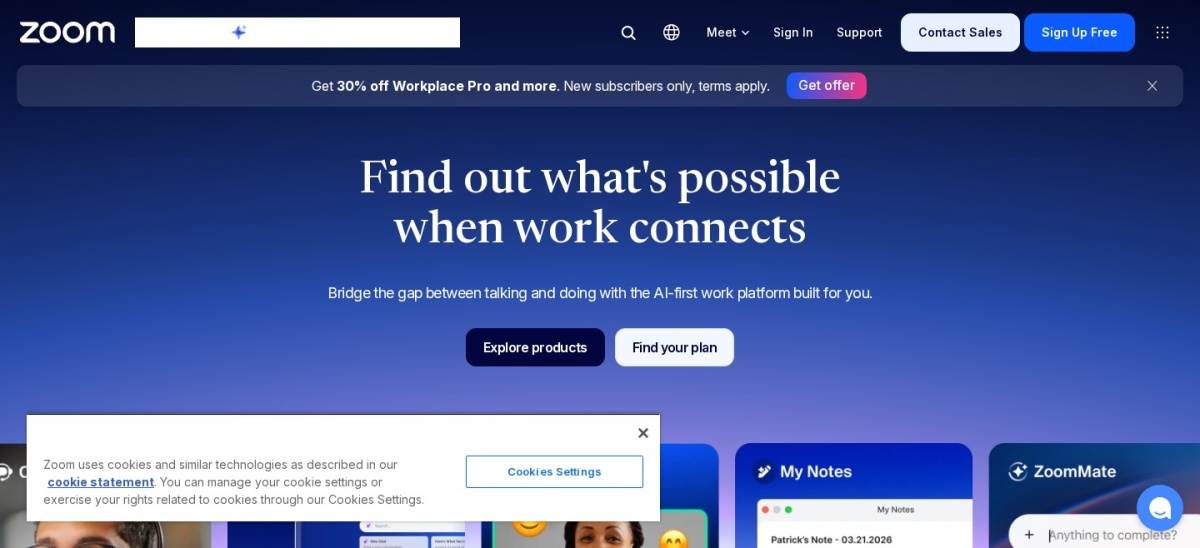
Zoom is the meeting pick: free group calls run 40 minutes, and Pro costs $14.16 a user a month billed annually.
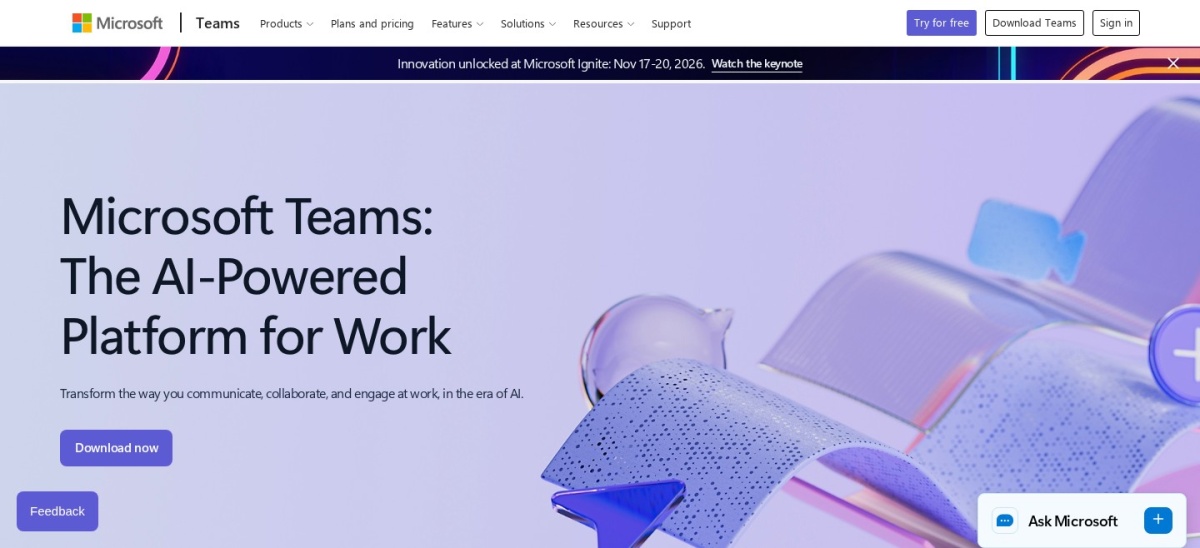
Microsoft Teams is the cheapest paid pick at $4 a user a month, and the best fit for Microsoft 365 teams.
ClickUp replaces three tools at once, with a free plan and Core at $12 a user a month as its regular price.
Every tool here has a free plan, and paid plans run from $4 to $14.16 a user a month billed annually.
What remote working software should cover
Remote teams lose the office hallway, so the tools have to carry the talk. Chat, video, tasks, and docs each need a home, or work slips into scattered email threads.
Start with how your team talks most. A chat-first team needs channels and quick calls, while a meeting-heavy team needs long calls, recordings, and notes. Our guide on collaborating in WordPress shows the same idea on a smaller scale: agree where work lives before adding more tools.
Price is per user, so a small rate gap grows with every hire. All 9 tools here have a free plan, and the cheapest paid plan runs from $4 to $14.16 a user a month when billed annually. Check the seat minimum too: Asana needs 2 seats and monday.com needs 3.
Free plans are real here, not demos. They cap history, seats, or boards, so a team of 3 to 10 can often run on free until the limits bite. Pick the tool that fits the work your team does every day, not the one with the longest feature list.
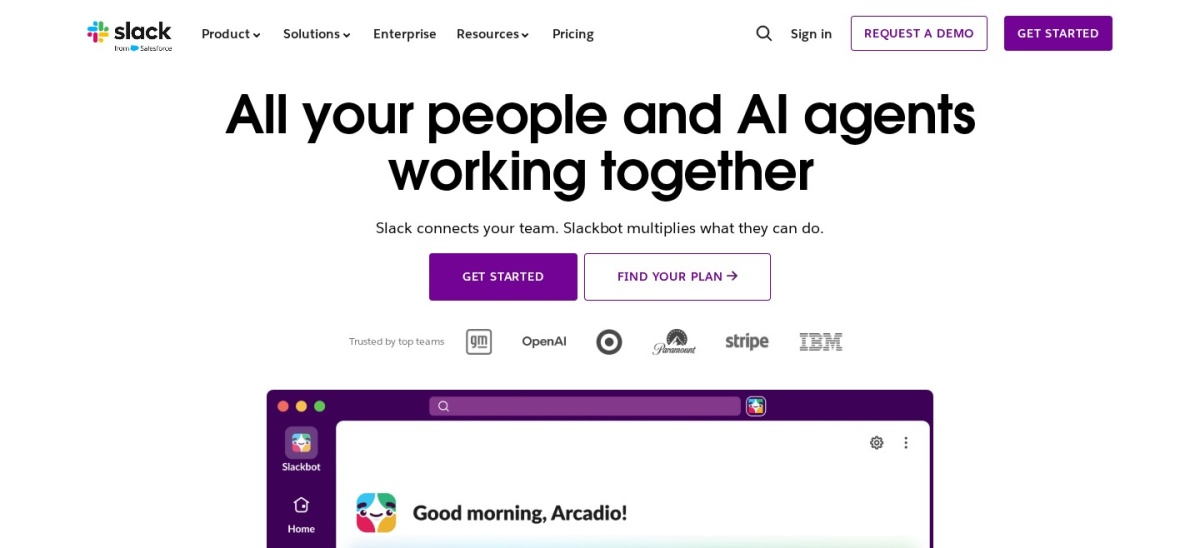
Slack is a channel-based messaging app that remote teams use as their main office chat. The free plan keeps 90 days of message history, allows 10 app integrations, and includes audio and video huddles for quick calls. Channels keep talks by topic, and threads keep replies in place.
The trade off is cost at scale. Pro costs $7.25 per user per month when billed annually, or $8.75 when billed monthly, and Slack was showing 50% off Pro for three months at the time of checking. It suits teams that want one chat home for daily talk, files, and app alerts.
Zoom is a video meeting platform with team chat, mail, calendar, and whiteboards built in. The free Basic plan allows group meetings of up to 40 minutes with 100 people, plus team chat and 3 whiteboards. Most remote teams know it already, so guests rarely need help joining.
The trade off is price. Pro costs $14.16 per user per month when billed annually, or $16.99 monthly, and Zoom was showing 30% off Pro for new subscribers at the time of checking. It suits teams that meet on video every day and want long meetings with AI notes.
Microsoft Teams is a chat and meeting app that comes with Microsoft 365. The free version allows group meetings of up to 60 minutes with 100 people, plus chat, file sharing, and 5 GB of cloud storage per user. It works best where Word, Excel, and Outlook are already in daily use.
The trade off is weight. Teams can feel slow and busy on older machines, and its best value comes from the Microsoft 365 bundle rather than the standalone plan. Essentials costs $4 per user per month when billed annually. It suits teams already paying for Microsoft 365.
ClickUp is an all-in-one workspace for tasks, docs, chat, and goals. The Free Forever plan allows unlimited tasks and members, with 60 MB of storage, Kanban boards, docs, and native time tracking. One workspace can hold projects, docs, and team chat instead of three paid tools.
The trade off is setup time. ClickUp packs in so many views and settings that new teams need time to shape it, and the paid Core plan lists at $12 per user per month as its regular price, with a $9 sale rate showing at the time of checking. It suits teams that want tasks, docs, and chat in one place.
Notion is a flexible workspace for docs, wikis, tasks, and team knowledge. The free plan covers individual use with unlimited pages, 10 guests, and a 7-day page history. Teams can build a wiki, a project tracker, and meeting notes from the same blocks.
The trade off is the learning curve. Notion starts as a blank page, so teams must design their own setup, and large workspaces can feel slow. Plus costs $10 per user per month when billed annually, or $12 monthly. It suits teams that want one shared brain for docs and plans.
Asana is a work management tool that turns goals into tasks with owners and due dates. The free Personal plan covers up to 2 users with unlimited tasks, projects, and messages. Paid Starter adds timeline and Gantt views, dashboards, and unlimited automations for larger teams.
The trade off is the free limit. Two seats is enough to try Asana, not to run a team, and Starter costs $10.99 per user per month when billed annually, with a 2-seat minimum. It suits cross-functional teams that need clear owners and dates for every task.
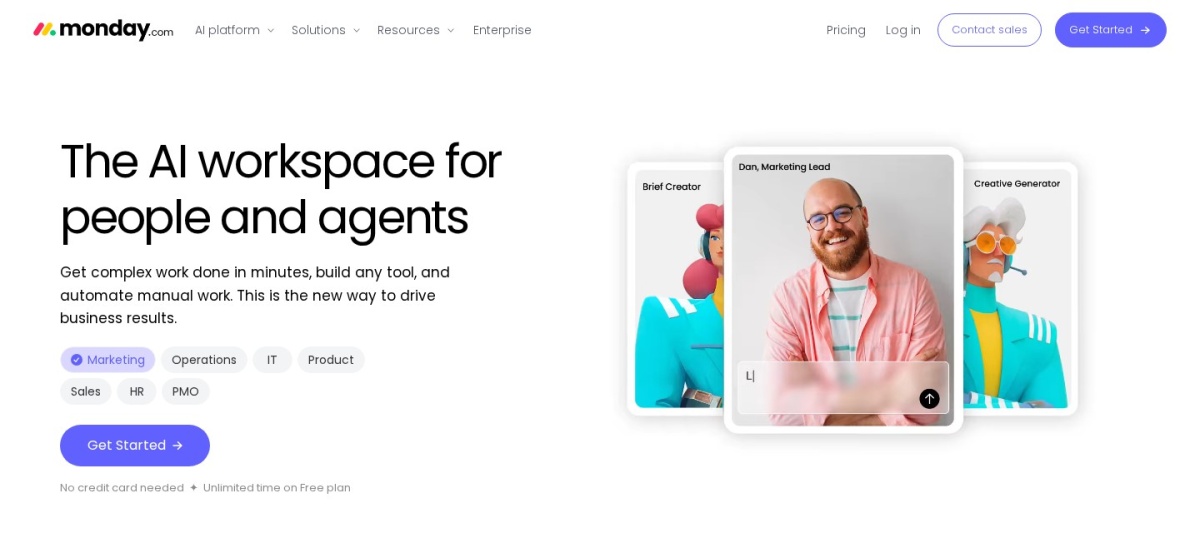
monday.com is a visual work platform built on boards, with status columns teams can read at a glance. The free plan covers up to 2 seats and 3 boards, with calendar and Kanban views. Paid Basic adds unlimited boards and viewers for the whole team.
The trade off is the seat rules. Paid plans start at 3 seats, so a solo user still pays for three, and Basic costs $9 per seat per month when billed annually, or $12 monthly. It suits visual teams that want fast setup and bright, simple boards.
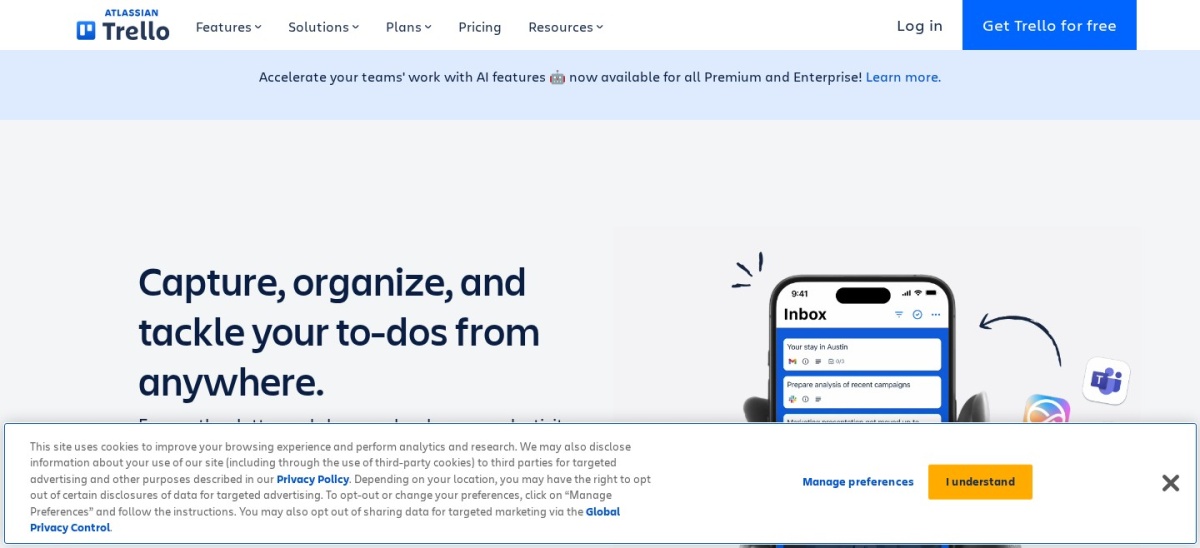
Trello is a simple board tool where cards move across lists from to-do to done. The free plan allows up to 10 collaborators per workspace and 10 boards, with unlimited cards and lists. It takes minutes to learn, and most teams need no training to start.
The trade off is depth. Trello has no built-in time tracking or workload view, and bigger features such as timeline views sit on paid plans. Standard costs $5 per user per month when billed annually. It suits small teams that want a light, visual task board.
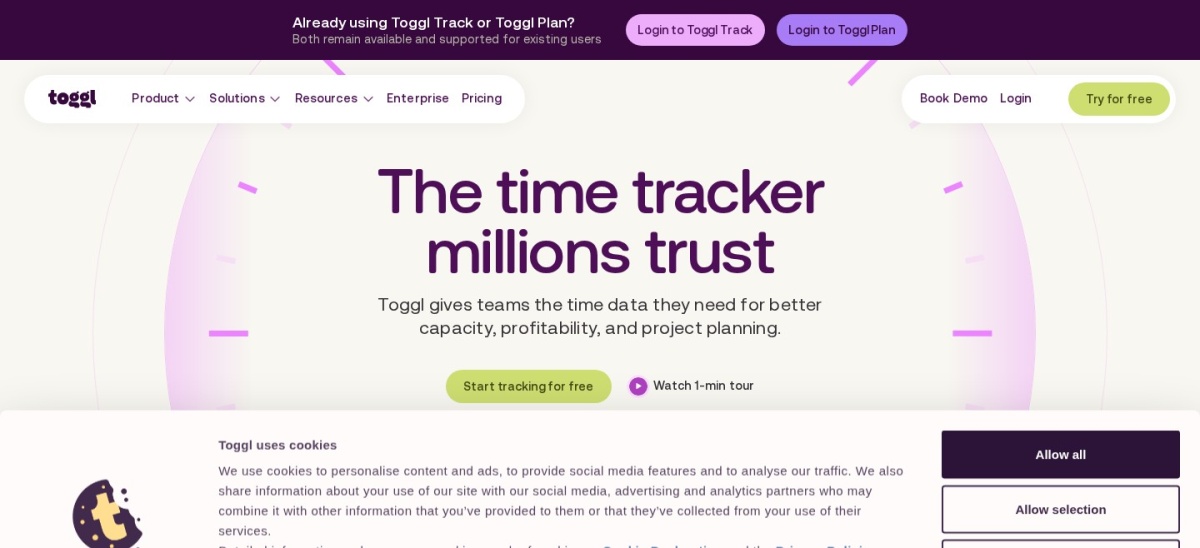
Toggl Track is a time tracker with one-click timers, manual entries, and reports for clients and payroll. The free plan covers up to 3 users with unlimited tracking, projects, clients, and tags. Reports show where hours went and can be exported for billing.
The trade off is scope. Toggl Track tracks time well but does not manage tasks or chat, so most teams pair it with another tool. Starter costs $9 per user per month when billed annually, or $12 monthly. It suits freelancers and small teams that bill by the hour.
Free plans cover the basics well. Most include chat, meetings, or boards for a small team at no cost.
Paid plans mostly add room and history. You get more seats, longer message history, more boards, and longer meetings.
If your team is larger than the free cap, the paid plan is the fix. Check the seat minimum first, since monday.com needs 3 seats and Asana needs 2.
For a team that meets and chats every day, the first year of a paid plan often costs less than the hours lost to scattered tools.
How we chose
We started from the tools remote teams name most often for chat, meetings, tasks, docs, and time tracking, then kept 9 with a free plan and a public rating.
Prices come from each vendor's pricing page, checked on 26 November 2026. Ratings and review counts come from G2 on the same day. Where a vendor shows a sale, the list shows the regular price.
We left out tools with no public rating and tools built for one narrow job, such as phone-only apps. No vendor paid for a place, and we do not claim to have used these tools ourselves.
How to choose software for remote working
List the three jobs your team does most each week, then match the tool to those jobs.
Work out where talk happens. If most talk is short and written, start with chat. If most talk is live, start with video meetings.
Count the seats and the limits. Free plans cap seats, history, or boards. Check the cap against your team size before you move work in.
Try the free plan with real work. Run one real project on the free plan for a week. If the limits bite, the paid plan is the fix, not a new tool.
Keep the stack small. One chat app, one meeting app, and one task app is enough for most teams. Extra tools add cost and split the talk.
FAQ
What is the best software for remote working?
Slack is the best pick for most remote teams. It keeps daily talk in channels, adds quick huddles for calls, and is rated 4.5 out of 5 from 39,350 G2 reviews. Its free plan covers small teams, and Pro costs $7.25 per user per month billed annually.
What is the cheapest remote working software?
Microsoft Teams is the cheapest paid pick here at $4 per user per month billed annually for Essentials. Its free plan covers group meetings of up to 60 minutes with 100 people. Trello Standard is next at $5 per user per month billed annually.
Can a remote team work on free plans only?
Yes, for small teams. Every tool in this list has a free plan, and a team of 2 to 10 people can often run on free chat, meetings, and boards. The limits that bite first are message history, seats, and board counts.
Do I need both Slack and Zoom?
Not always. Slack covers chat and quick huddles, and Zoom covers long meetings with notes. Many teams use Slack for talk and Zoom for scheduled calls, but Teams covers both jobs in one app for Microsoft 365 teams.
Which tool is best for tracking remote work hours?
Toggl Track is the best pick for hours. Its one-click timers, project tags, and exportable reports suit teams that bill by the hour. It is rated 4.6 out of 5 from 1,588 G2 reviews, and its free plan covers up to 3 users.
Is ClickUp really $12 a month?
$12 per user per month is the regular Core price used in this list. ClickUp was showing a $9 sale rate for Core billed annually at the time of checking, and Business costs $17 billed annually or $25 billed monthly.
SaaS SEO and WordPress specialist with about 8 years of experience. Rakib compares WordPress plugins, themes, hosting and software using public pricing, documentation and user reviews. See how we rank.