Best SEO Forecasting Tools in 2026: 7 Tools Compared
WLWPLegible EditorsLast verified 22 Nov 2026How we rank12 min read
★ Short answer
Advanced Web Ranking is the best SEO forecasting tool for teams that want built-in traffic projections, with one forecast per project and 7,000 tracked keywords on its $139/month Pro plan. SE Ranking is better for combining keyword research and tracking in an affordable suite, while Semrush helps teams build forecasts from competitive and search-demand data.
How we make this list: we compare pricing pages, product documentation and public user reviews, then re-check every price before each update. No product paid for a place. Disclosure.
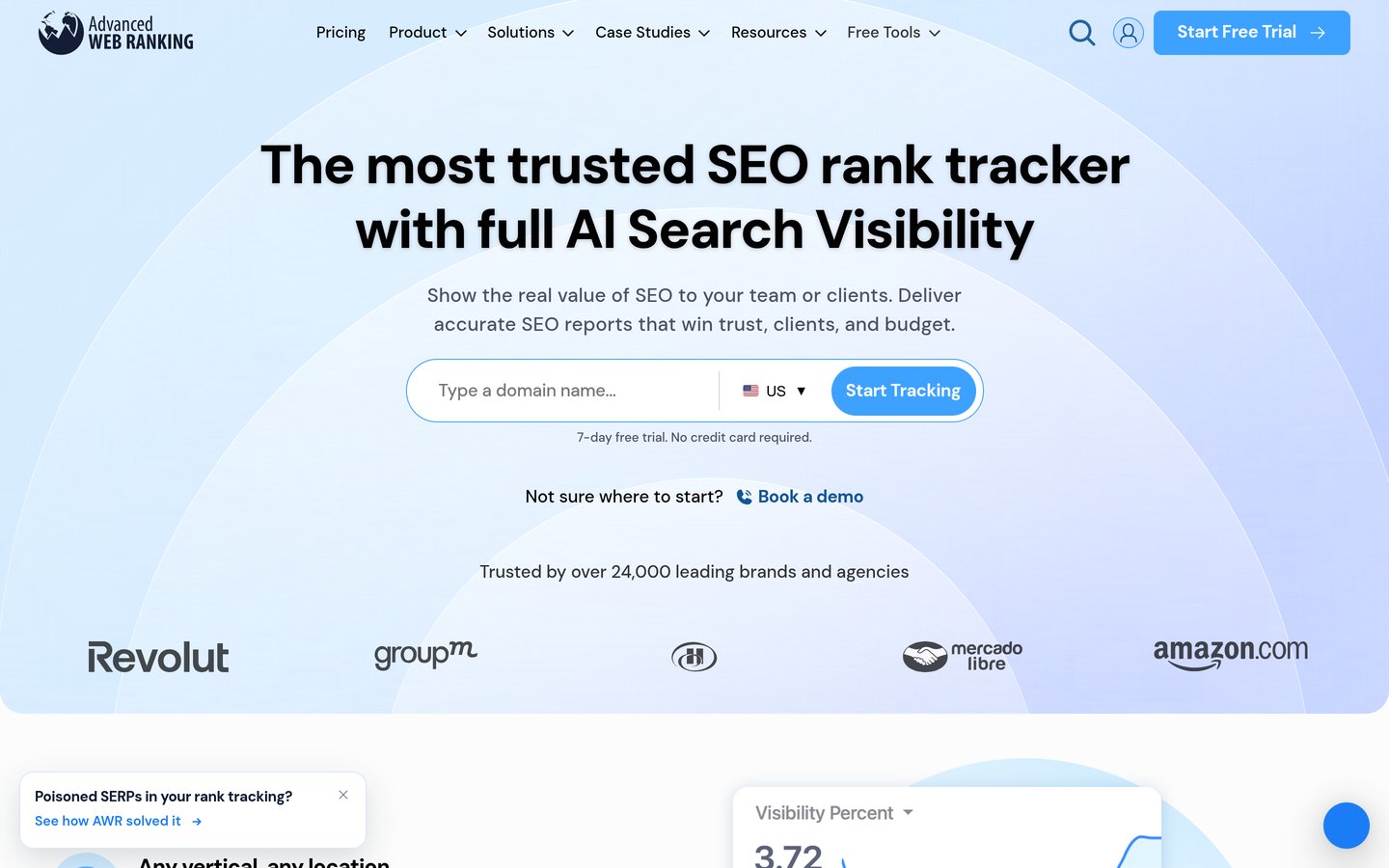
Advanced Web Ranking offers built-in SEO forecasting and 7,000 tracked keywords on its $139/month Pro plan.
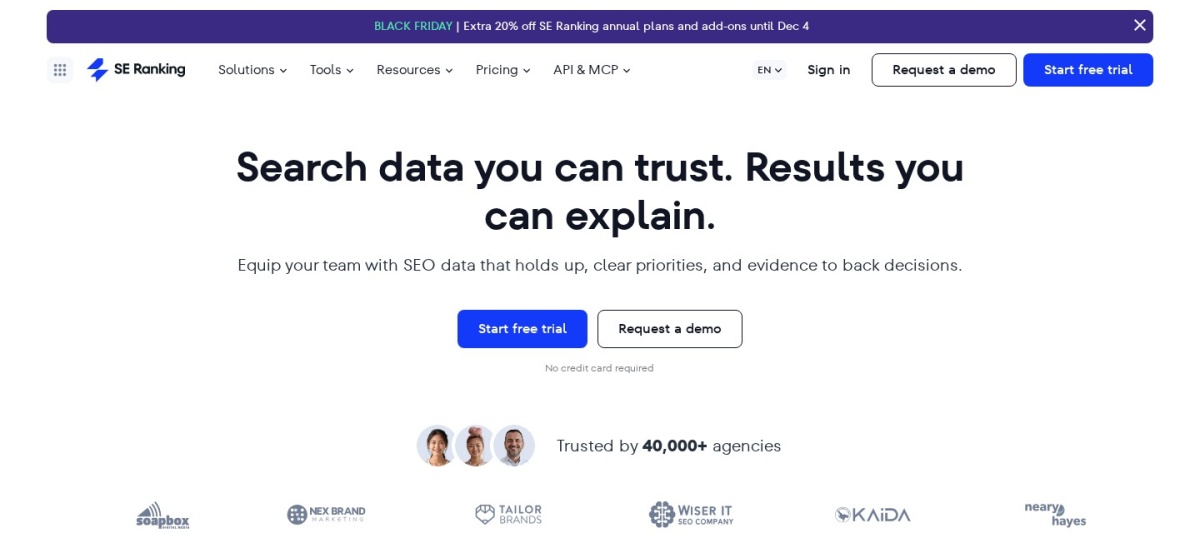
SE Ranking Core costs $129/month at regular monthly billing and includes 2,000 tracked keywords across 10 projects.
Semrush's entry SEO plan costs $139/month and includes monitoring for 5 websites and 500 tracked keywords.
Ahrefs Lite starts at $129/month, with 750 tracked keywords and 6 months of historical data.
SpyFu has the lowest regular monthly entry price here at $39, with 5,000 weekly tracked keyword rankings.
Forecasting functionality differs: dedicated forecasting platforms generate projections, while research suites mainly supply data for models you build.
What makes an SEO forecasting tool useful?
SEO forecasting estimates how organic traffic, search visibility and business outcomes might change when rankings improve. A useful forecast combines current rankings, search demand, expected click-through rates and realistic ranking targets rather than treating every keyword as equally valuable.
The most important distinction is between built-in forecasting and forecasting inputs. Advanced Web Ranking provides a dedicated forecasting feature. Broader platforms such as Semrush, Ahrefs and SE Ranking provide keyword volumes, ranking histories and competitive data that teams can use in their own forecasting models.
Consider how each platform handles seasonality, changing search behavior and branded versus non-branded traffic. Search volume alone does not guarantee clicks, particularly when search results contain advertisements, AI-generated answers and other features.
A good forecasting process should also connect projected visits to commercial outcomes. Add your own conversion rates, lead values and revenue assumptions, then compare forecasts against actual performance regularly. Treat every estimate as a scenario rather than a guaranteed result.
Advanced Web Ranking is an SEO rank tracking and forecasting platform with a dedicated feature for projecting organic search performance. Its Pro plan includes 7,000 tracked keywords, unlimited projects, unlimited users, local and mobile rankings, and SEO Forecasting with one forecast per project.
The trade off is that the entry plan costs $139 per month, making it a larger commitment than basic keyword research tools. Forecast output also depends on realistic assumptions about ranking improvements and search behavior. It suits agencies and in-house teams that need structured projections alongside ongoing performance reporting.
What we like
Dedicated SEO forecasting feature
7,000 tracked keywords on the entry plan
Unlimited projects and users
Local and mobile ranking coverage
Shareable reports and competitive visibility data
Watch out for
Higher starting cost than lightweight research tools
Pro limits forecasting to one forecast per project
Forecasts still depend on user-selected assumptions
SE Ranking is an SEO research and monitoring suite that provides the keyword and competitor data needed to prepare traffic forecasts. Its Core plan includes 10 projects, 2,000 daily tracked keywords, website auditing, competitive research and integrations with Google Analytics and Google Search Console.
The trade off is that SE Ranking does not replace a dedicated scenario-based forecasting engine. Core costs $129 per month at regular monthly billing, or $103.20 per month when billed annually, before temporary promotions. It suits growing SEO teams that want forecasting inputs, rank monitoring and campaign management in one subscription.
Requires external calculations for detailed traffic forecasts
Core is limited to 10 projects
More extensive historical data is available on higher plans
Growth adds more projects, keyword capacity and historical data.Visit seranking.com
03
Semrush
4.4/5on G2 (4,293 reviews, checked Nov 2026)
Starts at$139/mo
Best for competitive SEO forecast research
ForecastingManual traffic and ranking models
Tracked keywords500 daily
Websites5 monitored
Entry planSEO, $139/mo
semrush.com
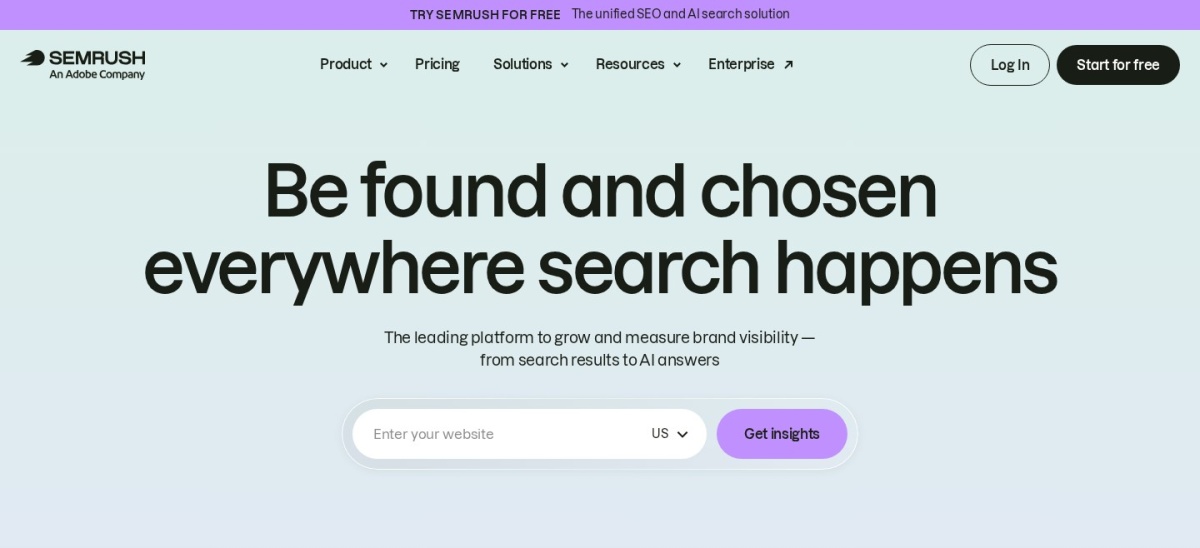
Semrush homepage, captured Nov 2026.
Semrush is a search marketing platform that combines keyword research, competitor analysis and position tracking for SEO planning. Its entry SEO plan includes monitoring for 5 websites, 500 daily tracked keywords, technical site auditing and competitive research. These datasets help estimate the traffic potential of keyword groups and ranking improvements.
The trade off is that a complete traffic-to-revenue forecast requires external modeling and business data. The entry SEO plan costs $139 per month at regular monthly billing, compared with $117.33 per month billed annually. It suits teams that need competitive evidence and search demand estimates before building forecasts.
Detailed forecasts require a separate calculation model
Entry plan tracks 500 keywords
Additional products and higher tiers increase total cost
Higher tiers expand research capacity, tracking and collaboration.Visit semrush.com
04
Ahrefs
4.5/5on G2 (725 reviews, checked Nov 2026)
Starts at$129/mo
Best for keyword opportunity forecasting
ForecastingManual models from keyword data
Tracked keywords750
Historical data6 months
Entry planLite, $129/mo
ahrefs.com
Ahrefs homepage, captured Nov 2026.
Ahrefs is an SEO research platform that helps estimate potential traffic using keyword demand, competitive rankings and historical search data. Its Lite plan costs $129 per month and includes 750 tracked keywords, 6 months of historical data, 100,000 crawl credits and access to its core research tools.
The trade off is that Ahrefs provides the research inputs rather than a complete business forecasting workflow. Detailed scenarios involving target rankings, conversion rates and revenue need a separate model. It suits content strategists and SEO consultants who prioritize keyword opportunities before estimating campaign returns.
What we like
Detailed keyword and competitor research
Historical data helps establish a baseline
Rank tracking supports forecast validation
Site auditing helps identify technical constraints
Watch out for
No dedicated end-to-end revenue forecasting model on Lite
Entry plan has limited historical depth
Usage limits and paid additional seats affect scaling
Standard adds deeper history, more keywords and expanded research tools.Visit ahrefs.com
05
SpyFu
4.6/5on G2 (521 reviews, checked Nov 2026)
Starts at$39/mo
Best budget option for competitive projections
ForecastingManual competitor-based models
Tracked rankings5,000 weekly
Tracking projects1 live project
Entry planBasic, $39/mo
spyfu.com
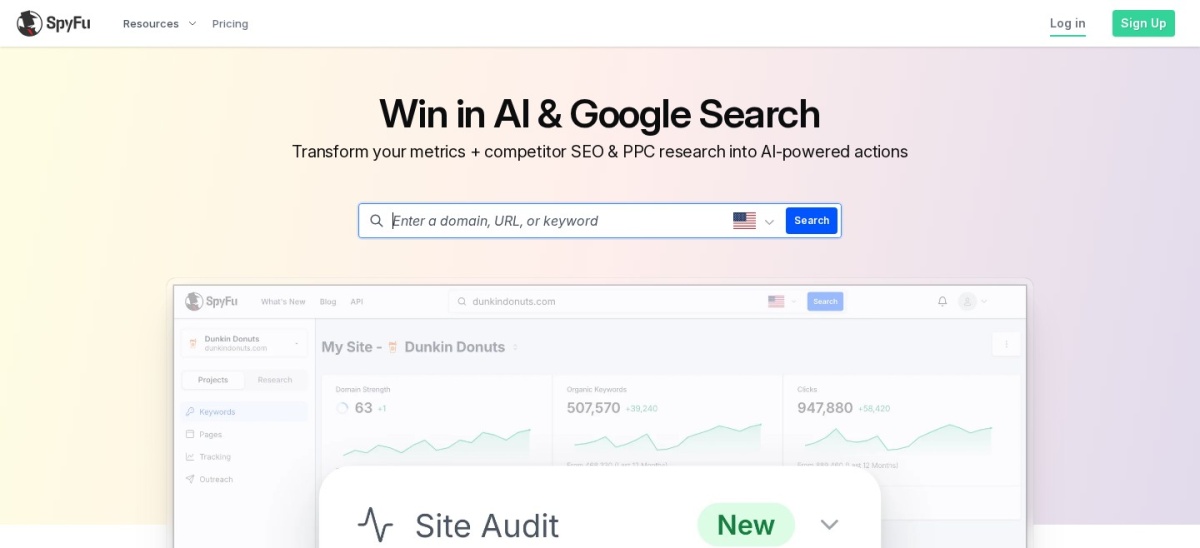
SpyFu homepage, captured Nov 2026.
SpyFu is a competitive intelligence platform for SEO and paid search research. Its Basic plan includes 10,000-row search results, 10,000-row exports, one live tracking project, 5,000 weekly tracked keyword rankings and 10 automated reports, providing useful inputs for competitor-based traffic estimates.
The trade off is that SpyFu is not a dedicated forecasting platform, and Basic excludes extensive historical ranking data and Google Search Console integration. Basic costs $39 per month, or $29 per month billed annually. It suits freelancers who want affordable competitor intelligence to support forecasts built in a spreadsheet.
What we like
Lowest regular monthly entry price in this comparison
Competitor keyword and advertising research
5,000 weekly tracked rankings on Basic
Automated reporting included
Annual billing reduces the subscription cost
Watch out for
No dedicated scenario-based SEO forecasting engine
Basic supports only one live tracking project
Historical ranking data requires a higher plan
Pro + AI adds historical data, more projects and additional integrations.Visit spyfu.com
06
Serpstat
4.6/5on G2 (466 reviews, checked Nov 2026)
Starts at$69/mo
Best for structured keyword forecast inputs
ForecastingExternal models using SEO data
Projects5
Position checks10,000
Regular entry price$69/mo equivalent
serpstat.com
Serpstat homepage, captured Nov 2026.
Serpstat is a search intelligence platform that combines keyword analysis, rank tracking and website auditing. Its Individual plan supports 5 projects, 100 daily research searches, 10,000 keyword position checks and 30,000 pages for auditing. These metrics can support keyword-level opportunity estimates and campaign forecasts.
The trade off is that Serpstat does not provide a complete traffic-to-revenue forecasting model on its entry plan. The regular equivalent is $69 per month, calculated from its published $50 monthly annual-plan offer and $228 annual savings; the advertised Black Friday rate applies only to the first billing period. It suits teams comfortable developing their own forecasts.
What we like
Combines keyword research and rank tracking
Supports 5 projects on Individual
Website auditing supports planning
Competitive rankings help identify opportunities
Watch out for
No dedicated business forecasting model on Individual
Research and tracking usage limits
Advanced integrations require higher plans
Team adds API access, expanded limits and AI visibility checks.Visit serpstat.com
07
Morningscore
4.5/5on G2 (27 reviews, checked Nov 2026)
Starts at$69/mo
Best for simplified SEO growth planning
ForecastingManual models from SEO metrics
Tracked keywords100
Websites3
Entry planLite, $69/mo
morningscore.io
Morningscore homepage, captured Nov 2026.
Morningscore is an SEO management platform that combines keyword tracking, competitive research and prioritized optimization tasks. Its Lite plan costs $69 per month and supports 3 websites, 100 tracked keywords, 2 users and 100 AI credits. It helps smaller teams establish baseline performance and identify possible growth opportunities.
The trade off is that Lite has limited keyword capacity and does not offer the detailed scenario modeling found in specialized forecasting software. Forecasting traffic and revenue requires external calculations, while more extensive reporting is reserved for higher plans. It suits small teams that value straightforward SEO planning over advanced forecasting.
Keyword-based forecasting starts with search volume, current ranking and a target ranking. Apply a reasonable click-through rate to estimate visits at each position, then compare the scenarios. Group keywords by intent and avoid counting overlapping search opportunities twice.
Historical forecasting uses organic traffic trends to estimate future performance. It works best when sufficient clean historical data exists, but major site changes, seasonal demand and search algorithm updates can make past performance a weak guide.
Revenue forecasting adds conversion rates and customer value to projected traffic. Build conservative, expected and ambitious scenarios. This makes assumptions visible and helps stakeholders understand how changes in rankings might affect commercial outcomes.
Why SEO forecasts can miss their targets
Search volume is an estimate, not a guaranteed number of visitors. Even when a page reaches its target position, click-through rates can vary because of branded results, advertisements, AI answers and search features.
Ranking improvements also take uncertain amounts of time. Website authority, competition, content quality, technical limitations and changing user behavior influence results. A forecast should therefore contain assumptions, ranges and regular comparisons with actual performance.
For business forecasts, keep traffic estimates separate from conversion assumptions. A successful ranking campaign may attract more visitors without producing proportional increases in leads or revenue.
How we chose
We compared established SEO platforms with dedicated forecasting features or substantial keyword, rank tracking and competitive research capabilities that can support traffic projections. We prioritized tools with documented functionality, meaningful public review histories and actively maintained commercial products.
Pricing pages and public G2 ratings were checked on 22 Nov 2026 for the requested editorial snapshot. The comparison uses regular entry-plan pricing rather than introductory promotions, with monthly prices annualized for the price ladder. Annual-billing discounts are explained separately when relevant.
We excluded products whose entry pricing could not be confirmed in the requested format, tools without sufficient public reviews, and services that primarily provide consultancy rather than forecasting data or software. We also distinguish dedicated forecasting engines from general SEO tools that require external calculations. No vendor paid for a place, and we do not claim testing for this list.
How to choose the right SEO forecasting tool
Start by defining the decisions your forecast must support, then select software that provides the necessary data and reporting capabilities.
Decide whether you need built-in forecasting. Choose a platform with an actual forecasting feature when you need ready-made projections and client-facing scenarios. If you already maintain a forecasting spreadsheet, a research suite may provide enough keyword and ranking data.
Check the quality of your baseline data. Review how the tool supplies search volumes, ranking history, competitive visibility and keyword groups. Connect first-party analytics data where possible, and separate branded traffic from non-branded traffic to avoid overstating opportunities.
Match tracking capacity to your workflow. Check keyword limits, projects, users, update frequency and historical access. A low entry price may become expensive when additional campaigns, higher tracking volumes or reporting features require an upgrade.
Build scenarios and review actual outcomes. Create conservative, expected and ambitious forecasts using explicit ranking and click-through assumptions. Add conversion rates only when they are supported by your own business data. Revisit projections as performance and search conditions change.
FAQ
What is the best SEO forecasting tool in 2026?
Advanced Web Ranking is the strongest choice in this comparison for teams specifically seeking built-in SEO forecasting. Its Pro plan includes a forecasting feature alongside rank tracking and reporting. SE Ranking is an alternative when you primarily need keyword research and monitoring data to build forecasts yourself.
Can SEO forecasting tools predict exact traffic?
No. SEO forecasts estimate possible outcomes based on search demand, rankings, click-through assumptions and historical performance. Search results, competition and user behavior change continuously. Treat projected traffic as a range of plausible outcomes, and compare the model against actual analytics data over time.
What is the difference between SEO forecasting and rank tracking?
Rank tracking records where a website currently appears for selected search terms. SEO forecasting estimates what could happen if those rankings improve or decline. Tracking data provides a baseline, while a forecast introduces assumptions about future positions, clicks and potentially business outcomes.
Can I build an SEO forecast using Ahrefs or Semrush?
Yes. Both platforms provide keyword research, competitive insights and ranking data that can support a forecasting model. You still need to calculate expected clicks, ranking scenarios and business outcomes separately. Their traffic estimates should not be treated as guaranteed future website visits.
What is the cheapest SEO forecasting research tool?
SpyFu has the lowest regular monthly entry price among the products in this comparison at $39 per month, with a lower rate available through annual billing. It provides competitive keyword research and tracking rather than a complete forecasting engine, so you must build the forecast separately.
How do I calculate forecasted SEO traffic?
Start with the estimated search volume for each keyword and multiply it by an appropriate click-through rate for the expected ranking position. Compare that result with current estimated clicks to calculate potential gains. Adjust for seasonality, overlapping keywords and changes in search result features.
Can SEO forecasting tools predict revenue?
Some forecasting workflows can estimate potential revenue when traffic projections are combined with conversion rates and customer values. These business assumptions generally come from your own analytics or sales systems. Revenue estimates are especially uncertain when traffic intent or conversion behavior changes.
How often should SEO forecasts be updated?
Review forecasts regularly during an active campaign, particularly after substantial ranking changes, website updates or shifts in search demand. Monthly comparisons are practical for many teams. Rebuild assumptions when the original forecast no longer reflects current traffic, competitive conditions or conversion performance.
Do I need a paid SEO forecasting platform?
Not necessarily. A spreadsheet, search performance data and documented assumptions can support a basic forecast. Paid software becomes more useful when you need larger keyword datasets, competitive benchmarks, repeatable reporting and collaboration across campaigns. Choose based on the complexity of the forecast rather than the number of features alone.