HashiCorp Vault is the best secret management tool for enterprise DevSecOps, with dynamic secrets, HSM support and detailed audit logs, rated 4.3/5 on G2 from 53 reviews. Pick Akeyless for multi-cloud estates and Doppler when developers need the fastest setup.
How we make this list: we compare pricing pages, product documentation and public user reviews, then re-check every price before each update. No product paid for a place. Disclosure.
HashiCorp Vault is the deepest enterprise vault, with dynamic secrets and HSM support, but managed production clusters start at $1,152 a month.
Akeyless is the strongest multi-cloud pick, rated 4.6/5 on G2 from 92 reviews, with zero-knowledge architecture and HSM integration.
Doppler has the highest rating in this list at 4.8/5 on G2 from 96 reviews, and its Team plan costs $21 per user a month.
AWS Secrets Manager and Azure Key Vault are the cheapest per secret at $0.40 a secret a month and $0.03 per 10,000 operations, but each one ties you to its own cloud.
Infisical is rated 4.8/5 on G2, but from only 9 reviews, so treat that score as thin evidence.
Three tools in this list publish no paid price at all: Akeyless, CyberArk Conjur and Delinea Secret Server are all quote-based.
What enterprise DevSecOps teams should look for
Enterprise secrets management is not about storing one API key. It is about thousands of machine identities, database credentials and certificates that change constantly, with every read logged for audit.
Rotation matters most. A vault that mints short-lived, dynamic credentials beats one that stores a static password for months, even if the static store is encrypted. Look for automatic rotation, lease expiry and revocation.
Audit and access control decide whether a tool passes compliance review. You need per-secret permissions, approval flows for sensitive reads and logs that feed your SIEM. Our guide on adding two-factor authentication to WordPress shows the same access-control thinking applied to human logins.
Deployment model is the other big fork. Cloud-native stores are cheap and fast inside one cloud, while dedicated vaults such as Vault and Akeyless work across clouds and on-premises, with HSM backing for regulated teams.
The 9 best secret management tools for enterprise DevSecOps
01
HashiCorp Vault
4.3/5on G2 (53 reviews, checked Nov 2026)
Paid from$1,152/mo
Best enterprise vault overall
Dynamic secretsYes, databases and clouds
HSM supportYes, Enterprise
DeploymentSelf-hosted or managed
Paid planHCP Vault Dedicated
hashicorp.com
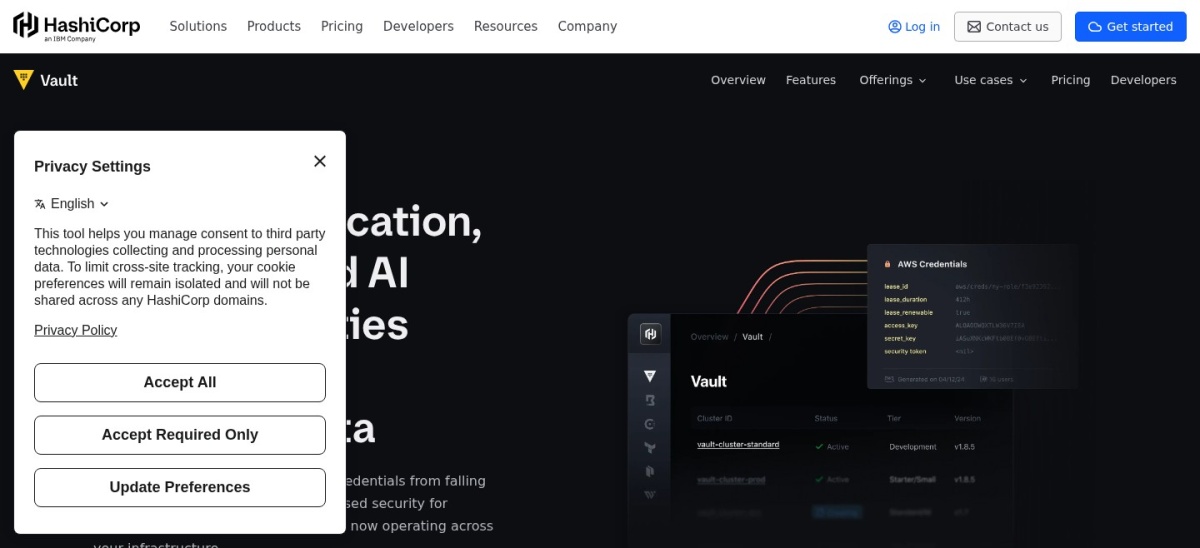
HashiCorp Vault homepage, captured Nov 2026.
HashiCorp Vault is the reference vault for enterprise DevSecOps, now part of IBM. It stores static secrets, mints short-lived dynamic credentials for databases and cloud accounts, runs encryption as a service, and logs every access in detail. The open-source Community Edition is free to self-host.
The trade off is operational weight and price. The managed HCP Vault Dedicated Essentials Small cluster costs about $1,152 a month, and the cheaper $450-a-month Development tier carries no production SLA. It suits platform teams that need dynamic secrets at scale and can staff a vault.
What we like
Dynamic secrets for databases and cloud accounts
HSM support and detailed audit logging
Free open-source edition to self-host
Largest ecosystem of integrations
Watch out for
Managed production clusters start at $1,152 a month
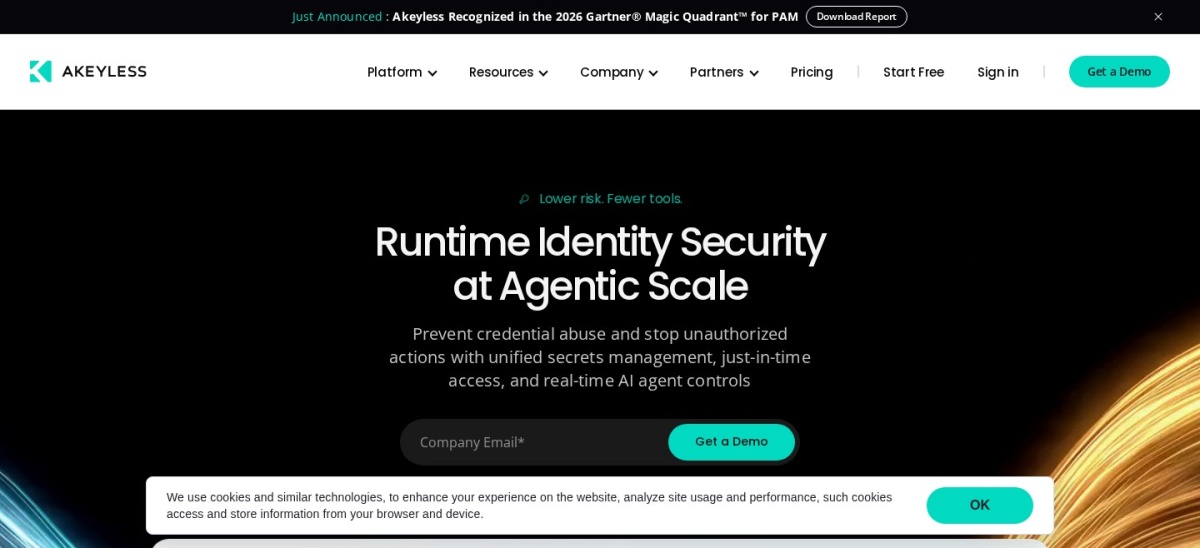
Akeyless is a SaaS vault built for multi-cloud and hybrid estates, rated 4.6/5 on G2 from 92 reviews. It issues just-in-time, short-lived credentials so applications never hold a static secret, and its hybrid SaaS option keeps encryption keys inside your own network with zero-knowledge encryption.
The trade off is pricing transparency. Akeyless publishes no paid price, and its per-client annual packages are quote-based, so budgeting needs a sales conversation. It suits enterprises that span AWS, Azure and Google Cloud and want one vault with HSM backing.
CyberArk Conjur is the governance-heavy enterprise secrets engine, rated 4.5/5 on G2 from 17 reviews. Secrets, roles and access rules are defined as declarative, version-controlled policy, which fits teams that treat security configuration like code. Conjur Open Source is free to self-host.
The trade off is weight and naming. The product was renamed Idira Secrets Manager in May 2026 after Palo Alto Networks bought CyberArk, and the enterprise edition is quote-based with no public price. It suits regulated teams already invested in the CyberArk platform.
Doppler is a hosted secrets platform that replaces scattered .env files, rated 4.8/5 on G2 from 96 reviews, the joint-highest score in this list. It stores secrets once per project and environment, then syncs them to local machines, CI pipelines and cloud platforms, with automatic rotation on the Team plan.
The trade off is enterprise depth. Dynamic secrets, customer-managed encryption keys and on-premises deployment sit in the custom-priced Enterprise tier, and extra users on the free Developer plan cost $8 a month each. It suits engineering teams that want secrets managed fast with little setup.
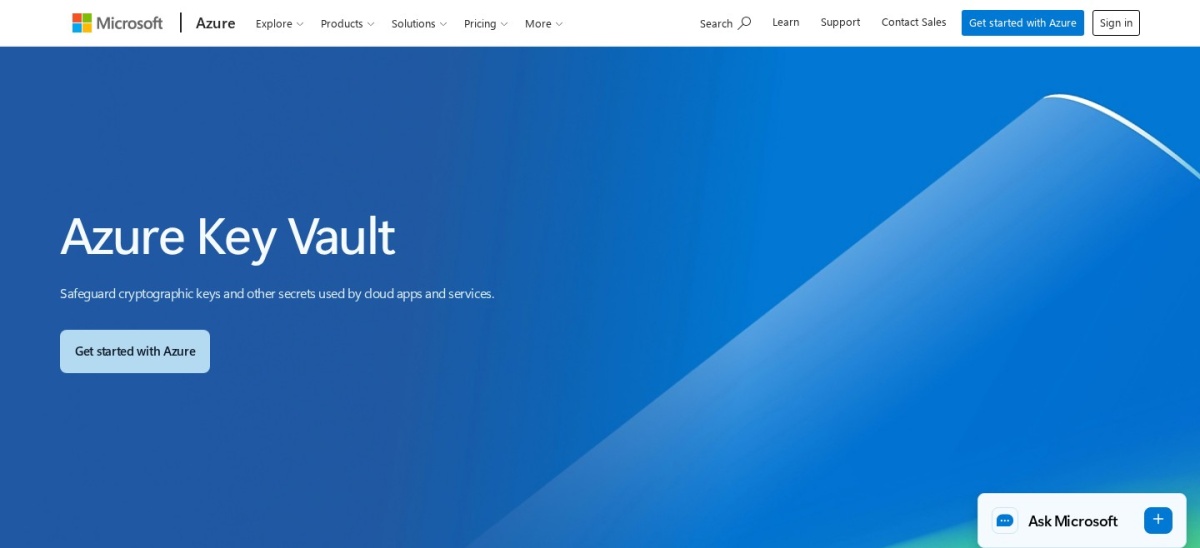
Azure Key Vault is the native place to store secrets, keys and certificates for Azure workloads, rated 4.5/5 on G2 from 55 reviews. Applications read secrets with a managed identity and no stored credential, and access is controlled per secret through Azure RBAC with a 99.99% availability SLA.
The trade off is rotation. Key Vault raises a near-expiry event 30 days ahead but does not rotate secret values itself, so you write an Azure Function to do it. It suits teams already on Azure who want the cheapest metered vault in this list.
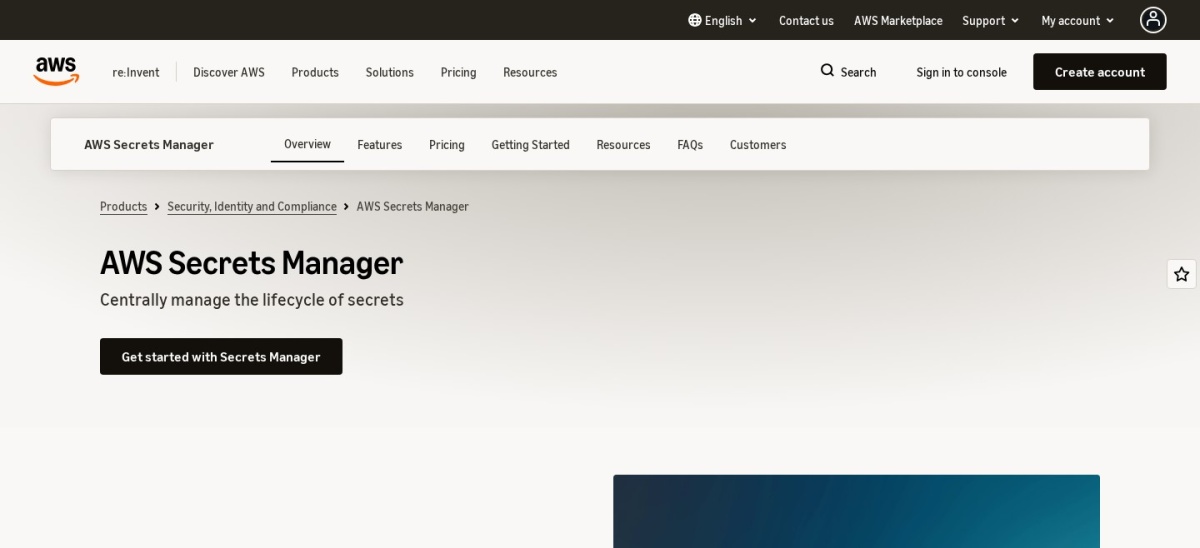
AWS Secrets Manager is the native vault for AWS workloads, rated 4.5/5 on G2 from 18 reviews. It stores and automatically rotates database credentials, API keys and other secrets, with fine-grained IAM policies per secret and audit through CloudTrail. New AWS customers get up to $200 in free tier credits.
The trade off is metered cost and lock-in. Every secret costs $0.40 a month plus $0.05 per 10,000 API calls, so heavy read volumes add up, and the service is built for AWS first. It suits teams running on EC2, ECS, Lambda or EKS that need managed rotation.
Delinea Secret Server homepage, captured Nov 2026.
Delinea Secret Server is an enterprise privileged access vault for securing, managing and auditing privileged accounts, rated 4.4/5 on G2 from 44 reviews. It centralises credential vaulting, automates password rotation and gives granular access controls with audit trails, in the cloud or on-premises.
The trade off is pricing clarity. There is no published price, and G2 reviewers note hidden extra costs and convoluted licensing, alongside a dated interface. It suits mid-market and enterprise teams that want a PAM vault rather than a developer-first secrets store.
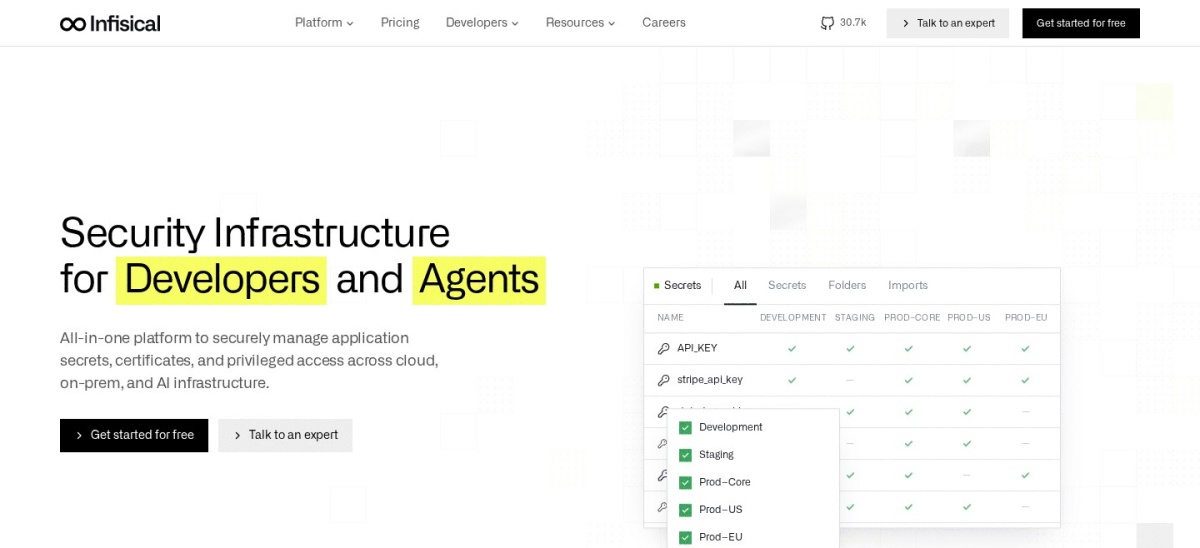
Infisical is an open-core secrets platform that covers secrets, certificates, keys and privileged access in one product, rated 4.8/5 on G2 from 9 reviews. The free plan covers 5 identities with unlimited projects, and teams can self-host the open-source core or use the cloud. Pro costs $20 per identity a month billed yearly.
The trade off is a thin review base and per-identity billing. Only 9 G2 reviews support that 4.8 score, dynamic secrets need the $40 Advanced tier, and every machine identity counts toward the bill. It suits startups and mid-market teams that want managed secrets fast.
GitGuardian is a secrets detection platform rather than a vault, rated 4.8/5 on G2 from 308 reviews, the largest review base in this list. It scans repositories, CI pipelines and developer machines for leaked credentials across 350+ secret types, and blocks secrets in pull requests and pre-commit hooks.
The trade off is scope. GitGuardian finds and remediates leaked secrets but does not store or serve them to applications, so it complements a vault instead of replacing one. It suits DevSecOps teams that want to stop leaks at the source.
What we like
Largest G2 review base in this list
Free Starter plan for up to 25 developers
Blocks secrets before they reach the repo
Covers public leaks and internal code
Watch out for
Not a vault, so it needs a secrets store beside it
Cloud stores win on price and setup inside one cloud. AWS Secrets Manager at $0.40 a secret a month and Azure Key Vault at $0.03 per 10,000 operations are hard to beat when every workload already lives in that cloud.
Dedicated vaults win on portability and depth. Vault, Akeyless and Conjur work across clouds and on-premises, mint dynamic credentials and back keys with HSMs, which matters for regulated estates.
Many teams run both: a dedicated vault as the control plane, with cloud stores as the delivery layer underneath. That pattern costs more to run but keeps one audit trail.
How we chose
We started from the secrets tools enterprise DevSecOps teams actually evaluate: dedicated vault platforms, developer-first SaaS, the three cloud-native secret stores, and vault-extended options. We kept tools with a public user rating and a verifiable price or a clear quote-based model.
Prices come from each vendor's pricing page, checked on 26 November 2026. Ratings and review counts come from G2 on the same day. Where a vendor shows no price, the list says Custom instead of guessing a figure. Metered tools state their meter honestly.
We left out tools with no public user rating, including Google Secret Manager and Pulumi ESC. No vendor paid for a place, and we do not claim to have used these tools ourselves.
How to choose a secret management tool for enterprise DevSecOps
Start from where your workloads run, then check rotation, audit and price in that order.
Map where your secrets live today. List every cloud, cluster and CI system that holds a credential. One cloud points to its native store; several clouds point to a dedicated vault.
Demand automatic rotation. Static secrets that never change are the main leak risk. Pick a tool that rotates database and cloud credentials on a schedule without manual work.
Check the audit trail before the price. Ask whether every read is logged, who can approve sensitive access, and whether logs feed your SIEM. Compliance review fails without that evidence.
Price the meter, not the headline. Per-secret, per-operation and per-identity billing behave very differently at scale. Model your secret count and read volume before signing.
FAQ
What is the best secret management tool for enterprise DevSecOps?
HashiCorp Vault is the best pick for most enterprise DevSecOps teams. It mints dynamic secrets, supports HSMs and keeps detailed audit logs, and it is rated 4.3/5 on G2 from 53 reviews. Akeyless is the better choice for multi-cloud estates.
How much does HashiCorp Vault cost?
The open-source Community Edition is free to self-host. The managed HCP Vault Dedicated service starts with a Development cluster at about $450 a month, while the smallest production cluster, Essentials Small, costs about $1,152 a month before per-client fees.
Is AWS Secrets Manager cheaper than Vault?
For small secret counts, yes. AWS Secrets Manager charges $0.40 per secret a month plus $0.05 per 10,000 API calls, so 100 secrets cost about $40 a month. Vault costs more but works across clouds and mints dynamic credentials.
Do I need a vault if I already use Azure Key Vault?
Not always. If every workload runs on Azure, Key Vault covers storage, keys and certificates well. Add a dedicated vault when you span clouds, need dynamic secrets, or want one audit trail across providers.
What is the difference between secrets management and secrets detection?
Secrets management stores and serves credentials to applications, while detection finds credentials that leaked into code or public repositories. GitGuardian does detection; Vault, Akeyless and Doppler do management. Most teams need both.
Which secret management tool has the best user rating?
Doppler, Infisical and GitGuardian all score 4.8/5 on G2. Doppler has the strongest base at 96 reviews, GitGuardian has 308 reviews, and Infisical has only 9 reviews, so its score is the least proven of the three.
SaaS SEO and WordPress specialist with about 8 years of experience. Rakib compares WordPress plugins, themes, hosting and software using public pricing, documentation and user reviews. See how we rank.