Best Root Cause Analysis Software in 2026: 7 Tools Compared
WLWPLegible EditorsLast verified 22 Nov 2026How we rank13 min read
★ Short answer
EasyRCA is the best root cause analysis software for organizations needing structured investigations, evidence management, and corrective-action tracking. Its single-plant license costs $14,975 annually with unlimited users. GoAudits is better for inspection-driven corrective actions, while MaintainX connects investigations with maintenance records and equipment work orders.
How we make this list: we compare pricing pages, product documentation and public user reviews, then re-check every price before each update. No product paid for a place. Disclosure.
EasyRCA supports structured investigation workflows and more than 300 RCA templates. Its single-plant license costs $14,975 annually with unlimited users.
GoAudits starts at $10 per user monthly with annual billing and connects inspection failures to assigned corrective actions.
MaintainX offers unlimited work orders on its free plan. Essential starts at $20 per user monthly with annual billing.
Miro provides 3 editable boards for free and more than 7,000 templates. Starter costs $8 per member monthly with annual billing.
SmartDraw supports fishbone and cause-and-effect diagrams. Its regular Individual subscription costs $10.95 monthly with annual billing.
Datadog starts its Infrastructure Pro offering at $15 per host monthly, while PagerDuty's Reliability Platform Starter lists a $2,800 annual platform fee.
What to look for in root cause analysis software
Root cause analysis software helps teams investigate why failures, defects, incidents, or recurring problems happen. The goal is to identify contributing causes, verify findings with evidence, and prevent the same problem from returning.
Different tools support different investigation methods. 5 Whys works well for straightforward problems, while fishbone diagrams organize possible causes into categories. Logic trees and incident timelines help investigate complicated failures involving multiple contributing factors.
A useful RCA system should connect findings with corrective actions. Look for evidence attachments, assigned owners, deadlines, investigation histories, and effectiveness checks. Diagramming alone does not guarantee that the organization will implement or verify a solution.
Choose software based on the problems your team investigates. Manufacturing and maintenance teams may need equipment histories and formal investigations. Safety teams often begin with inspections. IT teams need monitoring data, incident timelines, and post-incident reviews.
Best for structured industrial root cause investigations
RCA methodsPROACT logic trees, 5 Whys, fishbone
Template library300+ RCA templates
Single-plant usersUnlimited
Paid planSingle Plant, $14,975/yr
easyrca.com
EasyRCA homepage, captured Nov 2026.
EasyRCA is dedicated root cause analysis software for reliability, operations, quality, and safety teams investigating recurring failures. Its platform includes visual logic trees, evidence management, corrective-action tracking, and more than 300 RCA templates. The single-plant subscription includes unlimited users, allowing investigation teams to collaborate without individual seat charges.
The trade off is its substantial entry price and focus on formal industrial investigations. A single-plant license costs $14,975 annually, while larger deployments require custom pricing. It suits manufacturing facilities and reliability programs that need consistent investigation records, assigned actions, and reusable lessons from previous failures.
What we like
Purpose-built for formal root cause investigations
More than 300 investigation templates
Links evidence to causes and corrective actions
Unlimited users under the single-plant license
Searchable investigation histories and reports
Watch out for
Single-plant subscription costs $14,975 annually
Limited public review volume
More specialized than occasional problem-solving teams need
Paid licensing includes structured investigations, action tracking and shared RCA recordsVisit easyrca.com
02
GoAudits
4.6/5on G2 (16 reviews, checked Nov 2026)
Starts at$10/mo
Best for inspection-driven root cause investigations
Inspection accessOnline and offline
Starter templates10 checklist templates
Starter locations25
Paid planStarter, $10/user/mo annually
goaudits.com
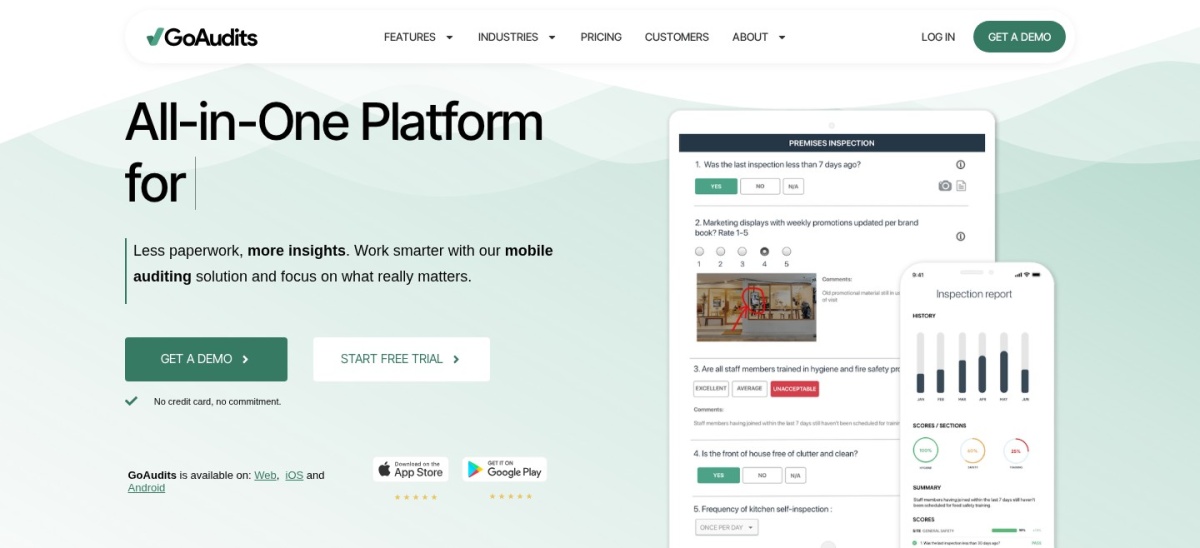
GoAudits homepage, captured Nov 2026.
GoAudits is an inspection and audit management platform that helps teams document failures, identify recurring problems, and assign corrective actions. Starter costs $10 per user monthly with annual billing and includes offline inspections, instant reports, action plans, and support for 25 locations. Teams can record findings and follow their resolution.
The trade off is that GoAudits emphasizes inspection findings and corrective-action tracking rather than detailed logic-tree investigations. Starter costs $120 per user annually, while Enterprise adds advanced reporting, scheduling, and broader administrative controls. It suits quality, safety, and operations teams whose RCA process begins with inspection results.
What we like
Connects inspection findings with corrective actions
Offline mobile inspections
Instant inspection reports
Starter covers 25 locations
Annual entry price of $120 per user
Watch out for
Not a dedicated logic-tree RCA platform
Advanced reporting requires Enterprise
Limited public review volume
Enterprise adds advanced reporting, scheduling, permissions and trend analysisVisit goaudits.com
03
MaintainX
4.8/5on G2 (1,602 reviews, checked Nov 2026)
Paid from$20/mo
Best for equipment failure and maintenance investigations
Free work ordersUnlimited
Free proceduresUnlimited
Maintenance trackingWork orders and asset records
Paid planEssential, $20/user/mo annually
getmaintainx.com
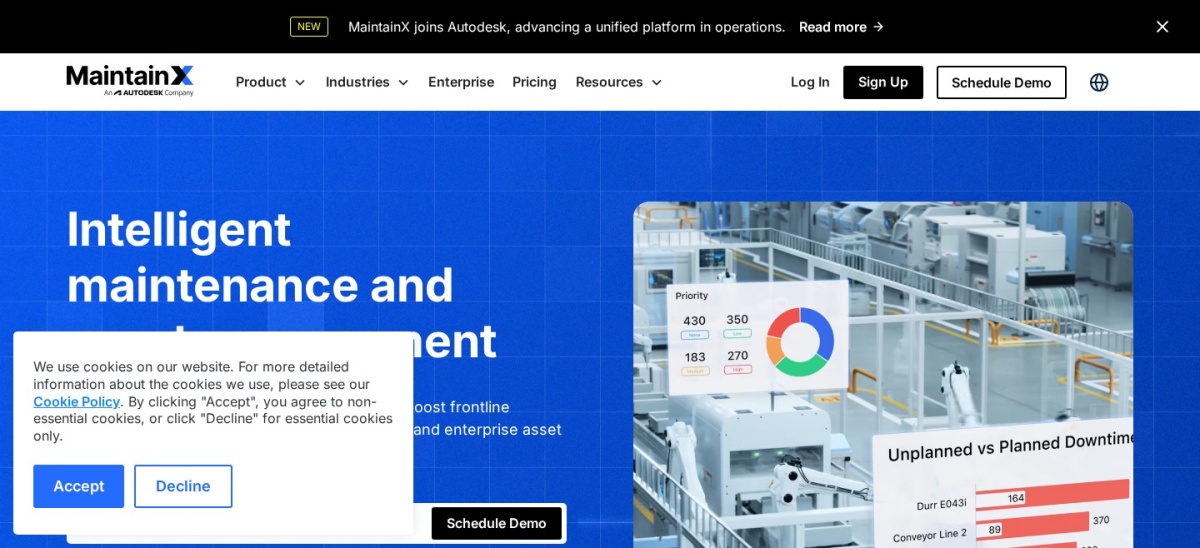
MaintainX homepage, captured Nov 2026.
MaintainX is a maintenance management platform that helps operations teams investigate equipment problems using work orders, procedures, and maintenance records. Its free Basic plan includes unlimited work orders, unlimited procedures, real-time messaging, and unlimited requester accounts. Teams can document equipment failures and track the work performed to resolve them.
The trade off is that MaintainX manages maintenance execution rather than providing a complete dedicated RCA methodology in its entry plan. Essential costs $20 per user monthly with annual billing, equivalent to $240 annually, and adds more preventive maintenance capacity. It suits maintenance teams that need investigation records connected to actual repairs.
What we like
Unlimited work orders on the free plan
Equipment maintenance and repair histories
Mobile-friendly procedures and team communication
Free requester accounts
Premium provides deeper maintenance analytics
Watch out for
Dedicated RCA diagrams are not a core entry-plan feature
Advanced analytics and asset capabilities require upgrades
Best for collaborative fishbone and 5 Whys workshops
Free editable boards3
Templates7,000+
RCA visualizationFishbone, mind maps and diagrams
Paid planStarter, $8/member/mo annually
miro.com
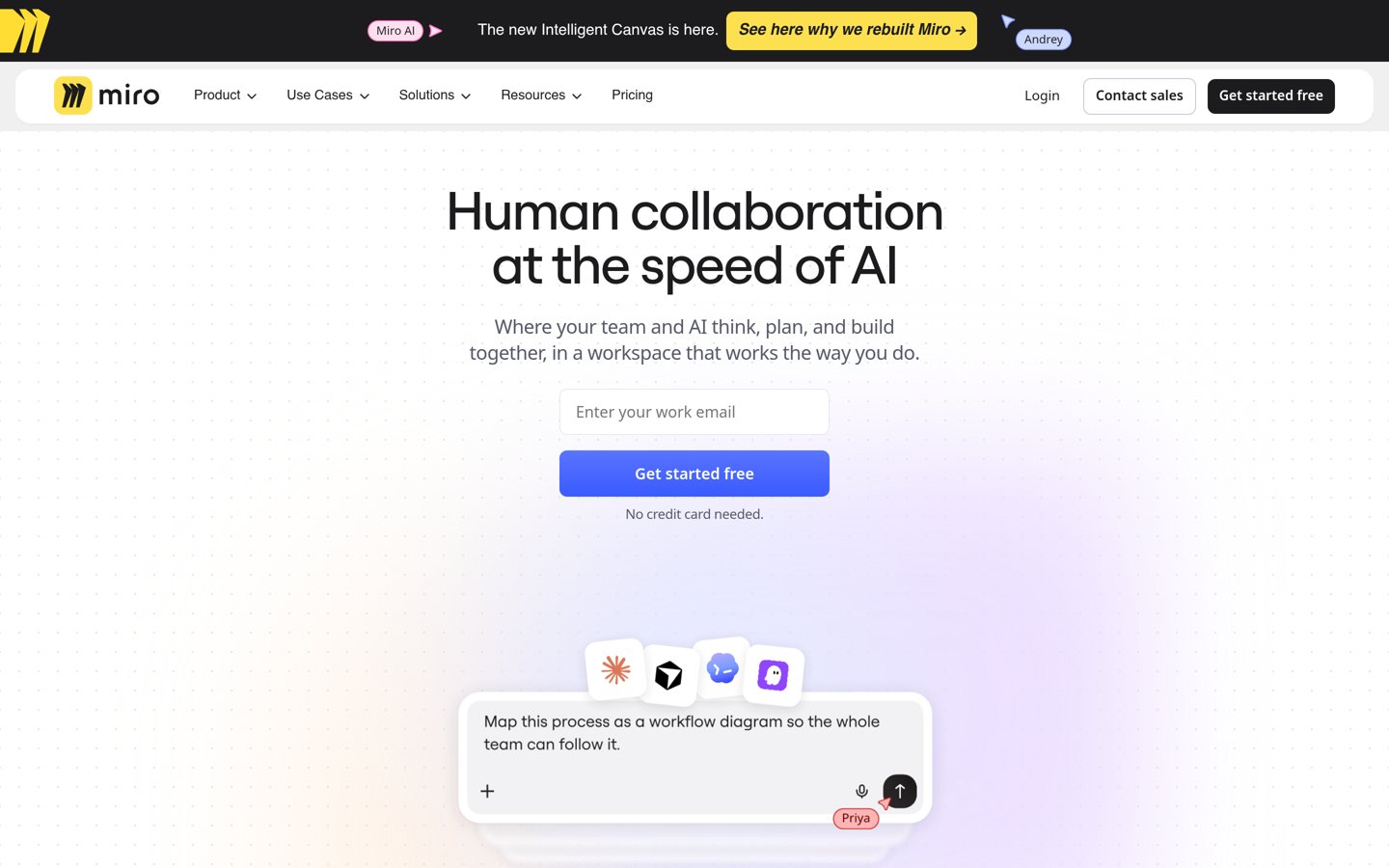
Miro homepage, captured Nov 2026.
Miro is a collaborative visual workspace for brainstorming possible causes and documenting investigation discussions. Its free plan provides 3 editable boards and access to more than 7,000 Miro and community templates. Teams can build fishbone diagrams, cause-and-effect maps, and 5 Whys workflows together on a shared canvas.
The trade off is that Miro does not automatically provide a formal RCA investigation system with verified causes and corrective-action closure. Starter costs $8 per member monthly with annual billing, or $96 per year, and adds unlimited private boards and visitor editing. It suits teams running collaborative RCA workshops.
SmartDraw is a diagramming platform for visualizing problems, processes, contributing factors, and possible causes. Teams can build fishbone diagrams, cause-and-effect charts, flowcharts, and process maps using templates and automatic formatting. Its Individual subscription provides the diagramming environment needed to document investigation findings and present them clearly.
The trade off is that SmartDraw focuses on creating diagrams rather than managing evidence approval or corrective-action workflows. Its regular Individual price is $10.95 monthly with annual billing, equivalent to $131.40 annually, although the vendor advertises a lower introductory rate for new customers. It suits analysts who need clear RCA visuals.
What we like
Fishbone and cause-and-effect diagram support
Automatic diagram formatting
Process mapping and flowchart tools
Integrates with common productivity applications
Regular Individual price is publicly listed
Watch out for
No permanent free plan
Does not replace a formal CAPA tracking system
Introductory pricing differs from renewal pricing
Individual provides the paid diagramming tools; team plans add shared administrationVisit smartdraw.com
06
Datadog
4.4/5on G2 (746 reviews, checked Nov 2026)
Paid from$15/mo
Best for technical root cause investigation
RCA evidenceMetrics, logs and traces
Integrations1,000+
Infrastructure ProPer-host billing
Paid planInfrastructure Pro, $15/host/mo
datadoghq.com
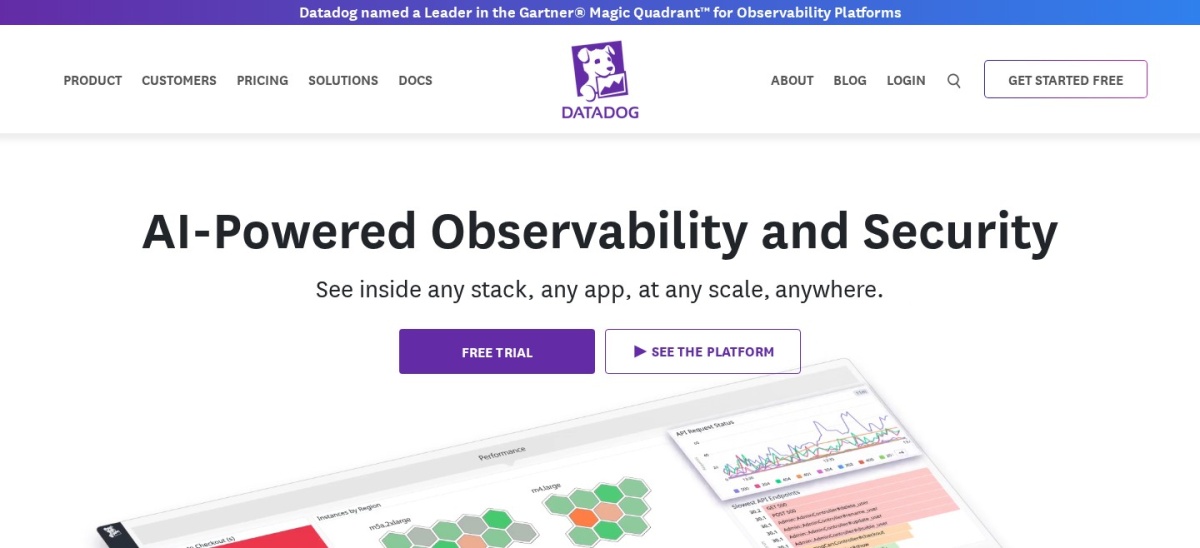
Datadog homepage, captured Nov 2026.
Datadog is an observability platform that helps technical teams investigate application failures, infrastructure incidents, and abnormal system behavior. Infrastructure Pro starts at $15 per host monthly with annual billing and supports more than 1,000 integrations. Teams can correlate monitoring information across services, while additional observability products provide deeper logs and traces.
The trade off is product-based usage billing and the need for additional services when investigations require application traces or detailed logs. Infrastructure Pro starts at $180 per host annually, but actual RCA costs can increase as monitoring coverage expands. It suits engineering teams investigating software and infrastructure failures rather than industrial defects.
What we like
Correlates technical evidence across monitored systems
More than 1,000 integrations
Infrastructure monitoring with service visibility
Supports investigation of recurring performance incidents
Watch out for
Not suitable for traditional fishbone or 5 Whys workflows
Multiple product charges can complicate costs
Detailed application investigation may require additional products
Infrastructure Pro adds broader monitoring; APM and log products are priced separatelyVisit datadoghq.com
07
PagerDuty
4.5/5on G2 (983 reviews, checked Nov 2026)
Starts at$2,800/yr
Best for incident response and post-incident reviews
Primary focusIT incident management
Post-incident reviewsIncluded in Starter
Custom incident typesUp to 3 on Starter
Paid planReliability Platform Starter, $2,800/yr
pagerduty.com
PagerDuty homepage, captured Nov 2026.
PagerDuty is an incident management platform for coordinating technical incidents and documenting what happened afterward. Its Reliability Platform Starter includes signal intelligence, incident workflows, post-incident reviews, and up to 3 custom incident types. Teams can use incident records and response timelines to investigate failures and plan preventive improvements.
The trade off is that PagerDuty focuses on incident detection, response coordination, and review rather than traditional manufacturing RCA diagrams. Reliability Platform Starter lists a $2,800 annual platform fee, and organizations should confirm any additional charges before purchasing. It suits IT operations teams handling outages and recurring service incidents.
What we like
Post-incident reviews included in Starter
Connects incident response with investigation records
Signal intelligence helps organize incident information
Supports incident workflows and stakeholder communication
Watch out for
Platform pricing is higher than basic diagramming tools
Not intended for manufacturing fishbone investigations
Total subscription costs may include additional charges
Essential expands incident workflows and AI-related platform allowancesVisit pagerduty.com
Which root cause analysis methods should your software support?
5 Whys is a question-based technique for tracing a problem through successive causes. It works well for straightforward issues but may oversimplify failures with multiple contributing factors. Dedicated RCA platforms and customizable visual tools can help document the questioning process.
Fishbone diagrams, also called Ishikawa diagrams, organize potential causes into categories. They are useful during team brainstorming because participants can examine equipment, processes, materials, people, and environmental factors without assuming a single cause.
Logic trees connect events and contributing conditions through documented cause-and-effect relationships. They are useful for complex industrial failures where teams must distinguish observed facts from hypotheses and attach evidence to their conclusions.
Corrective and preventive action, or CAPA, goes beyond identifying causes. The team assigns solutions, tracks implementation, and checks whether changes actually prevent recurrence. Organizations with formal quality programs should prioritize tools that support this complete workflow.
Root cause analysis software vs CAPA software
Root cause analysis focuses on understanding why an event happened. CAPA software focuses on implementing and monitoring corrective and preventive measures. These processes overlap, but a platform can perform one without fully supporting the other.
A diagramming tool may document a convincing fishbone analysis without assigning corrective actions. An inspection platform may track actions efficiently but provide limited support for complex causal reasoning. The right choice depends on which part of the workflow needs improvement.
For regulated or audit-sensitive operations, look for investigation histories, evidence records, approvals, action ownership, and effectiveness verification. These capabilities are more important than attractive diagrams when an organization must demonstrate that corrective measures addressed verified causes.
How we chose
We compared established investigation, inspection, maintenance, diagramming, and incident management products using official feature documentation and public user reviews. The shortlist represents different RCA workflows, from industrial cause-and-effect analysis to equipment failure investigations and software incident reviews.
This article uses a 22 Nov 2026 editorial date. Pricing and review figures were checked against accessible vendor and G2 pages during preparation on 23 Nov 2026. Annual equivalents use published regular entry-level prices, with per-user, per-host, and platform licensing differences identified.
We excluded products whose official pricing could not be confirmed, including several quote-only quality management platforms. Two specialist tools have fewer public reviews than the preferred threshold but were retained for their directly relevant capabilities and transparent pricing. No vendor paid for a place, and we do not claim testing for this list.
How to choose root cause analysis software
Identify your most common failure scenarios, then compare investigation methods, evidence management, corrective-action workflows, and licensing costs.
Match the software to the problem type. Choose dedicated RCA software for recurring industrial failures, inspection platforms for audit findings, maintenance systems for equipment problems, and observability tools for software incidents. Products designed for different failure types should not be treated as direct substitutes.
Check investigation methods and evidence handling. Confirm whether the platform supports 5 Whys, fishbone diagrams, logic trees, timelines, or another method your team uses. Look for a way to attach evidence, distinguish hypotheses from verified causes, and preserve investigation histories.
Verify corrective-action accountability. Determine whether investigators can assign actions, set deadlines, record implementation, and confirm effectiveness. Teams that only need diagrams may choose a visual workspace, while formal quality programs usually need more structured records.
Compare total licensing and implementation costs. Check whether pricing is per user, facility, host, or platform. Include minimum commitments, paid modules, and additional services. A dedicated plant license can be economical for large investigation teams but excessive for occasional users.
FAQ
What is the best root cause analysis software in 2026?
EasyRCA is our top pick for structured industrial investigations because it supports logic trees, evidence management, corrective-action tracking, and a substantial RCA template library. GoAudits is more appropriate when investigations begin with inspection failures, while MaintainX suits equipment maintenance teams.
Is there free root cause analysis software?
Yes. Miro offers 3 editable boards on its free plan, which can be used for fishbone diagrams and 5 Whys sessions. MaintainX also provides free work-order management for recording equipment problems. These free options do not necessarily replace a dedicated investigation and CAPA platform.
What is the difference between 5 Whys and fishbone analysis?
5 Whys follows a chain of questions to investigate why a problem occurred. Fishbone analysis organizes multiple possible contributing factors into categories. Use 5 Whys for relatively straightforward problems and fishbone diagrams when several factors or departments may contribute to the failure.
Can RCA software prevent recurring equipment failures?
RCA software can help teams identify contributing causes, document evidence, and track corrective actions intended to prevent recurrence. It cannot guarantee that failures will stop. Prevention depends on the quality of the investigation, the corrective measures selected, and whether their effectiveness is verified.
Which software is best for manufacturing root cause analysis?
EasyRCA is well suited to manufacturing facilities that need formal investigations, logic trees, evidence documentation, and corrective-action records. MaintainX is more useful when equipment failures must be connected with work orders and maintenance histories. GoAudits fits manufacturing teams focused on inspections and quality findings.
Can I use Miro for root cause analysis?
Yes. Miro can support fishbone diagrams, 5 Whys workshops, brainstorming, and collaborative cause mapping. Its free plan allows 3 editable boards. However, organizations requiring formal approval histories, controlled evidence, or corrective-action verification may need additional systems or dedicated RCA software.
What is the difference between root cause analysis and CAPA?
Root cause analysis investigates why an event occurred. CAPA manages corrective and preventive measures that address identified causes and reduce recurrence. An effective improvement process often uses both: RCA establishes evidence-based explanations, while CAPA tracks implementation and confirms whether corrective measures work.
How much does root cause analysis software cost?
Pricing varies significantly by workflow. Miro Starter costs $96 per member annually, GoAudits Starter costs $120 per user annually, and EasyRCA lists $14,975 annually for a single plant with unlimited users. Specialized IT and maintenance platforms use other licensing models, so compare total requirements rather than headline prices.
Is root cause analysis software the same as incident management software?
No. Incident management software primarily helps teams detect, coordinate, and resolve incidents. Root cause analysis software focuses on explaining why failures occurred and preventing recurrence. PagerDuty supports post-incident reviews, while dedicated industrial RCA platforms offer investigation methods that are better suited to physical equipment and process failures.