Ansible is the best rated software config management solution for most teams. Its agentless design and readable YAML playbooks are rated 4.6/5 on G2 from 377 reviews, and the open-source core is free. Pick Terraform for cloud provisioning and Pulumi if your team prefers real programming languages over YAML.
How we make this list: we compare pricing pages, product documentation and public user reviews, then re-check every price before each update. No product paid for a place. Disclosure.
Ansible is the top pick: agentless, YAML playbooks, rated 4.6/5 on G2 from 377 reviews, with a free open-source core.
Terraform is the pick for cloud provisioning, with declarative HCL across clouds and a free tier up to 500 managed resources.
Pulumi has the highest G2 rating in this list at 4.8/5 and lets teams write infrastructure in TypeScript, Python or Go.
Chef publishes the clearest per-node price: Business costs $59 per node per year, Enterprise $189.
All 9 tools have a free plan or free edition. Paid prices run from $0.10 per managed resource a month for Terraform to $399 a month for Spacelift Starter.
What config management software should cover
Config management keeps servers and cloud resources in a known, repeatable state. Instead of changing settings by hand, teams write the wanted state once and let the tool apply it everywhere.
A good tool should detect drift and bring systems back in line. Agent-based tools check state on a schedule, while agentless tools push changes over SSH or an API when you run them.
Look for a free edition you can run first. Our guide on deploying WordPress with GitHub Actions shows the same idea at small scale: define the change in code, then let automation apply it.
Price models differ more than features here. Some tools charge per node, some per managed resource, and five of the nine in this list sell enterprise plans only by quote, so model your fleet size before you choose.
The 9 best rated software config management solutions
01
Ansible
4.6/5on G2 (377 reviews, checked Nov 2026)
PricingCustom/yr
Best config management tool overall
AgentlessYes, SSH or WinRM
Config languageYAML playbooks
Free editionAnsible Core
Paid planAutomation Platform, by quote
ansible.com
Ansible homepage, captured Nov 2026.
Ansible is an automation tool that manages servers, cloud resources and network devices without installing an agent on each node. It runs tasks over SSH or WinRM from readable YAML files called playbooks, and the open-source core is free. Red Hat sells the Automation Platform on top, adding a web console, role-based access and event-driven automation.
The trade off is that Ansible does not enforce state on its own. It applies changes when a playbook runs, so teams that need continuous drift correction must schedule runs or add the paid platform. It suits DevOps and sysadmin teams that want simple, agentless automation across mixed fleets.
What we like
No agent to install or update on managed nodes
YAML playbooks are easy to read and share
Largest review base in this list at 377 G2 reviews
Runs on Linux, Windows, macOS and network devices
Watch out for
No built-in continuous enforcement without scheduling
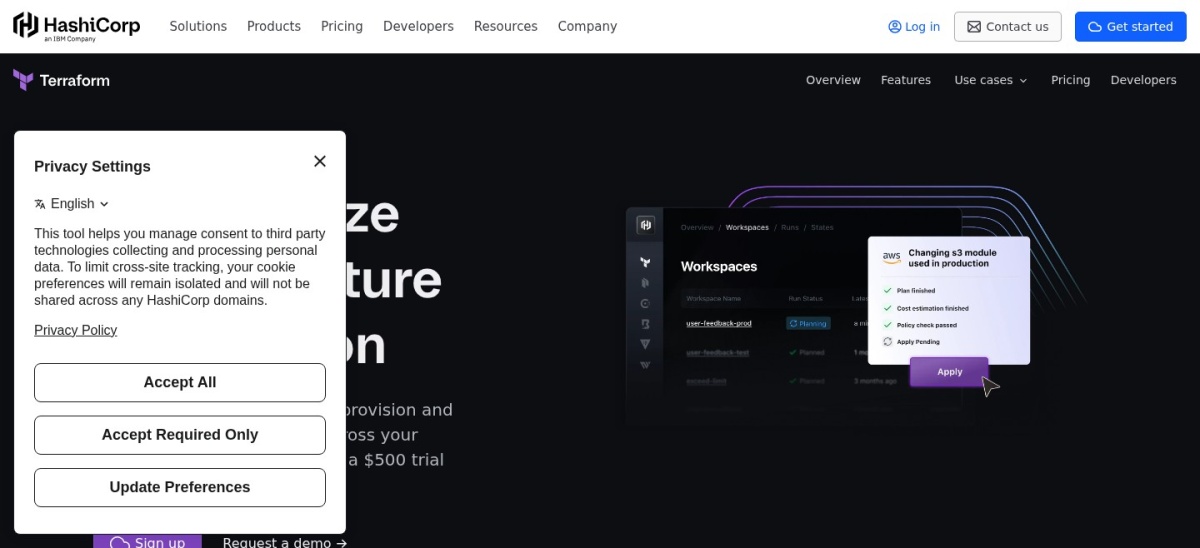
Terraform is an infrastructure-as-code tool that provisions and configures cloud resources from declarative files written in HCL. One codebase can manage AWS, Azure, Google Cloud and on-prem resources, and the CLI is free to run with local state. HCP Terraform adds remote state, team workflows and a private registry, free for up to 500 managed resources.
The trade off is usage-based billing. Paid HCP Terraform starts at $0.10 per managed resource a month, so costs rise with every resource in state, and drift detection and audit logs need the Standard or Premium tiers. It suits cloud teams that provision infrastructure as code and want one workflow across providers.
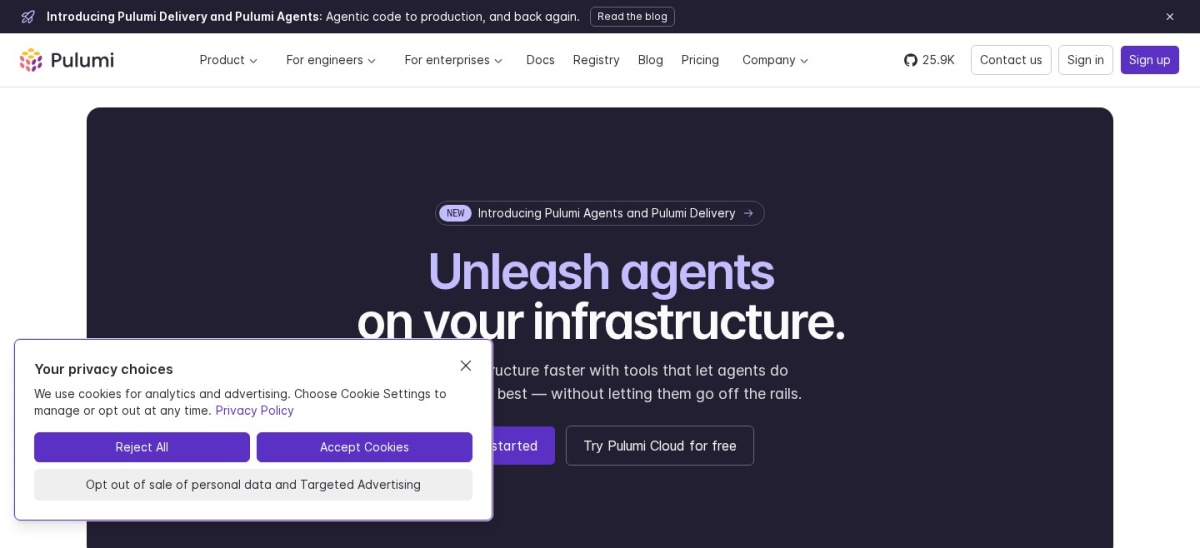
Pulumi is an infrastructure-as-code platform that lets teams define cloud resources in TypeScript, Python, Go, C#, Java or YAML instead of a config-only language. Loops, functions and unit tests work as they do in normal code, and the engine is open source. Pulumi Cloud adds state management, secrets, policy checks and a console, free for one user.
The trade off is cost and code upkeep. Essentials costs $40 a month with unlimited users, and managed resources beyond the included credits bill per resource, while Pro at $400 a month adds the governance features larger teams need. It suits software-led teams that already write TypeScript or Python every day.
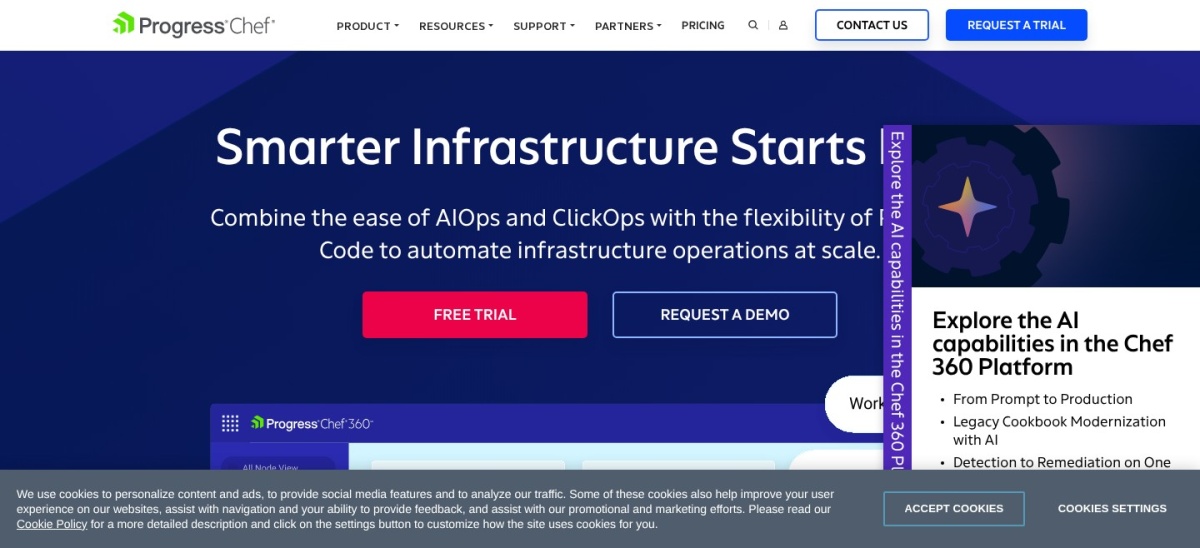
Chef is a configuration management platform that defines infrastructure as policy-as-code, written as recipes and cookbooks in a Ruby-based language. Chef Infra applies the wanted state, detects drift and corrects it across Windows, Linux and macOS, and InSpec checks systems against compliance rules. A free community version covers non-commercial use.
The trade off is per-node cost at scale. Business costs $59 per node per year and Enterprise $189, so large fleets add up fast, and serious cookbook work needs Ruby skills. It suits teams that want testable, code-driven configuration with compliance checks built in.
What we like
Clear published per-node pricing
Drift detection and auto-correction built in
InSpec compliance checks in the same platform
Works across Windows, Linux and macOS
Watch out for
Per-node pricing grows fast at scale
Cookbooks need Ruby skills
Community version is non-commercial only
Enterprise adds compliance and premium supportVisit chef.io
05
Puppet
4.2/5on G2 (43 reviews, checked Nov 2026)
PricingCustom/yr
Best for enterprise governance and enforcement
EnforcementContinuous, agent-based
Free editionCore, under 25 nodes
Paid planEnterprise, by quote
Modules7,000+ on Puppet Forge
puppet.com
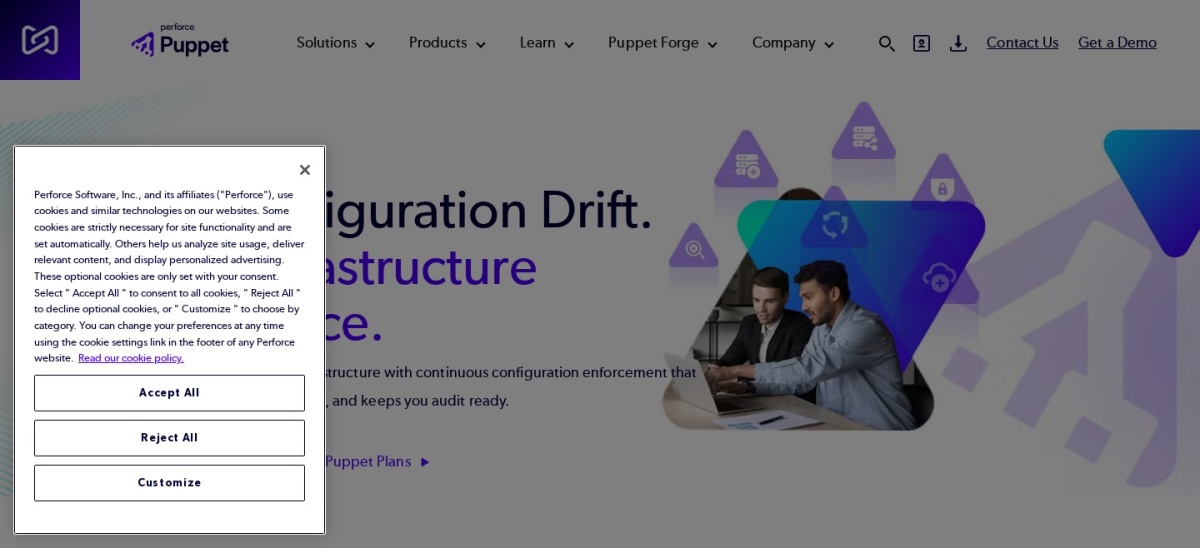
Puppet homepage, captured Nov 2026.
Puppet is a configuration management platform built around continuous enforcement of a wanted state. Agents on each node check in on a schedule, apply the declared configuration and report drift, which suits large fleets that must stay compliant. Puppet Core is free for fewer than 25 nodes, and more than 7,000 ready modules are listed on Puppet Forge.
The trade off is price opacity and agent overhead. Enterprise and Advanced plans are sold by quote only, and every managed node needs an agent installed and kept up to date. It suits large enterprise IT teams that need governance, compliance reporting and enforcement they can prove.
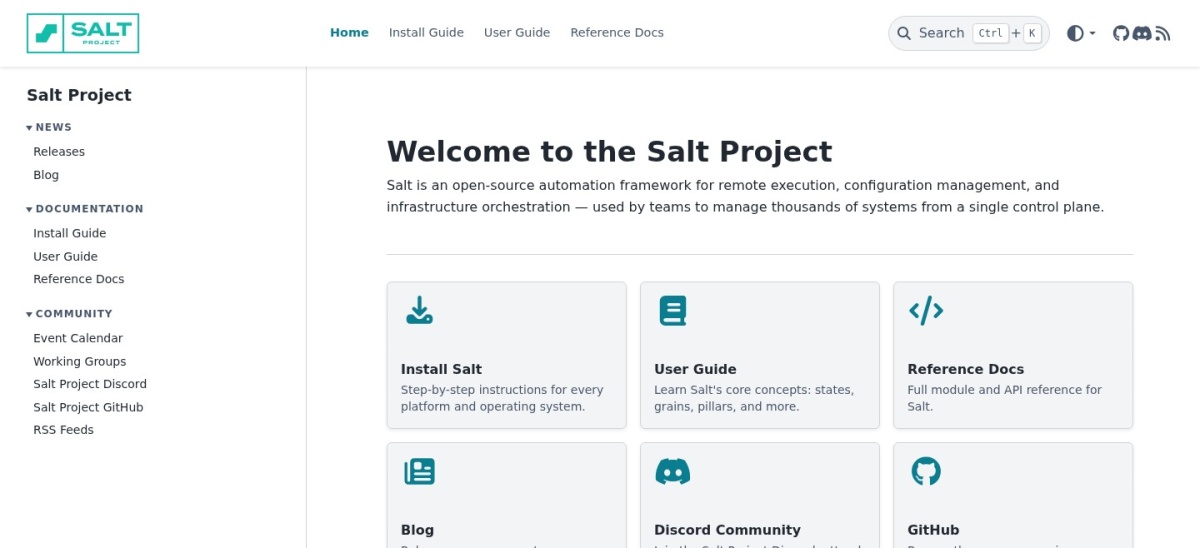
SaltStack, now the Salt Project, is an open-source configuration management tool known for speed and event-driven automation. Its master-minion design reacts to infrastructure events in real time, and it manages Linux, macOS and Windows at large scale. The open-source project is free, with documentation and releases kept up by its community.
The trade off is the enterprise route. VMware Salt is sold only as part of Broadcom's Advanced Cyber Compliance add-on, priced by quote and tied to VMware platform subscriptions, so there is no standalone paid edition to buy. It suits large, distributed teams that need fast, event-driven automation and are happy running open source.
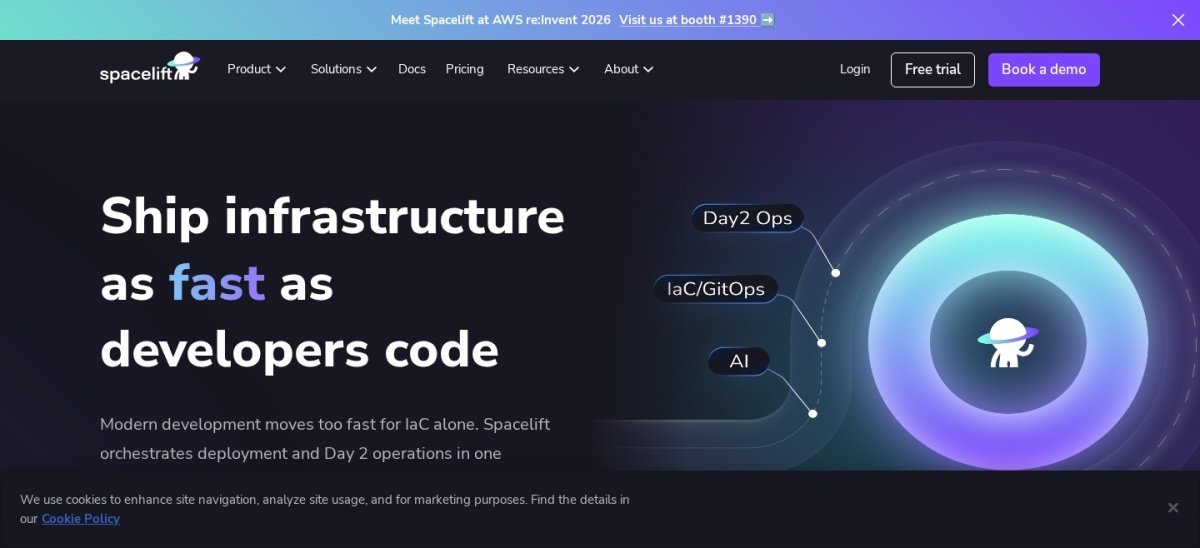
Spacelift is an orchestration platform that runs infrastructure-as-code workflows with policies, approvals, drift detection and audit trails. It supports Terraform, OpenTofu, Pulumi, CloudFormation, Kubernetes and Ansible from one control plane, so teams running several tools can govern them together. The free plan covers 2 users, and Starter adds 10 users, 2 public workers and a policy engine.
The trade off is the jump from free to paid. Starter costs $399 a month on an annual subscription, which is a big step for a small team, and drift detection and audit trails sit in the higher Business and Enterprise tiers. It suits platform teams that run several IaC tools and need approvals and policy checks on every change.
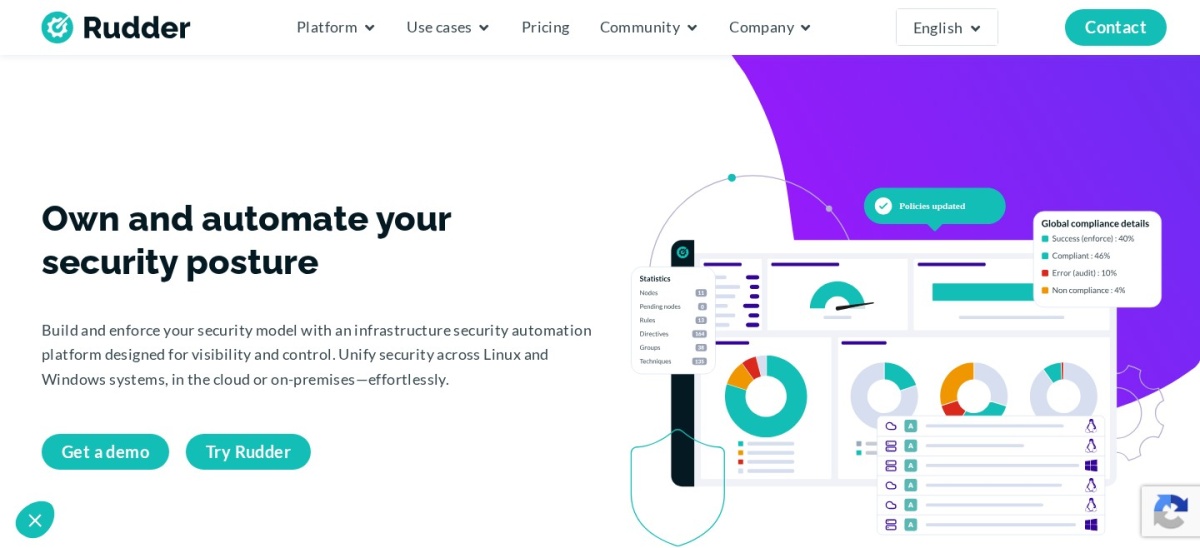
Rudder is an open-source platform for configuration management, patching and continuous compliance. A central web console manages policies, inventory and reports, while a light agent enforces the wanted state and reports back in real time. Rules can run in audit mode or enforce mode per node, which fits teams that must prove compliance, not just set it.
The trade off is a smaller ecosystem. The community and module library are far smaller than Ansible or Puppet, and paid subscriptions with proprietary plugins are priced by quote. It suits regulated teams that want a clear console, audit trails and drift correction without building their own reporting.
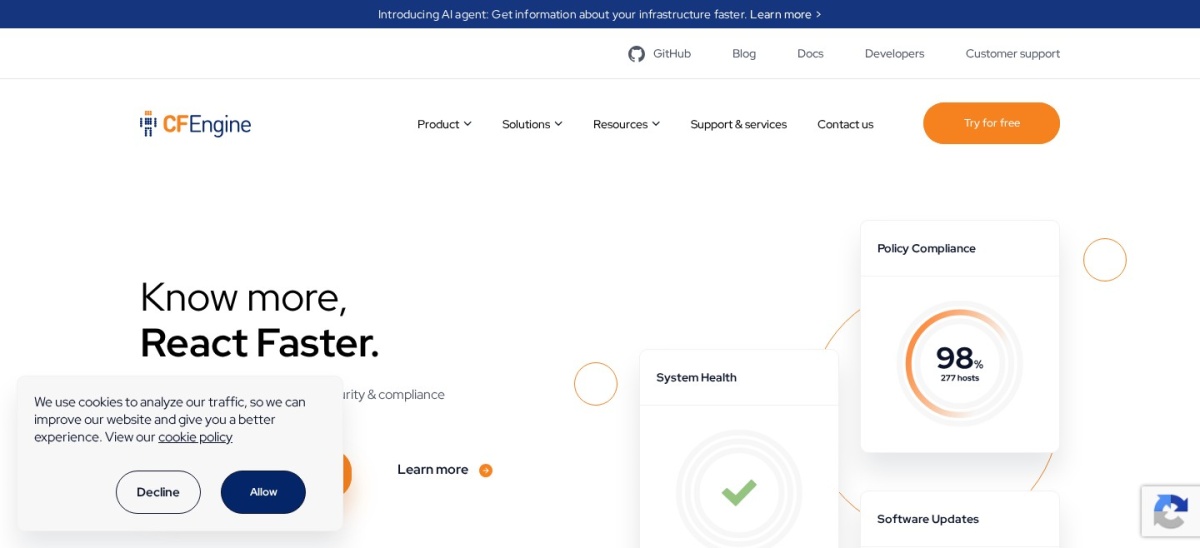
CFEngine is the oldest configuration management tool in this list, created in 1993 and built on promise theory. Its agent is very small, so it runs well on large fleets, embedded systems and edge devices where heavier agents cost resources. The community edition is free under GPLv3, and the Enterprise edition adds support and compliance features.
The trade off is age and reach. The policy language and interface feel older than modern tools, and the community is small, so answers and ready-made content are harder to find. It suits teams running very large or constrained fleets that value a tiny agent over a polished console.
All nine tools have a free plan or free edition. Spacelift limits its free plan to 2 users, while the open-source tools let you run real fleets without paying.
Paid plans mostly add control and proof. You get a web console, role-based access, audit logs, drift detection and support.
Five tools sell enterprise plans by quote only: Ansible, Puppet, SaltStack, Rudder and CFEngine. Budget for a sales conversation, and get the quote before you commit to a migration.
If you run fewer than 25 nodes, Puppet Core is free, and Terraform's free tier covers 500 managed resources. Start free, measure your fleet, then price the paid tier against your real node count.
How we chose
We started from the configuration management tools most often named in 2026 comparisons and G2's configuration management category, then kept the nine with a real free edition and a public rating.
Prices come from each vendor's pricing page, checked on 26 November 2026. Ratings and review counts come from G2 on the same day. Where a vendor publishes no price, the list shows Custom and says so in the text.
We left out tools with no public rating, such as niche forks and new entrants. No vendor paid for a place, and we do not claim to have used these tools ourselves.
How to choose a config management tool
Start with your fleet size and your team's skills, then match the tool to the job.
Count your nodes first. Per-node and per-resource pricing punish large fleets. Model your real count before you shortlist, since five tools here need a sales quote.
Pick agentless for a quick start. Ansible, Terraform and Pulumi need no agent on managed machines, so you can automate a fleet in days rather than weeks.
Match the model to the job. Use Terraform or Pulumi to provision cloud resources, and Ansible, Puppet, Chef or Salt to keep running servers in a wanted state.
Run the free edition before you pay. Set up the open-source version on a few test nodes first. See our guide on deploying WordPress with GitHub Actions for a small-scale taste of automation in code.
FAQ
What is the best rated software config management solution?
Ansible is the best rated config management solution for most teams. It is agentless, uses readable YAML playbooks, is rated 4.6 out of 5 on G2 from 377 reviews, and its open-source core is free.
What is the difference between Ansible and Puppet?
Ansible is agentless and applies changes when a playbook runs, while Puppet installs agents that check in on a schedule and enforce state continuously. Ansible is easier to start, while Puppet fits large teams that need provable compliance and drift correction.
Is Terraform a configuration management tool?
Terraform is mainly a provisioning tool: it creates and configures cloud resources from declarative files. It pairs well with Ansible, Puppet or Chef, which keep running servers in a wanted state after Terraform has built them.
Which config management tools are free?
All nine tools in this list have a free plan or free edition. Ansible, Terraform, Pulumi, Chef, Puppet, SaltStack, Rudder and CFEngine all have free open-source editions, and Spacelift has a free plan for 2 users.
How much does config management software cost?
Published prices start at $0.10 per managed resource a month for Terraform and $59 per node a year for Chef. Pulumi Essentials costs $40 a month and Spacelift Starter $399 a month, while five tools sell enterprise plans by quote only.
Which tool is best for compliance reporting?
Puppet and Rudder lead for compliance. Puppet enforces CIS benchmarks and reports drift across large fleets, while Rudder adds a central console with live compliance dashboards and audit or enforce modes per node.
SaaS SEO and WordPress specialist with about 8 years of experience. Rakib compares WordPress plugins, themes, hosting and software using public pricing, documentation and user reviews. See how we rank.