NVivo is the best qualitative analysis software for most researchers, with deep coding, queries and mixed-methods tools, rated 4.0/5 on G2. Pick ATLAS.ti for AI-assisted coding and MAXQDA for mixed-methods work in a friendlier interface.
How we make this list: we compare pricing pages, product documentation and public user reviews, then re-check every price before each update. No product paid for a place. Disclosure.
NVivo is the deepest tool here, with coding, queries and mixed-methods analysis across text, audio, video and images.
ATLAS.ti is rated 4.7/5 on G2, with AI coding, network views and desktop, web and mobile apps.
MAXQDA costs $278 a year for academics, less than NVivo at $520, and adds statistics without a second program.
Dedoose charges only for months you log in, at $17.95 a month for individuals, which suits short team projects.
The free and cheap end is thin: only QDA Miner Lite is free, and Thematic starts at $25,000 a year for CX teams.
What qualitative analysis software should do
Qualitative analysis software helps you code interviews, field notes, documents and media, then find patterns across them. The core work is the same in every tool: highlight a passage, attach a code, group codes into themes and check how they relate.
The big three in this list, NVivo, ATLAS.ti and MAXQDA, are desktop tools built for academic research. They handle the widest range of data types and the most demanding methods, from grounded theory to framework analysis.
Cloud tools such as Dedoose, Dovetail and Delve trade some depth for collaboration. Several people can code the same project at once, and nothing needs installing. That matters more for UX and applied research teams than for a solo thesis.
Price is hard to compare at a glance because vendors split prices by audience. Student licences start near $105 a year, academic seats run $278 to $520 a year, and commercial seats cost far more, so check your own category before judging a price.
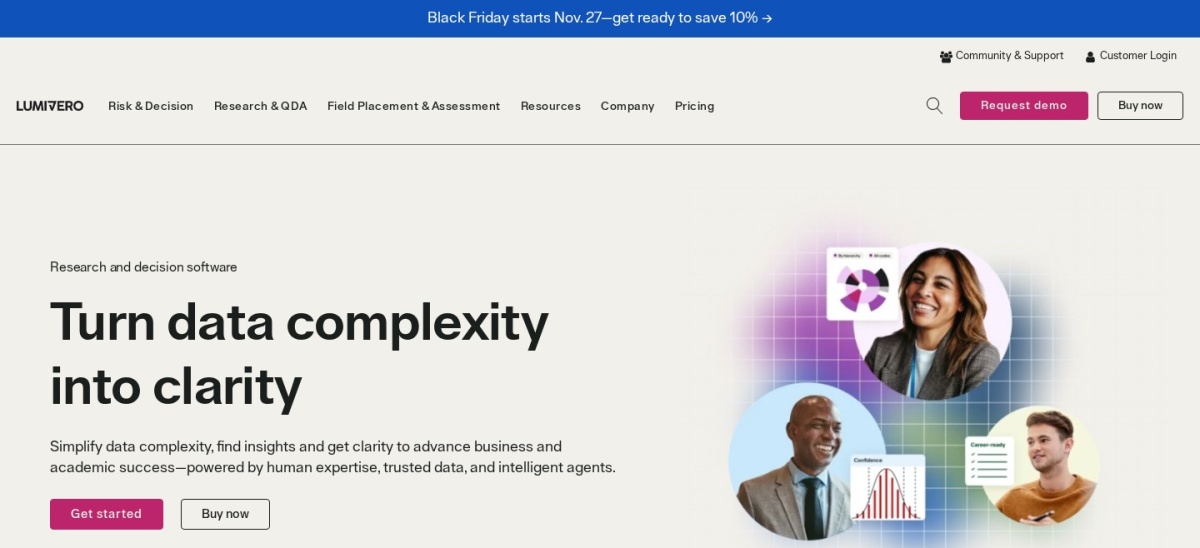
NVivo is the most complete qualitative analysis package in this list, from Lumivero. It codes interviews, documents, PDFs, audio, video, images, survey text and social media, with matrix coding, framework analysis and visualisations that support demanding methods.
The trade off is price and complexity. NVivo Desktop costs $520 a year for academics, $1,005 for businesses, and the AI features sit in NVivo AI Cloud at $770 a year, with a 10% Black Friday offer on the shop. It suits dissertations, funded projects and institutions where analytical depth matters most.
What we like
Deepest feature set, from coding to queries
Handles almost every data type
Widely taught, so help and tutorials are easy to find
Watch out for
Academic price is high, and AI costs extra
Interface can overwhelm new users
Paid plans add the desktop app; AI Cloud is a separate productVisit lumivero.com
02
ATLAS.ti
4.7/5on G2 (60 reviews, checked Nov 2026)
Starts at$336/yr
Best for AI-assisted coding
Data typesText, audio, video, images, geodata
AI codingYes, plus sentiment analysis
PlatformsWindows, Mac, web, mobile
Paid planEducational seat, $336/yr
atlasti.com
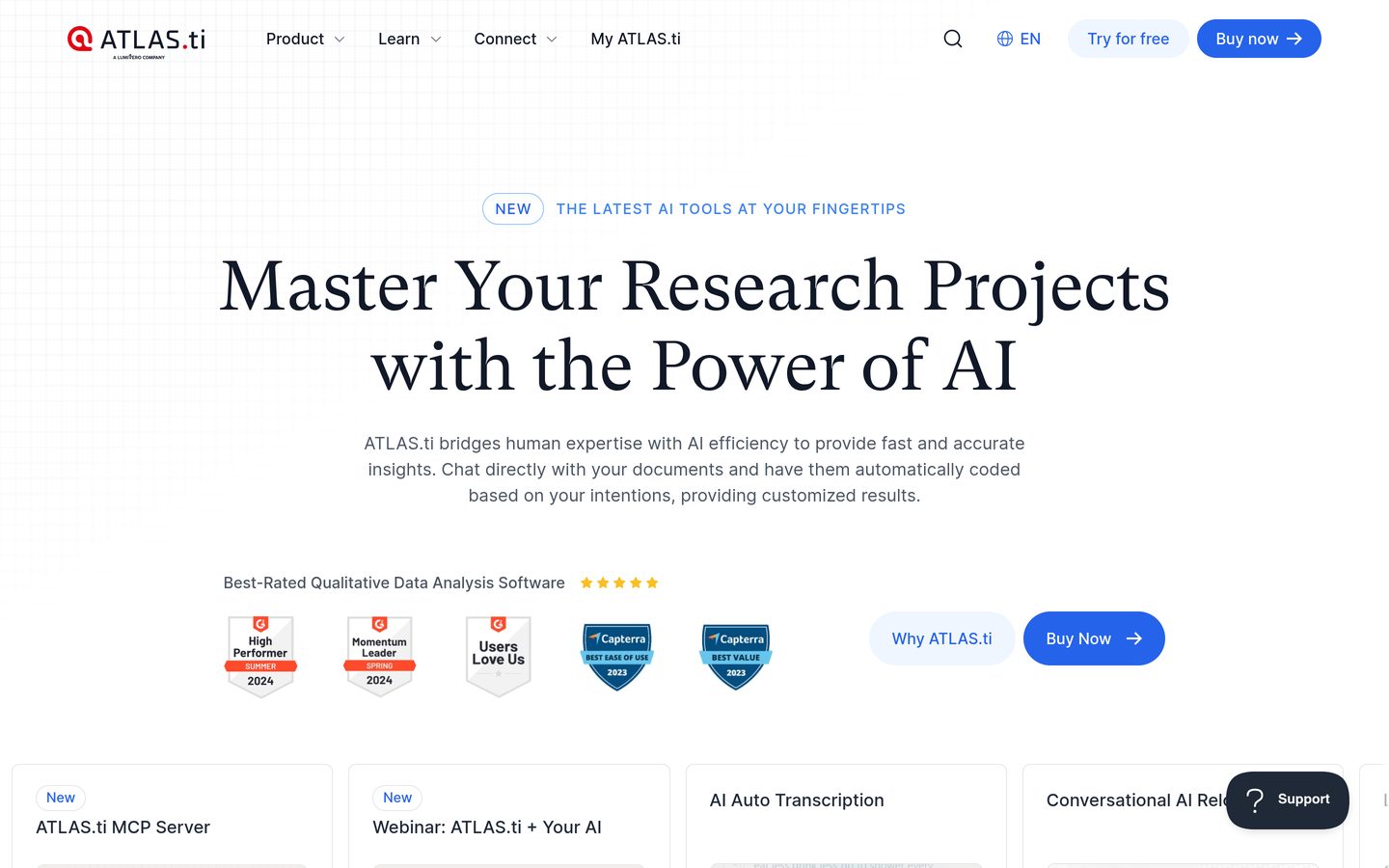
ATLAS.ti homepage, captured Nov 2026.
ATLAS.ti is a flexible qualitative analysis tool, now owned by Lumivero. It lets you code freely, build networks of concepts visually, and work across desktop, web and mobile, with AI coding, sentiment analysis and automatic transcription in recent versions.
The trade off is per-seat pricing. An educational seat costs $336 a year, a commercial seat $628, and a web-only plan at $264 a year is cheaper but excludes the desktop apps. It suits researchers who want open, visual coding and strong AI help.
What we like
Highest-rated academic tool in this list at 4.7/5 on G2
Strong AI coding and network views
Desktop, web and mobile in one licence
Watch out for
Per-seat pricing adds up for teams
Flexibility means less guidance for beginners
Paid plans add desktop apps; the cheapest plan is web onlyVisit atlasti.com
03
MAXQDA
4.5/5on G2 (38 reviews, checked Nov 2026)
Starts at$278/yr
Best for mixed-methods research
Data typesText, audio, video, images, surveys
AI codingAI Assist, free tier included
PlatformsWindows, Mac
Paid planAcademic, $278/yr
maxqda.com
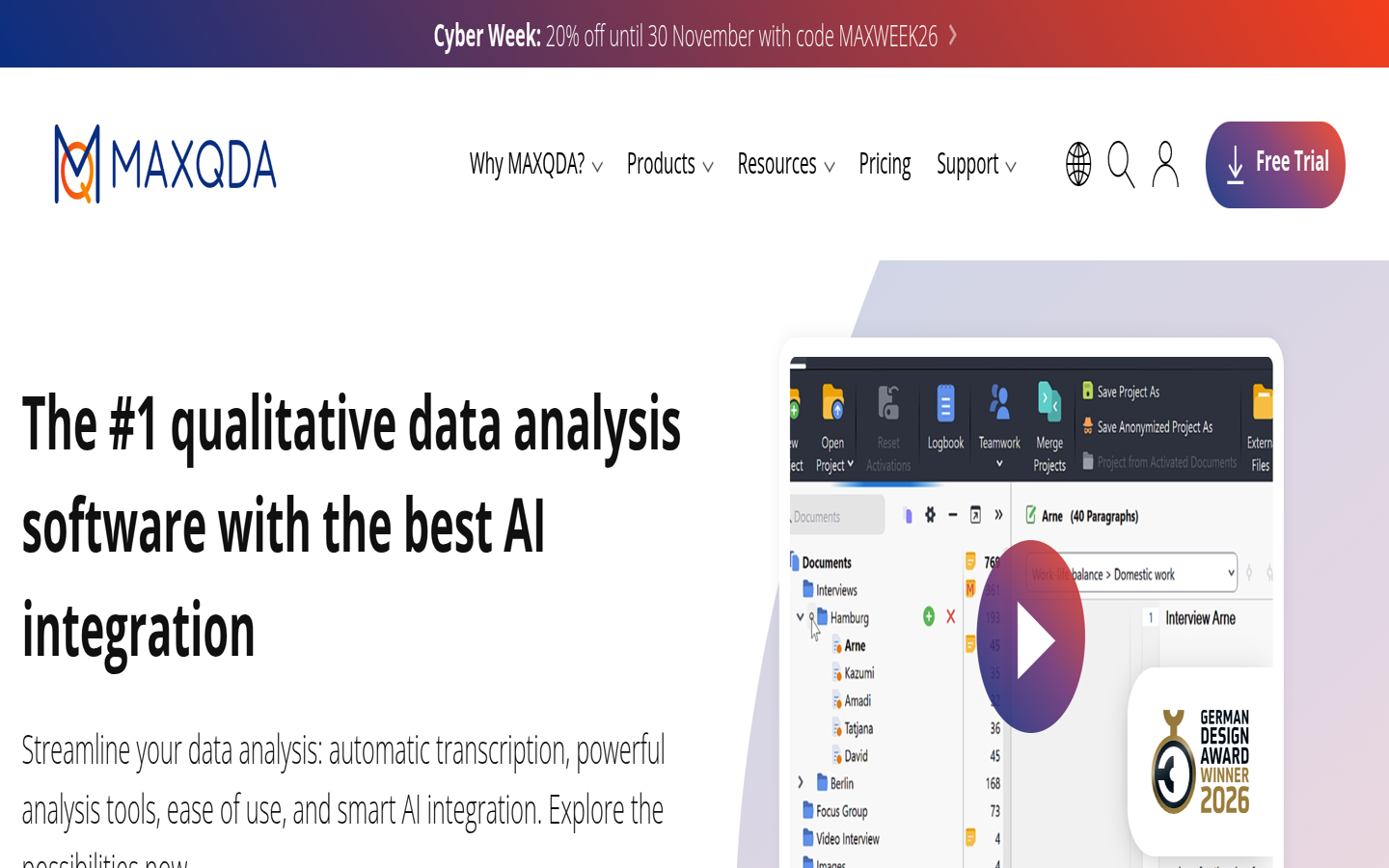
MAXQDA homepage, captured Nov 2026.
MAXQDA, from VERBI in Germany, is the only big three tool still independent of Lumivero. It pairs full qualitative coding with survey data and statistics in one project, and its interface is the most approachable of the three, with the same layout on Windows and Mac.
The trade off is price tiers that take study to navigate. An academic licence costs $278 a year, a business licence $633, and Analytics Pro, which adds statistics, costs $317 a year for academics, with a 20% Cyber Week offer until 30 November. It suits mixed-methods researchers who need coding and stats together.
What we like
Coding and statistics in one program
Friendlier interface than its rivals
AI Assist free tier included
Watch out for
Pricing tiers are confusing
Smaller community outside Europe
Analytics Pro adds statistics for $317 a year for academicsVisit maxqda.com
04
Dedoose
3.7/5on G2 (14 reviews, checked Nov 2026)
Starts at$17.95/mo
Best for cloud collaboration on a budget
Data typesText, audio, video, images, surveys
AI codingNo, manual coding with descriptors
PlatformsWeb browser
Paid planIndividual, $17.95 per active month
dedoose.com
Dedoose homepage, captured Nov 2026.
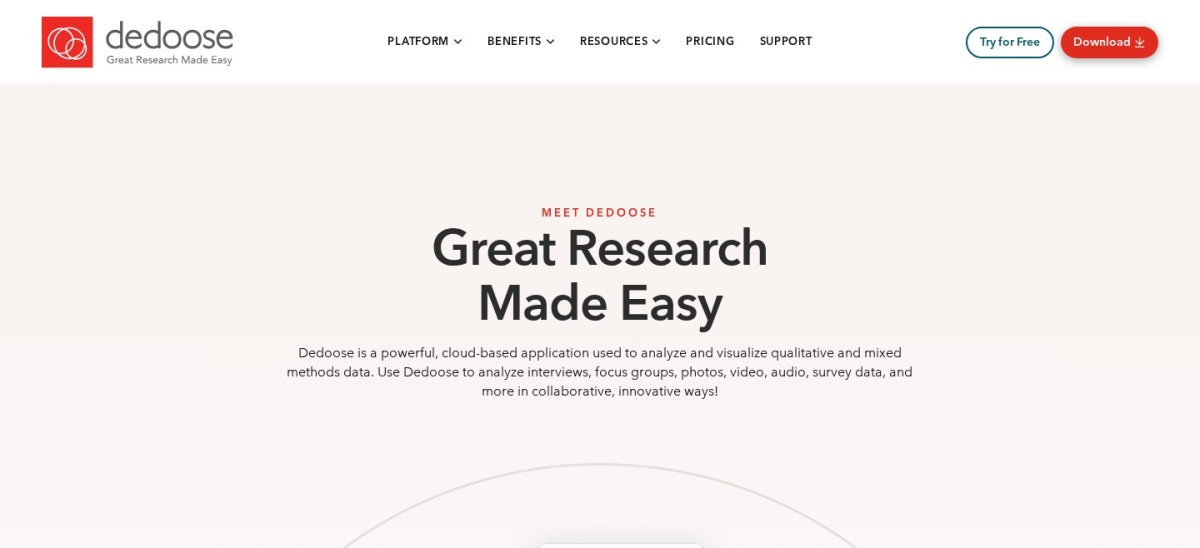
Dedoose is a cloud tool for qualitative and mixed-methods analysis, built for teams who work together in a browser. Several coders can work on the same project at once, with inter-rater reliability checks and descriptors that link qualitative excerpts to survey data.
The trade off is depth and connection. It needs the internet, and its advanced analysis does not match NVivo, while $17.95 a month is charged only for months you log in. It suits grant-funded team projects with defined timelines.
Dovetail is a research repository for UX and product teams. Interviews, usability tests and survey responses live in one searchable place, with AI tagging, transcription and summaries that turn raw research into findings the whole product team can use.
The trade off is academic fit. Paid plans start at $29 per user per month and target business teams, and traditional methods such as complex coding hierarchies fit less naturally. It suits product teams building a shared research library.
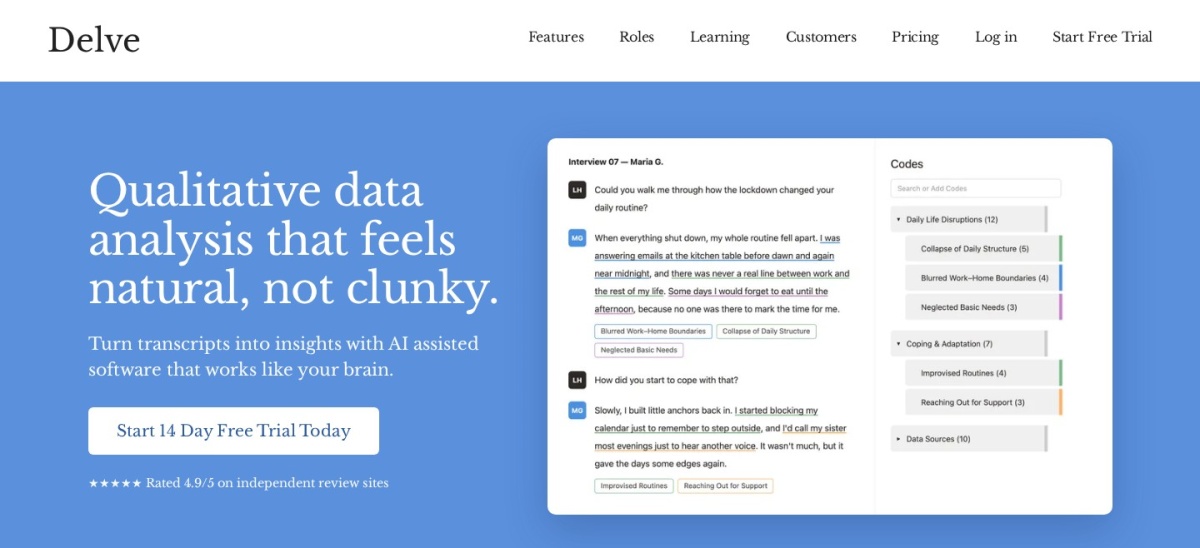
Delve strips qualitative analysis to its essence: import transcripts, code them, find themes and export the results. The interface is clean, the learning curve is short, and AI-assisted thematic analysis suggests codes without taking over the work.
The trade off is a narrow feature set. Advanced queries, complex visualisations and mixed-methods work go elsewhere, and the standard plan costs $50 a month, or $432 a year with the annual discount. It suits small teams and solo researchers doing straightforward thematic analysis.
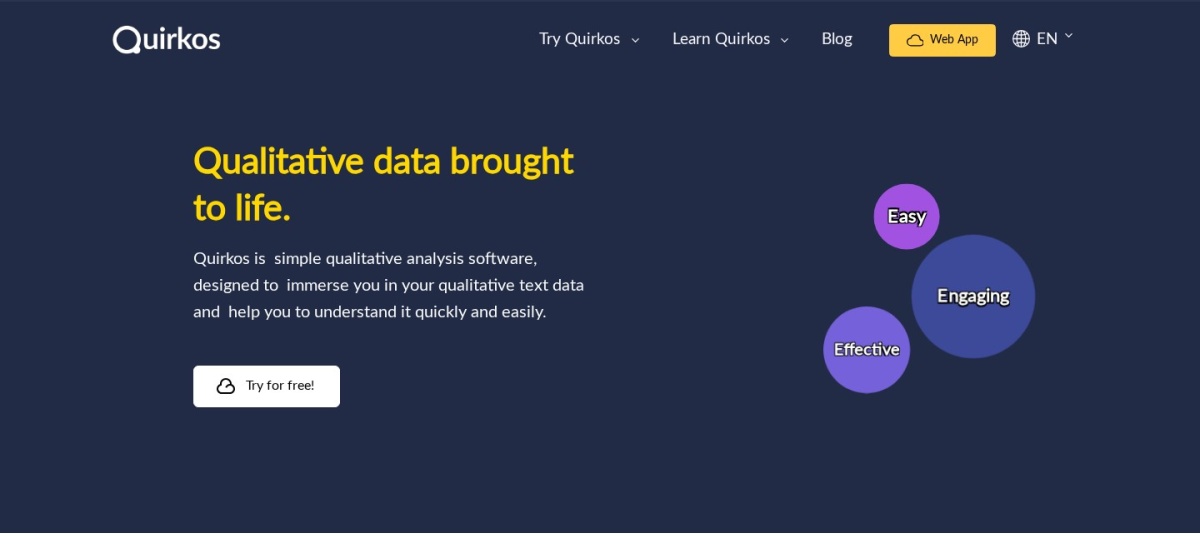
Quirkos makes qualitative analysis visual, with colourful bubbles for codes instead of long text lists. It covers the essentials, coding, queries, visualisations and reports, without the overwhelming options of the big tools, and runs on Windows, Mac, Linux and the web.
The trade off is depth. There is no AI coding, and large datasets or complex queries will outgrow it, while the academic plan costs $13 a month and the commercial plan $23. It suits students, teachers and first-time researchers.
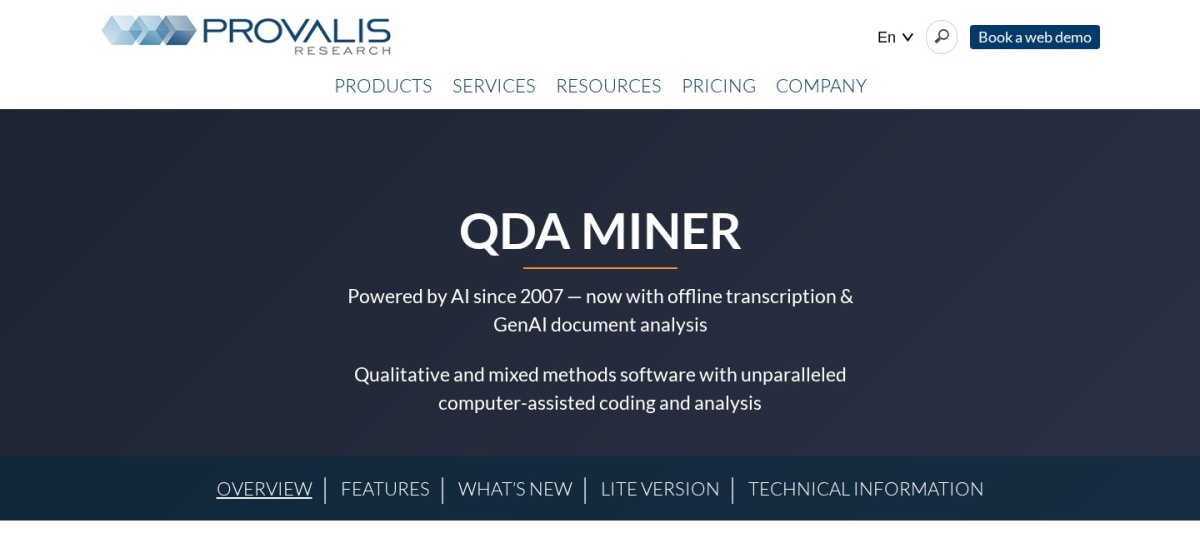
QDA Miner, from Provalis Research, bridges qualitative coding and quantitative text mining. Alongside standard coding it offers clustering, concept mapping and statistical analysis of text, and it pairs with WordStat and SimStat for deeper text analysis.
The trade off is price and polish. Pro costs $1,695 as a one-time licence, the interface shows its age, and the learning curve is real, while the free Lite version covers basic coding. It suits researchers working with large text collections.
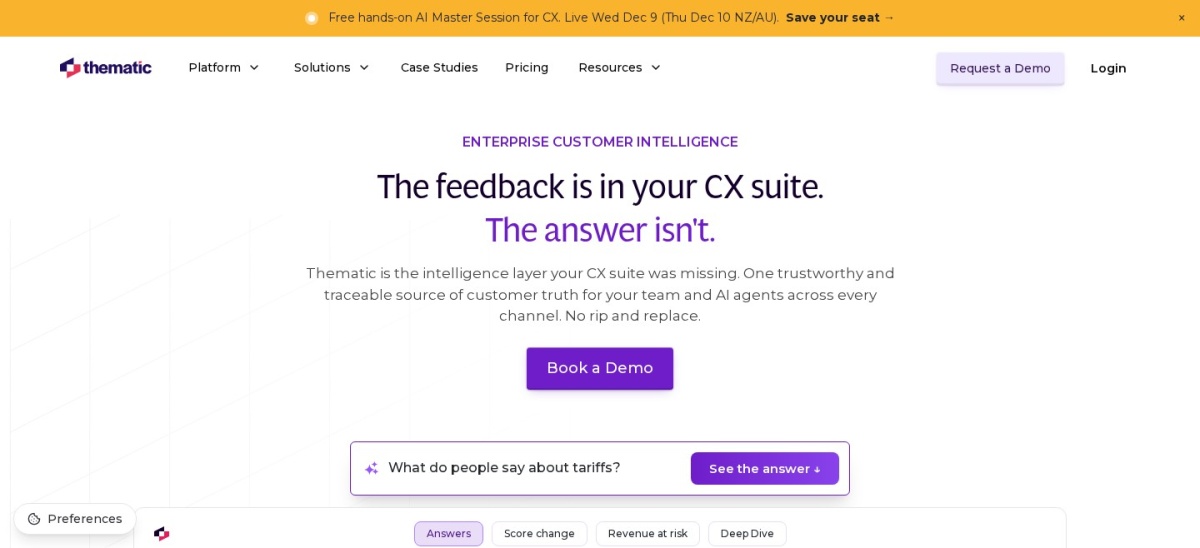
Thematic is an AI platform that turns open-ended customer feedback into structured themes. It analyses surveys, reviews, support tickets and social posts automatically, with human review to refine themes, and tracks how theme frequency and impact shift over time.
The trade off is price and purpose. Plans start at $25,000 a year, which puts it out of reach for academic and solo researchers, and it is built for feedback at scale rather than interview coding. It suits mid-market CX and product teams.
Desktop suites vs cloud tools: which fits your project
Desktop suites win on depth. NVivo, ATLAS.ti, MAXQDA and QDA Miner handle large, messy datasets offline and support the most demanding methods.
Cloud tools win on teamwork. Dedoose, Dovetail and Delve let several people code together in a browser, with no install and no file merging.
If your supervisor or department already uses one tool, match it. Sharing projects and codebooks matters more than a small feature gap.
How we chose
We started from the established qualitative analysis tools with real user bases in 2026, spanning academic desktop suites, cloud team tools and AI feedback platforms, then kept those with a public G2 rating and a published price.
Prices come from each vendor's pricing page or shop, checked on 26 November 2026. Where vendors split prices by audience, we use the academic or researcher price for the big three and the standard individual price elsewhere. Ratings and review counts come from G2 on the same day. Where a vendor shows a sale, the list shows the regular price.
We left out free open-source tools with no public rating, and generic AI chatbots with no qualitative coding workflow. No vendor paid for a place, and we do not claim to have used these tools ourselves.
How to choose qualitative analysis software
Start with your method and your data, then match the tool to the project, not the other way round.
Name your method first. Grounded theory, thematic analysis and content analysis each fit different tools. Pick the tool that supports your method, not the one with the longest feature list.
List the data types you will analyse. Interviews and transcripts are universal, but video, audio, images, surveys and social media vary. Check each candidate handles your actual data natively.
Decide how your team will work. Solo researchers can use anything. Teams need simultaneous coding, shared codebooks and agreement checks, which favour Dedoose, Dovetail or Delve.
Check your institution before you pay. Many universities hold site licences for NVivo or ATLAS.ti. Confirm what is already covered, then compare the academic price for what is left.
FAQ
What is the best qualitative analysis software?
NVivo is the best overall pick for most researchers, with the deepest coding, queries and mixed-methods tools, rated 4.0/5 on G2. ATLAS.ti suits AI-assisted coding, and MAXQDA suits mixed-methods work in a friendlier interface.
Which qualitative analysis software is best for students?
Quirkos is the easiest to learn, at $13 a month for academics, and student licences for NVivo, ATLAS.ti and MAXQDA start near $105 a year. Check your university first, since many hold site licences that cover students at no extra cost.
Is there free qualitative analysis software?
Yes. QDA Miner Lite is free and covers basic coding, and Dovetail offers a free plan. Free open-source tools also exist, but they have no public G2 rating, so they are not in this list.
What is the difference between NVivo, ATLAS.ti and MAXQDA?
NVivo has the deepest features and the largest community. ATLAS.ti offers the most flexible coding style and the strongest AI help. MAXQDA leads on mixed-methods work and usability, with coding and statistics in one program.
How much does qualitative analysis software cost?
Academic licences run $278 to $520 a year for the big three, while Dedoose costs $17.95 per active month and Delve $50 a month. Prices split by audience, so student, academic and commercial prices for the same tool can differ by hundreds of dollars.
Can AI do qualitative coding now?
AI can suggest codes and summarise themes, and ATLAS.ti, Dovetail, Delve and Thematic all offer it. Treat AI coding as a starting point, not a result: the researcher's judgement, reflexivity and theoretical framing are the actual analysis.
SaaS SEO and WordPress specialist with about 8 years of experience. Rakib compares WordPress plugins, themes, hosting and software using public pricing, documentation and user reviews. See how we rank.