n8n is the best Python automation tool for most teams, pairing a visual workflow builder with Python code nodes and a free self-hosted edition, rated 4.7/5 on G2. Pick Playwright for free Python browser automation and Make for the cheapest paid cloud workflows at $9 a month.
How we make this list: we compare pricing pages, product documentation and public user reviews, then re-check every price before each update. No product paid for a place. Disclosure.
n8n leads with Python code nodes, execution-based billing and a free self-hosted edition, rated 4.7/5 on G2 from 328 reviews.
Playwright and Selenium are free Python libraries: Playwright covers three browsers from one API, Selenium is the long-running enterprise standard.
Make is the cheapest paid entry at $9 a month billed yearly, undercutting Zapier at $19.99 and Activepieces at $20.
Apify is the pick for Python web scraping, with a Python SDK and thousands of ready-made Actors from $17 a month.
UiPath and Power Automate are the enterprise picks, but only Power Automate publishes a per-user price: $15 a month.
What Python automation covers
Python automation means letting code do repetitive work: moving files, filling forms, calling APIs, scraping pages and running scheduled jobs. The tools split into Python libraries you import, workflow platforms you configure, and desktop bots that drive other apps.
Libraries such as Playwright and Selenium run inside your own Python scripts, so you keep full control and pay nothing for the tool itself. Platforms such as n8n, Make and Zapier trade some control for a visual builder, hosted runs and hundreds of ready-made connectors.
Check where your Python code actually runs before you pick. Our guide on adding a custom REST API endpoint shows the same idea: a script that only runs on your laptop stops working when the laptop sleeps, while a hosted workflow keeps running.
Pricing also splits two ways. Libraries are free, while cloud platforms meter executions, credits or tasks, so a workflow that polls every minute can cost far more than the headline monthly price.
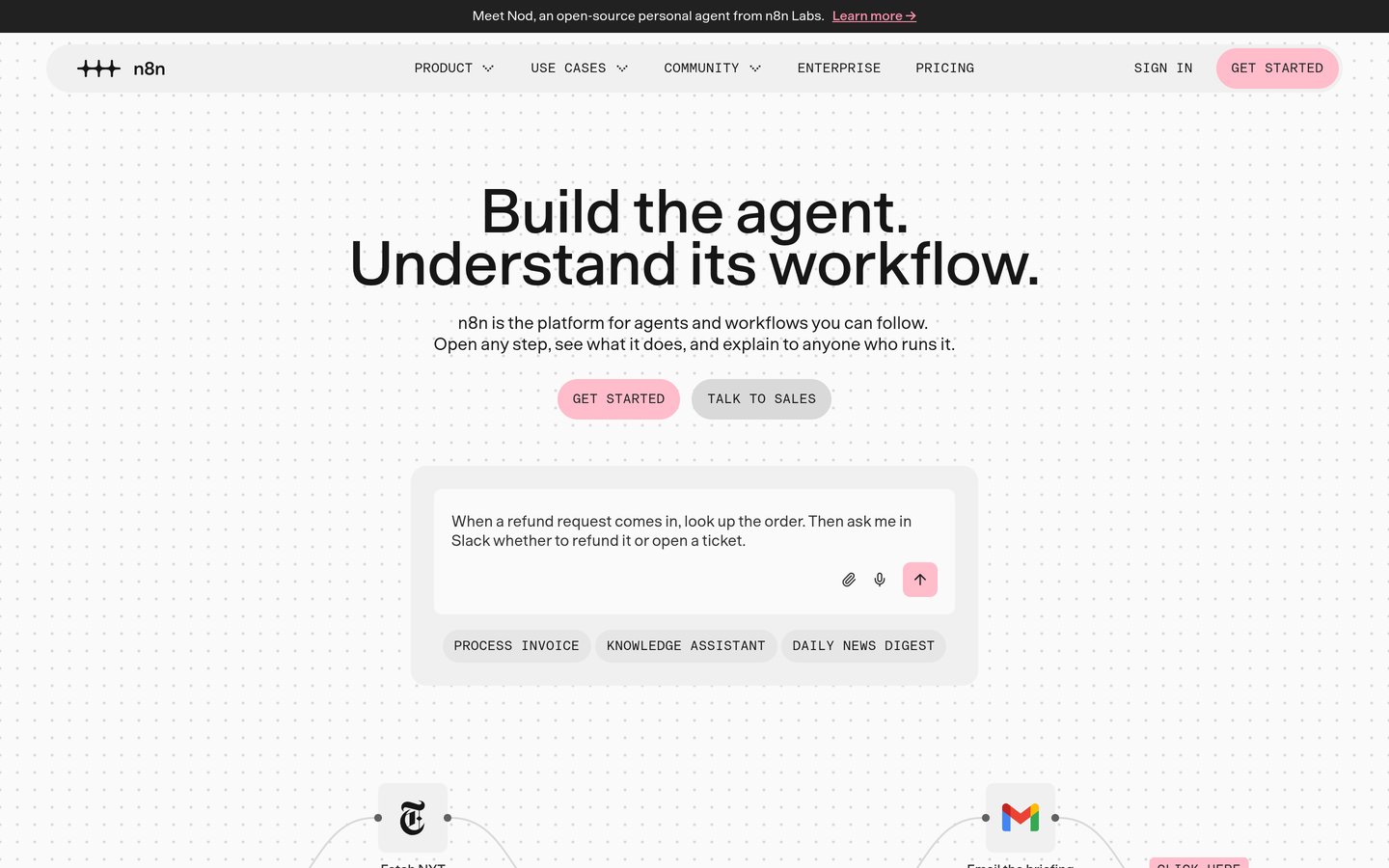
n8n is a source-available workflow automation platform that runs Python in its Code node beside a visual builder with 400-plus integrations. You can self-host the Community Edition for free with no execution cap, or use n8n Cloud Starter at €20 a month billed annually, about $22, for 2,500 full workflow executions a month.
The trade off is the learning curve. Workflows use expressions and JSON data, so non-developers will need time to get comfortable, and Starter caps single runs at 5 minutes with forum-only support. It suits technical teams building multi-step API and AI pipelines where per-step pricing is too expensive.
What we like
Python code nodes beside a visual builder
Bills per full workflow run, not per step
Free self-hosted edition with no execution cap
Native AI agent nodes and MCP support
Watch out for
Steeper learning curve than no-code rivals
Starter caps runs at 5 minutes
Forum-only support on Starter
Cloud Starter adds managed hosting and 2,500 executions a monthVisit n8n.io
02
Playwright
4.8/5on G2 (14 reviews, checked Nov 2026)
PriceFree
Best free Python browser automation
BrowsersChromium, Firefox, WebKit
Python APIFirst-class, sync and async
Test runnerBuilt in, with tracing
Paid planNone, free
playwright.dev
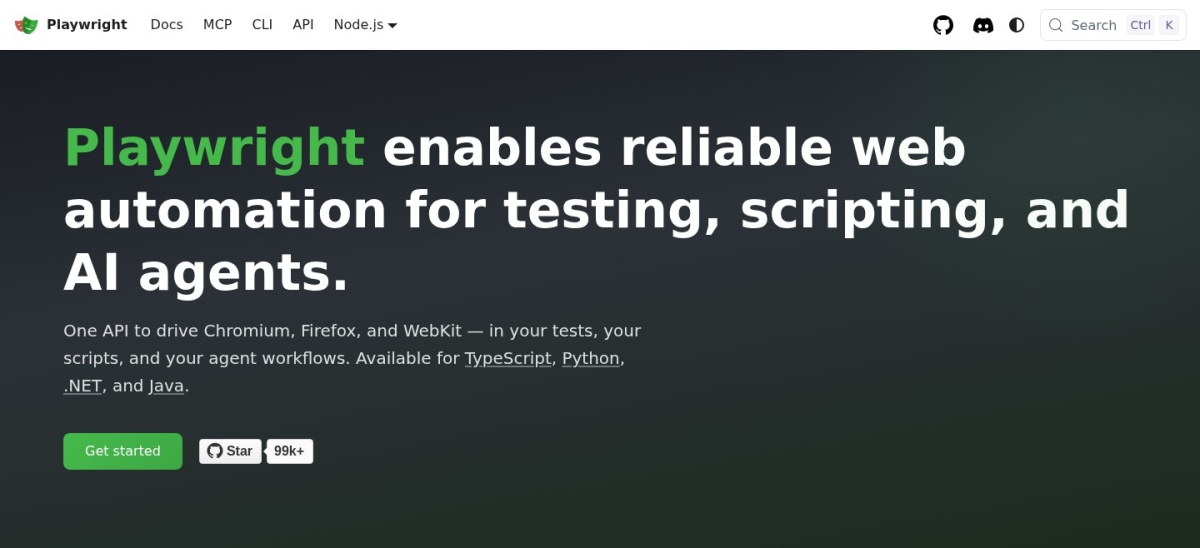
Playwright homepage, captured Nov 2026.
Playwright is Microsoft's free, open-source framework for driving Chromium, Firefox and WebKit from one Python API. It includes auto-waiting, a built-in test runner, code generation, tracing and parallel runs, with no licence fee and no paid tier.
The trade off is that it is code-first, so non-developers will find it harder to start than a visual recorder, and cloud browsers cost extra through Azure. It suits Python developers and QA teams who want one free framework for browser automation and end-to-end tests.
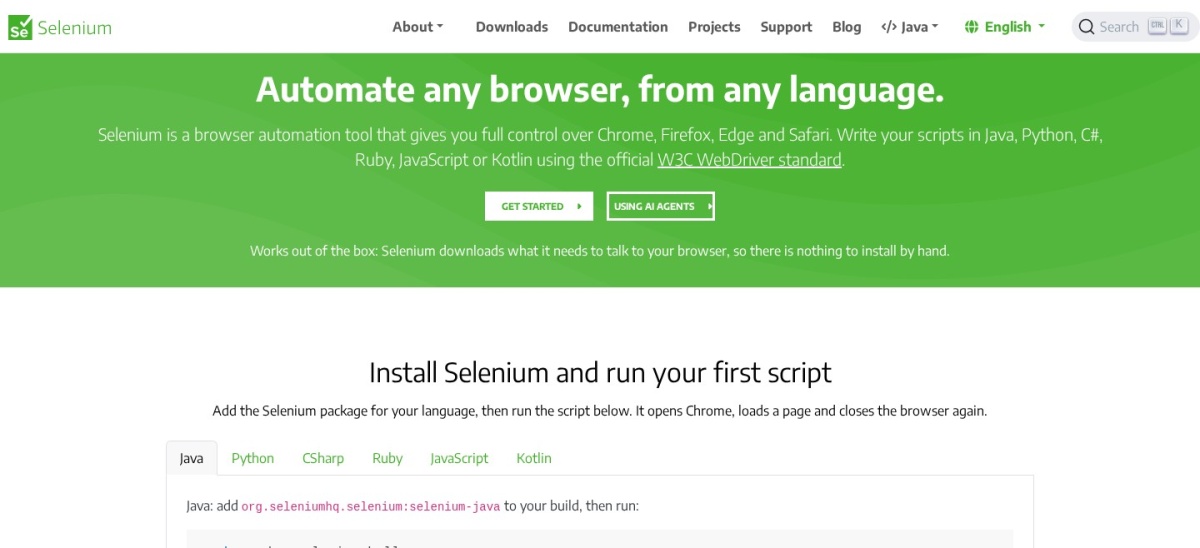
Selenium is the long-running open-source standard for browser automation, built around WebDriver with first-class Python bindings. It drives Chrome, Firefox, Edge and Safari, works in six programming languages and scales through Selenium Grid, with a recorder, Selenium IDE, for simple flows.
The trade off is age. Selenium gives you the browser driver and little else, so waits, assertions and reporting come from other libraries, and setup takes more wiring than newer frameworks. It suits large teams with existing Selenium suites and mixed-language codebases.
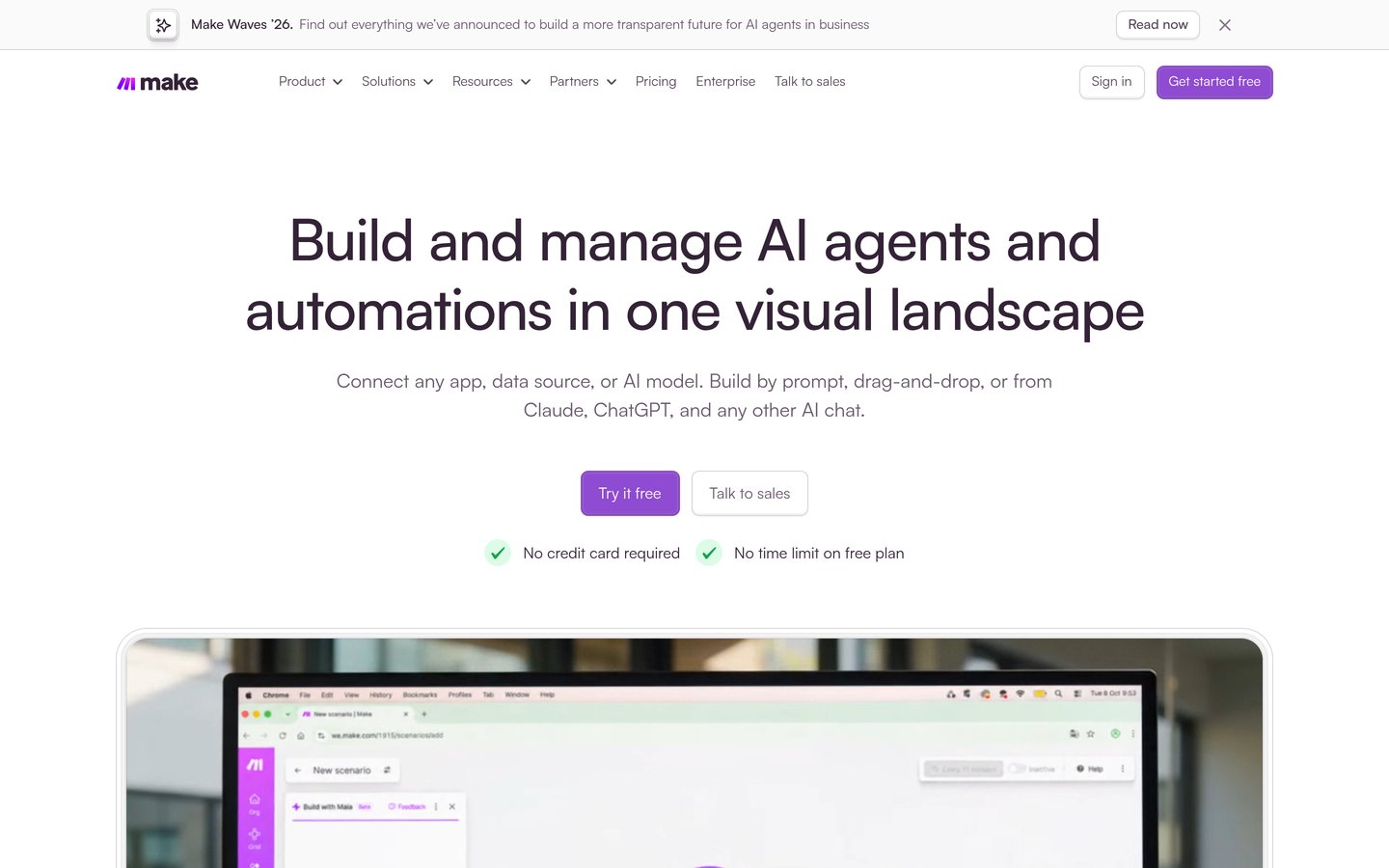
Make is a visual automation platform that connects over 3,000 apps on a drag-and-drop canvas with routers, filters and data aggregators. Its free plan includes 1,000 credits a month, while Core starts at $9 a month billed yearly for 10,000 monthly credits, and Python scripts reach it through HTTP requests or webhooks.
The trade off is that Make has no native Python step, so Python logic lives outside the platform, and every module action, including polling checks, consumes credits. It suits operations and marketing teams building multi-branch cloud automations at a low monthly cost.
What we like
Visual canvas makes branching easy to inspect
Routers and error handlers consume zero credits
10,000 monthly credits on Core for $9
Scheduling down to the minute on paid plans
Watch out for
No native Python step
Polling triggers spend credits even with no new data
Higher learning curve than linear step builders
Core removes the 2-scenario cap and adds the Make APIVisit make.com
05
Zapier
4.5/5on G2 (2,169 reviews, checked Nov 2026)
Paid from$19.99/mo
Best for the widest app catalog
Python useCode by Zapier step
App catalog9,000+ integrations
Included volume750 tasks/mo on Professional
Paid planProfessional, $19.99/mo yearly
zapier.com
Zapier homepage, captured Nov 2026.
Zapier is a no-code workflow automation platform that links over 9,000 web apps and runs Python in Code by Zapier steps. Its free plan provides 100 tasks a month, while Professional starts at $19.99 a month billed yearly for 750 monthly tasks, with multi-step Zaps, webhooks and premium apps.
The trade off is per-task billing, which scales up quickly when multi-step workflows run thousands of times a month, and it lacks native desktop automation. It suits non-technical teams that want fast setup across niche SaaS tools with Python only for small data transforms.
What we like
Broadest SaaS integration directory with 9,000+ apps
Triggers, filters and paths do not count toward task limits
Python code steps for small transforms
Includes Tables, Forms and Copilot on all plans
Watch out for
750 tasks on the entry paid plan runs out fast
Cloud-only, no local desktop automation
Pricing is the most cited complaint in reviews
Professional unlocks multi-step Zaps, webhooks and premium appsVisit zapier.com
06
Activepieces
4.8/5on G2 (142 reviews, checked Nov 2026)
Paid from$20/mo
Best open-source team automation
Python usePython code pieces
App library770+ integrations
Included volume10,000 credits/mo on Plus
Paid planPlus, $20/mo flat
activepieces.com
Activepieces homepage, captured Nov 2026.
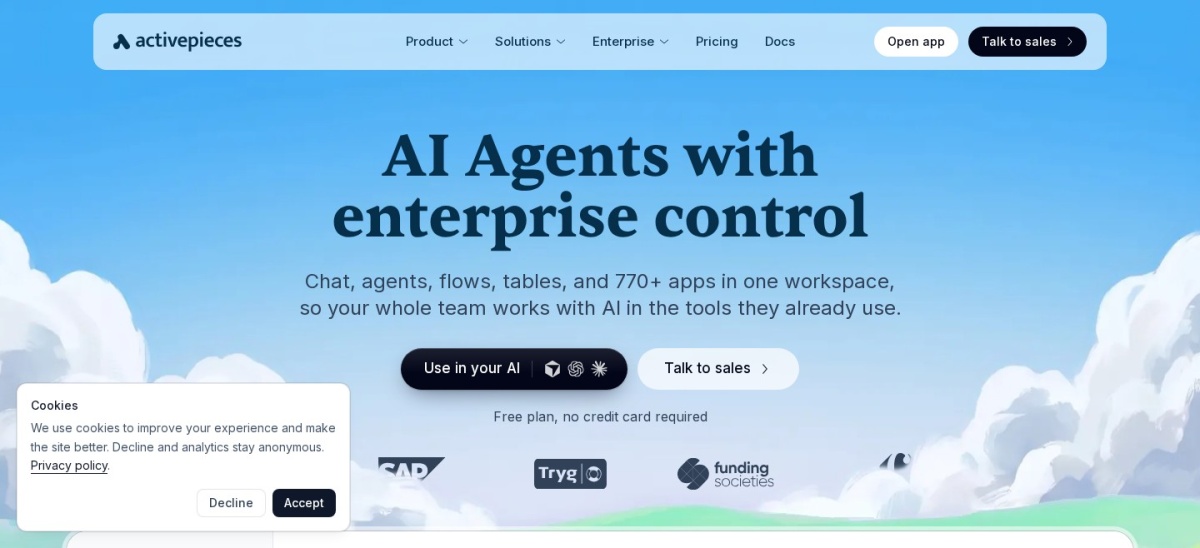
Activepieces is an open-ecosystem workflow and AI agent builder with Python code pieces, flows, tables and 770-plus app integrations. Its free plan includes 1,000 credits a month for up to 5 users, while the Plus plan costs a flat $20 a month for 10,000 monthly credits with pay-as-you-go overages.
The trade off is that its native app catalog is smaller than Zapier's, and SSO requires upgrading to the $200 a month Team tier. It suits small teams wanting predictable flat pricing, the option to bring their own AI provider keys, and an open-source core they can self-host.
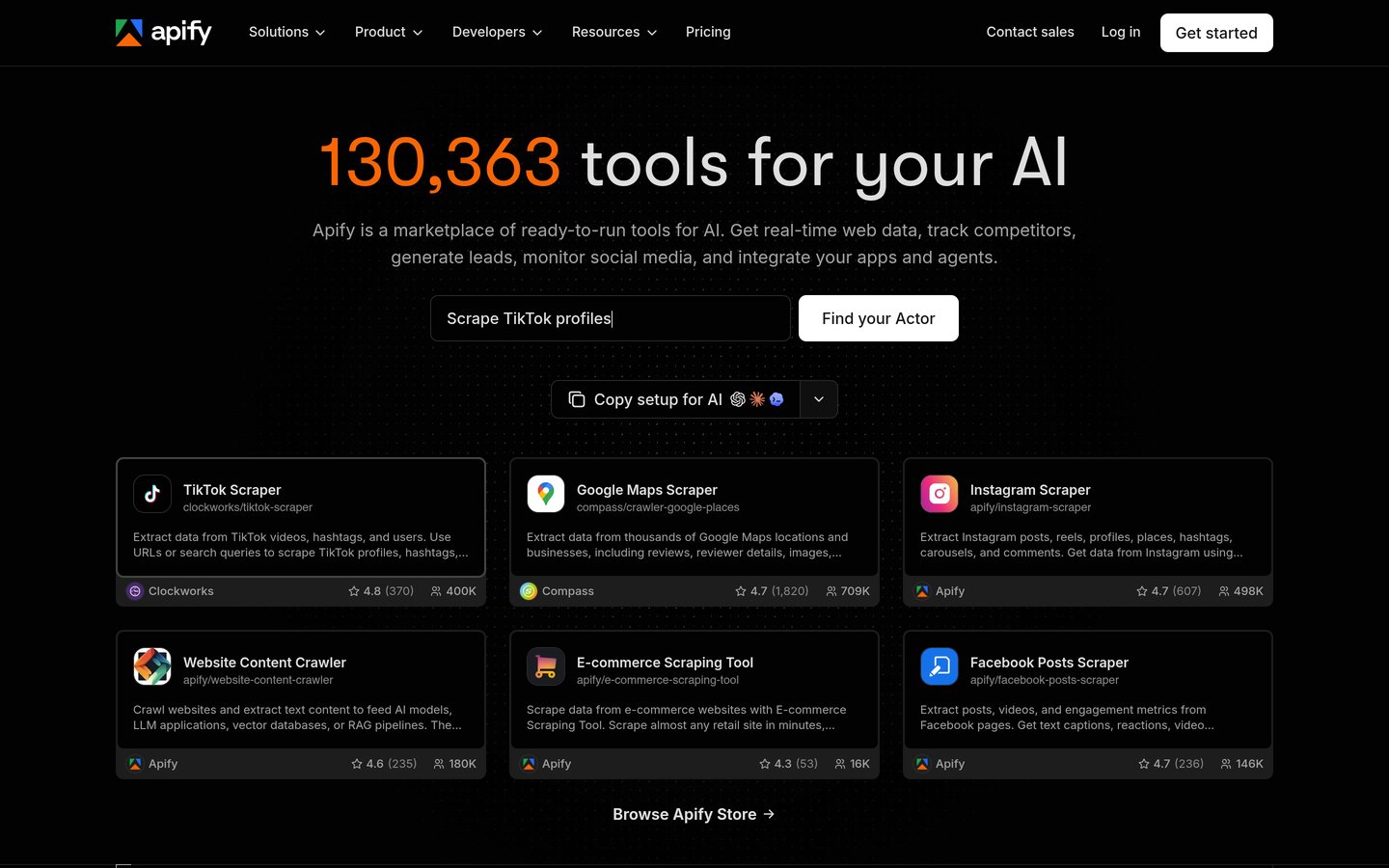
Apify is a cloud web scraping and browser automation platform built around Actors, small programs you can write in Python or JavaScript. Its free tier renews $5 in monthly usage credits, and the Starter plan costs $17 a month billed yearly with $19 of monthly prepaid usage included, plus 30 datacenter proxy IPs.
The trade off is usage-based metering, where unused prepaid credits expire at the end of each billing cycle and memory-heavy browser jobs consume credits faster. It suits data teams and developers automating web extraction pipelines with Python.
What we like
Large marketplace of maintained scrapers
Monthly fee converts into usable compute credit
Includes 30 datacenter proxy IPs on Starter
Python SDK plus n8n, Make and Zapier integrations
Watch out for
Unused prepaid credits do not roll over
Residential proxy bandwidth can dominate costs
Not designed for local desktop software
Starter includes $19 a month in usage credit and 30 proxy IPsVisit apify.com
08
UiPath
4.6/5on G2 (7,735 reviews, checked Nov 2026)
Paid from$25/mo
Best enterprise RPA with Python support
Python usePython activities in Studio
Free tierCommunity Edition (free)
DeploymentCloud, hybrid, on-premises
Paid planBasic, $25/mo
uipath.com
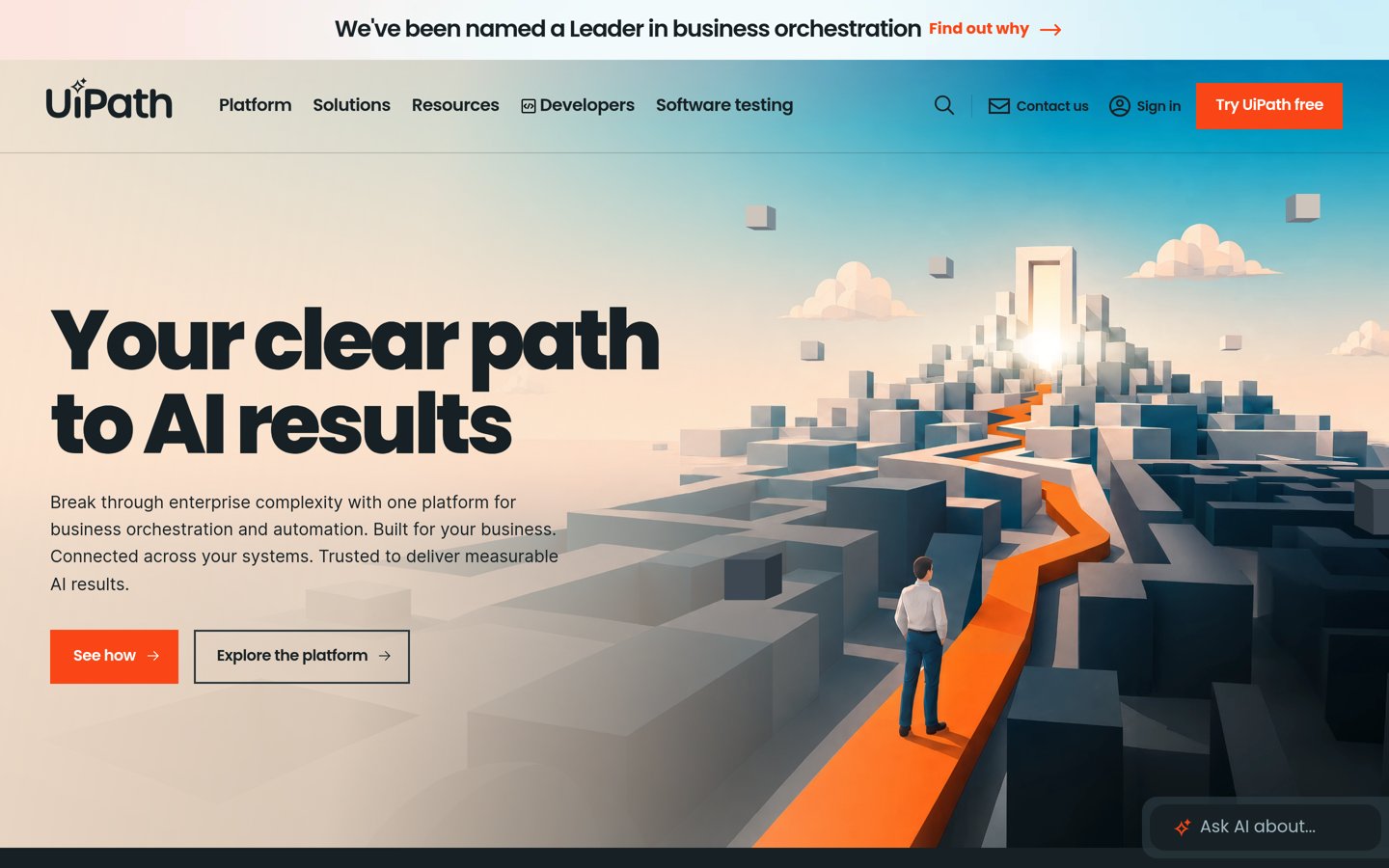
UiPath homepage, captured Nov 2026.
UiPath is a full-stack robotic process automation and agentic orchestration platform that runs Python scripts through Python activities in Studio. Its free Community Edition lets individual developers build and run personal automations, while the Basic plan starts at $25 a month with 99.9% service uptime and Bronze Support.
The trade off is that self-serve Basic licensing caps user and robot counts, while Standard and Enterprise tiers require custom quotes. It suits mid-size and enterprise teams automating complex desktop and UI workflows that mix Python scripts with attended and unattended bots.
What we like
Largest RPA developer ecosystem
Handles attended and unattended bots
Python activities run scripts inside Studio
Free Community tier for individual builders
Watch out for
Standard and Enterprise tiers have no public prices
Steeper learning curve than cloud workflow builders
Basic tier limits user and robot scale
Basic adds business-grade uptime, Bronze Support and team automationsVisit uipath.com
09
Microsoft Power Automate
4.4/5on G2 (1,094 reviews, checked Nov 2026)
Starts at$15/mo
Best for Microsoft 365 teams
Python useRun scripts in desktop flows
ConnectorsMicrosoft 365 native
Unattended botProcess, $150/bot/mo yearly
Paid planPremium, $15/user/mo yearly
microsoft.com
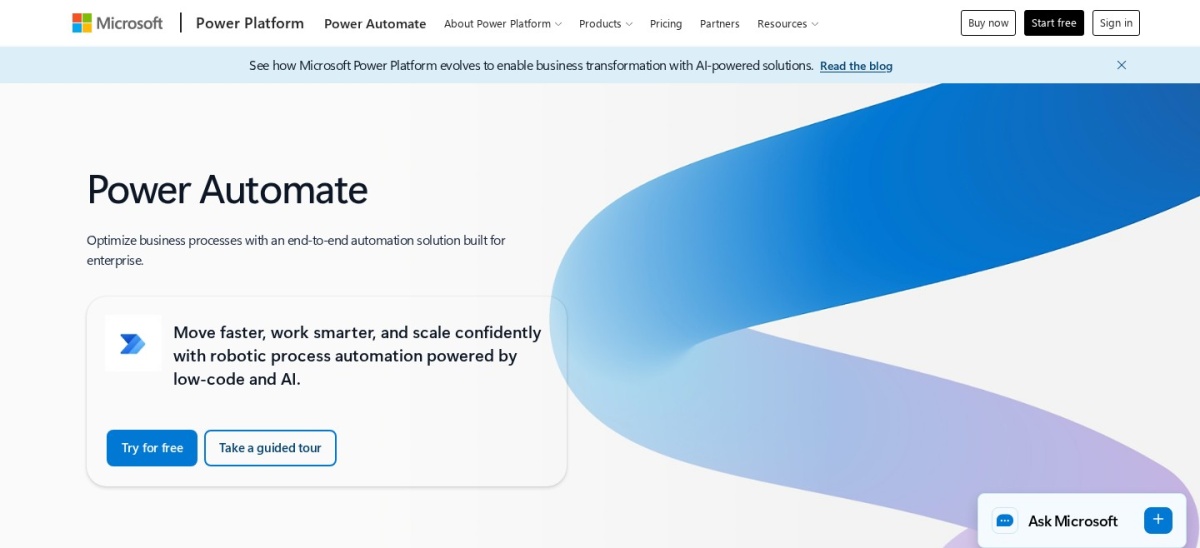
Microsoft Power Automate homepage, captured Nov 2026.
Microsoft Power Automate is a cloud and desktop automation platform tightly integrated with Windows 11, Microsoft 365 and Azure, and its desktop flows can run Python scripts. Power Automate Premium costs $15 per user a month paid yearly and includes cloud flows, attended desktop RPA, 50 MB of process mining storage and 250 MB of Dataverse capacity.
The trade off is the tenfold jump to unattended automation, which requires the Process plan at $150 per bot a month paid yearly, and non-Microsoft connectors lag behind API-first rivals. It suits organizations standardized on Microsoft 365 that want transparent per-user desktop automation.
What we like
Clear published pricing for seats and bots
Deep native connectors for Excel, SharePoint and Teams
Includes 50 MB of process mining on Premium
Desktop app included with Windows 11
Watch out for
Unattended bots jump to $150 per bot a month
No free plan beyond a 30-day trial
Non-Microsoft connectors lag behind API-first rivals
Premium unlocks premium connectors and attended desktop flowsVisit microsoft.com
Code-first vs no-code: which side fits your team
Code-first tools suit teams with a Python developer on staff. You version the scripts, run them in CI and debug them with the tools you already use.
No-code platforms suit teams without a developer. You build in a visual editor and hand the workflow to anyone, but you pay per run and depend on the vendor's connectors.
A mixed setup is common: Playwright scripts for browser work, called from n8n or Make when a schedule or a webhook fires. That keeps the heavy logic in Python and the scheduling in the cloud.
How we chose
We started from workflow platforms, browser libraries and RPA tools with a real Python story: a Python API, Python code steps, or a Python SDK. Every tool here has a public G2 rating and a published entry price or a free tier.
Prices come from each vendor's pricing page, checked on 26 November 2026. Ratings and review counts come from G2 on the same day. Where a vendor bills in euros, the list shows the approximate dollar price, and where a vendor shows a sale, the list shows the regular price.
We left out enterprise suites that publish no prices, such as Automation Anywhere, and tools with fewer than 10 public reviews. No vendor paid for a place, and we do not claim to have used these tools ourselves.
How to choose a Python automation tool
Start with the job you automate most often, then match the tool to how that job runs.
Decide whether you need code or a visual builder. If a Python developer owns the automation, a library such as Playwright or Selenium gives the most control. If anyone on the team must edit it, pick a visual platform such as n8n or Make.
Check how the tool runs Python. Some tools run Python natively in code steps, others only call scripts over HTTP or webhooks. Native code steps keep data in one place; HTTP calls need a server to host the script.
Count your monthly runs before you pay. Cloud tools meter executions, credits or tasks, and a workflow that polls every minute burns over 40,000 runs a month. A free self-hosted edition can be cheaper once volume grows.
Try the free tier with a real workflow. Build one small job end to end, including error alerts and retries, before you commit to a paid plan. A tool that is easy to start but hard to debug will cost more later.
FAQ
What is the best Python automation tool?
n8n is the best pick for most teams. It combines a visual workflow builder with Python code nodes and a free self-hosted edition, and it is rated 4.7 out of 5 on G2 from 328 reviews. Developers who only need browser automation should look at Playwright instead.
Can I automate tasks with Python for free?
Yes. Playwright and Selenium are free open-source Python libraries with no paid tier, and n8n, Make, Zapier, Activepieces and Apify all offer free plans. Running scripts still needs a computer or server that stays on, so hosted runs are the usual reason to pay.
Is Playwright or Selenium better for Python?
Playwright is the better choice for new Python projects: it covers Chromium, Firefox and WebKit from one API, waits for elements automatically and includes a test runner. Selenium remains the standard for large teams with existing suites and mixed-language codebases.
Do n8n, Make and Zapier support Python?
n8n runs Python in its Code node, Zapier runs it in Code by Zapier steps, and Activepieces offers Python code pieces. Make has no native Python step, so Python scripts reach it through HTTP requests or webhooks instead.
How much does Python automation software cost?
Python libraries are free. Paid cloud platforms start at $9 a month billed yearly for Make, $15 a month for Power Automate Premium, $17 for Apify Starter, $19.99 for Zapier Professional, $20 for Activepieces Plus, and about $22 for n8n Cloud Starter.
What should I automate first with Python?
Start with a repetitive job you already do by hand every week, such as moving files, updating a spreadsheet or checking a web page for changes. A small job shows whether the tool fits before you automate anything that touches money or customer data.
SaaS SEO and WordPress specialist with about 8 years of experience. Rakib compares WordPress plugins, themes, hosting and software using public pricing, documentation and user reviews. See how we rank.