Optibus is the best public transportation software for most agencies, combining AI planning, scheduling, rostering and operations in one cloud platform rated 4.4 out of 5 on Capterra. Pick Ecolane for paratransit and demand-response work, or TripMaster for a smaller paratransit team that wants the best-reviewed tool with a published starting price.
How we make this list: we compare pricing pages, product documentation and public user reviews, then re-check every price before each update. No product paid for a place. Disclosure.
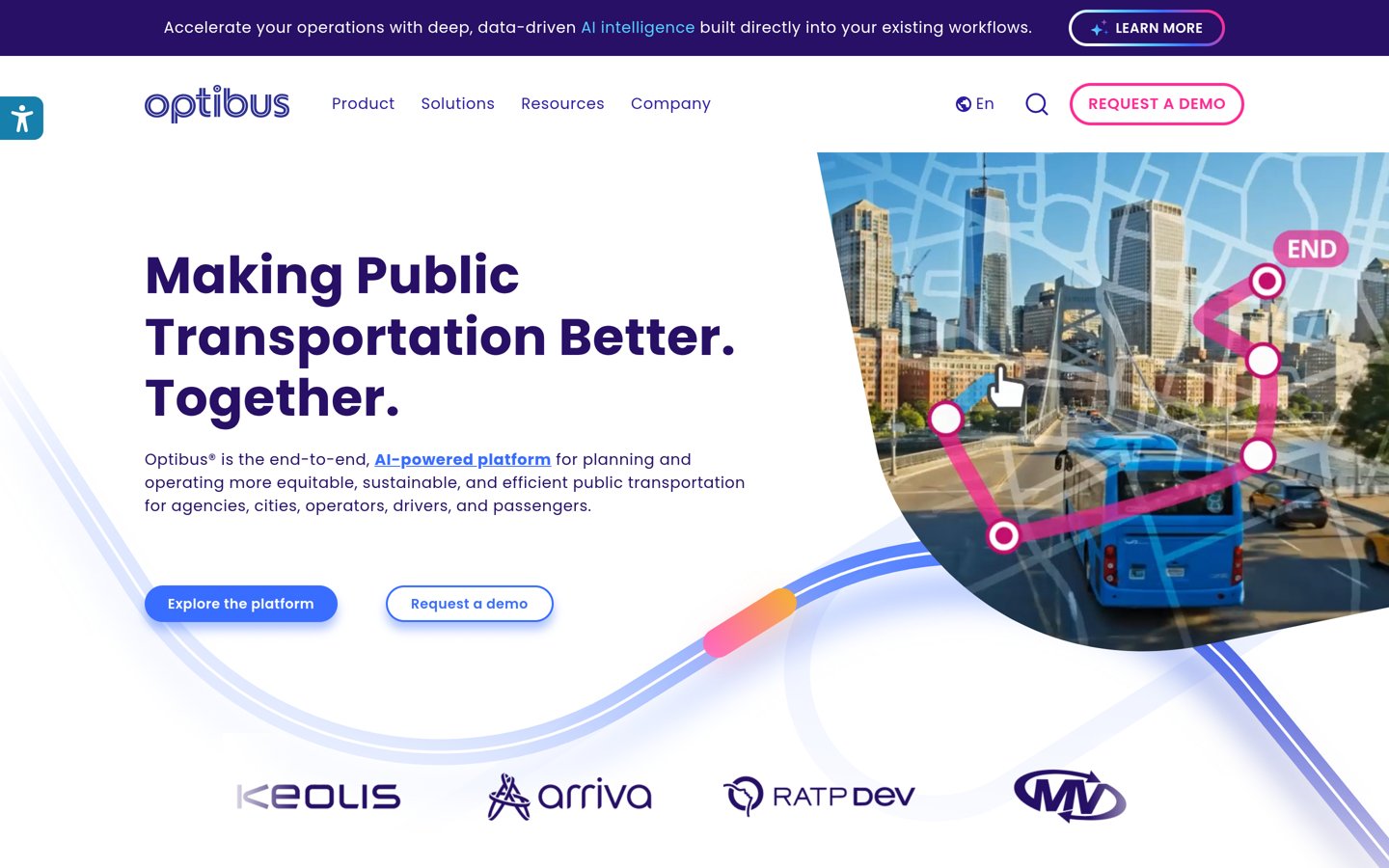
Optibus is the broadest pick: planning, scheduling, rostering and operations in one cloud platform, rated 4.4/5 on Capterra.
TripMaster has the strongest review base in this list, 4.5/5 from 93 Capterra reviews, with a published starting price of $125 a month.
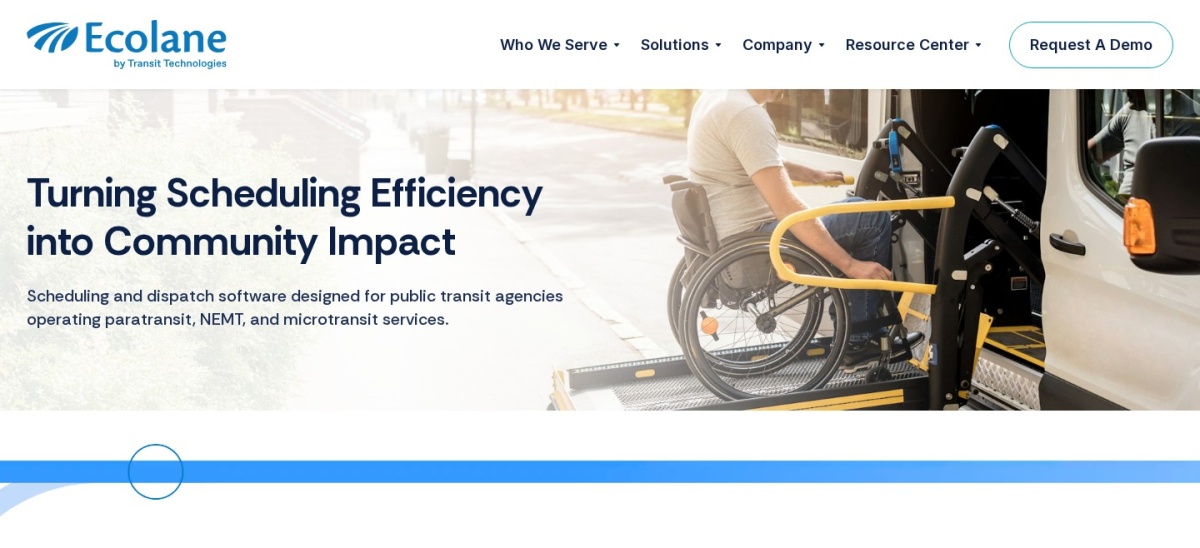
Ecolane is the paratransit specialist, used by 300+ agencies, with a Capterra starting price of $50,000 a year.
Only 2 of the 9 tools publish a starting price; the other 7 are quote-only, so plan for a demo and a pilot before budgeting.
Ratings are thin across this niche: 6 of the 9 tools have fewer than 10 public reviews, so treat scores as weak signals, not verdicts.
What public transportation software has to cover
Public transportation software covers a wide range: fixed-route planning and scheduling, paratransit and demand-response dispatch, real-time vehicle tracking, and rider information. No single tool in this list covers all four equally well, so agencies usually buy for their weakest link first.
Fixed-route agencies need timetables, vehicle blocking, run-cutting and driver rosters that respect labor rules. Paratransit and NEMT operators need trip-level scheduling, eligibility rules and rider communication instead.
Real-time data is the third piece. Tools such as Swiftly turn live vehicle positions into arrival predictions and performance reports, while CAD/AVL systems give dispatchers a live view of the fleet. Rider-facing booking matters too, and our booking calendar guide explains how booking forms work, though transit booking itself needs a dedicated rider app.
Pricing is the hardest part of this market. Only Ecolane and TripMaster show a starting price on Capterra, and neither publishes a price on its own site, so every other tool in this list needs a quote. Budget for implementation and training as well as the license.
Optibus is a cloud platform that covers planning, scheduling, rostering and operations for public transportation in one place. Its AI optimization builds timetables and crew schedules in minutes instead of days, and it handles bus, light rail and mixed fleets in a single network model.
The trade off is price and setup. Optibus publishes no price, so an agency must request a quote, and its optimization only works well when service rules and constraints are set up with care. It suits agencies and operators that want one system from network planning through daily operations.
What we like
Planning, scheduling, rostering and operations in one platform
AI optimization that builds schedules in minutes
Cloud-based, so planners can work on the same plan at once
Watch out for
No published price; quote only
Optimization needs careful setup of rules and constraints
Ecolane is a cloud platform built for demand-responsive transit, covering paratransit, NEMT and microtransit. It schedules and dispatches at the trip level, updates plans as conditions change during the day, and reports more than 300 agencies and 16,000 vehicles using the system.
The trade off is price. Capterra lists a starting price of $50,000 a year, and the vendor publishes no price of its own, so smaller agencies should expect an enterprise-style quote. It suits paratransit and NEMT operators that need trip-level scheduling rather than fixed-route planning.
What we like
Built for paratransit, NEMT and microtransit
Real-time trip-level scheduling and dispatch
Used by 300+ agencies, with ADA reporting built in
Watch out for
Starting price of $50,000 a year is high for small agencies
Fixed-route planning is not its focus
Pricing is quoted per agency; Capterra lists $50,000 a year to startVisit ecolane.com
03
TripMaster
4.5/5on Capterra (93 reviews, checked Nov 2026)
Starts at$125/mo
Best for small paratransit and NEMT teams
SchedulingAutomated, computer-aided
BillingElectronic, with auditing
Rider and driver appsTripPortal and ParaScope
Starting price$125/mo
tripmastersoftware.com
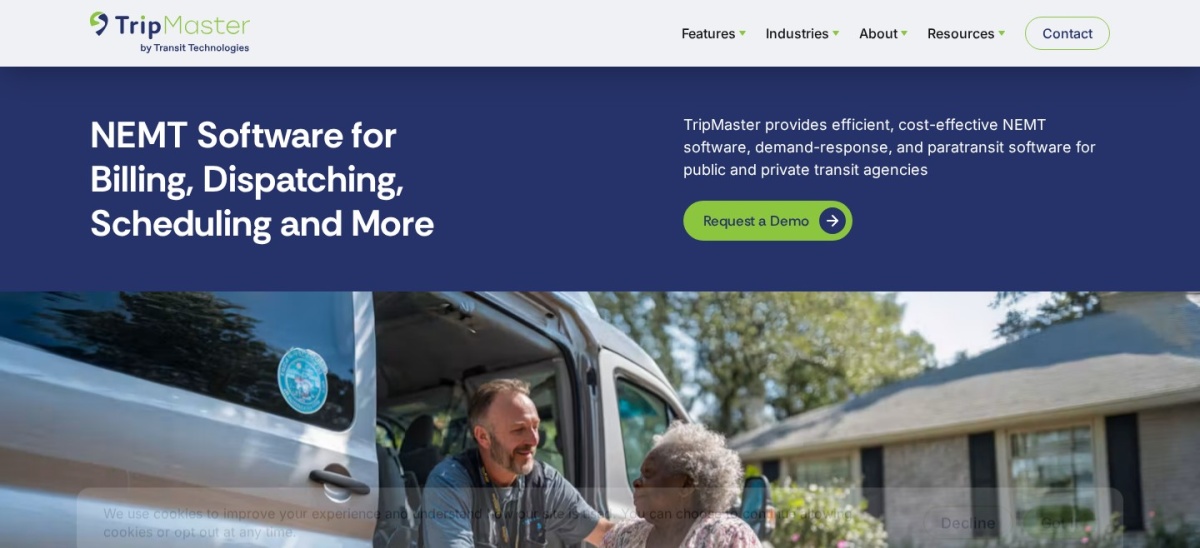
TripMaster homepage, captured Nov 2026.
TripMaster is a full transit suite from CTS Software, a company that has served paratransit, NEMT and demand-response providers for nearly 40 years. It covers automated scheduling, dispatch, ticketing, reporting, billing and fleet management, with a rider app and the ParaScope driver app.
The trade off is scale and price clarity. Capterra lists a starting price of $125 a month, while SourceForge lists $100 a month, so confirm the current figure with the vendor before budgeting. It suits smaller paratransit and NEMT teams that want one suite instead of separate scheduling and billing tools.
What we like
Largest review base in this list, 4.5 from 93 Capterra reviews
Scheduling, dispatch, billing and fleet tools in one suite
Rider and driver apps included
Watch out for
Starting price differs between Capterra and SourceForge
Aimed at smaller operations, not large fixed-route networks
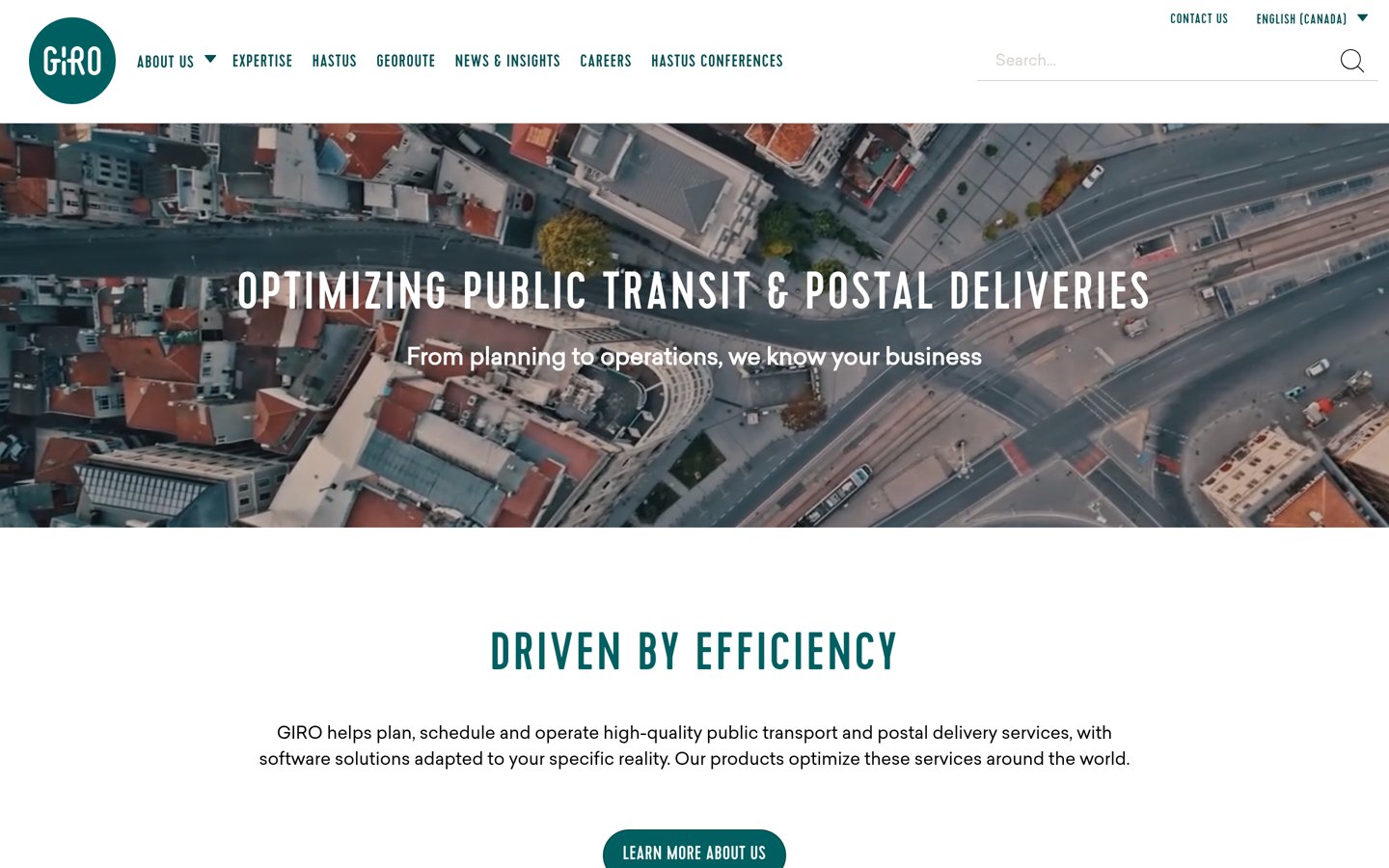
HASTUS is GIRO's scheduling and operations system for bus, metro, tram and passenger rail. It covers timetable development, vehicle blocking, run-cutting, rostering and day-of-service operations, and GIRO reports deployments in more than 25 countries.
The trade off is evidence and price. Its only Capterra review is a single 5-star rating from 2015, and GIRO publishes no price, so an agency must run a full evaluation and request a quote. It suits large agencies with complex rosters, union rules and multi-mode networks.
What we like
Deep scheduling: timetables, blocking, run-cutting, rostering
Covers bus, metro, tram and rail in one system
Long-established vendor, founded in 1979
Watch out for
Only 1 public Capterra review, from 2015
No published price; quote only
A quote covers the modules and network size you chooseVisit giro.ca
05
Trapeze
4.4/5on G2 (14 reviews, checked Nov 2026)
PricingCustom/yr
Best full suite for large agencies
CAD/AVLTransitMaster dispatch
ParatransitPASS scheduling
Asset managementTrapeze EAM
PricingQuote only
trapezegroup.com
Trapeze homepage, captured Nov 2026.
Trapeze is a full transit suite covering planning, scheduling, dispatch, fare collection and passenger information. Its TransitMaster CAD/AVL gives dispatchers live vehicle positions, while PASS handles paratransit scheduling and EAM tracks transit assets and maintenance.
The trade off is breadth and evidence. The G2 rating of 4.4 covers 14 reviews across Trapeze products rather than one product, and the vendor publishes no price. It suits large agencies that want planning, dispatch and fares from a single vendor.
What we like
One vendor for planning, dispatch, fares and assets
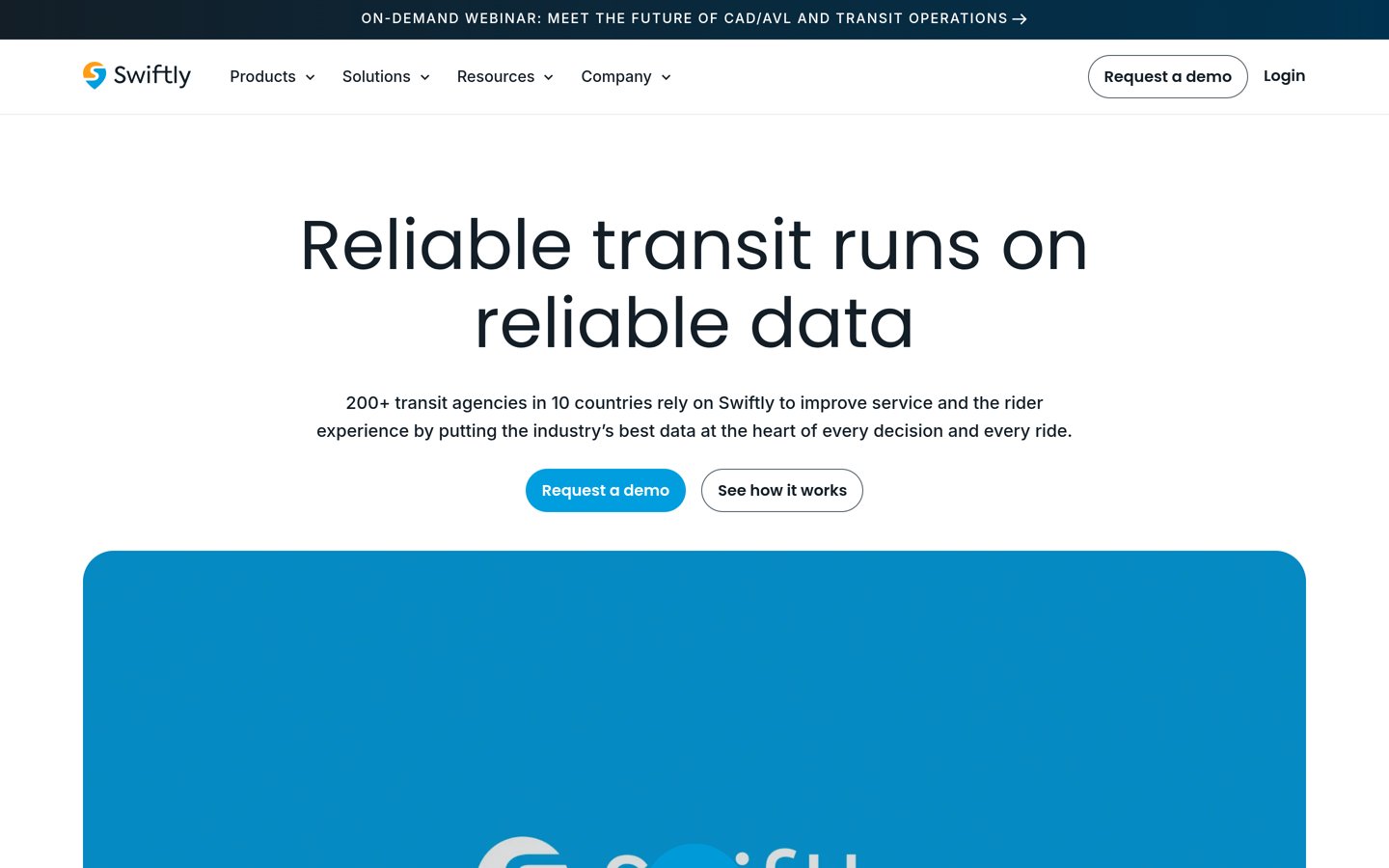
Swiftly is a transit data platform that turns live vehicle locations into arrival predictions, service alerts and performance reports. Its homepage reports more than 200 transit agencies in 10 countries using the platform to track schedule adherence and spot bunching and gaps.
The trade off is evidence and scope. Its Capterra rating of 5.0 rests on only 2 reviews, and Swiftly publishes no price, so agencies should pilot it on their own data before committing. It suits agencies that need accurate real-time passenger information and performance analysis.
What we like
Real-time predictions, alerts and performance dashboards
Used by 200+ agencies in 10 countries
CAD/AVL built on the same data platform
Watch out for
Only 2 Capterra reviews behind the 5.0 rating
No published price; quote only
A quote covers the modules and fleet size you chooseVisit goswift.ly
07
Remix by Via
4.3/5on G2 (2 reviews, checked Nov 2026)
PricingCustom/yr
Best for visual transit planning
Route planningMap-based, with scenarios
SchedulingBlocking and run-cutting
GTFS exportGoogle-ready feeds
PricingQuote only
remix.com
Remix by Via homepage, captured Nov 2026.
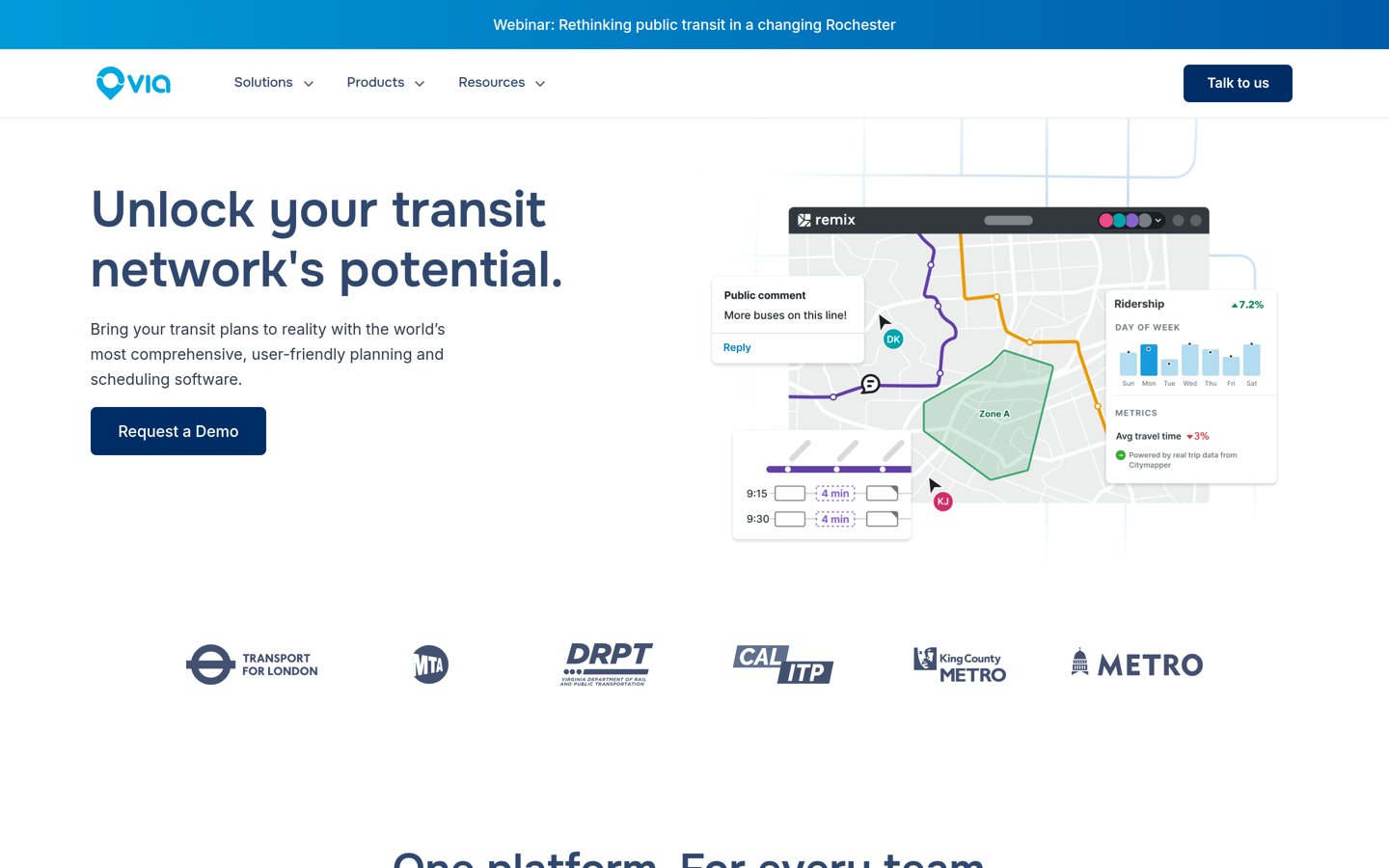
Remix by Via is a map-based planning tool for transit agencies and city planners. Planners draw routes on a map, test scenarios in hours instead of days, and export Google-ready GTFS feeds for riders and operations teams.
The trade off is evidence and scope. Its G2 rating of 4.3 rests on only 2 reviews, and Remix publishes no price, so it works best as the planning layer beside a scheduling and dispatch system. It suits planning teams that need to show route and cost trade-offs to the public.
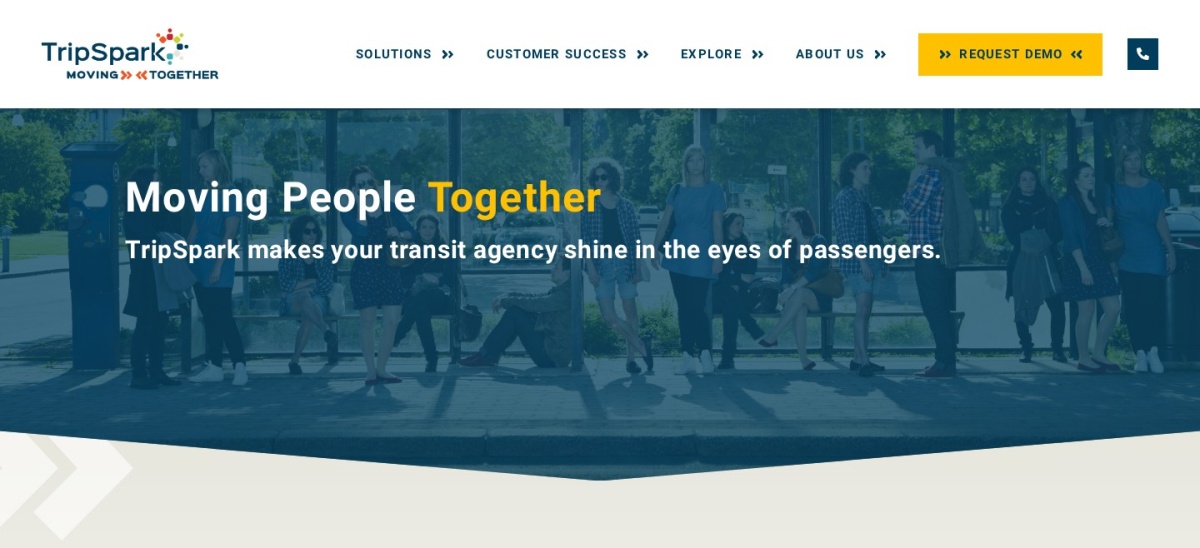
TripSpark is an end-to-end transit suite for mid-size to large agencies, covering fixed-route and paratransit service in one system. It also covers NEMT, ridesharing and K-12 transport, with dispatch, rider communication and reporting across the suite.
The trade off is evidence and price. Its Capterra rating of 4.4 rests on only 8 reviews, and TripSpark publishes no price, so agencies should ask for a reference site of similar size. It suits mid-size agencies that run fixed-route and paratransit service together.
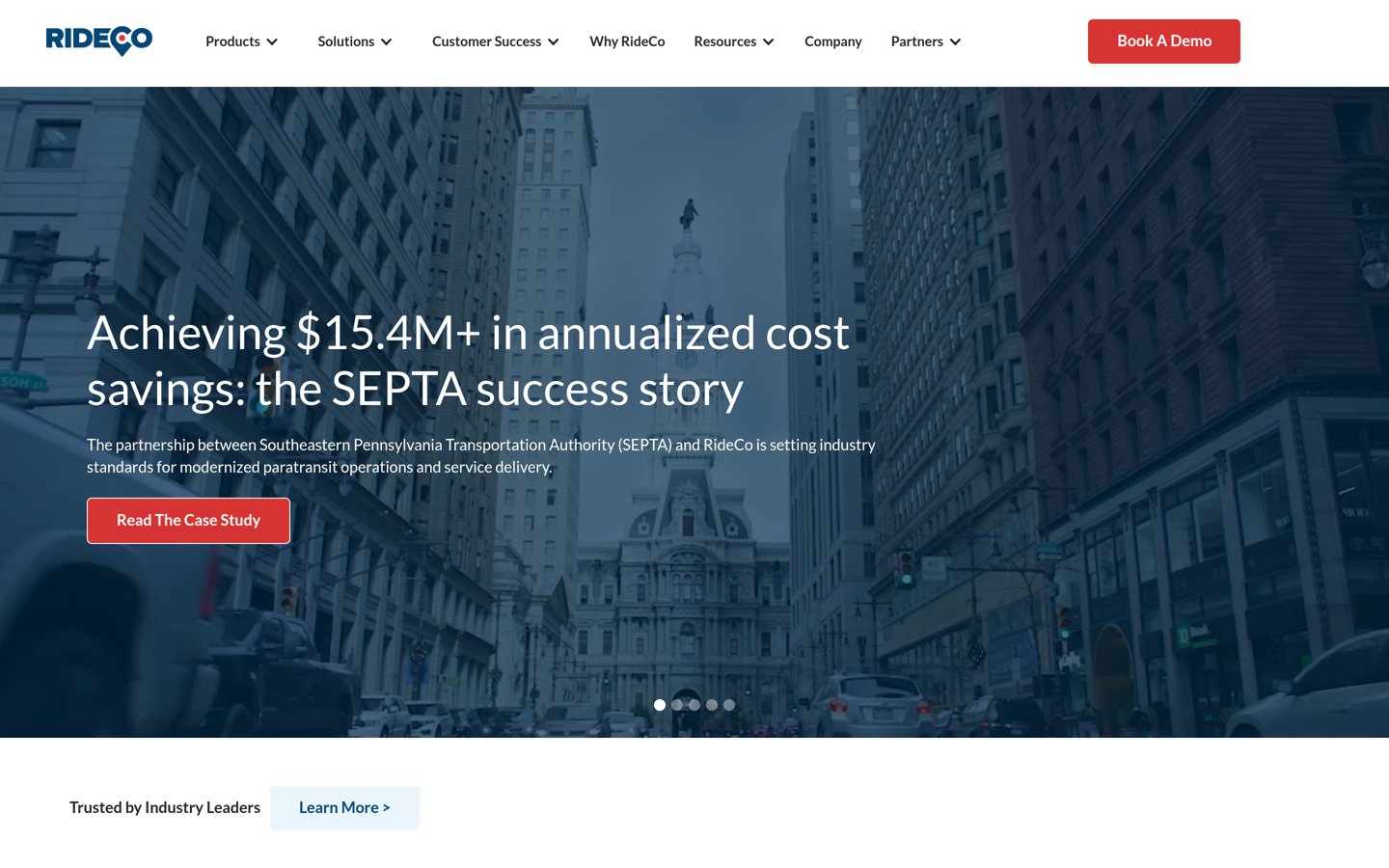
RideCo is a cloud platform for on-demand paratransit and microtransit, used by large city services including Los Angeles and Philadelphia. Its rider app lets passengers book and manage trips, while automation reassigns rides when a vehicle is pulled from service.
The trade off is evidence and price. Its Capterra rating of 5.0 rests on only 6 reviews, all 5 stars, and RideCo publishes no price. It suits agencies replacing fixed routes with on-demand zones or modernizing a paratransit service.
What we like
On-demand paratransit and microtransit in one platform
Rider app with self-service booking
Automation that reassigns rides during disruptions
Watch out for
Only 6 Capterra reviews, all 5 stars
No published price; quote only
A quote covers the service size and zones you chooseVisit rideco.com
Quote-only pricing: what to ask vendors
Seven of the nine tools publish no price at all. Expect pricing to depend on fleet size, modules and contract length, and ask for the full first-year cost in writing.
Ask for a pilot on your own routes and data before signing. A pilot shows whether predictions, schedules and rosters hold up on your network, not a demo network.
Ask for two reference agencies of similar size and mode, and ask what implementation and training cost. Support hours and response times matter more than the license fee once service is live.
How we chose
We started from transit scheduling and operations platforms named in agency roundups and review sites, then kept nine established tools covering fixed-route planning, paratransit, on-demand service and real-time data.
Prices and ratings were checked on 26 November 2026. Ratings come from Capterra or G2, with the source named on each tool; where a vendor shows no price, the list shows Custom and says so in the text. The two starting prices shown come from Capterra listings, not vendor pricing pages.
We left out tools with no public reviews at all, such as Pantonium, and fare-only tools such as Masabi. No vendor paid for a place, and we do not claim to have used these tools ourselves.
How to choose public transportation software
Start with the service you run today, then match the tool to its weakest link.
Name the service type first. Fixed-route, paratransit, NEMT, microtransit and rail each need different scheduling logic. A tool built for one rarely fits another well.
List the jobs the software must do. Planning, scheduling, dispatch, real-time data, fares and rider apps are separate modules. Buy the modules that fix your current pain, not the full suite.
Ask for a pilot and references. Run a pilot on your own routes and talk to two agencies of similar size. Thin public reviews make references more important here than in most software markets.
Get the full first-year cost in writing. Ask what implementation, training and support cost on top of the license, and confirm response times for service-hour problems.
FAQ
What is the best public transportation software?
Optibus is the best overall pick for most agencies, because it covers planning, scheduling, rostering and operations in one cloud platform rated 4.4 out of 5 on Capterra. Agencies focused on paratransit should look at Ecolane first, and small paratransit teams at TripMaster.
How much does public transportation software cost?
Most tools are sold by quote, so there is no standard price. The only published starting prices in this list are $50,000 a year for Ecolane and $125 a month for TripMaster, both from Capterra listings. Expect the total to depend on fleet size, modules and contract length.
What is the difference between fixed-route and paratransit software?
Fixed-route software builds timetables, vehicle blocks and driver rosters for buses and trains that run on set routes. Paratransit software schedules individual trips for riders who book ahead, with eligibility rules, rider communication and door-to-door dispatch.
Do these tools include real-time passenger information?
Some do. Swiftly specializes in live arrival predictions and performance data, and Trapeze TransitMaster gives dispatchers live vehicle positions. Planning tools such as Remix and HASTUS focus on schedules and rosters, so they need a separate real-time layer.
Can one tool cover planning, dispatch and fares?
Trapeze and TripSpark come closest, with planning, dispatch and fare tools in one suite. Most agencies still pair a planning tool with a separate dispatch or real-time system, so check integrations and data exports before assuming one purchase covers everything.
Why are the ratings in this list so thin?
Transit software is sold to a small number of agencies through long contracts, so few users leave public reviews. Six of the nine tools here have fewer than 10 reviews on Capterra or G2. Ask vendors for reference agencies and run a pilot instead of relying on scores alone.
SaaS SEO and WordPress specialist with about 8 years of experience. Rakib compares WordPress plugins, themes, hosting and software using public pricing, documentation and user reviews. See how we rank.