Eventbrite is the best platform to sell tickets online for most organisers, with the largest built-in audience and free listings for free events. Ticket Tailor suits organisers with their own audience who want the lowest flat fee, and Zeffy is free for registered nonprofits.
How we make this list: we compare pricing pages, product documentation and public user reviews, then re-check every price before each update. No product paid for a place. Disclosure.
Eventbrite is the best overall pick, with the largest built-in audience and 270 million tickets transacted.
Ticket Tailor is the cheapest flat-fee option at $0.85 a ticket, or from $0.30 with prepaid credits.
Zeffy is free for registered nonprofits and holds the highest G2 rating here at 4.9 out of 5.
TicketSpice pays weekly, the fastest published payout in this list.
Ticketmaster and Showpass are quote-only, so only seven of the nine publish a fee.
Marketplace or checkout: the first choice
Ticket platforms split into two camps: marketplaces that bring buyers, and checkout engines that sell to your own audience. Eventbrite, DICE and Ticketmaster bring discovery, while Ticket Tailor and TicketSpice sell tickets and leave the marketing to you.
Fees come in two parts: the platform fee and the payment processing fee. A flat fee wins on expensive tickets, a percentage fee can win on cheap ones, and processing applies on most platforms even when the platform fee is low.
Payout timing matters as much as the headline fee. TicketSpice pays weekly, Ticket Tailor sends money to your own payment account, and Eventbrite usually pays after the event. Our guide on best event management software covers the wider event stack.
Free events are free on most platforms here, but check the paid ticket fee, the processing fee and any monthly plan before you commit. A platform that looks free can still take a share of every paid ticket.
Eventbrite is the default choice when discovery matters. People already browse it for concerts, classes, festivals and business events, so a public listing can pick up buyers who never saw your own site, and the organiser app covers scanning, refunds and attendee lists. It helped transact 270 million tickets across 4.7 million events, with 89 million monthly users.
The trade off is cost and cash flow. Paid tickets cost 3.7 percent plus $1.79 each, plus 2.9 percent processing per order, and payouts usually arrive after the event. It suits organisers running public events where new buyers matter more than saving a dollar per ticket.
Ticket Tailor is the flat-fee alternative for organisers who already have an audience. It charges $0.85 per ticket pay as you go, or from $0.30 with prepaid credits, with no percentage of the sale, and money goes straight to your own Stripe, PayPal or Square account with full export of buyer data.
The trade off is reach. You need to drive traffic yourself, since buyers are less likely to stumble across your event inside Ticket Tailor, and prepaid credits need upfront planning. It suits independent organisers, charities and small festivals that want to keep more of each sale.
TicketSpice is built for organisers who care about cash flow. Weekly payouts mean you can pay deposits, print costs and venue balances while tickets are still selling, rather than waiting until after doors close, and the drag-and-drop page builder gives close control over branding, ticket types and add-ons.
The trade off is the free tier. There is no free plan for paid events, and the interface has more options to learn than simpler rivals. It suits attractions and recurring events with complex pricing that need money early.
Humanitix is the ticketing platform for galas, fundraisers, school events and community festivals. It charges 2.1 percent plus $0.99 per paid ticket, plus payment processing, and states that 100 percent of booking fee profits support charitable causes, with registered charities and schools paying a lower rate of 1 percent plus $0.99.
The trade off is total cost and depth. It is not the cheapest option on a straight fee comparison, and large conferences may want deeper registration or seating tools. It suits cause-led events where the fee buys goodwill as well as software.
What we like
Booking fee profits go to charity
Reduced rates for charities and schools
Clean checkout and discovery pages
Watch out for
Total cost higher than the cheapest flat-fee options
Tito is the ticketing tool for conferences, meetups and workshops. It sits inside your own event website with a short embed, so the ticket flow feels like part of your brand rather than a detour to another site, and paid events cost 3 percent per ticket with the fee capped at 25 euros per ticket.
The trade off is audience and evidence. There is no large public discovery marketplace, and only 4 G2 reviews sit behind its 4.0 rating, the thinnest base in this list. It suits professional conferences with a known audience that want a clean embed.
What we like
Clean embed for your own event site
Simple setup with no monthly subscription
Fee capped at 25 euros per ticket
Watch out for
Only 4 G2 reviews, a very thin base
No large public discovery marketplace
Percentage fee adds up on expensive tickets
Free events are free; no monthly subscriptionVisit ti.to
06
Zeffy
4.9/5on G2 (3,373 reviews, checked Nov 2026)
PriceFree
Best for nonprofits selling tickets
Fee per ticket$0
FundingOptional donor tips
Free planYes
G2 rating4.9/5 (3,373 reviews)
zeffy.com
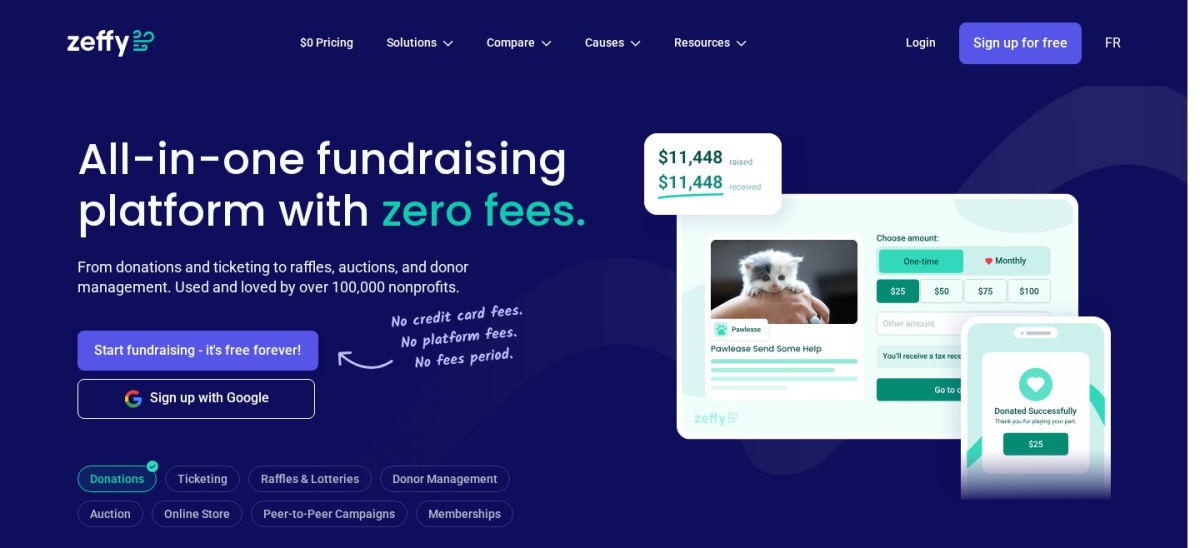
Zeffy homepage, captured Nov 2026.
Zeffy is only for nonprofits, and within that limit it is unusually generous. There is no platform fee for tickets, donations, raffles, auctions or memberships, and the company earns money from optional tips that donors can add or remove at checkout, so a small charity keeps every ticket dollar with the mission.
The trade off is scope. Zeffy is not a general ticketing marketplace for commercial promoters, and very large festivals may need deeper seating or access control tools. It suits schools, churches, rescue charities and arts nonprofits that sell gala or fundraiser tickets.
What we like
Highest G2 rating here at 4.9 out of 5
No platform or processing fees for nonprofits
Tickets plus donations and memberships in one place
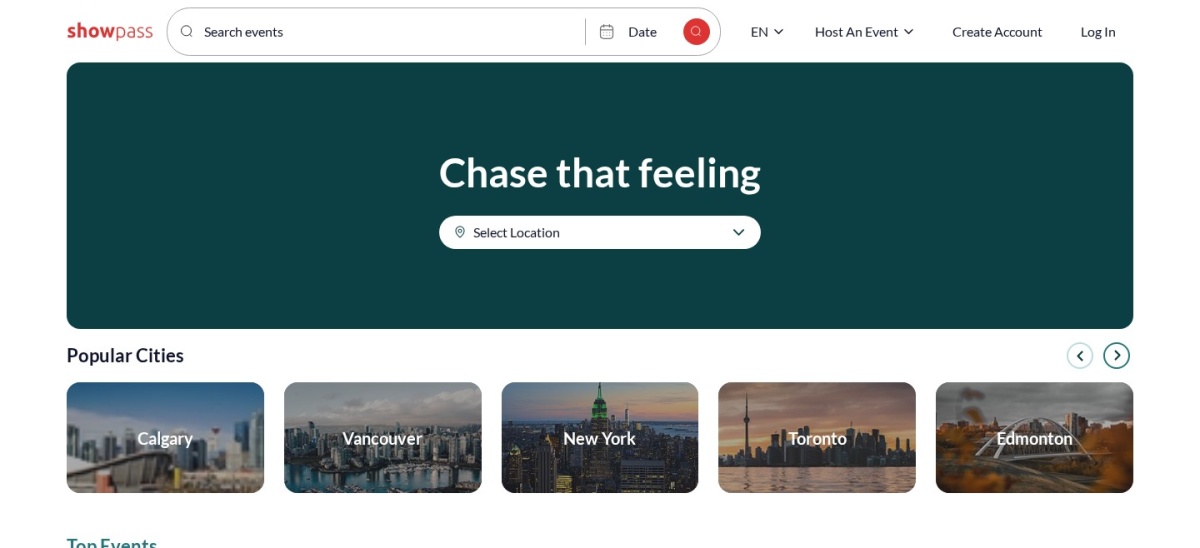
Showpass is a ticketing platform focused on the live entertainment world, from concerts and comedy to festivals and venue series. Buyers can browse events, buy in the app and manage tickets on a phone, which fits last-minute gig decisions, and organisers get tools for hosting events, managing organisations and promoting shows.
The trade off is pricing clarity. Showpass publishes pricing through its organiser pages rather than a single headline rate, so request a quote for your ticket price and volume and confirm who pays the fee. It suits venues and promoters running a regular programme of shows.
4.7/5on Google Play (96,451 reviews, checked Nov 2026)
Pricing13%/ticket
Best for music fans and gig promoters
Fee13% of face value
Charity tickets3%
Free ticketsFree
Google Play rating4.7/5 (96,451 reviews)
dice.fm
DICE homepage, captured Nov 2026.
DICE is a music ticketing app that built its name on gigs, and that focus shows in the buyer experience. Prices are shown upfront, tickets live in the app, and recommendations are based on artists and venues a person already follows, with about 10 million monthly active fans and waiting lists for sold-out shows.
The trade off is coverage and pricing. Its strength is strongest in major music cities, organiser pricing is agreed directly rather than published, and US self sign-up terms set a 13 percent service fee. It suits music venues and promoters in cities where DICE already has fans.
What we like
Upfront all-in pricing for buyers
Personalised recommendations drive sales
Strong music venue network
Watch out for
Organiser pricing is not published as a simple rate
Ticketmaster is the enterprise ticketing system for large venues, promoters and tours. It provides primary ticket sales, venue box office operations, presales, mobile delivery and access control at a scale no other tool here matches, with 346 million fee-bearing tickets sold in 2025.
The trade off is price opacity and a thin review base. There is no public rate for organisers, fees are negotiated per contract, and only 15 G2 reviews sit behind its rating. It suits arenas, stadiums and major tours that need high-throughput onsales and fast mobile entry.
Free events are free on most platforms here. Eventbrite, Ticket Tailor, Humanitix, Tito, Zeffy and Showpass all let you publish free events at no cost.
Paid tickets always cost something. The cheapest published fee is $0 on Zeffy for nonprofits, then flat fees from $0.30 a ticket on Ticket Tailor with prepaid credits.
Marketplaces charge more but bring buyers. Eventbrite and DICE cost more per ticket than flat-fee rivals, but their discovery audience can sell tickets you would not reach alone.
For a first event, the fee difference is small in cash terms. The bigger choice is whether you need an audience or just a checkout.
How we chose
We started from the ticket selling platforms most often compared for organisers, then kept those with a verifiable G2, Trustpilot or Google Play rating and a real ticketing feature set.
Prices come from each vendor's pricing page, checked on 26 November 2026, with Eventbrite's 3.7 percent plus $1.79 fee confirmed on its official pricing page that day. Ratings and review counts come from G2 on the same day. Where a vendor shows a sale, the list shows the regular price.
We left out tools with no verifiable rating and resale marketplaces that do not sell your own event's tickets. No vendor paid for a place, and we do not claim hands-on testing for this list.
How to choose a platform to sell tickets online
Start with your real ticket price, then work out the total cost per ticket sold.
Work out the total cost on your real ticket price. Add the platform fee and the processing fee together, then check who pays each one.
Check when the money arrives. Weekly payouts and direct-to-your-account payments beat post-event payouts when deposits are due.
Test the day-of-event tools. A free check-in app, offline scanning and guest list search matter more on a busy door than a pretty page.
Confirm refunds and cancellations. Ask whether fees are returned on refunded tickets and who covers chargebacks before you publish.
FAQ
What is the best platform to sell tickets online?
Eventbrite is the best overall pick for most organisers. It has the largest built-in audience, free listings for free events, and a 4.3 out of 5 G2 rating across 915 reviews, with paid tickets at 3.7 percent plus $1.79 each.
What is the cheapest platform to sell tickets?
Zeffy is the cheapest for registered nonprofits at $0, funded by optional donor tips. For everyone else, Ticket Tailor is cheapest at $0.85 a ticket pay as you go, or from $0.30 with prepaid credits.
How much does Eventbrite charge per ticket?
Eventbrite charges 3.7 percent plus $1.79 per paid ticket, plus 2.9 percent payment processing per order. Free events are free, and buyers pay the fees by default unless the organiser absorbs them.
Does Ticketmaster publish its fees?
No. Ticketmaster does not publish a rate for organisers, and its help center says service fees are generally negotiated and shared between the parties organising the event. Its self-service arm Universe lists 2 percent plus $0.59 per ticket.
Is DICE free for organisers?
No. DICE folds a 13 percent service fee into an all-in fan price under US self sign-up terms, with 3 percent for charity tickets and a 10 percent box-office fee. Established venues onboard through negotiated partnership deals.
Which ticket platform pays out fastest?
TicketSpice pays weekly, which is the fastest published payout here, and Ticket Tailor sends money straight to your own Stripe, PayPal or Square account. Eventbrite usually pays after the event ends.
SaaS SEO and WordPress specialist with about 8 years of experience. Rakib compares WordPress plugins, themes, hosting and software using public pricing, documentation and user reviews. See how we rank.