Best Platform for Content for Retail in 2026: 7 Tools Compared
WLWPLegible EditorsLast verified 23 Nov 2026How we rank12 min read
★ Short answer
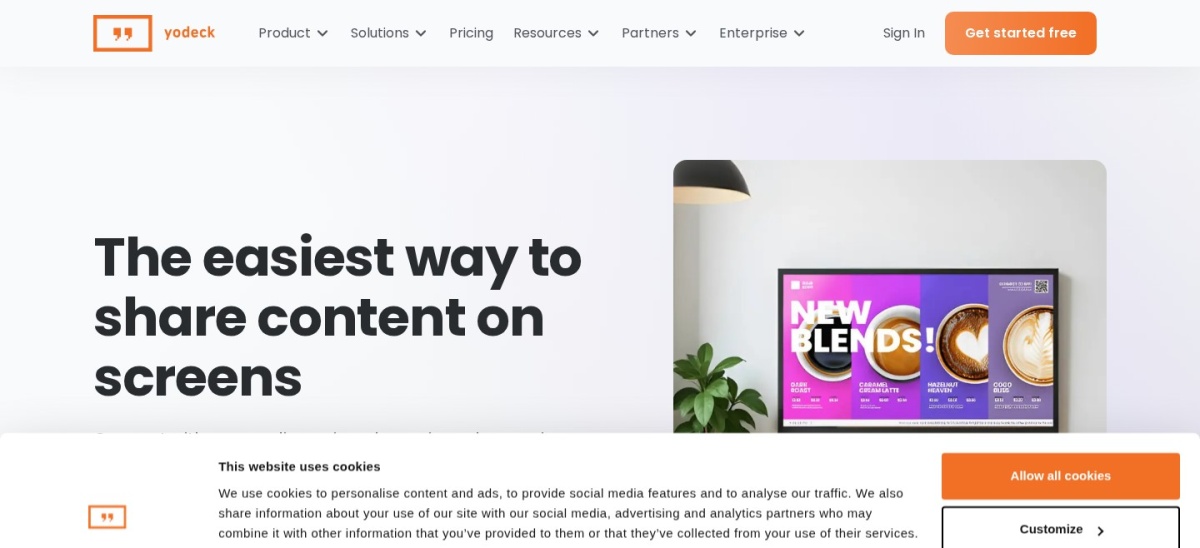
Yodeck is the best platform for retail content for most stores: one screen is free, paid screens cost $8 each a month, and it has a free player on annual plans. OptiSigns is the best pick for app-heavy content, and Raydiant is the best pick for multi-location retail chains.
How we make this list: we compare pricing pages, product documentation and public user reviews, then re-check every price before each update. No product paid for a place. Disclosure.
Yodeck is the best platform for retail content for most stores, with one screen free and paid screens at $8 each a month.
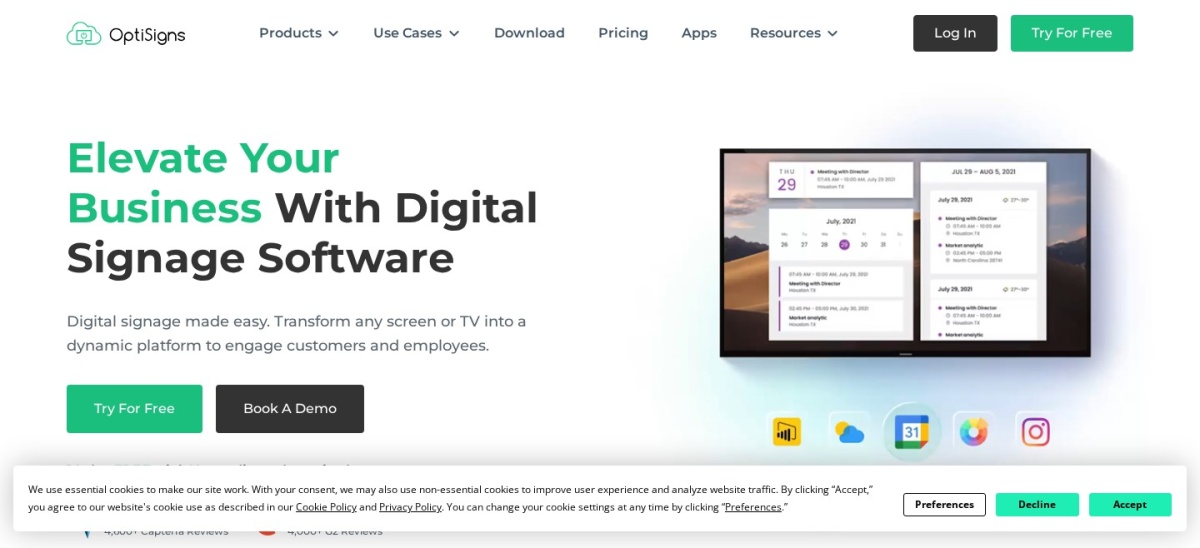
OptiSigns is the best pick for app-heavy content, with over 140 integrations and three free screens.
ScreenCloud is the best pick for polished multi-location retail, but at $20 a screen a month it costs roughly double most rivals.
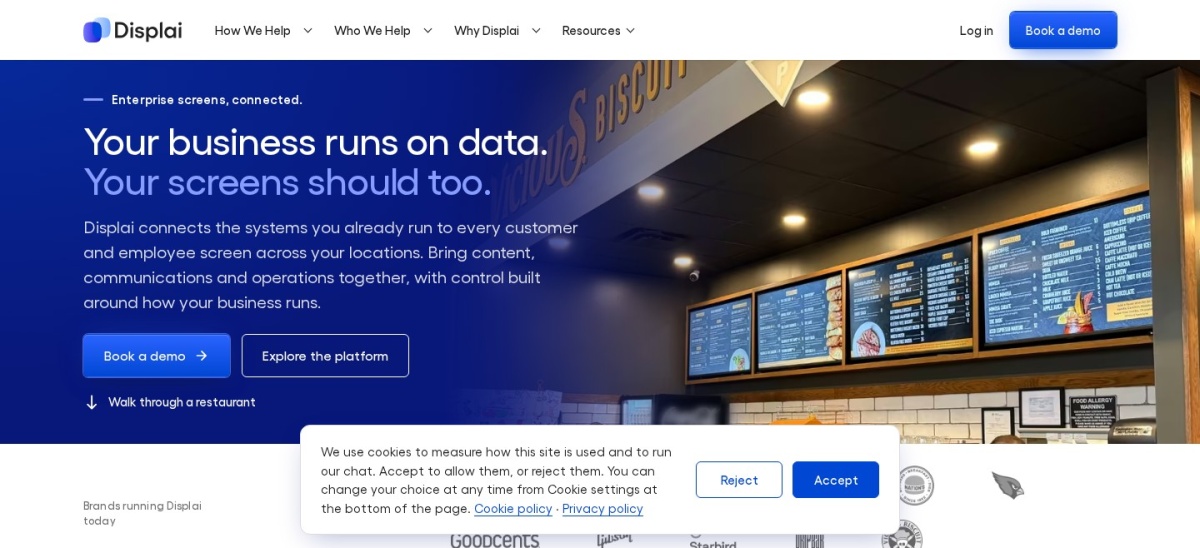
Raydiant, now Displai, is the best pick for multi-location retail chains, with POS integrations and kiosk workflows, but pricing is quote-only.
Juuno is the cheapest full-featured option at $5 a screen a month, though it has far fewer reviews than the established tools.
What a retail content platform does
A TV on the wall is cheap. The software that keeps its content current across locations is the recurring cost, and it is priced per screen, which means small price differences compound fast across a network.
A retail content platform schedules promotions, menus and announcements by time of day, manages dozens of screens from one dashboard, and proves content played. It also handles permissions so local staff cannot break the brand look.
Retail buyers need different things from office buyers. Stores want menu sync with the POS, promo scheduling and kiosks, while offices want dashboards and internal comms. Our guide on the best digital signage software compares more signage tools.
Hardware is the hidden half of the bill. Budget $99 to $349 per screen for a player plus the display itself, and remember that a 10-screen network at $8 a screen costs $960 a year, while at $30 a screen it costs $3,600.
Yodeck is the tool most small retailers should try first. One screen is free forever with Basic features and no credit card, paid screens cost $8 each a month, and annual plans bundle a free Raspberry Pi player per screen.
The trade off is hardware and the free-tier cliff. The player story centers on Raspberry Pi, and adding a second screen makes every screen billable, so growth from one to two screens costs $16 a month. It suits single stores and small chains starting with in-store screens.
What we like
One screen free forever
Annual plans bundle a free player per screen
Clear tiered pricing, $8 to $16
Watch out for
Hardware story centers on Raspberry Pi
Adding a second screen makes every screen billable
OptiSigns wins the app-library race, with over 140 integrations pulling content from Google Slides, YouTube, social feeds and more into screen layouts. The free tier covers three screens, and Standard at $10 per screen a month adds schedules, zones and templates.
The trade off is the pricing curve. The $10 entry is attractive, but approvals and proof of play sit at $15, kiosks at $30, and the free tier shows OptiSigns branding with a 25 MB file cap. It suits stores that want a deep app ecosystem without enterprise pricing.
ScreenCloud is the polished option for retailers with many locations. Clean templates cover company updates, KPI walls and promotions, deep integrations connect Slack, Teams and BI tools, and an enterprise security layer with SSO and MFA survives IT review.
The trade off is price. Core starts at $20 per screen a month billed annually, $24 on monthly billing, and Pro runs $30 with a five-screen minimum, so a 200-screen network becomes a budget conversation. It suits franchises and brands where design quality and IT governance matter.
Raydiant, now rebranded as Displai, is the enterprise retail pick. It offers POS integrations, menu sync, kiosk workflows and a platform used for global QSR and retail rollouts, with design services for brands that do not want to build content themselves.
The trade off is the sales gate. Pricing is custom quote only, reviewers describe it as premium per-screen SaaS plus player hardware costs, and third-party reviews flag support responsiveness. It suits chains that need menu board sync with their POS and kiosk workflows at scale.
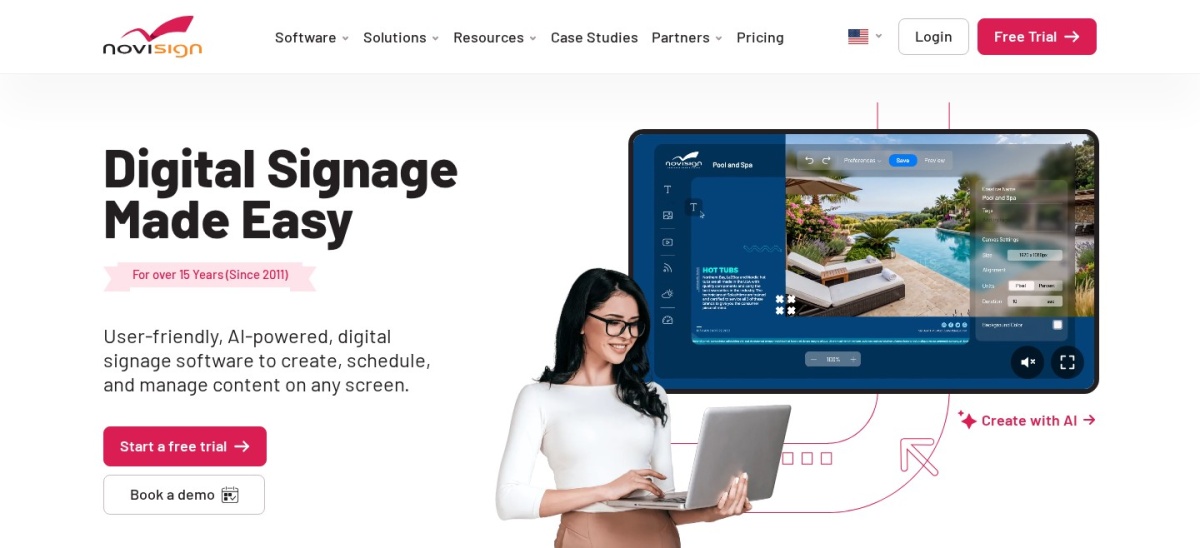
NoviSign has invested in screen interactivity longer than most competitors. Touch widgets, quizzes, surveys and feedback forms ship without custom development, which is why it shows up in retail showrooms where a screen that answers questions removes work from staff.
The trade off is price and polish. The entry rate sits at the top of the SMB range at $14 per screen a month, and reviewers call the interface dated next to newer tools. It suits interactive and kiosk-style deployments where touch matters more than looks.
What we like
Longest track record in touch interactivity
Free setup and training
Power BI and Tableau integrations on Business Plus
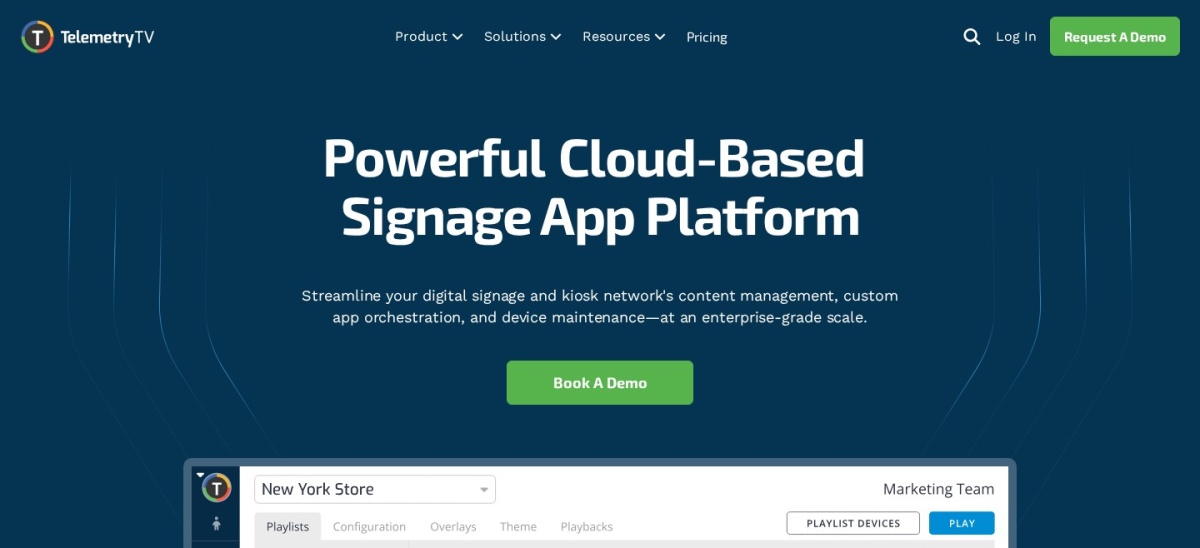
TelemetryTV treats the screen as an instrument, not a poster. It embeds dashboards from BI tools, pulls live data through APIs, supports live video streaming and can interrupt normal content with alerts when thresholds are crossed.
The trade off is creative depth. Teams producing polished retail promotions find the design tooling less developed than ScreenCloud or Fugo, and usually design elsewhere and import finished files. It suits operations floors and back-of-store screens where the number on the wall must be current.
What we like
Built for live data, BI dashboards and APIs
Low entry price for a data-capable platform
No minimum devices on Entry and Core tiers
Watch out for
Creative and design tooling is thinner than rivals
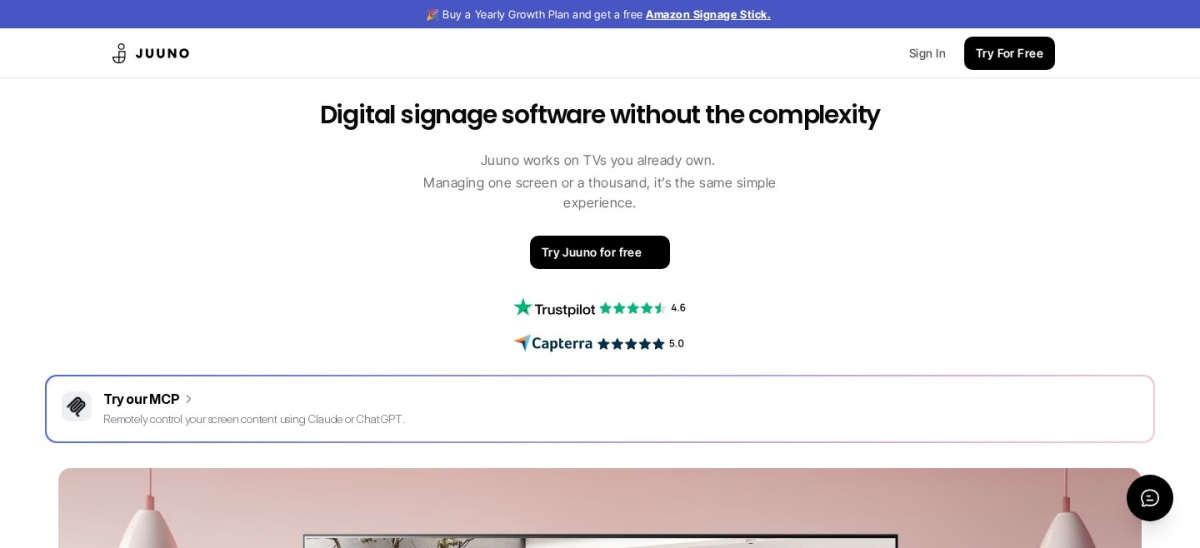
Juuno is the cheapest full-featured option in this list at $5 per screen a month for the Business plan. It runs on a $99 Amazon Signage Stick or a smart TV browser, so hardware stays cheap, and the Growth plan at $9 adds proof-of-play reporting and API access.
The trade off is maturity. Juuno has fewer published reviews and community references than Yodeck or ScreenCloud, which makes internal buy-in harder for risk-averse IT teams, and its app library is smaller. It suits budget-conscious small retailers that can live with a newer name.
What we like
Lowest full-featured per-screen price
Flat regional pricing with no VAT surprises
Dayparting-first scheduler
Watch out for
Newer vendor with fewer peer references
Smaller app library than OptiSigns or ScreenCloud
Integration ecosystem still growing
Growth $9/screen/mo; White Label $100/mo for 20 screensVisit juuno.co
Free vs paid: what you give up
Free tiers cover one to three screens well. Yodeck is free for one screen and OptiSigns for three, which is enough to run a small shop for nothing, though OptiSigns shows its branding on the free tier.
Paid tiers mostly add screens and control. Approvals, proof-of-play reporting, SSO and kiosk features sit one to three tiers above the headline rate, and each jump can double or triple the per-screen cost.
Enterprise retail is a different purchase. Raydiant is quote-only with premium per-screen SaaS plus player costs, and it suits chains that need POS sync. Our best retail advertising platforms guide compares more ways to reach shoppers.
If you run under five screens, a free tier or Juuno at $5 a screen is enough. Once you manage dozens of screens across locations, central management and device health monitoring justify the higher tiers.
How we chose
We shortlisted retail content platforms with a real 2026 market presence, from free tiers to quote-only enterprise tools for chains.
Prices come from vendor pricing pages and G2, checked on 23 November 2026. Ratings come from G2 on the same day. Where a vendor shows a sale, the list shows the regular price.
We left out tools with no rating on G2 or Capterra. No vendor paid for a place, and this list is based on pricing, docs and reviews, not on using the tools ourselves.
How to choose a platform for retail content
Start with screen count, then check content type and budget.
Count your screens. Digital signage is priced per screen per month, so a 10-screen network costs $600 to $3,600 a year before hardware. Price each tool at your screen count.
Match content to the tool. Menu boards that follow the register need POS sync, while promo loops need scheduling and templates. Interactive screens need touch widgets, not just playlists.
Price the tier you will end up on. Approvals, proof of play, SSO and kiosks sit one to three tiers above the headline rate. Find which tier carries the features you need before comparing prices.
Budget the hardware too. Most platforms run on a smart TV browser or a $99 stick, but dedicated players cost $99 to $349 each. Add displays, mounts and cabling to the first-year total.
FAQ
What is the best platform for content for retail?
Yodeck is the best pick for most stores. One screen is free forever, paid screens cost $8 each a month, and it is rated 4.7 out of 5 on G2 from over 3,000 reviews.
How much does retail content software cost?
Published cloud rates in 2026 run $5 to $30 per screen per month. Juuno costs $5, Yodeck $8, OptiSigns $10, NoviSign $14 and ScreenCloud $20, while enterprise tools such as Raydiant are quote-only.
Is there free digital signage software for retail?
Yes, with limits. Yodeck is free forever for exactly one screen, and OptiSigns is free for up to three screens with branding. ScreenCloud, NoviSign and Raydiant offer trials only, with no permanent free tier.
Do I need special hardware for retail screens?
Not strictly. Most platforms run on a smart TV browser or a $99 Amazon Signage Stick. For reliability at scale, vendors recommend dedicated players from $99 to $349 each, plus the display itself.
What is the difference between digital signage and a smart TV?
A smart TV can play a slideshow, but it cannot schedule content by time of day, manage dozens of screens from one dashboard, or prove content played. Signage software is the management layer for every screen.
Which platform is best for a multi-location retail chain?
Raydiant, now Displai, is built for multi-location retail chains, with POS integrations, menu sync and kiosk workflows. ScreenCloud is the best pick if you want polished screens with enterprise governance and a public price.