FortiGate is the best network security tool for most teams, with fast inspection and built-in SD-WAN at a strong price per protected megabit. Palo Alto Networks suits security-mature enterprises, while NordLayer is the pick for small teams that want a published price.
How we make this list: we compare pricing pages, product documentation and public user reviews, then re-check every price before each update. No product paid for a place. Disclosure.
FortiGate leads on price and performance, with a 4.6 rating on G2 from 92 reviews.
Sophos Firewall and WatchGuard share the highest rating here at 4.7 out of 5 on G2.
Most firewalls here are quote-only, so buyers must get a reseller or partner quote.
NordLayer is the only tool here with a published price, at 8 dollars per user a month for Lite.
Zscaler Internet Access needs no appliance at all, and holds a 4.4 rating on G2 from 323 reviews.
What network security tools should cover
Network security tools sit at the edge of the network and decide what gets in. Firewalls inspect traffic, block threats and connect branch offices, while cloud tools such as Zscaler and NordLayer protect users without an appliance.
The market splits into appliances and cloud services. FortiGate, Palo Alto, Sophos, WatchGuard, Check Point and SonicWall sell appliances with security subscriptions. Zscaler and NordLayer are cloud-delivered, so there is no hardware to buy.
Pricing is mostly hidden. Entry hardware for a FortiGate 40F streets near 300 to 700 dollars, and a Palo Alto PA-440 near 1,750 dollars, but the security subscriptions on top usually cost more over three to five years.
Independent testing matters here. CyberRatings gave Check Point a 100 percent block rate in early 2025, and Juniper and Cisco scored far apart in the same tests. Our guide to email and SMS marketing software shows the same lesson: vendor claims need an outside check.
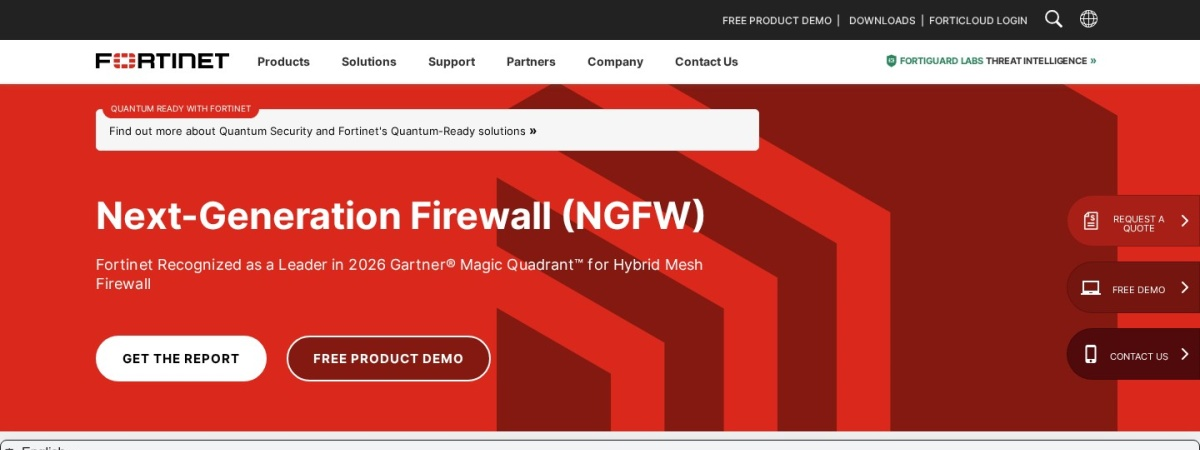
Fortinet FortiGate is a next-generation firewall from Fortinet that packs deep packet inspection, intrusion prevention, VPN and SD-WAN into one appliance. It holds a 4.6 rating on G2 from 92 reviews, its purpose-built ASICs keep throughput high when every security feature is on, and the entry 40F model streets near $300 to $700 hardware only.
The trade off is Fortinet does not publish list pricing, so buyers must quote through a reseller, and security bundles add 60 to 90 percent of hardware cost a year. It suits any size team with distributed sites that wants price and performance.
Palo Alto Networks NGFW homepage, captured Nov 2026.
Palo Alto Networks NGFW is a next-generation firewall family from Palo Alto Networks, built around App-ID application control and machine-learning threat prevention. It holds a 4.5 rating on G2 from 124 reviews, the entry PA-440 streets near $1,750 hardware only, and Palo Alto led the Gartner Magic Quadrant for completeness of vision in 2025.
The trade off is it is quote based with per-service subscriptions, and the full stack is the most expensive route in this list for most buyers. It suits security-mature enterprises with hybrid-cloud policy needs.
Sophos Firewall is a next-generation firewall for small and mid-sized businesses, with Synchronized Security that links the firewall to Sophos endpoints. It holds a 4.7 rating on G2 from 875 reviews, the largest firewall review base in this list, and when an endpoint detects an infection it tells the firewall to isolate the machine automatically.
The trade off is pricing is quote via partners with no published list price, and the deepest value comes when you also run Sophos endpoints. It suits SMBs and MSP-managed networks with small security teams.
WatchGuard Firebox is a small-business firewall sold through partners and MSPs, built around a one-SKU Total Security Suite that bundles every security service. It holds a 4.7 rating on G2 from 266 reviews, and the single-SKU bundle means buyers do not have to assemble licences service by service.
The trade off is it is sold only through partners and MSPs, so there is no direct list price and no direct purchase route. It suits small businesses that want a provider to configure and manage the firewall.
Check Point Quantum is a next-generation firewall for regulated enterprises, built around ThreatCloud AI threat intelligence and high prevention accuracy. It holds a 4.5 rating on G2 from 596 reviews, and CyberRatings gave it a 100 percent block rate in its first-quarter 2025 test, the top prevention score reported here.
The trade off is pricing is quote based with no published list price, and the platform is built for enterprises, not small teams. It suits regulated industries where prevention accuracy matters most.
SonicWall Next Generation Firewall homepage, captured Nov 2026.
SonicWall Next Generation Firewall is a budget next-generation firewall for small businesses and branch offices, with real-time deep memory inspection for hidden malware. It holds a 4.1 rating on G2 from 155 reviews, the entry TZ470 streets near $1,015 hardware only, and its RTDMI engine inspects memory for threats that hide from file scans.
The trade off is it has the lowest G2 rating in this list at 4.1, and reviewers report mixed experiences with reporting and firmware stability. It suits budget-conscious SMB and branch offices.
Zscaler Internet Access homepage, captured Nov 2026.
Zscaler Internet Access is a cloud-delivered service that secures connections between users and applications without relying on appliances or traffic backhauling. It holds a 4.4 rating on G2 from 323 reviews, it is the only appliance-free pick in this list, and go-live in under a day is the most common reported range.
The trade off is pricing is custom with no published list price, and strict filtering can block legitimate sites until policies are tuned. It suits mobile- and cloud-first organisations that want no hardware.
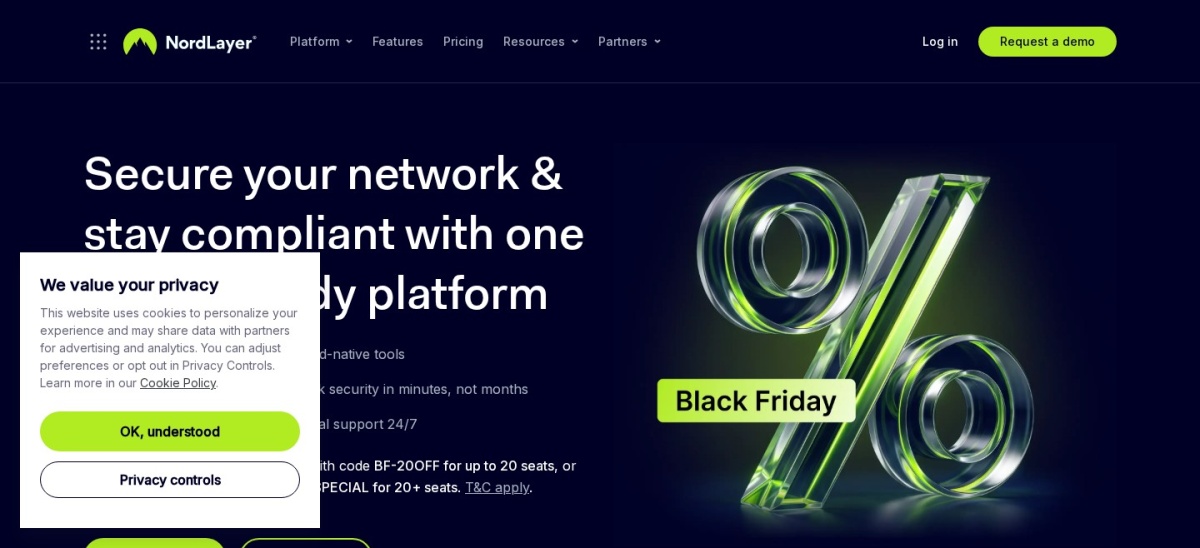
NordLayer is a network access security service from the Nord Security team, with a business VPN, zero-trust access and a central control panel. Lite costs $8 per user a month, Core is $11 and Premium is $14, and it holds a 4.3 rating on G2 from 125 reviews, with apps for Windows, macOS, Linux, Android and iOS.
The trade off is advanced configuration options are limited, and some features such as split tunnelling need a support request rather than a self-serve setting. It suits small teams that want secure remote access at a published price.
Appliance vs cloud: which network security fits you?
Appliances suit offices with a fixed edge. You buy the box, add security subscriptions and manage it on site or through an MSP.
Cloud tools suit remote and hybrid teams. Zscaler and NordLayer protect users wherever they work, with no hardware to ship or patch.
The total cost is what matters. Entry hardware looks cheap, but security subscriptions usually exceed the hardware cost over three to five years.
Run a proof of concept before you buy. Independent tests show wide gaps between vendors, and your own traffic is the only fair test.
How we chose
We started from the network security tools that appear most often in 2026 firewall and SASE shortlists, then kept those with a verifiable G2 rating and a clear network protection role.
Prices come from each vendor pricing page and G2 listing, checked on 26 November 2026. Ratings and review counts come from G2 on the same day. Where a vendor shows no price, the list shows Custom and says so.
We left out tools with no verifiable rating on G2, Capterra or Trustpilot. No vendor paid for a place, and we do not claim hands-on testing for this list.
How to choose a network security tool
Start with where your users work, then compare the five-year cost, not the hardware price.
Map where users work. Office-bound teams suit appliances. Remote and hybrid teams suit Zscaler or NordLayer.
Compare five-year cost. Add security subscriptions to the hardware price. Bundles often cost 60 to 90 percent of hardware a year.
Check independent test results. CyberRatings and Gartner results show wide gaps. Do not buy on vendor claims alone.
Run a proof of concept. Test with your own traffic and policies before signing a multi-year deal.
FAQ
What is the best network security tool?
FortiGate is the best pick for most teams, with fast inspection and built-in SD-WAN at a strong price per protected megabit. Palo Alto Networks suits security-mature enterprises, while NordLayer is the pick for small teams that want a published price.
How much does a next-generation firewall cost?
Entry hardware streets near 300 to 700 dollars for a FortiGate 40F and near 1,750 dollars for a Palo Alto PA-440, but security subscriptions on top usually cost more over three to five years. Most vendors quote through resellers.
Do I need a firewall if I use Zscaler?
Zscaler replaces the edge firewall for user traffic, since it inspects web traffic in the cloud. Offices with servers on site may still need a firewall for inbound traffic and network segmentation.
What is the difference between FortiGate and Palo Alto?
FortiGate wins on inspected throughput per dollar and built-in SD-WAN, while Palo Alto wins on application control and hybrid-cloud policy depth. Both are Leaders in the Gartner Magic Quadrant for hybrid mesh firewalls.
Is NordLayer good for small business network security?
Yes, it is the only tool here with a published price, at 8 dollars per user a month for Lite. It gives small teams a business VPN and zero-trust access without buying hardware.
Which firewall is best for small business?
Sophos Firewall and WatchGuard Firebox are the best small-business picks, both rated 4.7 out of 5 on G2. Sophos suits teams that also run Sophos endpoints, while WatchGuard suits teams that want an MSP to manage it.
SaaS SEO and WordPress specialist with about 8 years of experience. Rakib compares WordPress plugins, themes, hosting and software using public pricing, documentation and user reviews. See how we rank.