Best Multi-Channel Ecommerce Platforms in 2026: 7 Tools Compared
WLWPLegible EditorsLast verified 22 Nov 2026How we rank6 min read
★ Short answer
Shopify is the top multi-channel ecommerce platform, pairing built-in social and marketplace connections with a 4.5 rating across 6,764 Capterra reviews. BigCommerce fits growing catalogs needing built-in storefront tools without third-party gateway surcharges, while WooCommerce suits WordPress stores with a free core plugin.
How we make this list: we compare pricing pages, product documentation and public user reviews, then re-check every price before each update. No product paid for a place. Disclosure.
Shopify Basic starts at $29/mo billed yearly ($348/yr) with 2.9% + 30c online card processing on Shopify Payments.
BigCommerce Core starts at $29/mo billed yearly ($348/yr) for up to $30K in trailing 12-month sales.
WooCommerce has a free core WordPress plugin updated in November 2026, while hosting and extensions add separate costs.
Ecwid paid plans start at $5/mo ($60/yr) on Starter, with zero platform transaction fees charged by Ecwid.
ShipStation Starter begins at $14.99/mo ($179.88/yr) for shipping and multi-store order workflows.
What to look for in a multi-channel ecommerce platform
Selling across online storefronts, marketplaces, social shops, and physical locations requires centralized catalog and order tracking. When stock counts drift between channels, overselling creates cancellations and extra support work.
Check how each platform handles transaction fees and payment processors. Some hosted builders add a percentage fee if you use an external payment gateway, while sales volume caps can push a store into a higher tier.
Separate storefront builders from operations tools like inventory or shipping hubs. A store builder runs your checkout and product pages, whereas inventory and shipping software sync stock and labels across channels you already run.
Factor in annual versus monthly billing and add-on costs before committing. A low base subscription can rise once you add staff accounts, extra storefronts, third-party apps, or carrier label tiers.
4.5/5on Capterra (6,764 reviews, checked Nov 2026)
Starts at$29/mo
Best for broad multi-channel selling
Annual entry$29/mo ($348/yr)
Monthly entry$39/mo on Basic
Card rate (Basic)2.9% + 30c online
3rd-party fee2% on Basic
shopify.com
Shopify homepage, captured Nov 2026.
Shopify is a hosted commerce platform that connects an online storefront with social channels, marketplaces, and in-person checkout. Its Basic plan starts at $29 per month billed yearly ($39 monthly) and includes unlimited products, up to four inventory locations, and two staff accounts.
The trade off is that using a payment provider outside Shopify Payments adds a 2% fee on Basic, and paid apps or themes raise monthly spend. It suits merchants wanting a hosted storefront with broad channel integrations.
What we like
Large app store and sales channel ecosystem
Basic plan supports up to four inventory locations
24/7 support included on every plan
Watch out for
Extra 2% fee on Basic if using third-party gateways
Paid apps and premium themes add to ongoing costs
Higher plans lower online card rates and add staff accounts, reporting, and more inventory locations.Visit shopify.com
02
BigCommerce
4.4/5on Capterra (349 reviews, checked Nov 2026)
Starts at$29/mo
Best for growing catalogs and API flexibility
Annual entry$29/mo ($348/yr)
Monthly entry$39/mo on Core
Sales cap (Core)Up to $30K TTM GMV
Open gateway fee2.0% on Core
bigcommerce.com
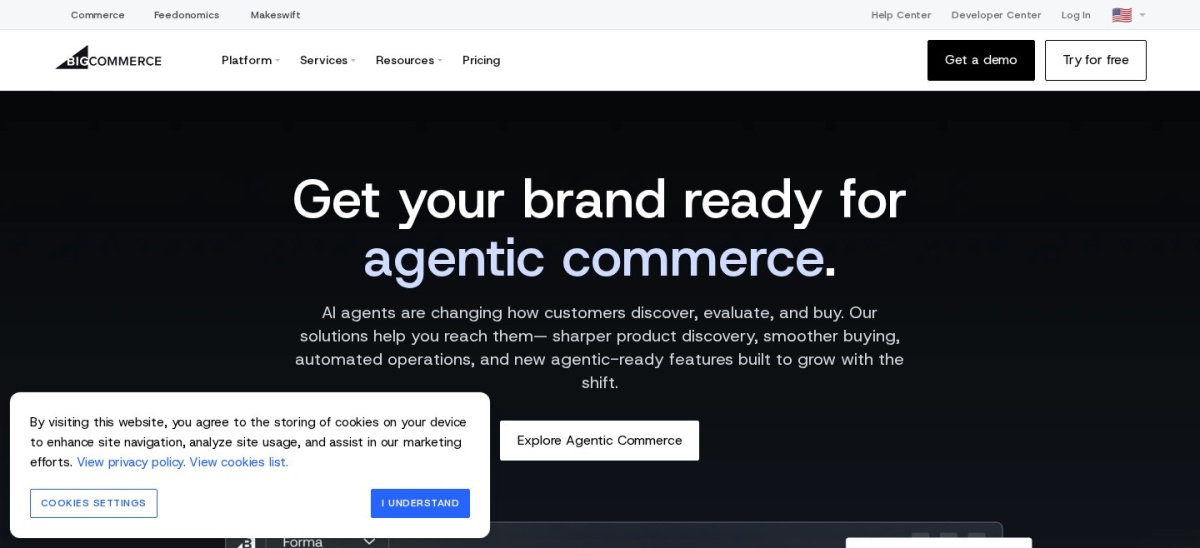
BigCommerce homepage, captured Nov 2026.
BigCommerce is a hosted ecommerce platform with multi-storefront options, catalog tools, and API support for multi-channel selling. Its Core plan starts at $29 per month billed annually ($39 monthly) for up to $30,000 in trailing 12-month sales.
The trade off is that crossing the Core sales cap triggers an upgrade to Growth, and phone support on Core costs extra. It suits growing brands that want built-in commerce tools and multi-storefront options.
What we like
Zero platform fee when using embedded payment providers
Multi-storefront add-ons available on paid plans
Built-in multi-channel and catalog management features
Watch out for
Core tier caps trailing 12-month GMV at $30,000
Phone support requires an add-on on the Core plan
Growth and Scale raise sales limits, add phone support, and increase included inventory locations.Visit bigcommerce.com
03
WooCommerce
4.5/5on WordPress.org (4,006 reviews, checked Nov 2026)
PriceFree
Best for WordPress sites wanting full control
Core pluginFree on WordPress.org
Active installs7M+ sites
WP.org rating4.5 / 5 (4,006)
Hosting & add-onsSeparate from plugin
woocommerce.com
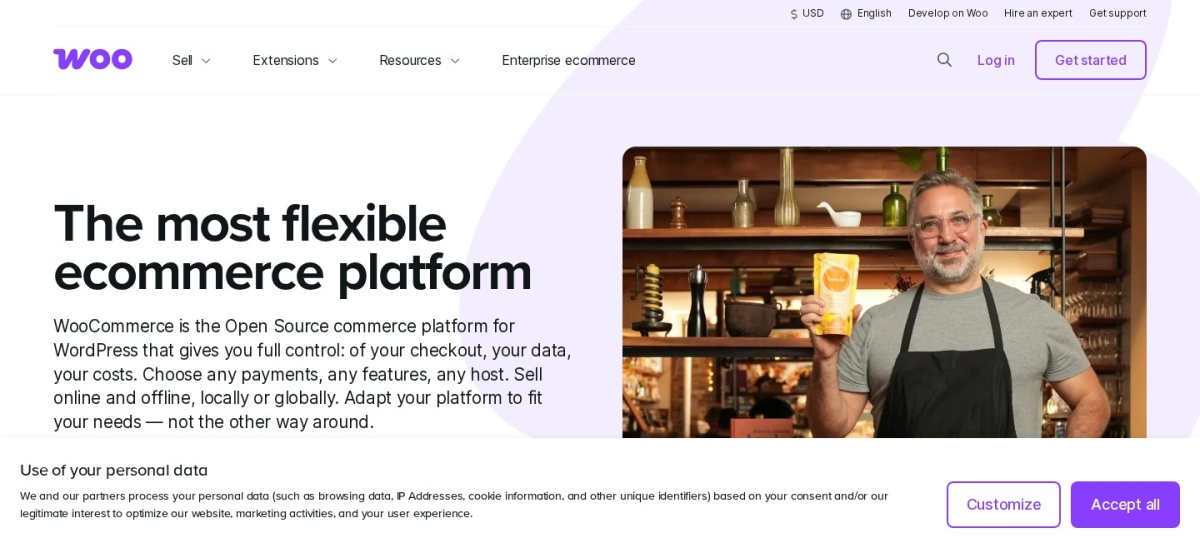
WooCommerce homepage, captured Nov 2026.
WooCommerce is an open-source WordPress commerce plugin with over 7 million active installations and a 4.5 out of 5 rating on WordPress.org. The core plugin is free to install and connects to payment gateways, marketplaces, and shipping extensions.
The trade off is that you manage your own WordPress hosting, security, updates, and paid extensions, so total costs vary by setup. It suits site owners already on WordPress who want full control over their store.
What we like
Free open-source core plugin on WordPress.org
Full code and store control on WordPress
Large library of extensions and themes
Watch out for
Hosting, security upkeep, and extensions are extra
Requires more technical maintenance than hosted builders
Paid extensions and managed WordPress hosting add specialized shipping, marketplace, and subscription tools.Visit woocommerce.com
04
Ecwid
4.6/5on Capterra (582 reviews, checked Nov 2026)
Starts at$5/mo
Best for embedding a store across sites and social
Entry plan$5/mo on Starter
Yearly cost$60/yr on Starter
Ecwid transaction fee$0 across plans
Capterra rating4.6 / 5 (582)
ecwid.com
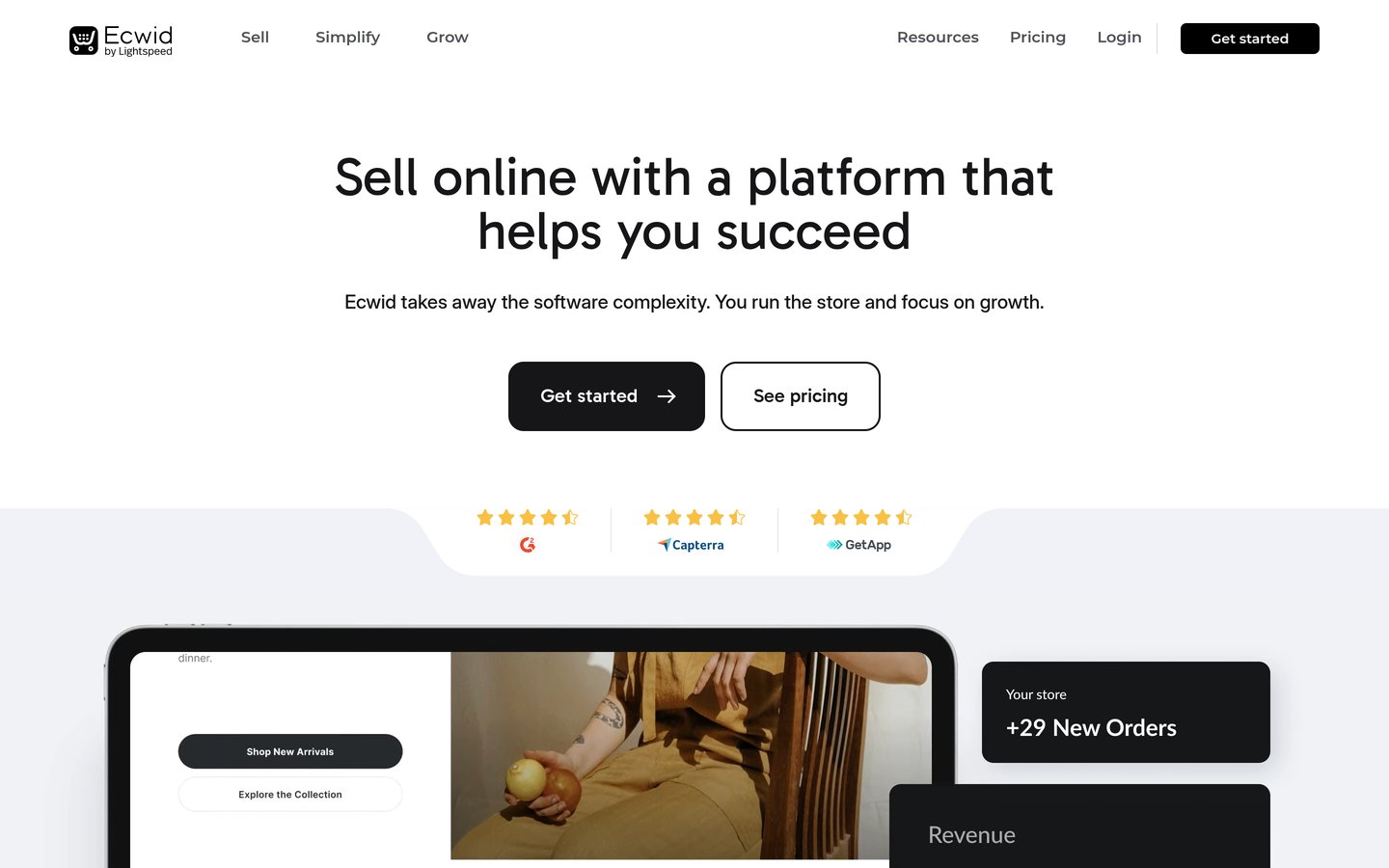
Ecwid homepage, captured Nov 2026.
Ecwid is a hosted shopping cart that embeds into existing websites and syncs products with social channels, mobile POS, and marketplaces. Its Starter plan starts at $5 per month with zero Ecwid transaction fees per sale.
The trade off is that Starter caps product counts and locks higher-tier tools like larger catalogs or staff accounts behind Venture, Business, and Unlimited. It suits sellers adding multi-channel checkout to an existing site.
What we like
Low $5/mo Starter entry price
Zero Ecwid-charged transaction fees on sales
Embeds into existing sites and connects social channels
Watch out for
Starter limits product count and catalog features
Higher tiers cost significantly more as catalogs grow
Venture, Business, and Unlimited expand product limits, staff accounts, and catalog tools.Visit ecwid.com
05
Squarespace
4.6/5on Capterra (3,435 reviews, checked Nov 2026)
Starts at$19/mo
Best for design-led small catalogs
Annual entry$19/mo ($228/yr)
Monthly entry$25/mo on Basic
Capterra rating4.6 / 5 (3,435)
Entry fee note2% physical / 7% digital
squarespace.com
Squarespace homepage, captured Nov 2026.
Squarespace is a hosted website builder known for design templates, integrated hosting, and built-in selling and social promotion tools. Its Basic plan starts at $19 per month billed annually ($25 monthly) with two contributors.
The trade off is that Basic charges a 2% fee on physical sales and 7% on digital sales, while Core and Plus lower fees and add code injection. It suits design-focused brands with smaller or simpler catalogs.
What we like
Polished templates and straightforward visual editing
Hosting, SSL, and basic site metrics included
Strong Capterra rating across 3,435 reviews
Watch out for
Entry Basic plan charges sales fees on physical and digital items
Less suited to complex multi-warehouse inventory workflows
Core, Plus, and Advanced reduce or remove sales fees and unlock custom code and commerce APIs.Visit squarespace.com
06
Wix
4.4/5on Capterra (10,806 reviews, checked Nov 2026)
Starts at$17/mo
Best for visual site building with simple selling
Annual entry$17/mo ($204/yr)
Store plansCore ($29/mo) & up
Capterra rating4.4 / 5 (10,806)
Storage (Light)2 GB storage space
wix.com
Wix homepage, captured Nov 2026.
Wix is a drag-and-drop website builder that combines site design, hosting, and commerce tools across tiered plans. Its Light plan starts at $17 per month billed annually ($204 yearly) with 2 GB of storage and two collaborators.
The trade off is that online payment and ecommerce features start on Core ($29/mo) and Business ($39/mo), while Light lacks full store checkout. It suits small businesses wanting an all-in-one site and store builder.
What we like
Low $17/mo entry tier with visual drag-and-drop editing
Core and Business plans add payments, catalog, and social selling
Large review footprint on Capterra
Watch out for
Entry Light plan does not include full online store selling
Storage and collaborator limits scale by tier
Core, Business, and Business Elite add payment acceptance, product catalogs, tax tools, and more storage.Visit wix.com
07
ShipStation
4.6/5on Capterra (963 reviews, checked Nov 2026)
Starts at$14.99/mo
Best for multi-channel shipping and order fulfillment
Entry plan$14.99/mo on Starter
Yearly cost$179.88/yr (50 shipments)
Integrations300+ store & carrier links
Capterra rating4.6 / 5 (963)
shipstation.com
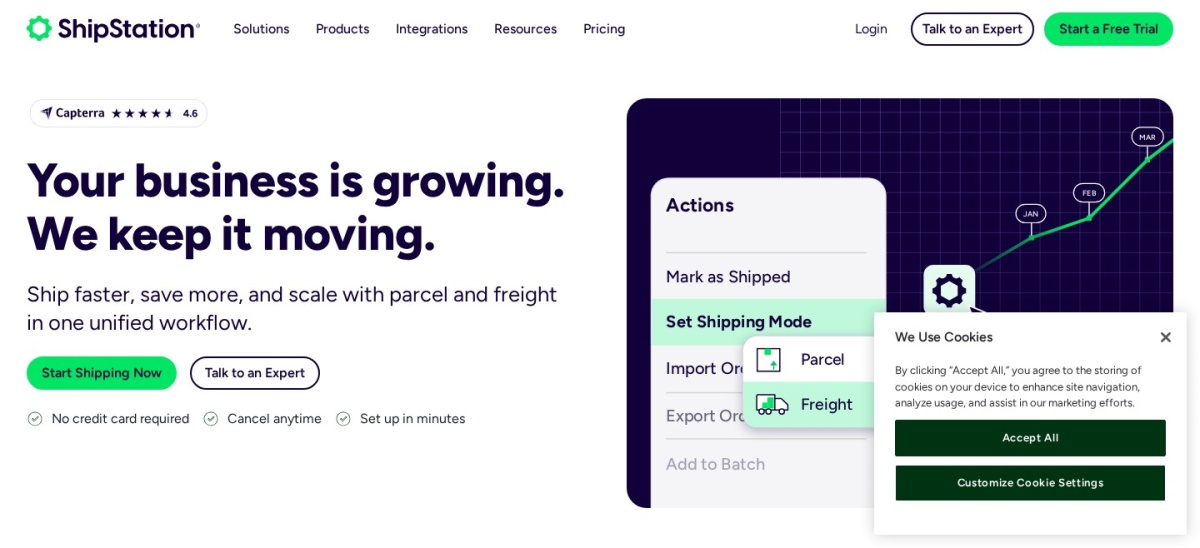
ShipStation homepage, captured Nov 2026.
ShipStation is a shipping and order fulfillment platform that connects over 300 store, marketplace, and carrier integrations. Its Starter plan begins at $14.99 per month for 50 shipments with automated rate shopping and return labels.
The trade off is that it acts as a fulfillment hub rather than a full storefront builder, and monthly fees rise with shipment volume. It suits sellers managing shipping across multiple carts and marketplaces.
What we like
Starter plan begins at $14.99/mo for up to 50 shipments
Connects 300+ integrations and supports unlimited store links
Includes discounted carrier rates and return labels
Watch out for
Does not replace a public storefront or product catalog site
Higher shipment tiers increase monthly costs
Standard and Premium add more users, warehouse management, shipping API access, and higher shipment caps.Visit shipstation.com
Storefront builders vs. shipping and inventory tools
Hosted platforms like Shopify, BigCommerce, Squarespace, and Wix give you a storefront, checkout, and multi-channel connections in one system. WooCommerce pairs with WordPress so you control hosting and extensions separately.
Tools like ShipStation focus on post-order shipping, labels, and carrier rates across existing stores and marketplaces. Many multi-channel sellers pair a storefront platform with a dedicated shipping or inventory tool as order volume grows.
How we chose
We selected established multi-channel ecommerce platforms and shipping tools based on active market adoption, published pricing tiers, and verified review profiles.
All prices, plan limits, and ratings were checked on 22 Nov 2026 from official vendor pricing pages, WordPress.org, and Capterra.
We excluded platforms without clear public entry pricing or those that do not fit general multi-channel commerce comparison. No vendor paid for a place, and we do not claim testing for this list.
How to choose the right platform for your channels
Follow these four steps to narrow down a multi-channel setup that fits your catalog and budget:
List every sales channel you plan to run this year. Map out your web storefront, social shops, marketplaces, and physical point of sale so you confirm native or app support before signing up.
Calculate total costs beyond the base monthly rate. Include annual versus monthly billing, payment processing rates, third-party gateway fees, and any paid apps or themes you need.
Check order, inventory, and sales volume caps. Review monthly shipment limits, location counts, and GMV thresholds that can move your account into a higher tier.
Decide how much technical upkeep your team wants to own. Hosted builders handle infrastructure and updates for you, while self-hosted WordPress setups trade convenience for deeper customization.
FAQ
What is a multi-channel ecommerce platform?
It is software that helps you sell and manage products across more than one sales channel, such as a web store, social platforms, marketplaces, or physical registers, while keeping orders and stock organized.
Do I need a separate shipping tool alongside a storefront?
Small stores often start with built-in shipping features on their storefront plan. Adding a dedicated shipping tool helps when you print high label volumes, compare many carriers, or manage orders across several channels.
Why do some platforms charge extra fees for third-party payment gateways?
Hosted platforms often apply a percentage surcharge when you bypass their native payment processor. Checking both card processing rates and gateway fees helps prevent surprise costs on every order.
Is WooCommerce free to run as a multi-channel store?
The core WooCommerce plugin on WordPress.org is free, so there is no software license fee for the plugin itself. You still pay separately for web hosting, domains, payment processing, and any paid extensions you add.
Should I pick annual or monthly billing on a store platform?
Annual billing usually lowers the monthly price on hosted plans, but requires paying upfront for a full year. Monthly billing costs more per month and gives you flexibility while testing a new store.
How do sales caps affect BigCommerce plans?
BigCommerce plans include trailing 12-month online sales thresholds, such as up to $30,000 on Core. Passing that threshold moves your store onto a higher tier with higher limits.