Best Media Buying Software in 2026: 8 Tools Compared
WLWPLegible EditorsLast verified 23 Nov 2026How we rank9 min read
★ Short answer
StackAdapt is the best media buying software for most teams: it is the only DSP in this list that states plainly there is no minimum spend, rated 4.7 out of 5 from 923 G2 reviews. The Trade Desk is the best pick for large-scale programmatic, and Choozle is the cheapest published plan at $99 a month.
How we make this list: we compare pricing pages, product documentation and public user reviews, then re-check every price before each update. No product paid for a place. Disclosure.
StackAdapt states plainly on its plans page that there is no minimum spend, and charges no separate platform fee.
Choozle Go costs $99 a month, the only published monthly fee among the DSPs in this list.
MNTN is the performance-TV specialist, with a budget calculator that starts at $5,000 a month.
The Trade Desk, Basis and DV360 publish no prices, so every term is negotiated.
AdRoll is the only tool here with a free self-serve plan, though you still pay for the media itself.
What to look for in media buying software
Media buying software is mostly demand-side platforms, or DSPs: they buy display, video, audio, native and connected TV across the open internet from one seat. The price is almost never a list price.
Expect platform fees of roughly 10 to 20 percent of media spend, plus the media itself. StackAdapt embeds its fee in the CPM, so you never see a separate line for it, while The Trade Desk negotiates fees per account.
The access gap matters more than the feature gap. StackAdapt and Choozle welcome smaller agencies with self-serve interfaces, while The Trade Desk and DV360 assume trained traders or an agency seat. Our guide on advertising platforms covers the wider field.
Walled gardens are a separate decision. DV360 is the only DSP that buys YouTube, and Amazon DSP is the only route to Amazon purchase data, so check the inventory before the interface.
StackAdapt is the easiest DSP in this list to start on, rated 4.7 out of 5 from 923 G2 reviews. It is the only one that states plainly on its own plans page that there is no minimum spend, and it runs display, native, video, audio and connected TV from one dashboard with a Creative Studio and forecasting tools built in.
The trade off is fee opacity. The platform fee is embedded in the CPM, so you never see a separate line for it, and self-serve access needs an application first. It fits agencies and mid-market teams running connected TV inside a multi-channel programmatic plan.
The Trade Desk is the enterprise end of this list: an independent demand-side platform that buys display, video, audio, native and connected TV across the open internet, with no owned media to steer your spend toward. It offers the deepest CTV footprint among independent platforms, with Kokai AI optimisation and UID2 identity tools.
The trade off is access. The Trade Desk publishes no price and no minimum spend, so every term is negotiated, and smaller advertisers reach it through an agency seat. It fits enterprise teams and agencies spending six figures a month.
Basis Technologies is the agency system in this list rather than a pure DSP. Programmatic, search, social and site-direct buying sit in one interface, and the billing automation reconciles delivery numbers and creates client invoices, the workflow other DSPs leave to spreadsheets.
The trade off is price and complexity. Pricing is entirely quote-based, a platform license plus media fees, and reviewers note a learning curve and an interface that can feel dated. It fits agencies that plan, buy and bill for many clients in one system.
MNTN is the performance-TV specialist in this list, rated 4.8 out of 5 from 61 G2 reviews, the highest score here. It buys connected TV the way a search campaign is bought, with direct deals across 150-plus premium streaming networks and measurement built for conversions rather than reach.
The trade off is budget. Its homepage budget calculator starts at $5,000 a month, so it suits DTC brands spending that much or more. It fits brands that want TV measured like a performance channel.
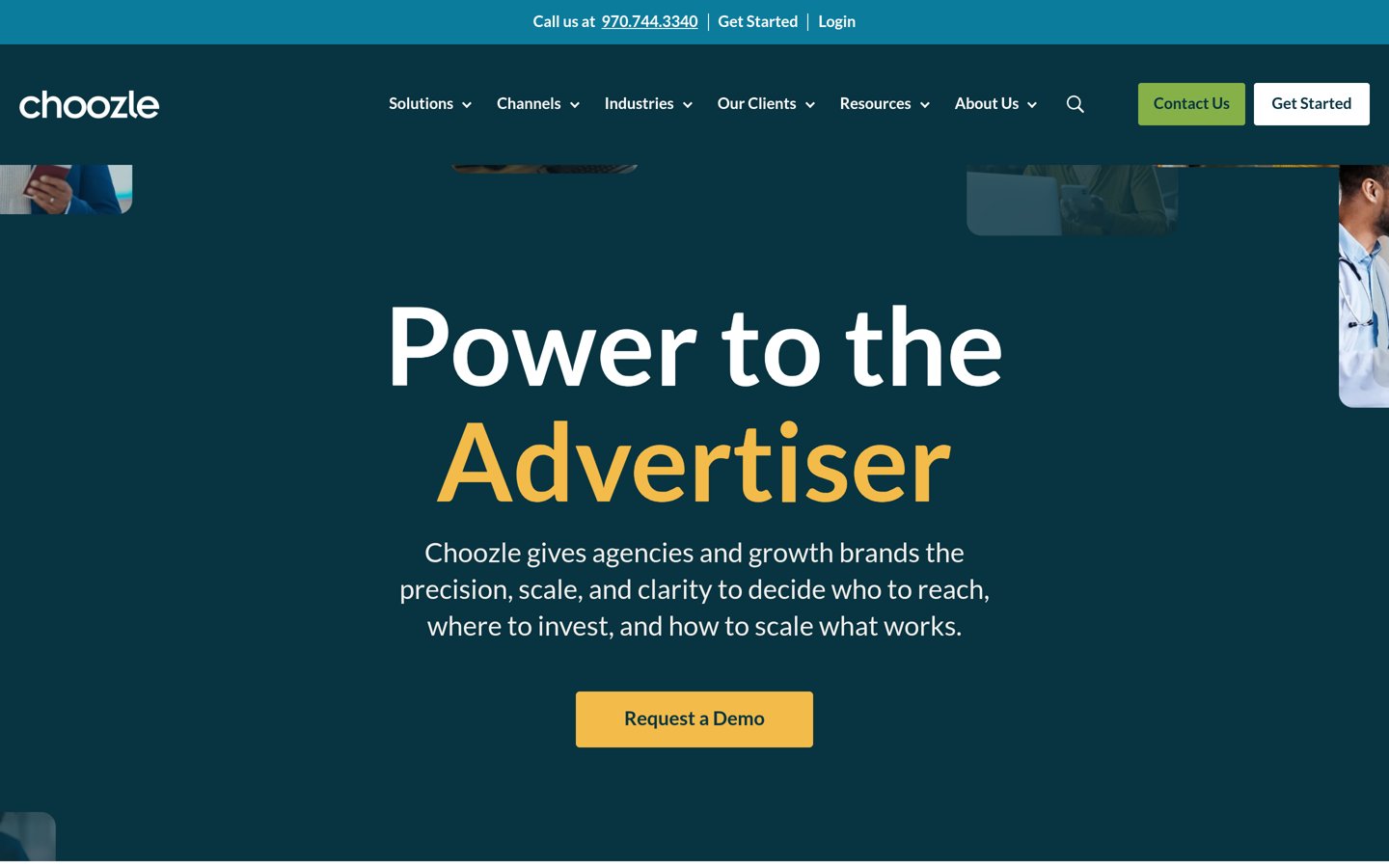
Choozle is the small-agency DSP in this list, rated 4.2 out of 5 from 211 G2 reviews. Choozle Go costs $99 a month, the only published monthly fee among the DSPs here, and it layers detailed consumer data on top of campaigns by partnering with The Trade Desk for inventory.
The trade off is scale. Choozle expects about $15,000 in media a quarter, with a $500 first fill-up, so the $99 fee is only part of the real bill. It fits small agencies and in-house teams that want a self-serve DSP with a flat, published fee.
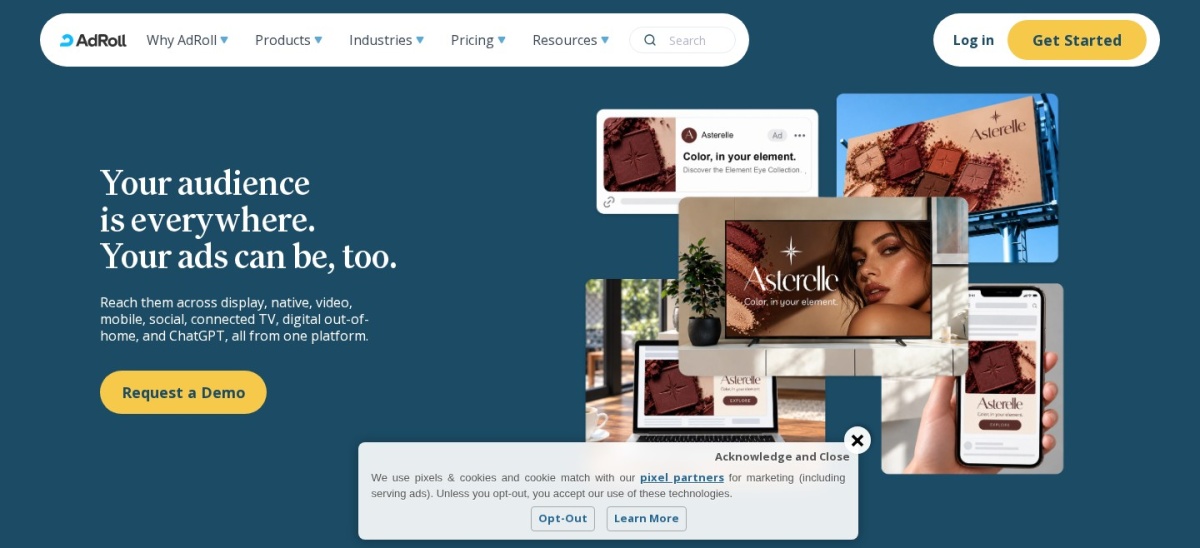
AdRoll is the only tool in this list with a free self-serve plan, rated 4.1 out of 5 from 787 G2 reviews. The free Ads plan covers retargeting and display ads, and you pay for the media itself, while Marketing & Ads Plus starts from $36 a month with more channels and support.
The trade off is depth. It is a retargeting and prospecting tool, not a full DSP, so it cannot match The Trade Desk or StackAdapt for programmatic reach. It fits small stores and teams starting paid ads on a small budget.
4.5/5on Gartner Peer Insights (37 reviews, checked Nov 2026)
PricingCustom/yr
Best for YouTube and Google inventory
Gartner rating4.5/5
Gartner reviews37
Free planNo
Entry paid planCustom quote
marketingplatform.google.com
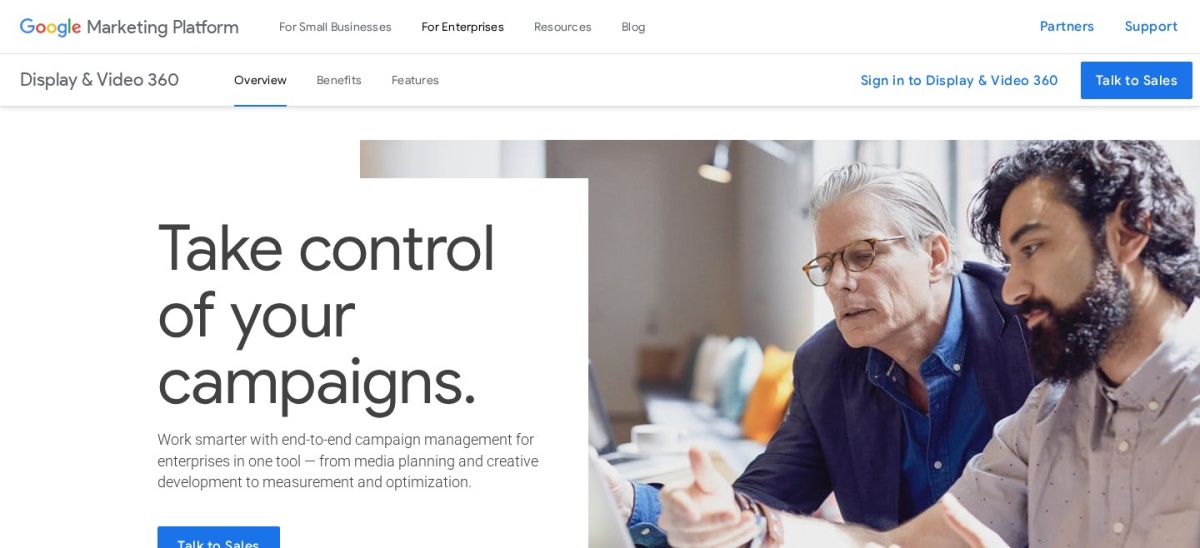
Google Display & Video 360 homepage, captured Nov 2026.
Google Display & Video 360 is the only DSP that buys YouTube, and that single fact keeps it on every serious shortlist. It combines YouTube and open-web buying in one seat on Google Marketing Platform, with Google audience data and measurement built in.
The trade off is access and independence. It is quote-only, assumes trained traders or an agency, and it favours Google inventory by design. It fits teams already on Google Marketing Platform that want YouTube and open-web buying in one seat.
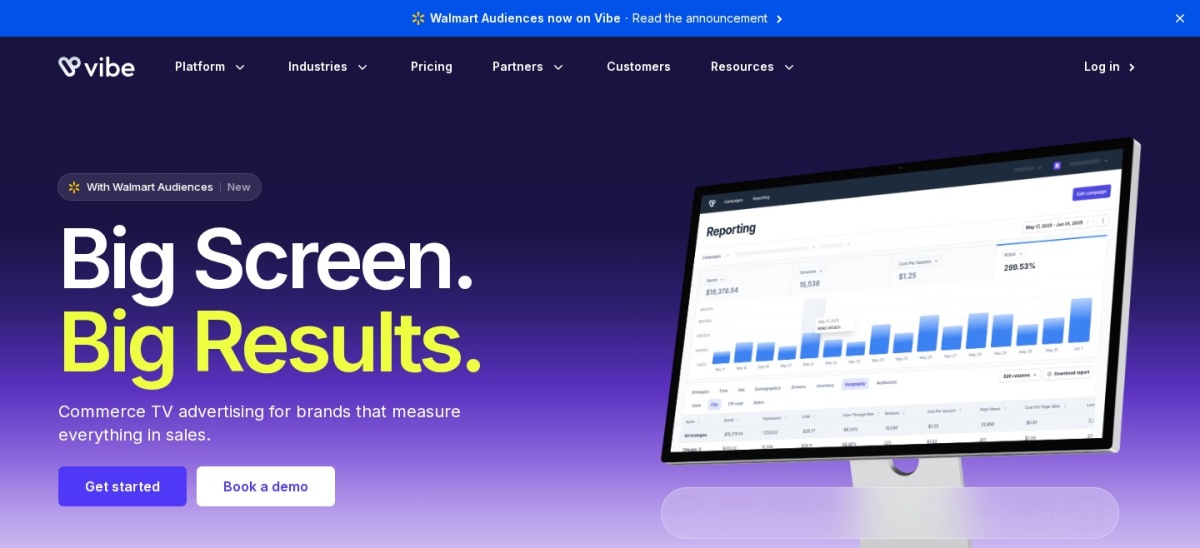
Vibe is the self-serve connected TV platform for smaller brands, rated 4.8 out of 5 from 168 G2 reviews. It lets teams launch streaming TV campaigns from a self-serve dashboard with targeting, creative tools and measurement, without the budget that MNTN expects.
The trade off is pricing transparency. Vibe publishes no prices, so the real cost only appears after signup, and it is TV-only rather than a full DSP. It fits small brands that want streaming TV without an enterprise contract.
DSP pricing is almost never a list price. Expect platform fees of roughly 10 to 20 percent of media spend, plus media costs that vary by channel.
StackAdapt embeds its fee in the CPM, so you never see a separate line. Choozle is the exception, with a flat $99 a month platform fee on top of media.
Ask for the fee structure in writing before the first campaign. A low CPM with a hidden margin costs more than a higher CPM with a clear fee.
How we chose
We started from every media buying platform with a public rating on G2, Capterra or Trustpilot, then kept the ones a buyer can actually evaluate, with a published price or a free plan.
Prices come from each vendor's pricing page, checked on 23 November 2026. Ratings and review counts come from G2 on the same day, except DV360, which uses Gartner Peer Insights. Where a vendor shows a sale, the list shows the regular price.
No vendor paid for a place, and this list is based on pricing, docs and reviews, not on using the tools ourselves.
How to choose media buying software
Start with the inventory, then check the minimums.
Decide walled garden or open web first. DV360 sells YouTube, Amazon DSP sells shopper data, and the rest buy the open web without favouring owned media.
Check the minimums in writing. StackAdapt states no minimum spend, while MNTN starts around $5,000 a month and Choozle expects about $15,000 a quarter.
Ask how the fee is charged. Platform fees run roughly 10 to 20 percent of media spend, and some vendors hide the margin inside the CPM.
Match the platform to the team's skill. Choozle and StackAdapt are built for self-serve teams, while The Trade Desk and DV360 assume trained traders or an agency.
FAQ
What is the best media buying software?
StackAdapt is the best media buying software for most teams. It is the only DSP in this list that states plainly there is no minimum spend, rated 4.7 out of 5 from 923 G2 reviews, and it runs display, native, video, audio and connected TV from one dashboard.
How much does media buying software cost?
Most DSPs publish no prices and charge a platform fee of roughly 10 to 20 percent of media spend. Choozle is the exception with a flat $99 a month platform fee, and StackAdapt embeds its fee in the CPM with no minimum spend.
What is the cheapest DSP?
Choozle is the cheapest DSP with a published price at $99 a month on Choozle Go, though it expects about $15,000 in media a quarter. StackAdapt has no minimum spend and no separate platform fee, so small test budgets cost less there.
What is the best DSP for connected TV?
MNTN is the best pick for performance TV, rated 4.8 out of 5 from 61 G2 reviews, with direct deals across 150-plus premium streaming networks and measurement built for conversions. Vibe is the self-serve alternative for smaller budgets.
Is The Trade Desk better than StackAdapt?
The Trade Desk is better for large-scale programmatic buying with negotiated terms and the deepest CTV footprint among independent platforms. StackAdapt is better for mid-market teams that want self-serve access without an enterprise contract or a minimum spend.
Can I buy YouTube ads programmatically?
Yes, but only through Google Display & Video 360, which is the only DSP that buys YouTube inventory. It is quote-only and assumes trained traders or an agency, so smaller advertisers usually reach it through an agency seat.